267 résultats
18813125108Deighton Bell and Co 1881. Pages cut. Pages foxed. Text in good condition. Bookplate inside cover. Re-bound by library. Covers marked and scuffed. Spine splitting at top of book. This book has hardback covers. Ex-library With usual stamps and markings In poor condition suitable as a reading copy. No dust jacket. Please note the Image in this listing is a stock photo and may not match the covers of the actual item300grams ISBN: Deighton, Bell and Co hardcover
181810296AB1818. Göttingen Vieweg 1818. Kl.-8°. 1 doppelbl.-gr. Kupfertaf. VI 80 S. Br. d. Zt. Callisen XX S. 302 f.; Engelmann 608; Hirsch/H. V 813. - Inauguralabhandlung des bedeutenden Staats- und Gerichtsmediziners Karl Wilhelm Ulrich Wagner 1793-1846. - Stellenw. etwas braunfleckig. unknown
1886410791886. Slg. klin. Vortr. 271-272. - Leipzig Verlag von Breitkopf & Härtel 1886 8° 106 pp. orig. Broschur; unaufgeschnittenes Exemplar. Erstdruck! unknown
1889195921889. Zbl. Chir. 16/47; 18/ 2. - Leipzig 1889 8° pp.833-848 feine Broschur. First Edition! "One of the greatest advances in the method of opening the skull for surgical exploration of the brain and its investing membranes was that made in 1887 by Wilhelm Wagner of Königshütte." "Previous to this the skull had been opened by means of a trephine and the area enlarged as necessary by mallet and chisel or by the use of bone forceps. The new method at once made large areas of the brain more easily accessible without leaving a large and troubelsome cranial defect. At the same time it sounded the knell of the various elaborate and time consuming methods of craniocerebral topography which were then in vogue. In other words it was now possible for neurosurgeons to visualize the underlying cerebral cortex sufficiently well so that with the wider exposure obtained by the osteoplastic flap the lesion was almost certain to be brought into view if the neurological localization had been at all acurate." Walker Neurosurgical Classics Walker No. 33: Garrison & Morton No.4862: "Osteoplastic flap operation. Wilhelm Wagner's 1848-1900 method of opening the skull made a large area of the brain more easily accessible than by trephining". unknown
1889127291889. hardcover. 6 pages pp. 833-38 IN: Zentralblatt fur Chirurgie vol. 16. Contemporary 1/2 calf; rubbed. Leipzig 1889. First Edition. Offered entire.<br/> <br/> Osteoplastic flap operation. Wagner's method of opening the skull made a large area of the brain more easily accessible than by trephining. GM 4862.<br/> <br/> unknown
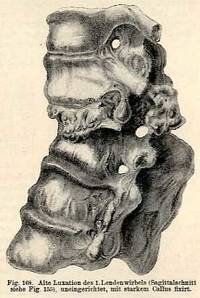
1898209161898. Dtsch. Chir. Lfg.40 . - Stuttgart Verlag von Ferdinand Enke 1898 8° XXXII 564 pp. 232 Abbildungen Leinenband d.Zt.; ExLibris von "Dr. Werner Block". First Edition of "the first successful account of the management of spinal injuries was by Wilhelm Wagner 1848-1900 a general surgeon working alone in a small workers compensation hospital Königshütte Hospital in Upper Silesia where he spent his whole career. He developed the practical treatment of spinal injuries and demonstrated how patients could and should be treated. He wrote a book with his former pupil Paul Stolper 1865-1906 on injuries of the spine and spinal cord. This dealt with every aspect of the subject. He started with anatomy of the spinal column pathology of injury the mechanism of injury the symptomatology and practical treatment including the indications for surgery. He understood the necessity of relieving pressure in preventing pressure sores and was concerned to prevent subsequent deformity. He identified six major problems: sepsis from pressure sores; treatment of cervical fractures; post-traumatic syringomyelia; infection of the chest; stones in the kidneys leading to sepsis of the renal tract; and the necessity of immobilising patients in bed until the fracture healed. The textbook is remarkable in its breadth of vision and its emphasis upon such commonplace but vital aspects of treatment as how the patient should be transported and nursed. Particular attention was paid to the pressure points and positioning of the patient. Water beds were used. He emphasised the need to prevent soiling of the mattress in incontinent patients. For doubly incontinent patients special beds were designed such as those used for cholera patients with a bucket underneath that could be removed. Once the fracture had healed the patient was mobilised and put into a bath. The object of treatment of the spine was to establish bony union. Wagner was opposed to operative treatment on the spine and recommended that radiographs should be used to estimate the position of the fracture. He recommended palpation of the kyphus to reduce a dislocation. He described in detail how a dislocated cervical spine could be reduced. He devoted pages to the description of how the bladder should be managed. Wagner treated patients with spinal injuries and was able to mobilise them. He gave opinions in court about their life expectancy so they were probably returning home. It is remarkable that he carried out all this work alone in a municipal hospital without an academic position." - J.R. Silver History of the treatment of spinal injuries. Postgraduate Medical Journal 81 2005: pp.108-114 unknown
1887943London: Swan Sonnenschein Lowrey & Co. 1887. 4th Edition. VG/--. Decorative bookplate to free endpaper. Tiny 1/8 inch crack to leather gutter / light page toning to interior - otherwise a clean tight copy. Illustrated - 3/4 leather. Swan Sonnenschein, Lowrey & Co. hardcover
187826018Leipzig 1878. In Schilderungen für Jugend und Volk. I.Göttersagen II.Nordische Heldensagen Neue Jugend- u.Hausbibliothek. Neue Folge 5./6.Bd. Unsere Vorzeit erster Band Einbanddeckel und Rücken goldgeprägt. Guter Zustand 2.verb.Aufl. Otto Spamer 8°. Ln. goldgepr. Mythologie unknown
18821911Leipzig: Spamer 1882. Hardcover. Very Good. 576 pages with fold out map Very Good hardcover with ornate decoration on cover and gilt title. Some slight corner wear signature of prior owner Spamer hardcover
18632264Leipzig: Spamer 1863. Hardcover. Good. 394 pages with fold out map red hardcover with gilt design on cover and spine frontispiece with tissue guard loose. Good condition text and internals signature of prior owner on title page. Spamer hardcover
18772263Leipzig: Spamer 1877. Hardcover. Very Good. Red hardcover with gilt picture on cover and elaborate gilt design on spine in Very Good condition. Text in GERMAN 443 pages. Signature of prior owner on inside front cover. Spamer hardcover
1820281441820. Arch. med. Erfahr. 1820/1. - Berlin G. Reimer 1820 8° 1 Bl. 184 pp. Broschur. unknown
188612033Leipzig 1886. Das Land und Volk der alten Griechen. 1. Bd. im Bund. locker. 6. Aufl. O.Spamer 8°. Ln. goldgepr. Geschichte unknown
187328263Leipzig 1873. Neue Jugend- und Hausbibliothek Dritte Serie 1.u.2.Bd. 2 Bde. Guter Zustand. N.a.V. 3.verb.Aufl. Spamer 8°. Ln. goldgepr. Geschichte unknown
188072863Philadelphia and London:: J. B. Lippincott; Swan Sonnichsein 1880. First US edition. publisher's pictorial cloth stamped in gold and black. Old faded ink signature; cloth a little frayed at corners and the extremities of the spine and with several small gouges to the cloth at the top of the front board; nevertheless clean tight and sound. 8vo. With numerous illustrations. J. B. Lippincott; Swan Sonnichsein, hardcover
18747851874. 6. verm. Aufl. Leipzig 1874 8° XVI902 pp. PappBd.d.Zt. Rsch. unknown
18846rjzeW. Swan Sonnenschein and Company 1884. 3rd edition . Hardcover. Good/No Jacket. Bookplate tipped in on the front inner board by the previous owner. Heavy book may require extra postage unless posted within South Africa. 3rd edition 1884. With numerous illustrations. Publication of 326 pages. Frontispiece. There is gilt on the spine of the book. The boards are in fair condition minor marks and edge worn. Internally the pages are in good condition clean and complete. The binding is excellent. GK. Our orders are shipped using tracked courier delivery services. W. Swan Sonnenschein and Company hardcover
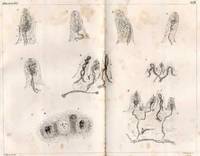
1835224771835. Arch. Anat. Phys. 1835/4.- Berlin Verlag G. Eichler 1835 8° pp.321-432 4 Stahlstichtafeln Broschur; etwas fleckig. First Edition! "The nucleolus which had been recorded by no observer since Fontana was now discovered by Wagner 1835 in the oocytes of various animals Ovis Fig. 2 on Tab. VIII Salmo Phalangium Anodonta Unio. He called it the Keimfleck or macula germinativa. The recognition of the nucleolus was important because it helped in the identification of nuclei." Baker The Cell-Theory: a Restartement History and Critique p.100 "Wagner saw and described the nucleolus". "Rudolph Wagner 1805-1864 conducted research in a number areas. His most important work concerned mammalian ova and sperm. Purkyne had already in 1825 discovered the nucleus in the avian egg while K.E.Bear had discovered the mammaalian ovum 1827 and J.V.Coste had identified its nucleus 1833. It remainded for Wagner to discover 1835 an important formation in the ovum of several species of mammals which he called the macula germinativa - later known as the nucleolus."Vladislav Kruta DSB 14 p.113f. Garrison & Morton No. 109.1 unknown
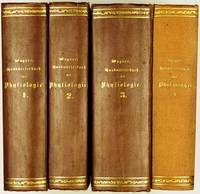
1843330511843/53. Wagners Hdwb. Physiol. 1-4. - Braunschweig Fr. Vieweg 1843/53 8° 3513 pp. zahlr. Holzschn. Tabellen u. 14 Taf. 5 Pappbände d.Zt. feines Expl. Erste Ausgabe! "Unvergessen ist Wagners Unternehmen eines Handwörterbuches der Physiologie welches den Stand des Wissens der Jahre 1842-1853 aus der Feder der bedeutendsten Physiologen dieser Zeit zusammenfaßte". Rothschuh Gesch. d. Physiol. 109. Inhalt: Bergmann C.: Kreislauf des Blutes; Ueber den Einfluß der Physiologie auf die gerichtliche Medizin. Berthold A.A.: Geschlechtseigentümlichkeiten. Berzelius J.J.: Galle. Bidder F.: Riechen; Schmecken Rothschuh Nr.2079: Prüft die Nachdauer des Geschmacks. Bischoff L.W.: Entwicklugsgeschichte mit besonderer Berücksichtigung der Mißbildungen. Budge J.: Sympathischer Nerv Ganglienstructur und Nervenendigung. Canstatt: Atrophie. Ecker Freiburg: Blutgefäßdrüsen Rothschuh Nr.1043: Zählt Schilddrüse Nebenniere Thymusdrüse und Hypophyse zu den "Blutdrüsen". Frerichs F.T.: Synovia Gelenkflüssigkeit; Verdauung.Thränensekretion. Hagen F.W.: Psychologie und Psychiatrie. Harleß E.: Temperament Physiognomik und Cranioskopie; Hören. Hasse Zürich: Krankheit; Stimme. Kohlrausch A.: Physiologie in Anwendung auf Chirurgie. Krause Hannover: Haut. Kürschner G.: Aussaugung; Herz und Herztätigkeit. Lehmann G.: Harn. Leuckart R.: Zeugung Nachtrag v. R. Wagner. Listing Göttingen: Zur Dioptrik des Auges. Litzmann Kiel: Schwangerschaft und Physiologie des weiblichen Organismus. Lotze H.: Leben. Lebenskraft; Instinct; Seele und Seelenleben. Ludwig C.: Nieren und Harnbereitung. Mohl H.v.: Die vegetabilische Zelle. Nasse H.: Blut; Chylus; Lymphe; Thierische Wärme. Purkinje J.: Mikroskop seine Anwendung und Gebrauch bei physiologischen Untersuchungen Anhang von R. Wagner; Sinne im Allgemeinen; Wachen Schlaf Traum und verwandte Zustände Rothschuh Nr.1741: Schlafeintritt durch Leitungsunfähigkeit der Stabkranzfasern. Ruete Göttingen: Die Physiologie in Anwendung auf die Augenheilkunde. Scherer J.: Milch. Siebold K.Th.E.: Parasiten. Spieß. G.A.: Krankhafte Störungen in der Thätigkeit des Nervensystems Nervenkrankheiten. Stannius Rostock: Fieber.Theile Bern: Leber. Valtentin G.: Absonderung; Elektricität der Thiere; Ernährung; Flimmerbewegung; Galvanismus; Gewebe des menschlichen und thierischen Körpers. Vierordt K.: Respiration; Transudation und Endosmose. Vogel J.: Entzündung und ihre Ausgänge; Gewebe in pathologischer Hinsicht; Hypertrophie. Volkmann A.W.: Gehirn; Nervenphysiologie; Sehen. Wagner R.: Sympathischer Ganglienstructur und Nervenendigung Rothschuh Nr.1468: 1. Schema der Reflexbahn sensible motorische Faser Ganglienzelle; Sympathische Ganglien des Herzens. Weber E.F.W.: Muskelbewegung Rothschuh Nr.294: Frequenz des Herzens bei verschiedenen Temperaturen. Weber E.H.: Tastsinn und das Gemeingefühl Rothschuh Nr. 713: Subjektives Durstgefühl durch verminderte Sekretion im Gaumen und Schlund Hungergefühl durch Magenkontraktionen; Nr.1229: Untersuchungen über Muskelelastizität; Nr.2119: Nimmt eine Identiät von Druck- und Schmerzsinn an. Bestimmung der Raumschwellen beim Drucksinn; Kitzeln wird durch die Ausstrahlung der Erregung auf angrenzende Theile hervorgerufen; Nr. 2161: Zwei gehobene Gewichte lassen sich besser unterscheiden als nur auf die Hand aufgesetzte. unknown
184230439AB1842. 4 in 5 Bänden. Braunschweig Vieweg 18421853. Gr.-8°. Halblederbände der Zeit. Rudolph Wagner 18051864 deutscher Anatom Zoologe und Physiologe war ab 1840 Professor an der Universität Göttingen. Er beklagt im Vorwort des ersten Bandes dass er keine Arbeiten von Kollegen erhalten habe und hofft für den zweiten Band mehr Beiträge zu bekommen. Ausgeschiedenes Bibliotheksexemplar mit handschr. Signatur auf dem Einbandrücken und gestempelten Vorsätzen. Papier durchgehend stockfleckig. unknown
183423563Leipzig Leopold Voss 1834-35. Cont. marbled boards. Light wear along hinges and spine ends. Stamp on title. XXIV6071 pp. hardcover
1836600041836. Lipsiae Sumptibus Leopoldi Vossi Foilio 1836 Folio 4 15 1 pp. 2 von Rudolph Wagner nach der Natur gezeichnete und Fr. Sturm gestoechene Tafeln mit 36 Figuren mit über 115 Einzeldarstellungen Pappband d.Zt.; etwas fleckig. Rare First Edition of the "Prodromus historiae generationis hominis atque animalium. Sistens icones ad illustrandam ovi primitivi inprimis vesiculae germinativae et germinis in ovario inclusi genesin atque structuram per omnes animalium classeo multosque ordines indagatam ; accedunt tabulae duae". Rudolph Rudolf Friedrich Johann Heinrich Wagner 1805-1864 anatomist and physiologist and the co-discoverer of the germinal vesicle. He made important investigations on ganglia nerve-endings and the sympathetic nerves. The precision of his earlier work is evidenced by his Micrometric Measurements of the Elementary Parts of Man and Animals Leipzig 1834. His zoological labours may be said to conclude with the atlas Icones zootomicae Leipzig 1841. In 1835 he communicated to the Munich academy of sciences his researches on the physiology of generation and development including the famous discovery of the germinal vesicle of the human ovum. These were republished under the title Prodromus historiae generationis hominis atque animalium Leipzig 1836. unknown
1852370531852. Arch. Anat. Phys. 1852. - Berlin Verlag von Veit et Comp. 1852 8° pp.493-520 2 lith. Tafeln Broschur. Rudolf Wagner 1805-1864 and Georg Meissner 1829.1903 first described the tactile nerve endings - " Wagner's corpuscles" in 1852. First published in Nachr. Georg-Augustus Univers. kgl. Ges. Wiss. Göttingen 1852 pp.17-32 unknown
1835255271835. Arch. Anat. Phys. 1835/3.- Berlin Verlag G. Eichler 1835 8° pp.225-321 2 Stahlstichtafel orig. Broschur; unaufgeschnittenes verlagsfrisches Exemplar unknown
1833669341833. Leipzig : Verlag von Leopold Voß 1833 8° VI 2 80 pp. 1 gstochene Tafel mit 12 Figuren Pappband d.Zt.; Rüchenschild erneuert feines Expl. Erste Auflage! "Wagner hält die roten Blutkörperchen für kernlos" Rothschuh Titel: "Zur vergleichenden Physiologie des Blutes. Untersuchungen über Blutkörnchen Blutbildung und Blutbahn nebst Bemerkungen über Blutbewegung Ernährung und Absonderung mit besonderer Rücksicht auf C.F. Burdach's Physiologie Bd. IV. mit Beiträgen von Johannes Müller." "Die folgenden Blätter verdanken zunächst ihre Entstehung dem vierten Bande von Burdach's Physiologie. Ich hatte zu verschiedenen Zeiten mehr gelegentlich als absichtlich mich mit mikroskopischen Beobachtungen des Bluts beschäftigt und ein Aufenthalt von mehrern Wochen in Triest während der Monate Mai und Juni hatte mir in diesem Jahre die erwünschte Gelegenheit gegeben die Blutkörnchen verschiedener Seethiere zu untersuchen. Die interessanten Versuche von Johannes Müller luden zur Wiederholung ein und Burdachs gediegene Darstellung in seinem für alle Zeiten wie Haller's Physiologie bewundernswerthen Werke regten Manches an so daß ich die Lust bekam meine Beobachtungen in einer Beurtheilung des letzten Bandes von Burdach's Physiologie mitzutheilen bis ich einsah daß das Material zu groß war. Ich hoffe daß man das hier Gegebene einer Mittheilung in dieser Form nicht unwerth finden wird; ich glaube manches Neue gesehen zu haben das einer kritischen Prüfung entgegensieht vor welcher es doch theilweise bestehen wird. Daß Andere später genauer sehen und Unrichtigkeiten auffinden werden bezweifle ich nicht; in einer Wissenschaft wie die Physiologie wird Jeder Gelegenheit genug gehabt haben weder seine Beobachtungen noch seine Ansichten für unfehlbar zu halten. Übrigens wünsche ich daß die vorliegende Schrift nicht ungünstig und nachsichtsvoll möge aufgenommen werden. Es ist eine Vorarbeit zu meinem Lehrbuche der vergleichenden Anatomie das einem baldigen Erscheinen entgegensieht. Schließlich bleibt es mir nur übrig meinen Dank gegen unsere Regierung auszusprechen welche mich früher schon und neuerlich wieder in meinen Studien durch freigebige Unterstützungen förderte. Erlangen den 7. Dec. 1832. Der Verfasser." Rudolf Friedrich Johann Heinrich Wagner 1805-1864 was a German anatomist and physiologist and the co-discoverer of the germinal vesicle. He made important investigations on ganglia nerve-endings and the sympathetic nerves. unknown