1 916 résultats
1884R121123s.l. [Milano or Roma], s.n. [1884] [6] + 110 + [4bl.] pp., Manuscript of the contributions made on the occasion of the commemoration in Rome in 1884 of the 300th anniversary of the death of Carolus Borromeus S.J. (1538-1584), organised by the occasional Accademia di Poesia e di Musica. This Academy of Poetry and Music was composed of students from Roman seminaries and church colleges. For this event a leaflet of 18pp. was published : S. Carlo Borromeo modello proposto agli ecclesiastici nel terzo centenario dalla beata sua morte. Accademia di poesia e di music ache offrono al pubblico gli alunni de seminari e collegi di Roma il giorno 25 Novembre 1884 containing the program and some excerpts of the contributions. The manuscript here on offer is most probably the only existing copy containing the complete poems and songs, handwritten by the different contributors in different languages (Italian, French, Hebrew, Armenian, Polish, German, Portuguese, etc.) and making it an important document for Jesuite and Italian church history, very neat handwriting throughout, text and interior are clean and bright, bound in contemporary red cloth binding with gilt ornamentations, some stains on lower end of both covers, all edges gilt, marbled endpapers, ownership stamp on first page, [Content: PARTE I, Il Sacerdote di Dio : S. Carlo e I Seminari Prolusione Latina (pp.1-6, text in Latin), AGRESTI Michele, Cantata S. Carlo e la musica sacra (pp.7-8, text in Italian), I: MASIGI Paolo (Colleg. Urbano de Prop. Fide), LEletto del Signore Poesia Ebraica (pp.11-14, text in Hebrew), HAELTERMANN Benedetto (alunno del collegio belga), Fiammingo: Leletto del Signore (parafrasi della Poesia ebraica, pp.15-18, text in Dutch), II: HELLO Enrico (Alunno del Seminario Francese), Il Divoto di Maria Poesia Francese (pp.19-22, text in French), III: GASPAROLO Francesco (alunno del Sem. De SS. Ambrogio e Carlo), Il Pellegrino ai Santuari Canzone (pp.23-26, text in Italian), IV: CHAPMAN Giovanni (alunno del Collegio Inglese), LAmico dei Santi Poesia Inglese (pp.27-30, text in English), V: RYCHLAK Giuseppe (Alunno del Collegio Polacco), S. Carlo Campione della Fede Poesia Polacca (pp.31-34, text in Polish), VI: OFLYNN Cornelio (alunno del Collegio Irlandese), San Carlo Zelatore della casa di Dio Poesia Irlandese (pp.35-38, text in Irish), VII: PAPI Ettore (alunno dellAlmo Collegio Capranica), S. Carlo Mecenate delle lettere Ode Italiana (pp.39-41, text in Italian), VIII: BERGAMASCHI Pietro (alunno del Sem. de SS. Ambrogio e Carlo), S. Carolo Iuventutis Patri (pp.43-48), // PARTE II: Il Cardinale Arcivescovo : Cantata S. Carlo e la peste di Milano (pp.51-53, text in Italian), LANZONI Francesco (Alunno del Pont. Sem. Pio), Prolusione Italiana: S. Carlo e I Romani Pontefici (pp.57-62, text in Italian), I: TERSIBASCIAN Giorgio (Alunno del Collegio Armeno), LUmile esaltato Poesia Armena (pp.63-66, text in Armenian) & MACKENZIE Colino Cameron, LUmile esaltato parafrasi in versi asclepiadei (pp.67-70, text in Latin), II: TEDESCA Antonio (Alunno del Collegio Germanico-Ungarico), Carlo Borromeo Procuratore del Concilio di Trento Poesia Tedesca (pp.71-74, text in German), III: DE PAUL MORAES Evaristo (Alunno del Collegio Pio-Latino-Americano), Il Preside dei Sinodi Milanesi Poesia Portoghese (pp.75-78, text in Portuguese), IV: DRUMOFF Giovanni (alunno del Collegio Greco), Il Pastor Buono Poesia Greca (pp.79-81, text in Greek) & KANNA Eduardus (e collegio Stat. Foederatorum Americas Borealis), Bonus Pastor parafrasi ex graeca Esametri (pp.83-86, text in Latin), V: PTACEK Giuseppe (alunno del Collegio Boemo), S. Carlu Burrum Elemosiniere Poema Boema (pp.87-89, text in Czech?), VI: OSES Aurelio (alunno del Collegio Spagnuolo), Fondador de pias Instituciones Poesia Spagnuola (pp.91-94, text in Spanish), VII: RAVAGLIA Giovanni (alunno del Pontif. Sem. Pio), LEroe della Carita Terzine (pp.95-98, text in Italian), VIII: GIAMMARIA Oreste (alunno del Sem. Vaticano), Carolus Borromeus ecclesiasticae libertatis vindex (pp.99-102, text in Latin), IX: VALLI Adolfo (alunno del Pont. Sem. Romano), Il comprensore celeste Ottave (pp.103-105, text in Italian), // Cantata S. Carlo e Leone XIII (p.107), Indice (pp.109-110)], R121123
18346131Zum Gebrauch als Vorlegeblätter für Landschaftszeichner, lithographirt von L[udwig Joseph] Kuntz u. Fr[iedrich] Eisenlohr. Mit 21 Kreidelithographien auf aufgewalztem Japan auf 20 Tafeln. Karlsruhe, Verlag der P. Wagner'schen Lithographie, 1834. Groß-Querfolio (63,5 x 48,2 cm). Lithogr. Orig.-Umschlag auf braunem Papier (nur Vorderseite).
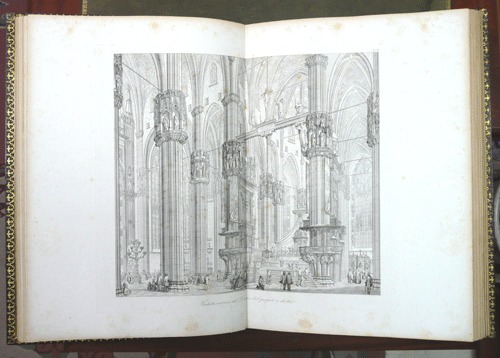
18227686CBMilano, Presso F. Artaria, 1822. Kl.-4°. XI, 175, (5) S. Mit gest. Titel, 30 kol. Aquatinta-Tafeln (meist nach Lory, gest. von Landini und Fumagalli) und 1 gef. Karte. Lederband der Zeit mit reicher Rücken-, Deckel- und Innenkantenvergoldung sowie dreis. Goldschnitt. + Wichtig: Für unsere Kunden in der EU erfolgt der Versand alle 14 Tage verzollt ab Deutschland / Postbank-Konto in Deutschland vorhanden +, 7686CB|7686CB_2|7686CB_3|7686CB_4 [4 Warenabbildungen]
1830151-W1830. Bleistift, auf chamoisfarbenem Velin, rechts unten bezeichnet und datiert ?Sorrento am 25. Juli 1830? und von einer anderen Hand ?im Hause der Gr(äfin) v(on) E(gloffstein). 18,3:24,1 cm. - Verso: Porträt der Karoline Lauska. Bleistift, rechts unten bezeichnet ?Frau Lauska?. Minimal fleckig. Im Juli 1830 reiste Julie von Egloffstein in Begleitung des Malers Fr. Preller d.Ä. (1804-1878) von Rom über Neapel nach Sorrent, wo sie einige Gemälde und Zeichnungen schuf. Unsere Ansicht ist von dem Haus aus gemalt, in dem die Künstlerin sich während ihres Sorrenter Aufenhaltes aufhielt. Das rückwärtige Bild zeigt ein Porträt der 1794 in Berlin geborenen Malerin Karoline Ermeler, die den Musiker F.I. Lauska (/1764-1825) geheiratet hatte. Sie war eine Schülerin von J.C.H. Kretschmar (1769-1847) und von W. von Schadow (1788-1862). Lauska bereiste Italien drei Mal, sicher 1829-1830. Möglich ist, daß sich Lauska ebenfalls 1830 in Sorrent aufhielt, wo dann Egloffstein das Porträt gemalt haben könnte. Ungewöhnlich ist bei diesem Porträt nicht nur die Wahl der Porträtansicht, sondern auch, daß es sich um eines jener seltenen Porträts einer Künstlerin handelt, das von einer Künstlerin gemalt wurde.
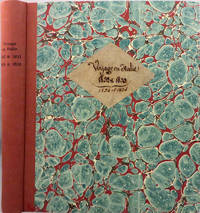
183227396n.p.: Original Manuscript 1832 1833 1834 1835. Original Manuscript in French of the travels by General Despans-CubiÄres to Italy over the course of four years. The text includes significant considerations of military affairs the mention and discussion of famous personages as well as historical observations and political affairs . 4to the manuscripts now bound into a binding of terra-cotta paper over marbled boards with a hand-calligraphed label to the upper cover and the titles in black to the spine panel. 534 pp. A fine and beautifully preserved collection of manuscripts written over four years. A UNIQUE AND INTERESTING MANUSCRIPT BY ONE OF THE MOST FAMOUS GENERALS IN ALL OF FRENCH HISTORY. 'Amédée Louis de CubiÄres was the illegitimate son of the Marquis Louis Pierre de CubiÄres page to Louis XV and squire to Louis XVI then in 1815 of Louis XVIII by Madame Guesnon de Bonneuil née Michelle Sentuary.<br> He served in the Austerlitz Prussian and Polish campaigns being mentioned in dispatches at Austerlitz and wounded at Jena 1806. Promoted to lieutenant on 30 November 1806 he received the cross of the Légion d'honneur at Eylau 1807. Aide-de-camp to general Morand from 12 January 1808 he followed him in the Austrian campaign of 1809 the French invasion of Russia in 1812 and the 1813 German campaign. He fought with distinction at Eckmühl and rose to captain at Essling 7 June 1809. He assisted at the battle of Wagram 6 July 1809 and had three horses shot from under him at the battle of Borodino. Napoleon I of France made him an officer of the Légion d’honneur in reward for his good conduct in the 1813 campaign in which he had become chef de bataillon promoted 3 October 1813.<br> On Napoleon's return from Elba in 1815 colonel de CubiÄres was made colonel Å• la suite to the 1st Light Infantry Regiment of which the titular colonel was Beurnonville. According to Jolyet Napoleon reviewed this regiment on the day after his arrival back in Paris on 21 March and asked who was its commander. CubiÄres replied "Sir it is colonel de Beurnonville ; but he is ill." Napoleon replied "Beurnonville is not sick - it is you colonel CubiÄres who shall nevertheless take command of the 1st Light Infantry". In 1815 Despans-CubiÄres fought with his regiment at Waterloo and was wounded at Quatre-Bras and at Mont-Saint-Jean.<br> According to Jolyet CubiÄres was "the most valiant soldier and the best man-of-war that I have known. With this he brought a remarkable beauty a brilliant spirit and a generous and independent love".<br> Promoted to commander of the Légion d’honneur 21 March 1831 he was made commander-in-chief of the French troops which landed at Ancona in the Papal States 9 February 1832 to occupy the town in reprisal for Austrian intervention at Bologna. Returning to France in 1837 with the rank of lieutenant-general he next became Minister for War in the 1839 transitional government 31 March-13 May 1839 then in Adolphe Thiers's second cabinet 1 March-29 October 1840. He attached his name to Paris's fortifications to the decision to write a history of all France's regiments since Francis I and to the organisation of the chasseurs of Vincennes. Made a peer of France on 7 November 1839 he took part in the discussions of the Chambre des pairs on taxes and roads before being raised to grand officer of the Légion d’honneur on 27 April 1840.<br> When the 1844 novel The Count of Monte Cristo was published - according to Librairie Générale Française 1995 its character of Fernand Mondego was inspired by general Despans-CubiÄres. On 17 August 1852 he won a decree of rehabilitation at the Court of Appeal at Rouen after an earlier trial on charges of corruption and was allowed to retire as a général de division on 1 January 1853 Original Manuscript hardcover
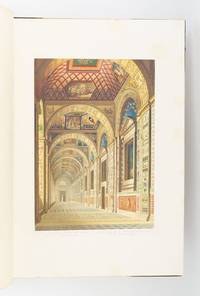
1854ST19418London: Thomas McLean 1854. New Edition "largely augmented by numerous plates plain and colored. 578 x 406 mm. 22 3/4 x 16". 4 p.l. comprising an engraved title page printed dedication preface and list of plates; xvi 76 pp. all of the text in the second work inlaid to size. Two related works a large folio plate volume and a quarto text volume bound in one volume. <br/> Decorative contemporary dark brown half morocco marbled paper sides broad decorated raised bands spine elaborately gilt in compartments featuring a very large and complex lozenge composed of antique tools as well as large scrolling cornerpieces marbled endpapers all edges gilt joints possibly but not certainly with very expert repairs. First work with illustrated title page and 56 LARGE-FOLIO PLATES NINE OF THEM ATTRACTIVE CHROMOLITHOGRAPHS original tissue guards. Avery Architectural Library p. 414 citing the edition of 1844. Corners and portions of the board rather rubbed and chafed some occasional light foxing and other trivial imperfections internally but still quite an attractive copy the text and plates clean and pleasing the binding completely solid with joints only slightly worn and the spine quite well preserved.<br/> <br/> This volume combines a visual survey of major decorative art of the Italian Renaissance with a scholarly account of the same the latter text published in quarto and here inlaid to the giant folio size of the plate volume. The plates picture some of the best wall decorations and architectural elements of palaces and churches constructed in Italy in the 15th and 16th centuries. Works of Raphael in Rome are featured here in particular the decoration of the loggias of the papal apartments at the Vatican and of the Villa Madama. The three chromolithographs of the loggias are little short of magnificent. Also included are the wall treatments of the Ducal Palace and Palazzo Te both in Mantua by Raphael’s pupil the mannerist painter Giulio Romano. Among churches pride of place is given to the elaborately decorated Carthusian monastery the Certosa of Pavia by Ambrogio da Fassano and others. The plates are for the most part adapted from the work of two German architects Thürmer and Gutensohn executed two decades previously and completed and explicated by Gruner. The final two plates display in brilliant color many small sections of the previous black and white plates the idea being that purchasers should try their hands at coloring using this elaborate and colorful chart as a guide an early owner seems to have made a tentative effort in that direction with some success in plates 20 and 44. Wilhelm Heinrich Ludwig Gruner 1801-81 was an art historian specializing in the Italian Renaissance and a designer of great houses gardens and furniture who came to England to advise Prince Albert the German consort of Queen Victoria on his decorative projects. The second part of the present volume contains an essay comparing Roman and Renaissance wall painting. Its author called J. J. Hittorff on the title page was Jacques Ignace Hittorff 1792-1867 an architect and archaeologist and the first person to argue that ancient statuary had been brightly colored. Thomas McLean unknown
1860STLB0029Paris, Jeannin s.d. [ca 1860]. gr.-querfolio (29 x 35,8 cm). Titel, 20 lithographische Tafeln, Halbfranzband, Ecken u. Rücken etw. berieben. Die Tafeln breitrandig, teils etw. stockfleckig Die Tafeln, von Deroy (1797-1886) nach der Natur gezeichnet u. eigenhändig lithographiert (Größe der Darstellung ca 23 x 27 cm) zeigen: 1. Rom, Piazza Navona. 2. Rom, Trinita di Monti. 3. Rom, Arco di Settimio Severo. 4. Rom, Foro Romano. 5. Rom, Ponte Rotto. 6. Rom, Campo Vaccino. 7. Rom, Castel e Ponte S. Angelo. 8. Rom, Colonna Trajana. 9. Rom, S. Pietro. 10. Rom, Veduta del Tempio della Pace. 11. Rom, Arco di Constantino. 12. Rom, Avanzi del Tempio di Giove Statore. 13. Rom, Avanzi del foro di Nerva. 14. Rom, Arco di Tito. 15. Rom, Pantheon. 16. Rom, Tempio di Antonino e Faustina. 17. Lago di Como. 18. Milano, Arco della Pace.19. Milano, Corso di Servi. 20. Milano, Il Duomo. - Differenzbesteuert
186144586S.l.n.d., , (1861 circa). In-4 broché de (56) ff. sous chemise et étui cartonnés, pièce de titre de maroquin vert (reliure moderne).
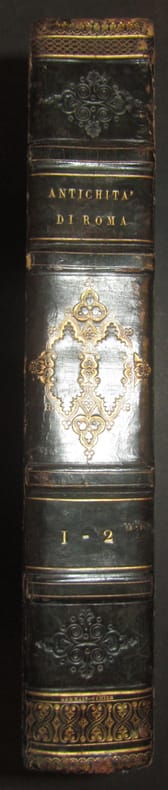
1805845201805 Roma, Pietro Paolo Montagnani-Mirabili, sans date (1805), 2 parties en un fort volume grand in 4° relié demi-veau noir à coins ancien, dos à nerfs plats orné à chaud et à froid (Germain Simier Relieur) ; ex-libris armorié contrecollé sur le premier contre-plat ; des rousseurs ; frottis à la reliure, coins émoussés.
1869042-I1869. Bleistift, mit Bleistift umrandet, auf festem cremefarbenem Velin, rechts unten bezeichnet und datiert ?Capri Mai / 69.?. 19,3:17,2 cm. Verso: Landschaftsskizze. Bleistift. An den Rändern leicht vergilbt und ungleich beschnitten. Minimal angeschmutzt. Verso im Rand oben und rechts Reste alter Verklebung.
18206127) Politi, gest. Titel mit Vignette von G. Politi sowie 34 gest. Tafeln (von G. oder R. Politi?). Messina, Presso Giusep. Pappalardo, 1819 (recte: 1820). Folio (33,0 x 26,7 cm). 1 Bl. Widmung (datiert Palazzolo, 20. X. 1820), V, X, 167 S., (1 S. Druckfehler), 1 leeres Bl. Halblederband d. Zt. mit Marmorpapierbezug, goldgeprägtem Rückenschild u. etwas Rückenvergoldung.
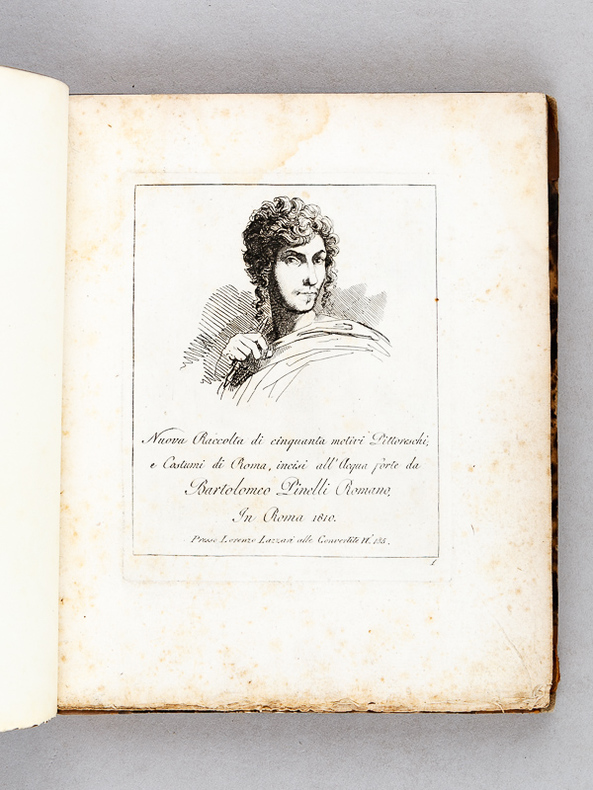
1810549961 vol. in-8 reliure de l'époque demi-veau à petits coins, dos lisse orné, Presso Lorenzo Lazzari, Roma, 1810, avec 50 eaux-fortes (y compris le feuillet de titre)
18475056Dessinée, mesurée, publiée et accompagnée d'un texte historique et explicatif. Mit gest. Titel mit großer Vignette von J. Bein u. 18 gest. Tafeln nach Baltard von Aubert, Leisner, Hibon u.a. Paris, ohne Drucker u. Verlag, 1847. Gr.-Folio (61,3 x 44,2 cm). 4 Bl. (inkl. gest. Titel), 62 S. Halbleinwandband d. Zt. [2 Warenabbildungen]
186418087ABRoma, Cromo-Lithografia Pontificia, 1864 - 1867. 38 : 30 cm. 4 leaves, XLIII, 391, 134 pages; 4 leaves, 351, 85 pages; 2 leaves, 40; 62 and 4 coloured, chromo-lithographed plates Contemporary half brown morocco, spine richly gilt, top edges gilt (One original wrapper bound in) Four parts in three volumes (two text and two plates-bound in one)
18710022361871 Milano, Antica Ditta Pietro e Giuseppe Vallardi, sans date [1871]. In-folio (350 X 476) maroquin marron foncé, dos sept nerfs filetés, caissons dorés fleuronnés avec points dorés, double encadrement de frise et large dentelle dorées sur les plats, titre doré au centre du premier plat, roulette dorée sur les coupes, bordure intérieure, tranches dorées (Assaleix) ; titre-frontispice, 64 planches, 33 pages de texte (dont page de titre), (1) page, (3) ff. de tables. Rousseurs.
180111089Genève, J. J. Paschoud, 1801. In-8 de XIV-327 pages, demi-veau beige, dos lisse orné de filets dorés, pièce de titre rouge et de bibliothèque verte. Bel exemplaire, à toutes marges.
18300005666London: Longman Rees Orme Brown and Green 1830. Second edition revised & enlarged. Hardcover. Very Good. 24 plates including lithographs with additional hand coloring and of which 6 of the 7 maps are folding maps - of which 1 is a wonderful panorama. Octavo x 148pp. contemporary half calf green marbled boards extremities rubbed foxing contemporary obituary of Auldjo tipped to free endpaper. <br/><br/> Auldjo was the British Consul at Geneva. He was the 1st Scotsman and only the 7th person to reach the peak of Mont Blanc in 1827. That he was a notable artist is proven by his sketches here. The 1828 1st edition was a quarto. " . the author has selected the present size octavo as more convenient than that in which it was originally published. In adapting the lithographic embellishments he has been enabled to improve them; and he has added two maps of extraordinary merit. Several additions have been made to the work -- Preface to the Second Edition." Presentation Copy inscribed by Auldjo to William Forsyth Grant probably Dr. Wm. F. Grant of Jamaica d.1834 which may explain the foxing. Neate 38b. 24 plates including lithographs with additional hand coloring and of which 6 of the 7 maps are folding maps - of which 1 is a wonderful panorama. Longman, Rees, Orme, Brown, and Green hardcover
18502744DBca. 1850. Folio. Roter Maroquineinband mit Rücken- und Deckelvergoldung. + Wichtig: Für unsere Kunden in der EU erfolgt der Versand alle 14 Tage verzollt ab Deutschland / Postbank-Konto in Deutschland vorhanden +, 2744D|2744D_2|2744D_3|2744D_4
1818025-I1818. Feder in Grau, in Sepia laviert, mit grauer Tuschlinie umrandet, auf Velin, rechts unten bezeichnet und datiert ?Neapel ? 1818 ?? und ?Nähe von Grangano (sic!)?. 22:31,5 cm. Bei der Ortsbezeichnung handelt es sich um die bei Neapel gelegene Ortschaft Gragnano. Bosse betrieb dort mit anderen Künstlern um 1820 Landschaftsstudien.
1830LBW-9016Paris, Basset, [circa 1830]. 375 x 455 mm.
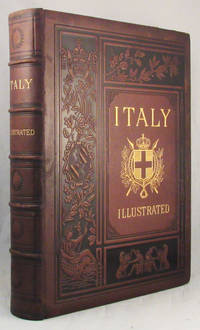
188032519New York: D. Appleton & Company 1880. First edition folio issue in a very fine and especially handsome binding. With over 100 very fine full page engraved plates and 300 engravings within the text many of which are quite large title-page printed in red and black. Folio superbly bound in full dark brown morocco the spine decorated fully in blind the compartments with central ornamental decorations raised bands lettered in gilt in one compartment the upper and lower covers with very elaborate decorations blocked in blind and black incorporating classical motifs coats of arms papal insignia floral devices and border decorations the upper cover with the whole surrounding an inner panel comprising an Italian coat-of-arms and titling in gilt marbled endleaves and all edges gilt. A superb and especially handsome binding. xiii 468 pp. A beautiful copy of a most beautiful book the binding and text block and illustrations all in an excellent state of preservation. FIRST EDITION FOLIO ISSUE OF An extremely attractive Italian travel book with beautiful engravings on almost every page. These combined firsthand narratives by three talented authors enter Italy through Mont Cenis and move on to Trentino Verona Venice Mantua Milan the lakes Genoa Florence Siena and many others before ending at the Island of Etna. The Trollopes brother and sister-in-law of the more famous novelist have through editing and translation created a text that is written in a clear and congenial style with great awareness of literature and the arts as it moves from one historic town to the next. A lovely addition to any Italian collection. D. Appleton & Company hardcover
18502744DBca. 1850. Folio. Roter Maroquineinband mit Rücken- und Deckelvergoldung.
182030105London: Rodwell and Martin 1820. First Edition. With engraved title-page vignette vignette at the finish and sixty wonderfully detailed and delicate plates of splendid Italian views engraved by Charles Heath Edward Finden George Corbould and others. With descriptions written ‘by a friend of the Publisher’s’. 4to in contemporary fine full brown calf the boards richly tooled in a herringbone-like pattern within ornate frame in blind and with a triple-ruled gilt outer framework the spine with elaborate floral gilt tooled compartments separated by wide raised band gilt tooled and with a black morocco gilt lettered and ruled label board edges gilt tooled turn-ins ruled in gilt marble endpapers and page edges. vi 197pp. A very attractive and fine copy of this scarce book. The plates are very clean and fresh with strong bold impressions the text is very fresh too but sometimes with offsetting from the plates as is common the impressive binding with some general wear and age but still sturdy strong and attractive. FIRST EDITION AND A SCARCE AND ESPECIALLY HANDSOME COLLECTION OF ITALIAN VIEWS WITH ENGRAVINGS BY FINDEN HEATH AND OTHERS. The artists worked in pen brush and sepia inks creating originals so perfectly suited to the engravers art that one can only assume this is exactly what Miss Batty had in mind. She records here the journey she made with her father a respected doctor and Fellow of the Linnean Society throughout all of Italy in 1817. This was a 'golden age' for such tours as the defeat of Napoleon had just recently reopened the Continent to British travelers and the welcome given to the British and to their Sterling was especially great.<br> In spite of the undeniable quality of Miss Batty's work this is the only book to feature any of her art and is found only in this one edition. Her work made an impact in the world of porcelain and pottery as Staffordshire potters Enoch Wood & Sons used several of these Italian Views on their blueware. Those popular dishes were exported to America where they helped foster the Romantic ideal of Italian travel that is still so strongly followed by many today. Rodwell and Martin hardcover
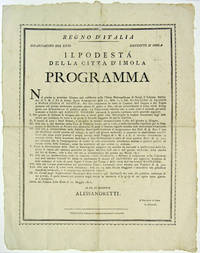
181140247Imola: tipografia comunale per Gianbenedetto Filippini 1811. First edition. A few tiny tears at folds else a fine untrimmed copy. Broadside. 49 x 38 cm. Announcing a series of celebrations of the baptism of Napoléon II 1811-1832 known from birth as the King of Rome son of Napoleon and his second wife Marie Louise of Austria. Issued in Imola the original seat of the provisional government of the Cispandane Republic later merged with the Transpadane Republic forming the Cisalpine Republic in turn merged into the new Italian Republic and then 1805 following Bonaparte's assumption of the title of Emperor of the French transformed into the Kingdom of Italy Regno d'Italia as it is here. After declaring that the people of Imola are second to none in their loyalty to Napoleon the proclamation notes a series of activities: poems to be read canon shots and the pealing of bells at dawn cash prizes to those being married and those who gave birth on the King of Rome's birthday food for the poor and for those imprisoned and at night the town is to be illuminated and there will be presentations at the theater a symphony concert and a ball. One copy at Biblioteca comunale Imola. No other copies shown at any North American or other European Libraries. tipografia comunale per Gianbenedetto Filippini unknown books
181918903Voyage en Italie par le peintre Antoine-Louis Castellan (1772-1838).Edition originale. Paris, chez A. Nepveu, libraire - 1819 - 367 pp, 307 pp, et 365 pp. - 50 planches gravées dont 6 à double page.Reliure plein veau de l'époque. Dos lisse ornés et dorés avec titre et tomaison. Coiffe sup. du T3 accidentée. Dos insolés. Pas de rousseur. Très bon état. Format in-8°(21x13).