PLUTARQUELivre Rare Book

194 résultats
177825140Chez La Veuve Desaint 1778 512 pages Paris. in-12. 1778. Plein veau Dos lisse orné de filets dorés avec pièce de titre. 512 pages. Contenant les vies d'Artaxerce d'Aratus de Galba d'Othon d'Aristippe et d'Annibal / Nouvelle édition revue et corrigée traduite en français avec des remarques historiques et critiques par M. Dacier
177825141Chez La Veuve Desaint 1778 520 pages Paris. in-12. 1778. Plein veau Dos lisse orné de filets dorés avec pièce de titre. 520 pages. Contenant les vies de Caton d'Utique d'Agis et Cléomene de Tibérius & Caïus Gracchus de Démosthene de Cicéron / Nouvelle édition revue et corrigée traduite en français avec des remarques historiques et critiques par M. Dacier
17840313-B1784. Radierung, 1748, auf Bütten mit Wasserzeichen: Lilie im Doppelkreis (Hind 3). 24:35,7 cm. Titelblatt, der ?Antichità romane de?tempi della Republica??. Abdruck der römischen Ausgabe, o.J., 1748. Literatur: Focillon 41; Hind 1; Taschen 81; Wilton-Ely 103. - Sehr kräftiger Abdruck mit vollem Rand, die Ränder leicht gebräunt.
17521105871752. In der Platte signiert "Piranesi F." und mit dem gestochenen Titel "Veduta della gran Curia Innocenziana edificata sulk rovine dell` Anfiteatro di StatilinTatiro, cheformano todierno Monte Citorio". Mit der gestochenen Nr. "723" bzw. "39". Ausgezeichneter, gegensatzreicher Druck auf vollrandigem festen Velin. 40,7 x 62,3 cm (Plattengröße). 58,6 x 85 cm (Papier).
17621105901762. In der Platte signiert "Piranesi F." und mit dem Titel "Sepolcro di Cecilia Metetla". 45 x 64, 5 cm (Plattengröße).
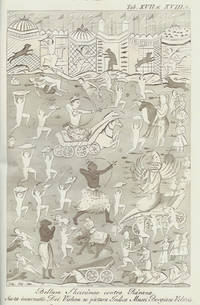
179177<p>4° mm 250x190; pp. XII 326. Al frontespizio vignetta incisa raffigurante Ganesha e <strong>32 tavole fuori testo</strong> di cui una a doppia pagina. Nel testo <strong>caratteri in sanscrito</strong>. Legatura coeva in piena pelle marezzata. Bell'esemplare.</p><p>First edition.</p><p>As the title well explains the Systema Brahmanicum by the Indologist Paulinus of St. Bartholomew - valuable compendium of Brahmanism - is closely based on the collection of <em>Indica reperta</em> from the famous Borgia Museum in Velletri <strong>profusely illustrated by the engravings. The volume therefore can be browsed as a kind of 'exegetical catalog' of the Hindu collection</strong>.<br /><br />The ancient Borgia Museum in Velletri formed between the 17th and 18th centuries by the Roman branch of the Borgia family was greatly enriched and enlarged in the second half of the 18th century by Cardinal Stefano Borgia 1731 – 1804 a man of vast culture who was a scholar of history and ethnology. The Museum famous throughout Europe for the variety and the rarity of the <em>reperta</em> as well as the singularity of the collections included artifacts from all parts of the world and was divided into nine sections one of which dedicated to Hindu manuscripts and relics.</p><p>Paulinus of St. Bartholomew Leithaberge in Lower Austria 1748 - Rome 1806 was an Austrian Carmelite missionary and Orientalist of Croatian origin. <strong>He is credited with being the author of the first Sanskrit grammar to be published in Europe and for being one of the first Orientalists to remark upon the close relationship between Indian and European languages</strong> followed by others such as William Jones and Gaston-Laurent Coeurdoux.<br /><br />Having entered into the seminary of the missions of his order at Rome he did Oriental studies at the College of St Pancratius. He was sent in 1774 as missionary to Malabar India. After spending fourteen years in India he was appointed vicar-general of his order and apostolic visitor. He was very well versed in languages: he spoke German Latin Greek Hebrew Hungarian Italian Portuguese English Malayalam Sanskrit and some other languages of India. He became known in Kerala as Paulinus Paathiri. He was one of the first to detect the similarity between Sanskrit and Indo-European languages though the very first was likely Fr Thomas Stephens SJ.</p><p>Recalled in 1789 to Rome to give an account of the state of the mission in Indostan he was charged with editing books – to correct the Catechisms and elementary books printed at Rome – for the use of missionaries.</p><p>In Rome he came into contact with Cardinal Stefano Borgia 1731 – 1804 Secretary of Propaganda Fide antiquarian scholar and patron who had set up in Velletri his native city the very well-endowed Museo Borgiano. Cardinal Borgia appointed him his private secretary and financed the publication of many volumes of indology including the first European grammar of the Sanskrit language <em>Sidharubam seu Grammatica Samscrdamica</em> published in Rome in 1790.</p> Apud Antonium Fulgonium
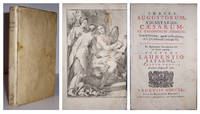
1740000157Venice: Jo. Baptistam Recurti 1740. Hardcover. See Description. Third Edition. 8vo. pp. XXXX 246 14. Including engraved frontispiece and numerous numismatic portraits of Roman emperors with the text. Title printed in red and black. Bound in contemporary full vellum. A couple of very faint library stamps in the bottom and outer title margins. Pages are generally clean with occasional mild spots of soiling. Small area of staining on the frontispiece. Name and date or shelf number printed in an old hand on front paste-down. Patarol's History of Roman Byzantine and Holy Roman Emperors from Julius Caesar to Carolus VI. Text in Latin. Lipsius II p. 307; Cicognara 2961 - lists the first edition of 1702. <br/> <br/> Jo. Baptistam Recurti hardcover
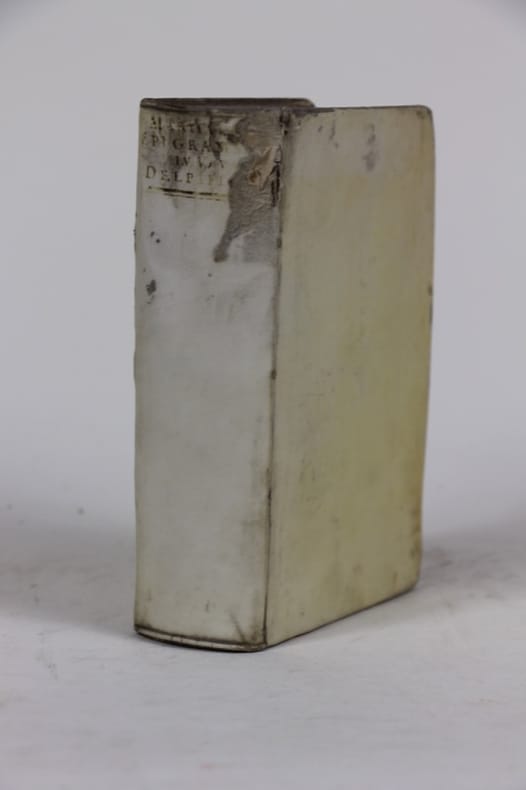
1728PHO-2523Ienae, ex officina Christiani Francisci Buchii, 1728. In-8° (18x11cm), 56pp.-721 pp.-7 ff., vélin à rabat époque, dos lisse avec titre manuscrit, tranches rouges, reliquat d’étiquette au dos, quelques rousseurs.
178525649Vicence [Vicenza], chez François Modena, 1785. Deux parties reliées en un vol. au format gd in-folio (522 x 353 mm) de 1 frontispice gravé n.fol., 35 et 32 pp. + 25 planches gravées. Reliure postérieure de demi-veau havane à coins, dos lisse orné de filets gras dorés, doubles filets maigres dorés, pièce de titre de maroquin havane, titre doré.
172449122chez d’Houry fils 1724 In-16, reliure de l’époque plein veau marbré, dos à nerfs, caissons ornés de motifs floraux dorés, tranches rouges, XXVI + 525 pp. Coiffe de pied légèrement usée, coins de pied légèrement émoussés. Bon exemplaire.
1784627464Berlin, C. F. Voss, 1784. 1 Bl., XXXVI, 464 S., 22 Bl., 42 S. Mit gestochenem Frontispiz, 22 Textkupfern u. 13 gefalteten Kupfertafeln. Leder d. Zeit mit reicher Rücken- u. Deckelvergoldung sowie marmorierten Vorsätzen (gering berieben, Ecken bestoßen, Rücken u. Rückdeckel mit kl. Wurmspuren, Gelenke mit kurzen Einrissen). [2 Warenabbildungen]
1712406935Utrecht, G. Broedelet, 1712. 7 Bl., 378 S., 27 Bl. Mit Frontispiz u. 1 gefalteten Kupfertafel. Leder d. Zeit (berieben, Gelenke gebrochen). [3 Warenabbildungen]
17412149A PARIS. CHEZ JEAN DESAINT, LIBRAIRE. 1741. IN-12 (10 X 17 X 3 CENTIMETRES ENVIRON) DE XVII + (3) + 415 PAGES, RELIURE D'EPOQUE PLEIN VEAU MARBRE, DOS A CINQ NERFS ORNE DE FLEURONS DORES, TITRE DORE SUR ETIQUETTE MAROQUIN ROUGE, TRANCHES ROUGES. EDITION ORIGINALE DE LA TRADUCTION DONNEE PAR L’ABBE DESFONTAINE (PIERRE-FRANCOIS GUYOT. 1685-1745). PETITS DEFAUTS EXTERIEURS, SINON BON EXEMPLAIRE.
17612874A Paris, Chez Jean Desaint, 1761. 1 vol. in-12 de XVII-[2]-415-8 pages. Plein veau marron, dos à nerfs orné, tranches rouges. Coiffes manquantes, mors du 1er plat fendu, dos frotté.
174717781CBBerlin / Potsdam, Johann Adam Rüdigern, 1747. 8°, [15] S. Vorrede, [19] S. Anweisung für die Jugend, [14] S. Landkarten-Index, 488 S., [80] S. Register und eine Faltlandkarte, Rundumrotschnitt, Text: lateinisch und deutsch, Halbleder-Einband mit Lederecken, an den Kanten minimal beschabter Einband, Vorderdeckel- und Rückdeckelinnenseite sowie Seitenschnitt mit handschriftlichen Buchstaben, Anmerkungen und Zeichnungen, einige Seiten mit Anmerkungen etc. am Seitenrand, sonst altersgemäß gutes, sauberes Exempla
17673939Paris:: M. Lambert for Briasson 1767. SOLE EDITION. Three tall octavo volumes:. 19.5 x 12.8 cm. Vol I: xxxvi 571 pages.; Vol II: vj 656 pages; Vol III: vi 290 286 1 pp. Collation: I. a-b8 c2 A-Z8 Aa-Mm8 Nn6 plus 22 plates; II. a3 A-Z8 Aa-Ss8; III. a3 A-S8 T4 a-s8 plus 8 plates Bound in contemporary mottled calf spines gilt with morocco labels light wear small imperfections. Internally all three volumes are in excellent condition. All 30 plates are crisp and in fine impressions. First and sole edition of this comprehensive catalogue of the collection of Pedro Francisco Dávila. The Dávila catalog as it has become known describes 8096 mineral specimens that encompass a large range of localities including a suite of specimens from Potosà in Spanish America as well as many items from Canada Mexico and Paraguay. In addition the catalog lists 5253 shells 600 preserved animals 101 plants 3915 fossils 154 bezoars and calculi and 402 books. Over 12000 prints and engravings 1741 original artworks 441 maps as well as various scientific instruments and precious stones are also described. "Pedro Francisco Dávila possessor of the largest collection of natural history specimens in Paris and wishing to establish an institution in Spain to preserve it approached King Carlos III of Spain. But political difficulties and an approaching war with England distracted the king who declined the purchase. Because of debts incurred building the collection creditors forced Dávila to put the accumulation up for auction in Paris. For this purpose a detailed collection catalog was required. Dávila had already written many descriptions but it was his introduction through Balthasar Sage to the young Romé de l'Isle that created this remarkable record of the collection. "Romé de l'Isle took the existing material added considerably to the mineralogical descriptions and put the catalog into publishable form. In this task he was assisted by Abbé Duguat who helped with the mineralogical descriptions and Abbé Gua de Malves 1712-1786 who described the shells. Through their efforts two volumes describing natural history specimens were produced one of which was entirely devoted to minerals. In addition a third volume written by Romé de l'Isle probably with assistance from Pierre Remy describes the fossils artwork and books. The published catalog provides a detailed insight into his collection his special tastes and preferences. The major value of the collection lay in its superb mineral specimens many of which were finely crystallized examples. Romé de l'Isle fully described the many fine mineralogical specimens which included examples of native silver from Norway cassiterite from the Dutch East Indies crocoite from Siberia pyrite from Columbia and calcite from Saxony etc. Dávila had been a collector for over 20 years when his accumulation was auctioned. In that time he or his agents had acquired specimens at other auctions including those that liquidated the collections of Albertus Seba in 1752 the Abbé Joly de Fleury in 1755 Claude Geoffroy in 1753 and others. Dávila's catalog received wide distribution in Paris London Amsterdam Rotterdam and Basle. This helped push the total realized by Dávila to over 800000 Spanish reales more than enough to pay of his creditors and to finance a second collection which he immediately began to build. Within two or three years he had again amassed a sizable collection specializing in minerals and selected with more knowledge and experience than his first collection had been. Once again he dreamed of establishing the cabinet in Madrid. In October 1771 this became reality when King Carlos III agreed to take over his collections with Dávila serving as director for life. This enormous collection eventually passed into the National Museum of Natural Sciences in Madrid where Dávila's specimens are still preserved today."The Mineralogical Record Conlon 67:1238; Nissen ZBI 1050; Sinkankas 1594; Wilson History of Mineral Collecting 1994: 136-40 166 & 209 provides a detailed history of the collections M. Lambert for Briasson, unknown books
173960402Mediolani [Milan],Typographia Soc. Palatinae 1739 In-folio 40 x 24 cm. Reliure plein vélin vélin crème, dos à nerfs, frontispice de Francisco Zugni, gravée par Andrea Zucchi. titre gravé, 3 ff.-1332 colonnes 4 colonnes par page, [333] pp. Vignettes par Antonio Grecolini, gravé par Jérôme Rossi. Petits accrocs en coupe et en coiffe de pied, sinon très frais.
17532595A MONTAUBAN. CHEZ JEROSME LEGIER, IMPRIMEUR DU ROY. A PARIS, CHEZ ROLLIN, LIBRAIRE. 1753. IN-12 (10 X 17 X 1,8 CENTIMETRES ENVIRON) DE (2) + XI + (1) + 165 ET (6) PAGES, RELIURE D'EPOQUE PLEIN VEAU, DOS A CINQ NERFS ORNE DE CAISSONS A FLEURONS DORES, TITRE DORE SUR ETIQUETTE MAROQUIN HAVANE, DOUBLE FILET DORE ENCADRANT LES PLATS, ROULETTE DOREE SUR COUPES, TRANCHES ROUGES. (BRUNET. 8927). L'EDITION ORIGINALE ANGLAISE EST PARUE EN 1747. EDITION ORIGINALE DE LA TRADUCTION FRANCAISE PAR ANNE-MARIE D'AIGNAN, MARQUIS D'ORBESSAN (1716-1796). EDITION MONTALBANAISE PEU COURANTE. QUELQUES DEFAUTS EXTERIEURS, SINON BON EXEMPLAIRE.
17193350032La Haye, Troyel bzw. Amsterdam, Changuion, 1719/53. Mit zahlreichen Kupfern (überwiegend Karten) auf gefaltetenTafeln sowie Kupferfrontispizen. Ganzleder der Zeit mit reicher Rückenvergoldung (Exlibris).
17481167<p>Lugdunum Batavorum: Samuelem Luchtmans1748. Illustrated with folding map. Thick 8vo full calf upper cover detached blindstamp and ink notation to titlepage part 2 titlepage misbound some staining along foredges otherwise very good. BMC Vol 17 p. 172; For a similar map see the Samourka Map Collection #A9109 cartouche is different. Mela was an early Roman geographer originally from Spain. He theorized that the world was divided into five parts of which only two were habitable. The map is particularly odd showing an oversized Indian subcontinent and a much widened Africa. Below Africa is a very large land mass. Mela's De Situ Orbis was originally published in 1471 and saw many subsequent editions published.</p>
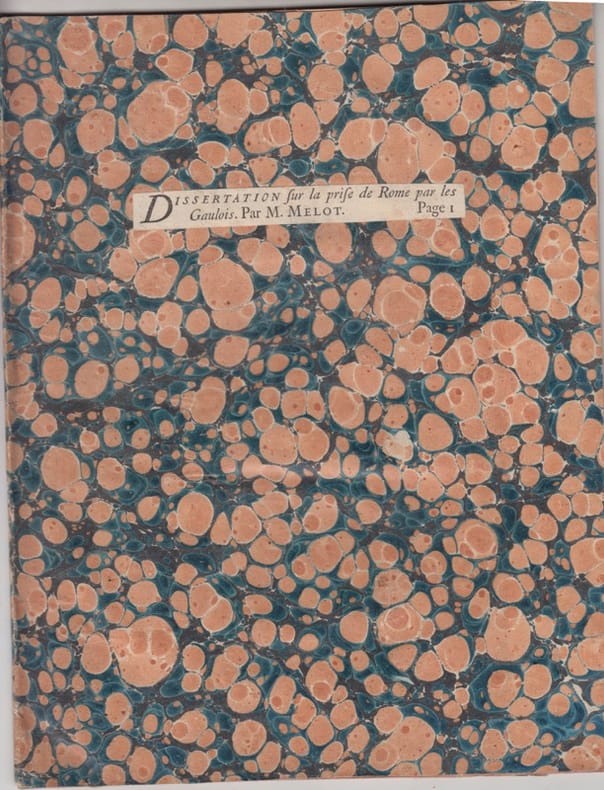
1743163081743 Paris, de l'Imprimerie Royale, MDCCXLIII,Memoires de Littérature tirez des Registres de l'Academie Royale des Inscriptions et Belles Lettres, depuis l'année MDCCXXXVIII jusques & compris l'année MDCCXLTome quinziéme,IN4 broche,21 p.couverture muette marbrée titrée,
170196885Amstelaedami, Amsterdam (Amstelaedami), Apud G. Gallet, 1701 Fort in-12, plein vélin crème de l’époque, [30]- 600- 56- 142 pp., 22 planches contenant 128 figures. Notes bibliographiques manuscrites à l’époque sur le premier ff. de garde. Usures et petit accroc au dos en tête.
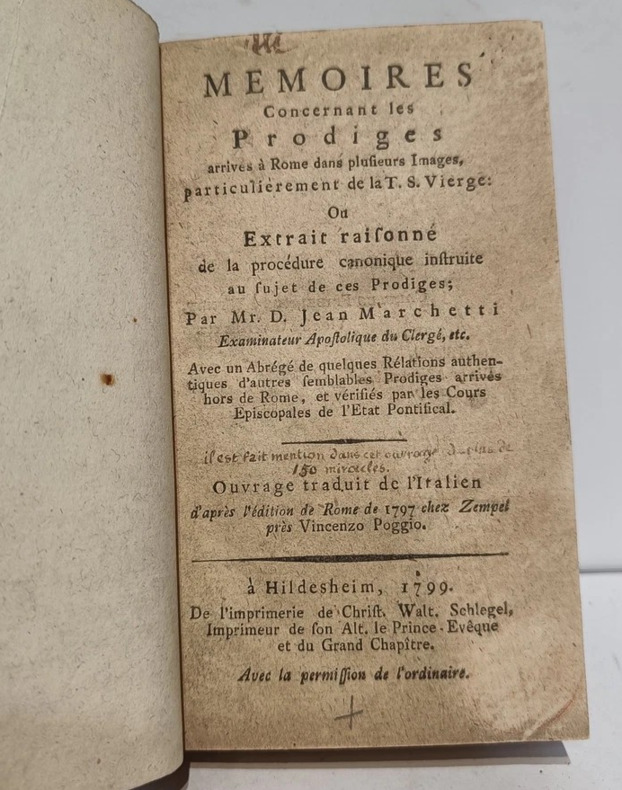
1799R41Hildesheim, De l’imprimerie de Christ. Walt. Schlegel, 1799. In-12 (10,5 x 17 cm), demi-chagrin brun, dos à nerfs, initiales T.T. en bas du dos (reliure du 19e siècle). 16 + LXXX + 264 pages. Des rousseurs, complet, bon état général. Une page manuscrite reliée avec, sur le miracle de Notre-Dame de Guadalupe (p. 144).
1790(LCPCVOY-0011)(Le Grand Tour en Italie au XVIII siècle, dans un petit guide pour visiter le site archéologique romain de Tivoli, la Villa de l'empereur Adrien et celle du poète Horace) MANAZZALE Andrea. "VIAGGIO DA ROMA A TIVOLI. CONCERNENTE LE NOTIZIE PIU' ESATTE DE' MONUMENTI ILLUSTRI DI QUELLA CITTA' CON L'AGGIUNTA DELLA VILLA ADRIANA, E DELLA VILLA D'ORAZIO FLACCO IN SABINA TIBURTINA, RAGGUAGLIATE, E DISPOSTE DA ANDREA MANAZZALE". 1790, Roma, A. Fulgoni. 1 volume petit in-8° (188x128 mm) (dimensions pages 186x125 mm) 48 pp. (A-C8) Couverture rose moitié XIX siècle. Edition Originale, très rare. Petit manque de papier à l'angle inférieur du premier plat, infimes déchirures marginales à la couverture, quelques rousseurs éparses, mais bel exemplaire. Très rare guide pour la visite des antiquités de Tivoli "e fuoi contorni con la più efatta defcrizione della Villa Adriana, e della Villa di Orazio Flacco in Sabina Tiburtina". Ce petit guide était proposé aux étrangers et aux amants de beaux arts qui visitaient l'Italie, qui avaient établi une étape à Tivoli dans leur Grand Tour et qui étaient "... anfiosi di ammirar fu due piedi quelli monumenti sì celebri teftimonj irrefragabili della Romana grandezza...". L'auteur précise que "animato da quefto folo motivo... mi fono portato per replicate volte fu la faccia del luogo, ed ivi medefimo avendo indagato ogni faffo ho defcritto tutti i monumenti più intereffanti efiftenti nella Villa Adriana per chiarezza de' Foreftieri, ed Amatori delle Belle Arti". Seulement cinq exemplaires dans les collections publiques italiennes. (Cicogna, 3770 ; Lozzi, II, 5355 (pour la seconde édition de 1817). (LCPCVOY-0011) (350,00 €) (Tous les livres provenant d'Italie possèdent la licence d'exportation (Attestato di Libera Circolazione) du Ministero dei Beni e Attività Culturali)
175661684Jean-Thomas Herissant 1756 In-16 11,5 x 17 cm. Reliure de l’époque pleine basane brune marbrée, dos à 5 nerfs, roulettes dorés, caissons ornés de fers dorés, 558 pp. Coiffes et coins émoussées, intérieur en bon état.






_1.jpg)