102 résultats
1973137578Vienna: Lisa-Film 1973. Collection of 12 vintage oversize double weight reference photographs for the 1973 German film based on the controversial 1897 play "Reigen" "La Ronde" by Arthur Schnitzler Adapted three time previously; by Max Ophuls in 1950 and Roger Vadim in 1964 both as "La Ronde" and by Richard Lerner and Paul Glickler in 1971 as "Hot Circuit" as well as several time subsequently. <br/><br/>Schnitzler's play which satirizes the sexual and class morals of its era was not produced on stage until 1920 although published versions in various languages were available as early as 1900. With its frank sexual nature and depictions of relationships that crossed class and cultural lines the play was immediately condemned as pornography and withdrawn from the German stage although it remained popular elsewhere. <br/><br/>The play consists of a series of vignettes each featuring a pair of lovers with each character appearing in two consecutive scenes with one character in the first scene appearing in the last. <br/><br/>The photographs in this collection are from four scenes each featuring either Sydne Rome or Maria Schneider as follows:<br/><br/>One photograph of Hans Bremmer and Rome as "The Soldier and the Parlor Maid."<br/><br/>Four photographs of Rome and Helmut Berger as "The Parlor Maid and the Young Gentleman."<br/><br/>Five photographs of Peter Weck and Schneider as "The Husband and the Little Miss."<br/><br/>Two photographs of Schneider and Michael Heltau as "The Little Miss and the Poet." <br/><br/>9.5 x 12.25 inches. Near Fine. Lisa-Film unknown books
165728752Lugd. Batav: Apud I. Elzevirium 1657. 2nd Elzevir edition Willems 803. Period full vellum with faint hand-inked titling to top of spine. Yapp edges. Spine a bit darkened with some discoloration along top edge. Smudge at base of t.p. Withal a VG copy. 8 336 16 pp. Index at rear. Engraved t.p. Head- tailpieces. Decorative initial capital letters. 24mo: 4 A - O12 P8. 5-1/2" x 3" <br/><br/> Apud I. Elzevirium hardcover books
1970137567N.p.: N.p. 1970. Collection of five vintage oversized double weight press photographs of actress Sydne Rome circa 1970s. Three of the four photographs with the label of the Paul Kohner agency affixed over the stamp of Italian agency I.M. on the verso. One photograph with a label of William Morris agency and stamp crediting photographer and at the time her husband Emlio Lari on the verso. <br/><br/>American born actress Sydne Rome achieved success in Italian and French films often typed the innocent or naive American abroad in films such as Roman Polanski's "What" 1972. <br/><br/>9.25 x 11.75 inches. Near Fine. N.p. unknown books
182561801Edinburgh: Bell & Bradfute 1825. New Edition Revised and Corrected. 4 folding maps. 5 vols. 8vo. Early half calf and boards edges a bit rubbed foot of vol. I chipped. Very good copy. New Edition Revised and Corrected. 4 folding maps. 5 vols. 8vo. Feguson's History of the Reublic was so well received in his own lifetime as to become regarded as the standard account in English. Bell & Bradfute unknown books
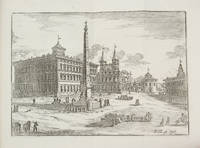
41776Early Nineteenth Century. 10 x 16 inches Image Size. Framed and glazed. 10 x 16 inches Image Size. unknown books
17018486Trajecti ad Rhenum: Apud Guilielmum vande Water Academiæ 1701. Editio postrema ab innumerabilibus erroribus repurgata. Contemporary vellum professionally repaired front joint with embossed amorial design castle on front & rear board. VG bit of splay to boards/lacking ties/contemporary presentation inscription on blank front fly/early po annotations on Ll1 - Ll3 Tt4 - Vv1. 16 1 - 792 2 815 - 956 32 pp. Index last 16 leaves. Engraved title. Illustrated with 7 inserted copperplate engravings after M1 R2 Bb4 Ff4 Kk1 Xx3 folding Zz2 folding. Tailpieces on Gg1b Yyy4b Nnnn4b Vvvv3a Ppppp4b Vvvvv1b Aaaaaa1a & Ccccc4b. 4to: - A - 5F Ggggg & Hhhhh Iiiii - Gggggg Gggggg4 a blank. <br/><br/> Apud Guilielmum vande Water, Academiæ hardcover books
1978146365N.p.: N.p. 1978. Draft script for the 1978 film. Included with the script is a small note from producer Sidney Beckerman to casting agent Paul Kohner introducing the script as one they had discussed previously.<br/><br/>After the end of World War I a young Prussian officer returns home to Berlin and begins working as a male prostitute in a brothel. Due to actor Marlene Dietrich's refusal to leave her home in Paris the scenes in which she appears were shot in France while the rest of the production took place in Berlin.<br/><br/>Set in Berlin shot on location in West Germany and France. <br/><br/>Self wrappers. Title page integral with first page of text. 162 leaves with last page of text numbered 161. Xerographic duplication rectos only. Pages Very Good Plus wrapper Very Good with silver prong binding. N.p. unknown books
34413ARDENE Jean Paul. TRAITE DE LA CULTURE DES RENONCULES. Paris: Saugrain 1754. 12mo. Contemporary cat's paw calf. xxxviii 447 4 pages. First edition. A valuable work on the cultivation violets tulips and similar plants. Arde was a French Jesuit. He describes the specific characteristics of the plants their cultivation places of growth and time of flowering. Very good in an ornately gilt handsome French binding. unknown books
34351ARDENE Jean Paul de Rome d'. TRAITE DES TULIPES. Avignon: Louis Chambeau 1760. 12mo. Nineteenth-century cloth spine marbled boards. 252 4 pages 2 folding plates. First edition. Written by this noted French priest and botanist this is only the second boo devoted entirely to the tulip. The first also by Ardene was published in 1754. The text offers a detailed history of the flower instructions on its care and cultivation and a glossary of technical terms. Rare. Only four copies cited by OCLC as being in American libraries. Folding plates by P. Duflos. Very good. unknown books
34353ARDENE Jean Paul de Rome d'. TRAITE DES RENONCULES. Paris: Lottin 1746. 8vo. Contemporary mottled calf. Frontispiece ix 279 3 pages 6 plates. First edition. Oak Spring Flora 76 Hunt 526. The first edition of this detailed study of the Ranunculus flower also known Crowfoot or Buttercup. The work describes the plant's history and medicinal use. The alegorical frontispiece and six plates four of which are folding by Benoit Audran and Nicholas Le Sueur. Small library stamp on title page a marginal stain to the tips on some pages light cover wear. unknown books
57312Second half of the 18th C. 12-1/2/ x 17 inches. Bordered in green paper. Edges rubbed with small tears not affecting image light browning to upper half else very good. 12-1/2/ x 17 inches. unknown books
188042095Roma: A. Olivieri Fotografo 49-50 Piazza di Spagna via Frattina 151 e 152 1880. 60 photographs of Rome and photos of painting tipped-in on thick cards 165 x 105 mm. 1 vols. Oblong 8vo 255 x 185 mm. Bound in full white vellum with rectangular gilt stamped red morocco onlays on upper and lower covers. "Roma" stamped in upper central panel gilt-stamped spine with "Olivieri leg." on bottom panel. Bookplate of Jacob Sloat Fassett. Fine. 60 photographs of Rome and photos of painting tipped-in on thick cards 165 x 105 mm. 1 vols. Oblong 8vo 255 x 185 mm. A. Olivieri, Fotografo, 49-50 Piazza di Spagna, via Frattina 151 e 152 unknown books
46461730 pp. report on prisons and prison labor in early 20th century Italy organized by type of intuition youth reformatory house of corrections agricultural penal colony and region illustrated throughout with reproductions of photographs showing prison buildings inmates working conditions and the produce of prison labor. Light foxing and page browning throughout. 4to. Recent-cloth backed boards. Rome Tipografia delle Mantellate 1923. A work that provides much rich documentation of prison conditions and inmate labor in early 20th century Italy. Extremely scarce in institutional collections. As of June 2015 WorldCat locates only one copy in North America. hardcover books
2004132996Los Angeles: Pandemonium Theatre Company 2004. An archive of 10 original posters for productions staged by Ray Bradbury's Pandemonium Theatre Company from 1988 to 2004. The plays were performed in Southern California predominantly at The Court Theatre Falcon Theatre Theatre West The Raven Playhouse and Melrose Theatre. <br/><br/>The archive includes posters from 10 productions including "Fahrenheit 451" "The October Country" "Past Present & Future" "The Time of Going Away" and "Drunk and In Charge of a Bicycle." and his Irish play "Falling Upward!" "Falling Upward!" was one of Bradbury's favorite plays and especially as he advanced in age he was know to encourage its frequent production simply for the joy of being able to see it again. <br/><br/>Bradbury was an avid playwright and a familiar and enthusiastic presence in the Southern California theatre circuit near his home. In 1963 he and director Charles Rome Smith founded Pandemonium Theatre Company. The two friends would go on to work with the company together for the next four decades until Rome's death in 2004. This archive is a solid representation of the company's latter half before Smith's passing and Bradbury's hearing loss which would necessitate that he stop attending performances. <br/><br/>Posters approximately 11 x 17 inches. About Fine condition. Pandemonium Theatre Company unknown books
7537Full-Leather. Oblong 14" x 10" album containing 63 black and white photographs and 37 hand-colored photos for a total of 100 photos mounted on heavy card stock depicting people and historic structures in Rome Italy. Photos are c. 1900 and measure 9 5/8" x 7 3/4". Binding is contemporary full vellum decorated in gilt and red; floral end papers. Stamp of Holy Cross Abby Canon City Colorado on end papers. Photos are of excellent quality; binding is very good. <br/><br/> hardcover books
1766565Paris: Lacombe 1766. Soft cover. Good. 8vo - over 7¾ - 9¾" tall. 8vo. 19 x 10 cm 58 pp. including title-page first leaf blank. Bound in red marbled wrappers. Title toned and a bit soiled with two small ink-spots not affecting text toning in the margins of some leaves; nevertheless generally good with some leaves uncut and with original deckle edges. Very rare first and sole edition of the first treatise published by the pioneering French mineralogist Jean-Baptiste Romé de L'Isle 1736-1780 and his sole work on marine biology concerning the "movement generation and nature" of the freshwater polyp. In the present work Romé hypothesizes drawing on observations by the naturalist "M. Bazin" that polyps are a kind of living hive built of thousands of tiny separate units 'petits grains' that nonetheless work harmoniously to feed move and regenerate the entire body. Though Romé's hypothesis is not entirely off the mark-polyps may reproduce asexually by budding for instance-it was eventually disproven by the observations of the naturalist Justin Girod-Chantrans 1750-1841.OCLC: No American copies. Lacombe paperback books
1627266707Leiden: Jacob Marcus 1627. hardcover. 2 parts in one with continuous pagination. 282 pages. 32mo bound in contemporary vellum. Lugduni Batavorum: Ex officina Iacobi Marci 1627. Editio sexta. A very good clean copy.<br/><br/> The Julian has separate half-title "D. Iuliani Imperatoris Cæsares sive Satyra in Romanos Imperatores. Interprete Petro Cunæo. In limine est eiusdem Præfatio in Iulianum."<br/><br/> Jacob Marcus unknown books
171311573Leide: Pierre Vander 1713. First edition. Full Leather. Good . Three separate volumes labed 1-3 in somewhat worn leather bindings. Text in French. Each volume contains numerous illustrations including fold-out illustrations at the beginning of each volume. 6 1/4 x 4" wide. Still well bound. Magnificent architectural structures of ancient Europe. <br/><br/> Pierre Vander hardcover books
188635403Rome 1886. Images neatly captioned on the mount by the traveler who assembled them often with pertinent remarks and historical observations and with lengthy quotation from Rogers's "Italy" to open the album. 1 vols. Most of the photographs measure approximately 10 x 8 inches. Each photo is mounted to the recto of a leaf of the album bound in green pebble cloth of the period lettered in gilt on the upper cover "Roma." Label of Garroni Piazzi Trevi on the pastedown. Images neatly captioned on the mount by the traveler who assembled them often with pertinent remarks and historical observations and with lengthy quotation from Rogers's "Italy" to open the album. 1 vols. Most of the photographs measure approximately 10 x 8 inches. Fine Photo Album of Rome. Wonderful assemblage of period photos of the Eternal City assembled by a tourist in 1886 comprising portraits views of the city and surrounding landscapes architecture works of art antiquities street scenes etc. Signed on the flyleaf by the original owner-compiler and dated "Margaret Willing Chisholm. Rome January 9th/86 unknown books
6021This item is currently on reserve; please contact dealer for more details. <p>Etching 285mm x 390mm. Trimmed to neatline with insignificant restoration to the upper right corner. Generally very good.<br /><br /></p><p>Very rare no US copy fascinating illustrated broadside sold in Rome during the pandemic of 1656-57 presenting through a series of "snapshots" of the city at this dramatic moment in time a rich and varied iconography of its response to the plague. Printed by Giacomo Molinari and sold in the Strada Nuova behind the church of the Giesu close to Piazza Navona the print is composed of 15 vignettes of different sizes and perspectives along with 20 short explanatory captions alphabetized from A to X at the base of the print keyed to guide the reader to a fuller grasp of the situation. Taken together these scenes were meant to capture the city through the measures taken to contain the spread of the disease cure the afflicted and dispose of the dead.</p><p>Eight are views of civic religious and private resources- some bird's eye encompassing a panorama others close up of specific recognizable buildings- depicting basilicas churches a convent a prison and private residences to give the viewer the scope of the city's repurposed infrastructure. Medieval and modern structures were converted into lazarettos used as temporary quarantine and purgation centers for the afflicted according to the seriousness of their contamination. Two of the views depict the<i> lazaretto brutto </i>leper colony dedicated to the worst cases: the Isola Tiberina and the Convent and Hospital of Santa Maria della Consolazione run by the brothers Hospitallers of Saint John. The Isola Tiberina one of the poorest areas of Rome and close to the Trastevere district with its Jewish ghetto has gates and fences at its perimeter capturing the isolation of the seriously contaminated within its bounds. A depiction of a special boat to ferry the dead Jews and the domestic animals which were tossed live in the Tiber add dramatic macabre details. Three other views are of the <i>lazaretto netto </i>the churches of San Pancras San Eusebio and the private residence of Pius V dedicated to patients with milder cases. In addition there is a representation of a <i>lazzaretto netto e pulito</i> located at the new jail recently built by Pope Innocent X which was used as a <i>stufa</i> something between a Roman bath and a modern sauna where those who were in quarantine in San Pancrazio and San Eusebio were washed and sterilized. The Villa Sandesio is dedicated to the burning of the contaminated clothing. The Basilica of San Paolo le Mure which in fact was the last stop for the afflicted where the deceased received their last sacraments and buried in the mass graves close by is prominently illustrated in the upper left corner.</p><p>Beneath the views 7 smaller vignettes vividly render social scenes during the pandemic: the images include ecclesiastical dignitaries confessors doctors surgeons all actively moving around the city to alleviate the physical and psychological burden of the sick. Guards omnipresent in the images were responsible for transporting the infected by carriage or by foot to their assigned destinations as well as disposing of the dead and of the contaminated clothing and furniture -- often tossing them in a bonfire in the street as shown by the image in the lower right of the print. Such images recorded and served to emphasize the severe laws of "social distancing" between the sick and the healthy then in place. Additionally along the bottom of the print are 20 short explanatory captions alphabetized from A to X and keyed to the views and vignettes to guide the reader to a better understanding of the situation.</p><p>"The management of the Rome plague of 1656-57 was a great success. Its mastermind was the cleric Girolamo Gastaldi who at the start of the outbreak was serving both as the Commissario Generale dei Lazzaretti the Chief Administrator of the epidemic hospitals and the Commissario generale di Sanità per lo Stato della Chiesa… Only 4500 died in Rome about 8% of the population compared to the 150000 who died in Naples and 50000 in Genoa representing over half of their respective populations."—See Michael Widener's comments on Gastaldi's <i>Tractatus</i>… Bologna 1684: https://library.law.yale.edu/news/epidemics-and-quarantines-17th-century-rome. "The well-thought-out measures devised by Cardinal Gastaldi for the control of the plague of 1656 in the Eternal City represent the most logical development of eradicative anti-contagionist practice before the twentieth century and could still serve as a model for action against any truly contagious disease" Hirst pp. 408-9 .</p><p>The print was engraved by Giovan Battista Gallestruzzi 1615-1669 a painter and engraver member of the Accademia di San Luca in Rome. For more on this artist see https://www.treccani.it/enciclopedia/giovanni-battista-galestruzzi_Dizionario-Biografico/ It is very rare: Both OCLC and ICCU list only one copy at the Biblioteca Nazionale Centrale in Rome under Gallestruzzi. Rose Marie San Juan in her book<i> Rome a city out of print </i>p. 233-34 attributes the print also illustrated in her book to Johann Friedrich Greuter active in Rome at that time. Nevertheless the monogram of Gallestruzzi illustrated in his Benezit entry vol. IV p. 588 is identical to the one on the print and all indications lead us to believe that the designer of the print is Gallestruzzi.</p>L. F. Hirst The conquest of the Plague pp.408-09: Rose Marie San Juan Rome a city out of Print p.233-34: Benezit vol. IV: p.588: Laura Volpe for the DSB vol. 51. Rome, Giacomo Molinari, n. d. books
17653598Rome:: A spese di Niccola Roisecco 1765. THIRD ROISECCO EDITION. The second 3-volume edition 1st 1750. Octavo: 3 vols. 17 x 12 cm. I. a8 A-Z8 Aa-Ss8 Tt-Xx4 Xx4 blank and present. With an engraved frontis. a1 and 19 added plates. II. π1 A-Z8 Aa-Rr8 Ss-Tt4 Vv6. With 20 added plates. III. π1 A-Z8 Aa-Mm8 Nn4 Oo8 With Oo8 blank and present. Bound in three uniform bindings of contemporary patterned paste-paper over cartoncino boards. wear to extremities and spines. Internally this is as close to an immaculate set as I have seen with some deckled edges preserved. The text is bright and clean throughout. The folding engravings are crisp.The three volumes are illustrated with an engraved frontispiece in Vol. I numerous engraved illustrations in the text a folding table and 39 folding engraved illustrations of architectural monuments and sculpture. This set is complete with all engravings called for by Rossetti. Sets such as this with all three volumes complete and with all plates bound in their original bindings are rare on the market. Excellent. A beautiful three-volume set describing and illustrating the ancient medieval Renaissance and Baroque monuments and buildings of Rome. This publication marks the culmination of a long series of developments in illustrated guides to Rome. Beginning with the guidebooks produced by Girolamo Franzini and his heirs in the late 16th-century pilgrims and tourists to the once-again-thriving Eternal City could purchase increasingly more accurate guidebooks to the ancient and modern marvels of Rome. In the late-17th century building on the work of Pompilio Totti Michelangelo and Piervicenzo de Rossi published their "Descrizione di Roma". In subsequent editions the "Descrizione" grew to include the redacted works of various learned authorities. The present three-volume production the third to be published by Gregorio Roisecco is based on the final De Rossi edition of 1727 but has been again expanded to include a third volume. The work comprises two and a half centuries of scholarship. Some of the significant authorities whose works were consulted quoted and extracted for this comprehensive guide include: Bartolomeo Marliani d. 1560 Onofrio Panvinio 1529-1568 Alessandro Donati 1584-1640; Famiano Nardini d. 1661; Cesare Baronio 1538-1607; Alfonso Chacón 1540-1599 Antonio Bosio 1575-1629 and Ottavio Panciroli 16th c. Rossetti 8883; Schudt 208 A spese di Niccola Roisecco, books
4877Engraved allegorical frontis. by Augustin Saint-Aubin. xxxii 299 5 pp. 8vo orig. wrappers uncut. Paris: Didot & Knapen 1773. First edition and a lovely copy in original state of an uncommon book; this is one of Romé's first publications. It is a description "of the metallic ores of his own mineral cabinet in which he discussed the origin metamorphosis and paragenesis of each."-D.S.B. XI p. 521. Earlier he had catalogued the mineralogical curiosities in the cabinet of Pedro Francisco Davila and for several years found steady employment by preparing at least fourteen other mineralogical catalogues. In all the descriptions in the present work Romé stresses the importance of crystalline form and that this form is the chief characteristic by which minerals may be classified. Romé 1736-90 by formulating the law of constancy of interfacial angles established crystallography as the basis of mineralogy. The attractive frontispiece drawn by Saint-Aubin depicts two putti one examining ores under a microscope and the other stoking a furnace. Preserved in a box. ❧ Yves Laissus "Les Cabinets d'Histoire Naturelle" in René Taton ed. Enseignement et diffusion des sciences en France au dix-huitième siècle p. 669-"un véritable manuel de minéralogie." Schuh Mineralogy & Crystallography: A Biobibliography 1469 to 1920 4154-"Very scarce. In this collection catalog the famous French crystallographer fully describes about 750 metallic minerals from his own cabinet. Included are specimens consisting of pure metals as well as natural alloys and combinations with sulfur. Basic division is based upon the principle metals and semi-metals contained in the described specimens and include gold silver copper iron tin lead mercury antimony zinc bismuth cobalt arsenic and sulfur. Under each of these headings the specimens are divided based upon their form and chemical composition. For each item described notes on the origin associated minerals locality size and the estimated weight of contained precious metals is presented. The catalog is well referenced and if a particular specimen was given to Romé the supplier's name is included in the description.". unknown books
17503631Rome:: Gregorio Roisecco mercante di libri in Piazza Navona nella stamperia Puccinelli 1750. THE FIRST EDITION IN THREE VOLUMES. The first Roisecco edition in 2 volumes appeared in 1739. Octavo: 3 volumes:. 16.5 x 11 cm. I. 2 xvi 654 pp. Collation: Ï€2 a8 A-Z8 Aa-Ss8 lacking Ss8 blank and with an added leaf Ii after leaf Ii1. Ï€1 is the engraved t.p. With 19 folding plates of which two are folding maps of ancient and modern Rome. 68 engravings in the text. Vol. II. 2 694 pp. Ï€2 A-Z8 Aa-Rr8 Ss-Tt4 Vv6 Ï€1 is the engraved t.p. With 12 added plates. 82 engravings in the text. Vol. III. 4 523 5 pp. A-Z8 Aa-Kk8 Ï€2 is the engraved t.p. With 1 added plate and a folding letterpress table. 8 engravings in the text. Includes the four-page advertisement for other books sold by Roisecco. I. 2 xvi 654 pp. Collation: Ï€2 a8 A-Z8 Aa-Ss8 lacking Ss8 blank and with an added leaf Ii after leaf Ii1. Ï€1 is the engraved t.p. With 19 folding plates of which two are folding maps of ancient and modern Rome. 68 engravings in the text. Vol. II. 2 694 pp. Ï€2 A-Z8 Aa-Rr8 Ss-Tt4 Vv8 Xx4 Xx4 is blank. Ï€1 is the engraved t.p. With 12 added plates. 82 engravings in the text. Vol. III. 4 523 5 pp. Ï€2 1 A-Z8 Aa-Kk8 Ï€1 is the engraved t.p. 1 is the privilege With 1 added plate and a folding letterpress table. 8 engravings in the text. Includes the four-page advertisement for other books sold by Roisecco. In addition to the 3 engraved title pages the 2 folding engraved maps and the 29 folding engraved plates the three volumes are illustrated with 158 engravings in the text. Vol. I with 82 Vol. II with 68 Vol. III with 8. Bound in matching contemporary vellum bindings silk endbands titles in ink on the spines edges of text block speckled red. Fine copies throughout with some mended tears and minor faults as follows: V. 1: Short wormtrail in gutter of a few signatures at end. V. 2: Short wormtrail in gutter of a few leaves at the beginning and a few signatures at end occasionally touching a letter. V. 3 one leaf browned. A few leaves toned. A beautiful three-volume set describing and illustrating the ancient medieval Renaissance and Baroque monuments and buildings of Rome. This publication marks the culmination of a long series of developments in illustrated guides to Rome. Beginning with the guidebooks produced by Girolamo Franzini and his heirs in the late 16th-century pilgrims and tourists to the once-again-thriving Eternal City could purchase increasingly more accurate guidebooks to the ancient and modern marvels of Rome. In the late-17th century building on the work of Pompilio Totti Michelangelo and Piervicenzo de Rossi published their “Descrizione di Romaâ€. In subsequent editions the “Descrizione†grew to include the redacted works of various learned authorities. The present three-volume production the third to be published by Gregorio Roisecco is based on the final De Rossi edition of 1727 but has been further expanded to include a third volume. The work comprises two and a half centuries of scholarship. Some of the significant authorities whose works were consulted quoted and extracted for this comprehensive guide include: Bartolomeo Marliani d. 1560 Onofrio Panvinio 1529-1568 Alessandro Donati 1584-1640; Famiano Nardini d. 1661; Cesare Baronio 1538-1607; Alfonso Chacón 1540-1599 Antonio Bosio 1575-1629 and Ottavio Panciroli 16th c. Fossati Bellani 704; Olschki Choix 17963; Schudt 207 Gregorio Roisecco mercante di libri in Piazza Navona nella stamperia Puccinelli, unknown books
176739389Paris: Briasson 1767. 8vo 3 vols. 7 11/16 x 4 5/8 inches. 36 571; 6 656; 6 290 286 1 pp. 30 engraved plates some folding. Contemporary half calf and marbled boards spines in six compartments with raised bands ruled and lettered in gilt with armorial crests in two compartments red edges.<br/> <br/>First and only edition of this comprehensive catalog of the Parisian curiosity collection of Pedro Dávila.<br/> <br/>Pedro Franco Dávila was born in Guayaquil in present-day Peru and studied natural sciences in Lima before moving to Paris in 1740. He took an interest in collecting around that time and over the course of 20 years he amassed the largest collection of natural history specimens in all of Paris. He sought to preserve it by establishing an institution in Spain but after King Carlos III rejected his request Dávila was forced to put the collection up for auction to settle the debts he incurred in building it. The Dávila catalogue as it became known was prepared as a sale catalogue when he sold the collection off in Paris prior to returning to his native Peru. Considering the size of the collection the sale became one of the major auction events of that time period and the catalogue was distributed widely in Paris London Amsterdam Rotterdam and Basel. The catalogue describes 8096 mineral specimens from a broad range of places including Canada Mexico and Paraguay. It further describes over 12000 prints and engravings 1741 original artworks 441 maps plus various scientific instruments and precious stones. It also lists 5253 shells 600 preserved animals 101 plants 3915 fossils 154 bezoars and calculi and 402 books. "Dávila had already written many descriptions but it was his introduction through Balthasar Sage to the young Romé de l'Isle that created this remarkable record of the collection. Romé de l'Isle took the existing material added considerably to the mineralogical descriptions and put the catalog into publishable form. In this task he was assisted by Abbé Duguat who helped with the mineralogical descriptions and Abbé Gua de Malves 1712-1786 who described the shells. Through their efforts two volumes describing natural history specimens were produced one of which was entirely devoted to minerals. In addition a third volume written by Romé de l'Isle probably with assistance from Pierre Remy describes the fossils artwork and books. "The published catalog provides a detailed insight into his collection his special tastes and preferences. The major value of the collection lay in its superb mineral specimens many of which were finely crystallized examples. Romé de l'Isle fully described the many fine mineralogical specimens which included examples of native silver from Norway cassiterite from the Dutch East Indies crocoite from Siberia pyrite from Columbia and calcite from Saxony etc." The Mineralogical Record. Dávila was able to make more than enough to pay off his creditors and subsequently began to amass a second collection. Within three years in October 1771 King Carlos III agreed to accept this second collection and Dávila became the founder and first director of the Royal Cabinet of Natural History of Madrid now known as the National Museum of Natural Sciences where his specimens are still located today.<br/> <br/>Nissen ZBI 1050; Wilson 209; Conlon 67:1238; Sinkankas 1594. Briasson unknown books
17673939Paris:: M. Lambert for Briasson 1767. SOLE EDITION. Three tall octavo volumes:. 19.5 x 12.8 cm. Vol I: xxxvi 571 pages.; Vol II: vj 656 pages; Vol III: vi 290 286 1 pp. Collation: I. a-b8 c2 A-Z8 Aa-Mm8 Nn6 plus 22 plates; II. a3 A-Z8 Aa-Ss8; III. a3 A-S8 T4 a-s8 plus 8 plates Bound in contemporary mottled calf spines gilt with morocco labels light wear small imperfections. Internally all three volumes are in excellent condition. All 30 plates are crisp and in fine impressions. First and sole edition of this comprehensive catalogue of the collection of Pedro Francisco Dávila. The Dávila catalog as it has become known describes 8096 mineral specimens that encompass a large range of localities including a suite of specimens from Potosà in Spanish America as well as many items from Canada Mexico and Paraguay. In addition the catalog lists 5253 shells 600 preserved animals 101 plants 3915 fossils 154 bezoars and calculi and 402 books. Over 12000 prints and engravings 1741 original artworks 441 maps as well as various scientific instruments and precious stones are also described. "Pedro Francisco Dávila possessor of the largest collection of natural history specimens in Paris and wishing to establish an institution in Spain to preserve it approached King Carlos III of Spain. But political difficulties and an approaching war with England distracted the king who declined the purchase. Because of debts incurred building the collection creditors forced Dávila to put the accumulation up for auction in Paris. For this purpose a detailed collection catalog was required. Dávila had already written many descriptions but it was his introduction through Balthasar Sage to the young Romé de l'Isle that created this remarkable record of the collection. "Romé de l'Isle took the existing material added considerably to the mineralogical descriptions and put the catalog into publishable form. In this task he was assisted by Abbé Duguat who helped with the mineralogical descriptions and Abbé Gua de Malves 1712-1786 who described the shells. Through their efforts two volumes describing natural history specimens were produced one of which was entirely devoted to minerals. In addition a third volume written by Romé de l'Isle probably with assistance from Pierre Remy describes the fossils artwork and books. The published catalog provides a detailed insight into his collection his special tastes and preferences. The major value of the collection lay in its superb mineral specimens many of which were finely crystallized examples. Romé de l'Isle fully described the many fine mineralogical specimens which included examples of native silver from Norway cassiterite from the Dutch East Indies crocoite from Siberia pyrite from Columbia and calcite from Saxony etc. Dávila had been a collector for over 20 years when his accumulation was auctioned. In that time he or his agents had acquired specimens at other auctions including those that liquidated the collections of Albertus Seba in 1752 the Abbé Joly de Fleury in 1755 Claude Geoffroy in 1753 and others. Dávila's catalog received wide distribution in Paris London Amsterdam Rotterdam and Basle. This helped push the total realized by Dávila to over 800000 Spanish reales more than enough to pay of his creditors and to finance a second collection which he immediately began to build. Within two or three years he had again amassed a sizable collection specializing in minerals and selected with more knowledge and experience than his first collection had been. Once again he dreamed of establishing the cabinet in Madrid. In October 1771 this became reality when King Carlos III agreed to take over his collections with Dávila serving as director for life. This enormous collection eventually passed into the National Museum of Natural Sciences in Madrid where Dávila's specimens are still preserved today."The Mineralogical Record Conlon 67:1238; Nissen ZBI 1050; Sinkankas 1594; Wilson History of Mineral Collecting 1994: 136-40 166 & 209 provides a detailed history of the collections M. Lambert for Briasson, unknown books