2 422 résultats
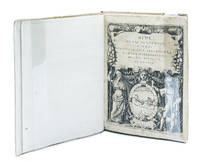
151829908Paris: Germain Hardouyn. Colophon: "ont este imprimees a Paris pour Germain Hardouyn demorant entre les deux portes du Palais a lenseigne de Saincte Marguerite. 1518. First of the edition. Printed on vellum and beautifully illuminated with forty hand-painted miniatures. There are sixteen large and twenty four small miniatures i.e. metalcuts painted in blue red brown green yellow white and gold and numerous one- and two-line initials in gold and blue pictorial metal-cut borders throughout partly illuminated. With full page miniatures: Skeleton Maria with the infant Jesus Jesus on Mount of Olives Flight to Egypt The Three Magi Nativity Crucification etc. 8vo 17.8 x 11/0 cm handsomely bound in eighteenth century full marbled polished calf the edges gilt the spine with raised bands gilt decorated. 112 leaves printed on vellum in a Gothic typeface twenty-four lines per page. Almanach / Calendar for the years 1518 -1525. Signatures: A - O8 14 quires = 112 leaves complete. A handsome and well preserved copy complete. A FINE PRINTED BOOK OF HOURS FROM THE EARLY 16TH CENTURY PARIS. In the late fifteenth and early sixteenth century printed books of hours like the present copy were produced in greater numbers than manuscript horae in part in order to meet the demands of a bourgeoning middle class audience that could afford such items.<br> RARE. Not in Brunet Bohatta Lacombe Mortimer French Adams Germain Hardouyn. (Colophon: "ont este imprimees a Paris pour Germain Hardouyn demorant entre les deux portes du Palais a lensei hardcover
BB08<p>Paris Germain Hardouyn 1518.</p><p>8vo 171 x 110 mm printed on vellum skin of 84 ll. in 11 quires signed A-K by 8 and L by 4. Roman characters 31 lines. The mark of the Hardouins is printed on l. A1.</p><p>17 large figures including the anatomical Man. 21 small illuminated vignettes 4 illuminated borders. Complete.</p><p>Full brown velvet from the 18th century signs of wear.</p><p><b>Precious Book of Hours printed on vellum skin decorated with 17 full-page engravings illuminated with gold at the time with 21 small vignettes equally illuminated and with numerous gilt initials on a blue or red background. </b></p><p>The calendar is dated 1518.</p><p>Lacombe 290 ; Van Praet Catalogue p. 112 n°135 ; Brunet <i>Heures</i> n°251.</p><p>The iconography is composed besides the printer's mark and the anatomical man of 16 large full-page figures all colored with shimmering colours and inserted inside gilt framings. </p><p>The 16 engravings represent:</p><p><i>- St John the Evangelist.</i></p><p><i>- Arrest of Jesus.</i></p><p><i>- Adam and Eve.</i></p><p><i>- Annunciation.</i></p><p><i>- Visitation.</i></p><p><i>- Nativity.</i></p><p><i>- Annunciation to the Shepherds. </i></p><p><i>- Adoration of the Magi.</i></p><p><i>- Presentation at the temple.</i></p><p><i>- Flight into Egypt. </i></p><p><i>- Presentation of Mary at the Temple.</i></p><p><i>- Bathsheba in her bath.</i></p><p><i>- Resurrection of Lazarus</i></p><p><i>- Crucifixion.</i></p><p><i>- Pentecost.</i></p><p><i>- Annunciation</i>of a different manner.</p><p>The illustration also contains 21 vignettes hand-colored at the time and illuminated.</p><p>This precious Book of Hours entirely rubricated is thus decorated with all its capital letters painted in gold on an alternated red or blue background. </p><p><b>Brunet underlines the rarity of Books of Hours printed by the Hardouins when they are rubricated and illuminated.</b></p><p>" <i>We can find quite precious copies because of the paintings and decorated letters that illustrate them. It appears that those gilt and coloured letters are the work of Germain Hardouyn 'in arte litteriare peritissimus' as bears the subscription of the Hours of the Virgin dated 1514</i> " Brunet V 1628.</p><p>Gilles Hardouyn settled at the end of the Nostre dame Bridge where he worked from 1509 until 1521.</p><p>After this date his associate Germain Hardouyn who was his associate in the bookshop succeeded him and temporarily occupied his home. He himself printed until 1528.</p><p><b>Precious copy illuminated on vellum skin coming from the library of Montalembert</b> with ex-libris and stamp of the <i>Earl of Montalembert</i>.</p><p><br /></p><p><u>French</u></p><p>Paris Germain Hardouyn 1518.</p><p>In-8 imprimé sur peau de vélin de 84 ff. en 11 cahiers signés A-K par 8 et L par 4. Caractères romains 31 lignes. La marque des Hardouin occupe le f. A1.</p><p>17 grandes figures dont l'Homme anatomique. 21 petites vignettes enluminées 4 bordures originales enluminées. Complet.</p><p>Plein velours brun du XVIIIe siècle qq. usures.</p><p>171 x 110 mm.</p><p><b>Précieux livre d'Heures imprimé sur peau de vélin orné de 17 gravures à pleine page enluminées à l'or à l'époque de 21 petites vignettes également enluminées et de nombreuses initiales en or sur fond bleu ou rouge.</b></p><p>La calendrier porte la date de 1518.</p><p>Lacombe 290 ; Van Praet Catalogue p. 112 n°135 ; Brunet Heures n°251.</p><p>L'iconographie se compose outre le feuillet de marque et l'homme anatomique de 16 grandes figures à pleine page toutes coloriées en teintes chatoyantes et insérées dans des encadrements à portique dorés.</p><p>Les 16 grandes gravures représentent :</p><p><i>- Saint Jean l'évangéliste</i></p><p><i>- L'Arrestation du Christ</i></p><p><i>- Adam et Eve</i></p><p><i>- L'Annonciation</i></p><p><i>- La Visitation</i></p><p><i>- la Nativité</i></p><p><i>- l'Annonce aux bergers</i></p><p><i>- L'Adoration des mages</i></p><p><i>- La Présentation au temple</i></p><p><i>- La Fuite en Egypte</i></p><p><i>- La Présentation de Marie au Temple</i></p><p><i>- Bethsabée au bain</i></p><p><i>- La Résurrection de Lazare</i></p><p><i>- La Crucifixion</i></p><p><i>- La Pentecôte</i></p><p><i>- L'Annonciation </i>de facture différente</p><p><b>L'ornementation comprend également 21 vignettes coloriées à l'époque et enluminées.</b></p><p><b>Ce précieux livre d'Heures entièrement rubriqué </b>est ainsi orné de toutes ses majuscules peintes en or sur fond rouge ou bleu alterné.</p><p><b>Brunet souligne la rareté des livres d'Heures imprimés par les Hardouin lorsqu'ils sont rubriqués et enluminés.</b></p><p>" <i>Il se trouve des exemplaires assez précieux à cause des peintures et des lettres ornées qui les décorent. Il paraît que ces lettres en or et en couleur sont l'ouvrage de Germain Hardouyn 'in arte litteriare peritissimus' ainsi que le porte la souscription des Heures de la Vierge à la date de 1514</i> " Brunet V 1628.</p><p>Gilles Hardouyn s'établit au bout du pont Nostre dame où il exerça de 1509 jusqu'en 1521.</p><p>Après cette année son associé Germain Hardouyn qui avait été son associé dans la librairie lui succéda et occupa momentanément son domicile. Il imprima lui-même jusqu'en 1528.</p><p><b>Précieux exemplaire enluminé sur peau de vélin</b><b> provenant de la Bibliothèque de Montalembert </b>avec ex-libris et cachet du Comte de Montalembert.</p> hardcover
2691Paris: Guillaume Anabat for Germain Hardouyn 1 October 1505 Almanac for 1505-1520. <p>Octavo. Printed on vellum. Collation: a-n8 o4: 108 ff. unnumbered. Blackletter type. Large Hardouyn device on title-page Renouard 434; Nettekoven p. 135 no. 223; Hardouyn's Planetary Man cut; three large cuts St. John with the Poisoned Cup The Betrayal of Christ and The Holy Trinity with the Church and its four Cardinal Virtues; Zöhl p. 174; twelve mid-size cuts The Life of Christ; Nettekoven pp. 122-123 no. 211-222; 26 smaller cuts of saints and biblical subjects; a small cut of the crucifixion on the final leaf; each page printed within an elaborate multi-block border sometimes incorporating letterpress captions. 194 x 124 mm. Decorated throughout; the larger initials illuminated with floral decoration in gold and colors; rubricated with the small initials and line-fillers supplied in gold on red or blue grounds; the arms on Hardouyn's device painted over with an unidentified coat of arms; the borders on a1r and a2v colored early but later than the illumination and rubrication. Early recipe for a rhubarb-based purgative in manuscript on a rear endleaf. binding: Later sixteenth century calf over paste boards elaborately tooled in gilt triple fillet border large strapwork and arabesque cornerpieces large strapwork and arabesque centerpiece with two lion's heads and a blank central oval in between a semé of fleurons spine with five raised double bands the compartments tooled with azured ovals and vines; two pairs of ties now lacking; three vellum endleaves at front and rear including the pastedowns.</p> <p>COLOPHON: Ces presentes heures a lusaige de Romme furent acheuees le premier iour de Octobre Lan Mil cinq cens et cinq. Par Guillaume Anabat imprimeur demourant a Paris en la rue sainct Jehan de Beauuais pres les escolles du decret a lenseigne des connis. Pour Germain Hardouin libraire demourant empres la grant porte du palais a limage saincte Marguerite.</p>. <p>An unsophisticated copy of this handsome book of hours the earliest dated production of Anabat's press.</p><br /> <br/><br/><br /> <p>Anabat was a native of Brittany; his press was active in Paris between 1505 and 1510. All of the books that he printed were done for other publishers; the vast majority were books of hours printed for the brothers Gilles and Germain Hardouyn who specialized in the production and sale of horae.</p><br /> <br/><br/><br /> <p>The metalcuts that illustrate this edition are the work of two distinct hands. The twelve smaller cuts depicting the life of Christ are copies based on a set that was produced for Thielman Kerver and Georg Wolff c. 1497; they were first used by the Hardouyn brothers in 1503. They have been attributed to the Master of the Très Petites Heures d'Anne de Bretagne also known as the Master of the Apocalypse Rose of the Sainte-Chapelle; this artist has been tentatively identified as Jean d'Ypres the son of Colin d'Amiens See Caroline Zöhl's article in the 2007 festschrift for François Avril Quand la peinture était dans les livres. He produced many designs for the illustration of books of hours in the period 1480-1510; he is also responsible for a small number of manuscripts as well as some celebrated designs for tapestries. The three large cuts that start the volume however are the work of Jean Pichore who was active in Paris c. 1500-1520. His illustrations in the renaissance style replaced the gothic designs of the Master of the Apocalypse Rose of the Sainte-Chapelle as the dominant mode in the illustration of Paris books of hours; this volume captures that transition perfectly with the more refined and sophisticated Pichore blocks standing in counterpoint to the slightly stiff cuts of the earlier master. The artist responsible for the Planetary Man cut which had appeared in earlier Hardouyn books of hours has not been identified.</p><br /> <br/><br/><br /> <p>This edition exists in two quite distinct states. In one each page is printed within an elaborate composite border made up of numerous small blocks and sometimes incorporating letterpress captions; our copy is an example of this state. In the other the text and illustrations are printed entirely without borders with the exception of the colophon leaf which has the same architectural border in both states. A copy of the state without borders is at Penn State; it has been digitized and can be seen online at Lehigh University's Digital Library of Illuminated Manuscripts. It is unclear at this point which state has priority or whether one is more common than the other.</p><br /> <br/><br/><br /> <p>PROVENANCE: Unidentified arms on title-page - Georges Quesnoy early inscription on rear endleaf - several other early ownership inscriptions now largely illegible on endleaves.</p><br /> <br/><br/><br /> <p>CONDITION: Leaves a1r and o4v rather rubbed with some loss; some occasional soiling and staining; the vellum at times somewhat cockled. The boards slightly warped; extremities a bit rubbed; rear hinge cracked. Despite these flaws still a pleasing and unsophisticated copy.</p><br /> <br/><br/><br /> <p>REFERENCES: Bohatta 807; Moreau 1505 85; Renouard 50; Tenschert & Nettekoven 65-67 Heribert Tenschert & Ina Nettekoven Horae B.M.V.: 158 Stundenbuchdrucke der Sammlung Bibermühle 1490-1550 Rottalmünster 2003; see also Ina Nettekoven Der Meister der Apocalypsenrose der Sainte Chapelle und die Pariser Buchkunst um 1500 Turnhout 2004 and Caroline Zöhl Jean Pichore: Buchmaler Graphiker und Verleger in Paris um 1500 Turnhout 2004. Copies: Bibl. Mazarine; Musée des Beaux-Arts Paris the Dutuit copy incomplete; John Rylands Library; Museo Civico Pavia; Tresoar Leeuwarden; Williams College; the Morgan Library; Princeton; Penn State; the Newberry Library incomplete; the University of Kansas; the Huntington Library; the Bibermühle collection three copies.</p> Paris: Guillaume Anabat for Germain Hardouyn, 1 October 1505 (Almanac for 1505-1520) unknown
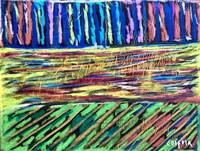
120211Roma: Edizioni Eos 2013. Perfetto Mint. Libro d'artista realizzato a mano facente parte della collana "25 libri / 25 artisti" "Je est un autre" del 2013-2015. Composto da una sovraccoperta dipinta a mano dal curatore"; una copertina rigida; il frontespizio; un testo di Kounellis; una immagine dipinta alle pagine centrali 4 e 5 eseguita a mano dall'artista su ogni libro variazione dello stesso motivo grafico;" Colophon. Le due pagine dipinte e la copertina sono realizzate con bitume ad acqua. L'opera originale di Kounellis misura cm 50 x 72. Folio Cm 50 x 36. pp. 8 2 quartini. Perfetto Mint. Edizione di 10 esemplari numerati e firmati. <em>La serie "25 libri / 25 artisti" "Je est un autre" è";" stata esposta nell'omonima mostra presso lo Studio Varroni dall'ottobre 2016 al febbraio 2017.</em> Edizioni Eos, unknown
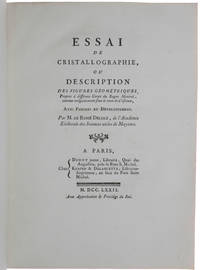
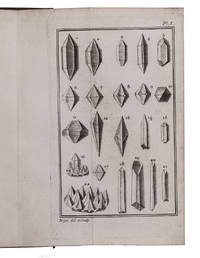
17725371Paris: Didot jeune and Knapen & Delaguette 1772. First edition. <p>First edition a magnificent and very rare large paper copy both larger and printed on thicker paper than the octavo issue of one of the fundamental works of modern crystallography; it appeared 12 years before Haüy's Essai d'une Théorie sur la Structure des Cristaux. "Very scarce. The Cristallographie ranks as one of the great contributions to the science of crystals. In it Roméde L'Isle attempted to make a comprehensive classification of crystals" Schuh.</p>. A FUNDAMENTAL WORK OF MODERN CRYSTALLOGRAPHY - VERY RARE LARGE PAPER COPY. <p>First edition a magnificent and very rare large paper copy both larger and printed on thicker paper than the octavo issue of one of the fundamental works of modern crystallography; it appeared 12 years before Haüy's Essai d'une Théorie sur la Structure des Cristaux. Romé de L'Isle established that various shapes of crystals of the same natural or artificial substance are all closely related to each other. Measurements he took with a goniometer enabled him to determine that the angles between corresponding faces of a crystal are always the same which earlier had only been described in specific cases in particular by Niels Steno this is often described as the first law of crystallography. In addition he demonstrated that these angles are a characteristic of mineral type introduced the concept of truncation and also enlarged the crystallographic vocabulary. He "identified 110 crystal forms drawing upon Linnaeus who had listed forty and described in minute detail the minerals that exhibited them. He subdivided the various substances into salts stones pyrites and metallic minerals stating that he agreed with Linnaeus that geometrical form is the chief characteristic by which minerals may be classified. Also like Linnaeus he held that saline principles imprinted their own geometrical form upon the earthy constituent of each mineral" DSB. "Very scarce. The Cristallographie ranks as one of the great contributions to the science of crystals. In it Romé de L'Isle attempted to make a comprehensive classification of crystals. By the time he wrote his volume he was extremely familiar with the subject and this work greatly surpassed all previous works in scope and detail. To apply his classification he adopted a morphological approach in which he attempted to relate the diverse forms of crystals of the same substance. As a general morphological concept he introduced the idea of the 'primitive form'. All crystals of the same inorganic substance no matter how different in appearance had a fundamental and common geometrical form - the primitive form - to which their actual crystal shapes related . In this first edition of the Cristallographie Romé de L'Isle identifies 110 crystal forms by which minerals crystallize. Grouped under each of these shapes are describe the minerals that exhibit similar habits including the approximate angles between crystal faces. These forms were all derived from a common saline ingredient in every mineral that worked at a molecular level" Schuh. Pages xii-xxviii contain an annotated bibliography of the principal works on crystals. The only large paper copy listed by ABPC/RBH is the Norman-Freilich copy but our copy is significantly larger than even that copy 265 x 205mm versus 249 x 193mm.</p> <br /> <p>"Romé the son of a lieutenant in the cavalry studied humanities at the Collège Ste. Barbe in Paris. In 1756 he entered the Royal Corps of Artillery and Engineering which he accompanied as a secretary to the French Indies in the following year. From 1758 until 1761 he was in the enclave of Pondicherry French India. When it fell to the English in 1761 Romé was taken prisoner and transported to China where he stayed until 1764 when he returned to France" DSB. </p> <br /> <p>"Romé de L'Isle had started collecting minerals during his travels as a naval officer. Back in Paris after the Indian Wars he was introduced into mineralogy by the apothecary chemist and mineralogist Balthazar Georges Sage 1740-1824 who became his friend. It was very fashionable at the time in Paris to have a mineral collection. The owner of an important private collection Pedro Francisco Davila wanted to sell his. At Sage's suggestion he asked Romé de L'Isle to draw up the inventory. Romé made a very thorough job of it the inventory running up to three thick volumes. This was his first work on mineralogy published in 1767 Catalogue systématique et raisonné des curiosités de la nature et de 1'art qui composent le cabinet de M. Davila. It gave him the opportunity to study crystalline forms in detail and led to his Essai de Cristallographie 1772 .</p> <br /> <p>"The context of the time was not very favourable for such studies for had not the famous French naturalist Buffon written in his Natural history of Minerals volume 1 1783: 'One has pretended that rhombohedra constitute a specific character of calcareous spar without being attention to the fact that some vitreous or metallic substances also crystallize in rhombohedra and that if calcareous spar does crystallize often in rhombohedra it also takes different other forms; and our crystallographers when trying to borrow from geometricians the way to transform a rhombohedron into an octahedron a pyramid or a lens have done nothing more than substitute ideal combinations to the real facts of Nature. This crystallization in rhombohedra like all others will never have a specific character. Not only is there no crystalline form common to different substances but conversely there are few substances which do not present different crystallization forms as shown by the prodigious variety of forms of calcareous spar itself' .</p> <br /> <p>"In the preface Romé noted that 'of the curious phenomena of the mineral kingdom those which struck him most were the regular and constant forms taken by some bodies designated by the name of crystals.' He was encouraged by the works of Linnaeus he added to undertake the study of the angular forms of crystals and of their transformations. Their polyhedral shape was only known from the Ancients only for quartz diamond and a few others and Romé widely extended this observation. Minerals were divided by him into four classes: salts stony pyritic and metallic. For each mineral the most frequent forms observed are described with a reference to Linnaeus's classification in Systema naturae . Steno's ideas relative to the growth of quartz layer by layer are quoted at length and Romé de L'Isle felt that they could be applied to all crystals. The book was a success acclaimed by Linnaeus himself and brought international fame to Romé de L'Isle . The importance of Romé de L'Isle's work was stressed by Haüy who wrote Leçons de Physique 1795: 'To the exact descriptions he gave of the crystalline forms he added the measure of the angles and which was essential showed that these angles were constant for each variety. In one word his crystallography was the fruit of an immense work almost entirely new and most precious for its usefulness.'</p> <br /> <p>"Romé de L'Isle was also the first mineralogist to give a rational description of twins . He described for instance the dovetail twin of gypsum and the feldspars twins. He introduced the term macle to designate a crystal in which 'one half is produced by the inversion in the opposite sense of the other half of the same crystal' - a property which he demonstrated by the concordance of angles" Authier pp. 313-6. </p> <br /> <p>"Romé's friendship with Sage brought him membership in a number of learned societies including the academies of Mainz Stockholm Berlin and St. Petersburg. But it did him no service with the Paris Académie des Sciences which rejected him on the ostensible grounds that he was a mere 'catalogue maker.' It is likely that Romé's controversies with Buffon also played a part in his rebuff by the Academy" DSB.</p> <br /> <p>Freilich sale 460; Hoover 2681; Norman 1847; Schuh Mineralogy & Crystallography: A Bibliography 1469 to 1920 4151; Ward & Carozzi 1906; Wellcome IV p. 553. Authier Early Days of X-ray Crystallography 2013. </p> <br/> <br/> 4to 265 x 205 mm pp. v viii-xxxii 427 3 including half-title with 2 folding letterpress tables and 10 folding engraved plates. Contemporary calf spine gilt in compartments with red morocco lettering-piece red edges. Didot jeune and Knapen & Delaguette unknown
149325185Nuremberg: Anton Koberger for Sebald Screyer and Sebastian Kammermeister 1493. First Edition with the German text. The bi-folium with fine hand-colouring to the Rome view. This is one of the large double-page city-view woodcuts from the workshop of Mighael Wolgemut and Wilhelm Pleydenwurff beneath 22 lines of text. It is handsomely and finely handcoloured in blues greens yellows reds grays etc. Double-page folio ca. 540 x 380 mm handsomely mounted framed and glazed. Leaves LVII and LVIII. In fine condition and very well preserved and presented. FROM THE FIRST EDITION OF THE NUREMBERG CHRONICLE ARGUABLY THE GREATEST ILLUSTRATED BOOK OF THE 15TH CENTURY. The artists Michael Wolgemut the well-known teacher of Albrecht Dürer and his stepson Wilhelm Pleydenwurff have been praised and admired for over five-hundred years for their contributions to one of the monuments of early printing. David Bland calls it "a marvelous book and a landmark in the history of illustration" and through the ages it has more than fulfilled Koberger's prophecy that it would be "the delight of the men of learning and of everyone who had any education at all."<br> A HIGHLY IMPORTANT INCUNABLE the “Nuremberg Chronicle†is the most extensively illustrated book of the fifteenth century and after the Gutenberg Bible the most celebrated book printed in the fifteenth century. Its 1809 woodcut illustrations 1164 excluding repeats depict popes saints and other religious figures kings and emperors historical and biblical genealogies mythological and fanciful creatures natural phenomena and views of all the major cities of the known world as well as a brilliant creation sequence. In addition to the full-sheet maps of the world and of Europe twenty-nine city views such as this one span two pages and eight other cuts excluding the xylographic title page are full-page. The colophon explicitly acknowledges the contributions of the artists Michael Wolgemut and Wilhelm Pleydenwurff. Albrecht Dürer was at that time a pupil in Wolgemut's workshop and there is good evidence that he did many of the preliminary drawings for woodcuts and may even have cut some of them see Adrian Wilson THE MAKING OF THE NUREMBERG CHRONICLE. Anton Koberger, for Sebald Screyer and Sebastian Kammermeister unknown
4877Engraved allegorical frontis. by Augustin Saint-Aubin. xxxii 299 5 pp. 8vo orig. wrappers uncut. Paris: Didot & Knapen 1773.<br/> <br/> First edition and a lovely copy in original state of an uncommon book; this is one of Romé’s first publications. It is a description “of the metallic ores of his own mineral cabinet in which he discussed the origin metamorphosis and paragenesis of each.â€â€“D.S.B. XI p. 521. Earlier he had catalogued the mineralogical curiosities in the cabinet of Pedro Francisco Davila and for several years found steady employment by preparing at least fourteen other mineralogical catalogues. In all the descriptions in the present work Romé stresses the importance of crystalline form and that this form is the chief characteristic by which minerals may be classified. <br/> <br/> Romé 1736-90 by formulating the law of constancy of interfacial angles established crystallography as the basis of mineralogy. <br/> <br/> The attractive frontispiece drawn by Saint-Aubin depicts two putti one examining ores under a microscope and the other stoking a furnace. Preserved in a box. <br/> <br/> ⧠Yves Laissus “Les Cabinets d’Histoire Naturelle†in René Taton ed. Enseignement et diffusion des sciences en France au dix-huitième siècle p. 669–“un véritable manuel de minéralogie.†Schuh Mineralogy & Crystallography: A Biobibliography 1469 to 1920 4154–“Very scarce. In this collection catalog the famous French crystallographer fully describes about 750 metallic minerals from his own cabinet. Included are specimens consisting of pure metals as well as natural alloys and combinations with sulfur. Basic division is based upon the principle metals and semi-metals contained in the described specimens and include gold silver copper iron tin lead mercury antimony zinc bismuth cobalt arsenic and sulfur. Under each of these headings the specimens are divided based upon their form and chemical composition. For each item described notes on the origin associated minerals locality size and the estimated weight of contained precious metals is presented. The catalog is well referenced and if a particular specimen was given to Romé the supplier’s name is included in the description.â€. unknown
1772899Paris: Didot Jeune; Knapen & Delaguette 1772. <br /> <br /> A landmark work in the history of mineralogy and crystallography by Jean-Baptiste Louis Romé de l'Isle 1736-1790 one of the principal founders of scientific crystallography. Published in Paris in 1772 Essai de Cristallographie represents one of the earliest systematic attempts to classify minerals according to the geometry of their crystal forms rather than solely by chemical composition or external appearance. Romé de l'Isle sought to demonstrate that crystals obey fixed geometric laws helping establish crystallography as a rigorous scientific discipline during the Enlightenment. The work discusses numerous classes of crystals including quartz mica feldspars zeolites metallic crystals pyrites and gemstones accompanied by detailed geometric analyses and descriptions.<br /> <br /> Particularly notable are the engraved folding tables and plates illustrating crystal forms polyhedra and geometric developments. These illustrations provided one of the earliest visual systems for understanding mineral structures and became highly influential among eighteenth-century natural philosophers mineralogists and geologists. The volume includes an extensive bibliography of earlier authors on crystallization and mineralogy reflecting Romé de l'Isle's attempt to synthesize contemporary scientific knowledge. Also present is an attractive engraved armorial bookplate of Lord Sandys adding desirable provenance and evidence of ownership by an eighteenth-century British noble family. A highly important scientific work that marks the transition from descriptive mineralogy to the quantitative study of crystal geometry.<br /> <br /> Condition & Binding: Bound in contemporary full calf with gilt roll-tooled borders marbled endpapers and all edges gilt. Binding remains attractive and solid showing moderate rubbing scuffing and wear to boards corners and spine. Spine lettering has largely faded though decorative tooling remains partially visible. Internally remarkably clean and bright for the period with light scattered foxing and occasional minor spotting. Folding engraved plates and the large folding crystallographic table appear present and in very good condition with no significant tears observed in the supplied photographs. Overall- very good. Didot Jeune; Knapen & Delaguette unknown
195894139Roma: L'esperienza moderna 1958. Brossura wrappers. Ottimo Fine. Significativa dedica firmata dall'Artista sull'intera prima pagina febbraio 1992 con un disegno originale anch'esso firmato Substantial inscription with an original drawing signed by the Artist. 33 litografie originali incise direttamente su lastra da <strong>Achille Perilli</strong>. Con un <strong>disegno originale dell'Artista</strong> a piena pagina firmato e datato. 8vo. pp. 80 non numerate. Significativa dedica firmata dall'Artista sull'intera prima pagina febbraio 1992 con un disegno originale anch'esso firmato Substantial inscription with an original drawing signed by the Artist. Ottimo Fine. Prima ed. di 200 es. numerati e firmati dall'Artista. L'esperienza moderna, unknown
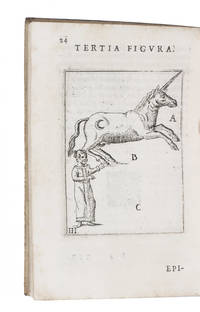
1596F75BBB01U79OBrescia 1596. Small 8vo 14.5 x 10 cm. Pietro Maria Marchetti Contemporary limp sheepskin parchment sewn on 3 alum-tawed thongs with manuscript title on smooth spine. With Marchetti's woodcut anchor and dolphin device imitating Aldus's on the title-page 16 numbered engraved emblematic illustrations plate size 8.5 x 6.5 cm woodcut headpieces tailpieces and decorated initials 3 series and decorations built up from cast fleurons. With the Latin text set in italic and the Italian translation in roman. 106 6 blank pp. First edition of the so-called Oracles of Leo the Wise with a bilingual Latin an Italian text and 16 lovely and rather surreal engravings: an emblematic book of prophecies traditionally attributed to Leo VI 866-911/12 Emperor of Byzantium from 866 to his death and at least here also to Antonius Severus 188-217 sole Emperor of Rome from his murder of his brother in December 211 to his death the book does not indicate which Severus is intended but the preface notes that he reigned from 212. The Latin text was circulated already attributed to Leo the Wise in the 12th century but Christians revived it in the 16th century and interpreted it as a prophecy that the Ottoman Empire would fall in 1622. These oracles remained popular in the 17th century when they were presented as having predicted the setbacks that the Ottomans suffered in Europe in that period.Owner's inscriptions on the title-page further with a bookplate. With a water stain in the first quire but otherwise in very good condition with only very minor foxing. The sewing supports have broken at the back hinge the thong ties are lost and the vellum is slightly wrinkled but the binding is still in good condition.l BMC STC Italian p. 622; Caillet 11042; Edit16/ICCU CNCE 28586; Mortimer Italian 254. hardcover
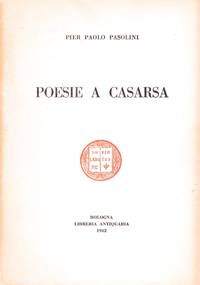
19424<p>Original editorial paperback; pp. 42 6.</p><p>First edition printed in 375 copies.</p><p>"<strong>In 1942 Pasolini published his first book <em>Poetry for Casarsa</em> choosing to write in the Friulan dialect</strong> that he associated with his mother considered by many Italians to be the most beautiful of Italian dialects. The dialect offered Pasolini not only a beautiful language but also the opportunity to spite his father who could not understand it. His use of dialect also defied fascist authority as the government of the time discouraged the use of dialects in an effort to mold a more unified national Italian identity" W. Van Watson <em>Pier Paolo Pasolini and the theatre of the word</em> UMI Research Press 1989 p. 5.</p><p>Il 14 luglio del 1942 Pasolini pubblica a spese proprie presso la Libreria antiquaria Mario Landi di Bologna la raccolta <em>Poesie a Casarsa</em>: quattordici componimenti scritti nel dialetto materno e dedicati al padre nel frontespizio. L'opera è subito notata e recensita da Gianfranco Contini nel saggio <em>Al limite della poesia dialettale</em> uscito sul "Corriere del Ticino" il 24 aprile del 1943. Contini consacra Pasolini poeta rilevando le qualità linguistiche di <em>Poesie a Casarsa</em> e mettendo in evidenza in particolar modo l'uso del dialetto <em>di ca da l'aga</em> della riva destra del Tagliamento: un friulano che inventa una propria <em>koinè</em> poetica dal sapore provenzale nata dalla necessità di scrivere una lingua che fino ad allora era solo parlata.</p><p>"Insegnavo allora in un'università straniera e facevo il pendolo fra quella sede e una piccola città di confine. Uno dei miei fornitori librarî la cui gestione artigianale fascette e fatture integralmente autografe si rifletteva nella tenuità delle cifre era un piccolo antiquario di Bologna chiamato Mario Landi. Non l'ho mai conosciuto di persona e solo molto più tardi il caro Giuseppe Raimondi doveva descrivermelo come una "macchietta" felsinea fra l'altro segnato dall'essere albino. Un giorno del 1942 la posta mi recò un plico iscritto dalla bella e arcaica lettera di Mario Landi ma non conteneva poche lire di Bodoni o di Romagnoli-Dall'Acqua bensì per la prima e unica volta un libretto stampato sotto la ragione editoriale del Landi stesso. Ignoto l'autore Pier Paolo Pasolini di aspetto onomastico inconfondibilmente ravennate e ignota la veste linguistica di quelle <em>Poesie a Casarsa</em> friulano ma "di cà da l'aga" cioè il Tagliamento quindi un'eccezione nell'eccezione. L'odore era quello irrefutabile della poesia in una specie inconsueta per di più in una di quelle non so se dire quasi-lingue o lingue minori che era mia passione e professione frequentare. Allora il tempo era mio niente ostacolava quando insorgeva il pronto desiderio di scrivere. All'uopo adibii un giornale del Ticino il "Corriere del Ticino" tra perché le sedi italiane stavano crollando nel disastro vicino a consumarsi e perché la censura invigilava che non si osasse dir troppo bene di cosa scritta in dialetto "Primato" infatti rifiutò il pezzo. Fu quella in sostanza la mia unica scoperta" G. Contini <em>Testimonianza per Pier Paolo Pasolini</em> ora in Id. <em>Ultimi esercizî ed elzeviri 1968-1987</em> Torino 1989 p. 390.</p> Libreria antiquaria Mario Landi paperback
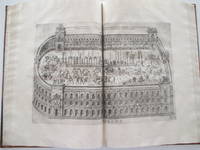
160015864AB1600. Venice Io. Baptista Ciotti 1600. 385 : 25 cm. Engraved title 6 leaves 136; 15 pages 32 double-page engraved plates. Calf in contemporary style. First edition. - Panvinio was an Augustinian monk and an important Reneissance historian of early Rome who also served as Corrector and Reviser of the books of the Vatican Library in 1556. The present work on the games triumphs and circuses of Rome Pompeii and Constantinople is profusely illustrated with engraving depicting gladatorial combat animal sacrifice Roman coins statuary classical architecture etc. - Engraved title mounted and bound oppoisite the dedication page page 15 of the appendix mounted on old paper the right part supplemented handwritten some minor waterstains in the lower edge not affacting text or illustrations. The intersting engravings in strong impressions. - Adams P-189; Berlin Kat. 1854; Mortimer Harvard Italian 357. unknown
156755<p>4º mm 220x158; cc. 4 76 8. <strong>Frontespizio allegorico inciso</strong>; testatine capilettera e fregî silografici. Caratteri corsivo e romano. Legatura coeva in cartonato rustico. Le prime otto carte sono interessate al margine da leggere gore d'umidità per il resto l'esemplare è fresco e pulito con ampli margini.</p><p>Provenienza: all'angolo inferiore sinistro della seconda carta coeva nota manoscritta di possesso; la stessa mano corregge il testo di alcuni componimenti.</p><p><strong>First edition of a poetry book essential for the history of Renaissance music as it constitutes the first organic collection of Torquato Tasso and Battista Guarini's poems.</strong></p><p>According to scholars <strong>Tasso and Guarini were the poets whose verses were most frequently set by Italian madrigalists and monodists in the late 16th and 17th centuries. From the 1570s through the 1630s virtually all composers of secular vocal music in Italy and Europe including notable ones like Luca Marenzio and Claudio Monteverdi set one or more of their poems producing a total of hundreds of settings</strong> cfr. <em>Torquato</em><em> Tasso in Music Project</em>: https://www.tassomusic.org; https://interlude.hk/the-music-of-poetry-giovanni-battista-guarini-tirsi-wanted-to-die/.</p><p><strong><em>Editio princeps</em> della "prima raccolta organica di rime tassiane </strong>…<strong> 38 sonetti due madrigali due canzoni" </strong>A. Casu <em>"Translata proficit arbos": le imprese "eteree" nelle 'Rime' del Tasso</em> "Italique" <em>online</em> II 1999 <strong>nonché del primo rilevante <em>corpus </em>di liriche guariniane</strong> 35 sonetti 56 stanze e un madrigale.</p><p>Sull'attribuzione tipografica cfr. D.E. Rhodes <em>Rettifiche e aggiunte alla storia della stampa a Padova 1471-1600</em> in <em>Studi di bibliografia e di storia in onore di Tammaro de Marinis</em> IV Verona 1964 p. 35.</p><p>L'Accademia degli Eterei nacque nella Padova dei primi anni '60 per iniziativa di un gruppo di giovani studenti letterati e soprattutto di Scipione Gonzaga Mantova 1542 – San Martino dall'Argine 1593. Fu inaugurata ufficialmente da un'orazione di Stefano Santini il primo gennaio 1564. Alle sedute bisettimanali dedicate alla discussione e alla recita di testi poetici prese parte anche il Tasso reduce dalla breve stagione trascorsa a Bologna e richiamato a Padova proprio dal Gonzaga. All'ambiente degli Eterei vanno ricondotti molti componimenti lirici tassiani di questa stagione che poi confluirono nella presente raccolta si veda l'edizione a cura di G. Auzzas e M. Pastore Stocchi Padova Accademia Galileiana 1995: alla sezione di rime per Lucrezia Bendidio il Tasso accostò altri testi dei suoi esordi dagli omaggi a Leonora d'Este a una serie di liriche d'occasione.</p><p>"A consacrare la fama dell'esordiente lirico Battista Guarini giunse l'anno successivo la prima vera esperienza di un qualche rilievo: la partecipazione su invito di Scipione Gonzaga all'Accademia patavina degli Eterei. Il ruolo e l'importanza del Guarini nel sodalizio in cui assunse il nome accademico di Costante risultano ben documentati oltre che dalla carica di segretario di cui venne insignito dal <em>corpus</em> delle sue rime accolte nella silloge degli accademici che vide la luce nel 1567. <strong>Un <em>corpus</em> che insieme con quello del giovanissimo Torquato Tasso si configura numericamente come il più folto a testimonianza del valore riconosciutogli nel novero degli undici "novissimi" poeti animatori dell'Accademia e promotori con la raccolta di una sperimentazione di prim'ordine nello sviluppo del petrarchismo veneto</strong>. Il felice "albergo delle Muse" Eteree resterà lungo la vita errante e tormentata del G. il solo fulgido esempio di una serena vacanza intellettuale di un esercizio letterario libero da obblighi servili e fondato su una pratica di relazioni personali: quel "sistema delle protezioni e degli amici" di cui sarà perno Scipione Gonzaga al quale il G. farà appello nei tempi bui delle sue disavventure cortigiane per ottenere appoggi e sostentamento. L'amicizia con il Gonzaga ma anche con altri Eterei come Ridolfo Arlotti e Annibale Bonagente oltre agli ovvi rapporti con il Tasso accompagnò il G. per tutta la vita coronata dalla scelta del cardinale come consulente e censore del <em>Pastor fido</em>. È inoltre presumibile che la stagione eterea fosse coincisa anche con lo sviluppo di quegli interessi filosofici che il G. verrà sempre rivendicando nelle <em>Lettere</em> come la più autentica inclinazione della sua indole costretta alla poesia per "diporto cortigiano" e "obbligo di servitù" ma per natura propensa a coltivare frutti di più elevata speculazione" E. Selmi <em>DBI</em> LXI 2003.</p><p>L'Accademia fu sciolta fra il 1567 e il 1568 proprio a ridosso di questo raffinato florilegio. La dedicata a Margherita di Valois detta Margherita di Francia Duchessa di Savoia Saint-Germain-en-Laye 1523-Torino 1574 che data 1° gennaio 1567 è firmata da Giovan Battista Guarini il Costante e Luigi Gradenigo l'Occulto. Oltre a quelle del Tasso e dei due prefatori sono presenti rime di: Annibale Bonagente Digiuno Ascanio Pignatello Adombrato Giovacchino Guarino il Lagrimoso Francesco Pusterla l'Affrenato Pietro Gabrielli l'Impedito Ridolfo Arlotti il Sicuro Stefano Santini l'Invaghito e il cardinale fondatore Scipione Gonzaga l'Ardito.</p><p>Cfr. M. Magliani <em>Sull'edizione delle Rime de gli Academici Eterei del 1567</em> Padova Accademia Patavina di Scienze Lettere ed Arti 1994 pp. 5-26 Estratto dagli <em>Atti e Memorie dell'Accademia Patavina di Scienze Lettere ed Arti</em> vol. 106 anno accademico 1993-1994 parte 3. Classe di Scienze Morali Lettere ed Arti; <em>Rime de gli Academici Eterei</em> a cura di G. Auzzas e M. Pastore Stocchi Introduzione di A. Daniele Padova 1995.</p> [Comin da Trino]
19381699351938. ROME. La Milizia universitaria ai goliardi del mondo 1938-XVI. 240 pp. illustrated throughout with 12 additional plates on heavier paper present only in the first 200 copies. Folio 365 x 280 mm. publisher's full morocco. Milan: Italica editoriale 1938. Despite the overwhelming presence of Mussolini this is one of the most stunning Italian interwar photobooks with immense care taken with the design and layout. Although there is scattered foxing throughout it does not detract from the overall stunning impression made by the book. There is a little wear to the fragile boards which are not strong enough to support such a heavy book. One of the extra deluxe copies being No. 133 of 200 copies. OCLC lists only University of Siena presumably a trade version. Grillo Il Libro Fotografico Italiano 1931-1941. pp. 190-191. hardcover
206305. Ottimo Fine. Pastello originale a olio su carta velluto nera firmato al recto e autenticato e datato Roma 1993 al verso dall'Artista. Cm 50x65. Ottimo Fine. . , unknown
2020__0444641653Elsevier 2020. Hardcover. New. 2nd edition. 2944 pages. 12.00x10.00x8.00 inches. Elsevier hardcover
159933044-51Basel Konrad Waldkirch 1599. Printer's device and historiated initials at top of title-page. Double columns. 166 ff. Sm. folio. Old boards spine and all edges leather- rebacked. In a cloth case. Basel Konrad Waldkirch 1599. First Basel edition of this dictionary entitled "Arukh" of the entire post-biblical literature and a special dictionary to the Talmud and Midrash. Rabbi Nathan ben Jechiel b. Abraham c. 1020-1106 was a Jewish Italian and both a lexicographer and one of the most important Talmudic authorities of the 11th century. He quotes on individual headwords texts from many of today lost writings and leads rabbinic expressions on their supposed original in Greek Latin Persian etc. It attained great popularity especially at the work on Tamudic lexica up to the present. This work was first issued at Venice in 1533 but in fact it is not a word-for-word reprint.- Due to paper quality slightly browned throughout some small wormtracks in inner margin of last few leaves otherwise a good copy. - VD 16 N 160; Fürst III p. 21; Prijs 158; Wininger JNB vol. 4 p. 500. JUDAICA ; Basel, Konrad Waldkirch hardcover
1557ST16379-032Basel: Hieronymus Froben 1552; Venice: Jacopo Strada 1557. FIRST COMPLETE AND FIRST ILLUSTRATED EDITION of the first work; FIRST EDITION Second Issue of the second work. 330 x 215 mm. 13 x 8 1/4". 108 leaves; 8 p.l. 192 181-228 pp. 99 leaves index. Two works in one volume. <br/> 18th century marbled calf rebacked original backstrip laid down flat spine in compartments formed by decorative leafy rules and featuring large floral ornaments at center two morocco labels marbled end papers. Printer's device on titles and on final leaf of first work fine large and small mostly historiated woodcut initials and MORE THAN 100 FINE WOODCUTS mostly large or full-page IN FIRST WORK several signed by "C S" perhaps Conrad Schnitt or Christoph Schweizer ILLUSTRATING BUILDINGS OCCUPATIONS MILITARY MACHINES COSTUMES etc. some cuts repeated one cut printed upside down; 369 numismatic woodcuts in text of second work 262 of these including repetitions with medallion portraits and 107 with names only. Front flyleaf with early ink inscription of a library number; third leaf of first work and 10th leaf of second work with the crowned "L" library stamp of the Lamoignon Library. VD16 N 1884; Schweiger II 618; Brunet IV 111; Graesse IV 691 all for first work; Mortimer Italian 322 a later edition with copies of these cuts 355; Adams N-354 P-195. ◆Original spine leather somewhat dried and eroded covers slightly pitted and marked but the binding entirely firm with only superficial wear to joints and certainly agreeable. First title a little smudged and foxed a few other trivial imperfections but A REMARKABLY FRESH CLEAN AND SMOOTH COPY INTERNALLY AND WITH FINE IMPRESSIONS OF THE CUTS.<br/> <br/> This is a very attractive copy with distinguished provenance of two works with considerable data relating to and shedding substantial light on the politics government provincial administration and military establishment of Rome as well as other aspects of Roman life. The first work here is an anonymous early fifth century Roman state handbook more commonly known as the "Notitia Dignitatum" edited by Siegmund Ghelen Gelenius ca. 1477 - ca. 1554 and Beatus Rhenanus 1485-1547 from a lost Medieval manuscript. It is arranged according to the provinces of the Roman Empire and their cities. The second work is a synopsis of Roman history from Romulus through the reign of Habsburg emperor Charles V in the 15th century. Its first section is based on the "fasti consulares" inscriptions from the Arch of Augustus in the Roman forum listing all Roman consuls from 483 B.C. to 19 A.D. These relics were discovered in the 1540s when the forum was being quarried for building materials. The compiler of this work Panvinio 1529-68 was an Augustinian monk devoted to antiquarian studies who spent considerable time in Italy recording inscriptions on ancient monuments medals and other surfaces. He recognized the "fasti consulares" fragments recovered from the ruins and worked frantically to save them. They were restored by Michelangelo and added to the collection of what became the Capitoline Museum. Panvinio also used the coins and medals collected by Strada the publisher as a source for this compilation. A considerable portion of the interest and value in this volume today resides in the woodcuts. Copied from the original illustrations in an early manuscript of the work now lost; the cuts in the first work include many depictions of books showing several different kinds of decorated bindings. The illustrations also provide many details of Roman dwellings costumes and objects used in private religious and military life. Excepting the fact that they have produced books on basically the same subject our two printers could hardly be more different. Whereas the Swiss Froben was one of the giants of Renaissance printing and a great promoter of learning the Venetian Strada apparently spent much of his time speculating in the antiques market being one of the first merchants to make a business of selling Italian antiques to foreigners. Our copy comes from the collection of the great bibliophile Antoine Moriau 1699-1759 who leased the stately Hôtel d'Angoulême Lamoignon in Paris to house his library of 14000 books and more than 2000 manuscripts. The second work here is rare. Hieronymus Froben, 1552; Venice: Jacopo Strada unknown
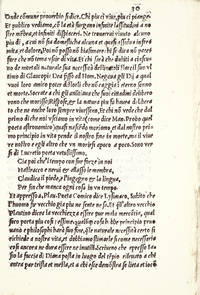
154388<p>8° mm 151x104; cc. 32. Marca tipografica al frontespizio. Margine superiore un poco rifilato. Pergamena posteriore.</p><p>Seconda edizione del dialogo albertiano - meglio conosciuto sotto il titolo di <em>Theogenius</em> - dopo quella che priva di dati tipografici ISTC cataloga come: "Florence 1500" cfr. L.B. Alberti <em>Opere volgari</em> II <em>Rime e trattati morali</em> a cura di C. Grayson Bari 1966 p. 409.</p><p>Il <em>Theogenius</em> rappresenta un capitolo poco noto della fortuna e dell'influsso dell'epicureismo nel Quattrocento. In questo dialogo infatti l'Alberti illustra diversi temi dell'etica epicurea e <strong>traduce alcuni versi del <em>De rerum natura</em> di Lucrezio </strong>S. Gambino <em>Alberti lettore di Lucrezio: motivi lucreziani nel "Theogenius"</em> "Albertiana" IV 2001 pp. 69-84.</p><p>Leon Battista Alberti's <em>Theogenius</em> revived and revised the ancient view developed in the Hellenistic age according to which philosophy aims to form rather than inform people showing them how to cultivate a specific attitude towards existence through a rational comprehension of the nature of humanity and its place in the cosmos. This view of philosophy as a way of life was challenged by the development of scholastic philosophy seen as a body of speculative doctrines and professional skills ancillary to the superior wisdom of theology. Nevertheless it survived thanks to Renaissance humanists like Petrarch Alberti Erasmus and Montaigne. <strong>On the influence of Lucretius on Italian Humanism after Poggio Bracciolini's discovery of the only surviving manuscript of <em>De rerum natura</em> 1417</strong> cf. A. Brown <em>The Return of Lucretius to Renaissance Florence</em> Harvard University Press 2010 and S. Greenblatt <em>The Swerve: How the Renaissance Began</em> London 2011.</p> Appresso Paulo Girardo, [colophon:] per Venturino Rosinello
195489152Firenze: Vallecchi 1954. Brossura custodia wrappers slip-case. Ottimo Fine. Una delle 200 copie con 7 acqueforti tirate a mano dai rami originali numerate e firmate a matita cm 126x232"; 74x6; 95x7; 13x92; 124x7; 53x9;" 115x94. cm 35x25. pp. 50 incisioni. Ottimo Fine. Prima edizione di 800 200 es. mumerati. Prima edizione di 800 200 es. mumerati. Vallecchi, unknown
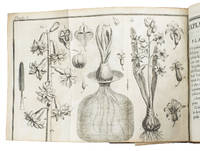
1765L3IEIGJIR4NJ1765. 252 4; 156 pp. Convolute containing the rare second editions of two botanical books one on tulips and the other on hyacinths written by the French priest and botanist Jean Paul Rome dArdène 1689-1769 famous for his studies of flowers which demonstrate his vast erudition as well as providing practical advice. His work is therefore full of information addressed not only to florists and gardeners but to scientists flower lovers and cultivated persons generally and infused with the authors profound love for his subject Oak Spring Flora. The same printer-publisher published the first editions in 1760 and 1759 respectively.Ad 1: Traité des tulipes is an extensive work exclusively devoted to tulips discussing their origin name different varieties cultivation and beauty in 12 chapters. It ends with two folding plates illustrating tulips with an explanation for each plate.Ad 2: Traité sur la connoissance et la culture des jacintes similarly discusses .different aspects of the hyacinth once again in twelve chapters. It covers etymology the right conditions for cultivation and common diseases that affect hyacinths. Like the tulips it ends with two folding plates illustrating hyacinths with an explanation for each plate. It was translated into Italian in 1763. Both first editions are very rare: WorldCat records two copies of each but also only three and four copies of the present second editions of 1765.With a small crease in the first folding engraved plate of Traité des tulipes and a small tear in one text leaf but overall in very good condition.l Ad 1: Hunt 587; Oak Spring flora 76 note p. 294; WorldCat 3 copies; cf. Cat. Lindley libr. p. 10 1760 ed. Ad 2: Oak Spring flora 76 note p. 294; WorldCat 4 copies; cf. Cat. Lindley libr. p. 10 1759 ed.; Hunt 526 note 1759 ed.; neither in: BMC NH; Nissen BBI; Bradley. unknown
194489156Roma: Documento 1944. Ottimo Fine. Dieci acqueforti originali numerate e firmate dall'Artista cm da 145x195 a 30x195. Foglio cm 355x27. Ogni incisione reca a matita anche un proverbio di Gentilini. Edizione curata dalla Libreria La Margherita. 4to cm 37x285. Ottimo Fine. Prima edizione di 45 esemplari numerati. Prima cartella di incisioni di Franco Gentilini. Documento, unknown
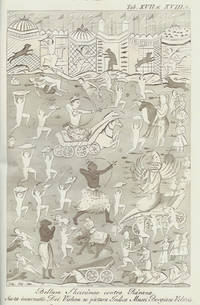
179177<p>4° mm 250x190; pp. XII 326. Al frontespizio vignetta incisa raffigurante Ganesha e <strong>32 tavole fuori testo</strong> di cui una a doppia pagina. Nel testo <strong>caratteri in sanscrito</strong>. Legatura coeva in piena pelle marezzata. Bell'esemplare.</p><p>First edition.</p><p>As the title well explains the Systema Brahmanicum by the Indologist Paulinus of St. Bartholomew - valuable compendium of Brahmanism - is closely based on the collection of <em>Indica reperta</em> from the famous Borgia Museum in Velletri <strong>profusely illustrated by the engravings. The volume therefore can be browsed as a kind of 'exegetical catalog' of the Hindu collection</strong>.<br /><br />The ancient Borgia Museum in Velletri formed between the 17th and 18th centuries by the Roman branch of the Borgia family was greatly enriched and enlarged in the second half of the 18th century by Cardinal Stefano Borgia 1731 – 1804 a man of vast culture who was a scholar of history and ethnology. The Museum famous throughout Europe for the variety and the rarity of the <em>reperta</em> as well as the singularity of the collections included artifacts from all parts of the world and was divided into nine sections one of which dedicated to Hindu manuscripts and relics.</p><p>Paulinus of St. Bartholomew Leithaberge in Lower Austria 1748 - Rome 1806 was an Austrian Carmelite missionary and Orientalist of Croatian origin. <strong>He is credited with being the author of the first Sanskrit grammar to be published in Europe and for being one of the first Orientalists to remark upon the close relationship between Indian and European languages</strong> followed by others such as William Jones and Gaston-Laurent Coeurdoux.<br /><br />Having entered into the seminary of the missions of his order at Rome he did Oriental studies at the College of St Pancratius. He was sent in 1774 as missionary to Malabar India. After spending fourteen years in India he was appointed vicar-general of his order and apostolic visitor. He was very well versed in languages: he spoke German Latin Greek Hebrew Hungarian Italian Portuguese English Malayalam Sanskrit and some other languages of India. He became known in Kerala as Paulinus Paathiri. He was one of the first to detect the similarity between Sanskrit and Indo-European languages though the very first was likely Fr Thomas Stephens SJ.</p><p>Recalled in 1789 to Rome to give an account of the state of the mission in Indostan he was charged with editing books – to correct the Catechisms and elementary books printed at Rome – for the use of missionaries.</p><p>In Rome he came into contact with Cardinal Stefano Borgia 1731 – 1804 Secretary of Propaganda Fide antiquarian scholar and patron who had set up in Velletri his native city the very well-endowed Museo Borgiano. Cardinal Borgia appointed him his private secretary and financed the publication of many volumes of indology including the first European grammar of the Sanskrit language <em>Sidharubam seu Grammatica Samscrdamica</em> published in Rome in 1790.</p> Apud Antonium Fulgonium
20091-0444527028Elsevier Science Ltd 2009. Hardcover. New. illustrated edition edition. 2200 pages. 11.50x9.25x7.25 inches. Elsevier Science Ltd hardcover
1772L3LEN89INLTKParis 1772. 8vo. Didot Knapen & Delaguette Contemporary mottled calf gold-tooled spine with red title-label red edges marbled endpapers. With 2 folding letterpress tables and 10 folding engraved plates I-X. XXXII 427 2 1 blank pp. First edition of an influential work on geometrical crystallography by the French mineralogist Jean-Baptiste Louis Romé de l'Isle 1736-1790 one of the founders of modern crystallography. "In 1772 he published his first important technical work a one volume essay on crystallography in which he identified 110 crystal forms. This was a major expansion upon the work of Linnaeus . The Essai made Romé de l'Isle a prominent name among Parisian scientists of his day" Wilson. Romé is best known for his "law of constancy of interfacial angles" now the first law of crystal habit. The preliminaries contain an annotated bibliography by the author of the principal works on crystals. The plates depict numerous crystal forms as well as some geometric figures.Occasionally some very faint foxing or a small spot. Binding only slightly rubbed along the extremities. Overall in very good condition.l Hoover 2681; Ward & Carozzi 1906; Wilson The history of mineral collecting p. 52. unknown