[HEURES A L'USAGE DE ROME].Biblio.com

2 422 résultats
BB08<p>Paris Germain Hardouyn 1518.</p><p>8vo 171 x 110 mm printed on vellum skin of 84 ll. in 11 quires signed A-K by 8 and L by 4. Roman characters 31 lines. The mark of the Hardouins is printed on l. A1.</p><p>17 large figures including the anatomical Man. 21 small illuminated vignettes 4 illuminated borders. Complete.</p><p>Full brown velvet from the 18th century signs of wear.</p><p><b>Precious Book of Hours printed on vellum skin decorated with 17 full-page engravings illuminated with gold at the time with 21 small vignettes equally illuminated and with numerous gilt initials on a blue or red background. </b></p><p>The calendar is dated 1518.</p><p>Lacombe 290 ; Van Praet Catalogue p. 112 n°135 ; Brunet <i>Heures</i> n°251.</p><p>The iconography is composed besides the printer's mark and the anatomical man of 16 large full-page figures all colored with shimmering colours and inserted inside gilt framings. </p><p>The 16 engravings represent:</p><p><i>- St John the Evangelist.</i></p><p><i>- Arrest of Jesus.</i></p><p><i>- Adam and Eve.</i></p><p><i>- Annunciation.</i></p><p><i>- Visitation.</i></p><p><i>- Nativity.</i></p><p><i>- Annunciation to the Shepherds. </i></p><p><i>- Adoration of the Magi.</i></p><p><i>- Presentation at the temple.</i></p><p><i>- Flight into Egypt. </i></p><p><i>- Presentation of Mary at the Temple.</i></p><p><i>- Bathsheba in her bath.</i></p><p><i>- Resurrection of Lazarus</i></p><p><i>- Crucifixion.</i></p><p><i>- Pentecost.</i></p><p><i>- Annunciation</i>of a different manner.</p><p>The illustration also contains 21 vignettes hand-colored at the time and illuminated.</p><p>This precious Book of Hours entirely rubricated is thus decorated with all its capital letters painted in gold on an alternated red or blue background. </p><p><b>Brunet underlines the rarity of Books of Hours printed by the Hardouins when they are rubricated and illuminated.</b></p><p>" <i>We can find quite precious copies because of the paintings and decorated letters that illustrate them. It appears that those gilt and coloured letters are the work of Germain Hardouyn 'in arte litteriare peritissimus' as bears the subscription of the Hours of the Virgin dated 1514</i> " Brunet V 1628.</p><p>Gilles Hardouyn settled at the end of the Nostre dame Bridge where he worked from 1509 until 1521.</p><p>After this date his associate Germain Hardouyn who was his associate in the bookshop succeeded him and temporarily occupied his home. He himself printed until 1528.</p><p><b>Precious copy illuminated on vellum skin coming from the library of Montalembert</b> with ex-libris and stamp of the <i>Earl of Montalembert</i>.</p><p><br /></p><p><u>French</u></p><p>Paris Germain Hardouyn 1518.</p><p>In-8 imprimé sur peau de vélin de 84 ff. en 11 cahiers signés A-K par 8 et L par 4. Caractères romains 31 lignes. La marque des Hardouin occupe le f. A1.</p><p>17 grandes figures dont l'Homme anatomique. 21 petites vignettes enluminées 4 bordures originales enluminées. Complet.</p><p>Plein velours brun du XVIIIe siècle qq. usures.</p><p>171 x 110 mm.</p><p><b>Précieux livre d'Heures imprimé sur peau de vélin orné de 17 gravures à pleine page enluminées à l'or à l'époque de 21 petites vignettes également enluminées et de nombreuses initiales en or sur fond bleu ou rouge.</b></p><p>La calendrier porte la date de 1518.</p><p>Lacombe 290 ; Van Praet Catalogue p. 112 n°135 ; Brunet Heures n°251.</p><p>L'iconographie se compose outre le feuillet de marque et l'homme anatomique de 16 grandes figures à pleine page toutes coloriées en teintes chatoyantes et insérées dans des encadrements à portique dorés.</p><p>Les 16 grandes gravures représentent :</p><p><i>- Saint Jean l'évangéliste</i></p><p><i>- L'Arrestation du Christ</i></p><p><i>- Adam et Eve</i></p><p><i>- L'Annonciation</i></p><p><i>- La Visitation</i></p><p><i>- la Nativité</i></p><p><i>- l'Annonce aux bergers</i></p><p><i>- L'Adoration des mages</i></p><p><i>- La Présentation au temple</i></p><p><i>- La Fuite en Egypte</i></p><p><i>- La Présentation de Marie au Temple</i></p><p><i>- Bethsabée au bain</i></p><p><i>- La Résurrection de Lazare</i></p><p><i>- La Crucifixion</i></p><p><i>- La Pentecôte</i></p><p><i>- L'Annonciation </i>de facture différente</p><p><b>L'ornementation comprend également 21 vignettes coloriées à l'époque et enluminées.</b></p><p><b>Ce précieux livre d'Heures entièrement rubriqué </b>est ainsi orné de toutes ses majuscules peintes en or sur fond rouge ou bleu alterné.</p><p><b>Brunet souligne la rareté des livres d'Heures imprimés par les Hardouin lorsqu'ils sont rubriqués et enluminés.</b></p><p>" <i>Il se trouve des exemplaires assez précieux à cause des peintures et des lettres ornées qui les décorent. Il paraît que ces lettres en or et en couleur sont l'ouvrage de Germain Hardouyn 'in arte litteriare peritissimus' ainsi que le porte la souscription des Heures de la Vierge à la date de 1514</i> " Brunet V 1628.</p><p>Gilles Hardouyn s'établit au bout du pont Nostre dame où il exerça de 1509 jusqu'en 1521.</p><p>Après cette année son associé Germain Hardouyn qui avait été son associé dans la librairie lui succéda et occupa momentanément son domicile. Il imprima lui-même jusqu'en 1528.</p><p><b>Précieux exemplaire enluminé sur peau de vélin</b><b> provenant de la Bibliothèque de Montalembert </b>avec ex-libris et cachet du Comte de Montalembert.</p> hardcover
149325185Nuremberg: Anton Koberger for Sebald Screyer and Sebastian Kammermeister 1493. First Edition with the German text. The bi-folium with fine hand-colouring to the Rome view. This is one of the large double-page city-view woodcuts from the workshop of Mighael Wolgemut and Wilhelm Pleydenwurff beneath 22 lines of text. It is handsomely and finely handcoloured in blues greens yellows reds grays etc. Double-page folio ca. 540 x 380 mm handsomely mounted framed and glazed. Leaves LVII and LVIII. In fine condition and very well preserved and presented. FROM THE FIRST EDITION OF THE NUREMBERG CHRONICLE ARGUABLY THE GREATEST ILLUSTRATED BOOK OF THE 15TH CENTURY. The artists Michael Wolgemut the well-known teacher of Albrecht Dürer and his stepson Wilhelm Pleydenwurff have been praised and admired for over five-hundred years for their contributions to one of the monuments of early printing. David Bland calls it "a marvelous book and a landmark in the history of illustration" and through the ages it has more than fulfilled Koberger's prophecy that it would be "the delight of the men of learning and of everyone who had any education at all."<br> A HIGHLY IMPORTANT INCUNABLE the “Nuremberg Chronicle†is the most extensively illustrated book of the fifteenth century and after the Gutenberg Bible the most celebrated book printed in the fifteenth century. Its 1809 woodcut illustrations 1164 excluding repeats depict popes saints and other religious figures kings and emperors historical and biblical genealogies mythological and fanciful creatures natural phenomena and views of all the major cities of the known world as well as a brilliant creation sequence. In addition to the full-sheet maps of the world and of Europe twenty-nine city views such as this one span two pages and eight other cuts excluding the xylographic title page are full-page. The colophon explicitly acknowledges the contributions of the artists Michael Wolgemut and Wilhelm Pleydenwurff. Albrecht Dürer was at that time a pupil in Wolgemut's workshop and there is good evidence that he did many of the preliminary drawings for woodcuts and may even have cut some of them see Adrian Wilson THE MAKING OF THE NUREMBERG CHRONICLE. Anton Koberger, for Sebald Screyer and Sebastian Kammermeister unknown
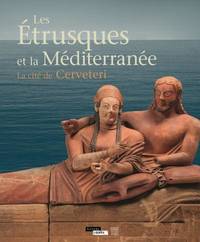
2013PMV503702ELens Paris: Louvre-Lens ; Somogy éd. d'art 2013. Trade paperback. Good/Not issued. 232 x 290 x 26 cm. Paperback • Illustrations en noir et en couleurs cartes couverture illustrée en couleurs • <b><i>French text original</i></b> • Printed 2013. Louvre-Lens ; Somogy, éd. d'art paperback
161860225Rome: Venance Monaldini Librarie Place d’Espagne No. 79 1816-1821. Four works. 1st -- Large dissected copper-engraved map dissected & mounted on linen 35.5 x 22.75 in. slight foxing edgewear closed tears at corner folds a couple folds w/ archival repair tape on verso over linen; 2nd & 3rd - 8vo. 63 1; 15 1 pp. With large folding copper-engraved frontisp. highlighting section of the pantogram. Original marbled wrappers very slight chipping head & foot of spine; 4th -- large 3-sheet “Pantogram†or panoramic view of Rome 63 x 8.75 in. all preserved together in open-backed slipcase wrapped in patterned blue paper printed cover label manuscript pricing information & title in ink some scuffing & edgewear still an overall VG set. Second edition of the large dissected map of Rome and surrounding countryside fourth edition of the two-in-one handbook illustrating the coast along the Tyrrhenian Sea from Lake Bracchiano to Mount Circe and inland to the Central Apennines foothills. Sickler’s 1773-1836 Panoramic elevated view of Rome with text key above identifying churches monuments and historical locations in 19th-Century Rome together with the map and handbooks here were key references for those taking the Grand Tour following the Napoleonic Wars which had devastated much of the Continent. Pietro Ruga 1772-1850 was a noted Italian engraver printmaker furniture designer and architectural draftsman best remembered for his maps and pocket panoramic views of Rome. Venance Monaldini Librarie, Place d’Espagne, No. 79, unknown
2002146488Adelaide: Axiom Publishing in association with the John Bray Law Chapter of the Alumni Association of the University of Adelaide 2002. First Edition. Hardcover. Very Good/Fine. Adelaide Axiom Publishing in association with the John Bray Law Chapter of the Alumni Association of the University of Adelaide 2002. Small quarto 366 pages with numerous illustrations from photographs. Papered boards; front cover slightly marked; front free endpaper slightly stained from the adhesive used to mount two signed cards see below; overall an excellent copy with the near-fine dustwrapper slightly rubbed in the pictorial slipcase with the original laminate bubbled with slight loss on one side. The deluxe edition being number 220 of 275 copies with the limitation stated on the first of two cards mounted facing each other on two early blanks. The cards are personally signed by the editor and 13 prominent members of the South Australian legal and political fraternities above their printed names. The signatories are Sir William Deane Sir Harry Gibbs Len King Elizabeth Evatt Ted Mullighan Marcus Einfeld Amanda Vanstone Geoff Muecke Clyde Cameron Kevin Marjoribanks Noni Farwell Peter Bassett Susan Magarey and Helena Jasinski. <p>The cards are now loosely inserted as the paste is ineffective as well as decidedly inferior. A contemporary personalised presentation plate is mounted on the half-title. Axiom Publishing in association with the John Bray Law Chapter of the Alumni Association of the University of Adelaide hardcover
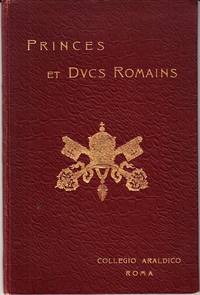
116954Rome Collège Héraldique 1906. 8vo. 43pp. With 6 full page plates in the pagination. Publ. dark red embossed paper boards gilt front board with front wrapper preserved. Front fly-leaf loose. The plates with the heraldic arms of the families. Roman nobility from d’Archery to Veralli. hardcover
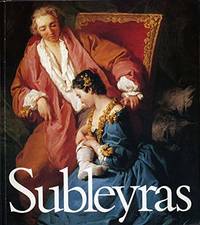
1987PMV436204QParis: Éd. de la Réunion des musées nationaux 1987. Trade paperback. Good/Not issued. 240 x 215 x 27 cm. Paperback • Illustrations en noir et en couleurs couverture illustrée en couleurs • <b><i>French text original</i></b>. Éd. de la Réunion des musées nationaux paperback
2004132996Los Angeles: Pandemonium Theatre Company 2004. An archive of 10 original posters for productions staged by Ray Bradbury's Pandemonium Theatre Company from 1988 to 2004. The plays were performed in Southern California predominantly at The Court Theatre Falcon Theatre Theatre West The Raven Playhouse and Melrose Theatre. <br /> <br /> The archive includes posters from 10 productions including "Fahrenheit 451" "The October Country" "Past Present & Future" "The Time of Going Away" and "Drunk and In Charge of a Bicycle." and his Irish play "Falling Upward!" "Falling Upward!" was one of Bradbury's favorite plays and especially as he advanced in age he was know to encourage its frequent production simply for the joy of being able to see it again. <br /> <br /> Bradbury was an avid playwright and a familiar and enthusiastic presence in the Southern California theatre circuit near his home. In 1963 he and director Charles Rome Smith founded Pandemonium Theatre Company. The two friends would go on to work with the company together for the next four decades until Rome's death in 2004. This archive is a solid representation of the company's latter half before Smith's passing and Bradbury's hearing loss which would necessitate that he stop attending performances. <br /> <br /> Posters approximately 11 x 17 inches. About Fine condition. Pandemonium Theatre Company unknown
1627AQ23154Romae i.e. Rome: Ex Typographia Reu. Camerae Apostolicae 1627. 8160pp 16. Contemporary vellum title in manuscript to spine. Extremities lightly marked and discoloured later paper labels to foot of spine. Ink-stamp of the Lawes Agricultural Library to FEP and REP. A crisp copy of a mid-seventeenth century edition of the statutes and laws of the Roman city guild of agricultural workers published by Giorgio Ferrari for the Roman Papal Press. Part of the comprehensive reforms and publication of decrees and statutes issued in the wake of Michele Ghislieri’s election as Pope Pius V in 1566 this volume outlines an extensive reorganisation of the agricultural industry including measures relating to the sale and distribution of vegetables and live-stock including pricing regulations regarding the division of land the rates of pay for farm workers and numerous public health measures relating to hygiene. Numerous revised editions were issued up to the mid-nineteenth century. . Quarto. Ex Typographia Reu. Camerae Apostolicae hardcover
1595AQ19655Romae i.e. Rome: Apud Georgium Ferrarium 1595. 8 196pp 34. Contemporary vellum title in manuscript to spine. Extremities worn heavily marked and discoloured several worm-holes to boards spine cracked. Ink-stamp of the Lawes Agricultural library to FEP early ink signatures to title a couple scored through leaves browned and stained some worming to margins. An early edition of the statutes and laws of the Roman city guild of agricultural workers published by Giorgio Ferrari for the Roman Papal Press. Part of the comprehensive reforms and publication of decrees and statutes issued in the wake of Michele Ghislieri’s election as Pope Pius V in 1566 this volume outlines an extensive reorganisation of the agricultural industry including measures relating to the sale and distribution of vegetables and live-stock including pricing regulations regarding the division of land the rates of pay for farm workers and numerous public health measures relating to hygiene. Numerous revised editions were issued up to the mid-nineteenth century. COPAC records copies of this edition at two locations Cambridge and Oxford; OCLC adds one further BNF. . Quarto. Apud Georgium Ferrarium hardcover
1956DOMIT[RO95Rome: 1956. 1956. 4to. pp. 149. profusely illus. many colour some full-page. wrs. extremities rubbed tail of spine chipped. Exhib. Cat. [Rome: 1956]. unknown
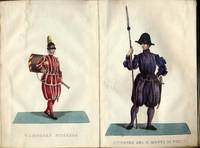
18533220516<i>Hand-coloured lithograph panorama measuring 16 x 335 cm including a title portrait and 30 costumes; folding out of covers measuring 172 x 115 mm.; folding down into original red pattern paper boards 17.2 x 11.5 cm. slightly worn on joints</i><br /><br />Produced as a souvenir for visitors to Rome the panorama depicts the bewildering variety of colourful costumes that were still being worn by the Papal Court. The only flamboyant costume to survive today is the familiar one worn by the Swiss Guard although variants of other costumes used by the clergy in the panorama do survive but in a much reduced modest form.<br /><br />The panels that follow each other depict a costume of a member of the Papal Court beginning with he Pope himself: They are entitled: 'Pio IX P.O.M.'; 'S.P. in Dedia Gestatoria'; 'S.P. in Abrito Pontificale'; 'S.P. in Abrito Di Udienza'; 'S.P. in Mozzetta e Stola'; 'S.P. in Abito Privato'; 'Cardinale Diacono'; 'Cardinale no sibérien Cappa'; 'Cardinale in Manteletta'; 'Cardinale in Privato'; 'Vescovo Greco'; 'Vescovo Siro'; 'Vescovo Armeno'; 'Prelato' 'Crocifero'; 'Bussolante Contriregno'; 'Cammeriere Secreto con Flabello'; 'Senatore'; 'Cameriere Segreto'; 'Mazziere'; 'Gentilomo de Cardinale'; 'Sediaro'; 'Guardia Nobile'; 'Vesillifero di s. Chiesa'; 'Capitano Svizzero'; 'Sargente Svizzero'; 'Svizzero con Corazza'; 'Svizzero con Corazza'; 'Soldato Svizzero'; 'Svizzero del S. Monte di Pieta'; 'Tamburro Svizzero'<br /><br />Compare with Abbey Life 553. Presso i Fratelli d’Atri, Via del Corso No. 395, 395A e 142.
RGW14805Engraving on wove paper figures walking at night plate numbered 12 good margins a little creasing in the margins Giuseppe Vasi who moved to Rome in 1736 produced a ten volume work recording the ancient and modern monuments of the city published between 1747-1761. unknown
RGW14806Engraving on wove paper figures walking at night plate numbered 4 good margins creasing in the margins tear in left margin coming within platemark Giuseppe Vasi who moved to Rome in 1736 produced a ten volume work recording the ancient and modern monuments of the city published between 1747-1761. unknown
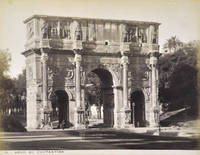
80275. Two albumen prints attached on different sides of one original card. Slight fading on right margin otherwise a good photograph with very good tonal range. Title printed underneath image. Dimensions 20 x 26cm. <br /> <br /> unknown
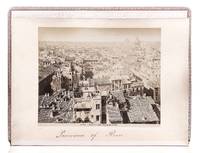
65475c.1900. Large 4to. 37 x 27.5 cm. Contemporary full brown morocco spine with raised bands gilt inner dentelles endpapers of white watered silk all edges gilt. 66 albumen prints 20 x 25 cm pasted onto 34 leaves of card each captioned in the print and with additional manuscript title in English beneath all of Rome save for the final 18 which depict Florence Milan and Pisa. Some toning and light scattered spotting throughout some fading to prints generally a very good example. [c.1900]. hardcover
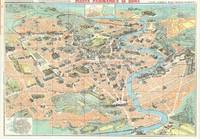
63441Roma: Editore Mauro Gigli c.1960. Original colour-printed bird's-eye-view of Rome 70 x 100 cm folding between publisher's pictorial card covers the verso printed with an additional map of Rome and extensive index. Oriented with north to lower right. Insets: E.U.R. -- Lido di Roma Ostia. Index and map "Pianta stradale di Roma" on verso. Generally an excellent copy. Arti grafiche Panetto & Petrelly. Roma: Editore Mauro Gigli, [c.1960]. unknown
155963276Geneva: Excudebat Henricus Stephanus Henri Etienne illustris viri Huldrici Fuggeri typographus 1559. Folio. 9 x 13 in. iiii 56 leaves 4 A-G8 i.e. 120 pp unpaginated. Printer’s device on title page decorated initials decorated headpieces. Contemporary mottled calf 5 raised bands on spine gilt ornament on spine gilt & tan morocco spine label scuffing rubbing slight worming to covers minor chipping head & foot of spine faint tidemark to lower corner visible through C2 still a good copy from the libraries of S. Pietro in Vincoli Rome Italy and then Joseph Pitton de Tournefort 1656-1708 noted French Botanist credited as the first to make clear distinction between genus and species who published his books as “conseilier du roy†as seen here in ink manuscript at lower fore-edge of title. First edition of Henri Etienne II’s printing of Steun von Schwarzenau’s “Collection of genealogies of Roman patrician and plebian families featuring a detailed analysis of ancient Roman lineages tracing them through generations. He wrote the work at 21 while finishing his studies in Padua and Strasbourg from 1554-1159 and served on the Court Council of Emperor Macilimian II from 1564-1566 and then President of the Court Chamber until 1575 often mediating as a Protestant between Protestants and Catholics. This is an early work published by the then 30-year-old scholar-printer and grandson of the famed Henri Estienne who in 1557 with the financial backing of Ulrich Fugger established his own press before inheriting his father Robert Etienne’s press later in 1559. Adams S1931; See: Renouard Estienne 118: 2 L2082-2091. Excudebat Henricus Stephanus [Henri Etienne], illustris viri Huldrici Fuggeri typographus, hardcover
189755331Philadelphia: John C. Winston Co. The International Press 1897 ca. 1900. 16mo. x 2 510 pp. Title in red & black. Photogravure frontisp. numerous photogravure plates 1 large folding colour map. Decorated red cloth gilt ornament on front cover & spine t.e.g. w/ red linen open-backed slipcase slight darkening shelfwear NF/NF copy. Early Winston edition of this nicely illustrated travelogue and history of the city of Rome first published by Coates in 1897 as part of their extra-illustrated series. John C. Winston Co., The International Press, hardcover
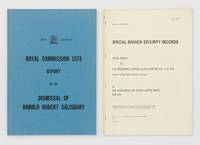
1978146447Adelaide: D.J. Woolman Government Printer 1978. First Edition. Paperback. Good. Adelaide D.J. Woolman Government Printer 1978. Quarto 90 pages. Wrappers a trifle rubbed at the corners; occasional highlighting; in good condition. The official report of the Royal Commission chaired by Justice Roma Mitchell which found that South Australian Police Commissioner Harold Salisbury had misled the state government with regard to personal files maintained by 'Special Branch' and that his dismissal was justified and legal. Offered together with a copy of the report of Acting Justice White which prompted the dismissal 'Special Branch Security Records. Initial Report to the Honourable Donald Allan Dunstan Q.C. LL.B. M.P. Premier of the State of South Australia' South Australian Parliamentary Paper Number 145 of 1978; 82 pages; stapled as issued; some tanning and highlighting. <p>'For years questions had been raised as to whether some files kept by the Special Branch were political and sexual in nature. A January 1978 report found that they were. The crux of the matter was that Salisbury misled Dunstan twice about the files who in turn misled the parliament. Salisbury denied his accountability to the government and refused to resign. Dunstan's sacking of him was constitutionally justified though done so quickly that it sparked public outcry and demonstrations. A June 1978 royal commission report found that the dismissal was justifiable. While Dunstan was vindicated the criticism took a political and personal toll. In February 1979 he collapsed in the House during question time and resigned on the advice of his doctor' Australian Dictionary of Biography. D.J. Woolman, Government Printer paperback
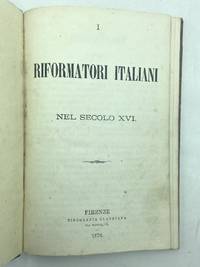
187011844Firenze: Tipografia Claudiana 1870. Buon esemplare. Legatura coeva in cartone rivestito in carta marmorizzata bruna in ottavo cm 17x11 pp 163 1. Raccolta di biografie di riformatori italiani del Cinquecento pubblicata dalla Tipografia Claudiana all’inizio del periodo fiorentino 1862-1910. L'anonimato dell'edizione nasconde il lavoro dell’emigrato siciliano Giacinto Scelsi patriota garibaldino governatore di Cefalù Noto e Girgenti poi prefetto dal 1861 e senatore dal 1890 del Regno giurista ed economista a Torino tenne la cattedra di Economia Politica e fu tra i fondatori della rivista Il Diritto 1854; in parlamento promosse la creazione di una legge sugli infortuni sul lavoro e la tutela del sepolcro di Giacomo Leopardi. Il volumetto si compone di una ventina di biografie volte a dimostrare la diffusione del fermento protestante in tutte le regioni d'Italia: Giovanni Ludovico Pascale Celio Secondo Curione Pietro Martire Vermigli Pietro Carnesecchi Galeazzo Caracciolo Fanino di Faenza Francesco Gamba Gioffredo Varaglia Nicola Sartorio Bartolomeo Bartocci Domenico della Casa Bianca Galeazzo Trezio Pietro Paolo Vergerio Giovanni Mollio; un capitolo è dedicato ai riformati attivi a Venezia Baldassarre Altieri Baldo Lupetino Giulio Ghirlanda Antonio Ricetto Francesco Sega Francesco Spinola Girolamo Galateo. Per l'autore si veda A. Jahier che nel suo saggio del 1925 su Rifomati e riformatori italiani dei secoli XV e XVI ricorda questo lavoro ""utile al suo tempo"" ma ormai esaurito e la Bibliografia della Storia della Riforma Religiosa in Italia di P. Chiminelli Roma Bilychnis 1921 numero 413. Buon esemplare. Tipografia Claudiana unknown
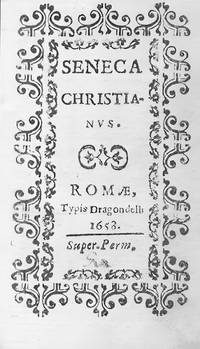
165873<p>32° mm 85x53; A-L8 K6 ; pp. 152 cc. 2. Frontespizio in cornice silografica. Legatura dell'epoca in pergamena.</p><p>Rarissima <em>miniature edition</em> di un'antologia "cristiana" del pensiero di Seneca autore assai fortunato nel corso del '600.</p><p>Dal falso carteggio tra Seneca e san Paolo al presente breviario laico la leggenda di "Seneca cristiano" abbandona il terreno infido dell'apocrifìa medievale per trovare un riscontro puntuale nello stile e nel contenuto presso una "sentenziosità virtuosa" precipuamente barocca.</p> Typis Dragondelli
260791828. On one side of 31 x 21 cm. A frail survival worn aged and with closed tears with the backing damaged and stained. Text clear and entire in Greek key border. Blind stamp of Cardinal Zurla at bottom left. Signed by 'J. Patr. Constantinop. Vicesgs.' and by the scribe who completed the printed document in manuscript. Somewhat crudely printed with Zurla's arms at the head. Headed: 'D. PLACIDUS ORDINIS S. BENEDICTI / CONGREGATIONIS CAMALDULENSIS / TITULI S. CRUCIS IN JERUSALEM S. R. E. PRESBYTER / CARDINALIS ZURLA / SSmi Domini Nostri PAPAE VICARIUS GENERALIS.’ The manuscript part of the document concerning 'sacred particles from the neck of Saint Theresa the Virgin reads: 'sacras particulas ex ossibus S. Teresiae Virg; quas ex authenticis locis extractas reverenter collo cavimus in thea ex aurichalco argento obducto ovalis figurae unico crystallo munita’. See scan. 1828. unknown
156755<p>4º mm 220x158; cc. 4 76 8. <strong>Frontespizio allegorico inciso</strong>; testatine capilettera e fregî silografici. Caratteri corsivo e romano. Legatura coeva in cartonato rustico. Le prime otto carte sono interessate al margine da leggere gore d'umidità per il resto l'esemplare è fresco e pulito con ampli margini.</p><p>Provenienza: all'angolo inferiore sinistro della seconda carta coeva nota manoscritta di possesso; la stessa mano corregge il testo di alcuni componimenti.</p><p><strong>First edition of a poetry book essential for the history of Renaissance music as it constitutes the first organic collection of Torquato Tasso and Battista Guarini's poems.</strong></p><p>According to scholars <strong>Tasso and Guarini were the poets whose verses were most frequently set by Italian madrigalists and monodists in the late 16th and 17th centuries. From the 1570s through the 1630s virtually all composers of secular vocal music in Italy and Europe including notable ones like Luca Marenzio and Claudio Monteverdi set one or more of their poems producing a total of hundreds of settings</strong> cfr. <em>Torquato</em><em> Tasso in Music Project</em>: https://www.tassomusic.org; https://interlude.hk/the-music-of-poetry-giovanni-battista-guarini-tirsi-wanted-to-die/.</p><p><strong><em>Editio princeps</em> della "prima raccolta organica di rime tassiane </strong>…<strong> 38 sonetti due madrigali due canzoni" </strong>A. Casu <em>"Translata proficit arbos": le imprese "eteree" nelle 'Rime' del Tasso</em> "Italique" <em>online</em> II 1999 <strong>nonché del primo rilevante <em>corpus </em>di liriche guariniane</strong> 35 sonetti 56 stanze e un madrigale.</p><p>Sull'attribuzione tipografica cfr. D.E. Rhodes <em>Rettifiche e aggiunte alla storia della stampa a Padova 1471-1600</em> in <em>Studi di bibliografia e di storia in onore di Tammaro de Marinis</em> IV Verona 1964 p. 35.</p><p>L'Accademia degli Eterei nacque nella Padova dei primi anni '60 per iniziativa di un gruppo di giovani studenti letterati e soprattutto di Scipione Gonzaga Mantova 1542 – San Martino dall'Argine 1593. Fu inaugurata ufficialmente da un'orazione di Stefano Santini il primo gennaio 1564. Alle sedute bisettimanali dedicate alla discussione e alla recita di testi poetici prese parte anche il Tasso reduce dalla breve stagione trascorsa a Bologna e richiamato a Padova proprio dal Gonzaga. All'ambiente degli Eterei vanno ricondotti molti componimenti lirici tassiani di questa stagione che poi confluirono nella presente raccolta si veda l'edizione a cura di G. Auzzas e M. Pastore Stocchi Padova Accademia Galileiana 1995: alla sezione di rime per Lucrezia Bendidio il Tasso accostò altri testi dei suoi esordi dagli omaggi a Leonora d'Este a una serie di liriche d'occasione.</p><p>"A consacrare la fama dell'esordiente lirico Battista Guarini giunse l'anno successivo la prima vera esperienza di un qualche rilievo: la partecipazione su invito di Scipione Gonzaga all'Accademia patavina degli Eterei. Il ruolo e l'importanza del Guarini nel sodalizio in cui assunse il nome accademico di Costante risultano ben documentati oltre che dalla carica di segretario di cui venne insignito dal <em>corpus</em> delle sue rime accolte nella silloge degli accademici che vide la luce nel 1567. <strong>Un <em>corpus</em> che insieme con quello del giovanissimo Torquato Tasso si configura numericamente come il più folto a testimonianza del valore riconosciutogli nel novero degli undici "novissimi" poeti animatori dell'Accademia e promotori con la raccolta di una sperimentazione di prim'ordine nello sviluppo del petrarchismo veneto</strong>. Il felice "albergo delle Muse" Eteree resterà lungo la vita errante e tormentata del G. il solo fulgido esempio di una serena vacanza intellettuale di un esercizio letterario libero da obblighi servili e fondato su una pratica di relazioni personali: quel "sistema delle protezioni e degli amici" di cui sarà perno Scipione Gonzaga al quale il G. farà appello nei tempi bui delle sue disavventure cortigiane per ottenere appoggi e sostentamento. L'amicizia con il Gonzaga ma anche con altri Eterei come Ridolfo Arlotti e Annibale Bonagente oltre agli ovvi rapporti con il Tasso accompagnò il G. per tutta la vita coronata dalla scelta del cardinale come consulente e censore del <em>Pastor fido</em>. È inoltre presumibile che la stagione eterea fosse coincisa anche con lo sviluppo di quegli interessi filosofici che il G. verrà sempre rivendicando nelle <em>Lettere</em> come la più autentica inclinazione della sua indole costretta alla poesia per "diporto cortigiano" e "obbligo di servitù" ma per natura propensa a coltivare frutti di più elevata speculazione" E. Selmi <em>DBI</em> LXI 2003.</p><p>L'Accademia fu sciolta fra il 1567 e il 1568 proprio a ridosso di questo raffinato florilegio. La dedicata a Margherita di Valois detta Margherita di Francia Duchessa di Savoia Saint-Germain-en-Laye 1523-Torino 1574 che data 1° gennaio 1567 è firmata da Giovan Battista Guarini il Costante e Luigi Gradenigo l'Occulto. Oltre a quelle del Tasso e dei due prefatori sono presenti rime di: Annibale Bonagente Digiuno Ascanio Pignatello Adombrato Giovacchino Guarino il Lagrimoso Francesco Pusterla l'Affrenato Pietro Gabrielli l'Impedito Ridolfo Arlotti il Sicuro Stefano Santini l'Invaghito e il cardinale fondatore Scipione Gonzaga l'Ardito.</p><p>Cfr. M. Magliani <em>Sull'edizione delle Rime de gli Academici Eterei del 1567</em> Padova Accademia Patavina di Scienze Lettere ed Arti 1994 pp. 5-26 Estratto dagli <em>Atti e Memorie dell'Accademia Patavina di Scienze Lettere ed Arti</em> vol. 106 anno accademico 1993-1994 parte 3. Classe di Scienze Morali Lettere ed Arti; <em>Rime de gli Academici Eterei</em> a cura di G. Auzzas e M. Pastore Stocchi Introduzione di A. Daniele Padova 1995.</p> [Comin da Trino]
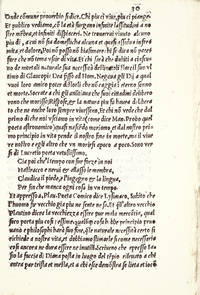
154388<p>8° mm 151x104; cc. 32. Marca tipografica al frontespizio. Margine superiore un poco rifilato. Pergamena posteriore.</p><p>Seconda edizione del dialogo albertiano - meglio conosciuto sotto il titolo di <em>Theogenius</em> - dopo quella che priva di dati tipografici ISTC cataloga come: "Florence 1500" cfr. L.B. Alberti <em>Opere volgari</em> II <em>Rime e trattati morali</em> a cura di C. Grayson Bari 1966 p. 409.</p><p>Il <em>Theogenius</em> rappresenta un capitolo poco noto della fortuna e dell'influsso dell'epicureismo nel Quattrocento. In questo dialogo infatti l'Alberti illustra diversi temi dell'etica epicurea e <strong>traduce alcuni versi del <em>De rerum natura</em> di Lucrezio </strong>S. Gambino <em>Alberti lettore di Lucrezio: motivi lucreziani nel "Theogenius"</em> "Albertiana" IV 2001 pp. 69-84.</p><p>Leon Battista Alberti's <em>Theogenius</em> revived and revised the ancient view developed in the Hellenistic age according to which philosophy aims to form rather than inform people showing them how to cultivate a specific attitude towards existence through a rational comprehension of the nature of humanity and its place in the cosmos. This view of philosophy as a way of life was challenged by the development of scholastic philosophy seen as a body of speculative doctrines and professional skills ancillary to the superior wisdom of theology. Nevertheless it survived thanks to Renaissance humanists like Petrarch Alberti Erasmus and Montaigne. <strong>On the influence of Lucretius on Italian Humanism after Poggio Bracciolini's discovery of the only surviving manuscript of <em>De rerum natura</em> 1417</strong> cf. A. Brown <em>The Return of Lucretius to Renaissance Florence</em> Harvard University Press 2010 and S. Greenblatt <em>The Swerve: How the Renaissance Began</em> London 2011.</p> Appresso Paulo Girardo, [colophon:] per Venturino Rosinello