2 422 résultats
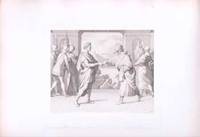
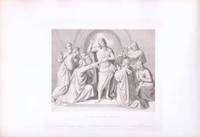
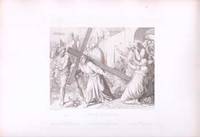
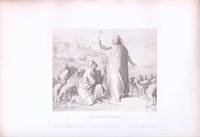
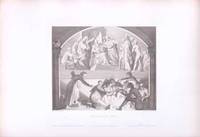
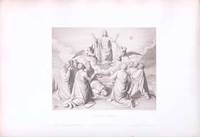
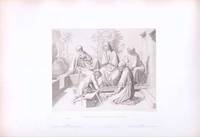
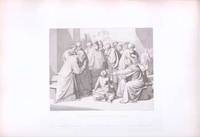
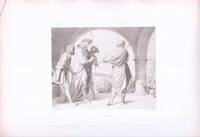
75-7654Dusseldorf: August Wilhelm Schulgen circa 1850. Engraving together with a letterpress description in English and French. 35 x 44.5 cm sheet size. Good. Tearing Age Toning Foxing at sheet edges else Good.Fueled by dissatisfaction with the direction of the Vienna Academy a group of six German students founded the Brotherhood of St. Luke in 1809. Among them was Johann Friedrich Overbeck son of a senator of the Hanseatic free city of Lübeck. The brotherhood was a direct reference to the old painter’s guilds of medieval times. Four of the artists Overbeck Franz Pforr Ludwig Vogel and Johann Konrad Hottinger settled in Rome in 1810. Later joined by Friedrich Wilhelm Schadow Peter von Cornelius Philipp Veit and Julius Schnorr von Carolsfeld they were mockingly referred to as the Nazarenes. The group advocated a renewed interest in religious art and monumental wall paintings…… Their religious zeal most likely stemmed from the fact that almost all of them were Roman Catholic converts. Although the pursuit of spiritual and artistic simplicity and piety were typically romantic characteristics the means by which they attempted to depict their dreams were classical. It has been suggested that the Nazarenes should be considered a special branch of German Romanticism. They strove for a new form of German religious-patriotic art fusing Dürer with Fra Angelico Perugino and a young Raphael. Dusseldorf: August Wilhelm Schulgen, circa 1850 unknown
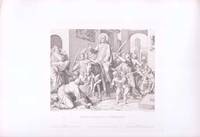
75-7646Dusseldorf: August Wilhelm Schulgen circa 1850. Engraving together with a letterpress description in English and French. 35 x 44.5 cm sheet size. Good. Tearing Age Toning Foxing at sheet edges else Good.Fueled by dissatisfaction with the direction of the Vienna Academy a group of six German students founded the Brotherhood of St. Luke in 1809. Among them was Johann Friedrich Overbeck son of a senator of the Hanseatic free city of Lübeck. The brotherhood was a direct reference to the old painter’s guilds of medieval times. Four of the artists Overbeck Franz Pforr Ludwig Vogel and Johann Konrad Hottinger settled in Rome in 1810. Later joined by Friedrich Wilhelm Schadow Peter von Cornelius Philipp Veit and Julius Schnorr von Carolsfeld they were mockingly referred to as the Nazarenes. The group advocated a renewed interest in religious art and monumental wall paintings…… Their religious zeal most likely stemmed from the fact that almost all of them were Roman Catholic converts. Although the pursuit of spiritual and artistic simplicity and piety were typically romantic characteristics the means by which they attempted to depict their dreams were classical. It has been suggested that the Nazarenes should be considered a special branch of German Romanticism. They strove for a new form of German religious-patriotic art fusing Dürer with Fra Angelico Perugino and a young Raphael. Dusseldorf: August Wilhelm Schulgen, circa 1850 unknown
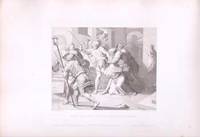
75-7651Dusseldorf: August Wilhelm Schulgen circa 1850. Engraving together with a letterpress description in English and French. 35 x 44.5 cm sheet size. Good. Tearing Age Toning Foxing at sheet edges else Good.Fueled by dissatisfaction with the direction of the Vienna Academy a group of six German students founded the Brotherhood of St. Luke in 1809. Among them was Johann Friedrich Overbeck son of a senator of the Hanseatic free city of Lübeck. The brotherhood was a direct reference to the old painter’s guilds of medieval times. Four of the artists Overbeck Franz Pforr Ludwig Vogel and Johann Konrad Hottinger settled in Rome in 1810. Later joined by Friedrich Wilhelm Schadow Peter von Cornelius Philipp Veit and Julius Schnorr von Carolsfeld they were mockingly referred to as the Nazarenes. The group advocated a renewed interest in religious art and monumental wall paintings…… Their religious zeal most likely stemmed from the fact that almost all of them were Roman Catholic converts. Although the pursuit of spiritual and artistic simplicity and piety were typically romantic characteristics the means by which they attempted to depict their dreams were classical. It has been suggested that the Nazarenes should be considered a special branch of German Romanticism. They strove for a new form of German religious-patriotic art fusing Dürer with Fra Angelico Perugino and a young Raphael. Dusseldorf: August Wilhelm Schulgen, circa 1850 unknown
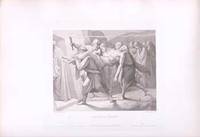
75-7659Dusseldorf: August Wilhelm Schulgen circa 1850. Engraving together with a letterpress description in English and French. 35 x 44.5 cm sheet size. Good. Tearing Age Toning Foxing at sheet edges else Good.Fueled by dissatisfaction with the direction of the Vienna Academy a group of six German students founded the Brotherhood of St. Luke in 1809. Among them was Johann Friedrich Overbeck son of a senator of the Hanseatic free city of Lübeck. The brotherhood was a direct reference to the old painter’s guilds of medieval times. Four of the artists Overbeck Franz Pforr Ludwig Vogel and Johann Konrad Hottinger settled in Rome in 1810. Later joined by Friedrich Wilhelm Schadow Peter von Cornelius Philipp Veit and Julius Schnorr von Carolsfeld they were mockingly referred to as the Nazarenes. The group advocated a renewed interest in religious art and monumental wall paintings…… Their religious zeal most likely stemmed from the fact that almost all of them were Roman Catholic converts. Although the pursuit of spiritual and artistic simplicity and piety were typically romantic characteristics the means by which they attempted to depict their dreams were classical. It has been suggested that the Nazarenes should be considered a special branch of German Romanticism. They strove for a new form of German religious-patriotic art fusing Dürer with Fra Angelico Perugino and a young Raphael. Dusseldorf: August Wilhelm Schulgen, circa 1850 unknown
75-7655Dusseldorf: August Wilhelm Schulgen circa 1850. Engraving together with a letterpress description in English and French. 35 x 44.5 cm sheet size. Good. Tearing Age Toning Foxing at sheet edges else Good.Fueled by dissatisfaction with the direction of the Vienna Academy a group of six German students founded the Brotherhood of St. Luke in 1809. Among them was Johann Friedrich Overbeck son of a senator of the Hanseatic free city of Lübeck. The brotherhood was a direct reference to the old painter’s guilds of medieval times. Four of the artists Overbeck Franz Pforr Ludwig Vogel and Johann Konrad Hottinger settled in Rome in 1810. Later joined by Friedrich Wilhelm Schadow Peter von Cornelius Philipp Veit and Julius Schnorr von Carolsfeld they were mockingly referred to as the Nazarenes. The group advocated a renewed interest in religious art and monumental wall paintings…… Their religious zeal most likely stemmed from the fact that almost all of them were Roman Catholic converts. Although the pursuit of spiritual and artistic simplicity and piety were typically romantic characteristics the means by which they attempted to depict their dreams were classical. It has been suggested that the Nazarenes should be considered a special branch of German Romanticism. They strove for a new form of German religious-patriotic art fusing Dürer with Fra Angelico Perugino and a young Raphael. Dusseldorf: August Wilhelm Schulgen, circa 1850 unknown
75-7660Dusseldorf: August Wilhelm Schulgen circa 1850. Engraving together with a letterpress description in English and French. 35 x 44.5 cm sheet size. Good. Tearing Age Toning Foxing at sheet edges else Good.Fueled by dissatisfaction with the direction of the Vienna Academy a group of six German students founded the Brotherhood of St. Luke in 1809. Among them was Johann Friedrich Overbeck son of a senator of the Hanseatic free city of Lübeck. The brotherhood was a direct reference to the old painter’s guilds of medieval times. Four of the artists Overbeck Franz Pforr Ludwig Vogel and Johann Konrad Hottinger settled in Rome in 1810. Later joined by Friedrich Wilhelm Schadow Peter von Cornelius Philipp Veit and Julius Schnorr von Carolsfeld they were mockingly referred to as the Nazarenes. The group advocated a renewed interest in religious art and monumental wall paintings…… Their religious zeal most likely stemmed from the fact that almost all of them were Roman Catholic converts. Although the pursuit of spiritual and artistic simplicity and piety were typically romantic characteristics the means by which they attempted to depict their dreams were classical. It has been suggested that the Nazarenes should be considered a special branch of German Romanticism. They strove for a new form of German religious-patriotic art fusing Dürer with Fra Angelico Perugino and a young Raphael. Dusseldorf: August Wilhelm Schulgen, circa 1850 unknown
75-7650Dusseldorf: August Wilhelm Schulgen circa 1850. Engraving together with a letterpress description in English and French. 35 x 44.5 cm sheet size. Good. Tearing Age Toning Foxing at sheet edges else Good.Fueled by dissatisfaction with the direction of the Vienna Academy a group of six German students founded the Brotherhood of St. Luke in 1809. Among them was Johann Friedrich Overbeck son of a senator of the Hanseatic free city of Lübeck. The brotherhood was a direct reference to the old painter’s guilds of medieval times. Four of the artists Overbeck Franz Pforr Ludwig Vogel and Johann Konrad Hottinger settled in Rome in 1810. Later joined by Friedrich Wilhelm Schadow Peter von Cornelius Philipp Veit and Julius Schnorr von Carolsfeld they were mockingly referred to as the Nazarenes. The group advocated a renewed interest in religious art and monumental wall paintings…… Their religious zeal most likely stemmed from the fact that almost all of them were Roman Catholic converts. Although the pursuit of spiritual and artistic simplicity and piety were typically romantic characteristics the means by which they attempted to depict their dreams were classical. It has been suggested that the Nazarenes should be considered a special branch of German Romanticism. They strove for a new form of German religious-patriotic art fusing Dürer with Fra Angelico Perugino and a young Raphael. Dusseldorf: August Wilhelm Schulgen, circa 1850 unknown
75-7643Dusseldorf: August Wilhelm Schulgen circa 1850. Engraving together with a letterpress description in English and French. 35 x 44.5 cm sheet size. Good. Tearing Age Toning Foxing at sheet edges else Good.Fueled by dissatisfaction with the direction of the Vienna Academy a group of six German students founded the Brotherhood of St. Luke in 1809. Among them was Johann Friedrich Overbeck son of a senator of the Hanseatic free city of Lübeck. The brotherhood was a direct reference to the old painter’s guilds of medieval times. Four of the artists Overbeck Franz Pforr Ludwig Vogel and Johann Konrad Hottinger settled in Rome in 1810. Later joined by Friedrich Wilhelm Schadow Peter von Cornelius Philipp Veit and Julius Schnorr von Carolsfeld they were mockingly referred to as the Nazarenes. The group advocated a renewed interest in religious art and monumental wall paintings…… Their religious zeal most likely stemmed from the fact that almost all of them were Roman Catholic converts. Although the pursuit of spiritual and artistic simplicity and piety were typically romantic characteristics the means by which they attempted to depict their dreams were classical. It has been suggested that the Nazarenes should be considered a special branch of German Romanticism. They strove for a new form of German religious-patriotic art fusing Dürer with Fra Angelico Perugino and a young Raphael. Dusseldorf: August Wilhelm Schulgen, circa 1850 unknown
75-7640Dusseldorf: August Wilhelm Schulgen circa 1850. Engraving together with a letterpress description in English and French. 35 x 44.5 cm sheet size. Good. Tearing Age Toning Foxing at sheet edges else Good.Fueled by dissatisfaction with the direction of the Vienna Academy a group of six German students founded the Brotherhood of St. Luke in 1809. Among them was Johann Friedrich Overbeck son of a senator of the Hanseatic free city of Lübeck. The brotherhood was a direct reference to the old painter’s guilds of medieval times. Four of the artists Overbeck Franz Pforr Ludwig Vogel and Johann Konrad Hottinger settled in Rome in 1810. Later joined by Friedrich Wilhelm Schadow Peter von Cornelius Philipp Veit and Julius Schnorr von Carolsfeld they were mockingly referred to as the Nazarenes. The group advocated a renewed interest in religious art and monumental wall paintings…… Their religious zeal most likely stemmed from the fact that almost all of them were Roman Catholic converts. Although the pursuit of spiritual and artistic simplicity and piety were typically romantic characteristics the means by which they attempted to depict their dreams were classical. It has been suggested that the Nazarenes should be considered a special branch of German Romanticism. They strove for a new form of German religious-patriotic art fusing Dürer with Fra Angelico Perugino and a young Raphael. Dusseldorf: August Wilhelm Schulgen, circa 1850 unknown
75-7649Dusseldorf: August Wilhelm Schulgen circa 1850. Engraving together with a letterpress description in English and French. 35 x 44.5 cm sheet size. Good. Tearing Age Toning Foxing at sheet edges else Good.Fueled by dissatisfaction with the direction of the Vienna Academy a group of six German students founded the Brotherhood of St. Luke in 1809. Among them was Johann Friedrich Overbeck son of a senator of the Hanseatic free city of Lübeck. The brotherhood was a direct reference to the old painter’s guilds of medieval times. Four of the artists Overbeck Franz Pforr Ludwig Vogel and Johann Konrad Hottinger settled in Rome in 1810. Later joined by Friedrich Wilhelm Schadow Peter von Cornelius Philipp Veit and Julius Schnorr von Carolsfeld they were mockingly referred to as the Nazarenes. The group advocated a renewed interest in religious art and monumental wall paintings…… Their religious zeal most likely stemmed from the fact that almost all of them were Roman Catholic converts. Although the pursuit of spiritual and artistic simplicity and piety were typically romantic characteristics the means by which they attempted to depict their dreams were classical. It has been suggested that the Nazarenes should be considered a special branch of German Romanticism. They strove for a new form of German religious-patriotic art fusing Dürer with Fra Angelico Perugino and a young Raphael. Dusseldorf: August Wilhelm Schulgen, circa 1850 unknown
75-7657Dusseldorf: August Wilhelm Schulgen circa 1850. Engraving together with a letterpress description in English and French. 35 x 44.5 cm sheet size. Good. Tearing Age Toning Foxing at sheet edges else Good.Fueled by dissatisfaction with the direction of the Vienna Academy a group of six German students founded the Brotherhood of St. Luke in 1809. Among them was Johann Friedrich Overbeck son of a senator of the Hanseatic free city of Lübeck. The brotherhood was a direct reference to the old painter’s guilds of medieval times. Four of the artists Overbeck Franz Pforr Ludwig Vogel and Johann Konrad Hottinger settled in Rome in 1810. Later joined by Friedrich Wilhelm Schadow Peter von Cornelius Philipp Veit and Julius Schnorr von Carolsfeld they were mockingly referred to as the Nazarenes. The group advocated a renewed interest in religious art and monumental wall paintings…… Their religious zeal most likely stemmed from the fact that almost all of them were Roman Catholic converts. Although the pursuit of spiritual and artistic simplicity and piety were typically romantic characteristics the means by which they attempted to depict their dreams were classical. It has been suggested that the Nazarenes should be considered a special branch of German Romanticism. They strove for a new form of German religious-patriotic art fusing Dürer with Fra Angelico Perugino and a young Raphael. Dusseldorf: August Wilhelm Schulgen, circa 1850 unknown
75-7656Dusseldorf: August Wilhelm Schulgen circa 1850. Engraving together with a letterpress description in English and French. 35 x 44.5 cm sheet size. Good. Tearing Age Toning Foxing at sheet edges else Good.Fueled by dissatisfaction with the direction of the Vienna Academy a group of six German students founded the Brotherhood of St. Luke in 1809. Among them was Johann Friedrich Overbeck son of a senator of the Hanseatic free city of Lübeck. The brotherhood was a direct reference to the old painter’s guilds of medieval times. Four of the artists Overbeck Franz Pforr Ludwig Vogel and Johann Konrad Hottinger settled in Rome in 1810. Later joined by Friedrich Wilhelm Schadow Peter von Cornelius Philipp Veit and Julius Schnorr von Carolsfeld they were mockingly referred to as the Nazarenes. The group advocated a renewed interest in religious art and monumental wall paintings…… Their religious zeal most likely stemmed from the fact that almost all of them were Roman Catholic converts. Although the pursuit of spiritual and artistic simplicity and piety were typically romantic characteristics the means by which they attempted to depict their dreams were classical. It has been suggested that the Nazarenes should be considered a special branch of German Romanticism. They strove for a new form of German religious-patriotic art fusing Dürer with Fra Angelico Perugino and a young Raphael. Dusseldorf: August Wilhelm Schulgen, circa 1850 unknown
75-7653Dusseldorf: August Wilhelm Schulgen circa 1850. Engraving together with a letterpress description in English and French. 35 x 44.5 cm sheet size. Good. Tearing Age Toning Foxing at sheet edges else Good.Fueled by dissatisfaction with the direction of the Vienna Academy a group of six German students founded the Brotherhood of St. Luke in 1809. Among them was Johann Friedrich Overbeck son of a senator of the Hanseatic free city of Lübeck. The brotherhood was a direct reference to the old painter’s guilds of medieval times. Four of the artists Overbeck Franz Pforr Ludwig Vogel and Johann Konrad Hottinger settled in Rome in 1810. Later joined by Friedrich Wilhelm Schadow Peter von Cornelius Philipp Veit and Julius Schnorr von Carolsfeld they were mockingly referred to as the Nazarenes. The group advocated a renewed interest in religious art and monumental wall paintings…… Their religious zeal most likely stemmed from the fact that almost all of them were Roman Catholic converts. Although the pursuit of spiritual and artistic simplicity and piety were typically romantic characteristics the means by which they attempted to depict their dreams were classical. It has been suggested that the Nazarenes should be considered a special branch of German Romanticism. They strove for a new form of German religious-patriotic art fusing Dürer with Fra Angelico Perugino and a young Raphael. Dusseldorf: August Wilhelm Schulgen, circa 1850 unknown
75-7642Dusseldorf: August Wilhelm Schulgen circa 1850. Engraving together with a letterpress description in English and French. 35 x 44.5 cm sheet size. Good. Tearing Age Toning Foxing at sheet edges else Good.Fueled by dissatisfaction with the direction of the Vienna Academy a group of six German students founded the Brotherhood of St. Luke in 1809. Among them was Johann Friedrich Overbeck son of a senator of the Hanseatic free city of Lübeck. The brotherhood was a direct reference to the old painter’s guilds of medieval times. Four of the artists Overbeck Franz Pforr Ludwig Vogel and Johann Konrad Hottinger settled in Rome in 1810. Later joined by Friedrich Wilhelm Schadow Peter von Cornelius Philipp Veit and Julius Schnorr von Carolsfeld they were mockingly referred to as the Nazarenes. The group advocated a renewed interest in religious art and monumental wall paintings…… Their religious zeal most likely stemmed from the fact that almost all of them were Roman Catholic converts. Although the pursuit of spiritual and artistic simplicity and piety were typically romantic characteristics the means by which they attempted to depict their dreams were classical. It has been suggested that the Nazarenes should be considered a special branch of German Romanticism. They strove for a new form of German religious-patriotic art fusing Dürer with Fra Angelico Perugino and a young Raphael. Dusseldorf: August Wilhelm Schulgen, circa 1850 unknown
75-7637Dusseldorf: August Wilhelm Schulgen circa 1850. Engraving together with a letterpress description in English and French. 35 x 44.5 cm sheet size. Good. Tearing Age Toning Foxing at sheet edges else Good.Fueled by dissatisfaction with the direction of the Vienna Academy a group of six German students founded the Brotherhood of St. Luke in 1809. Among them was Johann Friedrich Overbeck son of a senator of the Hanseatic free city of Lübeck. The brotherhood was a direct reference to the old painter’s guilds of medieval times. Four of the artists Overbeck Franz Pforr Ludwig Vogel and Johann Konrad Hottinger settled in Rome in 1810. Later joined by Friedrich Wilhelm Schadow Peter von Cornelius Philipp Veit and Julius Schnorr von Carolsfeld they were mockingly referred to as the Nazarenes. The group advocated a renewed interest in religious art and monumental wall paintings…… Their religious zeal most likely stemmed from the fact that almost all of them were Roman Catholic converts. Although the pursuit of spiritual and artistic simplicity and piety were typically romantic characteristics the means by which they attempted to depict their dreams were classical. It has been suggested that the Nazarenes should be considered a special branch of German Romanticism. They strove for a new form of German religious-patriotic art fusing Dürer with Fra Angelico Perugino and a young Raphael. Dusseldorf: August Wilhelm Schulgen, circa 1850 unknown
75-7644Dusseldorf: August Wilhelm Schulgen circa 1850. Engraving together with a letterpress description in English and French. 35 x 44.5 cm sheet size. Good. Tearing Age Toning Foxing at sheet edges else Good.Fueled by dissatisfaction with the direction of the Vienna Academy a group of six German students founded the Brotherhood of St. Luke in 1809. Among them was Johann Friedrich Overbeck son of a senator of the Hanseatic free city of Lübeck. The brotherhood was a direct reference to the old painter’s guilds of medieval times. Four of the artists Overbeck Franz Pforr Ludwig Vogel and Johann Konrad Hottinger settled in Rome in 1810. Later joined by Friedrich Wilhelm Schadow Peter von Cornelius Philipp Veit and Julius Schnorr von Carolsfeld they were mockingly referred to as the Nazarenes. The group advocated a renewed interest in religious art and monumental wall paintings…… Their religious zeal most likely stemmed from the fact that almost all of them were Roman Catholic converts. Although the pursuit of spiritual and artistic simplicity and piety were typically romantic characteristics the means by which they attempted to depict their dreams were classical. It has been suggested that the Nazarenes should be considered a special branch of German Romanticism. They strove for a new form of German religious-patriotic art fusing Dürer with Fra Angelico Perugino and a young Raphael. Dusseldorf: August Wilhelm Schulgen, circa 1850 unknown
75-7632Dusseldorf: August Wilhelm Schulgen circa 1850. Engraving together with a letterpress description in English and French. 35 x 44.5 cm sheet size. Good. Tearing Age Toning Foxing and minor Staining at sheet edges else Good.Fueled by dissatisfaction with the direction of the Vienna Academy a group of six German students founded the Brotherhood of St. Luke in 1809. Among them was Johann Friedrich Overbeck son of a senator of the Hanseatic free city of Lübeck. The brotherhood was a direct reference to the old painter’s guilds of medieval times. Four of the artists Overbeck Franz Pforr Ludwig Vogel and Johann Konrad Hottinger settled in Rome in 1810. Later joined by Friedrich Wilhelm Schadow Peter von Cornelius Philipp Veit and Julius Schnorr von Carolsfeld they were mockingly referred to as the Nazarenes. The group advocated a renewed interest in religious art and monumental wall paintings…… Their religious zeal most likely stemmed from the fact that almost all of them were Roman Catholic converts. Although the pursuit of spiritual and artistic simplicity and piety were typically romantic characteristics the means by which they attempted to depict their dreams were classical. It has been suggested that the Nazarenes should be considered a special branch of German Romanticism. They strove for a new form of German religious-patriotic art fusing Dürer with Fra Angelico Perugino and a young Raphael. Dusseldorf: August Wilhelm Schulgen, circa 1850 unknown
75-7624Dusseldorf: August Wilhelm Schulgen circa 1850. Engraving together with a letterpress description in English and French. 35 x 44.5 cm sheet size. Good. Tearing Age Toning and Foxing at sheet edges else Good.Fueled by dissatisfaction with the direction of the Vienna Academy a group of six German students founded the Brotherhood of St. Luke in 1809. Among them was Johann Friedrich Overbeck son of a senator of the Hanseatic free city of Lübeck. The brotherhood was a direct reference to the old painter’s guilds of medieval times. Four of the artists Overbeck Franz Pforr Ludwig Vogel and Johann Konrad Hottinger settled in Rome in 1810. Later joined by Friedrich Wilhelm Schadow Peter von Cornelius Philipp Veit and Julius Schnorr von Carolsfeld they were mockingly referred to as the Nazarenes. The group advocated a renewed interest in religious art and monumental wall paintings…… Their religious zeal most likely stemmed from the fact that almost all of them were Roman Catholic converts. Although the pursuit of spiritual and artistic simplicity and piety were typically romantic characteristics the means by which they attempted to depict their dreams were classical. It has been suggested that the Nazarenes should be considered a special branch of German Romanticism. They strove for a new form of German religious-patriotic art fusing Dürer with Fra Angelico Perugino and a young Raphael. Dusseldorf: August Wilhelm Schulgen, circa 1850 unknown
75-7647Dusseldorf: August Wilhelm Schulgen circa 1850. Engraving together with a letterpress description in English and French. 35 x 44.5 cm sheet size. Good. Tearing Age Toning Foxing at sheet edges. Spotting else Good.Fueled by dissatisfaction with the direction of the Vienna Academy a group of six German students founded the Brotherhood of St. Luke in 1809. Among them was Johann Friedrich Overbeck son of a senator of the Hanseatic free city of Lübeck. The brotherhood was a direct reference to the old painter’s guilds of medieval times. Four of the artists Overbeck Franz Pforr Ludwig Vogel and Johann Konrad Hottinger settled in Rome in 1810. Later joined by Friedrich Wilhelm Schadow Peter von Cornelius Philipp Veit and Julius Schnorr von Carolsfeld they were mockingly referred to as the Nazarenes. The group advocated a renewed interest in religious art and monumental wall paintings…… Their religious zeal most likely stemmed from the fact that almost all of them were Roman Catholic converts. Although the pursuit of spiritual and artistic simplicity and piety were typically romantic characteristics the means by which they attempted to depict their dreams were classical. It has been suggested that the Nazarenes should be considered a special branch of German Romanticism. They strove for a new form of German religious-patriotic art fusing Dürer with Fra Angelico Perugino and a young Raphael. Dusseldorf: August Wilhelm Schulgen, circa 1850 unknown
75-7622Dusseldorf: August Wilhelm Schulgen circa 1850. Engraving together with a letterpress description in English and French. 35 x 44.5 cm sheet size. Good. Tearing Age Toning and Foxing at sheet edges else Good.Fueled by dissatisfaction with the direction of the Vienna Academy a group of six German students founded the Brotherhood of St. Luke in 1809. Among them was Johann Friedrich Overbeck son of a senator of the Hanseatic free city of Lübeck. The brotherhood was a direct reference to the old painter’s guilds of medieval times. Four of the artists Overbeck Franz Pforr Ludwig Vogel and Johann Konrad Hottinger settled in Rome in 1810. Later joined by Friedrich Wilhelm Schadow Peter von Cornelius Philipp Veit and Julius Schnorr von Carolsfeld they were mockingly referred to as the Nazarenes. The group advocated a renewed interest in religious art and monumental wall paintings…… Their religious zeal most likely stemmed from the fact that almost all of them were Roman Catholic converts. Although the pursuit of spiritual and artistic simplicity and piety were typically romantic characteristics the means by which they attempted to depict their dreams were classical. It has been suggested that the Nazarenes should be considered a special branch of German Romanticism. They strove for a new form of German religious-patriotic art fusing Dürer with Fra Angelico Perugino and a young Raphael. Dusseldorf: August Wilhelm Schulgen, circa 1850 unknown
75-7648Dusseldorf: August Wilhelm Schulgen circa 1850. Engraving together with a letterpress description in English and French. 35 x 44.5 cm sheet size. Good. Tearing Age Toning Foxing at sheet edges else Good.Fueled by dissatisfaction with the direction of the Vienna Academy a group of six German students founded the Brotherhood of St. Luke in 1809. Among them was Johann Friedrich Overbeck son of a senator of the Hanseatic free city of Lübeck. The brotherhood was a direct reference to the old painter’s guilds of medieval times. Four of the artists Overbeck Franz Pforr Ludwig Vogel and Johann Konrad Hottinger settled in Rome in 1810. Later joined by Friedrich Wilhelm Schadow Peter von Cornelius Philipp Veit and Julius Schnorr von Carolsfeld they were mockingly referred to as the Nazarenes. The group advocated a renewed interest in religious art and monumental wall paintings…… Their religious zeal most likely stemmed from the fact that almost all of them were Roman Catholic converts. Although the pursuit of spiritual and artistic simplicity and piety were typically romantic characteristics the means by which they attempted to depict their dreams were classical. It has been suggested that the Nazarenes should be considered a special branch of German Romanticism. They strove for a new form of German religious-patriotic art fusing Dürer with Fra Angelico Perugino and a young Raphael. Dusseldorf: August Wilhelm Schulgen, circa 1850 unknown
75-7661Dusseldorf: August Wilhelm Schulgen circa 1850. Engraving together with a letterpress description in English and French. 35 x 44.5 cm sheet size. Good. Tearing Age Toning Foxing at sheet edges else Good.Fueled by dissatisfaction with the direction of the Vienna Academy a group of six German students founded the Brotherhood of St. Luke in 1809. Among them was Johann Friedrich Overbeck son of a senator of the Hanseatic free city of Lübeck. The brotherhood was a direct reference to the old painter’s guilds of medieval times. Four of the artists Overbeck Franz Pforr Ludwig Vogel and Johann Konrad Hottinger settled in Rome in 1810. Later joined by Friedrich Wilhelm Schadow Peter von Cornelius Philipp Veit and Julius Schnorr von Carolsfeld they were mockingly referred to as the Nazarenes. The group advocated a renewed interest in religious art and monumental wall paintings…… Their religious zeal most likely stemmed from the fact that almost all of them were Roman Catholic converts. Although the pursuit of spiritual and artistic simplicity and piety were typically romantic characteristics the means by which they attempted to depict their dreams were classical. It has been suggested that the Nazarenes should be considered a special branch of German Romanticism. They strove for a new form of German religious-patriotic art fusing Dürer with Fra Angelico Perugino and a young Raphael. Dusseldorf: August Wilhelm Schulgen, circa 1850 unknown
75-7635Dusseldorf: August Wilhelm Schulgen circa 1850. Engraving together with a letterpress description in English and French. 35 x 44.5 cm sheet size. Good. Tearing Age Toning Foxing at sheet edges minor Staining else Good.Fueled by dissatisfaction with the direction of the Vienna Academy a group of six German students founded the Brotherhood of St. Luke in 1809. Among them was Johann Friedrich Overbeck son of a senator of the Hanseatic free city of Lübeck. The brotherhood was a direct reference to the old painter’s guilds of medieval times. Four of the artists Overbeck Franz Pforr Ludwig Vogel and Johann Konrad Hottinger settled in Rome in 1810. Later joined by Friedrich Wilhelm Schadow Peter von Cornelius Philipp Veit and Julius Schnorr von Carolsfeld they were mockingly referred to as the Nazarenes. The group advocated a renewed interest in religious art and monumental wall paintings…… Their religious zeal most likely stemmed from the fact that almost all of them were Roman Catholic converts. Although the pursuit of spiritual and artistic simplicity and piety were typically romantic characteristics the means by which they attempted to depict their dreams were classical. It has been suggested that the Nazarenes should be considered a special branch of German Romanticism. They strove for a new form of German religious-patriotic art fusing Dürer with Fra Angelico Perugino and a young Raphael. Dusseldorf: August Wilhelm Schulgen, circa 1850 unknown
75-7630Dusseldorf: August Wilhelm Schulgen circa 1850. Engraving together with a letterpress description in English and French. 35 x 44.5 cm sheet size. Good. Tearing Age Toning Foxing and minor Staining at sheet edges else Good.Fueled by dissatisfaction with the direction of the Vienna Academy a group of six German students founded the Brotherhood of St. Luke in 1809. Among them was Johann Friedrich Overbeck son of a senator of the Hanseatic free city of Lübeck. The brotherhood was a direct reference to the old painter’s guilds of medieval times. Four of the artists Overbeck Franz Pforr Ludwig Vogel and Johann Konrad Hottinger settled in Rome in 1810. Later joined by Friedrich Wilhelm Schadow Peter von Cornelius Philipp Veit and Julius Schnorr von Carolsfeld they were mockingly referred to as the Nazarenes. The group advocated a renewed interest in religious art and monumental wall paintings…… Their religious zeal most likely stemmed from the fact that almost all of them were Roman Catholic converts. Although the pursuit of spiritual and artistic simplicity and piety were typically romantic characteristics the means by which they attempted to depict their dreams were classical. It has been suggested that the Nazarenes should be considered a special branch of German Romanticism. They strove for a new form of German religious-patriotic art fusing Dürer with Fra Angelico Perugino and a young Raphael. Dusseldorf: August Wilhelm Schulgen, circa 1850 unknown
75-7631Dusseldorf: August Wilhelm Schulgen circa 1850. Engraving together with a letterpress description in English and French. 35 x 44.5 cm sheet size. Good. Tearing Age Toning Foxing and minor Staining at sheet edges else Good.Fueled by dissatisfaction with the direction of the Vienna Academy a group of six German students founded the Brotherhood of St. Luke in 1809. Among them was Johann Friedrich Overbeck son of a senator of the Hanseatic free city of Lübeck. The brotherhood was a direct reference to the old painter’s guilds of medieval times. Four of the artists Overbeck Franz Pforr Ludwig Vogel and Johann Konrad Hottinger settled in Rome in 1810. Later joined by Friedrich Wilhelm Schadow Peter von Cornelius Philipp Veit and Julius Schnorr von Carolsfeld they were mockingly referred to as the Nazarenes. The group advocated a renewed interest in religious art and monumental wall paintings…… Their religious zeal most likely stemmed from the fact that almost all of them were Roman Catholic converts. Although the pursuit of spiritual and artistic simplicity and piety were typically romantic characteristics the means by which they attempted to depict their dreams were classical. It has been suggested that the Nazarenes should be considered a special branch of German Romanticism. They strove for a new form of German religious-patriotic art fusing Dürer with Fra Angelico Perugino and a young Raphael. Dusseldorf: August Wilhelm Schulgen, circa 1850 unknown