Rome, Denise DeBiblio.com

2 422 résultats
1993Q-0563364211Bbc Book Pub 1993-12-31. Paperback. New. In shrink wrap. Looks like an interesting title! Bbc Book Pub paperback
0563363568.GaudioCD. Good. Access codes and supplements are not guaranteed with used items. May be an ex-library book. unknown
1334040796.Gpaperback. Good. Access codes and supplements are not guaranteed with used items. May be an ex-library book. paperback
139027084X.Gpaperback. Good. Access codes and supplements are not guaranteed with used items. May be an ex-library book. paperback
1391719018.Ghardcover. Good. Access codes and supplements are not guaranteed with used items. May be an ex-library book. hardcover
1019834730.Ghardcover. Good. Access codes and supplements are not guaranteed with used items. May be an ex-library book. hardcover
185522 January 1819. 1p. 12mo. Bifolium. In good condition on lightly-aged paper. Addressed on second leaf with broken seal in red wax 'A Madame Madame Sophie de Gail &c &c &c Paris'. Nine lines of neatly and elegantly written text. A somewhat flirtatious acceptance of an invitation with Bartholdy noting 'les belles choses que vous daignez me dire . Votre maniere est trop sedisante pour ne pas faire de l'impression'. It was at Bartholdy's suggestion that his sister Lea the mother of the composer Felix Mendelssohn joined him in adopting the surname Bartholdy. 2 January 1819. unknown
1980TOB202-22386-OS-1.52Flume Press. Good with No dust jacket as issued. 1980. Hardcover. Signed by Author; Slipcover included and in good condition. - Brief dedication on first page. Signed by author! Light foxing to edge of pages. - Good overall condition. General wear. No major blemishes. No writing. ; - We're committed to your satisfaction. We offer free returns and respond promptly to all inquiries. Your item will be carefully wrapped in bubble wrap and securely boxed. All orders ship on the same or next business day. Buy with confidence. . Flume Press hardcover
68-1277Milano : Electa 1989. 4to. Soft Covers. 267 pp. Very Good. Mostly B&W plates some color. Exhibition Catalogue.Text in Italiano.ISBN 884353081X [Milano] : Electa, 1989. paperback
B139664-6<p>Roma 1982. 4pp. single sheet of tan wove card stock imprinted in red letterpress. Lrg. 8vo. Self-wraps. The very first catalogue and the first monograph published on the work of Jean-Michel Basquiat with a densely written text by Mario Diacono. The exhibition was devoted to the display of a single major painting Il campo vicino laltra strada The Field Next to the Other Road. Mario Diacono has previously noted that this painting has often been incorrectly dated 1981 and also as being painted and exhibited that year in Modena at the Galleria Emilio Mazzoli in the show titled SAMO. The work was indeed painted in Modena by the 21-year-old Basquiat but in May of 1982. It was one of eight new works that Basquiat produced in a Modena warehouse at the invitation of Emilio Mazzoli for a solo exhibition at the Galleria Mazzoli that never actually took place. By an agreement between Basquiat's primary dealer at the time Annina Nosei and the Galleria Diacono the work was then exhibited by Diacono in Rome in October 1982. Its price was set at 7 million lire or about $5000. In May 2015 the painting was sold at Christies for $37125000. "The Field Next to the Other Road" was reunited with the other seven paintings that were to be in the 1982 Mazzoli exhibition and all were shown together for the first time in an exhibition held at the Fondation Beyeler in Basel June-August 2023. A very fine copy. Extremely rare.</p> Roma, 1982. paperback
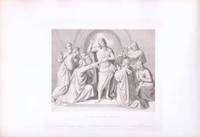
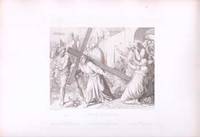
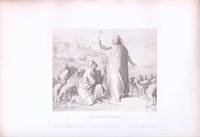
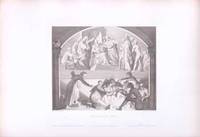
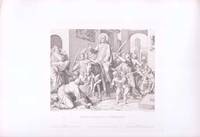
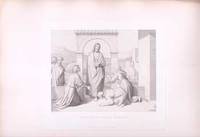
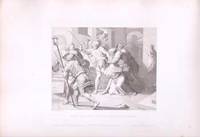
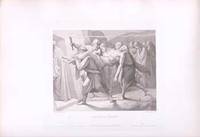
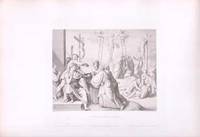
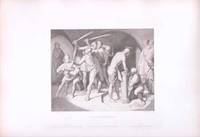
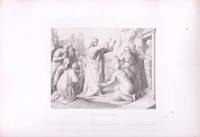
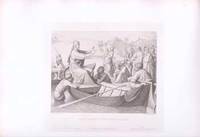
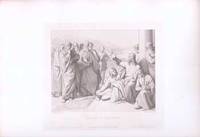
75-7659Dusseldorf: August Wilhelm Schulgen circa 1850. Engraving together with a letterpress description in English and French. 35 x 44.5 cm sheet size. Good. Tearing Age Toning Foxing at sheet edges else Good.Fueled by dissatisfaction with the direction of the Vienna Academy a group of six German students founded the Brotherhood of St. Luke in 1809. Among them was Johann Friedrich Overbeck son of a senator of the Hanseatic free city of Lübeck. The brotherhood was a direct reference to the old painter’s guilds of medieval times. Four of the artists Overbeck Franz Pforr Ludwig Vogel and Johann Konrad Hottinger settled in Rome in 1810. Later joined by Friedrich Wilhelm Schadow Peter von Cornelius Philipp Veit and Julius Schnorr von Carolsfeld they were mockingly referred to as the Nazarenes. The group advocated a renewed interest in religious art and monumental wall paintings…… Their religious zeal most likely stemmed from the fact that almost all of them were Roman Catholic converts. Although the pursuit of spiritual and artistic simplicity and piety were typically romantic characteristics the means by which they attempted to depict their dreams were classical. It has been suggested that the Nazarenes should be considered a special branch of German Romanticism. They strove for a new form of German religious-patriotic art fusing Dürer with Fra Angelico Perugino and a young Raphael. Dusseldorf: August Wilhelm Schulgen, circa 1850 unknown
75-7655Dusseldorf: August Wilhelm Schulgen circa 1850. Engraving together with a letterpress description in English and French. 35 x 44.5 cm sheet size. Good. Tearing Age Toning Foxing at sheet edges else Good.Fueled by dissatisfaction with the direction of the Vienna Academy a group of six German students founded the Brotherhood of St. Luke in 1809. Among them was Johann Friedrich Overbeck son of a senator of the Hanseatic free city of Lübeck. The brotherhood was a direct reference to the old painter’s guilds of medieval times. Four of the artists Overbeck Franz Pforr Ludwig Vogel and Johann Konrad Hottinger settled in Rome in 1810. Later joined by Friedrich Wilhelm Schadow Peter von Cornelius Philipp Veit and Julius Schnorr von Carolsfeld they were mockingly referred to as the Nazarenes. The group advocated a renewed interest in religious art and monumental wall paintings…… Their religious zeal most likely stemmed from the fact that almost all of them were Roman Catholic converts. Although the pursuit of spiritual and artistic simplicity and piety were typically romantic characteristics the means by which they attempted to depict their dreams were classical. It has been suggested that the Nazarenes should be considered a special branch of German Romanticism. They strove for a new form of German religious-patriotic art fusing Dürer with Fra Angelico Perugino and a young Raphael. Dusseldorf: August Wilhelm Schulgen, circa 1850 unknown
75-7660Dusseldorf: August Wilhelm Schulgen circa 1850. Engraving together with a letterpress description in English and French. 35 x 44.5 cm sheet size. Good. Tearing Age Toning Foxing at sheet edges else Good.Fueled by dissatisfaction with the direction of the Vienna Academy a group of six German students founded the Brotherhood of St. Luke in 1809. Among them was Johann Friedrich Overbeck son of a senator of the Hanseatic free city of Lübeck. The brotherhood was a direct reference to the old painter’s guilds of medieval times. Four of the artists Overbeck Franz Pforr Ludwig Vogel and Johann Konrad Hottinger settled in Rome in 1810. Later joined by Friedrich Wilhelm Schadow Peter von Cornelius Philipp Veit and Julius Schnorr von Carolsfeld they were mockingly referred to as the Nazarenes. The group advocated a renewed interest in religious art and monumental wall paintings…… Their religious zeal most likely stemmed from the fact that almost all of them were Roman Catholic converts. Although the pursuit of spiritual and artistic simplicity and piety were typically romantic characteristics the means by which they attempted to depict their dreams were classical. It has been suggested that the Nazarenes should be considered a special branch of German Romanticism. They strove for a new form of German religious-patriotic art fusing Dürer with Fra Angelico Perugino and a young Raphael. Dusseldorf: August Wilhelm Schulgen, circa 1850 unknown
75-7650Dusseldorf: August Wilhelm Schulgen circa 1850. Engraving together with a letterpress description in English and French. 35 x 44.5 cm sheet size. Good. Tearing Age Toning Foxing at sheet edges else Good.Fueled by dissatisfaction with the direction of the Vienna Academy a group of six German students founded the Brotherhood of St. Luke in 1809. Among them was Johann Friedrich Overbeck son of a senator of the Hanseatic free city of Lübeck. The brotherhood was a direct reference to the old painter’s guilds of medieval times. Four of the artists Overbeck Franz Pforr Ludwig Vogel and Johann Konrad Hottinger settled in Rome in 1810. Later joined by Friedrich Wilhelm Schadow Peter von Cornelius Philipp Veit and Julius Schnorr von Carolsfeld they were mockingly referred to as the Nazarenes. The group advocated a renewed interest in religious art and monumental wall paintings…… Their religious zeal most likely stemmed from the fact that almost all of them were Roman Catholic converts. Although the pursuit of spiritual and artistic simplicity and piety were typically romantic characteristics the means by which they attempted to depict their dreams were classical. It has been suggested that the Nazarenes should be considered a special branch of German Romanticism. They strove for a new form of German religious-patriotic art fusing Dürer with Fra Angelico Perugino and a young Raphael. Dusseldorf: August Wilhelm Schulgen, circa 1850 unknown
75-7643Dusseldorf: August Wilhelm Schulgen circa 1850. Engraving together with a letterpress description in English and French. 35 x 44.5 cm sheet size. Good. Tearing Age Toning Foxing at sheet edges else Good.Fueled by dissatisfaction with the direction of the Vienna Academy a group of six German students founded the Brotherhood of St. Luke in 1809. Among them was Johann Friedrich Overbeck son of a senator of the Hanseatic free city of Lübeck. The brotherhood was a direct reference to the old painter’s guilds of medieval times. Four of the artists Overbeck Franz Pforr Ludwig Vogel and Johann Konrad Hottinger settled in Rome in 1810. Later joined by Friedrich Wilhelm Schadow Peter von Cornelius Philipp Veit and Julius Schnorr von Carolsfeld they were mockingly referred to as the Nazarenes. The group advocated a renewed interest in religious art and monumental wall paintings…… Their religious zeal most likely stemmed from the fact that almost all of them were Roman Catholic converts. Although the pursuit of spiritual and artistic simplicity and piety were typically romantic characteristics the means by which they attempted to depict their dreams were classical. It has been suggested that the Nazarenes should be considered a special branch of German Romanticism. They strove for a new form of German religious-patriotic art fusing Dürer with Fra Angelico Perugino and a young Raphael. Dusseldorf: August Wilhelm Schulgen, circa 1850 unknown
75-7640Dusseldorf: August Wilhelm Schulgen circa 1850. Engraving together with a letterpress description in English and French. 35 x 44.5 cm sheet size. Good. Tearing Age Toning Foxing at sheet edges else Good.Fueled by dissatisfaction with the direction of the Vienna Academy a group of six German students founded the Brotherhood of St. Luke in 1809. Among them was Johann Friedrich Overbeck son of a senator of the Hanseatic free city of Lübeck. The brotherhood was a direct reference to the old painter’s guilds of medieval times. Four of the artists Overbeck Franz Pforr Ludwig Vogel and Johann Konrad Hottinger settled in Rome in 1810. Later joined by Friedrich Wilhelm Schadow Peter von Cornelius Philipp Veit and Julius Schnorr von Carolsfeld they were mockingly referred to as the Nazarenes. The group advocated a renewed interest in religious art and monumental wall paintings…… Their religious zeal most likely stemmed from the fact that almost all of them were Roman Catholic converts. Although the pursuit of spiritual and artistic simplicity and piety were typically romantic characteristics the means by which they attempted to depict their dreams were classical. It has been suggested that the Nazarenes should be considered a special branch of German Romanticism. They strove for a new form of German religious-patriotic art fusing Dürer with Fra Angelico Perugino and a young Raphael. Dusseldorf: August Wilhelm Schulgen, circa 1850 unknown
75-7649Dusseldorf: August Wilhelm Schulgen circa 1850. Engraving together with a letterpress description in English and French. 35 x 44.5 cm sheet size. Good. Tearing Age Toning Foxing at sheet edges else Good.Fueled by dissatisfaction with the direction of the Vienna Academy a group of six German students founded the Brotherhood of St. Luke in 1809. Among them was Johann Friedrich Overbeck son of a senator of the Hanseatic free city of Lübeck. The brotherhood was a direct reference to the old painter’s guilds of medieval times. Four of the artists Overbeck Franz Pforr Ludwig Vogel and Johann Konrad Hottinger settled in Rome in 1810. Later joined by Friedrich Wilhelm Schadow Peter von Cornelius Philipp Veit and Julius Schnorr von Carolsfeld they were mockingly referred to as the Nazarenes. The group advocated a renewed interest in religious art and monumental wall paintings…… Their religious zeal most likely stemmed from the fact that almost all of them were Roman Catholic converts. Although the pursuit of spiritual and artistic simplicity and piety were typically romantic characteristics the means by which they attempted to depict their dreams were classical. It has been suggested that the Nazarenes should be considered a special branch of German Romanticism. They strove for a new form of German religious-patriotic art fusing Dürer with Fra Angelico Perugino and a young Raphael. Dusseldorf: August Wilhelm Schulgen, circa 1850 unknown
75-7657Dusseldorf: August Wilhelm Schulgen circa 1850. Engraving together with a letterpress description in English and French. 35 x 44.5 cm sheet size. Good. Tearing Age Toning Foxing at sheet edges else Good.Fueled by dissatisfaction with the direction of the Vienna Academy a group of six German students founded the Brotherhood of St. Luke in 1809. Among them was Johann Friedrich Overbeck son of a senator of the Hanseatic free city of Lübeck. The brotherhood was a direct reference to the old painter’s guilds of medieval times. Four of the artists Overbeck Franz Pforr Ludwig Vogel and Johann Konrad Hottinger settled in Rome in 1810. Later joined by Friedrich Wilhelm Schadow Peter von Cornelius Philipp Veit and Julius Schnorr von Carolsfeld they were mockingly referred to as the Nazarenes. The group advocated a renewed interest in religious art and monumental wall paintings…… Their religious zeal most likely stemmed from the fact that almost all of them were Roman Catholic converts. Although the pursuit of spiritual and artistic simplicity and piety were typically romantic characteristics the means by which they attempted to depict their dreams were classical. It has been suggested that the Nazarenes should be considered a special branch of German Romanticism. They strove for a new form of German religious-patriotic art fusing Dürer with Fra Angelico Perugino and a young Raphael. Dusseldorf: August Wilhelm Schulgen, circa 1850 unknown
75-7656Dusseldorf: August Wilhelm Schulgen circa 1850. Engraving together with a letterpress description in English and French. 35 x 44.5 cm sheet size. Good. Tearing Age Toning Foxing at sheet edges else Good.Fueled by dissatisfaction with the direction of the Vienna Academy a group of six German students founded the Brotherhood of St. Luke in 1809. Among them was Johann Friedrich Overbeck son of a senator of the Hanseatic free city of Lübeck. The brotherhood was a direct reference to the old painter’s guilds of medieval times. Four of the artists Overbeck Franz Pforr Ludwig Vogel and Johann Konrad Hottinger settled in Rome in 1810. Later joined by Friedrich Wilhelm Schadow Peter von Cornelius Philipp Veit and Julius Schnorr von Carolsfeld they were mockingly referred to as the Nazarenes. The group advocated a renewed interest in religious art and monumental wall paintings…… Their religious zeal most likely stemmed from the fact that almost all of them were Roman Catholic converts. Although the pursuit of spiritual and artistic simplicity and piety were typically romantic characteristics the means by which they attempted to depict their dreams were classical. It has been suggested that the Nazarenes should be considered a special branch of German Romanticism. They strove for a new form of German religious-patriotic art fusing Dürer with Fra Angelico Perugino and a young Raphael. Dusseldorf: August Wilhelm Schulgen, circa 1850 unknown
75-7653Dusseldorf: August Wilhelm Schulgen circa 1850. Engraving together with a letterpress description in English and French. 35 x 44.5 cm sheet size. Good. Tearing Age Toning Foxing at sheet edges else Good.Fueled by dissatisfaction with the direction of the Vienna Academy a group of six German students founded the Brotherhood of St. Luke in 1809. Among them was Johann Friedrich Overbeck son of a senator of the Hanseatic free city of Lübeck. The brotherhood was a direct reference to the old painter’s guilds of medieval times. Four of the artists Overbeck Franz Pforr Ludwig Vogel and Johann Konrad Hottinger settled in Rome in 1810. Later joined by Friedrich Wilhelm Schadow Peter von Cornelius Philipp Veit and Julius Schnorr von Carolsfeld they were mockingly referred to as the Nazarenes. The group advocated a renewed interest in religious art and monumental wall paintings…… Their religious zeal most likely stemmed from the fact that almost all of them were Roman Catholic converts. Although the pursuit of spiritual and artistic simplicity and piety were typically romantic characteristics the means by which they attempted to depict their dreams were classical. It has been suggested that the Nazarenes should be considered a special branch of German Romanticism. They strove for a new form of German religious-patriotic art fusing Dürer with Fra Angelico Perugino and a young Raphael. Dusseldorf: August Wilhelm Schulgen, circa 1850 unknown
75-7642Dusseldorf: August Wilhelm Schulgen circa 1850. Engraving together with a letterpress description in English and French. 35 x 44.5 cm sheet size. Good. Tearing Age Toning Foxing at sheet edges else Good.Fueled by dissatisfaction with the direction of the Vienna Academy a group of six German students founded the Brotherhood of St. Luke in 1809. Among them was Johann Friedrich Overbeck son of a senator of the Hanseatic free city of Lübeck. The brotherhood was a direct reference to the old painter’s guilds of medieval times. Four of the artists Overbeck Franz Pforr Ludwig Vogel and Johann Konrad Hottinger settled in Rome in 1810. Later joined by Friedrich Wilhelm Schadow Peter von Cornelius Philipp Veit and Julius Schnorr von Carolsfeld they were mockingly referred to as the Nazarenes. The group advocated a renewed interest in religious art and monumental wall paintings…… Their religious zeal most likely stemmed from the fact that almost all of them were Roman Catholic converts. Although the pursuit of spiritual and artistic simplicity and piety were typically romantic characteristics the means by which they attempted to depict their dreams were classical. It has been suggested that the Nazarenes should be considered a special branch of German Romanticism. They strove for a new form of German religious-patriotic art fusing Dürer with Fra Angelico Perugino and a young Raphael. Dusseldorf: August Wilhelm Schulgen, circa 1850 unknown
75-7637Dusseldorf: August Wilhelm Schulgen circa 1850. Engraving together with a letterpress description in English and French. 35 x 44.5 cm sheet size. Good. Tearing Age Toning Foxing at sheet edges else Good.Fueled by dissatisfaction with the direction of the Vienna Academy a group of six German students founded the Brotherhood of St. Luke in 1809. Among them was Johann Friedrich Overbeck son of a senator of the Hanseatic free city of Lübeck. The brotherhood was a direct reference to the old painter’s guilds of medieval times. Four of the artists Overbeck Franz Pforr Ludwig Vogel and Johann Konrad Hottinger settled in Rome in 1810. Later joined by Friedrich Wilhelm Schadow Peter von Cornelius Philipp Veit and Julius Schnorr von Carolsfeld they were mockingly referred to as the Nazarenes. The group advocated a renewed interest in religious art and monumental wall paintings…… Their religious zeal most likely stemmed from the fact that almost all of them were Roman Catholic converts. Although the pursuit of spiritual and artistic simplicity and piety were typically romantic characteristics the means by which they attempted to depict their dreams were classical. It has been suggested that the Nazarenes should be considered a special branch of German Romanticism. They strove for a new form of German religious-patriotic art fusing Dürer with Fra Angelico Perugino and a young Raphael. Dusseldorf: August Wilhelm Schulgen, circa 1850 unknown
75-7644Dusseldorf: August Wilhelm Schulgen circa 1850. Engraving together with a letterpress description in English and French. 35 x 44.5 cm sheet size. Good. Tearing Age Toning Foxing at sheet edges else Good.Fueled by dissatisfaction with the direction of the Vienna Academy a group of six German students founded the Brotherhood of St. Luke in 1809. Among them was Johann Friedrich Overbeck son of a senator of the Hanseatic free city of Lübeck. The brotherhood was a direct reference to the old painter’s guilds of medieval times. Four of the artists Overbeck Franz Pforr Ludwig Vogel and Johann Konrad Hottinger settled in Rome in 1810. Later joined by Friedrich Wilhelm Schadow Peter von Cornelius Philipp Veit and Julius Schnorr von Carolsfeld they were mockingly referred to as the Nazarenes. The group advocated a renewed interest in religious art and monumental wall paintings…… Their religious zeal most likely stemmed from the fact that almost all of them were Roman Catholic converts. Although the pursuit of spiritual and artistic simplicity and piety were typically romantic characteristics the means by which they attempted to depict their dreams were classical. It has been suggested that the Nazarenes should be considered a special branch of German Romanticism. They strove for a new form of German religious-patriotic art fusing Dürer with Fra Angelico Perugino and a young Raphael. Dusseldorf: August Wilhelm Schulgen, circa 1850 unknown
1962106622Montreal: The Canadian Jewish Congress/The Jewish Public Library 1962. 1st Edition. Paperback. Good. 2 3 XII 218 260 one-sided pages. 27 cm. Softcover. Discolouration to covers and spine. Library label on lower spine. Ink stamp on title page. First pages a bit loose. Envelope and stamp on last page. <br/><br/>Includes bios of Jewish Canadian writers notes on literary criticism and translation commentary on the Jewish presence in Canadian literature works in French. The Canadian Jewish Congress/The Jewish Public Library paperback
1964026404Montreal: Canadian Jewish Congress and Jewish Public Library 1964. Book. Near Fine. Hardcover. First Edition. 4to - over 9¾" - 12" tall. Volume 1 111p. Volume 2 140p. previous owner's small blind stamp o/w fine. Canadian Jewish Congress and Jewish Public Library Hardcover