Hall, WH (Bullock) FRGS W H F R G SBiblio.com

2 422 résultats
189800005425London: Macmillan and Co. Limited 1898. First edition. Hardcover. Good. 8vo. 7 viii-x 3 2-194 2 pp. Bound in dark green cloth with gilt lettering on spine and decorations and lettering in gold on the front board. Includes several black and white plates maps and plans including a fold out map in the rear. With an index. Name and address written on free front endpaper which has been corner clipped name on the half-title page some foxing to the textblock. Macmillan and Co., Limited hardcover
1408703920.Gpaperback. Good. Access codes and supplements are not guaranteed with used items. May be an ex-library book. paperback
mon0000166988Oakhill Publishing Limited 2014-01-01. Audio CD. Good. in x in x in. Ex-Library CD audiobook. Discs present in case with artwork. Oakhill Publishing Limited unknown
1961BIBRR1111601611961. Hardcover. USED. THIS RARE/ANTIQUE BOOK PUBLISHED IN THE YEAR 1961 BY Central Institute OF Higher Tibetan Study HAVING 182 PGS AND SIZE 5.308.45 WRITTEN IN English. THE BOOK IS IN READABLE CONDITION Originally in Hardcover with some issues like loose binding. THE IMAGE OF THIS BOOK IS GIVEN FOR YOUR REFERENCE. WE CAN REBIND THE SAME IN LEATHER BINDING FOR EXTRA $ 25. hardcover
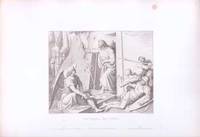
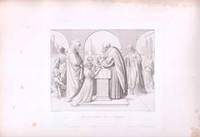
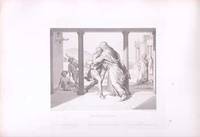
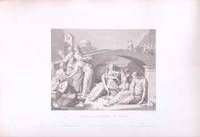
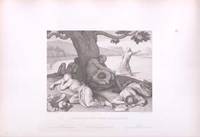
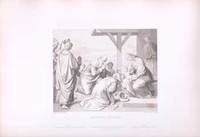
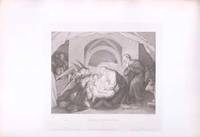
75-7658Dusseldorf: August Wilhelm Schulgen circa 1850. Engraving together with a letterpress description in English and French. 35 x 44.5 cm sheet size. Good. Tearing Age Toning Foxing at sheet edges else Good.Fueled by dissatisfaction with the direction of the Vienna Academy a group of six German students founded the Brotherhood of St. Luke in 1809. Among them was Johann Friedrich Overbeck son of a senator of the Hanseatic free city of Lübeck. The brotherhood was a direct reference to the old painter’s guilds of medieval times. Four of the artists Overbeck Franz Pforr Ludwig Vogel and Johann Konrad Hottinger settled in Rome in 1810. Later joined by Friedrich Wilhelm Schadow Peter von Cornelius Philipp Veit and Julius Schnorr von Carolsfeld they were mockingly referred to as the Nazarenes. The group advocated a renewed interest in religious art and monumental wall paintings…… Their religious zeal most likely stemmed from the fact that almost all of them were Roman Catholic converts. Although the pursuit of spiritual and artistic simplicity and piety were typically romantic characteristics the means by which they attempted to depict their dreams were classical. It has been suggested that the Nazarenes should be considered a special branch of German Romanticism. They strove for a new form of German religious-patriotic art fusing Dürer with Fra Angelico Perugino and a young Raphael. Dusseldorf: August Wilhelm Schulgen, circa 1850 unknown
1962387265London : Catholic Record Society 1962. First Edition. Hardcover. Very good copy in the original gilt-blocked cloth. Slight suggestion only of dust-dulling and rubbing to the spine bands and panel edges. Remains particularly well-preserved overall; tight bright clean and strong. Physical description: 2 v. xi 701 p. ; 23 cm. Subject: Venerable English College Rome Italy Registers. Catholic theological seminaries Italy Rome Registers. Catholic theological seminaries. [London] : Catholic Record Society hardcover
2007RC58002007. McCoog. Thomas M. Fine paperback. paperback
1913287335Oklahoma City: Oklahoma State Bar Association 1913 Tan Card Covers.24 Pgs Stapled. Annual Address Before Oklahoma State Bar Assoc. Rare Worldcat Finds 23 Copies. 4to - over 9¾ - 12" tall. 1st Edition. Original Wraps. Very Good. Oklahoma State Bar Association paperback
75-7626Dusseldorf: August Wilhelm Schulgen circa 1850. Engraving together with a letterpress description in English and French. 35 x 44.5 cm sheet size. Good. Tearing Age Toning Foxing and Staining at sheet edges else Good.Fueled by dissatisfaction with the direction of the Vienna Academy a group of six German students founded the Brotherhood of St. Luke in 1809. Among them was Johann Friedrich Overbeck son of a senator of the Hanseatic free city of Lübeck. The brotherhood was a direct reference to the old painter’s guilds of medieval times. Four of the artists Overbeck Franz Pforr Ludwig Vogel and Johann Konrad Hottinger settled in Rome in 1810. Later joined by Friedrich Wilhelm Schadow Peter von Cornelius Philipp Veit and Julius Schnorr von Carolsfeld they were mockingly referred to as the Nazarenes. The group advocated a renewed interest in religious art and monumental wall paintings…… Their religious zeal most likely stemmed from the fact that almost all of them were Roman Catholic converts. Although the pursuit of spiritual and artistic simplicity and piety were typically romantic characteristics the means by which they attempted to depict their dreams were classical. It has been suggested that the Nazarenes should be considered a special branch of German Romanticism. They strove for a new form of German religious-patriotic art fusing Dürer with Fra Angelico Perugino and a young Raphael. Dusseldorf: August Wilhelm Schulgen, circa 1850 unknown
1982035414Montreal: Canadian Jewish Congress Archives 1982. Ex-Library. Very Good. Soft cover. 1st Edition. 4to - over 9¾ - 12" tall. 2 Volumes 226 Pages Usual Ex-Lib Marks O/W Sound. Canadian Jewish Congress Archives Paperback
196329056regnery 1963 hardback book in near fine conditiondust jacket is very good. 1st Edition. Hardcover. Near Fine/Very Good. regnery hardcover
1990Q-0873384121The Kent State University Press 1990-06-15. Hardcover. New. In shrink wrap. Looks like an interesting title! The Kent State University Press hardcover
20021-0471273430John Wiley & Sons Inc 2002. Hardcover. New. 170 pages. 9.50x6.25x1.00 inches. John Wiley & Sons Inc hardcover
75-7641Dusseldorf: August Wilhelm Schulgen circa 1850. Engraving together with a letterpress description in English and French. 35 x 44.5 cm sheet size. Good. Tearing Age Toning Foxing at sheet edges else Good.Fueled by dissatisfaction with the direction of the Vienna Academy a group of six German students founded the Brotherhood of St. Luke in 1809. Among them was Johann Friedrich Overbeck son of a senator of the Hanseatic free city of Lübeck. The brotherhood was a direct reference to the old painter’s guilds of medieval times. Four of the artists Overbeck Franz Pforr Ludwig Vogel and Johann Konrad Hottinger settled in Rome in 1810. Later joined by Friedrich Wilhelm Schadow Peter von Cornelius Philipp Veit and Julius Schnorr von Carolsfeld they were mockingly referred to as the Nazarenes. The group advocated a renewed interest in religious art and monumental wall paintings…… Their religious zeal most likely stemmed from the fact that almost all of them were Roman Catholic converts. Although the pursuit of spiritual and artistic simplicity and piety were typically romantic characteristics the means by which they attempted to depict their dreams were classical. It has been suggested that the Nazarenes should be considered a special branch of German Romanticism. They strove for a new form of German religious-patriotic art fusing Dürer with Fra Angelico Perugino and a young Raphael. Dusseldorf: August Wilhelm Schulgen, circa 1850 unknown
75-7645Dusseldorf: August Wilhelm Schulgen circa 1850. Engraving together with a letterpress description in English and French. 35 x 44.5 cm sheet size. Good. Tearing Age Toning Foxing at sheet edges else Good.Fueled by dissatisfaction with the direction of the Vienna Academy a group of six German students founded the Brotherhood of St. Luke in 1809. Among them was Johann Friedrich Overbeck son of a senator of the Hanseatic free city of Lübeck. The brotherhood was a direct reference to the old painter’s guilds of medieval times. Four of the artists Overbeck Franz Pforr Ludwig Vogel and Johann Konrad Hottinger settled in Rome in 1810. Later joined by Friedrich Wilhelm Schadow Peter von Cornelius Philipp Veit and Julius Schnorr von Carolsfeld they were mockingly referred to as the Nazarenes. The group advocated a renewed interest in religious art and monumental wall paintings…… Their religious zeal most likely stemmed from the fact that almost all of them were Roman Catholic converts. Although the pursuit of spiritual and artistic simplicity and piety were typically romantic characteristics the means by which they attempted to depict their dreams were classical. It has been suggested that the Nazarenes should be considered a special branch of German Romanticism. They strove for a new form of German religious-patriotic art fusing Dürer with Fra Angelico Perugino and a young Raphael. Dusseldorf: August Wilhelm Schulgen, circa 1850 unknown
75-7638Dusseldorf: August Wilhelm Schulgen circa 1850. Engraving together with a letterpress description in English and French. 35 x 44.5 cm sheet size. Good. Tearing Age Toning Foxing at sheet edges else Good.Fueled by dissatisfaction with the direction of the Vienna Academy a group of six German students founded the Brotherhood of St. Luke in 1809. Among them was Johann Friedrich Overbeck son of a senator of the Hanseatic free city of Lübeck. The brotherhood was a direct reference to the old painter’s guilds of medieval times. Four of the artists Overbeck Franz Pforr Ludwig Vogel and Johann Konrad Hottinger settled in Rome in 1810. Later joined by Friedrich Wilhelm Schadow Peter von Cornelius Philipp Veit and Julius Schnorr von Carolsfeld they were mockingly referred to as the Nazarenes. The group advocated a renewed interest in religious art and monumental wall paintings…… Their religious zeal most likely stemmed from the fact that almost all of them were Roman Catholic converts. Although the pursuit of spiritual and artistic simplicity and piety were typically romantic characteristics the means by which they attempted to depict their dreams were classical. It has been suggested that the Nazarenes should be considered a special branch of German Romanticism. They strove for a new form of German religious-patriotic art fusing Dürer with Fra Angelico Perugino and a young Raphael. Dusseldorf: August Wilhelm Schulgen, circa 1850 unknown
50245805like new. unknown
75-7627Dusseldorf: August Wilhelm Schulgen circa 1850. Engraving together with a letterpress description in English and French. 35 x 44.5 cm sheet size. Good. Tearing Age Toning Foxing and minor Staining at sheet edges else Good.Fueled by dissatisfaction with the direction of the Vienna Academy a group of six German students founded the Brotherhood of St. Luke in 1809. Among them was Johann Friedrich Overbeck son of a senator of the Hanseatic free city of Lübeck. The brotherhood was a direct reference to the old painter’s guilds of medieval times. Four of the artists Overbeck Franz Pforr Ludwig Vogel and Johann Konrad Hottinger settled in Rome in 1810. Later joined by Friedrich Wilhelm Schadow Peter von Cornelius Philipp Veit and Julius Schnorr von Carolsfeld they were mockingly referred to as the Nazarenes. The group advocated a renewed interest in religious art and monumental wall paintings…… Their religious zeal most likely stemmed from the fact that almost all of them were Roman Catholic converts. Although the pursuit of spiritual and artistic simplicity and piety were typically romantic characteristics the means by which they attempted to depict their dreams were classical. It has been suggested that the Nazarenes should be considered a special branch of German Romanticism. They strove for a new form of German religious-patriotic art fusing Dürer with Fra Angelico Perugino and a young Raphael. Dusseldorf: August Wilhelm Schulgen, circa 1850 unknown
1803358297.Gpaperback. Good. Access codes and supplements are not guaranteed with used items. May be an ex-library book. paperback
75-7625Dusseldorf: August Wilhelm Schulgen circa 1850. Engraving together with a letterpress description in English and French. 35 x 44.5 cm sheet size. Good. Tearing Age Toning and Foxing at sheet edges else Good.Fueled by dissatisfaction with the direction of the Vienna Academy a group of six German students founded the Brotherhood of St. Luke in 1809. Among them was Johann Friedrich Overbeck son of a senator of the Hanseatic free city of Lübeck. The brotherhood was a direct reference to the old painter’s guilds of medieval times. Four of the artists Overbeck Franz Pforr Ludwig Vogel and Johann Konrad Hottinger settled in Rome in 1810. Later joined by Friedrich Wilhelm Schadow Peter von Cornelius Philipp Veit and Julius Schnorr von Carolsfeld they were mockingly referred to as the Nazarenes. The group advocated a renewed interest in religious art and monumental wall paintings…… Their religious zeal most likely stemmed from the fact that almost all of them were Roman Catholic converts. Although the pursuit of spiritual and artistic simplicity and piety were typically romantic characteristics the means by which they attempted to depict their dreams were classical. It has been suggested that the Nazarenes should be considered a special branch of German Romanticism. They strove for a new form of German religious-patriotic art fusing Dürer with Fra Angelico Perugino and a young Raphael. Dusseldorf: August Wilhelm Schulgen, circa 1850 unknown
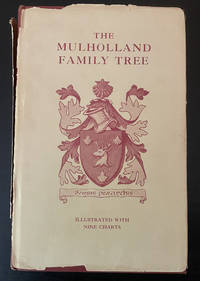
19375617<p>Toronto: The Ontario Publishing Co. Limited 1937. Hardcover. Very Good /fair. Tight binding. No chips tears creases on pages. Gift inscription on front free endpaper. Frontis and dust jacket feature the Mulholland coat of arms. Illustrated with nine fold-out charts showing various branches of family tree. "The Mulhollands claim to be a branch of the ancient sept of MacIallan in Argyleshire N. B. and were first established in Ireland in County Antrim". Dust jacket has stains edgewear a piece missing from tail of spine and a slit across rear panel. Some pressure marks on edge of text block. Some residue on front endpaper left from address label removal. Size: 8vo 8" to 9". 107 pp. <br /><br /></p> The Ontario Publishing Co., Limited hardcover
1359116362.Ghardcover. Good. Access codes and supplements are not guaranteed with used items. May be an ex-library book. hardcover
0265261295.Ghardcover. Good. Access codes and supplements are not guaranteed with used items. May be an ex-library book. hardcover
133459354X.Gpaperback. Good. Access codes and supplements are not guaranteed with used items. May be an ex-library book. paperback
2006Q-019832152XOxford University Press 2006-05-25. Paperback. New. In shrink wrap. Looks like an interesting title! Oxford University Press paperback