806 résultats
62156Paris, Le Livre Contemporain, 1958. 14 x 21, 251 pp., cartonnage d'édition + demi-jaquette + rhodoïd, bon état.
67837ABDüsseldorf., Richter Verlag., 2017. 27,5 x 21 cm. 191 S. Illustrierter OPappband., 67837A 1. Auflage. Sehr gutes, frisches Exemplar.
Un volume broché de format in 8° de 336 pp.; bande éditeur conservée. Bon état. Voir photo. Première édition sur papier courant.
1821M1634821821 Firmin Didot Couverture souple 1821 DU CONGRES DE TROPPAU . Ou examens des monarchies absolues à l' égard de la Monarchie constitutionnelle de Naples. Deuxième édition, revue et augmentée. Paris, Firmin Didot, 1821. In8 1/2 veau, dos lisse , XXVII - 249 pp . Epidermures sur le dos, sinon exemplaire en très bon état.
67325Roma, Newton Compton editori, 1981. 13 x 19, 268 pp., 105 illustrazioni e carte (illustrations/pictures), brossura (broché/paperback), in ottimo stato (très bon état/very fine copy).
8vo., First Edition, with plates; tan cloth, gilt back, a near fine copy in unclipped dustwrapper. A PRESENTATION COPY FROM THE AUTHOR WITH HER SIGNED HOLOGRAPH INSCRIPTION ON FRONT FREE ENDPAPER.
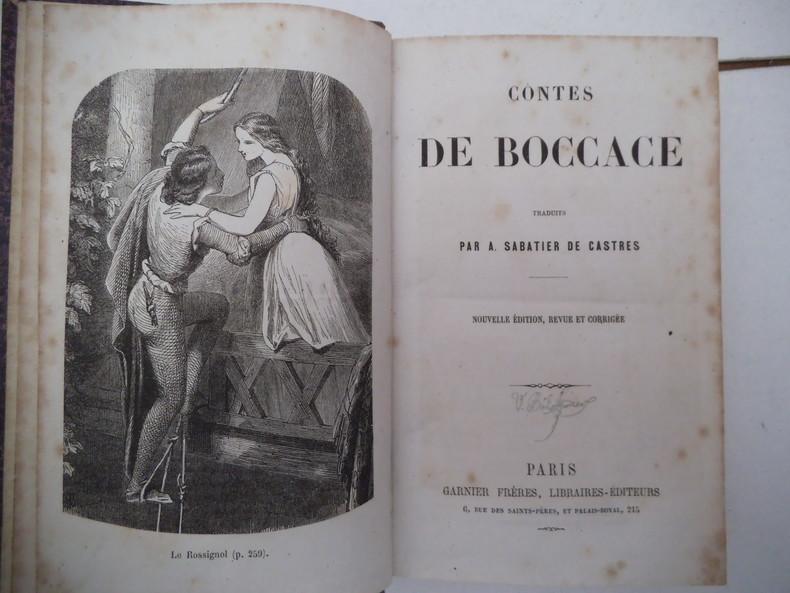
9540Traduits par A. Sabatier de Castres. Nouvelle édition, revue et corrigée In 12 demi-toile lie de vin, titre et filets dorés, filets à froid. Faux-titre, titre, 504 pages, Paris Garnier frères éditeurs sans date. Rousseurs, plus fortes en début et fin de volume.
4125NAPLES, Sans date - In-4, Format à l'italienne - Reliure éditeur à la Bradel, avec jaquette couleurs illustrée, dans emboîtage - Texte tri-lingue : italien, anglais et français - 5 pages de texte non paginées - 24 photographies couleurs PP - Neuf
NAPLES, Sans date - In-4, Format à l'italienne - Reliure éditeur à la Bradel, avec jaquette couleurs illustrée, dans emboîtage - Texte tri-lingue : italien, anglais et français - 5 pages de texte non paginées - 24 photographies couleurs PP - Neuf
1905115605Paris, Perrin et Cie 1905 In-8 23 x 14 cm. Reliure demi-chagrin noir, dos à nerfs, couvertures conservées, tête dorée,VI-403 pp., notes en bas de page, 2 portraits hors texte, table des matières. Exemplaire en bon état.
1988GIT008e4Marseille Edisud / Archives Municipales 1988. In-4 broché couverture illustrée 180pp. Illustrations dans le texte, hors texte, à pleine page, en noir et en couleurs.
190547301905 Lemerre, Paris, 1905. Un volume in-12 demi percaline havane, dos lisse orné d'un fleuron doré, pièce de titre en maroquin rouge, plats conservés, 240 pages. Envoi de l'auteur au Marquis Guy de Charnacé, écrivain et journaliste. Bel exemplaire, intérieur frais.
2013x-1405185775Blackwell Pub 2013. Paperback. New. 1st edition. 216 pages. 10.79x0.55x8.43 inches. Blackwell Pub paperback
4601Editions de la R.M.N., Paris, 1983. In-8, broché sous couverture illustrée en couleur, 308 pp. Avant-propos, par Arnauld Brejon de Lavergnée - Préface, par Harold Acton - Naples au XVIIe siècle, par Clovis Whitfield - Caravage à Naples, par Mina Gregori - Baroque et classicisme à Naples dans la seconde moitié du XVIIe siècle, par ...
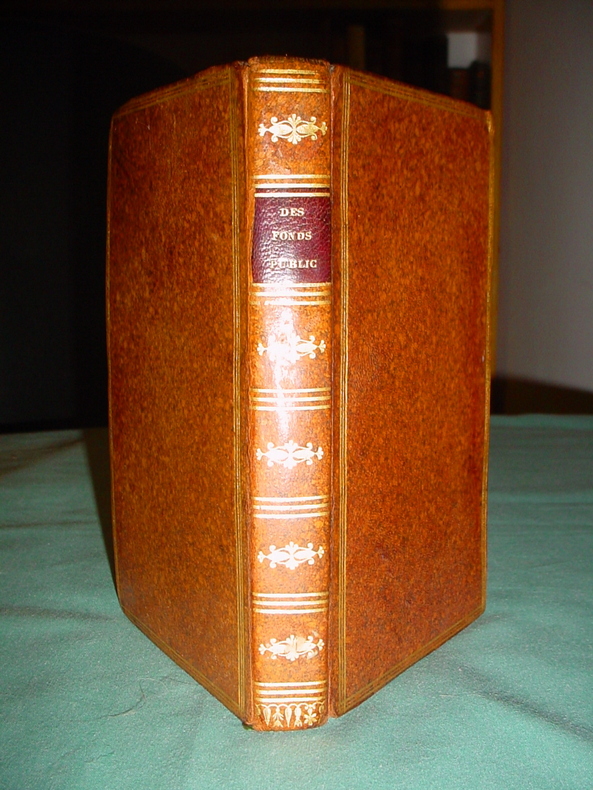
15113Paris Bachelier, 1825 (édition revue at augmentée). In-12 relié pleine basane fauve, plats avec encadrements dorés, filets et fleurons dorés sur le dos, tranches marbrées, 247 pages, complet des 10 planches dépliantes. Excellent état, jolie reliure, intérieur frais.
188019456Florence-Naples Giacomo Brogi 1880 in-4 pleine percale album en accordéon de 48 photographies originales vues de NAPLES, format 17,2 x 11,5 cm, reliure pleine percale rouge in-douze Editeur, à plaques spéciales pour le dos et le premier plat (editor hard-back green percale with special covers editor for the spine and the front cover in-12) avec son etui recouvert de papier granité rouge, dos long, titre doré (gilt title) dans le sens de la hauteur, 1er plat décoré or et noir, titre frappé or (gilt title), toutes tranches rouges, sans date(1880) Florence-Naples Giacomo Brogi Editeur,
1927007344DIJON AUX EDITIONS DU RAISIN 1927 Un volume petit in-4 broché de 84 pages , couverture rempliée avec le premier plat illustré , 4 planches d' illustrations hors-texte , tirage à 100 ex. numérotés sur vieux Japon teinté ( n° 72 ) , bon exemplaire , rare . Ouvrage paru à Dijon en 1750 Bon Couverture souple
M4130Couverture rigide Paris, Stoupe, 1780 , 2 vols in16 , plein veau , dos lisse, piéces de titre vertes et rouge, légers travaux de vers, 2 coins frottés ,264- 252pp Langue: Français
2006504352006 1 vol in-8 broché - 4ème trimestre 2006 - Tome LXV - N° 4 - 100 pages
xv, 376 pages. Color map endpapers. Generously illustrated with black and white photos. Includes eleven maps, a fifty-five page roster of former members and their hometowns, and a twelve-page list of members who lost their lives in service. Documents the history of this elite American-Canadian WWII commando unit which was famously dramatized in the 1968 motion picture "The Devil's Brigade". Somewhat above-average wear to navy blue boards. Beige evidence of moisture exposure to bottom edge of entire textblock. Binding intact. Minimal markings. A sound copy of this important history. Enser p.440, Cooke (2) p.156, Dornbusch 505. Book
20360Rotterdam, printed for Abraham Acher, bookseller by the Exchange, 1687 [et] 1688. Petit in-8 de [24]-336 et [16]-191-[1] pages, plein veau caramel, dos à nerfs orné de filets à froid, plats décorés de double filets et fleurons à froid, tranche rouge.
20075558VB2007. 2007th ed. Springer 2007. 15 x 23 cm. 634 pages. Paperback. Versand aus Deutschland / We dispatch from Germany via Air Mail. Einband bestoßen daher Mängelexemplar gestempelt sonst sehr guter Zustand. Imperfect copy due to slightly bumped cover apart from this in very good condition. Stamped. paperback
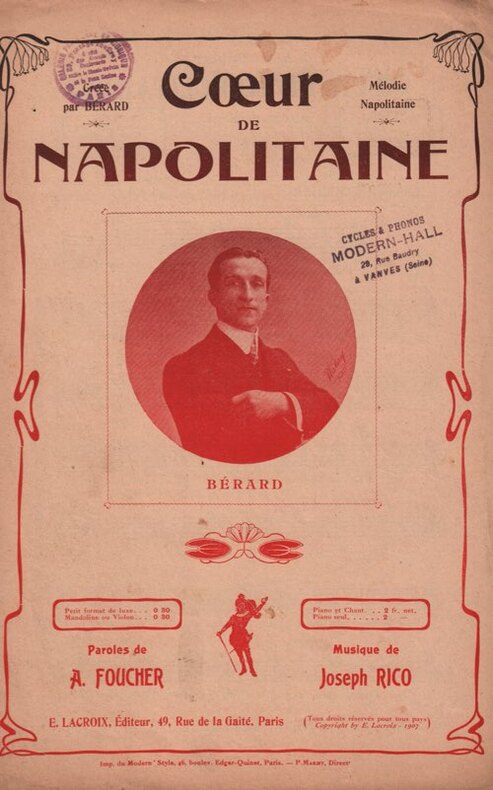
190775812Partitions sur l'Italie Lacroix 1907
In-8 vol.1 cc(2) pp. 155 incisione sull’antiporta raffigurante scene popolari, vol.2 cc(1) pp. 152 cc(1) incisione sull’anitiporta raffiguarnte scene popolari, vol.3 cc(1) 166 (1) incisione sull’antiporta raffigurante scene popolari, vol. 4 cc(1) pp 164 (1) cc.(1) fronte spizio strappato, incisione sull’antiporta raffigurante scene di vita popolare; vol.5 cc.(1)pp 156 incisione sull’antiporta raffigurante scene di vita popolare; vol. 6 cc(1) pp. 157 cc (2) incisione sull’antiporta raffigurante scene di vita popolare vol.7 cc. (2) pp.168 incisione sull’antiporta raffigurante scene di vita popolare; vol.8 cc(1) pp.149 cc.(1) incisione sull’antiporta raffigurante scene di vita popolare; vo.9 cc(1) pp 172 incisione sull’antiporta raffigurante scene di vita popolare. Romanzo. Rilegato in tre volumi in mezza pelle con incisoni in oro sul dorso.
In-4°, 44cc, legatura in mezza pergamena, buone condizioni, frontespizio in rosso e nero con stemma del dedicatario Paolo IV. Famoso avvocato napoletano, il Camerario partecipava inoltre contemporaneamente anche all'attività culturale del circolo umanistico napoletano che gravitava intorno ad Alfonso Capece. Ed è proprio subito dopo la repressione governativa di questo gruppo di intellettuali (1540-42) che scoppiarono, come episodio non marginale delle contraddizioni interne alla classe dirigente napoletana, i primi violenti contrasti col viceré Pietro di Toledo. Inviati allora una serie di memoriali in sua difesa a Carlo V, senza però mai ottenere alcuna risposta, comprese alla fine l'inutilità dei suoi sforzi di reintegrazione e di riabilitazione: abbandonato il territorio imperiale, si rifugiò in Francia (1547) entrando subito in contatto coi numerosi circoli antispagnoli degli esuli napoletani e forse ottenne a corte anche una carica retribuita di consigliere di Stato. Il Camerario decise di trasferirsi da Parigi a Roma, ponendosi sotto la protezione antispagnola di Paolo IV che, in considerazione delle sue specifiche competenze, dopo averlo nominato commissario generale dell'esercito per la guerra contro la Spagna, gli affidò, insieme con la carica di prefetto, la gestione dell'amministrazione annonaria dello Stato della Chiesa. In-4 °, 44cc, half vellum binding, good condition, red and black title page with coat of arms of the dedicatee Paul IV. A famous Neapolitan lawyer, he also participated simultaneously in the cultural activity of the Neapolitan humanistic circle that gravitated around Alfonso Capece. And it was just after the government repression of this group of intellectuals (1540-42) that the first violent contrasts with Viceroy Pietro di Toledo broke out, as a non-marginal episode of the internal contradictions of the Neapolitan ruling class. Then Camerario sent a series of memorials in his defense to Charles V, without ever getting any response, eventually including the futility of his reintegration and rehabilitation efforts: abandoned the imperial territory, he took refuge in France (1547) immediately entering contact with the numerous anti-Spanish circles of the Neapolitan exiles and perhaps he also obtained a paid position as councilor of state at court. Camerario decided to move from Paris to Rome, placing himself under the anti-Spanish protection of Paul IV who, in consideration of his specific skills, after having appointed him general commissioner of the army for the war against Spain, entrusted him, together with the office of prefect, the administration of the State of the Church.