806 résultats
2237Chez Zacharie Chatelain, à Amsterdam, 1743-1745.
1990EYL-64Torriana, Paris, Booking International, 1990. In folio (270 x 380) de XVI p. et 27 planches en double page. Cartonnage glacé bleu de l’éditeur, illustration en couleurs sur le plat sup. Etat neuf.
c6549Napoli, Francesco Giannini et Figli, 1889 ; volume grand in-8°, demi-chagrin rouge de l' époque, dos à nerfs, titre et année dorés ; 796pp. et 6 planches de filigranes de papier anciens. Avec à la fin la Table générale pour l'année 1889.Ex-libris étiquette armorié à l' intérieur du 1er plat de Fernand de Sassenay ( 1829 - 1899).
c6550Napoli, Francesco Giannini et Figli, 1891 ; volume grand in-8°, demi-chagrin rouge de l' époque, dos à nerfs, titre et année dorés ; 886pp. et 1 tableau dépliant. Avec à la fin la Table générale pour l'année 1891.Ex-libris étiquette armorié à l' intérieur du 1er plat de Fernand de Sassenay ( 1829 - 1899).
c6551Napoli, Francesco Giannini et Figli, 1893 ; volume grand in-8°, demi-chagrin rouge de l' époque, dos à nerfs, titre et année dorés ; 815pp. et 1 ill. à pleine page. Avec à la fin la Table générale pour l'année 1893.Ex-libris étiquette armorié à l' intérieur du 1er plat de Fernand de Sassenay ( 1829 - 1899).
c6552Napoli, Francesco Giannini et Figli, 1896 ; volume grand in-8°, demi-chagrin rouge de l' époque, dos à nerfs, titre et année dorés ; 871pp. Avec à la fin la Table générale pour l'année 1896.Ex-libris étiquette armorié à l' intérieur du 1er plat de Fernand de Sassenay ( 1829 - 1899).
c6553Napoli, Francesco Giannini et Figli, 1882 ; volume grand in-8°, demi-chagrin rouge de l' époque, dos à nerfs, titre et année dorés( relieur Gaetan Ronner) ; 835pp. et 3 tableaux généalogiques dépliants. Avec à la fin la Table générale pour l'année 1882.Ex-libris étiquette armorié à l' intérieur du 1er plat de Fernand de Sassenay ( 1829 - 1899).
41103Paris.1922.In-12 en percaline éditeur verte.802 p.Cartes et plans rempliés soulignés de couleurs. BE.Tranches rouges.
In-4°, (80 cc), presenza di molte glosse coeve di più mani, alcune correzioni al testo, legatura in mezza pergamena moderna, due capilettera figurati. Al frontespizio nota di possesso manoscritta di William Godolphin (1635-1696), diplomatico e grande collezionista inglese. Ex libris Pagel. Dedica a Marco Antonio Colonna, firmata ex Accademia Pisana. Buone condizioni. Edizione originale dell’opera filosofico-epistemiologica di Simone Porzio, aristotelico radicale, materialista convinto, sostenitore della mortalità dell’anima. Questa è la sua più importante opera di fisica, in cui l’autore si inserisce nella disputa sul determinismo. Pensatore originale, uno dei primi grandi filosofi napoletani, profondo conoscitore dei testi in greco, Porzio fu il maggior esponente a Napoli della corrente degli ‘alessandristi’ (sostenitori della mortalità dell’anima; contro di lui scrisse Giacomo Antonio Marta), e ispiratore del pensiero di Bernardino Telesio; sosteneva la separazione di filosofia e teologia. Aristotele è accolto qui attraverso il suo interprete più famoso, Alessandro di Afrodisia (II-III sec. d.C), autore tra l’altro di uno scritto sul fato, contrario ad ogni forma di determinismo. In quest’opera Porzio definisce, approfondisce ed esamina in due libri i concetti aristotelici di materia e natura. Infine, dopo aver parlato delle cause efficienti, arriva discutere di ciò che stava diventando realmente interessante: il problema del fato e della libertà, citando Platone, Plotino, Aristotele, Crisippo. Fatum est lex nobis promulgata, instar divinae mentis. La totale libertà è negata all’essere umano, sostiene Porzio anche in due opuscoli precedenti, perché solo l’individuo che esiste in se stesso può avere completa libertà. La sua posizione si orienta verso una visione sempre più naturalistica, che riproponendo il valore centrale della visione e dell’esperienza nell’indagine dei fatti, automaticamente rinuncia alla spiegazione di questi attraverso il sacro e il miracoloso. Simone Porzio (1497-1554), filosofo napoletano, medico e professore di filosofia naturale tra le Università di Napoli e Pisa (qui per la seconda volta tra il 1545 e il ’53); a Napoli fu allievo di Agostino Nifo. E.Garin, History of Italian Philosophy, I, 362 Cesare Vasoli, Tra Aristotele, Alessandro di Afrodisia e Juan de Valdès: note su Simone Porzio, in Rivista di storia della filosofia, 4, 2001 Eva del Soldato, Simone Porzio: un aristotelico tra natura e grazia. istituto nazionale di Studi sul Rinascimento, 6, 2010 In-4 °, (80 cc), presence of many contemporary glosses by different hands, some corrections to the text, binding in modern half vellum, two figured initials. On the title page handwritten ownership note by William Godolphin (1635-1696), diplomat and great English collector. Ex libris Pagel. Dedication to Marco Antonio Colonna, by the former Accademia Pisana. Good copy. Original edition of the philosophical-epistemological work of Simone Porzio, radical Aristotelian, convinced materialist, advocate of the mortality of the soul. This is his most important work on phisics, in which the author is part of the dispute over determinism. Original thinker, one of the first great Neapolitan philosophers, profound connoisseur of Greek texts, Porzio was the greatest exponent in Naples of the current of the 'Alexandrians' (supporters of the mortality of the soul; Giacomo Antonio Marta wrote against him), and inspirer of the thought of Bernardino Telesio; he advocated the separation of philosophy and theology. Aristotle is introduced here through his most famous interpreter, Alexander of Aphrodisias (II-III century AD), author, among other things, of a writing on fate, contrary to any form of determinism. In this work, Porzio defines, deepens and examines the Aristotelian concepts of matter and nature in two books. Finally, after talking about efficient causes, he comes to discuss what was becoming really interesting: the problem of fate and freedom, quoting Plato, Plotinus, Aristotle, Chrysippus. Fatum est lex nobis promulgata, instar divinae mentis. Total freedom is denied to the human being, as Porzio stated in two previous pamphlets, because only the individual who exists in himself can have complete freedom. His position is oriented towards an increasingly naturalistic vision, which by re-proposing the central value of vision and experience in the investigation of facts, automatically renounces the explanation of these through the sacred and the miraculous. Simone Porzio (1497-1554), Neapolitan philosopher, doctor and professor of natural philosophy between the Universities of Naples and Pisa (here for the second time between 1545 and '53); in Naples he was a pupil of Agostino Nifo. E. Garin, History of Italian Philosophy, I, 362 Cesare Vasoli, Between Aristotle, Alexander of Aphrodisias and Juan de Valdès: notes on Simone Porzio, in Review of the history of philosophy, 4, 2001 Eva del Soldato, Simone Porzio: an Aristotelian between nature and grace. National Institute of Renaissance Studies, 6, 2010
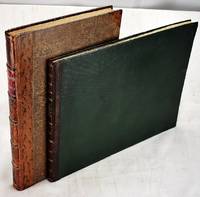
17842005060026Napoli: Presso Giuseppe Campo 1784. First Edition. Hardcover. Good. The Devastation of Nature: Sarconi's study of the Calabrian Earthquake 2 volume set. Text and Atlas volumes. Text volume collation: pp. xiv 2 352 vi 2. Plate volume is an oblong folio 48 x 36 cm. 54 of 68 plates. Bound in contemporary leather-backed boards over green cloth. Contains plates 1-51 53-54 57. Some marginal foxing. <br> In 1783 Calabria then the Kingdom of Naples and Sicily experienced a series of five devastating earthquakes. Nearly all of the built structures in the region were destroyed. The first two earthquakes created tsunamis which killed thousands of people sleeping on the beaches near Messina. Between 32000 and 50000 Italians died as a result of disaster. The Reale Accademia delle Scienze e Belle Lettere of Naples conducted the first scientific study of the event. This is the plate volume of their study engraved by Antonio Zaballi from the drawings by Pompeo Schiantarelli and Ignazio Stile. Ref: Kleemann Katrin. "Living in the Time of a Subsurface Revolution: The 1783 Calabrian Earthquake Sequence." Environment & Society Arcadia 2019 no. 30. <br> This is an oversized or heavy book which requires additional postage for international delivery outside the US. Napoli: Presso Giuseppe Campo hardcover
648493e année - N° 109 - 17 avril 1947 - revue illustrée - in-4 broché - 24 pages
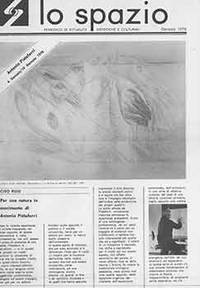
18-8044Naples Italy: Centro Culturale Lo Spazio 1978. . Folio. 2 pp. Single soft black and white illustrated sheet. Very good. Black and white plates. Includes an essay by Ciro Ruju. Includes plate reproductions of works by Antonio Pistafferi. Publication is the January 1978 issue of a monthly periodical released by the gallery Centro Culturale Lo Spazio in Naples Italy in conjunction with the show “Antonio Pistaferri†held from January 4 through January 19 at Lo Spazio in Naples Italy. In Italiano. Scarce. From the Collection of the Art Historian Peter Selz. Naples, Italy: Centro Culturale Lo Spazio, 1978. unknown
1334040796.Gpaperback. Good. Access codes and supplements are not guaranteed with used items. May be an ex-library book. paperback
8vo, 24.7cm. Pp. 263,[2], 28 photogr. plates, few notes, bibl., index of personal names. Orig. wrappers. Very good. - With extensive warm presentation inscription by author across 2/3 of half-title: "All'amico Mistice Andrea, A "Mast'Andrea" che alla sua arte ha aggiunto gran parte del suo nobile cuore [...]" signed and dated 27th March 1980.
pp. 407, (7) [Publisher's catalogue] + Engraved Portrait Frontis. All edges marbled. Damp stained. Foxed. Early XLib from Ohio School Library, Independence, OH. Marbled endpapers. 8vo. Original leather spine over cloth boards. Gilt lettered spine. Binding worn and stained. Hardbound. AMERICANA BOX 2
2026__3779981440Juventa Verlag GmbH 2026. Paperback. New. 300 pages. German language. 6.02x0.51x9.17 inches. Juventa Verlag GmbH paperback
1910GIT0128eParis Plon 1910. In-8 broché XXXpp (introduction) + d-ipp (préface) + 367pp. Avec 1 fac-similé hors texte. Petit manque au bas du dos.
1910172141910 1volume, reliure demi-chagrin vert olive (binding half shagreen) in-octavo (22,8 x 14,5 cm), reliure d'époque, dos 5 nerfs (spine with raised bands) insolé (le vert olive a viré au soleil en marron-clair)- entre-nerfs à fleuron au fer plein or (floweret with full blocking stamp) - titre frappé or (gilt title) et tomaison (volume numbering), papier marbré vert aux plats (cover with marbled paper), toutes tranches lisses (all edges smooth), Avec 1 fac-similé hors texte en noir, [(1) f + XXX pp + (5) ff (préface) + 367] pages, 1910 Paris E. PLON, Nourrit et Cie Imprimeurs-Editeurs,
8496107191.Ghardcover. Good. Access codes and supplements are not guaranteed with used items. May be an ex-library book. hardcover
185097139Bruxelles, Méline, Cans et compagnie, 1850, in-8°, (4)-434 pp, reliure pleine basane mordorée, dos lisse orné, coupes et coins lég. frottés, bon état. Edition belge, parue en même temps que l'édition originale (à Paris, chez Pagnerre)
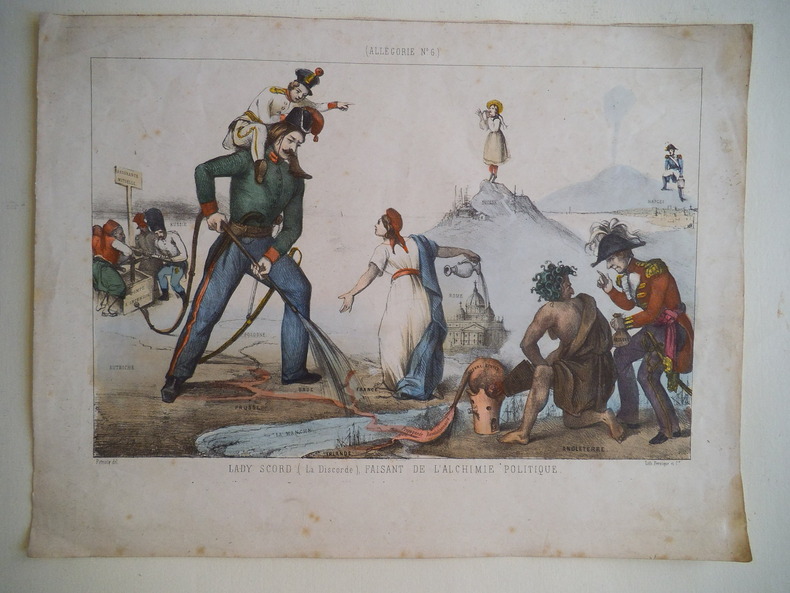
8619Lady Scord(La discorde)faisant de l’alchimie politique (allégorie n°6) lithographie originale en couleurs. 304x198mm et 335x270mm avec marge.Litho.Pernique & Cie. Quelques rousseurs Une satire sur la politique internationale,l’Angleterre qui attise les flammes de la guerre civile, pendant que d’autres essaient de les éteindre, avec en arrière plan Rome, Naples et la Suisse.
16986Broché - 15,5 x 24 - 436 pp - année 2005 - Editions Plon -
1953AUB-6300Ed. H. Lefebvre 1953. Bel exemplaire relié, couverture souple et ornée d'éd., in-4 numéroté, 256 pages.
ria9789814745000_inpHardback. New. New Book; Fast Shipping from UK; Not signed; Not First Edition; This book presents the multifaceted aspects of rare earth elements REEs focusing on both their potential benefits and adverse health effects. The adverse impacts of REEs on human and environmental health raise a growing concern not o hardcover
2002PEINTURE8570415Electa Napoli, 2002, 25 x 28, 237 pages cousues sous couverture souple rempliée illustrée. Iconographie en noir & blanc et en couleurs. Catalogue publié à l'occasion de l'exposition au Museo Diego Aragona Pignatelli Cortes du 22 décembre 2002 au 1er juin 2003.