6 228 résultats
First edition, 8vo (190 x 130 mm), a very good ex-library copy, orig. cloth, gilt.
576p. Hardcover Very good condition, edges lightly soiled
8vo., First Edition, with 17 plates, 13 maps (one folding and 7 double page) and illustrations in the text, free endpapers mildly browned; original tan cloth, upper board and backstrip lettered in black, edges lightly spotted else a very good, bright, clean copy. EXTREMELY SCARCE
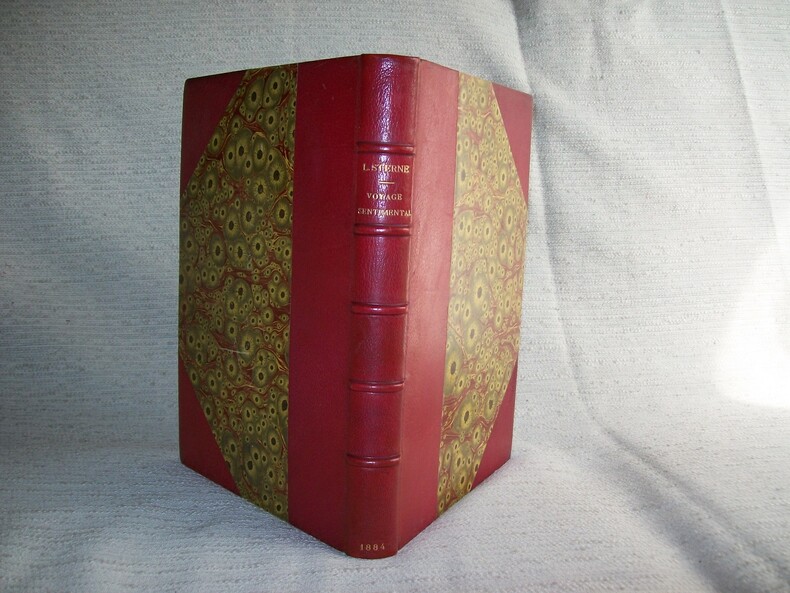
1884GITk186Paris Librairie Artistique H Launette 1884. In-4 2 feuillets non chiffrés (faux-titre, titre) XII 212pp 2 feuillets non chiffrés dont table des gravures hors texte. Demi maroquin rouge à coins, dos à nerfs saillants, tête dorée, non rogné, dos et plats de la jolie couverture illustrée conservés, reliure de l'époque (Bretault). Orné de 232 belles illustrations d'après les dessins de Maurice Leloir: 220 vignettes en tête de chapitre, culs de lampe, dans le texte et 12 grandes compositions hors texte reproduites en photogravure y compris le portrait de Sterne en frontispice. Très bel exemplaire imprimé sur papier fort, de la plus grande fraîcheur. Edition joliment illustrée par Maurice Leloir, proposée ici dans une reliure sobre soignée, signée par Joseph Bretault (1856-1903), ancien ouvrier de Champs établi à Paris (Fléty page33).
Cartonnage de l'éditeur. 231 pages.
Broché. 32 pages. Manque important au premier plat.
Deux volumes. Reliures demi-basanes. 468 + 472 pages. Rousseurs. Dos et titres dorés.
pp. vi, 36, (1)[Publisher's catalogue]. Uncut. Endpapers age stained. Small 8vo. Original full paper binding. Hardbound. First Edition. Very Good plus. James Stephens (1882-1950) was left fatherless in the Dublin slums at the age of two. His mother remarried or took up with another man when James was about six years of age. She abandoned her young son and he was forced to go to the Meath Protestant Industrial School for Boys. The Meath School was cruel and harsh and he ran away to live in the streets or live with families that took to the likely boy. In 1905 'The Greatest Miracle' was published by Arthur Griffith in The United Irishman. Griffith became good friends with Stephens and published his works in his magazine know as the Sinn Fein. From 1905-1910, Stephens attended Gaelic League classes and become involved with political meetings. During this time he published several pieces which focused on Irish national pride, the importance of learning one's Irish language and customs, and remembering the ancient saga heroes. Stephens met many of his great contemporaries during this period including George Russell (AE), George Moore, W.B. Yeats, Lady Gregory, etc. In the year 1912, Stephens published The Charwoman's Daughter and later in the same year his noted work The Crock of Gold. The Crock of Gold was a great success and Stephens moved to Paris so he could concentrate on writing full time. Cynthia Kavanagh who had been his lover since 1907 accompanied him. He later married her in 1919. The Demi-Gods was published in 1914 and in 1915 he moved back to Dublin to become the Registrar of the National Gallery of Ireland (and stayed in that position till 1924). Stephens witnessed the shooting of a man as a result of the Easter Uprising in Dublin in 1916. This became a turning point for him as the event intensified his patriotic feelings and renewed his interest in old Irish literature. Stephens moved to London in the year 1925. He began a series of lecture tours which extended to the United States. In 1935 Stephens began a literary and personal friendship with James Joyce. His colleagues considered Stephens to be a genius who easily embraced fantasy, philosophy, and comedy - those who read him today will still be struck by his genius. **PRICE JUST REDUCED! STEPHENS/W77
pp. xxii, 260. Uncut. Fore-edge age stained. Endpapers foxed. 8vo. Original full green cloth binding, gold lettered spine. Hardbound. First Trade Edition. James Stephens (1882-1950) was left fatherless in the Dublin slums at the age of two. His mother remarried or took up with another man when James was about six years of age. She abandoned her young son and he was forced to go to the Meath Protestant Industrial School for Boys. The Meath School was cruel and harsh and he ran away to live in the streets or live with families that took to the likely boy. In 1905 'The Greatest Miracle' was published by Arthur Griffith in The United Irishman. Griffith became good friends with Stephens and published his works in his magazine know as the Sinn Fein. From 1905-1910, Stephens attended Gaelic League classes and become involved with political meetings. During this time he published several pieces which focused on Irish national pride, the importance of learning one's Irish language and customs, and remembering the ancient saga heroes. Stephens met many of his great contemporaries during this period including George Russell (AE), George Moore, W.B. Yeats, Lady Gregory, etc. In the year 1912, Stephens published The Charwoman's Daughter and later in the same year his noted work The Crock of Gold. The Crock of Gold was a great success and Stephens moved to Paris so he could concentrate on writing full time. Cynthia Kavanagh who had been his lover since 1907 accompanied him. He later married her in 1919. The Demi-Gods was published in 1914 and in 1915 he moved back to Dublin to become the Registrar of the National Gallery of Ireland (and stayed in that position till 1924). Stephens witnessed the shooting of a man as a result of the Easter Uprising in Dublin in 1916. This became a turning point for him as the event intensified his patriotic feelings and renewed his interest in old Irish literature. Stephens moved to London in the year 1925. He began a series of lecture tours which extended to the United States. In 1935 Stephens began a literary and personal friendship with James Joyce. His colleagues considered Stephens to be a genius who easily embraced fantasy, philosophy, and comedy - those who read him today will still be struck by his genius. **PRICE JUST REDUCED! STEPHENS/W77
pp. v, 199. Top edge decorated green. 8vo. Original full cloth binding, decorated and lettered in brown. Spine faded. Hardbound. First Edition. James Stephens (1882-1950) was left fatherless in the Dublin slums at the age of two. His mother remarried or took up with another man when James was about six years of age. She abandoned her young son and he was forced to go to the Meath Protestant Industrial School for Boys. The Meath School was cruel and harsh and he ran away to live in the streets or live with families that took to the likely boy. In 1905 'The Greatest Miracle' was published by Arthur Griffith in The United Irishman. Griffith became good friends with Stephens and published his works in his magazine know as the Sinn Fein. From 1905-1910, Stephens attended Gaelic League classes and become involved with political meetings. During this time he published several pieces which focused on Irish national pride, the importance of learning one's Irish language and customs, and remembering the ancient saga heroes. Stephens met many of his great contemporaries during this period including George Russell (AE), George Moore, W.B. Yeats, Lady Gregory, etc. In the year 1912, Stephens published The Charwoman's Daughter and later in the same year his noted work The Crock of Gold. The Crock of Gold was a great success and Stephens moved to Paris so he could concentrate on writing full time. Cynthia Kavanagh who had been his lover since 1907 accompanied him. He later married her in 1919. The Demi-Gods was published in 1914 and in 1915 he moved back to Dublin to become the Registrar of the National Gallery of Ireland (and stayed in that position till 1924). Stephens witnessed the shooting of a man as a result of the Easter Uprising in Dublin in 1916. This became a turning point for him as the event intensified his patriotic feelings and renewed his interest in old Irish literature. Stephens moved to London in the year 1925. He began a series of lecture tours which extended to the United States. In 1935 Stephens began a literary and personal friendship with James Joyce. His colleagues considered Stephens to be a genius who easily embraced fantasy, philosophy, and comedy - those who read him today will still be struck by his genius. **PRICE JUST REDUCED! STEPHENS/W77
pp. 345, (4)[Publisher's catalogue]. Endpapers foxed. Bookseller's label. 8vo. Original full purple cloth binding, gold lettered and decorated. Spine very faded. Hardbound. First American Edition. James Stephens (1882-1950) was left fatherless in the Dublin slums at the age of two. His mother remarried or took up with another man when James was about six years of age. She abandoned her young son and he was forced to go to the Meath Protestant Industrial School for Boys. The Meath School was cruel and harsh and he ran away to live in the streets or live with families that took to the likely boy. In 1905 'The Greatest Miracle' was published by Arthur Griffith in The United Irishman. Griffith became good friends with Stephens and published his works in his magazine know as the Sinn Fein. From 1905-1910, Stephens attended Gaelic League classes and become involved with political meetings. During this time he published several pieces which focused on Irish national pride, the importance of learning one's Irish language and customs, and remembering the ancient saga heroes. Stephens met many of his great contemporaries during this period including George Russell (AE), George Moore, W.B. Yeats, Lady Gregory, etc. In the year 1912, Stephens published The Charwoman's Daughter and later in the same year his noted work The Crock of Gold. The Crock of Gold was a great success and Stephens moved to Paris so he could concentrate on writing full time. Cynthia Kavanagh who had been his lover since 1907 accompanied him. He later married her in 1919. The Demi-Gods was published in 1914 and in 1915 he moved back to Dublin to become the Registrar of the National Gallery of Ireland (and stayed in that position till 1924). Stephens witnessed the shooting of a man as a result of the Easter Uprising in Dublin in 1916. This became a turning point for him as the event intensified his patriotic feelings and renewed his interest in old Irish literature. Stephens moved to London in the year 1925. He began a series of lecture tours which extended to the United States. In 1935 Stephens began a literary and personal friendship with James Joyce. His colleagues considered Stephens to be a genius who easily embraced fantasy, philosophy, and comedy - those who read him today will still be struck by his genius. **PRICE JUST REDUCED! STEPHENS/W77
345p. 8vo. Original full purple cloth binding, embossed in blind and gold lettered. Spine faded. Covers spotted. Hardbound. James Stephens (1882-1950) was left fatherless in the Dublin slums at the age of two. His mother remarried or took up with another man when James was about six years of age. She abandoned her young son and he was forced to go to the Meath Protestant Industrial School for Boys. The Meath School was cruel and harsh and he ran away to live in the streets or live with families that took to the likely boy. In 1905 'The Greatest Miracle' was published by Arthur Griffith in The United Irishman. Griffith became good friends with Stephens and published his works in his magazine know as the Sinn Fein. From 1905-1910, Stephens attended Gaelic League classes and become involved with political meetings. During this time he published several pieces which focused on Irish national pride, the importance of learning one's Irish language and customs, and remembering the ancient saga heroes. Stephens met many of his great contemporaries during this period including George Russell (AE), George Moore, W.B. Yeats, Lady Gregory, etc. In the year 1912, Stephens published The Charwoman's Daughter and later in the same year his noted work The Crock of Gold. The Crock of Gold was a great success and Stephens moved to Paris so he could concentrate on writing full time. Cynthia Kavanagh who had been his lover since 1907 accompanied him. He later married her in 1919. The Demi-Gods was published in 1914 and in 1915 he moved back to Dublin to become the Registrar of the National Gallery of Ireland (and stayed in that position till 1924). Stephens witnessed the shooting of a man as a result of the Easter Uprising in Dublin in 1916. This became a turning point for him as the event intensified his patriotic feelings and renewed his interest in old Irish literature. Stephens moved to London in the year 1925. He began a series of lecture tours which extended to the United States. In 1935 Stephens began a literary and personal friendship with James Joyce. His colleagues considered Stephens to be a genius who easily embraced fantasy, philosophy, and comedy - those who read him today will still be struck by his genius. **PRICE JUST REDUCED! STEPHENS/W77
304p. 8vo. Original full green cloth binding, gold decorated and lettered. Spine faded. Hardbound. First Edition. James Stephens (1882-1950) was left fatherless in the Dublin slums at the age of two. His mother remarried or took up with another man when James was about six years of age. She abandoned her young son and he was forced to go to the Meath Protestant Industrial School for Boys. The Meath School was cruel and harsh and he ran away to live in the streets or live with families that took to the likely boy. In 1905 'The Greatest Miracle' was published by Arthur Griffith in The United Irishman. Griffith became good friends with Stephens and published his works in his magazine know as the Sinn Fein. From 1905-1910, Stephens attended Gaelic League classes and become involved with political meetings. During this time he published several pieces which focused on Irish national pride, the importance of learning one's Irish language and customs, and remembering the ancient saga heroes. Stephens met many of his great contemporaries during this period including George Russell (AE), George Moore, W.B. Yeats, Lady Gregory, etc. In the year 1912, Stephens published The Charwoman's Daughter and later in the same year his noted work The Crock of Gold. The Crock of Gold was a great success and Stephens moved to Paris so he could concentrate on writing full time. Cynthia Kavanagh who had been his lover since 1907 accompanied him. He later married her in 1919. The Demi-Gods was published in 1914 and in 1915 he moved back to Dublin to become the Registrar of the National Gallery of Ireland (and stayed in that position till 1924). Stephens witnessed the shooting of a man as a result of the Easter Uprising in Dublin in 1916. This became a turning point for him as the event intensified his patriotic feelings and renewed his interest in old Irish literature. Stephens moved to London in the year 1925. He began a series of lecture tours which extended to the United States. In 1935 Stephens began a literary and personal friendship with James Joyce. His colleagues considered Stephens to be a genius who easily embraced fantasy, philosophy, and comedy - those who read him today will still be struck by his genius. **PRICE JUST REDUCED! STEPHENS/W77
263p. 8vo. Original full green cloth binding, gold decorated and lettered. Binding has some old spotting and bits of wear. Hardbound. First U.S. Edition. Stephen's important first book, a novel of the Dublin slums that was published in Britain as 'The Charwoman's Daughter'. James Stephens (1882-1950) was left fatherless in the Dublin slums at the age of two. His mother remarried or took up with another man when James was about six years of age. She abandoned her young son and he was forced to go to the Meath Protestant Industrial School for Boys. The Meath School was cruel and harsh and he ran away to live in the streets or live with families that took to the likely boy. In 1905 'The Greatest Miracle' was published by Arthur Griffith in The United Irishman. Griffith became good friends with Stephens and published his works in his magazine know as the Sinn Fein. From 1905-1910, Stephens attended Gaelic League classes and become involved with political meetings. During this time he published several pieces which focused on Irish national pride, the importance of learning one's Irish language and customs, and remembering the ancient saga heroes. Stephens met many of his great contemporaries during this period including George Russell (AE), George Moore, W.B. Yeats, Lady Gregory, etc. In the year 1912, Stephens published The Charwoman's Daughter and later in the same year his noted work The Crock of Gold. The Crock of Gold was a great success and Stephens moved to Paris so he could concentrate on writing full time. Cynthia Kavanagh who had been his lover since 1907 accompanied him. He later married her in 1919. The Demi-Gods was published in 1914 and in 1915 he moved back to Dublin to become the Registrar of the National Gallery of Ireland (and stayed in that position till 1924). Stephens witnessed the shooting of a man as a result of the Easter Uprising in Dublin in 1916. This became a turning point for him as the event intensified his patriotic feelings and renewed his interest in old Irish literature. Stephens moved to London in the year 1925. He began a series of lecture tours which extended to the United States. In 1935 Stephens began a literary and personal friendship with James Joyce. His colleagues considered Stephens to be a genius who easily embraced fantasy, philosophy, and comedy - those who read him today will still be struck by his genius. **PRICE JUST REDUCED! STEPHENS/W77
41p. Uncut. Endpapers paste stained. Printed by William Edwin Rudge. Typography by Frederic Warde. Small 8vo. Attractive original full paper binding with color cloud like design. Original gold paper spine label. Hardbound. Limited to only 1,000 copies. Very good. James Stephens (1882-1950) was left fatherless in the Dublin slums at the age of two. His mother remarried or took up with another man when James was about six years of age. She abandoned her young son and he was forced to go to the Meath Protestant Industrial School for Boys. The Meath School was cruel and harsh and he ran away to live in the streets or live with families that took to the likely boy. In 1905 'The Greatest Miracle' was published by Arthur Griffith in The United Irishman. Griffith became good friends with Stephens and published his works in his magazine know as the Sinn Fein. From 1905-1910, Stephens attended Gaelic League classes and become involved with political meetings. During this time he published several pieces which focused on Irish national pride, the importance of learning one's Irish language and customs, and remembering the ancient saga heroes. Stephens met many of his great contemporaries during this period including George Russell (AE), George Moore, W.B. Yeats, Lady Gregory, etc. In the year 1912, Stephens published The Charwoman's Daughter and later in the same year his noted work The Crock of Gold. The Crock of Gold was a great success and Stephens moved to Paris so he could concentrate on writing full time. Cynthia Kavanagh who had been his lover since 1907 accompanied him. He later married her in 1919. The Demi-Gods was published in 1914 and in 1915 he moved back to Dublin to become the Registrar of the National Gallery of Ireland (and stayed in that position till 1924). Stephens witnessed the shooting of a man as a result of the Easter Uprising in Dublin in 1916. This became a turning point for him as the event intensified his patriotic feelings and renewed his interest in old Irish literature. Stephens moved to London in the year 1925. He began a series of lecture tours which extended to the United States. In 1935 Stephens began a literary and personal friendship with James Joyce. His colleagues considered Stephens to be a genius who easily embraced fantasy, philosophy, and comedy - those who read him today will still be struck by his genius. **PRICE JUST REDUCED! STEPHENS/W77
pp. viii, 66, (1)[Publisher's catalogue]. Uncut. A few leaves age stained. Inked ownership of E.G. Craddock? Small 8vo. Original full blue cloth binding, gold lettered. Spine worn and darkened. Binding worn. Hardbound. First Edition. James Stephens (1882-1950) was left fatherless in the Dublin slums at the age of two. His mother remarried or took up with another man when James was about six years of age. She abandoned her young son and he was forced to go to the Meath Protestant Industrial School for Boys. The Meath School was cruel and harsh and he ran away to live in the streets or live with families that took to the likely boy. In 1905 'The Greatest Miracle' was published by Arthur Griffith in The United Irishman. Griffith became good friends with Stephens and published his works in his magazine know as the Sinn Fein. From 1905-1910, Stephens attended Gaelic League classes and become involved with political meetings. During this time he published several pieces which focused on Irish national pride, the importance of learning one's Irish language and customs, and remembering the ancient saga heroes. Stephens met many of his great contemporaries during this period including George Russell (AE), George Moore, W.B. Yeats, Lady Gregory, etc. In the year 1912, Stephens published The Charwoman's Daughter and later in the same year his noted work The Crock of Gold. The Crock of Gold was a great success and Stephens moved to Paris so he could concentrate on writing full time. Cynthia Kavanagh who had been his lover since 1907 accompanied him. He later married her in 1919. The Demi-Gods was published in 1914 and in 1915 he moved back to Dublin to become the Registrar of the National Gallery of Ireland (and stayed in that position till 1924). Stephens witnessed the shooting of a man as a result of the Easter Uprising in Dublin in 1916. This became a turning point for him as the event intensified his patriotic feelings and renewed his interest in old Irish literature. Stephens moved to London in the year 1925. He began a series of lecture tours which extended to the United States. In 1935 Stephens began a literary and personal friendship with James Joyce. His colleagues considered Stephens to be a genius who easily embraced fantasy, philosophy, and comedy - those who read him today will still be struck by his genius. **PRICE JUST REDUCED! STEPHENS/W77
pp. 76, (6)[Publisher's catalogue]. Uncut. Text very slightly beginning to brown. Top edge gold. Inked ownership of Wilson Beall Vance (who was the only son of the prolific author - Louis Joseph Vance). Small 8vo. Original cloth backed binding. Original front cover paper label. Spine darkened. Hardbound. First American Edition. Nice example. James Stephens (1882-1950) was left fatherless in the Dublin slums at the age of two. His mother remarried or took up with another man when James was about six years of age. She abandoned her young son and he was forced to go to the Meath Protestant Industrial School for Boys. The Meath School was cruel and harsh and he ran away to live in the streets or live with families that took to the likely boy. In 1905 'The Greatest Miracle' was published by Arthur Griffith in The United Irishman. Griffith became good friends with Stephens and published his works in his magazine know as the Sinn Fein. From 1905-1910, Stephens attended Gaelic League classes and become involved with political meetings. During this time he published several pieces which focused on Irish national pride, the importance of learning one's Irish language and customs, and remembering the ancient saga heroes. Stephens met many of his great contemporaries during this period including George Russell (AE), George Moore, W.B. Yeats, Lady Gregory, etc. In the year 1912, Stephens published The Charwoman's Daughter and later in the same year his noted work The Crock of Gold. The Crock of Gold was a great success and Stephens moved to Paris so he could concentrate on writing full time. Cynthia Kavanagh who had been his lover since 1907 accompanied him. He later married her in 1919. The Demi-Gods was published in 1914 and in 1915 he moved back to Dublin to become the Registrar of the National Gallery of Ireland (and stayed in that position till 1924). Stephens witnessed the shooting of a man as a result of the Easter Uprising in Dublin in 1916. This became a turning point for him as the event intensified his patriotic feelings and renewed his interest in old Irish literature. Stephens moved to London in the year 1925. He began a series of lecture tours which extended to the United States. In 1935 Stephens began a literary and personal friendship with James Joyce. His colleagues considered Stephens to be a genius who easily embraced fantasy, philosophy, and comedy - those who read him today will still be struck by his genius. **PRICE JUST REDUCED! STEPHENS/W77
pp. vi, 106 (1)[Publisher's catalogue]. Uncut. Endpapers beginning to brown. Small 8vo. Original full blue cloth binding, gold lettered. Binding slightly worn. Hardbound. First Edition. James Stephens (1882-1950) was left fatherless in the Dublin slums at the age of two. His mother remarried or took up with another man when James was about six years of age. She abandoned her young son and he was forced to go to the Meath Protestant Industrial School for Boys. The Meath School was cruel and harsh and he ran away to live in the streets or live with families that took to the likely boy. In 1905 'The Greatest Miracle' was published by Arthur Griffith in The United Irishman. Griffith became good friends with Stephens and published his works in his magazine know as the Sinn Fein. From 1905-1910, Stephens attended Gaelic League classes and become involved with political meetings. During this time he published several pieces which focused on Irish national pride, the importance of learning one's Irish language and customs, and remembering the ancient saga heroes. Stephens met many of his great contemporaries during this period including George Russell (AE), George Moore, W.B. Yeats, Lady Gregory, etc. In the year 1912, Stephens published The Charwoman's Daughter and later in the same year his noted work The Crock of Gold. The Crock of Gold was a great success and Stephens moved to Paris so he could concentrate on writing full time. Cynthia Kavanagh who had been his lover since 1907 accompanied him. He later married her in 1919. The Demi-Gods was published in 1914 and in 1915 he moved back to Dublin to become the Registrar of the National Gallery of Ireland (and stayed in that position till 1924). Stephens witnessed the shooting of a man as a result of the Easter Uprising in Dublin in 1916. This became a turning point for him as the event intensified his patriotic feelings and renewed his interest in old Irish literature. Stephens moved to London in the year 1925. He began a series of lecture tours which extended to the United States. In 1935 Stephens began a literary and personal friendship with James Joyce. His colleagues considered Stephens to be a genius who easily embraced fantasy, philosophy, and comedy - those who read him today will still be struck by his genius. ! STEPHENS/W77
pp. 279, (3)[Publisher's catalogue]. Age stained. Inked ownership of Bobby As. Aplin, August 12, 1916. 8vo. Original full green cloth binding, gold lettered and decorated. Worn with stain on front cover. Hardbound. First Edition. James Stephens (1882-1950) was left fatherless in the Dublin slums at the age of two. His mother remarried or took up with another man when James was about six years of age. She abandoned her young son and he was forced to go to the Meath Protestant Industrial School for Boys. The Meath School was cruel and harsh and he ran away to live in the streets or live with families that took to the likely boy. In 1905 'The Greatest Miracle' was published by Arthur Griffith in The United Irishman. Griffith became good friends with Stephens and published his works in his magazine know as the Sinn Fein. From 1905-1910, Stephens attended Gaelic League classes and become involved with political meetings. During this time he published several pieces which focused on Irish national pride, the importance of learning one's Irish language and customs, and remembering the ancient saga heroes. Stephens met many of his great contemporaries during this period including George Russell (AE), George Moore, W.B. Yeats, Lady Gregory, etc. In the year 1912, Stephens published The Charwoman's Daughter and later in the same year his noted work The Crock of Gold. The Crock of Gold was a great success and Stephens moved to Paris so he could concentrate on writing full time. Cynthia Kavanagh who had been his lover since 1907 accompanied him. He later married her in 1919. The Demi-Gods was published in 1914 and in 1915 he moved back to Dublin to become the Registrar of the National Gallery of Ireland (and stayed in that position till 1924). Stephens witnessed the shooting of a man as a result of the Easter Uprising in Dublin in 1916. This became a turning point for him as the event intensified his patriotic feelings and renewed his interest in old Irish literature. Stephens moved to London in the year 1925. He began a series of lecture tours which extended to the United States. In 1935 Stephens began a literary and personal friendship with James Joyce. His colleagues considered Stephens to be a genius who easily embraced fantasy, philosophy, and comedy - those who read him today will still be struck by his genius. **PRICE JUST REDUCED! STEPHENS/W77
trad. di Silvia Gariglio bross. edit. ill. con bandelle, rare sottolineature a matita
trad. di Adriana Motti n. 28 bross. edit. ill. con bandelle, ex libris
Un volume (24 cm) di (6)-218 pagine, alcune illustrazioni nel testo. In lingua inglese. Tela editoriale con sovracoperta illustrata. Ottime condizioni.
1998x-1853991406Duckworth Publishing 1998. Paperback. New. 96 pages. 8.43x5.20x0.39 inches. Duckworth Publishing paperback
197913620DBGelsenkirchen, Jeunesse - Edition für Buchkunst/Heinz Stein, [1979]. 4°. 30 cm. 10 Blatt, 4 lose Blatt Holzschnitte. Original-Leinenband mit Original-Deckelholzschnitt. [4 Warenabbildungen]
19937031EBGelsenkirchen, Jeunesse - Edition für Buchkunst/Heinz Stein, [1993]. 4°. 30 cm. 23 Blatt. Original-Leinenband mit Original-Deckelholzschnitt. [7 Warenabbildungen]