9 943 résultats
1958134688Wien. Hrsg. im Selbstverlag 1958. 99 Seiten. Mit zahlreichen Abbildungen u. graphischen Darstellungen. Originalbroschur. (Gebrauchsspuren. Einband teils fleckig). 30x21 cm
Stampa alla gelatina ai sali d'argento di misure 260x207 mm. L'editore e la data si evincono dal timbrino a secco al piede da altre foto della serie.
OFFICE NATIONAL ALLEMAND DU TOURISME. 1976. In-8 Carré. Broché. Bon état. Couv. convenable. Dos satisfaisant. Intérieur frais. 7 BROCHURES DE quelques pages chacunes, dont nombreuses augmentées de nombreuses photos en couleur, dont une en format IN-4.
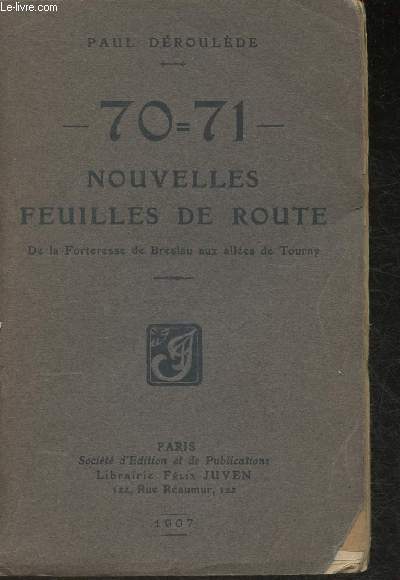
1907RO30321056Félix Juven. 1907. In-12. Broché. Bon état, Couv. convenable, Coiffe en tête abîmée, Intérieur frais. 346 pages. Un feuillet partiellement désolidarisé.. . . . Classification Dewey : 943-Allemagne, Autriche, Hongrie
1976RO60084755Stadt Menden. 1976. In-8. Relié. Bon état, Couv. convenable, Dos satisfaisant, Intérieur frais. 80 pages. Illustré de nombreuses photos en couleur et en noir et blanc hors texte. Texte en 3 langues, sur 3 colonnes.. . . . Classification Dewey : 943-Allemagne, Autriche, Hongrie
Stampa di due albumine di misure 77x82 mm applicate su cartoncino di misure 180x90 mm.
1981RO40155219MM-Verlag. 1981. In-8. Broché. Bon état, Couv. convenable, Dos satisfaisant, Intérieur frais. 39 pages. Illustré de nombreuses photos en couleur.. . . . Classification Dewey : 943-Allemagne, Autriche, Hongrie
MM-Verlag. 1981. In-8 Carré. Broché. Bon état. Couv. convenable. Dos satisfaisant. Intérieur frais. 39 pages. Illustré de nombreuses photos en couleur. Deutsch, English, Français, Italiano, Japanese.
Photocrome su cartoncino di cm 17x23 montata su cartoncino. Il processo fu inventato negli anni 1880 da Hans Jakob Schmid (1856-1924), un impiegato della compagnia svizzera Orell Gessner Füssli, un'impresa di stampe la cui storia risale al XVI secolo. La Füssli fondò la società per azioni Photochrom Zürich (conosciuta in seguito come Photoglob Zürich), come veicolo negli affari per lo sfruttamento commerciale del processo. Sia la Füssli che la Photoglob esistono ancora oggi. Dalla metà degli anni 1890 il processo fu concesso in licenza ad altre società, tra cui la Detroit Photographic Company, negli Stati Uniti, e la Photochrom Company di Londra. "<br>Il processo di fotocromia fu molto popolare negli anni 1890, quando la vera fotografia a colori era già stata sviluppata ma era ancora commercialmente impraticabile.
Stampa alla gelatina ai sali d'argento di misure 207x262 mm. L'editore e la data si evincono dal timbrino a secco al piede della stessa serie.
Stampa alla gelatina ai sali d'argento di misure 261x204 mm. L'editore e la data si evincono dal timbrino a secco al piede.
1974R260127362GEMEINDE HÜTTLINGEN. 1974. In-8. Cartonnage d'éditeurs. Etat d'usage, Couv. convenable, Dos satisfaisant, Intérieur frais. 236 pages. Jaquette illustrée en couleurs, légèrement passée. Nombreuses photos, illustrations et cartes, en couleurs et noir et blanc, dans et hors texte. Texte en allemand.. Avec Jaquette. . A l'italienne. Classification Dewey : 943-Allemagne, Autriche, Hongrie
Stampa alla gelatina ai sali d'argento di misure 260x207 mm. L'editore e la data si evincono dal timbrino a secco al piede.
186855056Graz, Leykam?s Erben, o. J. (um 1868). Getönte Lithographie (Blattgröße ca. 49,5 x 60 cm, Ansicht 26 x 40 cm).
1894A131-629Wien, Milit?rgeographisches Institut, um 1894. Formatangabe ca 50 x 37 cm mit breitem Rand, gefaltet zu 4 Segmenten, Ausgabe: einf?rbig ; Zustand: gut +
190023151Wien R. LECHNER (W. Müller) 1900 -in-12 pleine percale un album, reliure pleine percale bordeaux in-douze à l'italienne Editeur (full percale in-12 oblong editor)(13,2 x 18,7 cm), dos muet, couverture gauffrée "au chevalier en armure et écu aux armes de la ville de Vienne" titrée "or" au centre du 1er plat, toutre tranches lisses, album de 47 photos de Vienne en noir (texte d'explication sous la photo en allemand), sans date (1900) Wien R. LECHNER (W. Müller) Editeur,
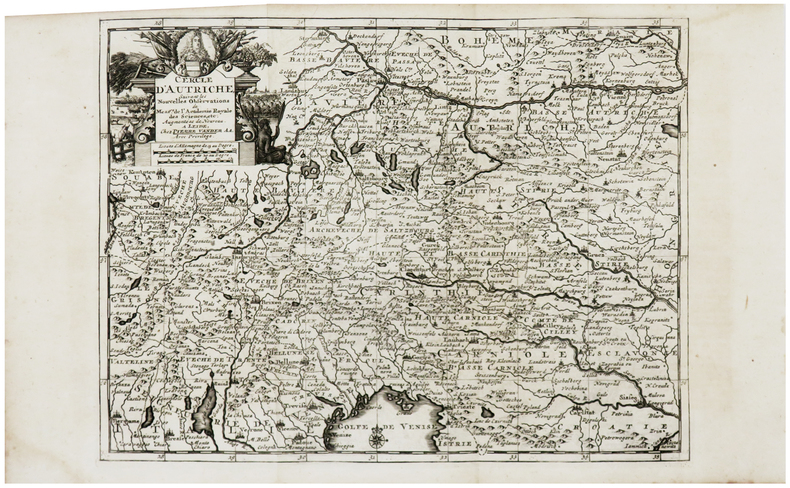
1729LBW-6229Leide, Pierre Vander Aa, [1729]. 224 x 297 mm.
Very Good Turkish Original typewritten letter written in response to questions about some interior decorations and curtains during the construction of a Republican Turkish school, signed 'Professor Egli'. 30x23 cm. In Turkish (Modern). 1 p. Chipped and damaged right side. Otherwise a good paper. Written to 'Zeki Bey' on December 21, 1933. An architectural environment of the Early Republic Period (1923-1950) has an effective language explicitly revealing political and cultural aspects of the Republic. Under such conditions, architects coming from German-speaking countries contributed quite significantly to the establishment of the International Architectural Style of Turkey in the '30s. Throughout the 1930s when the Building of School Political Sciences constituting the subject of the study was constructed, the International Architectural Style conveyed to Turkey by means of architects coming from Germany-speaking countries had a growing impact in the country. Ernst Egli, one of those architects, was one of the pioneers of this "modern" style with his numerous designs, and his educator and manager identity. Egli, son of Johann Jakob Egli, (1840-1918) carried out significant works in the field of educational buildings which he dealt with cautiously and fastidiously and explicitly regarded as a symbol of prestige. Primarily educational buildings together with National Education Ministry Construction Office management, Istanbul Fine Arts Academy Architecture Branch management, and teaching, design, and application of important public buildings in Ankara are among the said studies. (An important building for the representation of modernization project: Swiss architect Ernst Arnold Egli and Ankara Political Sciences School, Leyla Alpagut.).
191169S.l., 64 x 50 cm., entoilée.
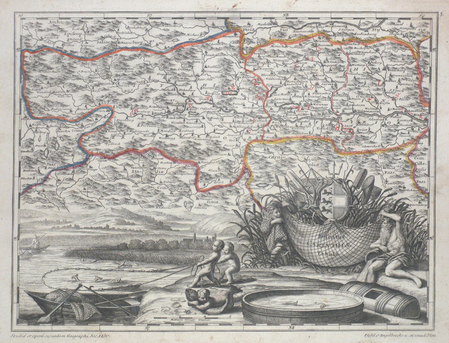
LBW00359Augsbourg circa 1740 252 x 333 mm.
176551S.l. [Vienne], s.d. (1866) in-4, 54 (sur 75) vignettes lithographiées en couleurs sur fond teinté (15 x 11,5 cm) contrecollées sur double feuille avec Marie-Louise, manque la page de titre en feuilles dans chemise demi-vélin à coins, dos lisse (rel. du XXe s.). Bon exemplaire.
Salisburgo, [fine del XIX sec.], fotografia originale in b.n. di mm. 100x57 applicata su cartoncino arancione di mm. 106x65. In basso la scritta "Salzburg v.d. Bürgerwehr" identifica il luogo ritratto e il luogo in cui fu scattata la fotografia.
[Innsbruck, fine del XIX sec.], fotografia originale all'albumina, mm. 145x95, applicata su cartoncino di mm. 165x108. Non firmata. Ottime condizioni. Il "Tettuccio d'oro" è il simbolo della città austriaca.
Very Good Hebrew Contemporary 1/4 leather bdg. Demy 8vo. (21 x 14 cm). In Hebrew with interspersed with Arabic; a preface in French. [xvi], 144 p. Goldenthal was an Austrian Orientalist; born at Brody, Galicia, April 16, 1815; died at Vienna Dec. 28, 1868; educated at the University of Leipsic. In June, 1843, he became principal of the Jewish school at Kishinef, Bessarabia, and held the office for some years. He was appointed professor of rabbinical and Oriental languages at the University of Vienna in Sept. 1849, and held the chair until his death. Upon the nomination of Hammer-Purgstall, he was elected a corresponding member of the Vienna Academy of Sciences, and member of the Asiatic Societies of Germany, of Paris, and of London. His chief literary activity consisted in editing the following manuscripts: "Mozene ?ede?," a treatise on philosóphical ethics by Al-Ghazali, translated into Hebrew by Abraham ibn ?asdai, with an introduction on the lives and works of Al-Ghazali and Ibn ?asdai, 1838. "Bi'ur ibn Roshd," Todrosi's Hebrew translation of Averroes' commentary on Aristotle's "Rhetorica," with a historical and philosophical introduction, 1842. "Mesharet Mosheh," commentary by Kalonymus on Maimonides' system of Divine Providence, with his explanation of Ps. xix. and xxxvii., 1845. "Maftea?," methodology of the Talmud by Nissim ben Jacob of Kairwan, with an introduction, notes, and references, 1847. "Mi?dash Me'a?," Moses Rieti's didactic poem on ancient philosophy and the history of Jewish literature, with an Italian and Hebrew preface, 1851 (see "Allg. Zeit. des Jud." 1859, p. 124). Goldenthal further published a catalog of Hebrew manuscripts in the Imperial Library of Vienna, 1854, and an Arabic grammar in Hebrew for the use of the Oriental Jews, with a French preface, 1857. Volume i. of the "Denkschriften" of the Vienna Academy of Sciences contains his "Beiträge zu einem Sprachvergleichenden Rabbinisch-Philosophischen Wörterbuche." He issued "Das Neue Zion," a monthly periodical, Leipsic, Nisan, 1845, of which only one number appeared. Another periodical which he edited, "Das Morgenland," was also short-lived. (Jewish Encyclopedia). In his Hebrew preface, Goldenthal notes that knowledge of Arabic is particularly important for Talmudists, illustrating his point by a passage from Rabbenu Nissim's commentary to Tractate Shabbat found in a manuscript in the Palatine Library of Vienna. (Source: K&C). First Edition. OCLC 40972030.; Friedberg M-2669.
1980AUST1112Wien u. München, Jugend & Volk 1975, 1976 u. 1980. 8°. 245 S., 179 S. u. 296(4) S. Mit Ansichten auf Tafelseiten. OKart m. Deckelbild. Einbde. geringf. berieben u. angestaubt. Umfasst: Ziehensack, Walther Franz. Land zwischen Thaya und Zaya. / Ziehensack, Walther Franz. Land zwischen Donau und Leitha. ISBN 3-8113-7601-2 / Häusler, Wolfgang. Land zwischen Donau und Schöpfl. ISBN 3-7141-7605-5