[WIC - PORTUGAL].Biblio.com
671 résultats
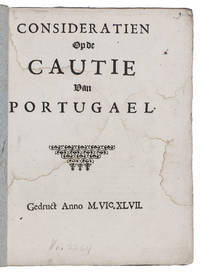
1647B32D19U6QRO5Amsterdam 1647. Small 4to 20 x 15.5 cm. Johannes van Marel pseudonym Later blue paper wrappers. With cast fleurons assembled to form a decoration on the title-page and a headpiece. Set in roman for the main text and italic type. 15 1 blank pp. First and only edition of a rare pamphlet defending Portugal against the claims of the Dutch Government and the West India Company WIC in Brazil: one of the earliest and one of the three "most remarkable works" published by Portugal's supporters in the Netherlands Asher p. 194. In an effort to take back Brazil from the Dutch the Portuguese had supported a local revolt in 1645 and the hostilities on land and sea between the Portuguese and the WIC had escalated rapidly. Portugal was suing for peace and the present pamphlet presents their side. In a series of questions and answers it sets forth the Dutch reservations about the peace and distrust of Portugal and attempts point by point to refute all arguments against a settlement.The author and printer of the pamphlet have not been identified but the author himself refers to his own Vertooch aen de . Staten Generael published earlier in the same year.With some waterstains otherwise in good condition.l Alden & Landis 647/51 6 copies; Asher 225 & pp. 192-194; Borba de Moraes p. 200; Knuttel 5554; Sabin 15933; STCN 6 copies; not in Van Doorninck. unknown
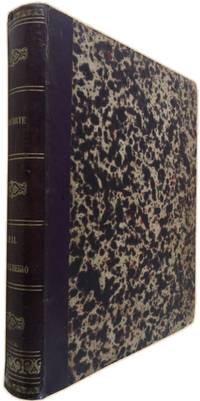
1312CS051<p>Pelo graça de Deos Rei de Portugal e do Algarve e Senhor de Ceuta A requerimento da muito excelente Rainha Dona Leonor sua mulher seguido do <strong>LIVRO DA ENSINANÇA DE BEM CAVALGAR TODA A SELLA</strong> Que fez o mesmo Rei o qual começou em sendo Infante; precedido duma introdução illustrado com varias notas e publicado debaixo dos auspícios Do Excellentissimo Senhor Visconde de Santarem Socio da Academia Real das Sciencias de Lisboa do Instituto de França etc etc. Fielmente trasladado do manuscrito contemporaneo que se conserva na Biblioteca Real de Pariz revisto addicionado com notas philologicas e um glossário das palavras e das phrases antiquadas e obsoletas que nelle se encontrão. E impresso à custa de J. I. Roquette presbytero. Pariz em casa de J. P. Aillaud Quai Voltaire e em Portugal em casa de todos os mercadores de livros de Lisboa Porto e Coimbra. MDCCCXLII. 1842.</p>_x000d_<p>In 4º gr. De 28x215 cm. com xxxii 672 págs.</p>_x000d_<p>Encadernação da época com lombada em pele com ferros a ouro cansada com dano na coifa superior e cantos cansados.</p>_x000d_<p>Ilustrado com um fac-simile desdobrável litografado da primeira página do manuscrito.</p>_x000d_<p>Exemplar com leves picos de humidade sobre a folha de rosto e acidulação natural do papel generalizada.</p>_x000d_<p>Primeira edição de um códice medieval que era totalmente desconhecido até à época desta publicação: o <strong>LIVRO DA ENSINANÇA DE BEM CAVALGAR TODA A SELLA</strong>. Trata-se do primeiro tratado europeu de equitação da época moderna sendo a obra anterior existente sobre o mesmo tema atribuída a Xenofonte.</p>_x000d_<p>Contém nas últimas 10 páginas um glossário das frases e palavras antigas e obsoletas.</p>_x000d_<p>Inocêncio II 203: D. Duarte XI Rei de Portugal nascido em Viseu em 1391 e falecido de peste em Tomar depois de curto e atribulado reinado a 9 de Setembro de 1438. Os nossos historiadores deram-lhe o cognome de Eloquente. Foi este monarca muito dado às ciências e às letras as quais mostra ter cultivado tanto quanto o permitia o estado dos conhecimentos naquela época. As obras mais importantes saídas da pena d'El-Rei D. Duarte que depois de jazerem pouco menos que ignoradas eram apenas conhecidos os títulos por mais de quatro séculos gozaram afinal da luz pública são: Leal Conselheiro seguido da Arte de Bem Cavalgar. Dado pela primeira vez á luz sobre o manuscripto original da Bibliotheca Real de Paríscom notas philologicas e um glossario das palavras antigas por José Ignacio Roquete. Paris 1842. 4.o maximo com um fac simile do manuscripto. Do que se diz no prologo desta edição parece concluir se que fora o Visconde de Santarém o primeiro que ali descobrira a existência do Leal Conselheiro; porém isto não é exacto. Já em 1804 o Abade Corrêa estando em Paris deparou com o manuscrito que o continha como se vê de uma carta que o mesmo abade escreveu a Antonio de Araujo então ministro de Estado e da resposta deste; documentos que em seu poder conserva o Sr. M. B. Lopes Fernandes e que fez publicar na Revista Universal Lisbonense vol. III da 1.ª serie 1843 artigo 299. Por mandado de Araujo o sobredito abade fez extrair uma cópia; mas por motivo ignorado em vez de a remeter guardou a consigo até que por seu falecimento em 1823 sua irmã a ofereceu á Academia Real das Ciências onde julgo que existe ainda manuscrita.</p>_x000d_<p>EN In quarto big. 28x21.5 cm. xxxii 672 pp.</p>_x000d_<p>Contemporary half calf binding gilt at spine one dent at top of spine and worned out corners at folders.</p>_x000d_<p>Illustrated with a folding lithographed facsimile of the first page of the original manuscript.</p>_x000d_<p>Copy with some slight damp stains at title page and general foxing mostly due to paper quality.</p>_x000d_<p>Work containing a Political Advice to monarchs Leal Consellheiro and the first European work on horse riding Arte de Cavalgar. This horsemanship treatise is the first of the modern era being known a previous work attributed to the ancient greek Xenophon. Contains 10 pages of a dictionary of outdated Portuguese words and phrases no longer in use in the 19th century.</p>_x000d_<p>The King of Portugal Duarte a grand son of John of Gaunt was born in Viseu Portugal in 1391 and died of plague in Tomar in 1438 after a short and troubled reign. Portuguese historians have given him of The Eloquent. This monarch was much given to science and letters. This is the most important output from the King Duarte of Portugal; an ignored work the titles were only known for over four centuries until the manuscript was discovered at the National Library of Paris in 1804.</p>_x000d_<p>Referências/References:</p>_x000d_<p>Inocêncio II 203.</p> M-9-D-28 unknown
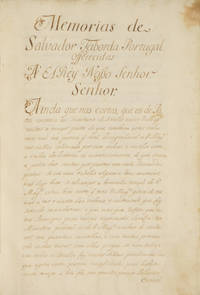
2502PG002<p>De 315x225 cm. Com xv 316 fólios. Encadernação da época inteira de pele com nervos e rótulos vermelhos gravados a ouro na lombada.</p>_x000d_<p>Manuscrito com falta de folha de rosto com falta do fólio 219 e com falta de fólios no fim. </p>_x000d_<p>Os primeiros 12 fólios contêm um índice segue-se a dedicatória ao Rei D. Pedro II nos dois lados do fólio 13 a advertência ao leitor ocupa a frente do fólio 14 o Sumário do livro primeiro preenche o verso da folha 14 e a frente do fólio 15 que tem o verso em branco. Seguem-se 4 livros da obra em que cada um é antecedido por um sumário. </p>_x000d_<p>Manuscrito muito raro no comércio e de grande importância para a história da diplomacia portuguesa no século XVII e para a história de Portugal na época. É igualmente importante para o conhecimento de pontos de vista desconhecidos até aos nossos dias sobre a vida política e sobre a política externa francesa cujos eventos são descritos com grande pormenor. </p>_x000d_<p>Na dedicatória o autor afirma que as presentes memórias são para informar o Rei de assuntos e questões que não foram explicadas nas suas cartas e ofícios enviados durante a sua missão e também para permitir ao rei ter à sua disposição uma narração seguida de todos os acontecimentos.</p>_x000d_<p>A advertência aos leitores serve para o autor explicar a maneira de escrever os nomes com a ortografia portuguesa no corpo do texto e com a forma da sua língua original nas margens. </p>_x000d_<p>O autor começa a sua narração pelo registo da sua nomeação em Março de 1677 para enviado do Príncipe Regente D. Pedro ao Rei de França Luís XIV e termina com os conflitos entre os criados do Duque de Elbeuf e os criados do Enviado do Rei de Inglaterra Duque de Savill em Setembro e Novembro de 1681. </p>_x000d_<p>O escolha de Salvador Taborda de Portugal para suceder a Ribeiro de Macedo e por indicação deste como representante dos interesses de Portugal na Corte de Luís XIV Rei de França insere-se na política de D. Pedro como Regente de Portugal e a partir de 1683 Rei de Portugal de diversificar e afirmar as relações externas de Portugal no período posterior à Guerra da Restauração e à afirmação da independência de Portugal em relação a Espanha e no contexto europeu da época. </p>_x000d_<p>Salvador Taborda de Portugal Penamacor 1632 - Paris 1690 Filho do célebre jurista Domingos Antunes Portugal doutorou-se na universidade de Coimbra onde foi admitido no Colégio de S. Pedro em 7 de Maio de 1664 e regeu a Cadeira de Instituta desde 23 de Julho de 1668. Exerceu os cargos de Desembargador na Relação do Porto Desembargador dos Agravos da Casa da Suplicação Procurador Fiscal da Junta dos Três Estados Procurador e Conselheiro do Conselho da Princessa D. Isabel. Foi nomeado Enviado Extraordinário à Corte de Paris tendo partido de Lisboa em 6 de Agosto de 1677 e chegado ao porto da Rochela em 29 de Setembro seguinte. Depois de exercer estas funções durante 13 anos faleceu em Paris em 1690 quando já estava nomeado para Enviado Extraordinário em Roma. </p>_x000d_<p>É autor de obras jurídicas que ficaram em manuscrito: <em>Relectio ad Tit. C. de Castrensi peculio </em>de poesias impressas em obras colectivas em folhetos e outras que ficaram manuscritas de correspondência nomeadamente com D. João de Ataíde e Castro mas principalmente das memórias e apontamentos da sua missão diplomática em Paris. </p>_x000d_<p>Referências: <br />Catarina Maria Marques dos Santos Viegas - Correspondência de Salvador Taborda de Portugal . temáticas e momentos vividos. Dissertação de Mestrado em História Moderna e dos Descobrimentos. Lisboa: FCSH da UNL Maio de 2019. <br />Nuno Miguel Castro Luís - Salvador Taborda Portugal. O percurso de um embaixador português à época do rei Sol. Colóquio Internacional Corte e Diplomacia na Península Ibérica séculos XIII-XVIII. Lisboa 2016<br />Duarte Ribeiro de Macedo e Ana Leal Faria - Os cadernos de Duarte Ribeiro de Macedo. Colecção Biblioteca Diplomática- Lisboa Ministério dos Negócios Estrangeiros 2007 p. 758-759.<br />Ana Leal Faria - O tempo dos diplomatas 1640-1736-1750. Projecto de Investigação. Trabalho complementar para as provas de doutoramento em História Moderna. FLUL. Departamento de História 2003-2004 p. 132 e 154.<br />Maria Rosalina Pinto da Ponte Delgado - José da Cunha Brochado 1651-1733 Universidade Lusíada 2000 374 p.<br />Inocêncio VII 195-196.<br />Barbosa Machado III 671 </p>_x000d_<p> </p>_x000d_<p> </p> M-10-C-64 unknown
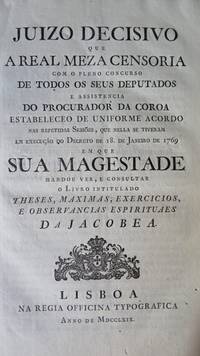
GD104<p>Juízo - Sentença dobre o Systema da Jacobea. Ano 1769. Trata-se da decisão e comentário da Mesa Censória após uma investigação aos papéis pessoais do Bispo de Coimbra Frei Miguel da Anunciação tendo sido apreendido um livro de teses com o qual foi feito um Auto de Fé com a sentença deste auto nas últimas 3 páginas impressas e cuja execução pelo fogo foi realizada na Praça do Comércio de Lisboa em 4 de abril de 1769. O Sistema da Seita chamada Jacobea foi considerada contra a Autoridade Régia e absoluta neste período pombalino. Extremamente raro. Completo e em bom estado. 89 páginas. ASSINADO POR TRÊS CENSORES. Impressão original com marcas d ´água. Documento foi periciado por aquivo público e foi constatada sua autenticidade e que sua origem não provém de nenhum arquivo público. Coleção Graphos Arte.</p><p>Judgment - Sentence on the Jacobean System. Year 1769. This is the decision and commentary of the Censorship Board after an investigation of the personal papers of the Bishop of Coimbra Frei Miguel da Anunciação having seized a book of theses with which an Auto de Fé was made with the sentence of this auto in the last 3 printed pages and whose execution by fire was carried out in the Praça do Comércio in Lisbon on April 4 1769. The System of the Sect called Jacobea was considered against the Royal Authority and absolute in this Pombaline period. Extremely rare. Complete and in good condition. 89 pages. SIGNED BY THREE CENSORS. Original print with watermarks. The document was examined by a public archive and its authenticity was confirmed and that its origin does not come from any public archive. Graphos Art Collection.</p>
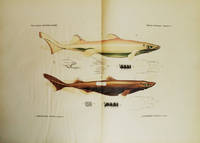
1710JC019<p>Por D. Carlos de Bragança avec un résumé en français Resultados das investigações scientificas feitas a bordo do Yacht 'Amelia' e sob a direcção de D. Carlos de Bragança. Com Tres estampas e oito mapas. Imprensa Nacional Lisboa. 1899.</p>_x000d_<p>In fólio de 38x28 cm com 104 págs.</p>_x000d_<p>Brochado deve ser encadernado ou acondicionado em caixa de transporte.</p>_x000d_<p>Profusamente ilustrado com oito mapas em extratexto mostrando as marchas do atum escalas milimétricas das suas rotas de entrada e de saída em vários momentos da época piscatória e as suas capturas de frente e de revés nestas rotas com a quantidade de arribadas estatisticamente calculadas escalas milimétricas em cada dia da faina e repartidas pelos sectores da linha costeira.</p>_x000d_<p>Exemplar da tiragem geral não numerada e acompanhado de uma carta do secretário do Rei timbrada do Palácio das Necessidades.</p>_x000d_<p>Junto com o 2º volume publicado em 1904:</p>_x000d_<p><strong>ICHTHYOLOGIA: II. ESQUALOS OBTIDOS NAS COSTAS DE PORTUGAL DURANTE AS CAMPANHAS DE 1896-1903. Por D. Carlos de Bragança.</strong> RESULTADOS DAS INVESTIGAÇÕES SCIENTIFICAS FEITAS A BORDO DO YACHT «AMELIA» E SOB A DIRECÇÃO DE D. CARLOS DE BRAGANÇA.Texto em portuguez e francez. 2 estampas. Imprensa Nacional. Lisboa. 1904.</p>_x000d_<p>In fólio de 39x28 cm. Com 107 3 4 págs.</p>_x000d_<p>Brochado deve ser encadernado ou acondicionado em caixa de transporte.</p>_x000d_<p>Ilustrado com dois quadros da distribuição batimétrica dos esqualos duas gravuras com os detalhes de um esqualo com a nomenclatura em francês e português e com duas gravuras litografias coloridas com a representação de três esqualos e dos seus detalhes morfológicos nomeadamente: Odontaspis nasutus Bragança n.sp Etmopterus spinax Linnaeus e Etmopterus pusillius Lowe.</p>_x000d_<p>Exemplar com dedicatória e assinatura do Rei D. Carlos na folha de anterrosto datada <em>Lisboa 1904</em>.</p>_x000d_<p>O exemplar apresenta-se por aparar com os cadernos soltos fortes vestígios de humidade sobretudo nas capas de brochura e com leve dano na coloração da litografia de um esqualo no entanto recuperável.</p>_x000d_<p>A obra descreve cada espécime de esqualo encontrado em todas as campanhas oceanográficas pelo que as fichas completas por espécie foram acrescentadas sucessivamente para cada espécimen em cada lance e em cada campanha podendo em alguns casos chegar a mais de 10 entradas ou capturas por espécie.</p>_x000d_<p>Nota: Na página 95 desta obra existe a descrição das capturas ficha Nº 31 do Echinorhinus spinosus Blainville 1816 e Gmelin ou Peixe Prego com 175 m de comprimento cujo exemplar que se encontrava no Museu de Lisboa é mencionado por Barboza du Bocage & Brito Capello.</p> M-2-B-05 unknown
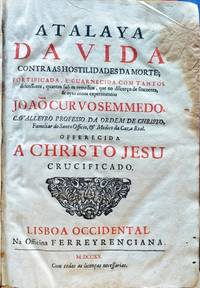
GD96<p>Atalaya da Vida Contra as Hostilidades; fortificada e guarnecida com tantos defenssores quantos são os remedios que no discurço de sincoenta & oyto annos experimentou. Semmedo Joao Curvo John Curvo Semedo . Officina Ferreyrenciana Lisboa - Primeira Edição. Ano 1720. Medidas 295 x 205 cm - 696 páinas. João Curvo Semmedo Monforte Portugal 1635 Lisboa Portugal 1719. Pioneiro da medicina química no período barroco em Portugal. Promoveu uma aliança entre os conhecimentos médicos greco-romanos e a magia natural. Médico e promotor de novos medicamentos. Obra apresenta tratamento para centenas de enfermidades. Muita rara e de grande importância histórica. Nenhum exemplar encontrado no Brasil e em livreiros internacionais. Apresenta mancha de humidade em algumas páginas sem comprometer a leitura.</p><p>Watchtower of Life Against Hostilities; fortified and garrisoned with as many defenders as there are remedies which in the discourse of fifty and eight years it has tried. Semmedo John Curvo John Curvo Semedo . Officina Ferreyrenciana Lisbon - First Edition. Year 1720. Measurements 29.5 x 20.5 cm - 696 pages. John Curvo Semmedo Monforte Portugal 1635 Lisbon Portugal 1719. Pioneer of chemical medicine in the Baroque period in Portugal. He promoted an alliance between Greco-Roman medical knowledge and natural magic. Physician and promoter of new medicines. Work presents treatment for hundreds of illnesses. Very rare and of great historical importance. No copies found in Brazil or in international booksellers. It has moisture stains on some pages without compromising readability.</p>
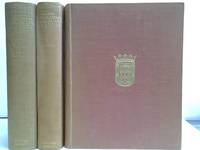
192999999-1069London Walter Lewis at the Cambridge University Press for Maggs Bros. 1929-35. With 22 plates and more than 1000 illustrations often in red and black. LVI 633 pp.; XII 817 pp.; XLI 791 pp. Large 4to. Orig. cloth gilt Royal coat of arms on covers spines slightly faded. London Walter Lewis at the Cambridge University Press for Maggs Bros. 1929-35. One of 650 copies on antique paper of a total edition of 698. A catalogue raisonné of the Royal Portuguese collection. Volume I covers the period 1489-1539 volume II 1540-1569 volume III 1570-1600 and supplement 1500-1597. More than 400 books are described in detail both in English and Portuguese. With a text by Aubrey F. G. Bell "H.M. King Manuel II" and by Stanley Morison "The King and his books". This catalogue can indeed be called a "masterpiece both of composition and press-work" Barker Stanley Morison p. 335. BIBLIOGRAPHY ; London, (Walter Lewis at the Cambridge University Press, for) Maggs Bros. hardcover
151354087Strasbourg. 1513. Originalt tresnitt. Arkets størrelse : 60 cm X 425 cm. Norsk. <br/><br/><em>“Martin Waldseemüller a highly accomplished scholar of geography merged the science of mapmaking and the art of printing in his 1513 atlas one of the most groundbraking documents in the history of cartography. He intended this atlas as a new edition of Ptolemy’s Geographia but included the addition of 20 modern maps which were not based upon the tradition of Ptolemy. Waldseemüller’s use of a quadratic plane projection was also a noteworthy advance.â€Martin Waldseemüller 1470-1520.Liten rift ved nedre marg. Et lite ormehull i venstre marg. Et par slitasjer i øvre marg. </em> unknown
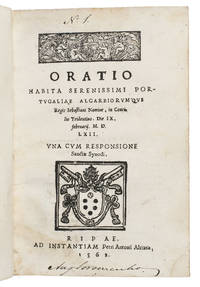
1562ABC_47938Ripae = Riva del Garda Italy 1562. 4to 18.2 x 13.4 cm. Pietro Antonio Alciatis Mid 19th-century marbled paper wrappers. With the woodcut coat-of-arms of the Medici popes and a woodcut head-piece on the title-page 2 large woodcut decorated initials in the text a woodcut head-piece at the start of the text and two ornaments at the start and end of the text. 1 1 blank 6 pp. Rare copy of the speech written in name of King Sebastião of Portugal 1554-1578 for the Council of Trent 1545-1563. The speech was given on February 9 1562 in front of the bishops and other attendants of the council when King Sebastião was just 8 years old. The speeches provided by the Kings of the European nations were to be measured carefully as the position taken by the Church in many matters carried geo-political changes; not a century ago the Pope had granted a large portion of the South American territories to Portugal through the Treaty of Tordesillas a line that took centuries to properly determine. It is unknown who wrote this speech but it is often attributed to Giovanni Strozzi active 1547-1562 who wrote another similar work. The text makes clear that the kings of Portugal have always been good Christians and promises that Sebastião will be as well. The last page contains the response from the Synod. This work rarely appears on the market.The Council of Trent was an ecumenical council of the Catholic Church held in reponse to the Protestant Reformation. There were 25 sessions over the course of 18 years. The attendants discussed the Church's doctrine and teachings in order to clarify them and defined what it considered to be heresies. The council had a long-lasting impact on religion in Europe through the numerous apologetic and polemical documents and decrees that resulted from it.With a manuscript note on the recto of the first blank flyleaf: "Indice" and two manuscript notes on the title-page "No. 1" at the head of the title-page and "Aug. Soromenho" at the foot of the title-page. With slight water-staining in the top and bottom margins of the leaves very slightly browned throughout. Otherwise in very good condition.l Adams vol. II 1953; USTC 850992; cf. BM Italian p. 619 different ed. unknown
1562ABC_47938Ripae = Riva del Garda Italy: Pietro Antonio Alciatis 1562. Mid 19th-century marbled paper wrappers. 4to 18.2 x 13.4 cm. With the woodcut coat-of-arms of the Medici popes and a woodcut head-piece on the title-page 2 large woodcut decorated initials in the text a woodcut head-piece at the start of the text and two ornaments at the start and end of the text. Rare copy of the speech written in name of King Sebastião of Portugal 1554-1578 for the Council of Trent 1545-1563. The speech was given on February 9 1562 in front of the bishops and other attendants of the council when King Sebastião was just 8 years old. The speeches provided by the Kings of the European nations were to be measured carefully as the position taken by the Church in many matters carried geo-political changes; not a century ago the Pope had granted a large portion of the South American territories to Portugal through the Treaty of Tordesillas a line that took centuries to properly determine. It is unknown who wrote this speech but it is often attributed to Giovanni Strozzi active 1547-1562 who wrote another similar work. The text makes clear that the kings of Portugal have always been good Christians and promises that Sebastião will be as well. The last page contains the response from the Synod. This work rarely appears on the market.The Council of Trent was an ecumenical council of the Catholic Church held in reponse to the Protestant Reformation. There were 25 sessions over the course of 18 years. The attendants discussed the Church's doctrine and teachings in order to clarify them and defined what it considered to be heresies. The council had a long-lasting impact on religion in Europe through the numerous apologetic and polemical documents and decrees that resulted from it.With a manuscript note on the recto of the first blank flyleaf: "Indice" and two manuscript notes on the title-page "No. 1" at the head of the title-page and "Aug. Soromenho" at the foot of the title-page. With slight water-staining in the top and bottom margins of the leaves very slightly browned throughout. Otherwise in very good condition.l Adams vol. II 1953; USTC 850992; cf. BM Italian p. 619 different ed. Pietro Antonio Alciatis, unknown
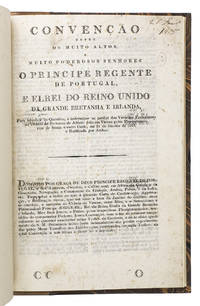
ABC_48887Lisbon: Na Impressão Regia 1815. Modern half calf marbled paper sides with the title and year of publication lettered in gold on the spine. Small folio ca. 28.5 x 18 cm. With the text printed in two columns in Portuguese on the left and in English on the right. Very rare first Portuguese edition of this treaty between Portugal and the United Kingdom of Great Britain and Ireland concerning the indemnification of Portuguese subjects for certain detained slave trade vessels as a result of British actions undertaken in pursuit of the abolition of the slave trade. "Britain agreed to pay compensation for the several Portuguese slavers detained brought before and condemned by British courts on the ground of illegal slave-trading along the African coast prior to 1814" J.P. van Niekerk "British Portuguese and American judges in Adderley Street ." pp. 22-23. Another edition of this same treaty in 8 pages was printed in the same year in Rio de Janeiro with the complete imprint including the place of publication.The present bilateral treaty comprising three articles printed in two columns in Portuguese and English was drafted on 21 January 1815 during the Congress of Vienna a series of international diplomatic meetings held in Vienna from September 1814 to June 1815 concerning the new layout of the European political and constitutional order after the downfall of the French Emperor Napoleon Bonaparte. The signatories of the present treaty were plenipotentiary at the Congress of Vienna formally this treaty was concluded between the Prince Regent of Portugal - future King John VI 1767-1826 - and the King of Great Britain and Ireland George III 1738-1820 as mentioned in the title.A more detailed description is available upon request.With the book plate of "Biblioteca de Hariberto de Miranda Jordão Filho" mounted on the front pastedown. The text leaves with a vague horizontal and vertical fold in the centre a manuscript annotation "21 Janeiro 1815" in brown ink in the upper outer corner of the first page some foxing. Otherwise in good condition.l Gauz Portuguese and Brazilian books in the JCB 815/10; Porbase 3240734 1 copy; WorldCat 1042407673 12791342 38346960 4 copies; cf. Camargo & Moraes Bibl. da Impressão Régia do Rio de Janeiro I 428; Rodrigues 735 & 737 Rio de Janeiro ed.; for more context relating to the treaty: Lesaffer R. "Vienna and the Abolition of the Slave Trade" Oxford Public International Law online via: https://opil.ouplaw.com/page/498; Niekerk J.P. van "British Portuguese and American judges in Adderley Street: the international legal background to and some judicial aspects of the Cape Town Mixed Commissions for the suppression of the transatlantic slave trade in the nineteenth century Part 1" in: The Comparative and International Law Journal of Southern Africa Vol. 37 No. 1 March 2004 pp. 1-39. online via: https://journals.co.za/doi/pdf/10.10520/AJA00104051_114. Na Impressão Regia, unknown
5i5587Maggs Bros. London 1929-1935. LVII/633/XII/817/XLI/791 Seiten roter orig. Leinen-Einband quart Einbände etwas ausgeblichen/ hinterer Einbanddeckel und hintere Vorsatzseiten von Band 1 wasserfleckig und berieben. - zweisprachig: englisch/portugiesisch// Der König 1889-1932 hatte 1910 auf den Thron verzichtet unter der Bedingung dass er mit den Büchern seiner Bibliothek das Land verlassen dürfe. Danach lebte er in London und arbeitete am vorliegenden Inventar über einen Zeitraum von 22 Jahren ohne es zu Lebzeiten definitiv abzuschließen: 414 teils extrem seltene oder unikate Werke. Die Beschreibungen sind fulminant betreffen bei weitem nicht nur die Bücher sondern liefern die Entwicklungsgeschichte des portugiesischen Frühdrucks vor dem Hintergrund der Kulturgeschichte des Landes. Alle Dokumente und biographischen Details der Autoren Drucker und Mäzene werden kritisch untersucht. Zitiert die maßgeblichen des öfteren auch ausgefallene Bibliographien die ebenfalls zur Bibliothek gehörten. Bände 12 vom König verfaßt Band 3 erschien postumum nach seiner Vorarbeit. Eines von 650 Exemplaren. Stillwell 313. Besterman Early Printed Books 1742 - unknown
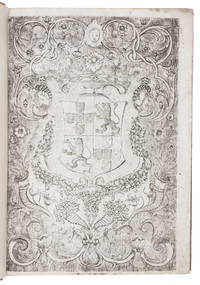
1711I17ERD520PLVLisbon 1711. Small folio 29 x 21 cm. Monastery of São Vicente de Fóra Modern sheepskin gold-tooled spine red morocco title-label. With engraved arms as fronstipiece and a title-page printed in red and black. 28 494 29 1 blank pp. Rare second edition of the first Portuguese pharmacopoeia first published in 1704 by the friar D. Caetano de Santo António d. 1730 an apothecary of the Monastery of Santa Cruz of the city of Coimbra who upon publication of the second volume was working at Lisbon in the Monastery of São Vicente de Fora. "The Pharmacopeia Lusitana shows how important the convent pharmacy was at that time in Portugal. The Portuguese religious apothecaries were very knowledgeable on pharmaceutical matters" Pita. With a few manuscript annotations in the margins. Ca. 50 leaves with a waterstain at the head of the gutter margin an occasional smudge and two leaves with a small hole and small tears otherwise in very good condition.l J.R. Pita Brief history of Portuguese pharmacopoeias pp. 1-5; Porbase 1 copy; Wellcome IV p. 369 incomplete; WorldCat 5 copies. unknown
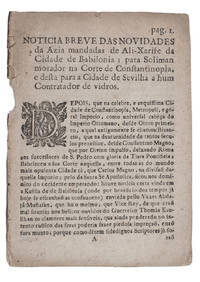
1742I14GSHQ8NCJEColophon: Madrid 1742. 4to 20 x 14.5 cm. heirs of Juan Garcia Infanzon Disbound. With a woodcut initial. 7 1 blank pp. Rare pamphlet satirising several Portuguese notables. According to this pamphlet presented as a fictional letter from "Ali-Charif of the city of Babylon" to "Suliman the Moor at the court of Constantinople" these notables are part of a Turkish regiment that might be sent off to fight "Thomas Kaulikan" Tahmasp Qoli Khan better known as Nader Shah. A follow-up to the pamphlet was published a week later and once again describes the regiment now in a letter "from Mecca to Holland to the city of The Hague" and from there to Cambrai in France" cf. Rossi 2392.Nader Shah was one of the most powerful rulers in Persian history and waged several military campaigns in Afghanistan and India. Although not at war with Portugal his war against the Islamic Mughal Empire in India culminating in the capture of Delhi in 1739 led indirectly to Portugal's loss of its colonial territory in India in the war with the Hindu Marathas 1737-1741.Browned throughout with the spine damaged; a fair copy.l Braga da Cruz Catalogo da collecçaõ de miscelânes V 7066; Porbase 2 copies; Rossi "La Spagna nella 'Livreria do Convento de Nossa Senhora de Jesus' in Lisbona" in: Annali-Sezione Romanza XXIII 1 1981 2391; WorldCat 1 additional copy. unknown
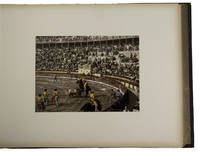
1899ABC_46443Spain 1899. Oblong album 32 x 41 cm. Hauser & Menet and others Half black leather red buckram sides blind-stamped boards title in gold on front board gold-stamped spine marbled endpapers. An album with 58 photographic prints including one tinted varying in size 20.5 x 15.5 to 27.5 x 21.5 cm each on thick paperboard. 58 ll. Album containing 58 photographic prints depicting scenes and sights in Spain and Portugal. Subjects of the prints vary. From the El Escorial the historical residence of the King of Spain to the interior of the cathedral - and former mosque - of Cordoba. The prints also show the exterior and interior of the bullfighting arena in Madrid. 2 of these 3 prints show bullfighting in action. A little more than half of the prints contain captions revealing the location depicted in the photograph such as the scenic views of cities such as Madrid Barcelona and Seville. The subject and/or location of the prints without captions remain unclear but some are very likely sites in Portugal since all of the prints with captions are in Spain.According to the captions the photographs of Seville were taken by E. Beauchy a Spanish photographer from the same city. He photographed the region of Andalusia south Spain at the end of the nineteenth-century. Some prints of Madrid and Barcelona were produced by printers of Spanish graphic art Hauser and Menet in 1896 and 1897.With an Antwerp bookseller's ticket on the front paste-down. The binding shows some minor signs of wear mostly around the spine and corners of the boards. Slight foxing/browning of the outer edges of the paperboard not affecting the photographs some photographs have slightly faded edges which does not interfere with the actual image. Overall in good condition. An album with 58 views of sights in Spain and Portugal. hardcover
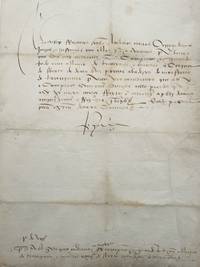
151529861515. . Folio 215 × 287 mm. Folded. Tears at foldings with small holes lightly affecting a few words. A tear at the lower half at the right edge with no effect to the text. Otherwise in fine condition. 1 page signed letter on paper in Portuguese. Manuel I King of Portugal’s signed letter to the Female Monastery of Santa Maria de Tarouquela.<br /> In his letter Manuel I advising the monastery of Santa Maria of Tarouquela to obey better the Benedictine <br /> the rules. “In 1514 we see the first signs of the autophagy process in which this monastery had been involved since the very beginning — an autophagy that resulted from its physical isolation from its size and its intrinsically family-related nature. The Benedictine habit was not even ruling the nuns’ habits anymore as we may infer from the intervention of King Manuel I 1495–1521 who asks the abbess of Arouca from the Cistercian order to put an end to that situation of neglect. The connection to Arouca despite the different rules is probably a result of a geographical proximity that allowed surveillance and after some time the emergence of an almost filial status that was preserved in Tarouquela until its extinction. In fact it is by mentioning the isolated nature of a place “where little was done to serve†God − a location and status that was similar to that of other female institutes Vairão Vila do Conde Vila Cova Vila Nova de Gaia TuÃas and Rio Tinto Gon- domar − that the sale king ordered their fusion in a single monastic house to be built in Porto†Machado 2014. Eventually the nuns of Tarouquela were transferred to the convent in Porto in 1536.<br /> Literature: Machado R. ed.: Route of the Romanesque Rota do Românico. Lousada: Centro de Estudos do Românico e do Território 2014. p. 194. unknown
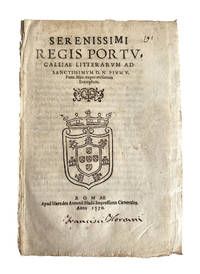
15705000917Rome: apud Haeredes Antonii Bladii 1570. In excellent original condition. Small quarto 4 leaves the last blank; woodcut device on title; page numbers in ink from an earlier binding within a volume; in a later plain wrappers binding and a folding case. <p><p>Extremely rare printed letter from King Sebastian of Portugal to Pope Pius V in which the king asks for more priests especially Jesuits stressing the significance of Portuguese conquests in the Far East in the process detailing the number of ships laden with treasure and trade goods arriving daily in Lisbon.</p> <p>The strategic relationships between the rulers of Portugal and Spain with the papacy were crucial in the discovery and colonisation period. The splitting of the new world enacted by the treaty of Tordesillas left the Portuguese and Spanish eager to exploit any advantage that could be gained and often the evangelisation of pagan natives was used to justify territorial ambitions; it was often in these pious terms that the pope was lobbied for his support.</p> <p>This letter from Sebastian is an excellent example of the sort of lobbying that took place. Donald Lach has written extensively about the nature of the exotic in the East Indies and the Far East describing how these printings often encompass exotic subjects for which monarch and pope both had a taste. In his relations with Pius V's namesake and predecessor for example Sebastian had been asked for and had promised a pair of elephants for the papal menagerie see Lach II 1 150n.</p> <p>The printing of letters and diplomatic orations such as this formed a critical part of the lobbying. Important records of the significance accorded to the new world it seems that they were generally printed in small numbers for limited circulation hence the tiny survival rate of any of these early works with this example particularly uncommon: USTC records five copies four of them in Italy and WorldCat adds another at Yale while the last copy that we can identify on the market was that offered by Maggs Bros in 1935.</p> <p>---</p> <p>At Sebastian's death fighting the Moors in north Africa the destiny of Portugal changed completely and from then on she would be under Spanish sway. "When at last she found herself again a free and independent state 1640 the sceptre of the Indies had passed irrevocably to Holland and England' Penrose p. 75. Nonetheless Sebastian still occupies a most important position in Portuguese history in which he has been compared with King Arthur or Barbarossa: he was known as the "sleeping king" who would mysteriously return at Portugal's time of great need. 'He would then be known by symbolic names: O Encoberto The Hidden One who would return on a foggy morning to save Portugal; or as O Desejado The Desired. The legend was vigorously promoted through the massive circulation of popular rhymes trovas written by Bandarra. Even as late as the 19th century Sebastianist peasants in the Brazilian sertão believed that the kings would return to help them in their rebellion against the "godless" Brazilian republic.' Wikipedia.</p> <p>Pius V reigned from 1566 to 1572: his reign was largely pre-occupied with the war against the Turks - the battle of Lepanto was won the year after this publication. In 1570 Goa was attacked by the Indian army but the Portuguese successfully defended it. Also in 1570 Sebastian issued orders that the Brazilian Indians used for slavery should be released from captivity.</p> </p> . Provenance: Early ink ownership inscription on title "Francisci Morani" sp. apud Haeredes Antonii Bladii unknown
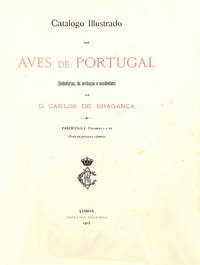
1105NM001<p>Sedentárias de arribação e accidentaes. Por D. Carlos de Bragança. Faciculo I: Estampas I a 20 Texto em portuguez e francez. Lisboa. Imprensa Nacional. 1903. Seguido de: <strong>CATALOGO ILLUSTRADO DAS AVES DE PORTUGAL</strong>. Sedentárias de arribação e accidentaes. Por D. Carlos de Bragança. Fascículo II: Estampas 21 a 40 Texto em portuguez e francez. Lisboa. Imprensa Nacional. 1907</p>_x000d_<p>In fólio de 32x25 cm. Obra em 2 volumes em um publicados respectivamente em 1903 e 1907.</p>_x000d_<p>Encadernação da época com lombada e cantos em pele com finos ferros a ouro na lombada e nas pastas.</p>_x000d_<p>Exemplar apresenta as capas anteriores e posteriores de cada um dos fascículos. Cortes das folhas aparados e carminados apenas à cabeça. Apresenta nas guardas um ex-libris de bibliófilo da época.</p>_x000d_<p>Cada um dos fascículos ilustra 20 espécies de aves. Estampas pintadas por Enrique Casanova sob orientação do rei D. Carlos e nalguns casos por si aguareladas.</p>_x000d_<p>Cada estampa/espécie apresenta o nome científico e o nome comum em cinco idiomas diferentes seguido do seu estatuto migratório e abundância fazendo-se também uma referência ao local de captura das aves ilustradas em cada estampa e por vezes a outros locais onde o Rei terá observado ou capturado aves dessa espécie.</p>_x000d_<p>D. Carlos cedo começou a organizar uma colecção de pássaros por si abatidos e destinados a formar um 'Museu Ornitológico'. Aos 24 anos o Rei começou a escrever a Ornitologia de Portugal que foi corrigindo constantemente com grande rigor científico. Em 1893 com 30 anos de idade decide publicá-la com o título <em>Catálogo Ilustrado das Aves de Portugal</em> entregando a Albert Girard a área científica ficando Enrique Casanova seu professor de desenho responsável pelas estampas. No entanto D. Carlos esteve presente em tudo com o seu saber e a sua arte. A obra destinou-se a ser publicada pela Imprensa Nacional - Casa da Moeda em fascículos ilustrados com 20 estampas cada. O 1º fascículo saiu em 1903 e o 2º em 1907.</p>_x000d_<p>Dom Carlos I rei de Portugal nasceu em 1863. Ao longo da sua juventude viajou por várias cortes europeias. Numa dessas viagens conheceu Amélia de Orleãs princesa de França e filha primogénita do Conde de Paris. Depois de um breve noivado desposou-a em Lisboa em Maio de 1886. O reinado de D. Carlos foi caracterizado por diversas crises políticas. O rei era dotado de uma grande sensibilidade artística que o levou a dedicar a maior parte do seu tempo a um conjunto diferenciado de actividades destacando-se a pintura a ornitologia estudo das aves e a oceanografia. D. Carlos foi um apaixonado por fotografia sendo o autor de uma grande parte do espólio da família real. O rei foi um pintor de talento com grande capacidade expressiva e uma técnica apurada demonstrando uma profunda sensibilidade na temática marinha. Assinava por vezes as suas obras com o nome 'Carlos Fernando. Recebeu prémios internacionais de instituições como a Sociedade Zoológica de Londres Sociedade Oceanográfica do Golfo de Biscaia ou o Museu História Natural entre outros.</p>_x000d_<p>Em 1985 foi publicado um fac-simile da obra e foi adicionado um terceiro volume ou suplemento que contém mais 53 estampas de desenhos até então inéditos também de passeriformes no entanto sem qualquer texto.</p>_x000d_<p>Enrique Casanova foi um pintor espanhol Saragoça 1850 - Madrid 1913 que veio para Portugal em 1880 tornando-se professor de pintura do príncipe D. Carlos e do infante D. Afonso em meados de Maio de 1881 tarefa que se prolongaria até Setembro de 1884. Outros membros da família real foram também alunos de desenho e de pintura de Casanova cujos ensinamentos influenciaram as obras artísticas de D. Maria Pia D. Luís e D. Amélia. Casanova fez parte do círculo restrito da Corte acompanhando-a nas suas viagens e estadias. Enrique Casanova foi um artista polivalente na sua produção cerâmica escultórica pictórica e gráfica. A aguarela foi a técnica mais utilizada na pintura. A sua mestria a técnica e o realismo das suas aguarelas possibilitou que um século mais tarde o Palácio Nacional da Ajuda as tomasse como fonte para a reconstituição das suas salas. No âmbito da ilustração colaborou também com a rainha D. Amélia e com o arquitecto Raul Lino nas ilustrações para o livro O Paço de Sintra 1903.</p>_x000d_<p>EN Dim.: In folio 32x25 cm.</p>_x000d_<p>Work in two volumes published in one in 1903 and 1907 respectively.</p>_x000d_<p>Binding: Contemporary half-calf with gilt tools on spine and boards.</p>_x000d_<p>Copy with both front and back covers of each booklet. Trimmed red top edges. It has an ex-libris of a contemporary bibliophile on the endpapers.</p>_x000d_<p>Each booklet contains 20 illustrations of bird species. The prints are painted by Enrique Casanova under the orientation of king D. Carlos and in some cases watercoloured by him.</p>_x000d_<p>Each print/species has its scientific name and common name in five different languages followed by its migratory status and quantity with reference to the place the birds were captured and sometimes to other places where the King had observed them or captured. D. Carlos started early to organize a collection of birds caught by him aiming to create an Ornithological Museum.At 24 years of age the King started to write the Ornithology of Portugal that he kept correcting with scientific accuracy. In 1893 age 20 he decides to publish it under the title Illustrated Catalogue of the Birds of Portugal handing the scientific part to Albert Girard and to Enrique Casanova his drawing teacher the responsibility of the prints. Nevertheless D. Carlos was always present with his knowledge and art. The work was printed by Imprensa Nacional - Casa da Moeda in illustrated booklets each with 20 prints. The first booklet was edited in 1903 and the second in 1907.</p>_x000d_<p>D. Carlos I king of Portugal was born in 1863. Throughout his youth he travelled to several European Courts. In one of those travels he met Amelia of Orleans princess of France and first daughter of the Count of Paris. After a short engagement he married her in Lisbon on May 1886. The reign of D. Carlos was marked by several political crises. The king was quite artistic which led to him doing several different activities mainly painting ornithology and oceanography. D. Carlos was also a passionate photographer being the author of the most part of the collection of the royal family. He was also a talented painter very expressive and with a sharp technique showing a profound sensibility in the sea themes. He sometimes signed is works with the name 'Carlos Fernando. He received international awards from different institutions like the Zoological Society of London Oceanographic Society of the Bay of Biscay or the Natural History Museum among others.</p>_x000d_<p>A facsimile of the work was published in 1985 and it was added a third volume that contains another 53 prints unpublished till then also of birds but with no text.</p>_x000d_<p>Enrique Casanova Saragoza 1850-Madrid 1913 was a Spanish painter who came to Portugal in 1880 becoming the painting teacher of D. Carlos and Prince D. Afonso in mid-May 1881 a task he would perform until September of 1884. Casanova also taught other members of the royal family and his teachings influenced the artistic works of D. Maria Pia D. Luís and D. Amélia. Casanova was part of the restrict circle of the court travelling with them. He was a versatile artist producing ceramics sculptures paintings and printings. Watercolour was his most used technique in painting. His mastery the technique and realism of his watercolours allowed one century later the National Palace of Ajuda to use them to the restoration of the rooms. As an illustrator he also worked with the Queen D. Amélia and the architect Raul Lino on the illustrations for the book <em>O Paço de Sintra</em> 1903.</p>_x000d_<p> </p>_x000d_<p> </p> M-8-D-28 hardcover
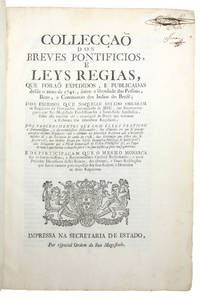
1759ABC_48500Lisbon: Secretaria de estado 1759. Contemporary calf gold-tooled spine marbled endpapers. Folio 21.3 x 30.5 cm. With al large woodcut vignette showing the Portuguese coat of arms on the title page and on one of the divisional title pages and with woodcut decorated initials. A publication of 21 Portuguese documents plus 1 handwritten addition detailing the first stages of the expulsion of The Society of Jesus commonly known as the Jesuits. Published by the special order of King José I of Portugal this book was intended to explain and defend the expulsion citing the Jesuits control over the affairs of the indigenous population of Brazil the "Indios do Brasil" and their alleged involvement in the "horroroso insulto de 3 de Setembro do anno de 1758". This September Insult is a reference to the Távora Affair the attempted assassination of King José I which resulted in the execution of the entire Távora family including Josés mistress Teresa Leonor wife of the heir of the Távoras. Teresa Leonors personal confessor was Gabriel Malagrida a Jesuit missionary who had spent time in Brazil; Malagridas tenuous involvement indeed the Távora as a whole are often considered scapegoats was utilised in anti-Jesuit rhetoric. This copy is of particular interest as a manuscript addition in an elegant contemporary hand has been added to the verso of the title page for document XII the sentencing of the Távoras and presents a copy of the speech made by the Judge of the People to the king: "O Juiz do Povo tem a honra de pedir a N.Ex.a ponha na Real prezença de S. Mag. que oseu justifismo Edital foi lido pelo fiel Povo de Lisboa com muitas lágrimas que todo elle pede justiça contra humatentado de que não há exemplo nage delidade Portuguese e que para avingar espera com impaciência as Reas ordens de S. Mag; pois todo elle dezeja anciozamente derramar até a última gota de sangue pela glória e serviço do Mesmo". Recorded just below is the reply of the King: "Reposta de S. Mag.e. Cu não esperava menos de fidelidade dos meus fiéis Vassalos a quem heide corresponder como bom Rey e Pay".With contemporary manuscript notes in brown ink. Each section with separate pagination and occasionally with a divisional title page bound together as issued. Gentle wear and dampstaining to the last few leaves lacking the back endpapers otherwise bright and clean.l Borba de Moraes I 165. Secretaria de estado, unknown
1774ABC_49591Lisbon 1774. Contemporary gold-tooled brown calf with a red morocco title label on the spine lettered in gold an elaborate border on both boards gold-tooled boards edges marbled edges. Folio. Manuscript on paper written in a neat secretarial hand. Rare contemporary manuscript of a royal letter addressed to the newly appointed Archbishop of Goa and Primate of the Orient the Augustinian hermit Dom Frei Francisco da Assunção e Brito just prior to his departure from Portugal to take up his new post. It outlines a set of ecclesiastic reforms arranged in six instructions. These were part of a series of major reforms introduced by the Portuguese king relating to the governance of the Estado da India: the same day royal instructions were also sent to the Governor and Captain General of Portuguese India D. José Pedro da Câmara regarding military political and economic reforms.The instructions to the Reverendo Arcebispo de Goa were drafted by the Marquês de Pombal Sebastião José de Carvalho e Melo 1st Marquis of Pombal 1st Count of Oeiras 1699-1782. Carvalho was one of the most influential Portuguese statesmen of the eighteenth century: it was during his term as prime minister earlier in the reign of José I that Portugal had abolished slavery both in Portugal itself and in the Portuguese colonies in India but not however in other parts of its empire and that autos-de-fé and the Limpeza de Sangue had been phased out. He had also been largely responsible for having the Jesuit Order expelled from Portuguese domains and he does not conceal his antipathy towards the Order in these instructions to the new Archbishop. Of great interest also are Carvalhos insistence on the removal of any distinction between natives of India and natives of Portugal second and third instructions and his condemnation of the level of censorship imposed by the Inquisition and by the Jesuits fifth instruction.An edited version of the present letter and of the letter dated the same day addressed to Câmara were published much later on in Pangim in 1841. The printed version of the ecclesiastical letter includes neither the index nor the second four-page royal letter which are both present in this manuscript.With a contemporary ownership inscription "Pertence do snr. Dez. Anst. Felis Contreiras." on the second free flyleaf. The edges of the boards are lightly scuffed the boards have been scratched with some loss of material. The bookplate mounted on the second free flyleaf has been cut off the work is lightly browned and foxed throughout. Otherwise in good condition. hardcover
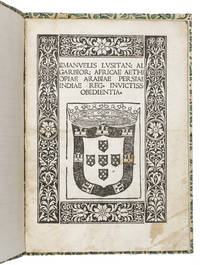
ABC_49338Rome: Marcello Silber 1514. 19th-century decorative paper with a pattern of green flowers. Small 4to ca. 19.5 x 14 cm. With the woodcut coat of arms of King Manuel I on the title page surrounded by a woodcut floral border. First and only edition of an important oration proudly announcing the Portuguese expansions in Africa Arabia and India with special mention of the conquest of Azamor present day Azemmour Morocco in August 1513. The oration was delivered to Pope Leo X 1475-1521 on 20 March 1514 to draw his attention to the latest Portuguese victories. No expenses were spared for this delivery as the oration was accompanied by lavish gifts brought from Asia including "Indian slaves Persian horses two leopards a young panther colourful parrots and a trained elephant . which caused a sensation as it bowed three times before the pope and squirted water from its trunk over the admiring multitude" Lach.The oration was delivered by Diego Pachego dates unknown "an eminent Portuguese jurist who gave the formal orations for his country in 1505 and 1514 on two of the most important occasions when the Portuguese announced to the papacy their progress in Asia" Lach. Pachego was a member of the Portuguese embassy of obedience intended to pay homage to a newly elected pope and hopefully gain his favour. As other countries especially Spain wanted to claim important regions such as the Spice Islands the support of the pope meant these would remain in Portuguese hands. King Manuel I 1469-1521 was highly aware of this so when Leo X became pope in 1513 he was determined that his mission of obedience would be such as had never been seen before. He sent all the riches that his Asian territories had to offer: the finest brocades the most precious metals the rarest gems and the most exotic animals including the white Indian elephant Hanno which was sent directly from India and became the pope's favorite pet. The present oration was also part of this event. It stressed the king's obedience to the pope and itemised his great successes in the East and in Africa. Despite its importance however the oration is quite rare as we have only been able to find 3 other copies in sales records of the past hundred years.The work is slightly browned with brown stains on the title page pp. 5-8 and pp. 13-14 a small hole in p. 5 affecting 1 letter a small water stain in the lower margin throughout. Otherwise in good condition.l BMC Italian p. 483 wrongly dated 1513; Edit 16 56280 12 copies; OPAC SBN CFIE030609 11 copies incl. 1 incomplete; USTC 845977 11 copies; WorldCat 727385121 1088206352 13 copies; cf. Lach Asia in the making of Europe vol. I book 1 pp. 167-168 and vol. II book 2 p. 8. Marcello Silber, unknown