BARANY TamasLivre Rare Book
1 574 résultats
19767169Couverture souple. Broché. 299 pages.
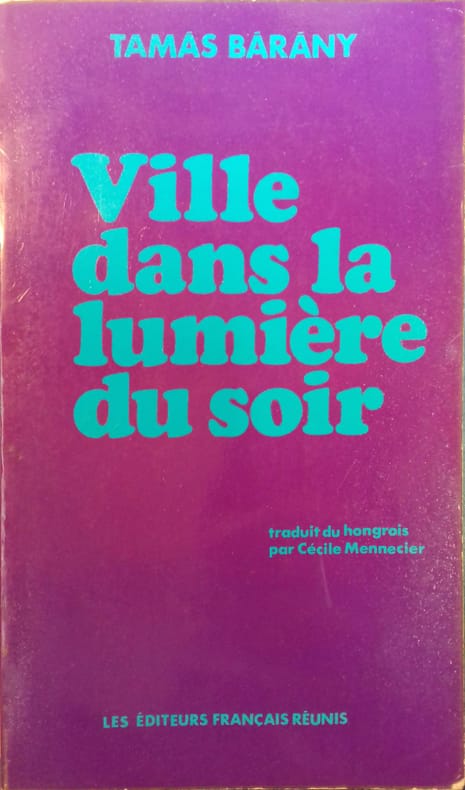
6318Les Editeurs français réunis, 1976, 299 p., broché, pliures sur le dos.
Fayard, 1968. In-8 broché de 363 pages. Rares passages soulignés au crayon de papier en marge sinon Bon état
1968166658Fayard Fayard, 1968. In-8 broché de 363 pages. Rares passages soulignés au crayon de papier en marge sinon Bon état
Barcelona, Editorial Argos, 1942. 4to.; 223 pp., 2 hs. Primera edición en español. Cubiertas originales.
17x13. 270p. Col. El libro del mes. Trad. G. Millás. Enc. Tela ed.
18x11. 255p. Núm. 90. Trad. G. Millás.
1920UNGA0042(Hann.), Deutschbund "Hannoverland" o. J. (um 1920). 27 S. im Spaltendruck, OBrosch., lichtspurig, abgegriff., Knitterspuren, einige kl. Randrisse, am Rü. m. Klebeband verklebt.
20053149EBKöln., Radical Egal / Verlag IL, ASA-European., 2005. 19 x 13,8 cm. 1 CD-ROM in OPlastik-Jewelbox mit Titel- und Einlegeblatt., 3149E Erste Auflage dieser Ausgabe. Sehr gutes Exemplar.
Frankfurt am Main, Insel Verlag, 1964. 4to.menor; VII-117 pp., 1 h. Cubiertas originales.
36998aafBasel, Benno Schwabe, 1945, in-8°, 64 S., Stempel a.d. Titelbl., Hlwd. (Bibl.).
199167475BBATM Contemporary Art Gallery, Mito Art Foundation., 1991. 30 x 21 cm. 117 S. OKarton., 67475B 1. Auflage. Einband angestaubt und leicht nachgedunkelt, sonst gutes Exemplar.
Fine English Original cloth bdg. 4to. (29 x 21 cm). 53, 298, [18] p., 369 b/w and color plates; 8 p. booklet in English with descriptions of plates and preface as 'Hunting weapons'. An illustrated study on Hungarian military and hunting weapons, guns, swords, and equipment. Vadaszfegyverek. = [Hunting weapons].
in-8, 462 p., broché, couverture illustrée Dos lég. us. (galbé) sinon bel exemplaire. [HI-5/2]
167318S.l., s.d. (v. 1800) 2 parties en un vol. in-folio, [14] et [12] ff. n. ch., texte bilingue allemand et magyar à la suite, cartonnage Bradel de papier azur, dos lisse, pièce de titre (rel. du XIXe siècle). Couverture un peu piquée, mais bon exemplaire.
196030089HBDJ 1960 STATED 1ST PRINTING MILD DJ EDGEWEAR FADE VG/VG UNPAGINATED TALL Slim TALL quarto illustrated publisher's PINK cloth lettered in black ON SPINE CVR & FRONT decorative endpapers moderate soiling toning and rubbing mostly to edges else very good. Pictorial dust jacket TINY chips toning and fading AT DJ SPINE rubbing else VERYgood or better. Most of the Things a Small Child Does & Knows & Loves have an UP & DOWN TO THEM. WITH A RHYTHM A RHYME & A SWING AUTHOR HAS PUT THEM TOGETHER. Here For a Little Boy Or Girl are the Moon the Sun a Smile a Clock on a Shelf ALL OF THEM UP. DOWN IS THE OTHER WAY AROUND. Fun of Digging a Hole or Pushing ones Foot inside a Boot Or watching the Rain drops Fall. READ ALOUD BOOK New York Franklin and Watts hardcover
178511252[um 1785]. 61 x 55 mm. Kupferstich, rückseitig kleine Montagereste, leicht fleckig.
178511250[um 1785]. 61 x 55 mm. Kupferstich, rückseitig kleine Montagereste, leicht fleckig.
178511249[um 1785]. 61 x 55 mm. Kupferstich, rückseitig kleine Montagereste, leicht fleckig.
178511248[um 1785]. 61 x 55 mm. Kupferstich, rückseitig kleine Montagereste, leicht fleckig, schwacher Abzug.
178511247[um 1785]. 61 x 55 mm. Kupferstich, minimal fleckig.
179011254[um 1790]. 63 x 65 mm. Kupferstich, minimal fleckig. schwächerer Abzug.
179011253[um 1790]. 63 x 65 mm. Kupferstich, schönes Blatt. kräftiger Abzug.
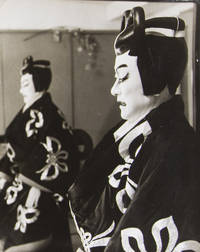
196541653Budapest: NP 1965. Original photographs. Hardcover. vg. Oblong folio 13 3/4 x 20". 30 tissue-guarded leaves. Original string-bound and gilt-ruled blue cloth. <br /> <br /> Created by the Japanese Embassy in Budapest Hungary this unique photo-album contains 66 original silver gelatin prints depicting Japan's spectacular natural and architectural landmarks as well as various aspects of its traditional art and culture Japanese dolls Bunraku Noh and Kabuki Theatres and faith Buddhism. <br /> <br /> In order of appearance the photographs featured in this album are the following:<br /> <br /> Recto of first leaf - The Sankeien Garden 2 photographs: Opened to the public since 1906 the Sankeien Garden is a vast classical Japan garden covering over 175000 square meters which exhibits a number of historic buildings from across Japan. These buildings include a three storied pagoda located high up on a hill deep inside the garden. This pagoda originally constructed in Kyoto in the mid-1400s was relocated to Sankei-en in 1914. The entire garden was once the private home of Tomitaro “Sankei†Hara 1869-1939 an extremely wealthy silk merchant. <br /> Verso of first leaf - Yomeimon Gate at the Nikko Toshogu Shrine 1 photograph: Designated a National Treasure and one of the most beautiful gates in Japan Yomeimon Gate is said to have been given the name “Main Gate of the Imperial Court.†It is also called “Gate of the Setting Sun†because one could gaze upon it all day and never tire. It is covered with over 500 carvings depicting traditional anecdotes children playing sages and wise men. <br /> Recto of second leaf - The Kofuku-ji Temple 1 photograph: Kofuku-ji is a Buddhist temple that was once one of the powerful Seven Great Temples in the city of Nara. The structure is one of the eight Historic Monuments of Ancient Nara inscribed on the UNESCO World Heritage List. - The Himeji Castle 1 photograph: : Located in Himeji Hyogo Prefecture this hilltop Japanese castle complex is regarded as the finest surviving example of prototypical Japanese castle architecture. It comprises a network of 83 buildings with advanced defensive systems from the feudal period.<br /> Verso of second leaf - Traditional bronze Japanese lanterns at a temple in Kyoto.<br /> Recto of third leaf - Osaka Castle 2 photographs: Located in Chuo-ku Osaka the castle is one of Japan's most famous landmarks as it played a major role in the unification of the country during the 16th century of the Azuchi-Momoyama period. <br /> Verso of third leaf - The Sarusawa Pond behind Kofuku-ji Temple at cherry blossom time 1 photograph; - A winter-view of a Japanese lake with a bridge in the background 1 photograph.<br /> Recto and verso of fourth leaf - Matsumoto Castle 3 photographs: Located in the city of Matsumoto Nagano Prefecture the building is one of Japan's premier historic castles along with Himeji Castle and Kumamoto Castle. It was completed in the 16th century and since then has maintained its original wooden interiors and external stonework. At verso is a photograph of the castle ground with the bridge moat and pond. <br /> Recto of fifth leaf - Himeji Castle 1 photograph: See recto of second leaf; - A view of the Hirosaki Castle at cherry blossom time. Built in 1611 the building is a hirayama-style Japanese castle and was the seat of the Tsugaru clan.<br /> Recto of sixth leaf - Himeji Castle 2 photographs. One view of the castle during spring-time and one view of the same castle during winter-time.<br /> Recto of seventh leaf - Todaiji Temple 1 photograph: One of Japan's most fanous and historically significant temples and a landmark of Nara Todaiji Temple was constructed in 752 as the head temple of all provincial Buddhist temples of Japan. Its influence grew so powerfully that the captital was moved from Nara to Nagaoka in 784 in order to lower the temple's influence on government affairs; Himeji Castle 1 photograph: Another view of this spectacular castle already featured in the two previous leaves. <br /> Recto of leaf 8 - An unidentified Japanese temple / shrine 1 photograph; - A stone garden 1 photograph.<br /> Recto of leaf 9 - The Osaka Castle and pond 2 photographs: See recto of third leaf.<br /> Recto of leaf 10 -The garden of the Katsura Imperial Villa Kyoto and the Kintai-Kyo Bridge: a historical bridge built in 1673 and located in the city of Iwakuni Yamaguchi Prefecture. The structure spans the Nishiki River in a series of five wooden arches 2 photographs.<br /> Recto of leaves 11 to 17 - Various temples with rock zen gardens moss gardens and ponds 14 photographs.<br /> Recto of leaves 18 and 19 - Various terraced rice fields 3 photographs and a wheat field 1 photograph.<br /> Recto of leaf 20 - Lake Aoki with the Hakuba Mountain Range in the background and Miho Beach with Mt. Fuji in the background 2 photographs.<br /> Recto of leaf 21 - Kegon Falls and Lake Chuzenji 2 photographs. Located near the city of Nikko Tochigi Prefecture the falls were formed when the Daiya River was rerouted by lava flows. In 1927 the Kegon Falls was recognized as one of the "Eight Views" which best showed Japan and its culture in the Showa period. Lake Chuzenji is a scenic lake created 20000 years ago when Mount Nantai erupted and blocked the river.<br /> Recto of leaf 22 - Snow-capped Mount Fuji 2 photographs. One photograph with one of the five lakes surrounding Mt. Fuji in the foreground; the second photograph with Fuji City in the foreground.<br /> Recto of 23rd leaf - Two photographs: One depicting a busy road near one of the five lakes surrounding Mt. Fuji; The second shows a snow-capped Mt. Fuji with a ropeway in the foreground.<br /> Recto of leaf 24 - Scenes of Kabuki theatre 2 photographs. A classical Japanese dance-drama Kabuki theatre is known for the stylization of its drama and for the elaborate make-up worn by some of its performers. <br /> Recto of leaves 25 - Scenes of Noh Theatre 2 photographs. Noh theatre is a traditional Japanese theatrical form and one of the oldest extant theatrical forms in the world. Wearing masks Noh performers are simply storytellers who use their visual appearances and their movements to suggest the essence of their tale rather than to enact it. <br /> Recto of 26th leaf - Hakata Ningyo Japanese dolls 2 photographs. The Hakata Ningyo are clay dolls manufactured in Hakata Northern Kyushu island. Their origin goes back to the beginning of the Edo period around 1615. <br /> Recto of 27th leaf - Bunraku puppets 2 photographs. Bunraku is the traditional puppet theatre of Japan. It started of as popular entertainment for the commoners during the Edo Period in Osaka and evolved into artistic theater during the late 17th century. Along with Noh and Kabuki it is recognized as a UNESCO Intangible Cultural Heritage. Bunraku puppets are about one-half life size and each is operated by three performers: a principal operator and two assistants. Strings are not used but rather the puppeteers co-operate to maneuver the limbs eyelids eyeballs eyebrows and mouths of the puppets thereby producing life-like actions and facial expressions. The puppeteers are in full view of the audience but are dressed in black to symbolize that they are to be taken as "invisible". <br /> Recto of leaves 28 - Scenes of Noh Theatre 2 photographs. See leaf 25. <br /> Recto of leaf 29 - Scenes of Kabuki theatre 2 photographs. See leaf 24. <br /> The last three photographs at verso of leaf 29 and recto of leaf 30 depict: <br /> 1 A sculpture of Amida a celestial buddha described in the scriptures of Mahayana Buddhism executed by Jocho and located in Byodo-in a Buddhist temple in the city of Uji Kyoto Prefecture. <br /> 2 The Alamy Great Buddha of Nara in the Daibutsuden Big Buddha Hall in Todaiji a Buddhist Temple complex located in the city of Nara. <br /> 3 The Great Buddha bronze statue in the temple of Kotokuin located in the city of Kamakura Kanagawa Prefecture. <br /> Each silver gelatin print measures appr. 9 3/4 x 8". Some have a tipped-in typed caption in English at verso and bear the stamp of the Japanese Embassy in Budapest Hungary. <br /> <br /> Photo-album and original photographs in very good condition. NP hardcover
1929UNGA0172Zch., Lpz., Wien, Amalthea (1929). gr.-8°, XXXII, 1007 S., 1 nn. S. Vlgsanz., OLn. m. Rückengoldpräg. u. gldgepr. Deckeltitel, Schnitt schwach stockfleck., einige Seiten m. Eckknicken.