8 687 résultats
187871303Couverture souple. Broché. 71 pages. Défraîchi Couverture défraîchie. Mouillures.
1914209451914 Paris, Fasquelle (Bibliothèque Charpentier), 1914, in 12 broché, 346 pages ; dos partiellement fendu.
19931248081993 Editions DLM/ ...Car Rien n'a d'importance, collection "Le Guide du Téléfan" - In-8, broché - 93 pages - Illustrations en N&B in texte

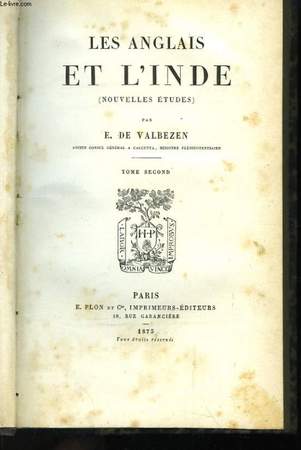
1875RO80052673PLON E. et Cie.. 1875. In-12. Relié demi-cuir. Bon état, Couv. convenable, Dos satisfaisant, Rousseurs. 492 pages. Quelques plans dépliants en noir et blanc, hors-texte. Titre, tomaison et filets dorés sur le dos cuir marron.. . . . Classification Dewey : 942-Angleterre
5933PARIS, E. Plon & cie - 1875 - In-8 - Débroché - 439 pages + table - Ex. non coupé - Très propre
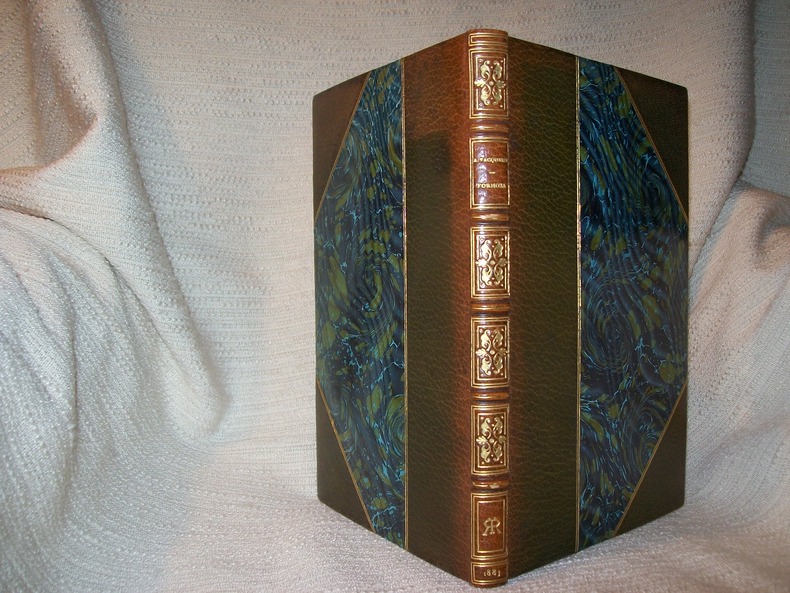
1883GITd420Paris Calmann Lévy 1883. In-8 88pp 2 feuillets non chiffrés. Demi maroquin brun à coins signés d'un double filet doré, dos à nerfs rehaussés d'un filet, cadres de filets et feuillages dorés dans les entrenerfs, monogramme doré "M-M" en queue, tête dorée, non rogné, plats de la couverture et dos conservés, reliure de l'époque (Lortic). Dos éclairci, rousseurs par endroits. Belle reliure décorative (malgré le défaut signalé) exécutée par Lortic.
4551Paris, Bureaux de la Revue, 1897. In-8 broché, 19 p. Très bon état. "Extrait de la Revue des questions historiques, janvier 1897".
1890R240093303IMPRIMERIE NATIONALE. 1890. In-4. Broché. Etat passable, 1er plat abîmé, Dos abîmé, Déchirures. 252 pages - 2ème plat et dos manquant - ouvrage désolidarisé - 1er plat désolidarisé - manque sur le 1er plat - rognures manque en coins en tête à l'intérieur de l'ouvrage sans réelle conséquence sur la lecture.. . . . Classification Dewey : 942-Angleterre
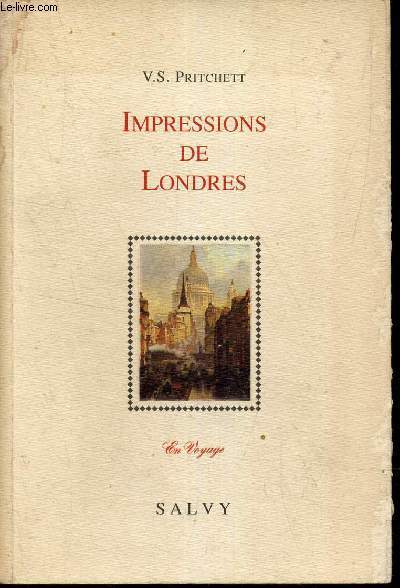
1996R320115957Salvy. 1996. In-8. Broché. Bon état, Couv. convenable, Dos satisfaisant, Intérieur frais. 210 pages - couverture contrepliée + 1 coupure de presse.. . . . Classification Dewey : 942-Angleterre
145751422 Broché - 14 x 22 - 231 pp - année 1963 - éditions de la Nouvelle Critique -
Librairie Payot et Cie, Paris. 1914. In-12 Carré. Broché. Etat d'usage. Couv. convenable. Dos abîmé. Intérieur frais. 317 pages. Etiquette de code sur la couverture. Quelques tampons et quelques annotations de bibliothèque. Londres et sa vie sociale, Spectacles mondains, sportifs et militaires, L'art et les artistes, Types populaires, La femme à Londres, Moeurs britanniques, Paysages et pèlerinages.
1914RO40245383Librairie Payot et Cie, Paris. 1914. In-12. Broché. Etat d'usage, Couv. convenable, Dos abîmé, Intérieur frais. 317 pages. Etiquette de code sur la couverture. Quelques tampons et quelques annotations de bibliothèque.. . . . Classification Dewey : 942-Angleterre
1914RO80177736PAYOT & CIE. 1914. In-12. Relié. Etat d'usage, Couv. défraîchie, Dos abîmé, Quelques rousseurs. 317 Pages. Quelques illustrations en noir et blanc dans et hors texte. Dos abimé. Quelques rousseurs sans conséquence pour la lecture. Titres collées sur le 1er plat.. . . . Classification Dewey : 942-Angleterre
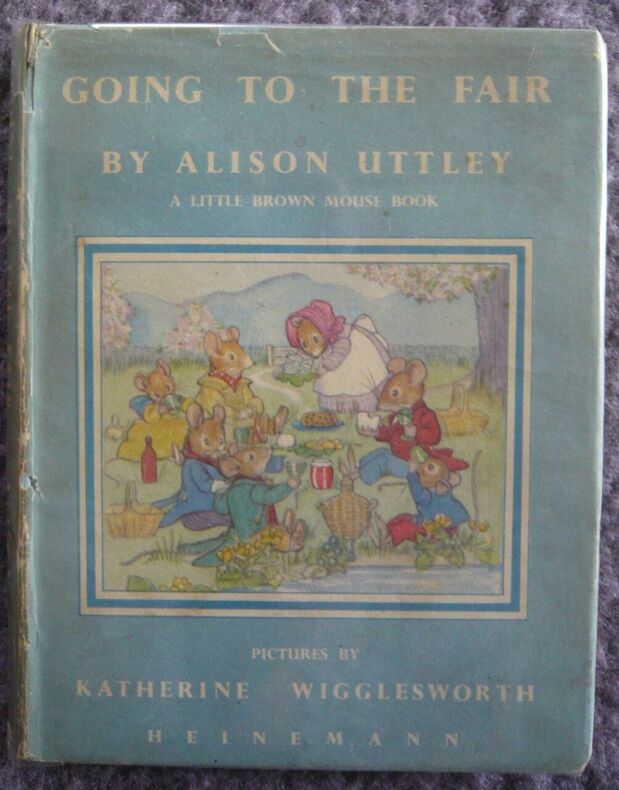
195118201951. Londres Editions William Heinemann 1951- Cartonné 14 cm x 18 cm 72 pages - Texte en anglais de Alison Uttley - Illustrations hors-texte couleurs de Katherine Wigglesworth - Dos très légèrement fatigué sinon bon état
25001P., Nelson, 1917, in 8° broché, 39pp. ; illustrations hors-texte ; couverture illustrée (fanée) ; exemplaire légèrement gauchi.
1967R240114050PLON. 1967. In-8. Broché. Bon état, Couv. convenable, Dos satisfaisant, Intérieur frais. 172 pages - tampon en page de garde. . . . Classification Dewey : 942-Angleterre
1967RO30313390Plon. 1967. In-8. Broché. Bon état, Couv. convenable, Dos abîmé, Papier jauni. 172 pages.. . . . Classification Dewey : 942-Angleterre
199712052France loisirs 1997 259 pages in8. 1997. Reliure Editeur avec jaquette. 259 pages. Dans une bourgade anglaise à la fin du XIVe siècle une troupe de comédiens ambulants se prépare à jouer. Le roman dépeint la vie difficile de ces artistes leurs rivalités avec les confréries organisées et la découverte fascinante qu'un jeune prêtre fait de leur condition dans un contexte marqué par la guerre la peste et les aspirations à la justice
193983836London: United Kingdom Home Office 1939. Presumed First Edition First printing. Wraps. Fair. Format is approximately 6 inches by 9.5 inches. 16 pages including covers. Illustrations. Cover worn and soiled with some edge tears creasing and chipping. It gives instructions on how to position and put together an Anderson Shelter. The shelter was sunk into the ground and is a logical precursor to the Cold War Fallout Shelters. This work includes a Description of the Shelter information on the Locations of the Shelter The Excavation Erection of the Shelter Covering the Shelter and then Finishing the Shelter off. Illustrations go from page 6 through 16 Among the aspects addressed in the illustrations are methods for drainage Terraced Houses Semi-detached Houses Illustration of major individual parts Erecting the back arch Frame arrangement Views from the inside and completion of the earth cover. Air raid shelters are structures for the protection of non-combatants as well as combatants against enemy attacks from the air. They are similar to bunkers in many regards although they are not designed to defend against ground attack but many have been used as defensive structures in such situations. Before WWII the U.K. had difficulty choosing the location of air raid shelters. During WWII many types of structures were used as air raid shelters such as cellars German Hochbunkers basements and underpasses. The U.K. began building street communal shelters as air raid shelters in 1940. Anderson shelters designed in 1938 and built to hold up to six people were also in common use in the U.K. Indoor shelters known as Morrison shelters were also in use. Prior to World War II in May 1924 an Air Raid Precautions Committee was set up in the United Kingdom. For years little progress was made with shelters because of the apparently irreconcilable conflict between the need to send the public underground for shelter and the need to keep them above ground for protection against gas attacks. In February 1936 the Home Secretary appointed a technical Committee on Structural Precautions against Air Attack. By November 1937 there had only been slow progress because of a serious lack of data on which to base any design recommendations and the Committee proposed that the Home Office should have its own department for research into structural precautions rather than relying on research work done by the Bombing Test Committee to support the development of bomb design and strategy. This proposal was eventually implemented in January 1939. They also decided to issue free to poorer households the Anderson shelter and to provide steel props to create shelters in suitable basements. The Anderson shelter was designed in 1938 by William Paterson and Oscar Carl Karl Kerrison in response to a request from the Home Office. It was named after Sir John Anderson then Lord Privy Seal with special responsibility for preparing air-raid precautions immediately prior to the outbreak of World War II and it was he who then initiated the development of the shelter. After evaluation by David Anderson Bertram Lawrence Hurst and Sir Henry Jupp of the Institution of Civil Engineers the design was released for production. Anderson shelters were designed to accommodate up to six people. The main principle of protection was based on curved and straight galvanized corrugated steel panels. Six curved panels were bolted together at the top so forming the main body of the shelter three straight sheets on either side and two more straight panels were fixed to each end one containing the door—a total of fourteen panels. A small drainage sump was often incorporated in the floor to collect rainwater seeping into the shelter. The shelters were 6 feet high 4.5 feet wide and 6.5 feet long. They were either buried 4 ft deep in the soil and then covered with a minimum of 15 inches of soil above the roof or in some cases installed inside people's houses and covered with sandbags. When they were buried outside the earth banks could be planted with vegetables and flowers that at times could be quite an appealing sight and in this way would become the subject of competitions of the best-planted shelter among householders in the neighborhood. The internal fitting out of the shelter was left to the owner and so there were wide variations in comfort. Anderson shelters were issued free to all householders who earned less than £5 a week equivalent to £320 in 2020 when adjusted for inflation. Those with a higher income were charged £7 £440 in 2020 for their shelter. One and a half million shelters of this type were distributed between February 1939 and the outbreak of war. During the war a further 2.1 million were erected. Large numbers were manufactured at John Summers & Sons ironworks at Shotton on Deeside with production peaking at 50000 units per week. The Anderson shelters performed well under blast and ground shock because they had good connectivity and ductility which meant that they could absorb a great deal of energy through plastic deformation without falling apart. Because of the large number made and their robustness many Anderson shelters still survive. Many were dug up after the war and converted into storage sheds for use in gardens and allotments. United Kingdom, Home Office paperback
194574899London: United Kingdom The Admiralty Naval Intelligence Division 1945. Presumed First Edition First printing. Hardcover. Good. xiii 1 416 pages. Frontis illustrations. Illustrations. Maps. Diagrams. Fold-outs. Conversion Tables. Indexes. Large color folding map in rear pocket Compiled and drawn by N.I.D.5 1945. Cover has wear and soiling. Corners a bit rubbed. Cloth torn at bottom of spine rear board. Some endpaper discoloration. This was prepared by the Oxford sub-centre of the Naval Intelligence Division under the direction of Lieut.-Colonel K. Mason Professor of Geography at the University of Oxford and was the work of a number of contributors whose names are on p. 347. The book was for the use of persons in H. M. Service only and must not be show or made available to the Press or to any member of the public. Fep has stamped statement "To be kept under lock and key when not in use." There is also a longer stamped statement entitled Conditions of Release what amplifies the control conditions for this item. In 1915 a Geographical Section was formed in the Naval Intelligence Division to write Geographical Handbooks on various parts of the world. The purpose of these handbooks was to supply by scientific research and skilled arrangement material for the discussion of naval military and political problems as distinct from an examination of the problems themselves. The old handbooks had been extensively used in the Second World War but experience showed both their value and their limitations. The old series did not cover many of the countries closed affected by the Second World War. There a new series was initiated resulting in a new set of books produced in the Naval Intelligence Division by trained geographers drawn largely from the Universities. The books follow in general a uniform approach and are illustrated by numerous maps and photographs. These are designed first to provide for the use of Commanding Officers information in a clear and comprehensive form about countries they may interact with. Secondarily these works supplied material for orientation lectures on the country for a variety of naval personnel. United Kingdom, The Admiralty, Naval Intelligence Division hardcover
191568203London England: His Majesty's Stationery Office 1915. Presumed first edition/first printing. Hardcover. Good. Cover has some wear and soiling. Some page corners turned. Signed by previous owner. xix 3 561 3 p. Includes index. Stiff card cover. List of Principal Persons Mentioned. The object of this volume was to bring together the official correspondence published by the various European Governemnt relating to the outbreak of the First World War. The correspondence thus collected was not new though official translations of the Serbian and Austrian book first appeared in this volume. The work was undertaken for the benefit of students of history and politics. The intention was to republish only those original documents which the various governments had laid before the world as authentic records of events. Documents which were not included in the collections originally published by the various governments but were officially published subsequently are presented at the end of the volume in Part X. His Majesty's Stationery Office hardcover
68-8832London UK: 1937. Fabric Broadside. 26 x 27 cm. Very Good. London, UK: 1937. unknown
63-5716London UK: Eldridge 1891. Framed and matted engraving signed in ink. 12" x 9" Good with toning & creasing. London, UK: Eldridge, 1891. unknown
193983838London: United Kingdom Lord Privy Seal's Office 1939. Presumed First Edition First printing. Single sheet printed on both sides. Fair. Sheet is approximately 11 inches by 8.5 inches folded in half with printing on all four sides/pages. Sheet has wear soiling and some staining. Some creasing noted. This is Public Information Leaflet No. 3. It addresses Why evacuation The Government Evacuation Scheme What You Have To Do with sections on Schoolchildren Children under five Expectant Mothers and The Blind Private Arrangements and discussion that Work Must Go On. On the last page there is a note at the end identifying the ;evacuable' areas under the Government Scheme which includes a long list of locations from which there may be some evacuations. Air Raid Precautions ARP refers to a number of organizations and guidelines in the United Kingdom dedicated to the protection of civilians from the danger of air raids. Government consideration for air raid precautions increased in the 1920s and 30s with the Raid Wardens' Service set up in 1937 to report on bombing incidents. Every local council was responsible for organizing ARP wardens messengers ambulance drivers rescue parties and liaison with police and fire brigades. From 1 September 1939 ARP wardens enforced the "blackout". Heavy curtains and shutters were required on all private residences commercial premises and factories to prevent light escaping and so making them a possible marker for enemy bombers to locate their targets. With increased enemy bombing during the Blitz the ARP services were central in reporting and dealing with bombing incidents. They managed the air raid sirens and ensured people were directed to shelters. The evacuation of civilians in Britain during the Second World War was designed to protect people especially children from the risks associated with aerial bombing of cities by moving them to areas thought to be less at risk. Operation Pied Piper which began on 1 September 1939 officially relocated 1.5 million people. There were further waves of official evacuation and re-evacuation from the south and east coasts in June 1940 when a seaborne invasion was expected and from affected cities after the Blitz began in September 1940. There were also official evacuations from the UK to other parts of the British Empire and many non-official evacuations within and from the UK. Other mass movements of civilians included British citizens arriving from the Channel Islands and displaced people arriving from continental Europe. The Government Evacuation Scheme was developed during summer 1938 by the Anderson Committee and implemented by the Ministry of Health. The country was divided into zones classified as either "evacuation" "neutral" or "reception" with priority evacuees being moved from the major urban centers and billeted on the available private housing in more rural areas. Each zone covered roughly a third of the population although several urban areas later bombed had not been classified for evacuation. In early 1939 the reception areas compiled lists of available housing. Space was found for about 2000 people and the government also constructed camps which provided a few thousand additional spaces. The government began to publicize its plan through the local authorities in summer 1939. The government had overestimated demand: only half of all school-aged children were moved from the urban areas instead of the expected 80%. There was enormous regional variation: as few as 15% of the children were evacuated from some urban areas while over 60% of children were evacuated from Manchester Belfast and Liverpool. Over 3000000 people were evacuated. United Kingdom, Lord Privy Seal's Office unknown
1963270150London: Her Majesty's Stationery Office. 1963. Ex-Library book. Hardcover is sound and clean with lightly worn lower edge leading corners and spine ends. Page block is a bit grubby. Library stamp on FEP; minor pen underlining on pages v vi; contents otherwise in good condition with sound binding clean pages and clear text throughout. Dust jacket has darkened spine with minor water spotting and large chips tears and creases on edges. T. Sixth Edition. hardcover. Good/Acceptable. Ex-Library. Her Majesty's Stationery Office. Hardcover