[Peru]Biblio.com
433 résultats
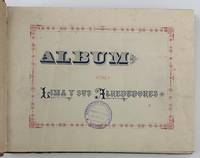
19004112Lima 1900. Very good. 210pp. Oblong quarto. Contemporary three-quarter calf and marbled paper-covered boards. Minor rubbing and scuffing to edges and boards. Handsome bookplate to front pastedown occasional very minor foxing. A delightful viewbook and commercial directory of Peru published in Lima at the turn of the 20th century. The monotone and sepia-toned photographs and photocollages picture numerous buildings interiors street scenes storefronts and more mostly in Lima but also in Callao Chorrillos Barranco and Miraflores. An Index of the "Vistas de Lima" provides a description for the photographs though almost all of the photographs are captioned beneath the image. The photographs are printed on the rectos of the work while most of the versos of each leaf contain full-page advertisements for a wide variety of businesses in the various cities including banks mercantile firms importers breweries milers and numerous others. A healthy percentage of the versos are printed with a commercial directory of Lima as well as the membership list of the Bolsa Comercial providing a snapshot of the economic life of Peru at the time. No copies in American institutions.<br /> <br /> OCLC records just two copies worldwide one in Peru and the other in France. unknown
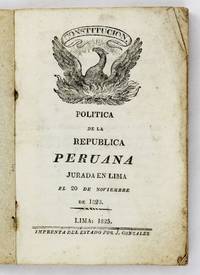
18255658Lima 1825. Very good. CXII523pp. Original blue wrappers. Lightly worn spine worn but sound. Minor foxing to title page internally clean. The second edition of the first constitution of Peru and the first to include the "Discurso con Que la Comision de Constitucion Presento el Proyecto de Ella al Congreso Constituyente." Peru declared its independence from Spain in 1821 in a period in which many of Spain's American colonies threw off the colonial yoke. We locate only a handful of copies in OCLC. unknown
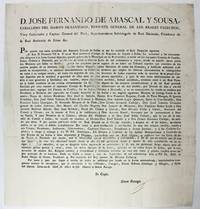
18113541Lima: April 24 1811. About very good. Broadside approximately 17 x 15.75 inches. Printed on two joined sheets. Some worming affecting a few words of text; larger losses reinforced with tissue on blank verso. Light toning and scattered small patches of staining. Contemporary manuscript rubric at foot. A scare late Spanish colonial broadside regarding appointments and alterations to administrative councils that had authority over Peru particularly the Supreme Council of the Indies. The text of this decree issued by Viceroy José Fernando de Abascal y Sousa in Lima on April 24 1811 promulgates orders from the King-in-exile Ferdinand VII and the Supreme Central Council that concerned the appointment of new officers and members of the Council of the Indies and several other government positions in the Spanish American colonies. The Supreme Central Council was a body that administered Spanish interests for the King during a six-year period following his abdication forced by Napoleon. OCLC locates one other copy at the John Carter Brown Library; Medina adds only his own example.<br /> Medina Lima 2596. Vargas Ugarte 3572. April 24 unknown
1770280241770. Very good condition. A copper engraving of the city layout of Lima and the Port of Callao below. At lower margin are numbered images describing the Llama Vicogn Huanaco Calash used at Lima Mestizo woman on horseback Lady of Lima Spaniard in Peruvian dress Lady of Lima in riding dress Mulatto woman and a Negro servant.<br /> Plate VI page 30 from an unknown book. 8 x 10 5/8" original folds slt offsetting marks otherwise very clean. unknown
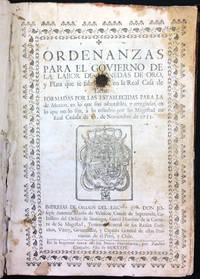
175943910Lima: En la Imprenta nueva de los Niños huerphanos por P. Gonzales 1759. First edition. Contemporary brown calf embossed boards. A good copy; tissue repairs to backstrip boards edge worn and moderately scuffed bookplate of Félix Francisco Martín y Herrera on front pastedown lacking front endpaper inked notations on front blank reattached and rear endpaper joint cracked title page worn and torn at inner margin with two small stains affecting but not obscuring the text repaired tears on corners of last page of index marginal dampstains mainly to the upper corners and fingersoilings a few wormholes but text is quite good. 2 leaves 84 pp. 5 pp. indice blank. Sm. 4to. Rare first editionxx of coinage ordinances for the mint in Lima modeled on Mexico's published just four years earlier but adapted to the needs of Lima. See Manuel Moreyra: "Apuntes sobre la historia de la moneda colonial en el peru" republished in La moneda colonial en el Perú 1980. Both the later 1788 edition and this first are uncommon: Not at the BN Spain nor in any European Libraries. OCLC locates two copies of the first at NYPL and JCB; there is also one at the BN Chile. Provenance: Felix Francisco Martín y Herrera 1918-2006 Argentinean Lawyer. Palau 203104 1788 edition only. Medina: Lima 1132. López de Azcona: Bibliografía minera hispano americana 1457. Maffei & Figueroa 3596. Moreno 1236. En la Imprenta nueva de los Niños huerphanos, por P. Gonzales hardcover
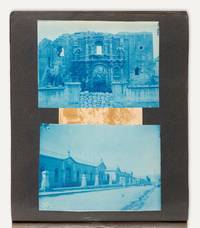
1918List2982Peru and Panama 1918. Approximately 364 photos; album and unmounted photos silver prints cyanotypes and printing-out-paper prints. Photos measure 3 x 4 to 8 x 10 inches with about half measuring 3 x 5 ½ inches. Some with photographer’s hand-stamp or credit in pencil; others with manuscript notations verso or recto; some captions to album pages. Offered in partnership with Daniel / Oliver.<br /> <br /> Rich and extensive photographic archive of Walton T. Burres of Stockton California showing his time in Peru c. 1904 as an amateur explorer and doctor for the Inca Mining and Rubber Company and his later work in Panama c. 1918 with the Rockefeller Foundation’s International Health Division.The collection consists of a large number of loose photos acquired by the gallery in 2021 and a recently discovered photo album showing some of the same subjects and containing a few duplicate images some printed in different sizes or formats as well as hundreds of previously unseen prints. Together this material makes up the largest extant archive of Burres’s photographic work. Though his work was published at the time both in Peruvian and American publications much of it was lost when he dropped it in a river that he was attempting to ford.<br /> <br /> Burres was educated at California’s Cooper Medical College the first school of medicine on the West Coast and was a prominent member of the Stockton community before sojourning to Peru around 1900 to help the Inca Mining and Rubber Company address the deadly diseases endemic to the region such as malaria and yellow fever. To encourage economic infrastructure in remote areas the Peruvian government began granting land concessions to any company that would build roads bridges or river ports. As a result the Inca Mining Company an American outfit based in Tirapata purchased the rights to mine gold along the upper Inambari River in 1896 and soon became the richest gold producer in Peru.<br /> <br /> A large portion of Burres’s Peruvian images document his 1903–1904 excursion from Arequipa 150 miles into “rubber country.†The journeys were well-recounted in U.S. papers and a number of the anecdotes described in print are seen in the present images.<br /> <br /> There are many dynamic views of Burres and his party trekking through the dense jungle and summiting the high mountains as well as shots of flora fauna and native Peruvians. Burres’s travel companions for this trip included the famed adventurer Harriet Chalmers Adams later dubbed “America’s greatest woman explorer†by the New York Times. Adams and her husband Frank both fellow Stocktonians joined up with Burres during their own multi-year expedition through South America. There are a number of portraits of a woman who bears a striking resemblance to Adams though it is possibly another person.<br /> <br /> Other Peruvian material includes numerous views of Cusco Arequipa and the surrounding environs including a beautiful interior of a chapel a Martin Chambi-esque detail shot of a stone wall and portraits of local townspeople some identified as Quechua people. There are a number of lush large-format cyanotypes rich printing-out-paper views and many handsome small-format panoramas. These were printed on Inca Mining Company surplus stationary which speaks to the makeshift nature of photo-development under the circumstances. One particularly striking image shows the top of Misti volcano barely visible above the clouds. This image was reproduced in Burres's account of his travels published in 1909 in Outing magazine.<br /> <br /> The photographs from Burres’s time in Panama document his more serious work as a virologist and health administrator in the area. One interesting photo shows a pair of recently-shot iguanas with a caption noting that “blood of these reptiles was found infected with Haemogregarina.†Another image is that of a new style of privy built from concrete and wire-mesh designed to better keep out rain water. There are also keenly-shot views of main streets and local culture in Los Santos Chiriquà and elsewhere including a number of humanistic group portraits taken at a girl’s school. unknown
186742235Lima: Imprenta Liberal 1867. First edition. Paper wrappers. A very good copy tear to front blank wrapper later silver cloth spine most likely extracted from a pamphlet binder owner's stamp on title. 35 pp. 12mo. Juan Antonio Pezet 1809-1879 was President of Peru during the Spanish-Peruvian -Chilean war over the Chincha Islands which contained vast deposits of Guano. He was forced to flee to Europe when his treaty with the Spanish was found wanting. Provenance: Francisco Pérez de Velasco his stamp former Peruvian Consul to New York a dealer who sold to Hiram Bingham an "unprecedented cache of. very early colonial Peruvian. documents and whose remaining collection on Peru was in "Cátalogo de la Biblioteca Peruana Propiedad de Dn. Francisco Perez de Velasco" Lima 1918. Scarce. OCLC reports only microfiche copies but it is part of the Yale series of Latin American pamphlets and BN Peru also has a copy. Imprenta Liberal hardcover
186633997New York: Wm. C. Bryant & Co. Printers 1866. First edition. Stitched paper wrappers. Lacking rear wrapper front wrapper soiled else very good. 46 pp. 8vo. Contains 12 documents including: Decree approving and ordering the ratification of the Peru-Chilean Treaty of Alliance; Declaration of War against the Spanish Government; Naturalization of Foreigners serving in Peruvian and Chilean Vessels; 9 more. Biblioteca Peruana 1208. Basadre I 4935. Wm. C. Bryant & Co., Printers unknown
193663860London: George Routledge & Sons Ltd. 1936. 8vo. x 304 pp. Photo frontisp. numerous photo plates. Brown publisher’s cloth gilt lettering on spine slight lean to spine minor dustsoiling & slight foxing to upper fore-edges w/ d.j. wraparound photo cover art of teams minor chipping head of spine 1 minor chip upper fore-edge First edition of these tales of treasure hunting opening with Sacambaya Expedition searching for the purported Jesuit Treasure of the Sacambaya Mission reputedly hidden in the 1760’s when the Jesuits were expelled from South America. Supposedly stashed in a multi-alcoved cave near the border between La Pac and Cochabamba. Legend had it that the Indigenous peoples who hid the treasure were then killed and sealed into the cave. Also featured are gold hunting expedition and canoe trek through Canada and the hunt for Montezuma’s treasure in British Honduras or Belize along the Belize River. Very scarce in original dustjacket. George Routledge & Sons, Ltd., hardcover
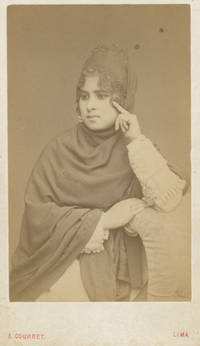
1870List1327Lima 1870. Albumen photographs measuring 2 x 3 ½ inches on larger mounts. Some slight fading a few spots to one image including one with loss about very good overall. A striking pair of early carte-de-visite portraits of Peruvian women from the Courret studios at 197 Calle de la Union one bearing the Courret Hermanos imprint and the other with just Eugenio Courret’s credit from the same studio. Eugenio formed the Courret Hermanos firm in 1863 with his brother Aquiles. The portrait of the woman and child is particularly uncommon for the Courret catalog as most of the photographs they took were of single wealth patrons. unknown
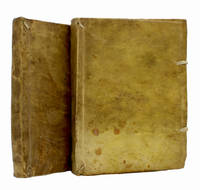
17726489Lima: Oficina de la calle de San Jacinto 1772. First Edition — Primera edición. Hardcover — Tapa dura. 190x135mm. 7½x5¼". Lima Oficina de la calle de San Jacinto 1772-1773. 2 volúmenes. En 4º menor 190 x 135mm. -I: 54 2 207 i.e. 133 5 pp. 14 hojas de portadillas. -II: 158 306 i.e. 318 4 pp. 5 hojas de portadillas. Encuadernación en pergamino de época. Primera edición de los cuadernos de desamortización de los bienes de la CompañÃa de Jesús en Perú con motivo de su expulsión según las reglas que prescribe la Real Cédula dada en Madrid a 9 de julio de 1769. Los Jesuitas fueron expulsados de Perú asà como de otras posesiones de España en América por orden de Carlos III en 1767. El libro también incluye las Constituciones de diferentes colegios peruanos que estaban bajo la supervisión de los jesuitas. Obra extraordinariamente rara de encontrar completa de sus dos volúmenes especialmente un ejemplar hermoso como el nuestro. Tiene en total 19 portadillas fuera de la paginación. En España sólo he encontrado completos 2 ejemplares institucionales Ministerio de Justicia y Biblioteca Nacional. Oficina de la calle de San Jacinto hardcover
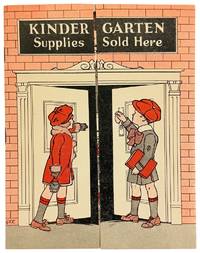
192831878N.p.: s.i. 1928. Very Good. N.p.: s.i. 1928. First Edition. 12mo 16cm.; publisher's pictorial staple bound wrappers signed in image "GEL"; illustrated throughout including photograph of a kindergarten class in Lima. Very light wear to margins brief tape repair inside upper left-hand panel else a Very Good example.<br /> <br /> Transformation fund-raising pamphlet for American kindergarten students to raise money for supplies at a kindergarten in Lima Peru. The front wrappers open like a pair of doors into a kindergarten supply store "For we're buying with the money / Juniors give o'er all this land / For the Lima Kindergarten. / They already have the land."<br /> <br /> Through another door leads to a photograph of the students at the Lima Kindergarten sitting expectantly in a classroom for their Froebel school supplies: "There are balls and books and pictures / To be colored and cut out; / Blocks and shining letters on them / Pencil crayons. Hear that shout"<br /> <br /> Unrecorded in OCLC as of January 2025. s.i. unknown
12992Junin Peru; 29 November 1935. 32pp. foolscap 8vo bound into white wraps with the six fold-out blueprints. In very good condition on lightly-aged paper in worn wraps. Figure 1: '2-6-2 Diesel Locomotive V.1601 showing the 'general characteristics' of the 'new 1400 H.P. Diesel locomotive'. Figure 2: 'General Arrangement of the small standard Shunting Locomotive' '75 H.P. Diesel shunting locomotive made by the Deutz Motorenfabr Köln Germany'. Figure 3: 'general proportions' of 'the old "Flying Hamburger" and the new unit equipped with hydraulic transmission'. Figure 4: '150 H.P. Diesel-Hydraulic Rail Car'. Figure 5: '2-2 2-2 Petrol-hydraulic Railcar series VT63'. Figure 6: 'Acceleration curves for various power-transmissions'. The report begins: 'I spent most of the month of August visiting Germany Austria Hungary and Denmark for the purpose of obtaining as much information as I possibly could in connection with the development of rail cars and rail car services in Europe and I divided my tipe principally into three sections namely: - a Visiting the Works of engine and rail car builders. b Discussing the subject with the various Chief Mechanical Engineers and Operating Staff. c Travelling on various rail cars for the purpose of forming my own impressions.' Headings: Trip from Strasburg to Cham 'accompanied by Herr Oberbaurat F. Scherrer Sectional Operating Engineer of the German State Railways on a Diesel car of 150 H.P.'; Austrian State Railways; The Steiermarkische Landisbahnem Railway Company; Visit to Austrian State Railways' Offices Vienna; Visit to Hungarian State Railways; Trial of Egyptian State Railways' Diesel Rail Car; Trial Run on 500 H.P. Diesel Car; Visit to the Headquarters of the German State Rlys. Berlin; Danish State Railways. From the papers of William Frank Stanton. Junin, Peru; 29 November 1935. paperback
19692111902156002171Ethnological Society of Japan 1969. Soft Cover. Fine. The book is in fine condition. Ethnological Society of Japan paperback
1024637719.Gpaperback. Good. Access codes and supplements are not guaranteed with used items. May be an ex-library book. paperback
1024633616.Ghardcover. Good. Access codes and supplements are not guaranteed with used items. May be an ex-library book. hardcover
1272943860.Gpaperback. Good. Access codes and supplements are not guaranteed with used items. May be an ex-library book. paperback
1274956250.Gpaperback. Good. Access codes and supplements are not guaranteed with used items. May be an ex-library book. paperback
192074922Lima: Lithografia Tip. Carlos Fabbri 1920. Original hand-colored lithograph map of the city of Lima. 24 x 26 1/2 inches. Key printed on left side and title on right. No copies located by OCLC. Very good."The Italian engraver and printer Carlos Fabbri studied art & design in Italy. In 1887 he moved to Peru and commenced his career as artist & designer for the journal El Peru Ilustrado in Lima. By 1888 Litografia y Tipografia Carlos Fabbri Lima Peru was set up in Calle Mercaderes 140. Having acquired the most up-to-date printing machinery from Italy they soon became leading book publishers and printers of postage stamps maps colour labels posters cheques share certificates and amongst other things cigarette insert cards for tobacco companies during the period 1890-1920 approx. Fabbri's artistic and industrial work was awarded gold medals at exhibitions in Paris Milan Madrid London 1906 and Lima 1910" World of Playing Cards. Lithografia Tip. Carlos Fabbri unknown
186276434Lima: N.p. 1862. Original manuscript title or deed to the Hacienda San Jacinto in the Nerena Valley of Coastal Peru. While the estate is named after a Hispanic saint San Jacinto its origin dates back to pre-Inca times. Evidence of this is the remains of cultural settlements in Punkuri Kiske and Cerro Blanco. The Spanish Crown gave this land to the Jesuits in 1720 who introduced sugarcane as part of the agricultural production in this part of Peru. They also took it away from the Jesuits in 1767.Folio. 151 leaves with manuscript on both sides of each leaf i.e. 352 pp. Each leaf bears the required tax stamp the equivalent of a notary stamp at that time and each leaf is written on paper bearing the same watermark. Each leaf also bears a blind-stamp of a seal in the inner margin of each recto. Written in a numerous hands but all quite legible. Original full brown sheepskin with gilt spine lettering and devices pattern endpapers. Like a ready made binding used for legal purposes as the text block in considerably smaller than the binding. Altogether in very nice condition.This is the original transfer title for an estate of great importance and size in one of the most fertile parts of coastal Peru the Narena Valley. It consisted of 700 fanejadas of land about 1200 acres and all that stood upon it; primarily the sugarcane and alfalfa fields but houses tools farm animals furniture etc. In fact it seems that the original name for the property still bore and can be seen on the first page of this manuscript the word "Canaverales" which is a euphemism for sugarcane. This mammoth 302-page manuscript is basically an inventory of literally everything on those 1200 acres. The detail on the inventory is incredibly extensive; every table horse cow frying pan etc is listed and priced. It was first laid out as a sugarcane plantation in 1720 by the Jesuits. The Jesuits were expelled from the New World lands and missions in 1767 by the Spanish crown with King Charles III ordering their removal from all Spanish territories including the Americas due to growing political pressure against the order; the Franciscans largely took over the operation of the missions after the expulsion. When all their lands were confiscated by the Spanish government as happened throughout Latin America the Hacienda likely went through a number of hands. It was well regarded as a solid and lucrative sugarcane plantation and would have been considered a prize acquisition. We can find no history of the buyer named on this deed Santiago Sanchez but that is likely due to the fact that Spanish people have last names that can be written in a variety of combinations. But we do know that he paid 8697 pesos for it and that was a very considerable sum for the time indeed enough to place someone in a wealthy or influential social position. The most curious thing in the inventory which is lengthy and detailed in the extreme is the list of slaves. Ostensibly President Ramon Castilla y Marquezado declared slavery abolished in 1854 yet here we have a document that clearly affixes values to each and every slave and the prices paid for each by Sanchez. Prices ranged from 0 to 500 pesos. And there were a large number of them. Staring on p. 68 of the inventory we find them all listed and they are broken down into a variety of categories. Indigenous people African people male female young old and & "Inservibles" translates as "useless people". All slaves were examined by Dr. Antonio Manriquez surgeon and the most common reasons for being deemed "inservible" included: old age hernias ulcers and missing limbs. Their value was deemed to be zero. After being examined by physician the value accorded to each was dependent on their ability to work the farm. Surprisingly African slaves were valued less than local peoples this may have been due to the language issue. It should be noted that the slaves constituted a large portion of the total price paid. So it seems that this document gives lie to the previously believed fact that slavery was abolished in Peru in 1854. But we do not find this surprising as the gulf between the monied class and the populace was great and with no ability to enforce decrees from the central government the aristocracy likely just did whatever they pleased. Apparently Santiago Sanchez was ill-equipped to manage so many people and such a large piece of land as we know that in 1868 a Scotsman by the name of Henry Swayne bought the Hacienda San Jacinto an turned it into a profitable enteerpise by his humane attitude towards the farmers. "The hacienda or estate of San Jacinto was anciently one of the largest and finest in the valley of Nepeña; but before its purchase by Mr. Swayne a few years before our visit it had very much run down. It was deserted by the negro slave soon after their emancipation; the dwellings had fallen out of repair" The Fife Post. It remains a very lucrative farming operation to this day.We conferred with a native Spanish speaker and an individual who is fluent in Spanish and this report is the result. We might be incorrect but it is doubtful and in any case it is a fine 19th century manuscript deed to a large and valuable parcel of land in 19th century Peru. N.p. unknown
185628032Philadelphia: Charles Desilver 1856. 17¼" X 13 3/4" image 15" X 12½". Hand colored. Decorative border. Very good. 2" tear at upper right corner archivally repaired on verso touches upon one corner of border. Charles Desilver unknown
1847214253New York: Harper and Brothers 1847. First edition. Engraved portrait frontispieces facsimile map. 2 vols. 8vo. Original publishers' blind-stamped brown cloth. Covers slightly faded and rubbed remnants of library labels removed from spines darkening to endpapers occasional light spotting to text. Ex-library with bookplate and one other from private owner on front pastedowns. First edition. Engraved portrait frontispieces facsimile map. 2 vols. 8vo. The classic work on the subject going through scores of editions Prescott's "Peru" was one of the standard household books for the later part of the Nineteenth century. Though included in the Grolier Club exhibition of One Hundred Books Famous in English Literature it was not included in their catalogue of One Hundred American Books . simply because "Prescott's Conquest of Mexico . came first and set a new American standard for the use of source materials." This standard he maintained in his History of the Conquest of Peru. Sabin 65272; BAL 16346 Harper and Brothers unknown
1863236424Paris: Libreria de Firmin Didot Hermanos Hijos y Ca 1863. Frontispiece in Volume One. xxv 745 3; 473 3 pp. 2 vols. Modern brown cloth worming at last 4 leaves of vol. II. Frontispiece in Volume One. xxv 745 3; 473 3 pp. 2 vols. Libreria de Firmin Didot Hermanos, Hijos y Ca unknown
1863236623Lima: Tipografia de Aurelio Alfarno 1863. xv 104 xxii 1 pp. 1 vols. 8vo. Yellow wrappers split with some loss. xv 104 xxii 1 pp. 1 vols. 8vo. Tipografia de Aurelio Alfarno unknown
1830319997London: James Duncan 1830. 3 plates & 1 folding map as frontispiece. 2 vi2 340pp. 1 vols. 12mo. Half contemp. calf. VG. 3 plates & 1 folding map as frontispiece. 2 vi2 340pp. 1 vols. 12mo. <br/><br/> James Duncan unknown