433 résultats
2302047923.Ghardcover. Good. Access codes and supplements are not guaranteed with used items. May be an ex-library book. hardcover
2302011155.Ghardcover. Good. Access codes and supplements are not guaranteed with used items. May be an ex-library book. hardcover
2302023560.Ghardcover. Good. Access codes and supplements are not guaranteed with used items. May be an ex-library book. hardcover
2302016270.Ghardcover. Good. Access codes and supplements are not guaranteed with used items. May be an ex-library book. hardcover
2302038444.Ghardcover. Good. Access codes and supplements are not guaranteed with used items. May be an ex-library book. hardcover
2302046579.Ghardcover. Good. Access codes and supplements are not guaranteed with used items. May be an ex-library book. hardcover
2302057848.Ghardcover. Good. Access codes and supplements are not guaranteed with used items. May be an ex-library book. hardcover
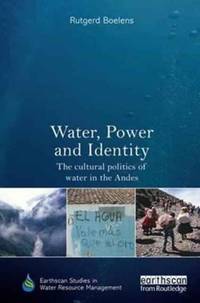
ria9781138628922_inpPaperback / softback. New. New Book; Fast Shipping from UK; Not signed; Not First Edition; This book addresses two major issues in natural resource management and political ecology: the complex conflicting relationship between communities managing water on the ground and national/global policy-making institutions and elites; paperback
256272 September 1850 from Trentham Staffordshire; and 4 September 1850 from London. Written during Prescott’s 1850 visit to England where he was greatly feted and lionized. Both items in good condition lightly aged and worn. Both folded for postage. Both to ‘Dear Lady Theresa’ and signed ‘Wm. H. Prescott’. See the Oxford DNB entry for the recipient Lady Maria Theresa Lewis 1803-1865 whose family home was the Grove Watford but who lived in Kent House in Knightsbridge with her second husband Sir George Cornewall Lewis Bart her first husband having been the novelist Thomas Henry Lister 1800-1842. ONE ‘Trentham / Sep. 2d.’ 1p 12mo. Begins by explaining that he will be ‘in London on my way to Ampthill on Thursday the 5th’. He asks her to allow him to avail himself of her kind invitation ‘to pass the night at Grove Mill House - & come down on the afternoon of Thursday’ He asks her to ‘drop a line’ to him at ‘Mivart’s - Upper Brook St - it will find me’. TWO: ‘London / Sept 4th’. 2pp 12mo. He has just returned to London and will be ‘most happy to come down to you to morrow - Thursday - by the train which reaches Watford at 3.45. I avail myself of your permission to pass four & twenty hours with when sic I shall be reluctantly compelled by my engagements to leave you at half past two on Friday’. He ends by sending his regards to ‘Mr Lewis’. 2 September [1850], from Trentham [Staffordshire]; and 4 September [1850], from London. unknown
0469272821.Ghardcover. Good. Access codes and supplements are not guaranteed with used items. May be an ex-library book. hardcover
026557076X.Ghardcover. Good. Access codes and supplements are not guaranteed with used items. May be an ex-library book. hardcover
1371794871.Ghardcover. Good. Access codes and supplements are not guaranteed with used items. May be an ex-library book. hardcover
20131356841PN. New. 2013. Soft Cover. Date is original print. This is a reprint edition. . PN paperback
1989Q-0688089267William Morrow & Co 1989-07-01. Hardcover. New. New. In shrink wrap. Looks like an interesting title! William Morrow & Co hardcover
1879236621Madrid: M. Tello 1879. xliv 328 pp. 1 vols. 8vo. Bound in full brown morocco a.e.g. wrappers bound in rubbing at joints but sound. xliv 328 pp. 1 vols. 8vo. M. Tello unknown
193663860London: George Routledge & Sons Ltd. 1936. 8vo. x 304 pp. Photo frontisp. numerous photo plates. Brown publisher’s cloth gilt lettering on spine slight lean to spine minor dustsoiling & slight foxing to upper fore-edges w/ d.j. wraparound photo cover art of teams minor chipping head of spine 1 minor chip upper fore-edge First edition of these tales of treasure hunting opening with Sacambaya Expedition searching for the purported Jesuit Treasure of the Sacambaya Mission reputedly hidden in the 1760’s when the Jesuits were expelled from South America. Supposedly stashed in a multi-alcoved cave near the border between La Pac and Cochabamba. Legend had it that the Indigenous peoples who hid the treasure were then killed and sealed into the cave. Also featured are gold hunting expedition and canoe trek through Canada and the hunt for Montezuma’s treasure in British Honduras or Belize along the Belize River. Very scarce in original dustjacket. George Routledge & Sons, Ltd., hardcover
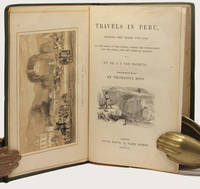
184734109London: David Bogue 1847. First Edition. Lithographic frontispiece and engraved illustrated title-page. Tall 8vo publisher's original green cloth the spine lettered in gilt and decorated in blind the covers blocked in all over designs in blind. xii 506 2 pp. A fine copy beautifully preserved with little evidence of age near as pristine internally. SCARCE FIRST EDITION OF THIS NOTED WORK ON PERU. Johann Jakob von Tschudi 25 July 1818 – 8 October 1889 was a Swiss naturalist explorer and diplomat. He is known for his travels in South America his scientific contributions to zoology and anthropology and his diplomatic service for Switzerland. In 1838 Tschudi travelled to Peru where he remained for five years exploring and collecting plants in the Andes. In 1845 he described 18 new species of South American reptiles. Between 1857 and 1859 he visited Brazil and other countries in South America.<br> In 1860 Tschudi was appointed Swiss ambassador to Brazil a position he held until 1868. During this period he continued to explore the country and collected plants for the museums of Neuchâtel Glarus and Freiburg. In 1868 he was appointed Swiss minister to Vienna. <br> Tschudi is commemorated in the scientific names of several animals including a species of venomous South American coral snake Micrurus tschudii the montane guinea pig Cavia tschudii and the Tschudi's yellow-shouldered bat. Birds named after him include the Tschudi's tapaculo Tschudi's nightjar and the Tschudi's woodcreeper. David Bogue hardcover
1854ZB568420Washington 1854. 53 pp issued as 33d Cong. 1st Sess. HR 347; light extraction roughness at spine light but large damp stain throughout self wrappers; the memorialists find Peruvian guano to be miraculously effective on their depleted soil but are being gouged by an odious Ango-Peruvian monopoly their suggestion that Peru cede a guano island to the United States was impractical but efforts were made to reduce prices. - If you are reading this this item is actually physically in our stock and ready for shipment once ordered. We are not bookjackers. Buyer is responsible for any additional duties taxes or fees required by recipient's country. Washington unknown
19124149Senior Class of 1912 Nebraska State Normal School at Peru 1912 A 1912 yearbook from Nebraska's first college first state-supported college. Stiff card boards full dark brown leather gilt front board lettering/decoration bright 10 3/8 x 8 inches 218 pp. Very good modest edgewear/rubbing; pages clean with no marks and binding sound. Rare. K071. 1st Edition. Hardcover. Very Good/No Jacket. Senior Class of 1912, Nebraska State Normal School at Peru hardcover
19114148Senior Class Nebraska State Normal School at Peru 1911 A 1911 yearbook from Nebraska's first college first state-supported college. Hardcover full brown leather gilt front board lettering and decoration bright 10 1/2 x 8 inches 232 pp. Laid in: a card with a printed Peru poem. Very good modest edgewear; sunning spine; pages clean with no marks and binding tight. Rare. K071. 1st Edition. Hardcover. Very Good/No Jacket. Senior Class, Nebraska State Normal School at Peru hardcover
0265963257.Ghardcover. Good. Access codes and supplements are not guaranteed with used items. May be an ex-library book. hardcover
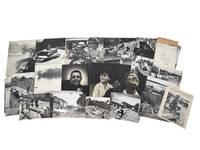
1961231231961. Baum Allyn. Peru photo archive a substantial working group of large original photographs and related New York Times material centered on Baum's Peru assignments significant for preserving a photographer's own visual record of Andean and Amazonian travel Indigenous communities village life and editorial circulation within mid twentieth century American newspaper photojournalism. Allyn Baum was a staff photographer for The New York Times from 1957 to 1967. Included is a typed note from New York Bureau Chief Gedeon de Margitay congratulating Baum on the Peru photographs published in the Magazine together with the January 21 1962 New York Times article "Into the Unknown" directly linking the images to their original publication context and to contemporary American visual encounters with Peru's Indigenous regions and frontier geographies. From the estate of Allyn Baum. Peru and New York. 1961-1973.<br /> <br /> Archive of 48 items including 46 large silver gelatin photographs a New York Times article written by Baum and a single-page typed letter regarding publication. Most photographs measure 8" x 10" while 9 larger examples measure 10" x 13". Several are mounted on board and bear Baum's signature or detailed inscriptions such as "Jungle Priest" "Headhunter" and "High Andes Quechua Indians in Peru. Working in home . producing products for sport." Many retain original press captions or handwritten notes on the versos some in Baum's own hand. The photographs document river and jungle travel in the Amazon Basin village and market scenes domestic interiors American aircraft and extensive portrait studies of Andean and Amazonian Indigenous peoples. Indigenous sitters appear weaving spinning wool knitting carrying children traveling by canoe gathered near riverside settlements or posed in both formal and informal portrait settings. Several photographs emphasize textile production and traditional labor practices among Quechua communities in the high Andes while others focus on Amazonian Indigenous groups photographed within thatched settlements and river communities preserving material evidence of architecture clothing subsistence practices and daily life during a period when American newspaper photography increasingly framed Indigenous South America through the lens of exploration modernization and remote access.<br /> <br /> The archive is a strong record of Peru in the early 1960s documenting not only transportation networks settlement patterns and regional travel but also Indigenous cultural continuity across both Andean and Amazonian environments. Baum's photographs repeatedly center Indigenous Peruvians not simply as background figures within landscape photography but as primary subjects whose labor dress craft production domestic life and physical presence structure the visual narrative of the archive. The accompanying New York Times material preserves the editorial framework through which these images entered American mass circulation while the de Margitay note confirms internal recognition of Baum's Peru work within the newspaper itself. The later date range appears to reflect continued press handling reuse and captioning rather than a single production moment giving the archive additional value as a working newspaper photography file shaped over time. Minor edgewear throughout; versos with original handwritten descriptions by Baum and press editors. A cohesive and well-preserved Peru field photography archive documenting Indigenous life regional travel and mid century American photojournalism connected to The New York Times. unknown
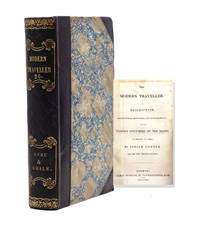
1830319997London: James Duncan 1830. 3 plates & 1 folding map as frontispiece. 2 vi2 340pp. 1 vols. 12mo. Half contemp. calf. VG. 3 plates & 1 folding map as frontispiece. 2 vi2 340pp. 1 vols. 12mo. <br/><br/> James Duncan unknown
0666580065.Gpaperback. Good. Access codes and supplements are not guaranteed with used items. May be an ex-library book. paperback
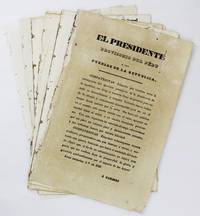
18305862Various places in Peru 1830. Good. Seven broadsides and bifolia totaling 14pp. with each sheet measuring approximately 11.5 x 7.5 inches. Previously bound with stabholes and residue at left margin. Moderate worming affecting some text but not sense. Minor tanning and soiling. A group of seven highly ephemeral and seemingly unrecorded military broadsides and bifolia reports from Peru dating to the country's war with Gran Colombia from 1828 to 1829 and just after. The conflict stemmed from a border dispute after independence was gained in 1820 and 1821 with the boundary left relatively undefined. The Armistice of Piura formally agreed in September 1829 recognized Guayaquil and its surrounding area as a part of Gran Colombia and accorded Peru recognition of its modern-day northern provinces. The documents present here include an exhortation by Peruvian President Agustin Gamarra to support the prospective peace a report on the state of the Peruvian treasury in Trujillo during the midst of the conflict a bulletin concerning military developments in April 1829 addressed to the armed forces a patriotic broadside printed in Arequipa and a congratulatory address to the army printed on the day of armistice. The titles of these works none of which are individually recorded in OCLC are as follows:<br /> <br /> 1 Gamarra Agustin. El Presidente Provisoria del Peru a los Pueblos de la Republica. Lima: September 1 1829.<br /> 2 Peru. Estado Que Manifiesta las Cantidades Acopiadas por Esta Administracion Pral. del Tesoro Público del Departamento de la Libertad en el Presente Mes de Junio. Trujillo: June 20 1829.<br /> 3 Bermudez Pedro. Ejercito Peruano. Boletin No. IV. Piura: April 1 1829.<br /> 4 Gamarra Agustin. El Presidente de la Republica a los Pueblos. Lima: September 5 1830.<br /> 5 Peru. Queja Que Interpone ante el Respetable Tribunal de la Opinion Pública el Ciudadano Evaristo Encina Capitan Graduado de Ejercito Cóntra José Policarpos Hernandes. Trujillo: Imprenta de la Municipalidad 1829.<br /> 6 Peru. Gratis. Desahogo Patriotico. Arequipa: Imprenta Libre 1829.<br /> 7 Cerdeña Blas. El Comandante en Jefe al Ejercito. Piura: September 9 1829. unknown