DELAPORTE (Joseph).Livre Rare Book
19 résultats
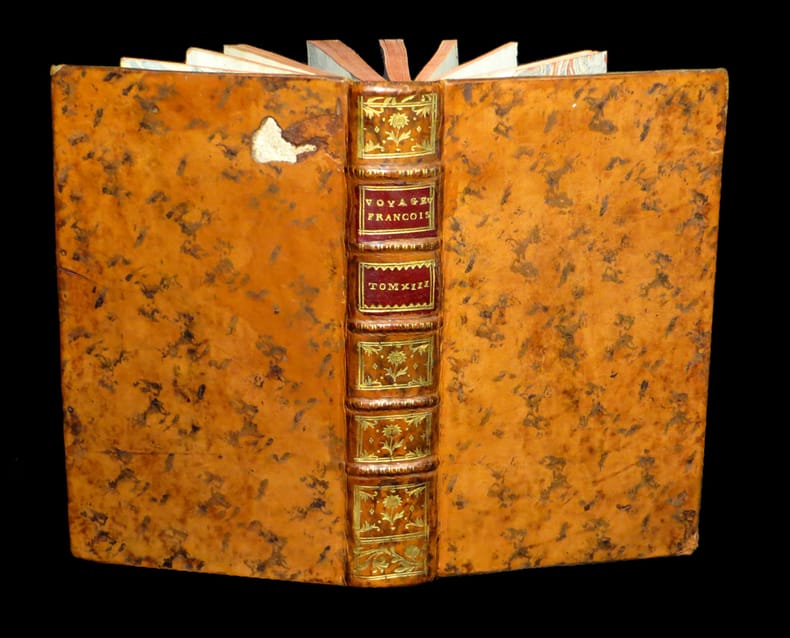
177222777A Paris, chez L. Cellot, 1776. Un vol. au format in-12 (171 x 98 mm) de 1 f. bl., 468 pp. et 1 f. bl. Reliure de l'époque de plein veau marbré blond, plats jansénistes, dos à nerfs orné de filets gras à froid, jeu de petits filets verticaux dorés sur les nerfs, doubles caissons d'encadrement dorés, fleurons dorés, semis de pointillés et de petits fleurons dorés, pièce de titre et de tomaison de maroquin lie-de-vin, titre doré, tomaison dorée, palette dorée en queue, filet doré sur les coupes, tranches rouges.
177189671771 carte ancienne colorée d'époque en vert , rouge et jaune, cartouche non coloré, gravée par Arrivet. Format total : 50 centimètres de haut par 39 centimètres de large, 1771 Paris Lattré Editeur,
1792910857CGLondon:, Dilly und Robinson, 1792. Kupferstich 19 x 22,5 cm, Blattgröße 22 x 26,5 cm.
176015718Carl Hermann Hemmerde, Halle und Helmstädt (Helmstedt), 1760. Titel, 38 nn., 955 Seiten. 8vo. Pappe.
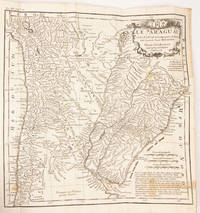
1781R51030Paris, chez J.G. Merigot le jeune 1781 416pp.+ 1 carte dépliante (35x38cm.) du Paraguay par le sr. D'Anville (géographe ord.re du Roi octobre 1733), avec une table de matières du 9e volume ainsi qu'une table générale des Mémoires d'Amérique (vols.6 à 9), Nouvelle édition, br.muet d'époque (avec qqs.traces d'usage au dos), 18cm., texte frais, bon exemplaire, [contient des lettres surtout sur le Paraguay & Pérou]
1717013082France: N.P. 1717. Second edition 1717. Half-Title: Moral Pratique des Jesuites Tome Cinquieme. In French. First published in 1671 in Holland the first edition being exceptionally rare Sabin 10804. Full contemporary calf with spine labels five raised spine bands marbled edges and endpapers xxiv 517 7 pages. Covers rubbed and a bit crackled from past dryness now stabilized joints rubbed small chips to corners and spine ends very short surface split to front joint at the top text block firm pages have some age-toning and occasional foxing old price in ink at far upper corner of preliminary blank. Externally fair to good internally very good. Hard Cover. Fair. 16.5 cm x 9.5 Cm. N.P. Hardcover
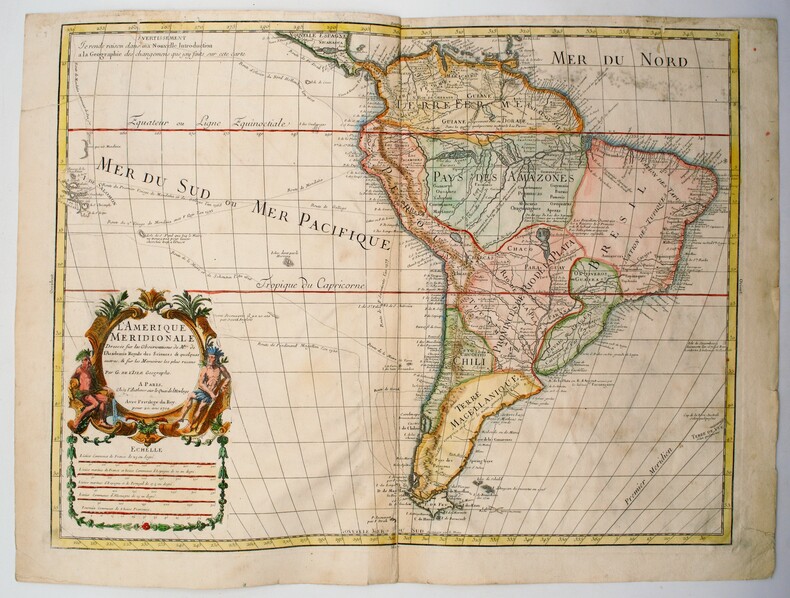
1705PHO-1102Carte gravée en couleur ,elle affiche les parcours de Magellan, Schouten, Medana, Sarmiento, le Maire, Gallego, Olivier et Drake. Comprend des notes sur les découvertes de divers lieux, par exemple, "I. d'Anycon decouvertes en 1705." "Avertissement. Te rend raison dans ma Nouvelle Introduction à la Géographie des changements que j'ai faits sur cette carte." Cartouche de titre ornemental, 50cmx60xm , réparations , papier légèrement gondolé , petit manque .
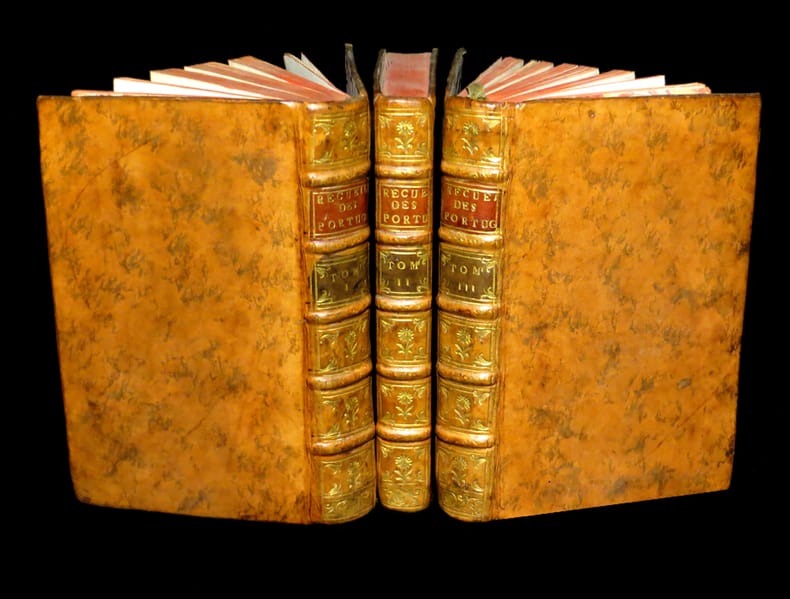
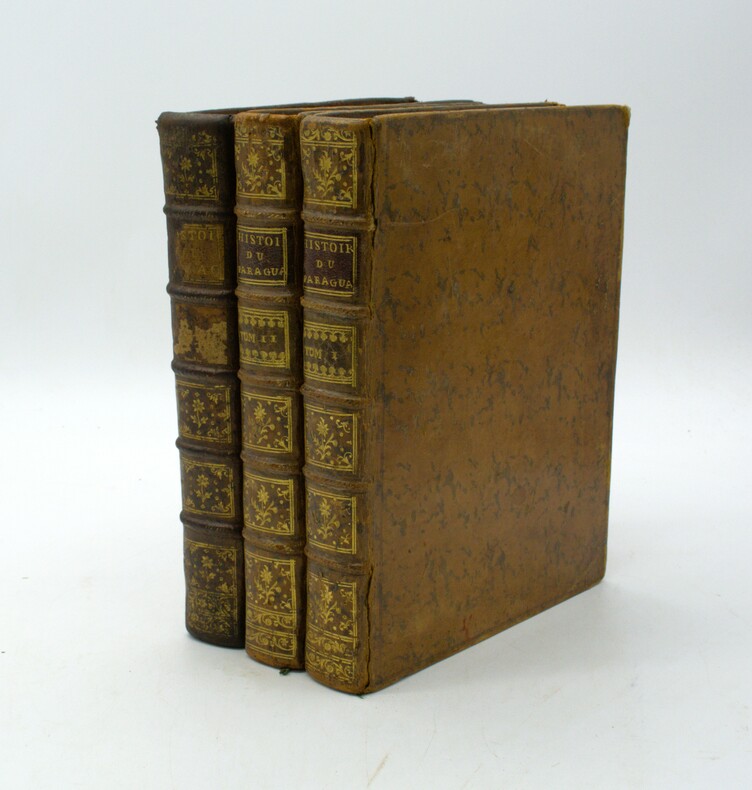
176019587A Amsterdam, chez M. [Marc] Michel Rey, 1760 et 1761. 3 vol. au format pt in-12 (163 x 104 mm) de 138, 48 pp. , f. n.fol., 275 pp. et 2 ff. n.fol. ; 1 f. n.fol., 241 pp. et 2 ff. n.fol. ; 108, 239 pp. et 4 ff. n.fol. Reliures uniformes de l'époque de plein veau glacé et marbré blond, plats jansénistes, dos à nerfs ornés de filets gras à froid, roulette dorée sur les nerfs, doubles caissons d'encadrement dorés, larges fleurons dorés, pièces de titre de maroquin acajou, pièces de tomaison de maroquin anthracite, titre doré, tomaison dorés, palette dorée en queue, dentelle dorée sur les coupes, toutes tranches rouges.
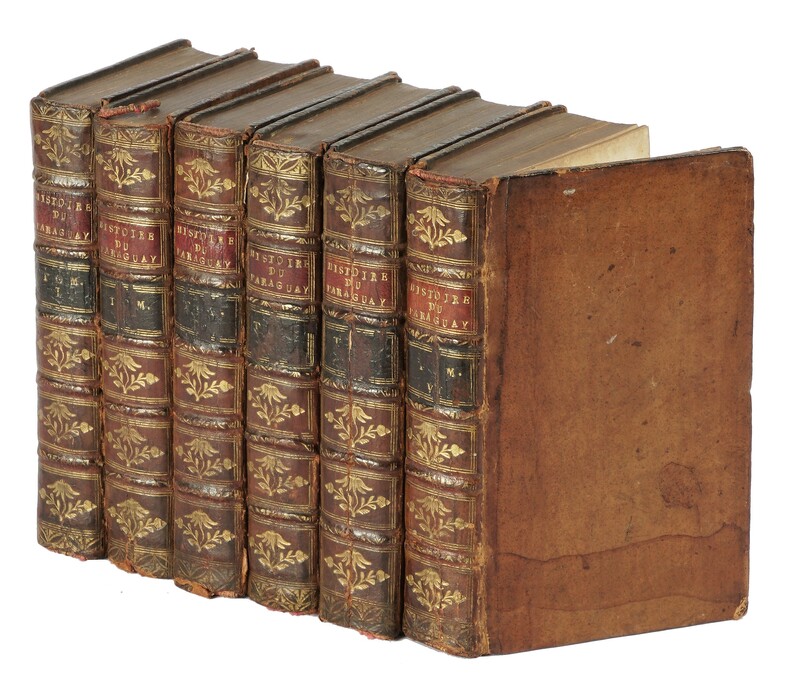
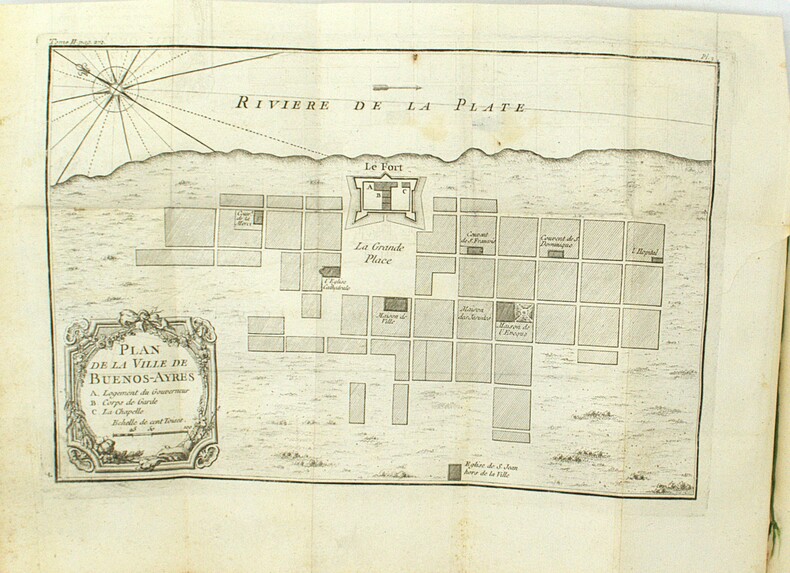
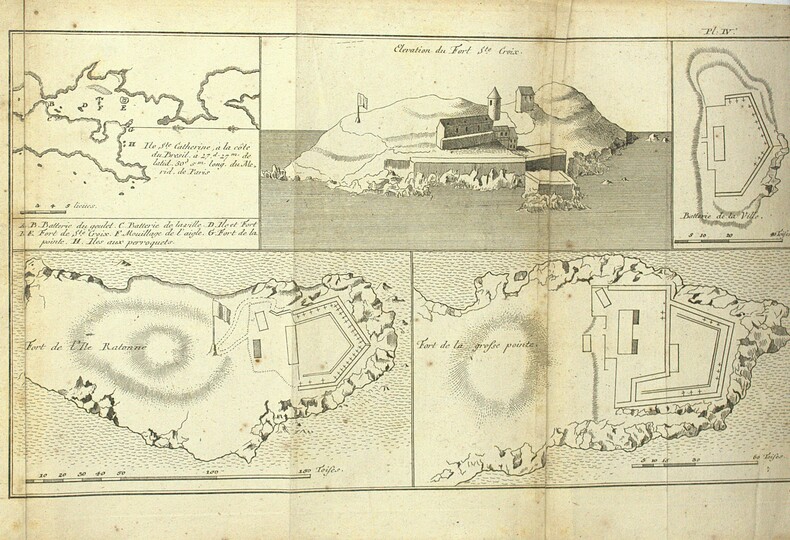
1757PHO-1258Paris , Chez Didot, Giffard , Nyon ,1757, In-12 (9,5x17cm), (6) 390pp. (2) et (4) 476pp. et (4) 407pp. (1) et (4) 414pp. (1) et (4) 461pp. (2) et (4) 460pp., 6 volumes reliés, plein veau époque , dos à nerfs orné avec pièce de titre et tomaison ,tranches rouges , ex-libris sur la page de garde, défauts de reliures et dos cassé au tome 2 , quelques brunissures ,Illustré de 7 cartes et plans dépliants sur papier fort (Amérique méridionale, plan de La Plata, Paraguay, Rivière Plate, Port Désiré, port Julien, découvertes des Espagnols).
1770PHO-2290Paris, Saillant, Delalain, 1770. 2 volumes in-8 (20x12,5 cm) : IV-385pp. et 1f.-334pp.-1f. ; illustré de 16 (18) planches hors texte in fine du tome 2, demi basane et coins époque, tomaison et pièce de titre rouge, tranches jaspées, vieille mouillure claire.
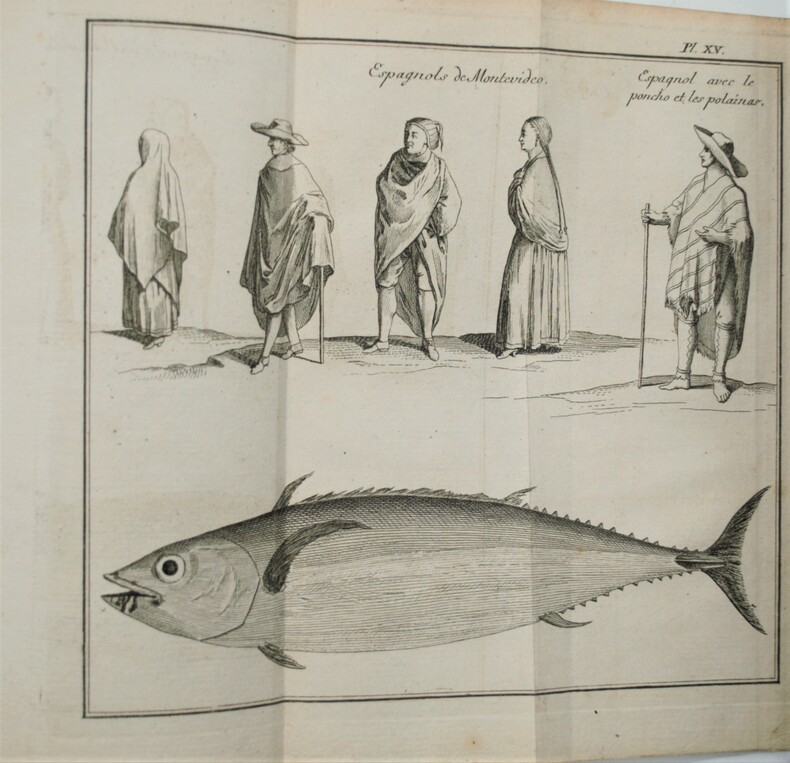
1756PHO-1915Paris, Didot, Giffart et Nyon, 1756. 3 vol. in-4 (260x200) de (5) ff., 489, xxxiii, (4) pp. ; (2) ff., 356, clviii, (2) pp. , 285pp ,cccxv,2ff., illustré de 6 carte et plan (sur 7 manque la carte du Paraguay) et 3 vignettes gravées. Veau marbré, dos à nerfs ornés, pièces de titre et de tomaison, tranches rouges (reliure de l'époque avec différences), Tome 1 ; frottements, pièce de tomaison absente, fentes aux charnières, coins usés, coiffe sup. arasée, petite épidermure, Tome 2 ; 1 coin usé, Tome 3 ; coiffes sup. absente avec petit manque, début de fente, supra libris gratté, coins et coupes usés, cachet retiré au titre
1770PHO-1034Paris, Saillant ; Delalain, 1770. 2 volumes in-8 : IV, 385pp. / 1f., 334pp., 1f. ; illustré de 17 planches hors texte in fine , manque les pages de titre relié plein veau écaillé glacé de l'époque, dos lisses ornés, pièces de titre rouges, tranches marbrées , frottements sur dos, charnières faibles , manque aux coiffes , coins usés.
1757PHO-1914Paris, Desaint, 1757. 6 vol in-12, veau havane moucheté époque, dos à 5 nerfs, pièces de titre et de tomaison rouge, caissons ornés, tranches rouges (défauts à la reliure dont des coins usés, 3 coiffes découvertes, des épidermures et des trous sur les mors des tomes 4, 5 et 6, très légères rousseurs). Édition illustrée de 7 cartes dépliantes hors-texte gravées sur cuivre. Provenance : bibliothèque de la Congrégation de Notre Dame - Maison des Oiseaux (étiquette lithographiée).
1770PHO-1934Paris, Saillant, Delalain, 1770. 2 volumes in-8 : IV-385pp. et 1f.-334pp.-1f. ; illustré de 18 planches hors texte in fine du tome 2, demi veau moderne, auteur, titre et tomaison au dos, signature aux titres, un cahier plus petit.
1732PHO-2447A Paris : chez Nyon, Didot, Quillau, 1732, in-4 ° (25x20cm). Pages [2], XIV, 298, [2], 63, [1] vierges + 37 planches H.T., dont dépliantes, demi basane et coins, dos à nerfs avec pièce de titre et auteur, tranches rouges. Frottements au dos, coiffes abimées avec petits manque, coupes et coins dénudés, réparation à 2 feuillets, petites rousseurs.
1756PHO-1895Paris, Didot, Giffart et Nyon, 1756. 3 vol. in-4 (260x200) de (5) ff., 489, xxxiii, (4) pp. ; (2) ff., 356, clviii, (2) pp. , 285pp ,cccxv,2ff .Veau marbré, dos à nerfs ornés, p. de titre et de tom., tranches rouges (reliure de l'époque),bien complets de leurs 7 cartes dépliantes dont le plan de Buenos Aires. Reliure tome 3 légèrement différente, avec pièce de tomaison absente, pièce de titre avec manque, coins usés, petit accroc.
17544105Paris:: chez Bordelet libraire rue S. Jacques vis-à -vis le Collége de Jésuites à Saint Ignace 1754. FIRST FRENCH EDITION. The original Italian edition "Il cristianesimo felice nelle missioni" appeared in two parts: 1743 and 1749. Octavo:. 16.5 x 9.7 cm. 2 XXIV 402 4 p. With added map. Collation: Ï€1 a-b8/4 A-Z8/4 Aa-Kk4/8 Ll3 Lacking final blank. This is an attractive copy in contemporary mottled spine richly tooled in gold light wear to head and foot of spine and extremities. The text is in fine condition with a few small marginal stains lvs. G1-2 N8 O1 and another small stain to the margins in the final two signatures touching the text on a few lvs. The large folding map of Paraguay in nice shape with a few light stains. Faded 18th c. exlibris on title “bibliotheca….†with a globe surmounted by a Greek cross. With a large folding map of Paraguay. Muratori’s book marked an important development in the historiography of Paraguay. Muratori offered a new approach to the subject distinct from the narratives of the Jesuits the skeptical approach of the Jansenists and those writers who filled their accounts with a mixture of adventure and romance. “Muratori was far from being a propagandist for the Society of Jesus: during the research for his “Cristianesimo felice†he was locked in violent argument with them and was not allowed to consult any of their archives. He had started off with the problem of understanding the Church's missionary activity among the newly-discovered peoples and found that the original evangelical impulse remained unaffected by political considerations in the case of Paraguay… “Muratori's work was… not apologetic in intention even though his attitude regarding the State of Paraguay turned out to be a positive one but it opened up another dimension in the debate. He placed Paraguay firmly in the context of human history. Although he did not share the conclusions of the Jansenists it is nevertheless easy to understand why the Jesuits did not look favorably on his work. He did not remove the sacred element in the Jesuit enterprise but he examined what human elements lay at its root. The Jesuits finding themselves in a world which Muratori described according to Lafitau's theory employed "utility . that great driving impulse of human hearts" to civilize the Indians. "Well-regulated freedom adequate provision for food clothing and lodging public quiet and individual tranquility are in my belief the real and solid elements which contribute to a people's happiness.†These "small republics" could "in a certain sense be called an immense number of monasteries where both the spiritual and practical affairs of the day are wonderfully well regulated and the upkeep of each is provided for." It followed that Paraguay was "far in advance of the conditions of many European peoples.â€Imbruglia The Jesuit Missions of Paraguay and a Cultural History of Utopia 1568–1789 p. 135 ff. The Reductions as a restorative: Muratori was aligned with Las Casas in his estimation of the cruelty and “European barbarism†of the Conquistadors who entered the New World “totally oblivious not only to the Gospel but also to being humanâ€. In the spirit of restitution Muratori offered the reductions of Paraguay as a model for restoring and improving the happiness of the Indians -who before the Conquest had been “simple without malice patient and peacefulâ€- through a benevolent Christianity. “The Indians of the riduzioni enjoyed greater freedom than all the other subjects of the kingdom of Spain as they had no obligations other than a small tax to which men only were subjected and military duties in case of need. In any case although Muratori praised the institution of collective property and the limitation of currency as guarantees of equality he never went so far as to fantasize utopias such as proposing the "Christian communistic" system of Paraguay as a possible model for European society. He confessed to "having fallen in love" with those missions insofar as they reminded him of "the primitive Church" and praised the admirable example of the missionaries who carried the cross among barbarians.â€Buccini “The Americas in Italian Literature and Culture 1700-1825 p. 6 ff. Sabin 51419; Sommervogel II 890 et V 37. Conlon Le siècle des lumières 54:907 chez Bordelet, libraire, rue S. Jacques, vis-à -vis le Collége de Jésuites, à Saint Ignace, unknown books
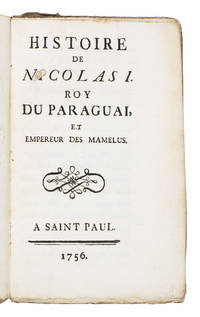
1756ABC_48388Saint Paul = São Paulo but the work was likely printed somewhere in Western Europe 1756. 8vo. Contemporary brown paste paper wrappers with a manuscript title label mounted at the head of the spine and a shelf mark label at the foot in a protective clear plastic sleeve. With a typographical ornament on the title-page. 88 pp. First or second edition of a rare biography of the mythical Spaniard Nicolas Rubiuni 1710- the "first king of Paraguay" and "emperor of the Mamelukes Mamelucos of São Paulo". It was the first time that the Bandeirantes settlers of Pirintinga served as the theme for a novel. This curious work is sometimes considered to be an anti-Jesuit publication but Borba de Moraes argues that it should simply be seen as a work of fiction instead. The first two editions of this novel were both published in 1756 and it is therefore unclear which is the first. However the present edition appears to be the most rare of the two as we have only been able to find it in two sales records of the past 100 years.The myth of Nicolas Rubiuni is said to have been created by Marquis Sebastião José de Carvalho e Melo 1699-1782 chief minister to the Portuguese king to undermine the Jesuits. When the Jesuits first arrived in Paraguay in 1588 their objective was to convert to local people the Guaraní to Christianity and to protect them from European colonists and slave traders. The Guaraní were threatened by the Bandeirantes from Brazil who tried to capture and enslave them to work on the sugar plantations. However armed by the Jesuits the Guaraní were able to defeat them in 1642 which ended to worst of the slave trade in the region. The involvement of the Jesuits inspired mixed feelings in Europe. They were painted as either romantic saviours or as exploiters who were using the Guaraní to create their own independent kingdom in Paraguay. The figure of Rubiuni was said to have stood up against the Jesuits and restore order in the region.According to Borba de Moraes the work demonstrates how closely the activities in the Americas were followed in Europe as the unknown author displays a wealth of knowledge about the missions the subjecting of Paraguay to Jesuit rule and the treatment of the Guaraní. The work must have been fairly popular in Europe as Italian German and Dutch translations were published shortly after the first French editions. With the bookplate of Carolus Franciscus S. R. J. Comes à Nefelrod mounted on the inside of the front wrapper. The edges and corners of the wrappers are somewhat scuffed with creasing and some loss of material on the spine including of the two paper labels mounted there making them difficult to read. With a wormhole on the front wrapper and first 3 leaves barely affecting the printed text. Otherwise in good condition.l Borba de Moraes I p. 404; Sabin 32020. unknown
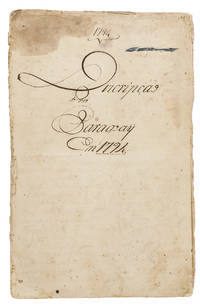
1794ABC_47826Paraguay and/or Brazil 1794. 34 x 22 cm. Stitched through 2 single holes only one remains intact. Written in brown ink in a very legible late 18th-century cursive. 1 1 blank 12 2 blank pp. A contemporary unpublished and unrecorded Portuguese manuscript describing the Paraguay River and the lands rivers and territories adjoining including the location of former Jesuit Missions. It is written within the context of the Portuguese-Spanish dispute over the frontier between Portuguese Brazil and the Spanish colonies and focuses in particular on the upper reaches of the river which at that time still remained relatively unknown. The Portuguese under the governorship of Luis de Albuquerque 1739-97 had recently in 1778 established the towns of Albuquerque today Corumbá Laredo Villa María today Cáceres Casalvasco and Salinas. These new establishments and their locations on the Paraguay River are mentioned here. The terms of the 1777 Treaty of San Ildefonso between Portugal and Spain directed that a Portuguese-Spanish delegation be sent to the Paraguay River region to determine a definitive border between the territories. The Spanish delegation arrived in 1781 under the command of the military officer and naturalist Félix Manuel de Azara 1746-1821 and waited in Asunción in Paraguay for the Portuguese. The latter in the end never arrived but the Spanish delegation remained in the region until the 1790s Azara until 1801 exploring and measuring the region as well as handling the ongoing disagreements with the Portuguese over the demarcation. This Portuguese description of the River Paraguay is undoubtedly connected to these ventures though whether it is a contemporary translation into Portuguese of a Spanish survey or a survey of the river carried out by the Portuguese themselves is uncertain. It is however the only known copy of an unpublished description of the River Paraguay and it describes in detail the little-known upper regions of the Paraguay River.With a crossed-out annotation on the title-page the title-page and the last blank leaf are somewhat water stained. The paper is otherwise uniformly toned and showing some occasional foxing the edges of the leaves are somewhat frayed slightly affecting the text at the head of each page. Overall in good condition. unknown