Paraguay, ParaguayBiblio.com
964 résultats
0364529822.Ghardcover. Good. Access codes and supplements are not guaranteed with used items. May be an ex-library book. hardcover
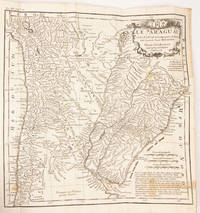
17544105Paris:: chez Bordelet libraire rue S. Jacques vis-à -vis le Collége de Jésuites à Saint Ignace 1754. FIRST FRENCH EDITION. The original Italian edition "Il cristianesimo felice nelle missioni" appeared in two parts: 1743 and 1749. Octavo:. 16.5 x 9.7 cm. 2 XXIV 402 4 p. With added map. Collation: Ï€1 a-b8/4 A-Z8/4 Aa-Kk4/8 Ll3 Lacking final blank. This is an attractive copy in contemporary mottled spine richly tooled in gold light wear to head and foot of spine and extremities. The text is in fine condition with a few small marginal stains lvs. G1-2 N8 O1 and another small stain to the margins in the final two signatures touching the text on a few lvs. The large folding map of Paraguay in nice shape with a few light stains. Faded 18th c. exlibris on title “bibliotheca….†with a globe surmounted by a Greek cross. With a large folding map of Paraguay. Muratori’s book marked an important development in the historiography of Paraguay. Muratori offered a new approach to the subject distinct from the narratives of the Jesuits the skeptical approach of the Jansenists and those writers who filled their accounts with a mixture of adventure and romance. “Muratori was far from being a propagandist for the Society of Jesus: during the research for his “Cristianesimo felice†he was locked in violent argument with them and was not allowed to consult any of their archives. He had started off with the problem of understanding the Church's missionary activity among the newly-discovered peoples and found that the original evangelical impulse remained unaffected by political considerations in the case of Paraguay… “Muratori's work was… not apologetic in intention even though his attitude regarding the State of Paraguay turned out to be a positive one but it opened up another dimension in the debate. He placed Paraguay firmly in the context of human history. Although he did not share the conclusions of the Jansenists it is nevertheless easy to understand why the Jesuits did not look favorably on his work. He did not remove the sacred element in the Jesuit enterprise but he examined what human elements lay at its root. The Jesuits finding themselves in a world which Muratori described according to Lafitau's theory employed "utility . that great driving impulse of human hearts" to civilize the Indians. "Well-regulated freedom adequate provision for food clothing and lodging public quiet and individual tranquility are in my belief the real and solid elements which contribute to a people's happiness.†These "small republics" could "in a certain sense be called an immense number of monasteries where both the spiritual and practical affairs of the day are wonderfully well regulated and the upkeep of each is provided for." It followed that Paraguay was "far in advance of the conditions of many European peoples.â€Imbruglia The Jesuit Missions of Paraguay and a Cultural History of Utopia 1568–1789 p. 135 ff. The Reductions as a restorative: Muratori was aligned with Las Casas in his estimation of the cruelty and “European barbarism†of the Conquistadors who entered the New World “totally oblivious not only to the Gospel but also to being humanâ€. In the spirit of restitution Muratori offered the reductions of Paraguay as a model for restoring and improving the happiness of the Indians -who before the Conquest had been “simple without malice patient and peacefulâ€- through a benevolent Christianity. “The Indians of the riduzioni enjoyed greater freedom than all the other subjects of the kingdom of Spain as they had no obligations other than a small tax to which men only were subjected and military duties in case of need. In any case although Muratori praised the institution of collective property and the limitation of currency as guarantees of equality he never went so far as to fantasize utopias such as proposing the "Christian communistic" system of Paraguay as a possible model for European society. He confessed to "having fallen in love" with those missions insofar as they reminded him of "the primitive Church" and praised the admirable example of the missionaries who carried the cross among barbarians.â€Buccini “The Americas in Italian Literature and Culture 1700-1825 p. 6 ff. Sabin 51419; Sommervogel II 890 et V 37. Conlon Le siècle des lumières 54:907 chez Bordelet, libraire, rue S. Jacques, vis-à -vis le Collége de Jésuites, à Saint Ignace, unknown books
Sm. 8vo., First Edition, with numerous portraits, wanting front free endpaper, pictorial endpapers browned; tan cloth, upper board and backstrip blocked and lettered in red, red edges, radial corners, a very good, bright, clean copy in unclipped dustwrapper, the latter with three of four small losses and lightly browned at backstrip. Hispanic Notes and Monographs, VI. EXTREMELY SCARCE IN THIS CONDITION.
Buenos Aires, Eudeba, 1966. 4to. mayor; 48 pp., con 45 ilustraciones entre el texto. Cubiertas originales.
Madrid, Indice Editorial, 1981. 4to.; 79 pp., 1 h. Cubiertas originales.
Madrid, "Índice", 1965. 4to. cuadrado; 105 pp., 3 hs. Cubiertas originales. El gran poeta, ensayista y crítico uruguayo, nacido en 1926, yerno de Jules Supervielle, y que había sido Secretario de Pablo Neruda en los años cuarenta, se nacionalizó francés en 1974, cerca de la Internacional Situacionista.
25x17. 16p. Separata.
1908RO20195875IMP. LEVE. 1908. In-8. En feuillets. Bon état, Couv. convenable, Dos satisfaisant, Intérieur frais. Paginé de 398 à 406 en feuillets.. . . . Classification Dewey : 989-Paraguay et Uruguay
Buenos Aires, Editorial Futuro, 1945. 4to. mayor; 82 pp. de texto, con 83 ilustraciones fotográficas. Encuadernación original en cartoné.
Buenos Aires, Editorial Nova, 1957. 4to. menor; 136 pp., con dibujos entre el texto, y 63 reproducciones fotográficas. Cubiertas originales.
Buenos Aires, Editorial Poseidon, 1943. 4to. mayor; 64 pp., con 36 reproducciones en blanco y negro y dos en color, de pinturas y dibujos, más un retrato del artista. Cubiertas originales en cartoné, con lomera reforzada.
Buenos Aires, Editorial Losada, 1952. 4to. menor; 153 pp., 1 h. Cubiertas originales.
Montevideo, Ediciones Ciudadela, 1951. 4to.; 57 pp., 3 hs. Cubiertas originales.
Málaga, "El Guadalhorce", 1967. 4to.mayor; 57 pp., 2 hs. Edición limitada y numerada de 200 ejemplares. Cubiertas originales.
Guadalajara, Colección "Doña Endrina", 1955. 4to. menor; 14 hs. sin numerar, con dibujos entre el texto de Antonio Fernandez Molina. Cubiertas originales.
Madrid, Comedias, 1927. 4to.; 85 pp. Cubiertas originales.
Madrid, Los Contemporaneos, 1925. 4to; 28 pp. sin numerar, impresas a doble columna, con ilustraciones de Ybañez. Cubiertas originales.
Madrid, La Novela Mundial, 1928. 4to. menor; 61 pp. Ilustraciones de Herreros. Cubiertas originales.
Madrid, La Novela Mundial, 1927. 4to. menor; 58 pp. Ilustraciones de Varela de Seijas. Cubiertas originales de Varela de Seijas.
Barcelona, Editorial Seix Barral, 1966. 4to.; 317 pp. Primera edición. Cubiertas originales.
Madrid, Escélicer, 1944. 4to.; 287 pp., 1 h. Cubiertas originales.
Madrid, Escelicer, 1942. 4to.; 206 pp., y una lámina aparte. Cubiertas originales.
La Plata, Cuadernos del Instituto de Literatura, 1970. 4to.; 88 pp., 4 hs. Cubiertas originales.
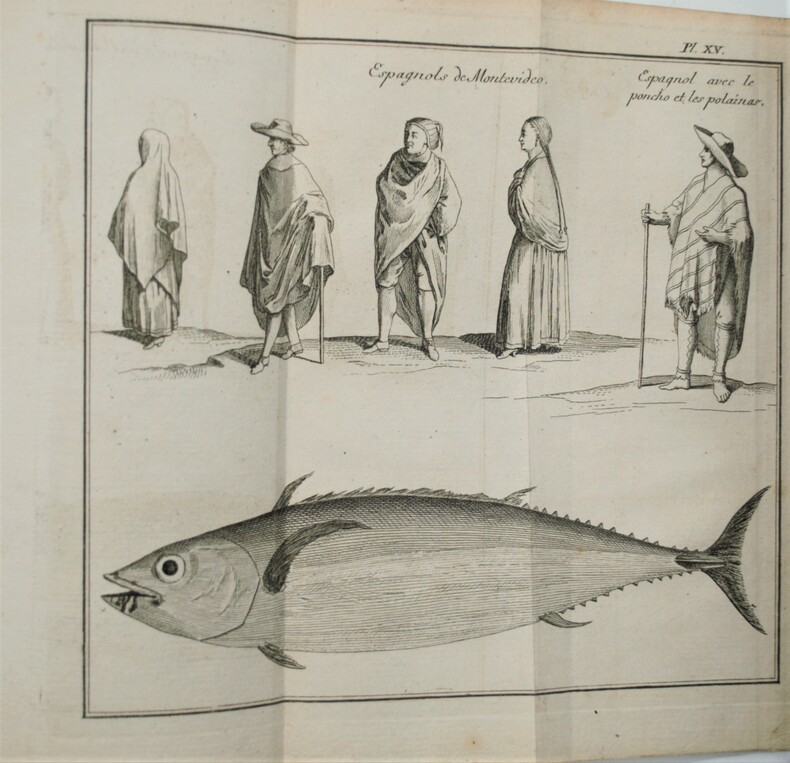
1770PHO-1034Paris, Saillant ; Delalain, 1770. 2 volumes in-8 : IV, 385pp. / 1f., 334pp., 1f. ; illustré de 17 planches hors texte in fine , manque les pages de titre relié plein veau écaillé glacé de l'époque, dos lisses ornés, pièces de titre rouges, tranches marbrées , frottements sur dos, charnières faibles , manque aux coiffes , coins usés.
1770PHO-2290Paris, Saillant, Delalain, 1770. 2 volumes in-8 (20x12,5 cm) : IV-385pp. et 1f.-334pp.-1f. ; illustré de 16 (18) planches hors texte in fine du tome 2, demi basane et coins époque, tomaison et pièce de titre rouge, tranches jaspées, vieille mouillure claire.