175 résultats
In-8 p. (mm.220x145), 2 volumi in 1, mz. pelle coeva (piatti con mancanze), fregi e tit. oro al dorso. L’opera, con testo su due colonne, molto ben illustrata da complessive 68 (su 74) tavole inc. in rame e numerate (poste alla fine del volume), è così composta: - "Chili, Paraguay, Uruguay, Buenos Aires" di Famin C., pp. (4),99;63; con 24 tavv, dedicate al Cile e 16 al Paraguay che raffigurano: usi e costumi, flora e fauna locali + 1 cartina geografica, ripieg., dedicata alle provincie unite del Rio della Plata (Paraguai, Uruguai e Chili). - "Patagonia, Terra del Fuoco ed isole Maluine" di La-Croix F., pp. 92 (incluso l’Indice), con 5 tavv. + la relativa cartina geografica, ripieg., numer. I. e II. - "Storia e descrizione delle isole dell’Oceano" di Bory di Saint-Vincent e Lacroix F. (con proprio frontesp., 1842), pp. 183 (Indice incluso). Questo secondo vol. è così suddiviso: Isole Orcadi - Shetland - Feroe - Normanne (Jersey, Guernesey, Serk e Aurigny) - Terranuova (San Pietro e Miquelon) - Bermude - Crozet - Galapagos - Revilla Gigedo. Fanno seguito le "Regioni circompolari" di Lacroix F., da p. 185 a 343 (incluso Indice), costituite da: Polo Artico - Islanda - Groenlandia, con 21 tavv. che raffigurano i nativi, loro abitazioni e vedute. Volume della Collana “L’Universo o Storia e descrizione di tutti i popoli, loro religioni, costumi, usanze, ecc. Con aloni, 8 tavv. ingiallite, ma complessivam. discreto esemplare.
Carta geografica raffigurante la Patagonia e la Terra del Fuoco con indicazione della rotta seguita dalla Resolution durante il secondo viaggio del capitano Cook.Rigobert Bonne (1727-1795) fu uno dei più importanti cartografi del tardo XVIII secolo, nel 1773 succedette a Jacques Bellin come cartografo reale in Francia.Piega centrale editoriale
80697 January 1863. 4 rue St Louis en l'Ile Paris. 8vo 2 pp. Bifolium. Thirty-two lines of text. Text clear and complete. Good on lightly-aged and creased paper. It is only now that he is able to thank him for the 'bon accueil que m'a fait Monsieur Benard grâce à votre Gracieuse recommendation'. Benard has lent him 'quelques ouvrages' including 'ceux que vous aviez bien voulu <> sur la petite note'. He has not had time to look at them 'pressé que j'etais tout d'abord de vous remettre ceux que vous m'avez bien voulu prêter'. He has not been able to 'les compulser' but has 'sommairement lu le contenu qui je l'espere me suffira'. As for the 'récit sur l'histoire des révolution des républiques de la Plata' that he has lent him he will return it 'en temps convenable' as it is 'indispensable pour commencer mon histoire'. In 1861 Guinnard's account of his three years of captivity by the Patagonians 1856-1859 was published in 'Le Tour du Monde'. It inspired the first part of Jules Verne's novel 'Les Enfants du Capitaine Grant'. Guinnard's adventures are also the subject of the French novel 'Pampa' 2006 by Pierre Kalfon. 7 January 1863. 4 rue St Louis en l'Ile [Paris]. unknown
1750PHO-2245Paris, Quillau, Delorme, Leloup. 1 (4) volume in-12 (17x10cm), veau marbré époque, dos cinq nerfs, caissons dorés fleuronnés, pièces de titre et tomaison grenat, tranches rouges. Frottements, coins usés, coiffe sup. arasée, une planche volante. Illustré de 7 planches dépliantes dont une mappe monde indiquant la route de l’expédition et la Californie en Île.
In 16 gr, pp.230. Con tavv. fot. in b/n f. t. Sottolineature a penna e a lapis e ampie annotazioni ad alcune pp. Lievi abrasioni al p. ant. Manca la sovracop. ill. T. tl. ed. con titoli in oro al p. ant. e al d.
44542Buenos Aires Ediciones Peuser 1953 in 8 (22,5x16) 1 volume reliure cartonnée illustrée de l'éditeur, jaquette illustrée en couleurs (petit manque de papier sur le haut de la jaquette), 336 pages [1], avec des illustrations photographiques en noir et blanc (con fotos en blanco y negro). Texte en langue espagnole. Bel envoi autographe en langue française signé par l'auteur à René Ferlet. René Ferlet, explorateur français, chef de la deuxième Expédition Française aux Andes Argentines 1953-1954, Aconcagua face sud. Bel exemplaire ( Photographies sur demande / We can send pictures of this book on simple request )
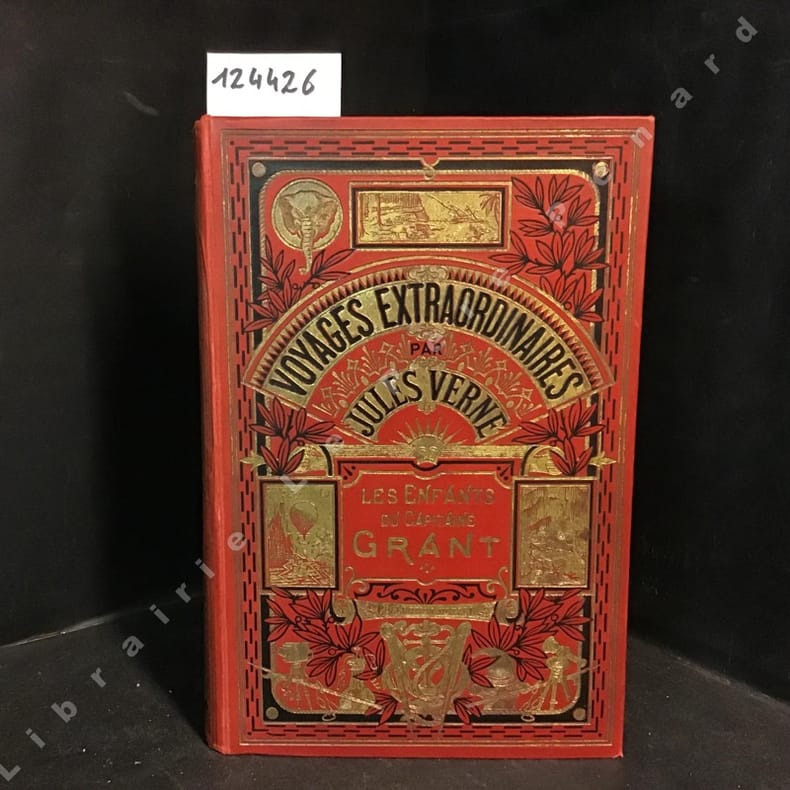
19171244261917 Pairs, Librairie Hachette et Cie, collection "Hetzel", Les Voyages Extraordinaires - In-4, cartonnage rouge "A un éléphant", dos lisse avec titre en doré et décors en noir et doré, toutes tranches dorés, frontispice - 620 pages - Nombreuses illustrations en N&B dans le texte
8vo., First Edition thus, with frontispiece and 22 photographs; ribbed silver boards, upper board blocked and lettered in brown and black, backstrip lettered in black, a near fine copy in publisher's board slip-case.
22581'From the Christian Times.' London Dated 10 May 1852. For the context see Gardiner's entry in the Oxford DNB. Gardiner's disastrous last mission to Patagonia ended with his death on 6 September 1851 as the last of the seven missionaries to starve to death on Picton Island. No other copy of the present item has been traced either on OCLC WorldCat or on COPAC. 4pp 16mo. Bifolium. Well printed. In fair condition lightly aged and worn and folded several times. At the end of the poem is the author's pseudonym the Greek letter delta with the date 'May 10 1852.' Monologue in blank verse by 'Captain Allan sic Gardiner' who is 'seen lying near a boat in the latest stage of exhaustion'. The poem begins: 'Once more I am myself again. Once more As calm as free from pain as clear in mind As in the days of health I gaze around And ask What hope' The poem is preceded by the following note by the 'Editor': 'We had designed to ask especial attention to the touching narrative of Captain Gardiner's Patagonian Mission and to have given expression to our sentiments upon that great undertaking. If it had prospered we should have heard nothing but commendation of the motives which planned and the indomitable fortitude which achieved so perilous an expedition: it failed and therefore it is subjected to obloquy. Such is the state of the world in its estimate of human action and such it has been from the days of Nelson - when he disobeyed orders at Copenhagen and would probably have been shot if success had not been his apology - to the present hour. We give insertion with much pleasure to the following touching lines.' Four footnotes in small print one of them very long with reference to 'Captain Morshead's report'. '(From the Christian Times.)' [London] Dated 10 May 1852. unknown
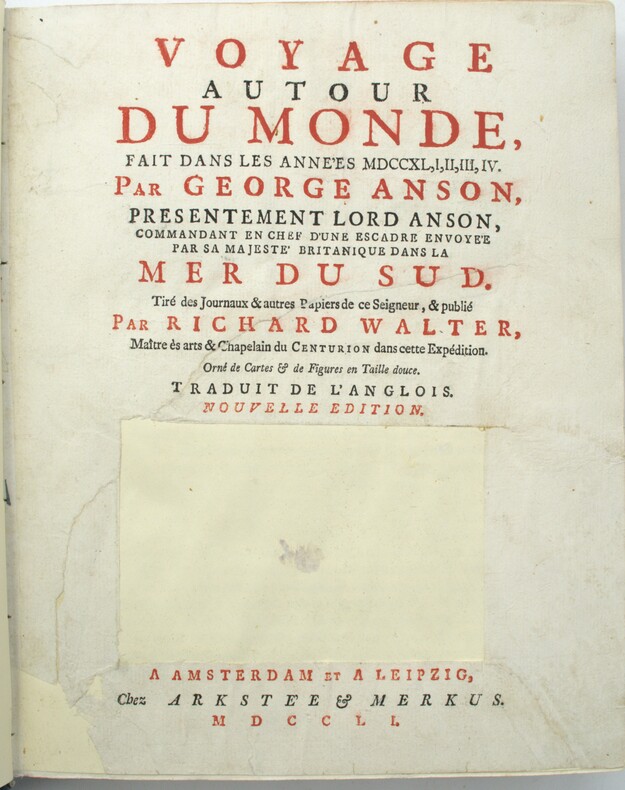
1751PHO-1784Amsterdam, Arstee & Merkus,1751. XIV-330 pp., relié plein cuir moderne bleu, auteur et titre au dos, sans les cartes et gravures, page de titre renforcée et sans la vignette, page 101/102 manquante (ici en copie).
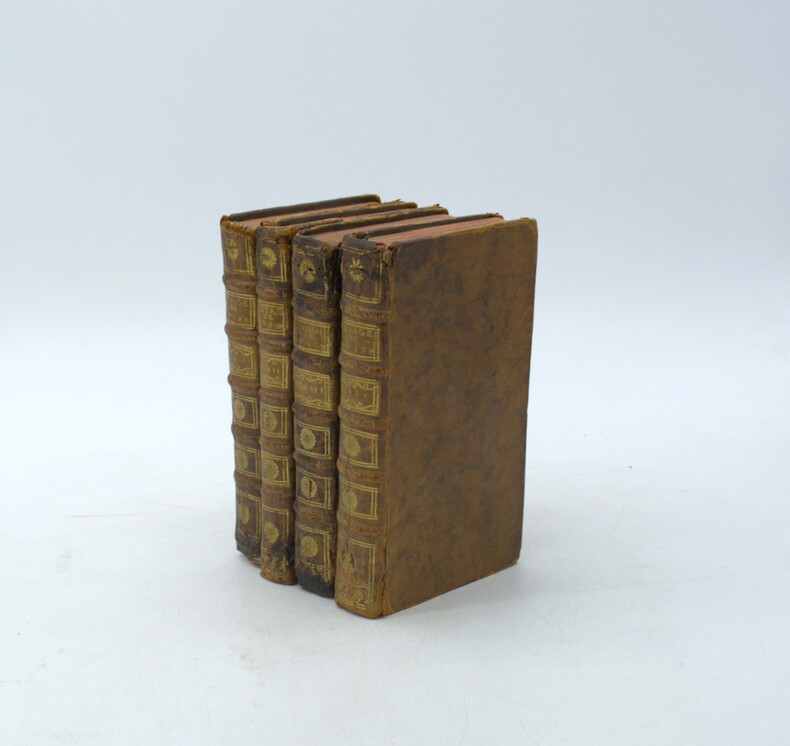
PHO-2244Paris, Quillau, Delorme, Leloup. 3 tomes en 4 volume in-12 (17x10cm), veau marbré époque, dos cinq nerfs orné avec titre et tomaison, tranches rouges. Frottements, coins usés, coiffes abimée, mouillures au tome 2, charnières avec défauts. Exemplaire sans planches.
In -12°, mezza pelle (6), V, (1), 337, (3) con cartina ripiegata della Patagonia e ritratto xilografato dell’autore all’antiporta. Prima edizione in volume di un avventuroso resoconto, estremamente popolare in Francia all’epoca della sua pubblicazione: l’autore, durante un suo viaggio nell’interno dell’Argentina, viene catturato dagli indiani “puelche” che lo riducono in schiavitù per tre anni. Dopo una rocambolesca fuga riesce a tornare in Francia, dove avrebbe conosciuto Jules Verne che, colpito dalla storia di Guinnard, ne avrebbe fatto uno dei personaggi del suo “I figli del capitano Grant”. The author was reduced in esclavery by the “puelche” indians, during a travel in Argentina. After three years he could escape and, back to France, he met Jules Verne who, stroke by his story, made him a character in his novel “In Search of the Castaways” (1867-1868).
Very Good Turkish, Ottoman (1500-1928) Original color map. Elephant folio. (59x75 cm). In Ottoman script. [OTTOMAN MILITARY MAP of PATAGONIA and FALKLAND ISLANDS: ROUTE of DRESDEN] Alman kruvazörü Dresden'in takîbi ve tahrîbi. SMS Dresden cruiser's routes between 1913-1915 (World War 1) on the Patagonian shelf; western shores of South America, Patagonia and Falkland Islands. Dresden spent much of her career overseas. After commissioning, she visited the United States in 1909 during the Hudson-Fulton Celebration, before returning to Germany to serve in the reconnaissance force of the High Seas Fleet for three years. In 1913, she was assigned to the Mediterranean Division. She was then sent to the Caribbean to protect German nationals during the Mexican Revolution. In mid-1914, she carried the former dictator Victoriano Huerta to Jamaica, where the British had granted him asylum. She was due to return to Germany in July 1914, but was prevented by the outbreak of World War I from doing so. At the onset of hostilities, Dresden operated as a commerce raider in South American waters in the Atlantic, then moved to the Pacific Ocean in September and joined Maximilian von Spee's East Asia Squadron. Dresden saw action in the Battle of Coronel in November, where she engaged the British cruiser HMS Glasgow, and at the Battle of the Falkland Islands in December, where she was the only German warship to escape destruction. She eluded her British pursuers for several more months, until she put into Robinson Crusoe Island in March 1915. Her engines were worn out and she had almost no coal left for her boilers, so the ship's captain contacted the local Chilean authorities to have Dresden interned. She was trapped by British cruisers, including her old opponent Glasgow. The British violated Chilean neutrality and opened fire on the ship in the Battle of Más a Tierra. The Germans scuttled Dresden and the majority of the crew escaped to be interned in Chile for the duration of the war. The wreck remains in the harbor; several artifacts, including her bell and compass, have been returned to Germany.
Torino, Società Editrice Internazionale, 1955, 8° grande (cm. 26 x 20) cartonato editoriale con copertina illustrata a colori, pp. VIII-341 con fotografie e illustrazioni dell’A. nel testo e fuori testo + grande carta a colori ("Tierra del Fuego") ripiegata in fine. Strappi al piede e alla testa del dorso; all’interno carta ingiallita ai margini; peraltro buono.
Pages 223-290 plus ads. Features: The Taxi-man's Revenge - officers shot at Prince Rupert, British Columbia Court House in 1937; The Miracle; The Shooter; The Man Who Waited - a story from Oto in southern Nigeria in 1911; Loot From Peking - an important ring and tablets circa the Boxer Rebellion; The Human Tiger; First Blood - an amusing tale from India; Burton's Boots; My Wife; The Clue of the Single Finger-print, Part II - the hold-up of the First National Bank at Lamar, Colorado, and its bloody aftermath; O-I-L - a story from the wilds of Patagonia; Diamond Cut Diamond - A Gold Coast mining struggle; The "Debbil-Debbil" Stone - what happened when the grave of a medicine man was unearthed; short article on the "Padley Martyrs" with photo; many nostalgic ads; and more. Covers present but detached as one. Bit of price sticker remnant on front cover. Unmarked. A quality vintage copy. Book
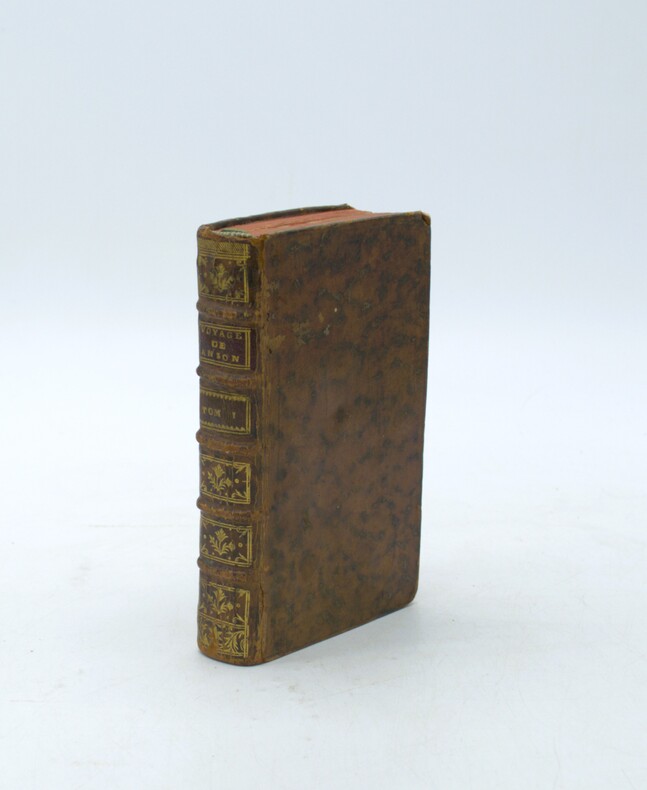
1764PHO-2242Paris, Par la Compagnie des Librairies, 1764. 4 volume in-12 (17x10cm), veau marbré époque, dos cinq nerfs, caissons dorés fleuronnés, tranches rouges. Frottements, coins usés, coiffes arasées, charnières fendillées, manques au dos. Reliures avec différences. Illustré de 25 planches (34) dépliantes dont une mappe monde indiquant la route de l’expédition.
190334686Monaco: Imprimerie de Monaco 1903. First edition. Illustrated with 71 figures in text 14 plates. pp. vii 342. 1 vols. 4to. Original paper covered boards. Lightly rubbed at extremities else a Fine unopened copy. First edition. Illustrated with 71 figures in text 14 plates. pp. vii 342. 1 vols. 4to. The stature of the indigenous Patagonians was observed by Magellan and became legendary in Europe. Verneau's monograph drawing upon collections brought to Europe by the comte H. de La Vaulx in the 1890s is divided into three sections: a brief discussion of anthropological evidence found in the historical record; a detailed consideration of the physical characteristics of indigenous Patagonians; and an in-depth ethnographic study. An important work of scholarship. Imprimerie de Monaco unknown
190334686Monaco: Imprimerie de Monaco 1903. First edition. Illustrated with 71 figures in text 14 plates. pp. vii 342. 1 vols. 4to. Original paper covered boards. Lightly rubbed at extremities else a Fine unopened copy. First edition. Illustrated with 71 figures in text 14 plates. pp. vii 342. 1 vols. 4to. The stature of the indigenous Patagonians was observed by Magellan and became legendary in Europe. Verneau's monograph drawing upon collections brought to Europe by the comte H. de La Vaulx in the 1890s is divided into three sections: a brief discussion of anthropological evidence found in the historical record; a detailed consideration of the physical characteristics of indigenous Patagonians; and an in-depth ethnographic study. An important work of scholarship. Imprimerie de Monaco unknown books
Torino, ILTE, 1958, 8° tutta tela editoriale con sovraccoperta illustrata (qualche strappo e mancanza), pp. 234 con una tavola in antiporta (Monte Sarmiento), varie tavole fotografiche in nero e a colori e quattro grandi carte geografiche in litografia a colori ripiegate fuori testo. Importante opera sulle scalate nella Terra del Fuoco. Prima edizione.
In-8°, in brossura editoriale, pp. 40. Con due carte, una del fiordo Negri con una sezione del ghiacciaio del monte Sarmiento, l'altra, ripiegata, della Baia Umberto e Porto Rocca nell'Isola degli Stati. Al margine superiore del piatto anteriore invio autografo dell'autore. Vecchio restauro alla brossura ma buon esemplare.
In 8, pp. 412 + (4) + (2b). Intonso. Strappetto al marg. est. del p. ant. P. post. e d. rifatti. P. ant. ed. Raccolta di saggi di interesse geografico con studio relativo alla famosa spedizione di Giacomo Bove in Patagonia e nella Terra del Fuoco e a quella di De Long, a bordo della Jeannette, alla volta del polo Nord, spedizione poi conclusasi tragicamente. Argomenti: Note metodologiche; Insegnamento elementare, secondario, superiore; Breve disegno di riordinamento degli Studi geografici in Italia; Note di Fisica terrestre; Della convessita' della corrente del Golfo; Dell'istituzione di alcuni Osservatorii meteorologici nell'America meridionale; Dei movimenti del suolo nell'isola del Madagascar, Carlo Darwin e la geografia; Note di geografia esploratrice; il Polo Nord e la ricerca della Jeannette; La questione dei laghi Liba al centro dell'Africa; La Patagonia e la Terra del Fuoco; viaggio di Rogers ed Ibar; Note di Geografia Medievale, etc...
3 volumi, cm. 18, brossura editoriale, pag. XIV, 246 (su 248: manca ultima carta di indice) più ritratto in b/n; 267 più carta geografica rip. e 4 tavole f.t.; 274 (manca l'ultima c. con elenco delle tavole) più 6 tavole f.t. (manca la n° 4). La carta geografica riguarda le Isole Washington. Collana "Raccolta de' viaggi più interessanti eseguiti nelle varie parti del mondo, tanto per terra quanto per mare, dopo quelli del celebre Cook...". Ottimo esemplare.
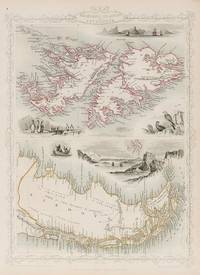
1851200110AG1851. London & New York John Tallis & Company 1851. Original steel engraving / Vintage map. Drawn and engraved by John Rapkin. Partly hand-coloured. Illustrations by H. Winkles and Engraved by W. Lacey. Plate Size: 25 cm x 35 cm. Sheet Size: 27 cm x 37.4 cm. Vintage 19th century map in very good condition. Two beautiful maps of the Falkland Islands Islas Malvinas and Patagonia bordered by a decorative boundary. In the upper section the islands of the Falkands are shown and identified: West Falkland and East Falkland the chief among them. Hachuring depicts relief and the few rivers shown are identified. A bar-scale lies beneath the islands. In the lower section is Patagonia and the archipelago of Tierra del Fuego separated from the mainland by the Strait of Magallanes. The names and locations of the indigenous 'wandering tribes of Indians' are shown on the map also: 'Teheul-het' or Southern People the 'Puel-che' or Eastern People the 'Chulilon' and 'Moluche' Indians. The plethora of offshore islands such as Chiloe Island in the Gulf of Ancud in the Pacific and peninsular points like the Peninsula of S. Josef on the Atlantic side are identified. To the east the West Falkand can be seen. A bar-scale is in the lower right corner of the map. John Tallis 7 November 1817 3 June 1876 was an English cartographic publisher. His company John Tallis and Company published views maps and atlases in London from roughly 1838 to 1851. Tallis set up as a publisher with Frederick Tallis in Cripplegate in 1842; the business moved to Smithfield in 1846 and was dissolved in 1849. From 1851 to 1854 Tallis operated as John Tallis and Company. He started The illustrated news of the world and national portrait gallery of eminent personages in 1858 selling it for £1370 in 1861; it folded in 1863. Wikipedia The most important project John Tallis undertook was the 'Illustrated Atlas' from 1851. The original map we offer here was part of this exceptional Atlas and all the maps it contained are still today considered as the last reminder of an era of lavish map production. Tallis worked the project together with John Rapkin 1815-1876 and it was Rapkin's style and talent that we have to thank for when we marvel at these maps today. What makes these maps so special is the detail of engraved vignettes that surround the map and often show indigenous scenes people in their environment and even more so historical buildings or historical views of towns and cities architecture and landscape. The project of 'The Illustrated Atlas' was designed to be finished just in time for the anxiously awaited "Great Exhibition of the Works of Industry of All Nations" or The Great Exhibition sometimes referred to as the Crystal Palace Exhibition in reference to the temporary structure in which it was held was an international exhibition that took place in Hyde Park London from 1 May to 11 October 1851. It was the first in a series of World's Fairs exhibitions of culture and industry that became popular in the 19th century and it was a much anticipated event. The Great Exhibition was organized by Henry Cole and Prince Albert husband of the reigning monarch Queen Victoria. It was attended by numerous notable figures of the time including Charles Darwin Samuel Colt members of the Orléanist Royal Family and the writers Charlotte Brontë Charles Dickens Lewis Carroll George Eliot and Alfred Tennyson. Music for the opening was under the direction of Sir George Thomas Smart and the continuous music from the exhibited organs for the Queen's procession was "under the superintendence of William Sterndale Bennett". Wikipedia unknown
Pages 266-352 plus 16 pages of nostalgic ads. Features: Poll Chunk's Son - a story from the hills of Kentucky; The Ivory Raiders - part 1 of a tale fromm the Turkanaland district of Central Africa on the western shores of Lake Rudolf where Major H. Rayne deals with Swahili elephant poachers and Turkana warriors; The Case for the Sea-Serpent - a mysterious Fijian monster; In the Wilds with a Camera - Mr. and Mrs. Martin Johnson take photos in the interior of British East Africa; The Land Sharks - criminal buying and selling of land in Canada; In Quest of the Unknown - part 3 of F.A. Mitchell-Hedges' adventures amoung the Chucunaque Indians; James Watson - Human Tiger - a remarkable American crime; An Eviction in Patagonia - a rich man attempts to drive away the cattle of a squatter; My Jungle Jaunts - part 1 of an Englishwoman's experiences in Burma, with nice photos; The Blue Powder - bewitching a District Commissioner in Nigeria; The Sea-Villages of Humboldt's Bay - photo-illustrated article on this Dutch New Guinea area; The Mad Jackal - how a homesick Pathan soldier in Mesopotamia got himself sent back to India; Imprisoned in a hollow tree - Harry Comstock spent horrible days and nights inside a tree in Bexar County, Texas; The Tiger I didn't Get - Movie star Tom Mix recounts an adventure that befell him while tiger-shooting in Bengal; Nice one-page General Electric ad with illustration of new street lighting in Nagoya, Japan; One-page photo-illustrated ad for Hobart Bradstreet of Chicago. Average wear. Unmarked. Binding intact. A sound copy of this great vintage issue. Book
In-4 p., tela edit., pp. VIII,431, con centinaia di ill. fotografiche in b.n., a colori e in tinta, nel t. e f.t. (alc. più volte ripieg.) ed 1 grande carta carta geografica, contenuta in una busta allegata. Bella edizione della più importante opera del celebre esploratore, fotografo e missionario salesiano Alberto Maria De Agostini (1883-1960), famoso per le sue esplorazioni della Patagonia e Terra del Fuoco. Il fratello maggiore, Giovanni, fondò l’Istituto Geografico De Agostini di Novara. Ben conservato.