AIRO, Clemente.MareMagnum

1 254 résultats
Madrid, Dirección General de Bellas Artes, 1961. 4to. menor; 15 pp. y 17 láminas. Cubiertas originales.
Madrid, Dirección General de Bellas Artes, 1961. 4to.; 36 pp. sin numerar, con 21 reproducciones fotográficas en negro. Cubiertas originales.
25x18. 570p. Sello anterior poseedor. Canto superior dorado. Enc. Guaflex ed.
Octavo in white and pink illus wrapsl 300 p. : ports. ; 19 cm ; bibliographical references. In Spanish || Sociology -- Bolivia -- History. Positivism. Irrationalism (Philosophy) Positivismo Irracionalismo (FilosofÌa)
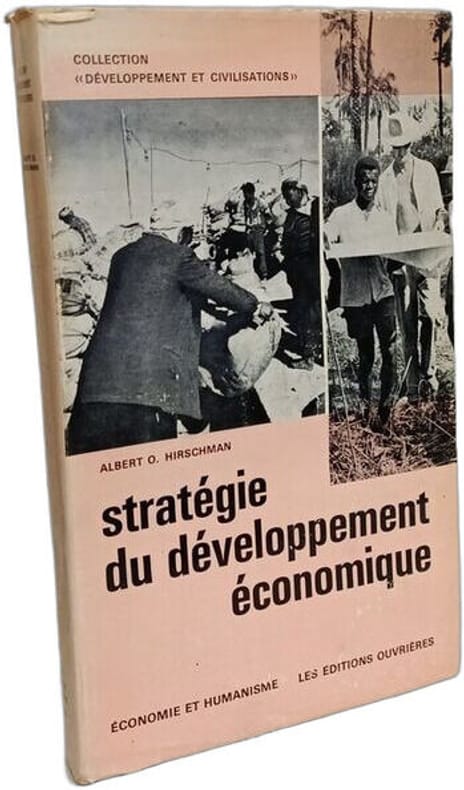
1964100145401Les Éditions Ouvrières 1964 in8. 1964. Broché. Ouvrage majeur d'Albert O. Hirschman publié en 1958 qui présente ses stratégies de développement économique notamment l'idée de croissance déséquilibrée. Le livre rédigé après son séjour en Colombie a rencontré un vif intérêt dans les années 1960 et a contribué aux débats sur le développement et la dépendance. Il s'agit d'une traduction de l'anglais par Françoise Pons publiée par les Éditions ouvrières en 1964
196410008Les Éditions Ouvrières 1964 246 pages in8. 1964. broché. 246 pages. Ouvrage majeur d'Albert O. Hirschman publié en 1958 (traduit en français en 1964) qui présente sa théorie du développement économique notamment le concept de croissance déséquilibrée. Rédigé après son séjour en Colombie le livre a suscité un vif intérêt dans les années 1960 et a contribué aux débats sur le développement et la dépendance
Alcina Franch, JoséZanin, Daniela L' arte precolombiana. Milano, Garzanti 1992 italian, 661 Opera con copertina rigida e sovraccoperta. ill. in b/n e a colori ft nt. 661 p. 32 cm Front. su 2 pagine.
108834aafParis, Mazenod, 1978, gr. in-4to, 613 p., richement ill. de photographies n./b. et couleurs, reliure en toile originale. Jaquette.
1968000329In-8 carré, Reliure pleine peau verte foncée, Dos à 4 nerfs, Ouvrage illustré de nombreux dessins en noir et blanc et en orange, Ed. TESTIMONIO, 1968, 1er et 2nd plat de couverture conservés, Tirage à 1000 exemplaires numérotés (celui-ci n=184), Enrichi d'un dessin original au stylo d'ALDOR, Ouvrage écrit en Espagnol, Peu courant. Bel ouvrage
A9781343941939Hardback. New. hardcover
199313466Cali, Ediciones Englebert, 1993, 2nd edition. Pappband, Schutzumschlag, gr-8° Querformat, ca 100 np S., durchgehend farbig illustriert; -Papier etwas gebräunt, Umschlag leicht berieben, gutes Exemplar/ hard board, dj, large 8vo, 100 np pp, numerous illustrations; -slightly browned and rubbed, very good copy.
Cm. 17; pp. (32). Brossura editoriale illustrata colorata. Illustrazioni nel testo sulle varie fasei della coltivazione e raccolta del caffè. Si allega pieghevole pubblicitario a colori, più volte ripegato, di cm. 14; "Caffè gloria della Colombia". Interessante insieme. Ottimo esemplari. (19 / 1093)
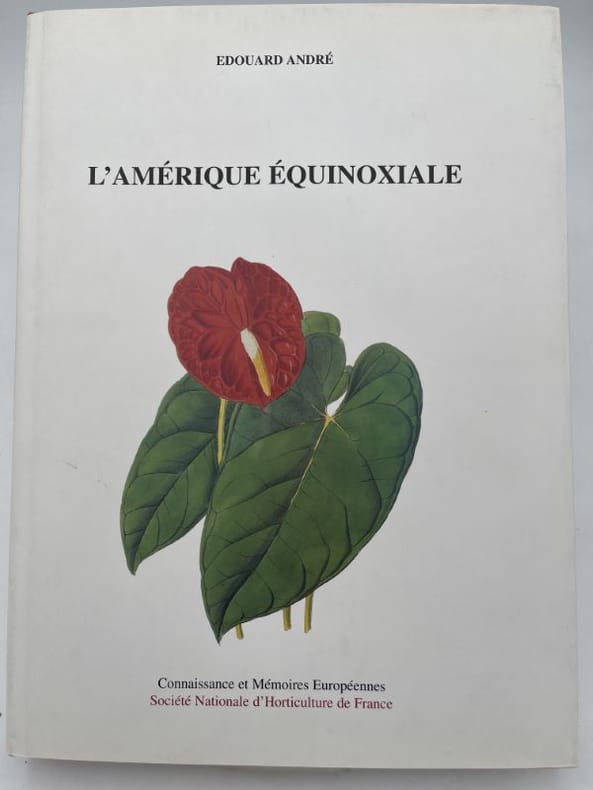
1999175506Société Nationale d'Horticulture de France Société Nationale d'Horticulture de France, 1999. In-4 relié toile sous jaquette de 416 pages illustrées. Texte sur 2 colonnes. Très Bon état
1928ROD0034904Charpentier et Fasquelle. 1928. In-12. Broché. Bon état, Couv. défraîchie, Dos frotté, Intérieur bon état. 228p. + Carte dépliante des peuples anciens de l'Amérique et de leur principales citées. Dos décoloré. Plat orné.. . . . Classification Dewey : 986-Colombie, Panama, Equateur
2017115146Bogotá: Ministerio de Cultura 2017. Individual size: 10.5 x 16 cm. 10 postcards per individual postcard book 40 postcards per collection of 4 postcard books Inks: 4 x 1 Material: Propalcote 300 gr and 115 gr. Artist project by Liliana Angulo. During the time of slavery in Colombia the fugitive enslaved used the hairstyles as escape maps. The braids and designs made on the head were used as secret codes. The braided style called troops was used to indicate that the escape route was by land and the style called "herringbone" indicated a leak in the water. Some styles meant hazardous or dangerous routes. While the "happened" something that happened was being woven the people of the community learned about the events in the mine or the plantation and the actions to take during the escape. Seeds and gold were kept in the head to survive in freedom. "Quieto Pelo" is a collective creation project that aims to document oral traditions and practices associated with hairstyle hair care and political actions expressed through hair among Afro-descendant women from different regions of Colombia and from Latin America. The project proposes the action of combing as an Afro cultural heritage that is both an aesthetic process and a creative and performative act. "Quieto Pelo" has summoned hairdressers knowledgeable women activists and other people who know the stories of hairstyle in different regions of Colombia and America to share their knowledge in a public event whose character is cultural and not competitive. There the hairdressers have shown their skills and knowledge of the different techniques with which they exalt the physical qualities of the person they comb; at the same time that they make an interpretation of the traditional uses of hairstyle and its context. "Quieto Pelo" also intends to join forces -between individuals groups and institutions- and be a pretext to give visibility to the experience the options of resistance and the representations that come into conflict in the body of women of descent. African. In this sense during the development of "Quieto Pelo" I have come into contact with hairdressers as well as with people who know and value the traditions of the hairstyle. Together we have organized meetings and events in public spaces in which the hairdressers show their techniques execute their styles and the "knowers" communicate their knowledge while discussing the specificity and importance of these cultural practices in their communities. As a result of these events "Quieto Pelo" has a large archive of recording material of the hairstyles carried out and the testimonies of the different people interested in preserving these customs. A fundamental interest of the project is to propose different circulation strategies that allow the images and information that this work has generated to be available to hairdressers the Afro-descendant population and other publics interested in these practices. For this purpose booklets of printed postcards have been published that return to the hairdressers and participants with the registration of their hairstyles. Postcards have been the preferred format for hairdressers as it allows them to show their styles to their clients. Exhibitions of the archive have also been made for other audiences. "Quieto Pelo" started in 2007 and has been carried out in several places in Colombia: Quibdó - 2008 Buenaventura - 2009 San Andrés Isla - 2010 Medellín - 2010 with the support of institutions in Colombia such as Banco de la República. through the Obra Viva Program and the Moravia Cultural Development Center through the project ExSitu - InSitu Artistic Practices in Community. In 2011 it was also held in Havana - Cuba within the framework of the International Colloquium "Cultural diversity in the Caribbean" at Casa de Las Américas and at the Caixa Cultural de Brasilia with the support of the Embassy of Colombia in Brazil and the Ministry of Foreign Relations of the Republic of Colombia. In 2013 it was held in Chicago Illinois USA at the University of Chicago with the support of the Illinois Association of Hair Braiders and the United African Organization within the framework of "Unfurling: Five Explorations in Art Activism and Archiving". Gray Center for Art and Inquiry. UC. Chicago - USA. Curator: Daniel Tucker and Rebecca Zorach. Never The Same. In 2017 it was held in Tumaco - Nariño - Colombia with the support of the National University of Colombia and in 2018 an exhibition of the project's photographic and video archive was held at the Spain Cultural Center in Santiago de Chile. Likewise the photographic archive was part of the Africamericanos exhibition curated by Claudi Carreras.<br /> Printed outside of commerce. <br /> 2020 Video Quieto Pelo Libritos Postales https://drive.google.com/drive/folders/1JcoY_pu27p-9PgZnoJttYqCgUo2BT1b3usp=sharing<br /> This is a presentation of Quieto Pelo for the Molaa https://molaa.org/angulocortes. Ministerio de Cultura unknown
10751In-8 - 3 ème année N° 4- Oct / Dec 1948
2011LFA-126731979Un ouvrage de 318 pages, format 140 x 225 mm, illustré, broché, publié en 2011, Le Livre Ouvert, bon état
20x14. 124p. Pref. A. Gatti.
Octavo in pale blue printed wraps; iii, 88 p. : music ; 22 cm. In Quechua with introd. in Spanish. Quite uncommon.
28490aafNew York, Abrams, n.d. (ca. 1970), gr. in-8°, 264 p., richly illustrated, clothbound, jackett.
1971R160187761SEUIL. 1971. In-12. Broché. Bon état, Couv. convenable, Dos satisfaisant, Intérieur frais. 189 Pages - Nombreuses photos et dessins en noir et blanc dans et hors texte. . . . Classification Dewey : 986-Colombie, Panama, Equateur
19x12. 366p. Firma anterior poseedor.
19542310270179xbvkQuito - Oruru - Santiago - Lima - Nueva York - Londres, Sociedades Biblicas Unidas, not dated (1954). 773 pages. - Publisher's gilt-titled black cloth-binding, all edges red; 8vo.(ca. 24 x 18 x 4 cm; ca. 1,2 kg.).
Tela con sovraccoperta, cm 35x25, pp 284 (6), fotografie a colori, cartine in nero e a colori. In spagnolo. Sulla prima bianca, dedica manoscritta.
23x15. 410p. 443p. 2 Vols. Láminas.