3 461 résultats
1808314806London: the author 1808. First edition. Engraved folding map and 3 folding plates. viii 216 pp with errata mounted at leaf at end. 8vo. Antiqued calf. Title and following leaf soiled and neatly repaired maps trimmed or with edgewear rear hinge separated at second work wrappers of second work chipped. First edition. Engraved folding map and 3 folding plates. viii 216 pp with errata mounted at leaf at end. 8vo. Sabin 103672; Palau 375051. Bound with: Paz José C. Estudios sobre Instituciones Libres. Buenos Aires: La Prensa 1876 the author unknown books
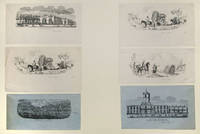
1855WRCAM41253Buenos Aires: R. Kratzenstein 1855. Lithographs on average 3 1/2 x 6 1/2 inches on slips of blue or white paper likely clipped from the top of pictorial letter sheets. Light edge wear. Very good. Matted. An attractive group of lithographic vignettes of scenes in and around Buenos Aires. These images were published by Rodolfo Kratzenstein who was one of the leading lithographers in Buenos Aires from the mid- 1850s and are likely from pictorial letter sheets issued by his firm in that period. One illustration shows a long stretch of the cityscape of Buenos Aires from the harbor and several ships are shown in the choppy waters of the port. Other images show the "Casa de Justicia" the courts and the "Palermo" neighborhood. Two other images one of them here in two examples show scenes in the countryside outside Buenos Aires both of them depicting men on horseback dealing with wagons in difficult terrain. Pictorial letter sheets from Argentina are uncommon and these are attractive images. R. Kratzenstein unknown books
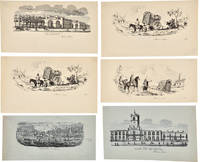
185522646Buenos Aires: R. Kratzenstein 1855. Lithographs measuring on average 3 1/2 x 6 1/2 inches on slips of blue or white paper likely clipped from the top of pictorial letter sheets. Light edge wear. Very good. Matted. An attractive group of lithographic vignettes of scenes in and around Buenos Aires.<br/> <br/>These images were published by Rodolfo Kratzenstein who was one of the leading lithographers in Buenos Aires from the mid-1850s and are probably from pictorial letter sheets issued by his firm in that period. One illustration shows a long stretch of the cityscape of Buenos Aires from the harbour and several ships are shown in the choppy waters of the port. Other images show the "Casa de Justicia" the courts and the "Palermo"neighborhood. Two other images one of them here in two examples show scenes in the countryside outside Buenos Aires both of them depicting men on horseback dealing with wagons in difficult terrain. Pictorial letter sheets from Argentina are uncommon and these are attractive images. R. Kratzenstein unknown books
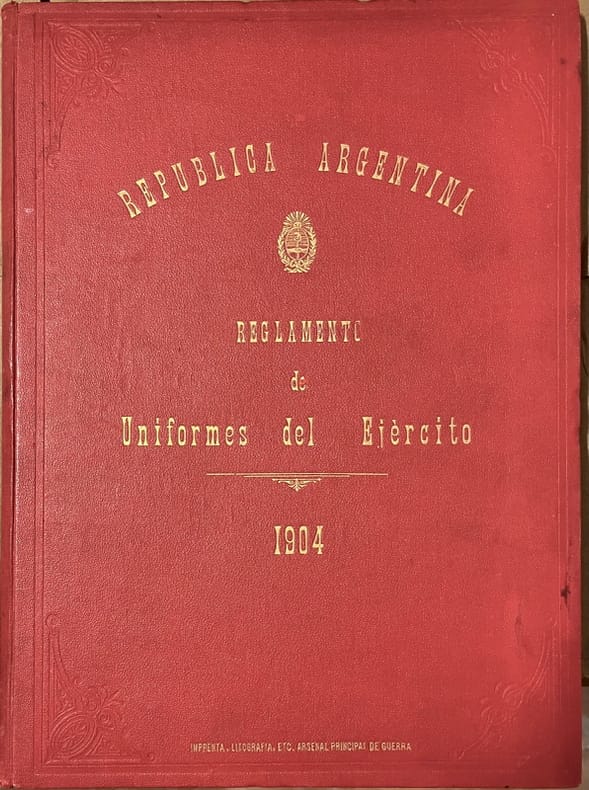
239569Buenos Aires, Arsenal principal de guerra, 1904 in-4, 29 pp. de texte, un f. n. ch., et 70 planches en chromolithographie, toile chagrinée cerise, dos lisse muet, encadrements à froid sur les plats, titre poussé en lettres dorées sur le plat supérieur, tranches mouchetées (reliure de l'éditeur).
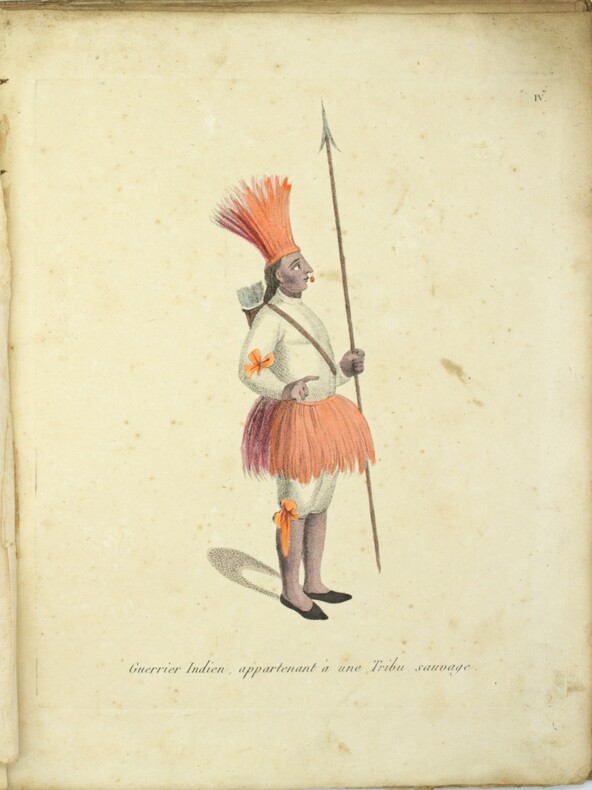
1809PHO-1737Paris, J.G. Dentu, 1809. 3 volumes TEXTE, 2 vol. in-8°,[2]-xii-385, [2]-427 pp. , brochage d’attente orange, étiquette avec titre au dos, quelques frottement. ATLAS, 1 vol. in-4° (290x225),12 planches sous serpente en couleurs et une carte de Lapie, reliure d’attente, titre sur le plat, dos manquant, coutures apparentes, la carte est volante et datée de 1829, elle provient d’un autre ouvrage
A wonderful gem of a livre d'artiste, illustrated with SIX ORIGINAL BURIN ENGRAVINGS BY HECTOR BALDASUA, hand-colored by Jean SaudÈ. 49 pp. Edition limited to 300 numbered copies printed on extremely fine Arches mouldmade wove paper. THIS COPY PRINTED FOR LEON PICHON, WHO PRINTED THE BOOK. Preface by Eugeni d'Ors. As issued in printed wraps. FINE AND BRIGHT, in the original board chemise and (lightly worn) slipcase.
1942005575Buenos Aires Editions de l'Aigle 1942 In-4 Broché, couverture rempliée Edition originale
196328756A Paris, chez Michel Cassé / Coll. ''Une Voix Un Geste'', 1963. Un vol. au format pt in-4 carré (288 x 265 mm) non paginé, en feuilles, sous couverture lithographiée à rabats rempliés et étui de pleine percaline satinée olive, dos lisse, titre frappé à l'oser amande.
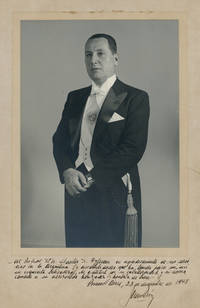
1948231092Buenos Aires 1948. Three quarter-length frontal pose in tuxedo with presidential sash and necktie. Gelatin silver print. 1 vols. Image 28.5 x 20 cm. 11-1/4 x 8 inches; approximately 16-1/2 x 12-1/2 inches overall. With embossed stamp "Sub secretaria de informacione" lower right. Tipped to larger sheet and mounted. Small tear in margin of mount image fine. Three quarter-length frontal pose in tuxedo with presidential sash and necktie. Gelatin silver print. 1 vols. Image 28.5 x 20 cm. 11-1/4 x 8 inches; approximately 16-1/2 x 12-1/2 inches overall. Inscribed on the mount by Perón in Spanish on December 23 1948 to the internationally renowned dentist Dr. Stanley D. Tylman "in gratitude for his services to Argentina and the friendliness he has shown me with his exquisite delicacy . "<br /> <br /> "Born in 1893 dentist Stanley D. Tylman not only taught more than 1000 students at the University of Illinois at Chicago College of Dentistry in his long career as a Professor of Dentistry 1920-1962 and head of the Department of Fixed Partial Prosthodontics but he influenced countless dentists internationally as well.<br /> <br /> "Tylman was particularly effective as a global educational force because he spoke four languages. His international lecture schedule took him to Asia Europe the Caribbean and South America--including Argentina where he performed dental work for President Juan Peron and First Lady Evita Peron. Dentists worldwide traveled to Chicago for personal consultations with Dr. Tylman . Tylman died in 1982." -- Wikipedia 8/3/06. unknown
1948231092Buenos Aires 1948. Three quarter-length frontal pose in tuxedo with presidential sash and necktie. Gelatin silver print. 1 vols. Image 28.5 x 20 cm. 11-1/4 x 8 inches; approximately 16-1/2 x 12-1/2 inches overall. With embossed stamp "Sub secretaria de informacione" lower right. Tipped to larger sheet and mounted. Small tear in margin of mount image fine. Three quarter-length frontal pose in tuxedo with presidential sash and necktie. Gelatin silver print. 1 vols. Image 28.5 x 20 cm. 11-1/4 x 8 inches; approximately 16-1/2 x 12-1/2 inches overall. Inscribed by Péron to Dentist Stanley Tylman. Inscribed on the mount by Perón in Spanish on December 23 1948 to the internationally renowned dentist Dr. Stanley D. Tylman "in gratitude for his services to Argentina and the friendliness he has shown me with his exquisite delicacy . "<br/><br/>"Born in 1893 dentist Stanley D. Tylman not only taught more than 1000 students at the University of Illinois at Chicago College of Dentistry in his long career as a Professor of Dentistry 1920-1962 and head of the Department of Fixed Partial Prosthodontics but he influenced countless dentists internationally as well.<br/><br/>"Tylman was particularly effective as a global educational force because he spoke four languages. His international lecture schedule took him to Asia Europe the Caribbean and South America--including Argentina where he performed dental work for President Juan Peron and First Lady Evita Peron. Dentists worldwide traveled to Chicago for personal consultations with Dr. Tylman . Tylman died in 1982." -- Wikipedia 8/3/06. unknown books
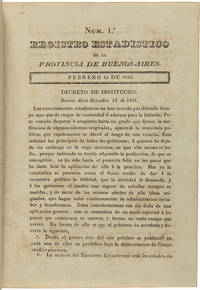
1823WRCAM36918Buenos Aires: Imprenta de la Independencia 1823. 208193-20031pp. Nos. 1-12. Nos. 1-10 paged continuously pages of No. 11 misnumbered pages of No. 12 numbered correctly 1-31 for second year of publication. The first eleven numbers were issued monthly February through December 1822; the twelfth issue was published March 1823. Contemporary diced sheep black leather label stamped in gilt. Outer joints and spine worn. Minor foxing and dampstaining. Very good. The extremely rare initial twelve issues of the first statistical register for the province of Buenos Aires. The publication was created by government decree on December 13 1821 reprinted here in the first issue published on February 15 1822. The REGISTRO ESTADISTICO. was charged with publishing statistics documenting conditions throughout the province with additional causes notes and observations. The issues are a fascinating compilation of facts and figures regarding all aspects of life in Buenos Aires in the early period of independence. On a regular basis data concerning geography meteorology the movement of populations and hospitals were recorded. Other areas documented in these issues include commerce means of production and education including courses taught at the university. <br> <br> An extremely rare government publication documenting the political economy of Buenos Aires in the early 1820s. OCLC lists nine locations for the register but only Cornell for the earliest issues. SABIN 68831. PALAU 253761. Imprenta de la Independencia hardcover books
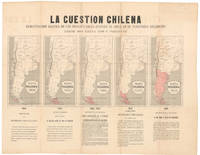
1878NL-02415<p><strong>Argentinian propaganda map of Chile's advance into Patagonia.</strong></p><p>This is an anonymous and undated propaganda map prepared by Argentina's Foreign Ministry for dissemination among potential allies on the American continents. It regards the conflict known as the "East Patagonia Tierra del Fuego and Strait of Magellan dispute" or "Patagonia Question" which was a territorial dispute between Chile and Argentina during most of the 19th century for more context see section below.</p><p>The sheet centers on five maps which are distinguished only by the varying size of the swathe of red that is meant to outline Chile's encroachment into Argentine Patagonia. The expansion process began in 1843 with only a few small islands and tiny peninsulas in the western part of the Strait of Magellan but by 1847 Chile was claiming the entire Strait as its own. The expansion continues in three subsequent phases each documented with its own map until 1876 when the territory in dispute consists of virtually all of Patagonia or the southern half of Argentina. Each of the intermediary stages in the quintet of displayed maps is dated and the territories in question are highlighted in red. Under each phase are noted the years in question as well as a brief explanation of the particulars of each phase of the expansionall of it from an Argentine perspective of course.</p><p>The Argentinian Foreign Ministry designed the map as a means of visualizing what Argentina considered the ongoing encroachment by Chile on Argentine territory. The broadsheet highlighted the blatant nature of Chilean territorial claims.</p><p>Because of this background and purpose the sheet was only distributed in limited circles making it a rarity today. The only institutional example of this map in the United States was presented to the US Minister to Argentina Thomas Ogden Osborn by the Argentine Minister of Foreign Affairs to serve precisely the purpose for which it was designed. The United States did indeed get involved and played a key role in the ensuing treaty negotiations 1879-1881.</p><p><strong>Census</strong></p><p>This sheet is rare likely because it was never produced in large quantities to begin with. There is only a single example of this sheet in US institutions. This document is located in the National Archives NAID: 5675669 and is the same sheet that Thomas Ogden Osborn sent to US Secretary of State William M. Evarts in 1880 following his role as US mediator in the negotiations for the 1881 Boundary Treaty that ended the conflict.</p><p>The only other institutional example we have been able to identify is held in the <em>Biblioteca Nacional de España</em> OCLC no. 431564806.</p><p><strong>Context is Everything</strong></p><p><em>The Strait of Magellan dispute and the "Patagonia Question" 18421881</em></p><p>The "Patagonia Question" was a nineteenth-century sovereignty dispute between Chile and Argentina over the southernmost lands of South America i.e. East Patagonia the Isla Grande de Tierra del Fuego and the strategically vital Strait of Magellan. Its roots lay in the messy inheritance of Spanish colonial jurisdictions and centuries of imprecise royal decrees that left overlapping claims along the entire Andean-to-Atlantic sweep. Both countries gradually sought to translate old legal claims into an effective national occupation: Chile concentrated on the Pacific channels and the Strait. At the same time Argentina pushed settlement eastward across the pampas and into Chubut.</p><p>Tensions hardened during the mid-1800s. Chile's deliberate occupation of the Strait of Magellan symbolized by the 1843 expedition that founded Fuerte Bulnes and formally took possession of the strait alarmed Buenos Aires and was the source of repeated diplomatic protests. Argentina in turn fostered new settlements established informal alliances with indigenous leaders and ensured a significant naval presence to assert influence on the Atlantic coast. By the 1870s both states were populating adjacent zones and commissioning maps and legal arguments to buttress their claims. This map is one such example from the Argentine side.</p><p>The trigger for a negotiated containment and ultimately a resolution of the conflict came in December 1878 when Chile and Argentina signed the FierroSarratea agreement. This was an interim pact that postponed a final delimitation and established arbitration procedures to avoid a fully fledged armed conflict. Chile quickly ratified the agreement but Argentina's Congress never gave its final approval causing it to collapse as a comprehensive settlement. The outbreak of the War of the Pacific 18791884 in which Chile fought Peru and Bolivia made rapid de-escalation with Argentina diplomatically urgent. Chile wished to avoid a second front. At the same time Argentina was engaged in the "Conquest of the Desert" on its southern frontier pushing it to resolve this old conflict as well.</p><p>The crisis was finally resolved by the <em>Boundary Treaty of 23 July 1881</em>. The treaty adopted a practical formula: north to the 52°S parallel the boundary would follow the highest Andes watershed; south of 52°S the agreement recognized Chilean sovereignty over the Strait of Magellan and assigned islands and Tierra del Fuego between the two states according to specified meridians and channels. Crucially the treaty neutralized the Strait of Magellan and guaranteed free navigation to all nations; a provision that allowed international passage through the strait and prevented any single power from controlling it.</p><p>US involvement in the dispute was modest. Washington did not act as an official guarantor or principal mediator in the 1881 settlement. However diplomatic records and dispatches confirm that the situation was under close observation and US diplomats regularly reported to their superiors on the crisis's development and its regional implications especially for shipping routes. Formal third-party arbitration and boundary adjudications were carried out by various state actors notably Britain or by various bilateral protocols. In short the U.S. was an interested observer rather than a decisive actor in both the dispute and its resolution.</p><p>The conflict illustrates how colonial legal ambiguities competing settlement policies and the strategic value of a single waterway combined to produce a long fraught boundary contest. The 1881 Boundary Treaty negotiated under the shadow of other regional wars and mediated by pragmatism rather than legality integrated competing claims into a workable frontier and ensured the neutrality of the Strait of Magellan for international shipping.</p><p>Condition Description</p><p>Good. Wear and toning along fold lines.</p> Foreign Ministry of Argentina
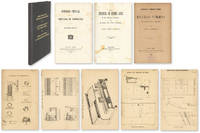
1873589331873. 3 titles all rare; the last with 5 plates. 3 titles all rare; the last with 5 plates. Three Rare Argentinean Items Argentina. Codigo Penal de la Provincia de Corrientes. Buenos Aires: Imprenta de Pablo E. Coni 1878. 110 pp. Bound with Llerena Juan. La Provincia de Buenos Aires y su Nueva Capital. Buenos Aires: Establecimiento Tipografico 1881. 54 pp. And Stegmann Carlos. Construccion y Disposicion Interior de las Escuelas Publicas en Relacion con la Higiene. Buenos Aires: Imprenta de Pablo E. Coni 1878. 24 pp. Five plates two folding. Octavo 9-1/4" x 6-1/4". Later cloth gilt titles to spine. Light shelfwear some toning to text final three leaves of Construccion detached internally clean. $950. Only editions located. The first item is the penal code for Corrientes one of the provinces of Argentina. The second title which is not legal in nature is an essay defending the establishment of Buenos Aires as the national capital in 1880. Illustrated with plates depicting classrooms and school furniture the final title is a book of regulations governing the construction of schools and the furnishing of classrooms. All of these titles are rare. OCLC locates 1 copy each of Corrientes and Provincia both in Germany no copies of Construccion. See Borchard Guide to the Law and Legal Literature of Argentina Brazil and Chile 115-116. unknown
1873589331873. 3 titles all rare; the last with 5 plates. 3 titles all rare; the last with 5 plates. Three Rare Argentinean Items Argentina. Codigo Penal de la Provincia de Corrientes. Buenos Aires: Imprenta de Pablo E. Coni 1878. 110 pp. Bound with Llerena Juan. La Provincia de Buenos Aires y su Nueva Capital. Buenos Aires: Establecimiento Tipografico 1881. 54 pp. And Stegmann Carlos. Construccion y Disposicion Interior de las Escuelas Publicas en Relacion con la Higiene. Buenos Aires: Imprenta de Pablo E. Coni 1878. 24 pp. Five plates two folding. Octavo 9-1/4" x 6-1/4". Later cloth gilt titles to spine. Light shelfwear some toning to text final three leaves of Construccion detached internally clean. $950. Only editions located. The first item is the penal code for Corrientes one of the provinces of Argentina. The second title which is not legal in nature is an essay defending the establishment of Buenos Aires as the national capital in 1880. Illustrated with plates depicting classrooms and school furniture the final title is a book of regulations governing the construction of schools and the furnishing of classrooms. All of these titles are rare. OCLC locates 1 copy each of Corrientes and Provincia both in Germany no copies of Construccion. See Borchard Guide to the Law and Legal Literature of Argentina Brazil and Chile 115-116. unknown books
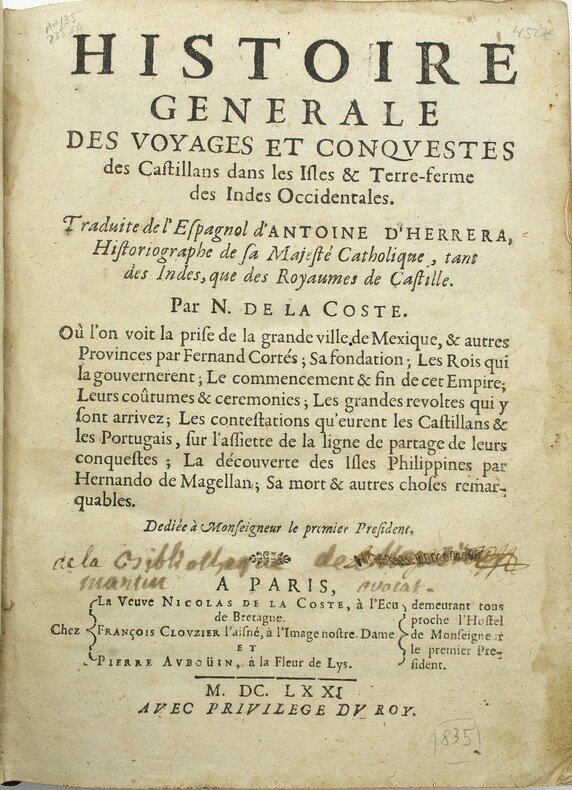
1671PHO-1819Paris, Veuve Nicolas de la Coste, 1671 ,1 volume in-4° de 14 ff., 9ff-790pp., Troisième décade en plein basane, ex-libris manuscrit au titre, coiffes arasées, coins usés, frottements et griffures, manque l’index.
In 8° (19,5x10,2 cm); 4 tomi: (2), XXX, 362 pp. e 1 grande c. di tav. fuori testo più volte ripiegata (Golfo del Messico ed paesi adiacenti), (4), 516 pp. e 1 grande c. di tav. fuori testo più volte ripiegato (America Meridionale) un piccolo restauro rinforzo al margine superiore della tavola a restaurare piccolo strappo senza perdita di carta, 552 pp. e una c. di tav. più volte ripiegata (Carta dei paesi sopra il mare meridionale) un piccolo alone al margine bianco superiore delle prime 10 carte ininfluente, 412 pp. e due grandi c. di tav. più volte ripiegate (la tavola con i disegni aztechi è solitamente inserita nel terzo volume, l'altra invece contiene Messico e Nuova Spagna, piccolo strappetto senza perdita di carta). Legatura coeva in tutta pergamena maculata con titolo e numero del volume impresso su pecette in pelle al dorso, strofinature e qualche lieve difetto alle cerniere del secondo volume che però si presenta in ogni caso solido e ben legato. Esemplare ancora in barbe. Prima non comune edizione italiana completa dei quattro volumi e delle tavole fuori testo. All'interno a parte i due strappetti senza perdita di carta a due delle tavole fuori testo, l'opera si presenta in buone-ottime condizioni di conservazione, priva delle tipiche bruniture presenti solitamente nelle altre copie e dovute alla qualità della carta utilizzata. L'opera ebbe subito grande successo e una nuova edizione uscì già nel 1778, una terza nel 1794. William Robertson nacque a Borthwick nel Midlothian nel 1721. E' considerato con Hume e Gibbon uno dei tre grandi storici inglesi del XVIII° secolo. Figlio di un ministro presbiteriano e risiedette a lungo a Gladsmuir nell'East Lothian (1743-59). Dopo aver preso parte alle rivolte contro i giacobiti che infiammarono la Scozia negli anni quaranta del settecento. Nel 1751 divenne capo del partito moderato in seno all'assemblea generale dellea Chiesa scozzese. Iniziò anche ad interessarsi attivamente alla storiografia pubblicando varie opere che ottennero subito un grande successo. Nel 1777 pubblicò il primo volume della History of America ma i moti che precedettero lo scoppio della Rivoluzione Americana lo indussero a rinunciare temporaneamete a terminare l'opera che fu completata solo posteriormente. La prima edizione italiana, contemporanea alla prima inglese, oltre a descrivere la storia dell'America, sia meridionale, centrale che settentrionale, ne analizza anche lo sviluppo economico, commerciale, gli usi e costumi, la situazione demografica, le cure tradizionali ecc. ecc. Prima rara edizione italiana.
195318764Buenos Aires, 1953 - 1984 (with gaps). 27 - 29 cm high, 21 - 25 cm deep, 272 cm breadth on shelf. 4°. Half-cloth with cardboard-covers; library copies
Album cm. 48 x 26. Composto di circa 400 pagine, ognuna con un’illustrazione, 28 dei queste stampate a colori. Le tavole rappresentano vedute, ritratti di personaggi celebri e scene della storia argentina, le immagini sono racchiuse in cornici tipografiche di vari colori. Tela editoriale rossa con titoli oro sul primo piatto. Esemplare in ottimo stato.
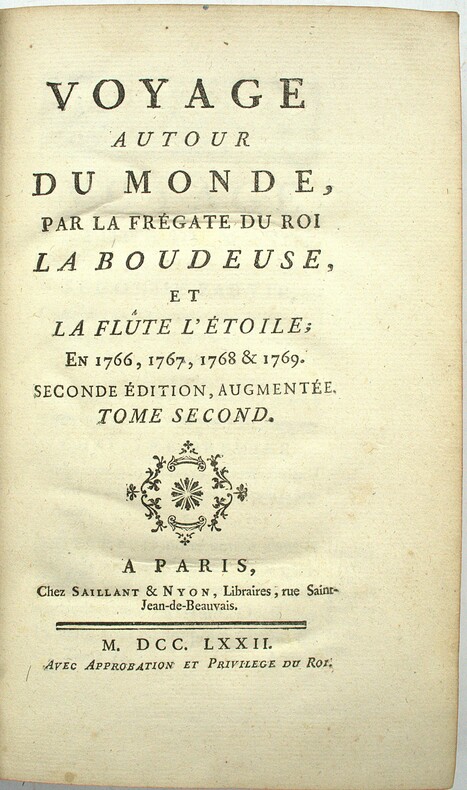
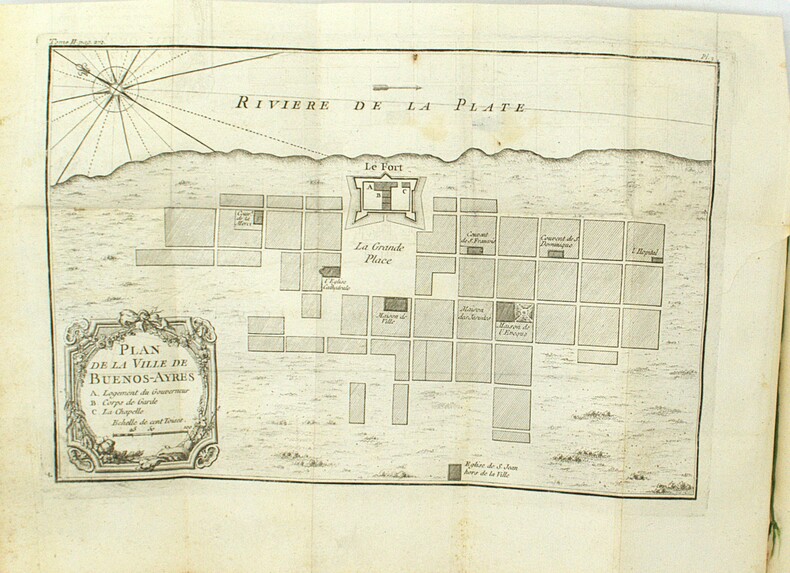
1772PHO-1925Paris, Saillant & Nyon, 1772, 2 volumes in-8 (200x130), relié plein veau marbré époque, dos à nerfs orné, pièce de titre et tomaison, tranches rouges 2ff. xliii , 336pp-2ff.453pp,1ff-1ff. , illustré de 3 planches et 20 cartes dépliantes ( sur 21, manque la carte n°3), 2 cartes détachées, déchirures et léger manque en marge à 3 cartes , coins et coupes usés, coiffes absentes tome 2, petit manque au plat, charnière fendillée tome 2.
In 4, pp. VIII + 432 con 43 tavole fotografiche fuori testo in nero e a colori e 6 grandi panorami fotografici piu' volte ripiegati + 1 grande carta geografica della Terra del fuoco in apposita taschina editoriale separata. Tutta tela editoriale con la rarissima sovraccoperta fotografica, estremamente difficile da reperirsi, probabilmente per la frase a firma Mussolini che campoeggia al piatto anteriore e che potrebbe aver indotto molti possessori a eliminarla. Curiosa la figura di Alberto MAria De Agostini, sacerdote salesiano e missionario in Terra del Fuoco, uni' alla sua attivita' pastorale anche quella di esploratore, alpinista e naturalista. Sali' infatti il Monte S. lorenzo nel 1943 e organizzo' varie spedizioni con Carlo Mauri e Monzino. Importanti furono anche le sue ricerche cartografiche e naturalistiche.
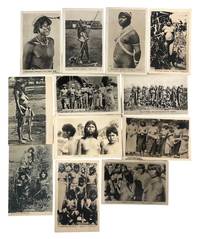
1910230041910. Real photo postcards depicting Indigenous peoples of Argentina in the early twentieth century document communities identified in captions as Indios del Chaco alongside additional references to southern regions including Tierra del Fuego. Produced during a period of intensified state expansion and consolidation these images record Indigenous individuals and groups at a time when Argentine policies of land seizure labor exploitation and missionization reshaped Indigenous life. The archive supports research into Indigenous history Latin American nation building and the visual culture of ethnographic photography.<br /> <br /> Archive consists of 12 black and white real photo postcards each with printed Spanish captions identifying subjects by region or group. The images present posed and semi candid compositions of Indigenous men women and children including group portraits of families and community gatherings as well as individual figures. Several photographs emphasize bodily presentation attire and adornment while others depict men holding tools or weapons in open landscapes. The majority of images are associated with the Chaco region an area targeted by military campaigns and settler expansion while one card references Tierra del Fuego extending the geographic range of the archive. The postcards appear to have been issued for circulation as documentary or commercial imagery.<br /> <br /> These photographs were produced in the aftermath of campaigns such as the Conquest of the Desert and subsequent northern military actions when Indigenous populations in Argentina were subjected to displacement forced labor and incorporation into state and missionary systems. Visual documentation of Indigenous communities during this period often coincided with efforts by anthropologists missionaries and state actors to classify and record populations whose autonomy was being curtailed. The images therefore function both as records of community life and as artifacts of a broader system of representation tied to colonial governance and modernization narratives. Mild fading and edge wear to some cards with others remaining sharp; overall very good condition. This archive provides primary visual documentation of Indigenous communities in Argentina during a period of significant political and social transformation. unknown
In-8°, legatura in mezza tela con titoli in oro su tassello al dorso, pp. XXVI, 2 bianche, 217(1). Con 55 tavole fotolitografiche di carte (ripiegate), strumenti, tipi indigeni, esemplari botanici, etc. Buon esemplare. Spartiacque per la scienza e la geopolitica argentine, la Spedizione Australe fu un progetto dell'esploratore e tenente di marina italiano Giacomo Bove, realizzato con l'appoggio del governo argentino. L'obiettivo iniziale di arrivare in Antartide fu modificato a beneficio di una spedizione scientifica nella parte meridionale della regione patagonica. Sotto il comando militare del comandante Luis Piedrabuena e quello scientifico di Bove, la nave Cabo de Hornos e poi la San José percorsero il fiume Santa Cruz, la Isla de los Estados, lo Estrecho di Magellano, i canali fueguini, il nord della Terra del Fuoco, Punta Arenas, Río Gallegos e parte della provincia di Santa Cruz. La spedizione produsse validi risultati in campo zoologico, botanico, metereologico, etnografico, orografico e geologico.
8vo [22 x 15 cm]; 2 volumes, xv, [iii] 436; xv [i] 527pp, large folding colored map, indexes. original cloth, gilt spine title lettering, short tear at spine end, endpaper bookplate of Mark Robinson and short note by Herbert Taylor dated 1904, a near fine set. A picture of this book is available upon request by email. A detailed description of the country, the peoples, tribes, gauchos, buildings, institutions, methods of travel, trade and commerce, climate, the authors travels throughout area, fauna and flora, the Andes, resources, hunting, agriculture, artisans, travels up the Uruguay river, Rioja, Salta, Tucuman, down the Parana river. Wood p. 625: 'Reference to animal life, especially to the birds, of the country are numerous'. See also Sclater and Hudson, Argentine Ornithology vol. 2, 230. Ibis 1885, p. 335. Welch 16. 'The notions about this vast and progressive country currently in England are at times absurd, at others biased and if my efforts serve to enlighten the one and correct the other, they will not have been in vain' (preface). Volume II was delayed due to printing difficulties, which was done in Buenos Aires.
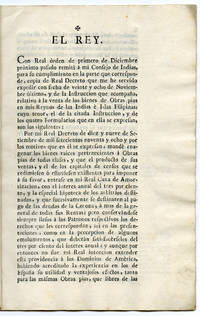
1805WRCAM51822Buenos Aires 1805. 34pp. Folio. Dbd. Some tanning and dust soiling scattered light foxing. Very good. An early Buenos Aires imprint that conveys several royal decrees of the King of Spain Charles IV. These decrees were originally issued in September 1804 and govern the sale of religious works in the Spanish colonies and give instructions for compliance. A rare piece of South American printing not in OCLC. Medina claims to have owned a copy. MEDINA RIO DE LA PLATA 285. unknown books
1757PHO-1914Paris, Desaint, 1757. 6 vol in-12, veau havane moucheté époque, dos à 5 nerfs, pièces de titre et de tomaison rouge, caissons ornés, tranches rouges (défauts à la reliure dont des coins usés, 3 coiffes découvertes, des épidermures et des trous sur les mors des tomes 4, 5 et 6, très légères rousseurs). Édition illustrée de 7 cartes dépliantes hors-texte gravées sur cuivre. Provenance : bibliothèque de la Congrégation de Notre Dame - Maison des Oiseaux (étiquette lithographiée).