83 résultats
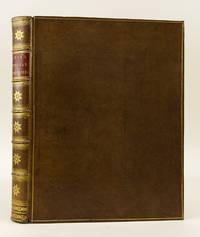
1803ST15927London: Cadell and Davies 1803. ONE OF 60 LARGE PAPER COPIES of the "considerably enlarged" Fourth Edition ours a variant retaining the date of 1803 on the title-page rather than 1804. 330 x 252 mm. 13 x 9 7/8". xviii 4 xix 1 380 pp. Two leaves usually bound at the end and containing the "List of Principle Books Referred to in this Work" and "Works by the same Author" bound between pp. xvii and xix here. <br/> VERY FINE CONTEMPORARY SPRINKLED CALF raised bands flanked by plain and decorative gilt rules and chain roll spine panels with star centerpiece red morocco label marbled endpapers. With six engravings: five maps two folding and one view. A Large Paper Copy. Front pastedown with engraved armorial bookplate of Marcus Gage; title page with ink inscription at head: "M. Gage's Book got from Mr. Asperne London April 15th 1805." Lada-Mocarski 29 note; Howes C-834; Sabin 17309; Streeter VI 3501; Cordier Bibliotheca Sinica pp. 2447-48. ◆Small chip to tail of spine corners a bit rubbed flyleaves somewhat foxed the usual minor foxing to plates and a bit of offsetting to adjacent pages otherwise A VERY FINE COPY OF AN ESPECIALLY DESIRABLE EDITION clean and fresh internally with vast margins and the binding firm lustrous and with only very minor wear to the joints.<br/> <br/> This is an extremely well-preserved copy in an elegant contemporary binding of the most sought-after edition of a key source on Russian exploration and that country's efforts to expand trade with China and Alaska. Eminent historian William Coxe 1747-1828 studied the voyages and exploration by Bering and others to the regions of Kamchatka the Aleutian Islands and Siberia to prepare this overview of the geography and cultures of the lands between Russia and North America and to analyze the economic potential of trade--particularly in furs--with the region. According to Sabin "Mr. Coxe's book contains many curious and important facts with respect to the various attempts of the Russians to open a communication to the New World." The 1780 first edition of this work covered Russian voyages of discovery between 1740 and 1769; the 1787 third edition added a supplement comparing these explorations to those of Captains Cook and Clerke. Our much-expanded fourth edition gives in the words of the Preface "a complete series of voyages from 1711 to 1792 comprising all that is known on the subject." Some of this supplementary information was gleaned from earlier accounts by German historians G. F. Muller and P. S. Pallas and some from Coxe's own travels in Russia. According to Lada-Mocarski Coxe "also succeeded in securing additional material: for instance the narrative and maps of Krenitzin and Levashev's 'secret' expedition the first official Russian government expedition since Bering's 2nd expedition of 1741. He was able to secure this particular information not widely known at the time even in Russia from Dr. Wm. Robertson who in turn obtained it through his friend Dr. Rogerson first physician to the Empress Catherine II. . . . In view of the above additions one should consider the fourth edition of 1803 as the most desirable." He concludes: "Coxe's work particularly the fourth edition is a result of contemporary and authoritative sources translated into English not to be overlooked by scholars and collectors alike." There are also distinct aesthetic advantages to the present Large Paper version over the octavo printing. Not only is the type beautifully re-set and laid out as well as surrounded by vast margins but as Streeter notes there are two charts here that are not included in the octavo issue of 1803. The original owner of this volume Marcus Gage is known to have assembled a substantial library of beautifully cared-for books on travel and discovery see for example "Exploration & Discovery 1576-1939 Books from the Library of Franklin Brooke-Hitching" passim. Gage notes that he got the book from "Mr. Asperne"—no doubt the London publisher and bookseller James Asperne 1757-1820. ABPC and RBH find just four other Large Paper copies at auction in the past 45 years two of which had condition issues. One could wait a considerable time to find a copy as attractive and desirable as the present one. Cadell and Davies unknown
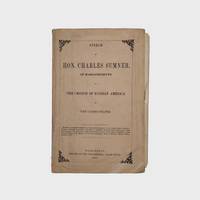
1867376097Washington: Printed at the Congressional Globe Office 1867. First edition. With the large 24 x 35 in. folding map of Northwest America "second edition May 1867" by A. Lindenkohl not found in all copies. 48 pp. text in double columns. 8vo. Publisher's pink wrappers minor soiling small repaired split at lower front joint. Minor foxing. First edition. With the large 24 x 35 in. folding map of Northwest America "second edition May 1867" by A. Lindenkohl not found in all copies. 48 pp. text in double columns. 8vo. Sumner gives an account of the history of the Alaskan Territory just recently purchased by Secretary of State William Seward from Russia for $7.2 million. Sumner was a strong exponent of the purchase and Seward praised his speech. <br /> <br /> This example with the large folding map not always present and not issued with all copies of the speech according to Lada-Mocarski - the first map to represent the Alaska Purchase and the first to use the name "Alaska". Howes S1134; Lada-Mocarski 159; Tourville 4391; Wickersham 4128 Printed at the Congressional Globe Office unknown
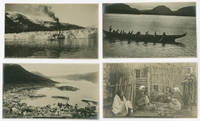
19004544Various locations in British Columbia and Alaska 1900. Very good. 14 leaves illustrated with 111 vernacular sepia-toned photographs between 2.5 x 4.5 inches and 3.5 x 5.5 inches. Mostly mounted four per page. Oblong folio. Contemporary black cloth gilt string tied. Minor edge wear and rubbing. Some edge chipping to a handful of album leaves occasional dust-soiling. With 5pp. typed and numbered list laid in keyed to manuscript numbering beneath each photograph. A phenomenal collection of vernacular photographs taken by an unidentified traveler on a voyage to British Columbia and Alaska around the turn of the 20th century. Most of the photographs were taken from aboard a steamship or from a railroad car when they venture inland but occasionally the compiler includes shots from the ground. The photographs begin with numerous scenic landscapes in and around Nelson Rossland and Victoria British Columbia picturing landmarks such as Kootenay Lake Bonnington Falls the Cascade Mountains and a "Government House" in Victoria. The scene then shifts to Alaska picturing Devil's Thumb various glaciers a wonderful totem in Simpson distant shots of Juneau and Skagway and much more. Once inland the compiler takes pictures of the White Pass Lake Bennet White Horse and more before getting back on a steamship. One particularly interesting image from White Horse shows a pair of businesses set up in tents - Cap. P. Martin's Cigar Store and the Vancouver Hotel. Once back on the steamship the compiler shoots Five Finger Rapids before reaching the "town" of Yukon really just a loose handful of wooden huts. The intrepid traveler lands next in Dawson City where they include at least half a dozen fantastic shots of the settlement and its downtown area. The next series of images in Grand Forks show exterior shots of gold mines called Gold Hill and Eldorado #26 and a sweeping "View of Klondike Valley." The traveler then apparently turned south as the next series of images picture Taku Alert Bay with images of five Totems and the local cemetery and eight views of Fraser Canon. The album concludes with a few shots of the Illecillewaet Glacier Lakes Agnes and Louise and several views in and around Banff. The latter images include one of a bear and two featuring grazing buffalo. An interesting and wide-ranging collection of photographs featuring the untouched majesty of the landscapes of Alaska and the Canadian Northwest mixed with areas already being developed and exploited by human prospectors and travelers. The images are accompanied by an invaluable list of captions which are vital to identifying the locations of the images which appear to emanate from slightly earlier than usual in photographic groups from these areas. unknown
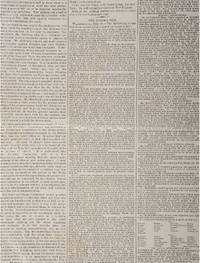
186825042<p>This copy is stamped "THE PRESIDENT" at the top of the front page indicating it belonged to President Andrew Johnson. The President would have read this copy of the act before Congress submitted it to him with some amendments on July 25. The report uses the early variant spelling of "Aliaska" for the territory and peninsula.</p> <b>ALASKA.</b>Newspaper. <i>New-York Tribune</i> July 17 1868. Featuring the terms of the "Aliaska" Bill as passed by the Senate. Copy belonging to President Andrew Johnson. New York: Horace Greeley. 8 pp. 18 x 23¾ in.<p><b><br /></b></p><p><b>Excerpts:</b></p><p>"<i>Be it enacted &c. That the laws of the United States relating to customs commerce and navigation be and the same are hereby extended to and over all the mainland islands and waters of the territory ceded to the United States by the Emperor of Russia.</i>" p1/c2</p><p>"<i>And be it further enacted that all the said territory with its ports harbors bays rivers and waters shall constitute a customs collection district to be called 'The District of Aliaska' for which said district a port of entry shall be established at some convenient point to be designated by the President at or near the town of Sitka or New-Archangel and a Collector of Customs shall be appointed by the President by and with the advice and consent of the Senate who shall reside at said port of entry and who shall receive an annual salary of $2500.</i>" p1/c2</p><p>"<i>That the President shall have the power to restrict and regulate or to prohibit the importation or use of firearms ammunition and distilled spirits into and within said territory.</i>" p1/c2</p><p>"<i>That until otherwise provided by law the Secretary of the Treasury with the approval of the President shall have power to prescribe such rules and regulations as he may deem proper for the preservation of fur-bearing animals from indiscriminate destruction provided that no special permits shall be granted under this act.</i>" p1/c2</p><p><b>Historical Background</b></p><p>After suffering defeat at the hands of the British and the French in the Crimean War of 1853-1856 Russia feared losing the Alaskan territory in some future conflict. In an effort to protect Russian interests Tsar Alexander II 1818-1881 determined to sell Alaska. After offering it in 1859 to the United Kingdom Russia negotiated a sale to the United States finalized in 1867. At the time the territory primarily offered fur trading and some natural resources. Americans generally supported the purchase and believed it enhanced American interests in the Pacific though some critics labeled it "Seward's Folly" after Secretary of State William H. Seward who had negotiated the purchase for the United States. Most newspaper editors especially those in California were enthusiastic about the purchase. Notable among the critics was Horace Greeley the editor of this newspaper and a long-time opponent of Seward. The value of the new territory increased dramatically with the discovery of gold fields in 1896.</p><p>The Senate ratified the Treaty with Russia on April 9 1867 by a vote of 37 to 2. On July 14 1868 the House of Representatives passed a resolution appropriating the $7.2 million necessary to purchase Alaska less than two cents per acre and the Senate approved the resolution with amendments. The House refused the amendments and the resolution went to a committee. The House passed the resolution as revised by the conference committee on July 23 and the Senate passed it the following day.</p><p>Meanwhile on July 15 Senator Zachariah Chandler of Michigan introduced "An Act to extend the Laws of the United States relating to the Customs Commerce and Navigation over the Territory ceded to the United States by Russia to establish a Collection District therein and for other Purposes" and the Senate passed it on July 16. In the House Representative Elihu B. Washburne of Illinois proposed amendments on July 25 and the House agreed to them. The Senate disagreed with the amendments and this bill went also to a conference committee where the Senate receded from its opposition and the bill passed. President Johnson approved and signed both the joint resolution and the act on July 27 1868.</p><p>In 1870 Congress followed up its concerns about preserving fur-bearing animals expressed in this law with "An Act to prevent the Extermination of Fur-bearing Animals in Alaska" aimed directly at regulating the killing of fur-bearing seals on Saint Paul and Saint George Islands off the western coast of Alaska north of the Aleutian Islands.</p><p><b>Additional Content</b></p><p>This issue also includes the Senate confirmation of William M. Evarts 1818-1901 as Attorney General p1/c2 p5/c4; proceedings of Congress including Senate discussion of this bill p1/c3-4; a letter from a special correspondent describing Sitka Alaska p2/c2-3; an editorial nomination of Thomas A. R. Nelson of Tennessee as Secretary of State to succeed William H. Seward "<i>now that Mr. Seward has succeeded in buying Aliaska</i>" p4/c5-6; "base ball" and cricket scores p5/c5; and a report on dozens of deaths from sunstroke during two-week heat wave especially among children p8/c1-3.</p><p><b><i>New-York Tribune</i></b> 1841-1924 was established as a daily newspaper in 1841 by Horace Greeley 1811-1872. By the 1850s it reached a circulation of 200000 copies making it the largest daily newspaper in New York City at the time. Greeley also published weekly and semi-weekly issues of the <i>Tribune</i> through much of his tenure. The <i>New-York Tribune</i>became the dominant Whig and then Republican newspaper in the United States helping to shape public opinion especially as other newspapers often copied its articles and editorials. It was one of the first newspapers in the Union to send reporters and correspondents to cover the military campaigns of the Civil War. Greeley used his newspaper to support many reforms including abolitionism pacifism socialism for a time and feminism. After Greeley's failed campaign as the Liberal Republican candidate for President Whitelaw Reid 1837-1912 assumed control of the <i>Tribune</i> until his death. His son Ogden Mills Reid 1882-1947 acquired the <i>New York Herald</i> and merged the newspapers in 1924.</p><p><b>Condition</b></p><p>Typical folds and light foxing few slight tears at some of the outer margins and appears to have been bound in a book at one point or someone reinforced the outer fold.</p>
186825042<p>This copy is stamped "THE PRESIDENT" at the top of the front page indicating it belonged to President Andrew Johnson. The President would have read this copy of the act before Congress submitted it to him with some amendments on July 25. The report uses the early variant spelling of "Aliaska" for the territory and peninsula.</p> <b>ALASKA.</b>Newspaper. <i>New-York Tribune</i> July 17 1868. Featuring the terms of the "Aliaska" Bill as passed by the Senate. Copy belonging to President Andrew Johnson. New York: Horace Greeley. 8 pp. 18 x 23¾ in.<p><b><br /></b></p><p><b>Excerpts:</b></p><p>"<i>Be it enacted &c. That the laws of the United States relating to customs commerce and navigation be and the same are hereby extended to and over all the mainland islands and waters of the territory ceded to the United States by the Emperor of Russia.</i>" p1/c2</p><p>"<i>And be it further enacted that all the said territory with its ports harbors bays rivers and waters shall constitute a customs collection district to be called 'The District of Aliaska' for which said district a port of entry shall be established at some convenient point to be designated by the President at or near the town of Sitka or New-Archangel and a Collector of Customs shall be appointed by the President by and with the advice and consent of the Senate who shall reside at said port of entry and who shall receive an annual salary of $2500.</i>" p1/c2</p><p>"<i>That the President shall have the power to restrict and regulate or to prohibit the importation or use of firearms ammunition and distilled spirits into and within said territory.</i>" p1/c2</p><p>"<i>That until otherwise provided by law the Secretary of the Treasury with the approval of the President shall have power to prescribe such rules and regulations as he may deem proper for the preservation of fur-bearing animals from indiscriminate destruction provided that no special permits shall be granted under this act.</i>" p1/c2</p><p><b>Historical Background</b></p><p>After suffering defeat at the hands of the British and the French in the Crimean War of 1853-1856 Russia feared losing the Alaskan territory in some future conflict. In an effort to protect Russian interests Tsar Alexander II 1818-1881 determined to sell Alaska. After offering it in 1859 to the United Kingdom Russia negotiated a sale to the United States finalized in 1867. At the time the territory primarily offered fur trading and some natural resources. Americans generally supported the purchase and believed it enhanced American interests in the Pacific though some critics labeled it "Seward's Folly" after Secretary of State William H. Seward who had negotiated the purchase for the United States. Most newspaper editors especially those in California were enthusiastic about the purchase. Notable among the critics was Horace Greeley the editor of this newspaper and a long-time opponent of Seward. The value of the new territory increased dramatically with the discovery of gold fields in 1896.</p><p>The Senate ratified the Treaty with Russia on April 9 1867 by a vote of 37 to 2. On July 14 1868 the House of Representatives passed a resolution appropriating the $7.2 million necessary to purchase Alaska less than two cents per acre and the Senate approved the resolution with amendments. The House refused the amendments and the resolution went to a committee. The House passed the resolution as revised by the conference committee on July 23 and the Senate passed it the following day.</p><p>Meanwhile on July 15 Senator Zachariah Chandler of Michigan introduced "An Act to extend the Laws of the United States relating to the Customs Commerce and Navigation over the Territory ceded to the United States by Russia to establish a Collection District therein and for other Purposes" and the Senate passed it on July 16. In the House Representative Elihu B. Washburne of Illinois proposed amendments on July 25 and the House agreed to them. The Senate disagreed with the amendments and this bill went also to a conference committee where the Senate receded from its opposition and the bill passed. President Johnson approved and signed both the joint resolution and the act on July 27 1868.</p><p>In 1870 Congress followed up its concerns about preserving fur-bearing animals expressed in this law with "An Act to prevent the Extermination of Fur-bearing Animals in Alaska" aimed directly at regulating the killing of fur-bearing seals on Saint Paul and Saint George Islands off the western coast of Alaska north of the Aleutian Islands.</p><p><b>Additional Content</b></p><p>This issue also includes the Senate confirmation of William M. Evarts 1818-1901 as Attorney General p1/c2 p5/c4; proceedings of Congress including Senate discussion of this bill p1/c3-4; a letter from a special correspondent describing Sitka Alaska p2/c2-3; an editorial nomination of Thomas A. R. Nelson of Tennessee as Secretary of State to succeed William H. Seward "<i>now that Mr. Seward has succeeded in buying Aliaska</i>" p4/c5-6; "base ball" and cricket scores p5/c5; and a report on dozens of deaths from sunstroke during two-week heat wave especially among children p8/c1-3.</p><p><b><i>New-York Tribune</i></b> 1841-1924 was established as a daily newspaper in 1841 by Horace Greeley 1811-1872. By the 1850s it reached a circulation of 200000 copies making it the largest daily newspaper in New York City at the time. Greeley also published weekly and semi-weekly issues of the <i>Tribune</i> through much of his tenure. The <i>New-York Tribune</i>became the dominant Whig and then Republican newspaper in the United States helping to shape public opinion especially as other newspapers often copied its articles and editorials. It was one of the first newspapers in the Union to send reporters and correspondents to cover the military campaigns of the Civil War. Greeley used his newspaper to support many reforms including abolitionism pacifism socialism for a time and feminism. After Greeley's failed campaign as the Liberal Republican candidate for President Whitelaw Reid 1837-1912 assumed control of the <i>Tribune</i> until his death. His son Ogden Mills Reid 1882-1947 acquired the <i>New York Herald</i> and merged the newspapers in 1924.</p><p><b>Condition</b></p><p>Typical folds and light foxing few slight tears at some of the outer margins and appears to have been bound in a book at one point or someone reinforced the outer fold.</p> books
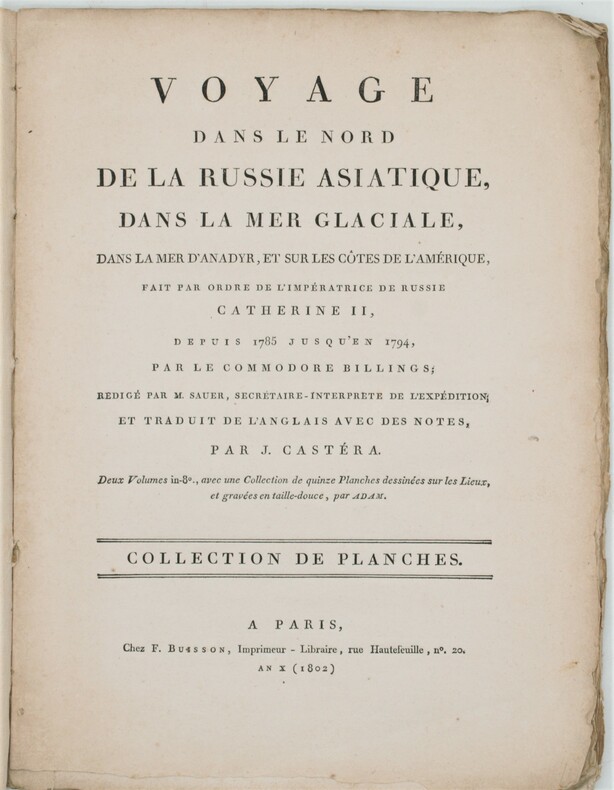
1802PHO-1648Paris, F. Buisson, et Giguen, an X – 1802. 2 volumes de texte in-8° (210x130mm), relié pleine toile époque, dos lisse. XXIV-385pp ; 417pp. et un Atlas In-4, broché, titre sur le plat contenant 14 planches gravées (vues, costumes) et une carte dépliante du détroit qui sépare l'Asie de l'Amérique. Bon exemplaire.
18942889Sitka Ak: August 1 1894. Very good plus. 5pp. Original mailing folds. A historically-illuminating eyewitness account of the burning of Baranof Castle the famous fort built in the New Archangel Sitka by the first governor of Russian America Alexander Baranov. During Russian rule the castle was the administrative center of Russian America. Baranof Castle was the site for both the formal ceremony of the sale of Alaska to the United States and the hoisting of the first American flag in Alaska. The building was continually reconstructed throughout its tenure and fully renovated in 1893. On the night of March 17 1894 the castle caught fire and burned to the ground apparently due to the ignition of oily rags stored there. At the time of the fire the building was used as the office and residence of the U.S. Court Commissioner Robert C. Rogers. Much later in 1962 the site where the castle once stood was declared a National Historic Landmark.<br /> <br /> The author of the present letter Julia E. Haley was the only daughter of Nicholas Haley a Sitka pioneer notable miner and important early landowner with several claims close to Sitka Bay. Born raised and ultimately buried in Sitka Julia Haley owned and operated the well-known curiosity shop the "Old Indian Trading Post" on Lincoln Street in Sitka in the first two decades of the 20th century. Her store offered a variety of local products and artifacts some of which purportedly came from the ashes of Baranof Castle though Haley's account of the fire seems to refute any possibility of relics being found in the ashes. Here Haley writes to a friend identified only as "Miss Young" a schoolteacher in San Francisco. In her letter Haley provides a detailed account of the Baranof Castle fire notes the troubles people have in getting to Sitka due to "much trouble on the railroads" and briefly describes a ball given by local ladies in honor of the Bering Sea Fleet "That is the U.S. Navy ships in harbour - Yorktown Mohican Albatross Ranger Hassler Corwin Adams Bear Rush Pinta and H.M. Ship Pheasant & Areal".<br /> <br /> Haley's description of the fire reads as follows: "I suppose you have heard about the Baranof Castle. It was burnt to the ground. Not even could we have a chip in remembrance. Of it nothing could be saved. It was impossible. Judge Rogers was in the building at the time & it took all they could do to get him out. He was at the windows for 8 hours crying for help. But no one heard him. Every one was asleep. He lost everything. Nothing saved only a long coat he had on. And his poor little dog was in the attic & no one could get near him. It was a beautiful building after it as nearly repaired. So you may tell your friends that the Baranof Castle at Sitka is no more. The ground it stood on is all there. The building after being repaired was going to be occupied by the officials & we miss the view so much. It was a very pretty fire. I wished you could have seen it. The flag pole was the very last to burn. They took several views of it which looks so much like it. Every one felth sic so sorry. All the ladies watched it from one in the morning until four."<br /> <br /> A unique account of one woman's experiences in far-flung Alaska in the last decade of the 19th century with a particularly noteworthy eyewitness account of the last moments of Baranof Castle. August 1 unknown
1900WRCAM54627Seattle; Skagway 1900. Twelve photographs each approximately 4 1/4 x 7 1/2 inches. Overall very good. A collection of photographs taken by Seattle photographer Frank La Roche. La Roche 1853- 1934 a Philadelphia native transplanted to the Northwest established a photography studio in Seattle in 1889. He undertook many trips to Alaska documenting the Klondike Gold Rush at length from 1897 to 1899. This group contains images of Juneau Sitka Fort Wrangell here spelled Wrangle and Taku Glacier. Two images are of Chilkat Tlingit Indians and one photo of the Seymour Rapids in British Columbia is also included. Each is numbered and captioned in manuscript or in print within the negative. Exemplary images from this noted landscape photographer of Alaska and the West. unknown books
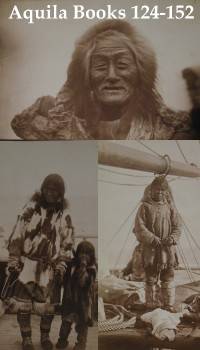
1890124152Alaska c 1890. Undetermined. near fine. Three card mouted 19th century albumen photorgraphs of eskimo from the Kotzebue Sound area of Northwestern Alaska. The images are mounted on black bevel mounts with grey backs 17.5 X 25 CM with the images being 11 X 19.5 cm. The condititon of the photos is excellent with good rich tones and little fading. All are captioned as above in an old hand. Two of the images were taken on the deck of a ship with the third undetermined. near fine Three very attractive images. We were unable to determine who the photographer is but the quality is so good that further research may yet results. 1890 unknown
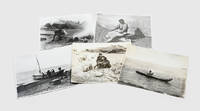
1900177155Early 1900s or slightly later. An evocative group of photographs depicting daily life and seasonal migration among the Iñupiat people. The images are taken around time of the Nome Gold Rush 1899 to 1908 a period that brought a massive influx of prospectors and drastically altered the region's demographics. Nome gained worldwide attention during the gold rush and in its aftermath the Iñupiat people underwent profound cultural and environmental shifts. Increased contact with outsiders the rise of wage labour and the introduction of Western goods by miners missionaries and teachers led to a transition from a semi-nomadic lifestyle to life in permanent villages. After the boom ended Nome's population sharply declined falling from an estimated 20000 in the early 1900s to fewer than 1500 by the 1930s. The photographer George R. King 1866-1951 was widely published with his work appearing in Sierra Club publications and in National Geographic including the 1919 feature Eskimo Life. Despite his visibility little is known about his career. Mautz lists him simply as a photographer from Boston who recorded claims on the Seward Peninsula in 1907 p. 47. King's photographs together with those of Frank H. Nowell the Lomen Brothers and others provide an important visual record during a period of rapid change. One of the images was published in The New America and the Far East 1907-10 with the photographer unidentified. Five gelatin silver prints from 182 x 234 to 197 x 248 mm all with pencillings on verso three with photographer's ink stamp on verso. Two a little yellowed a few small marginal chips tears or creasing minor surface abrasions: a very good collection. Carl Mautz Biographies of Western Photographers 2018. unknown
188076162Washington:: Government Printing Office 1880. Second Edition -- With Charts. publisher's lettered cloth. Cloth worn at the spine and extremities but tight and sound; contents apart from the vertical splits mentioned above fine. . Folio. Four charts in pocket at rear of volume. Printed "Compliments" slip of Sheldon Jackson U. S. General Agent of Education in Alaska tipped onto the title page. The collectors of the materials recorded in the Schedules were E. S. Smith assisted by William J. McDonnell Winter 1892 and 1893. There are Aleutian words and phrases recorded in ms. on dozens of pages; and in addition illustrations of a side view and ground plan of a native Western Alaskan house with detailed description; drawings of characteristic features of Eastern and Western Alaskan natives snowshoes boats paddles etc. Two of these illustrated descriptive pages have neat vertical splits not affecting legibility. Government Printing Office, hardcover
1802PHO-1231Paris, F. Buisson, et Giguen, an X – 1802. In-4, broché ,titre sur le plat Atlas seul contenant 14 planches gravées (vues, costumes) et une carte dépliante du détroit qui sépare l'Asie de l'Amérique. Bon exemplaire.
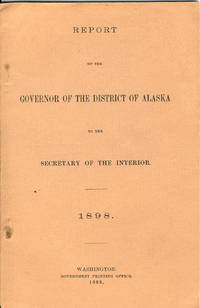
189832865Washington: Government Printing Office 1898. 1898. First edition. 8vo. Salmon-colored printed wrappers 49 pp. map. Large portion of the report deals with more effectually carrying out the law prohibiting the sale of intoxicating liquors in Alaska. Mention is made of a tribe on the Admiralty Island known as the "Hoochinoos" who used to smuggle to the soldiers at Sitka a beverage known as "hoochinoo" and "hooch." "Hooch" was made from a mash of black molasses imported from the Hawaiian Islands. Smuggling and the control of smugglers is of great concern to the law as well as effectively enforcing the laws to protect both saloon keepers and the citizens. The governor further reports on criminal and penal laws land laws population taxable property agricultural development stock raising reindeer fur seals sea otters mining etc. Disasters are included in the report with the mention of the schooner Lady Jane Grey that went down off Cape Flattery with only a few saved. A map of the longitudinal section of workings of the Alaska/Mexican Gold Mine is also present. A fine clean copy. WICKERSHAM 227. Government Printing Office, 1898. unknown
1898WRCAM32668Washington: United States Geological Survey 1898. 244pp. plus folding colored map. Original printed wrappers detached. Map with four neat closed tears. Text bright and clean. Very good. Report issued by the United States Geological Survey for the use of prospectors and miners including descriptions of routes to the Klondike and notes on the probable extent of gold-bearing deposits. The large folding map of Alaska is particularly fine and has some of the gold region shaded in bright yellow. WICKERSHAM 8223. United States Geological Survey unknown books
1875WRCAM18480San Francisco 1875. 43pp. Original front wrapper bound into later half morocco. Very good. A propagandistic appeal by the unsuccessful bidders for a fur seal contract for the repeal of the so-called monopoly of the Alaska Commercial Company. Claims to present only the "facts" and calls on the people and press of America to petition Congress for the repeal the government granted to the Company for a monopoly in the fur seal trade. Includes a brief historical sketch of Alaska focusing on how her natural riches came into the hands of a few money-hungry robber barons and paints a dismal picture of the "serfdom" of the civilized natives on the fur seal islands of St. George and St. Paul. TOURVILLE 269. RICKS p.26. WICKERSHAM 1793. unknown books
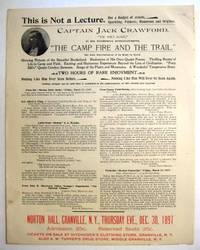
189729536New York 1897. Broadsheet 9 1/2" x 12". With a small oval half-tone portrait. On recto at the bottom printed in red: 'Norton Hall Granville N.Y. Thursday Eve. Dec. 30 1897.' Near Fine.<br /> <br /> A rare announcement of a public entertainment-- "Not a Lecture. But a Budget of Jewels Sparkling Pathetic Humorous and Original"-- by this popular Western hero who on his first outing as a reporter in 1875 promoted the Black Hills Gold Rush. John W. Crawford 1847-1917 was a "poet-scout" who memorialized Custer and Wild Bill Hickok in verse. He "was one of the original discoverers of gold on French Creek in the Black Hills in 1876." After a stint with Buffalo Bill's Wild West Show which he left when he accidentally shot himself in the groin blaming it on Buffalo Bill's drinking he moved to New Mexico to scout for the Army against the Apache. He "did more than any other man in the Territory in bringing before the public the immense mineral wealth of New Mexico."<br /> This broadsheet not only publicizes Captain Jack's Entertainment but also promotes "The Capt. Jack Crawford Alaska Prospecting and Mining Co." Testimonials to Crawford are printed here along with an invitation for the recipient to receive a Company prospectus.<br /> OCLC 778631567 3- Yale SMU U AK as of February 2023. unknown
190054584Washington, Governemnt Printing Office, 1900. Large 4to. Orig. red full cloth. Gilt lettering on spine. Spine dusty. VII,856 pp., textillustrations, 33 plates and 27 folded maps. Internally clean and fine.
190054584Washington Governemnt Printing Office 1900. Large 4to. Orig. red full cloth. Gilt lettering on spine. Spine dusty. VII856 pp. textillustrations 33 plates and 27 folded maps. Internally clean and fine. hardcover
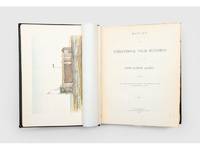
1885186340Washington DC: Government Printing Office 1885. First edition of the official United States government publication documenting the American contribution to the First International Polar Year of 1882 and 1883. The expedition departed San Francisco in July 1881 and established a long-term observing station near Point Barrow which remained in operation until 1883. The report records the practical realities of Arctic fieldwork including coastal and inland travel by sledge methods of construction and survival in polar conditions and the use of permafrost for storage. It also documents notable events of the expedition among them the loss of the whaling vessel North Star to the ice. The folding map illustrates the surveyed coastline and inland routes explored during the expedition. Quarto. Colour frontispiece 2 chromolithograph plates 10 photogravure plates lithograph plate 7 wood engraved plates 5 charts folding map. Original black cloth spine lettered in gilt boards ruled in blind. Bookplate of "Karl A. Pember". Ownership inscription of "James Moffitt" in black ink to front free endpaper. Spine toned with spot of wear gilt faded a couple of corners worn faint marks to covers front joint starting but firm minor foxing. A very good copy. Arctic Bibliography 7747 and 14292 for the Narrative; Casey Wood p. 530. hardcover
188743533London: Sampson Low Marston Searle & Rivington 1887. 8vo. xiv 2 248 pp. plus 32 pp. publ. ads. Frontisp. numerous text illusts. 2 colour maps 1 large folding. Illust. gray-blue cloth illust. of scene w/ kayak & canoe on front cover gilt lettering minor bumping to couple corners foot of spine minor rubbing old shelf number at foot of spine still a VG- copy. First edition of this fascinating account by the famed Victorian big game hunter archaeologist mountaineer and explorer. Seton Karr 1859-1938 describes in the book how his party were some of the first passengers to cross Canada by the new Canadian Pacific Railway then a steamship journey north where he made an attempt to scale the 18000 ft. summit of Mount St. Elias but his climbing party was forced back at 7200 feet. Of interest are also his observations of Alaskan Native Americans including a vocabulary for Chugachmiut Indians big game hunting the Aleutian Islands the Alaskan Fur Trade and more. Sampson Low, Marston, Searle & Rivington, hardcover
180324404Weimar, Verlag des L. Industrie Comptoirs, 1803. 67,5 x 50,5 cm
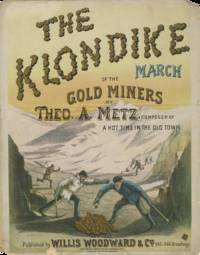
1897Cat358New York: Willis Woodward & Co 1897. Folio sheet music complete. Illustrated color lithograph title page by Robert Teller. Covers detached contents complete good with lithographed cover in particularly bright and attractive condition. Sheet music issued at the height of the Klondike Gold Rush capitalizing directly on the surge of public interest following the discoveries in the Yukon in 1896–1897. The lithographed title page signed in style by Robert Teller shows a dramatic scene of prospectors working a gold deposit in the mountains with two miners in the foreground bent over a pile of freshly uncovered gold tools in hand. Theodore August Metz was a German-born musician trained on violin in Hanover who emigrated to the United States and worked various trades before establishing himself as a bandleader and composer in Chicago’s late 19th-century popular music scene. He achieved national prominence with “There’ll Be a Hot Time in the Old Town Tonight†1896–97 a widely performed marching tune that became especially popular during the Spanish-American War and in minstrel and touring band repertories. <br /> <br /> OCLC 726910235 locating a single copy at the Levy Collection. Willis Woodward & Co unknown
189729536New York 1897. Broadsheet 9 1/2" x 12". With a small oval half-tone portrait. On recto at the bottom printed in red: 'Norton Hall Granville N.Y. Thursday Eve. Dec. 30 1897". Near Fine.<br/><br/> A rare announcement of a public entertainment-- "Not a Lecture. But a Budget of Jewels Sparkling Pathetic Humorous and Original"-- by this popular Western hero who on his first outing as a reporter in 1875 did much to promote the Black Hills Gold Rush. John W. Crawford 1847-1917 was a "poet-scout" who memorialized Custer and Wild Bill Hickok in verse. He "was one of the original discoverers of gold on French Creek in the Black Hills in 1876." After a stint with Buffalo Bill's Wild West Show which he left when he accidentally shot himself in the groin blaming it on Buffalo Bill's drinking he moved to New Mexico to scout for the Army against the Apache. He "did more than any other man in the Territory in bringing before the public the immense mineral wealth of New Mexico."<br/> This broadsheet serves not only to publicize Captain Jack's Entertainment but also to promote "The Capt. Jack Crawford Alaska Prospecting and Mining Co." Testimonials to Crawford are printed here along with an invitation for the recipient to receive a Company prospectus.<br/>OCLC 778631567 2- Yale SMU as of March 2018. unknown books
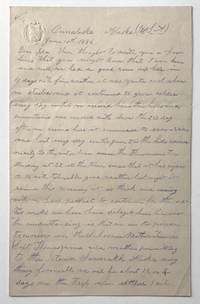
18861242Unalaska 1886. Very good. 4pp. on a small bifolium. Previously folded. In a relatively neat legible script. A manuscript letter by one S.L. Beckwith describing his 1886 travels through the Aleutian Islands and the town of Unalaska addressed to a woman named Ida perhaps his sister. It reads in part: <br/><br/>"This is a poor miserable place. The AC Co. has one comfortable house outside of storehouses coal house salt house oil house and the like. The houses are all small. There is one small church denomination the Russian Greek Catholick. There is about 40 buildings in all here and about a Doz. of Berakies that is underground houses. Everything is built on the sand beach. There is plenty of codfish here also salmon salmon trout brook trout some striped fish and plenty of clams. There is no wood growing on this land."<br/><br/>He goes on to describe the steamer and trading activity in the port and also discusses his prior travels and onward journey through the Aleutian Islands. The "AC Co." mentioned is the Alaska Commercial Company which supported the seal and fur trades in Alaska during the 19th century after it was purchased by the United States. It was headquartered in San Francisco and ran operations in Unga and St. Michael as well as in Unalaska. A brief but interesting account of this Alaskan trading outpost during the 1880s. unknown books
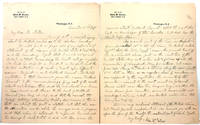
1899249256Washington D.C. 1899. 4 pp. 4to. Old folds else fine. 4 pp. 4to. The letter traces the diplomatic claims of Great Britain in Alaska and goes into detail about the 2 contested parts the "Portland Channel" and the parallel 50 degrees to Mt. St. Elias. <br /> He is grandfather of John Foster and Allen Dulles. He was also TR's head commissioner in the negotiations on Alaska-Canadian boundaries in 1903. unknown