469 résultats
192539563Portland OR: George Edward Lewis 1925. 12mo. 69 1 pp. Numerous text illusts. Printed gray wrappers blk lettrng & decrtn mnr shlfwr VG copy inscribed by the author on half-title. First edition inscribed by an Alaskan pioneer who eventually made the first silent movies produced in Alaska including The Chechakos Hearts of Alaska and North of Nome. Certain scenes shot of miners crossing the Chilkoot pass were used by Chaplin in The Gold Rush 1925. George Edward Lewis, unknown
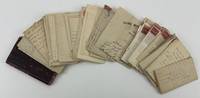
19104010Various locations including Sprague Wa.; Vancouver British Columbia; and Nome Ak 1910. Very good. Thirteen autograph letters signed totaling thirty-nine pages and a few original transmittal envelopes. Original mailing folds occasional short fold separations otherwise minor wear. Overall a well-preserved group stored in an antique wooden box from the St. Paul Rubber Company. An interesting collection of manuscript letters written to Fred Lindberg of Hallock Minnesota by his brother and other individuals participating in the Alaskan and Yukon gold rushes between 1897 and 1910. The preponderance of the correspondence relates to the ill-fated experiences of Fred's brother Albert William Lindberg who writes four letters while on his way to the Alaskan gold fields before apparently committing suicide in Nome in 1909. Albert William "Willie" Lindberg was a Swedish-American gold prospector from Minnesota who spent significant time in Washington State before trying his luck albeit unsuccessfully in Alaska.<br /> <br /> The four letters from Willie begin with his February 20 1897 letter to his brother Fred in Hallock Minnesota. With unbridled enthusiasm Willie writes from Sprague Washington that he has "heard so much about Alaska that I made up my mind to go." Willie encourages Fred to join him to work in the mines where he expects to "pick gold nuggets." Willie informs Fred that he has sold his horses and saddle and has collected about $400 with which he intends to "make a raise or go broke" in Alaska. He extolls Fred to raise his own money and come to Alaska where he intends to "make a fortchen sic fortune." Willie concludes: "And when we get there you will see one of the luckiest Swedes that ever struck Alaska." Lindberg next writes from Vancouver on March 20 1898 again to his brother Fred informing him that he is on the way to Alaska. He promises to "stake out a clame" for Fred once he gets there though he now believes that going to Alaska might be "a foolish trip." Still he intends to stay "as long as I can" in the Alaskan gold fields in the company of "an old miner he has mined for the last 35 years."<br /> <br /> Willie writes another letter on March 20 after he arrives in Juneau which he describes as "quite a town and everything is just as cheap here as in Seattle or Vancouver and food and lodging is $1.00 a day." Here Willie informs Fred that he intends to go further north to Dyea north of Skagway because "I want to go where the big strikes is made." Willie's last letter emanates from Seattle where he has apparently returned perhaps for the winter from the previous year but now informs Fred that he intends to start on his "wild goose chase again." Instead of "Cape Nome" Willie intends to go to Skagway then "down the Youkon River it is mining camps all along the Youkon River and I think it will be better up there than down at Cape Nome it is bound to be over down at Cape Nome this summer when all these people get there."<br /> <br /> Willie's letters are accompanied by a pocket-sized notebook in which he recorded a small amount of financial information for the Nome Bank in 1908-09 as well as listings of food and other goods he purchases there and a five-page diary-style entry dated February 15 1907. In the latter Willie writes introspectively about his state of mind and habits at one point noting that "at times you are liable to become blue and depressed really there is no cause to be that way." <br /> <br /> Lindberg's single diary entry in the notebook is especially intriguing considering he apparently committed suicide in Nome in 1909 according to five letters present here dated in the summer and fall of 1909. This includes two letters sent from Wentworth Brothers the undertakers in charge of Willie's remains. The first of these letters dated May 24 1909 begins: "On May 11th 1909 Mr. Lindberg W. was found in cabin on Belmount Point dead. Cause gun shot wound and the Coroners Jury brought in verdict of suicide. Two of his friends Mr. Godfry Johnson and John Olson furnished the funeral arrangements - as he was without money." In each of the two letters the undertakers ask that Fred Lindberg respond to them whether he wishes Willie to be buried in Alaska or have the body shipped to Minnesota. The other three letters were written from two of the men who found Willie's body; the authors were responding to Fred Lindberg's wife who sent letters to Nome inquiring about Willie's death. Two of the letters were written by Phillip Corrigan of the Nome Mine Workers Union in August and the third by Gotfred Johnson in September. Corrigan details finding the body wondering if "may be he was fooling with the gun and accidentally shot himself." He then writes that he has known of Willie prospecting in the area since 1907 but that he "did not find pay at any time" and had no money at the time of his death" though "he may have some claims here."<br /> <br /> In the next letter Corrigan details both a quartz and placer claim in which Willie had an interest then provides further detail on the claims and what must be done to maintain them. Johnson writes a highly-detailed five-page letter conveying his background and experiences with Willie providing important biographical material and informing Fred that Willie seemed in "good spirits" when he last saw him "3 or 4 days" before his suicide. Another letter from Nome in August 1909 is present here written on the same Nome Mine Workers Union stationery as Corrigan's letters by Carl de la Motte; the two-page letter seems to relate information on Willie but is written in Swedish.<br /> <br /> The present archive also includes four letters written to Fred Lindberg from his friend Edward A. Johnson in Circle City Alaska. Written between July 5 1905 and June 10 1906 Johnson's letters indicate he was tasked by Fred to find his brother Willie. In his first letter Johnson writes from Mastodon Creek that he has been unable to find anything "about Will." In his subsequent three letters Johnson details his search for Willie often mentioning that he expects to locate him in Fairbanks or Nome but never does. In the process Johnson relates other interesting details about Alaska and his experiences there including a report on weather patterns as they relate to the seasonal nature of the mining industry informative descriptions of the Alaskan country he visits in "the Tanana districts at Fairbanks" his decision to acquire claims near Mastodon Creek and the unreliable nature of the Alaskan postal schedule. The archive also includes several unrelated Lindberg family letters mostly written to Willard Lindberg of Hamline University in St. Paul Minnesota in the mid-1920s but these are not included in the letter and page counts above.<br /> <br /> An unusual collection of manuscript letters of particular interest to the study of suicide in American history documenting both the optimism of a young Minnesota man on his way to find fortune in the Alaskan gold fields and his tragic end by his own hand in Nome a little over a decade later. unknown
188076162Washington:: Government Printing Office 1880. Second Edition -- With Charts. publisher's lettered cloth. Cloth worn at the spine and extremities but tight and sound; contents apart from the vertical splits mentioned above fine. . Folio. Four charts in pocket at rear of volume. Printed "Compliments" slip of Sheldon Jackson U. S. General Agent of Education in Alaska tipped onto the title page. The collectors of the materials recorded in the Schedules were E. S. Smith assisted by William J. McDonnell Winter 1892 and 1893. There are Aleutian words and phrases recorded in ms. on dozens of pages; and in addition illustrations of a side view and ground plan of a native Western Alaskan house with detailed description; drawings of characteristic features of Eastern and Western Alaskan natives snowshoes boats paddles etc. Two of these illustrated descriptive pages have neat vertical splits not affecting legibility. Government Printing Office, hardcover
191260617Toronto: The Copp Clark Co. Ltd. 1912. 8vo. xvi 246 pp. Photogravure frontisp. by Carl Rungius 3 photogravure plates by Rungius numerous photo plates 5 maps 1 folding. Publisher’s blue-green cloth gilt illust. of Grizzly Bear & lettering front cover gilt lettering on spine t.e.g. minor shelfwear slight rubbing occasional light spotting still VG bright copy. First Canadian edition of this well-illustrated and documented account of hunting and observing on Vancouver Island Montague Island Queen Charlotte Islands and includes a chapter of his wife Louisa Walker Gulliver Sheldon’s b. 1880 experiences bear hunting on Admiralty Island. Sheldon 1867-1928 trekked by steamboat canoe pack horse and on foot with other explorers and hunters such as Frederick Selous William H. Osgood and Carl Rungius hunting caribou grizzly bears moose and other big game as well. The Copp, Clark Co., Ltd., hardcover
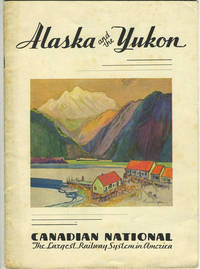
193326806Canada: Canadian National Railway System 1933. Paperback. Very good overall. A tourist brochure advertising trips up the Inner Passage from Vancouver to Skagway Alaska. Extensively illustrated with a double page map centerfold. With a stamp on the last page where this was distributed by the Canadian Nat. Railways in Sydney Australia. Includes a separate sheet "Canadian National Steamships Alaska Service -1933" which shows schedules for Vancouver Prince Rupert and Skagway. The fare from Vancouver/Seattle and Victoria to Skagway round trip $90.<br /> <br /> 4to 24pp color illustrated front cover with black titles color map at centerfold staplebound. Slt. dusty cover. Canadian National Railway System paperback
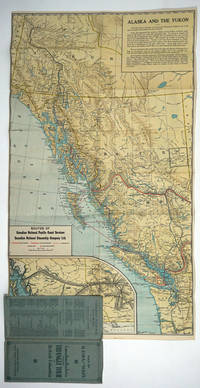
192726808Canada: Canadian National Railways 1927. Pamphlet. Very good condition. Double sided map of the railroad routes of the Canadian National Pacific Coast Services and the Canadian National Steamship Company Ltd. The map covers the area from Dawson Alaska to Portland Oregon. The verso is a pictorial map of the Triangle Tour of British Columbia Jasper National Park and Mount Robson Park with text about Jasper. <br /> <br /> Color map 17 x 30" folding 4 x 9 1/4" blue card wraps with green titles. Sml closed tear at one fold. Canadian National Railways unknown
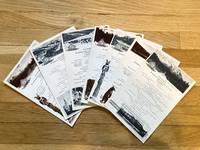
193112157Alaska Steamship Company 1931. First Edition. Cardstock. Very Good. Seven menus from a 1931 voyage of the SS Yukon printed on cardstock and illustrated with black & white photographs and the "Alaska LIne" logo on the verso; one large black & white photograph on the recto mostly of Alaskan scenery but including one photograph of the SS Yukon. Slight yellowing and rubbing to edges. The ocean liner SS Yukon built in 1899 joined the Alaska Steamship Co. fleet in 1924 and remained in service until 1946 when she was wrecked off the Alaskan coast with the loss of eleven lives. Dust jacket is now preserved within a clear removable archival protector with acid-free backing. Alaska Steamship Company unknown
195056567Seattle WA: Captain Olaf H. Hansen ca. 1950. 4to. 11 leaves typescript manuscript w/ ink manuscript annotations on verso of last leaf a couple corrections. Light gray limp cover split-pin binder manuscript cover title rounded corners minor shelfwear rubbing still VG exemplar from the library of Captain Olaf Hansen 1877-1959 Danish-American sea captain from Seattle WA w/ bookplate on verso of front cover. A remarkable typescript manuscript detailing Captain Hansen’s experiences with Henry Carlton Strong 1869-1954 who not only was Ketchikan’s postmaster but also owned the Clark & Martin fish-saltery located at the mouth of Ketchikan creek. Hansen was recruited as an 18 year old to work on the steamer Alert a whiskey runner for smuggling from Port Simpson to Juneau when Alaska was still a dry Territory in order to secure the mail delivery contract. The Captain “was a part Negro and his name was Watson and was the only one available who had a second class pilot license for the Ketchikan District. . . as we had the mail contract on account of her speed.†He goes on later after picking up mail sacks that “our first stop was at Grindall where Thomlinson and Syare were located. They had a store. . . on the wall . . . I saw the lithographed map which was used in New York to make the suckers to buy stock in their mining company and it showed a fine big harbor with seven men of wars anchored in it and lots of room to spare.†Hansen jumps ship and heads back to Seattle and then down the West Coast while Strong would continue to establish and expand the Northland Steamship Company. See: Louise Brick Harrington Henry C. Strong Pioneers of Southeast Alaska Stories in the News August 10 2006. Captain Olaf H. Hansen, unknown
171959230Washington D.C.: Government Printing Office Hydrographic Office U.S. Navy 1917; 1930. Two vols. 8vo. ix 1 4 364 pp.; 19 mimeograph leaves. With 2 large folding colour map. First vol. in black publisher’s buckram silver lettering stamped on front cover & spine minor shelfwear slight interior toning shelfwear 2nd vol. mimeographed typescript & stapled at gutter margin minor dustsoiling edgewear predation to lower fore-edge tear to last leaf of blank lower portion still a VG set. First editions of these coast pilot guides to Arctic waters during and after World War I issued about the time of the Russian Revolution and offered key navigational guides for Naval forces during the ill-fated White Russia Revolution and over 13000 troops in the Polar Bear Expedition. Prior to modern GPS systems and satellite navigation these regularly updated and revised navigation handbooks provided key sailing instructions often drawing not only from Russian & British sources but also sailing reports from U.S. Navy vessels and those from merchant ships. The two maps serve as indexes to sailing charts to be ordered from the Hydrographic Office and keyed to sailing instructions within the coast pilots. The supplement is uncommon no copies located in Worldcat. Government Printing Office, Hydrographic Office, U.S. Navy, hardcover
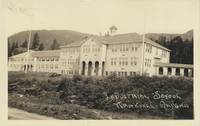
77191The Industrial School in Wrangell Alaska pictured in this circa 1905 real photo postcard was founded in 1877 by the first Presbyterian Church in Alaska. The purpose was to teach young native men of the area known as the Tlingit various American trades such as printing boatbuilding and construction. It closed in 1907.<br /> <br /> A new Wrangell Institute boarding school was operated by the Bureau of Indian Affairs from 1932 until 1975 at a site a few miles south of Wrangell. Children were forced to attend the school which for some was a traumatic experience because they were removed from their homes and families and forbidden from speaking their native language.<br /> <br /> The black-and-white card measures roughly 5 ½" x 3 ½" with a few light pencil markings on the verso. The front of the card is coated and the name of the school and location are etched in the negative. Overall in very good condition. unknown
194443828Seattle: Frank McCaffrey n.d. 1944. 1944. 10" x 7 5/8" in pictorial wrappers. 28 pp. including wrappers. Illustrations. Map. Information on all one might expect to see and do when visiting Alaska. Offers extensive information on Alaska's history and sites to include its glaciers Indians totems mining midnight sun etc. followed by information on a variety of tours and cruises to include Golden Belt Line Tours Yukon River Circle Tours Copper River - Keystone Canyon Tours the Inside Passage and Totemland Tours Prince William Sound Cruises etc. Also offers basic information about an Alaska cruise to include when to visit what to wear what about mail etc. Black and white photographs throughout to include Sitka Edgecumbe Childs Glacier Mt. McKinley individuals participating in various activities Valdez Skagway Wrangellvarious ships in the fleet etc. Inside rear wrapper is a color system map showing the routes of the various tours offered. Covers and spine worn and with splits to head and toe of spine. Rear wrapper with travel agency sticker. Inside rear wrapper reinforced with tape. Still a nice presentation of all Alaska has to offer. Frank McCaffrey, n.d. [1944]. unknown
1932142456Chicago: U. S. Department of the Interior 1932. 10pp. Square octavo. Colourfully illustrated paper wrappers with a map of the Alaska Railroad on the verso of the back wrapper. Heavily illustrated with black and white photos and drawings within the text. Fold line down the middle where it was folded to act as a pamphlet. Very mild edgewear to the wrappers otherwise a very good copy of this scarce piece of ephemera. A wonderfully produced little pamphlet promoting the Alaska Railroad and the central portion of Alaska as having the "choicest big game fields" in America. U. S. Department of the Interior unknown
189060273St. Paul MN: W.C. Riley Publisher Engraved by Charles Frey Franfurt Germany ca. 1890. Oblong 8vo. 9.75 x 6.25 in. 30 leaves unnumbered. sepia-tinted leporello accordion-style format. With 30 lithograph plates including 1 double-leaf plate w/ 2 birds-eye views of Minneapolis & St. Paul 1 birds-eye panoramic views of Northern Pacific train & Duluth Harbor many sepia-tinted views on remaining. Quarter-black cloth over elaborately decorated & embossed burgundy-coloured covers gilt lettering & decoration front cover minor scuffing edgewear small discrete paper repair to a few hinges hinge still a VG copy. Third edition “30000†of this nicely executed souvenir book issued in the same size as the popular “Boudoir†albumen souvenir photos for the Northern Pacific as its route opened through the Northern United States railroad lands for development across the West and expanding upon the much smaller original 1888 “Northern Pacific Tour.†These lithographs were created by hand-drawn images from photographs and printed using the Glaser/Frey lithographic process using five or more stones to lay down a series of separate shades offering a varnished look. The NP RR souvenir view book includes images of Dakota wheat fields Custer Battlefield monument Crow Indians at Yellowstone Montana cattle roundups and gold mining along the Columbia River with birds-eye views of Butte & Helena MT Spokane WA and salmon fishwheel as well as early birds-eye view of Portland OR. Views of Alaska include Sitka Juneau Totem Poles on Wrangel Island and the glaciers. The piece concludes with birds-eye view of San Francisco. W.C. Riley Publisher, [Engraved by Charles Frey, Franfurt, Germany], hardcover
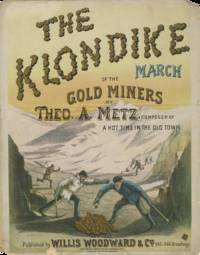
1897Cat358New York: Willis Woodward & Co 1897. Folio sheet music complete. Illustrated color lithograph title page by Robert Teller. Covers detached contents complete good with lithographed cover in particularly bright and attractive condition. Sheet music issued at the height of the Klondike Gold Rush capitalizing directly on the surge of public interest following the discoveries in the Yukon in 1896–1897. The lithographed title page signed in style by Robert Teller shows a dramatic scene of prospectors working a gold deposit in the mountains with two miners in the foreground bent over a pile of freshly uncovered gold tools in hand. Theodore August Metz was a German-born musician trained on violin in Hanover who emigrated to the United States and worked various trades before establishing himself as a bandleader and composer in Chicago’s late 19th-century popular music scene. He achieved national prominence with “There’ll Be a Hot Time in the Old Town Tonight†1896–97 a widely performed marching tune that became especially popular during the Spanish-American War and in minstrel and touring band repertories. <br /> <br /> OCLC 726910235 locating a single copy at the Levy Collection. Willis Woodward & Co unknown
19053538Copper River Valley Ak 1905. Very good. Forty-five printing-out paper photographs between 3.25 x 3.25 and 4 x 6 inches plus three real photo postcards. Minor wear a few creases occasional light soiling. A unique collection of almost fifty images capturing scenes in and around Copper Center in the Copper River Valley of Alaska in the years after gold was first found there in 1898. The images document pioneers panning for gold running dog sled teams posed in front of early wooden buildings in a bleak snow-covered landscape and more as well as capturing shots of a riverside mill a wooden bridge scenery on the Copper River and the majesty of the surrounding forests. A handful of the images capture pioneer women and children posed for the camera in winter clothing worn to combat the bitter Alaskan winters. One image pictures three men and two dogs standing outside the Hotel Holman an early Copper Center roadhouse that began in a tent but was opened in a wooden structure in 1899; the present image captures the post-1899 wooden structure. The Holman Hotel was established in July 1898 by Copper Center's first resident Andrew Holman in order to provide shelter for prospectors on their way to the Klondike gold fields. Copper Center is located northeast of Anchorage and served as a brief but important way station for gold prospectors in southeastern Alaska; one image here apparently pictures the early riverside settlement or is perhaps an early view of Anchorage. A rare view of Alaskan life in an uncommonly-seen settlement during the first decade of the 20th century. unknown
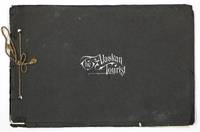
1905144857Skagway Alaska: Edw. H. Mitchell for Case & Draper ca. 1905. Oblong 12mo 22 X 15 cm. Illustrated with 16 tinted plates from photos including scenes of Skagway Summit of White Pass Lawton Glacier and Totem Poles at Sitka. Original black wrappers with white lettering on front cover and brown tie strings on spine. Minor chips to front edge of covers. A very good copy with clean and bright photos. Not in Tourville or Kurutz. For some reason seems very scarce. 1905 Edw. H. Mitchell, for Case & Draper unknown
122173Skagway Alaska: Edw. H. Mitchell for Case & Draper. Softcover. very good. 1st Edition. unpaginated. Oblong 12mo 22 X 15 cm. Illustrated with 16 tinted plates from photos including scences of Skagway Summit of White Pass Lawton Glacier and Totem Poles at Sitka. Original black wrappers with white letterng on front cover and brown tie strings on spine. Minor chips to front edge of covers. A very good copy with clean and bright photos. very good Not in Tourville or Kurutz. Seems very scarce. Probably considered more of a Skagway item based on the photos. Edw. H. Mitchell, for Case & Draper paperback
19224725Alcova Wy.; Gulham and Achorage Ak 1922. Very good. Eight autograph letters signed totaling approximately 32pp. All in original transmittal envelopes. Old mailing folds minor wear. A small archive of letters documenting brief bouts of time in the life of a young Massachusetts man working in Wyoming and Alaska in the years during and just after World War I. William Sherman Platt 1896-1969 was born in Troy New York. Throughout his life he worked as a shipper at a lumber yard and eventually as the manager and then proprietor of a coal company by 1950. He served in the military during the latter portion of the First World War but apparently did not serve in Europe. Later at the age of 46 he filled out a draft card for World War II but it is unclear whether he served during the war likely not. The present collection of his letters document two brief snapshots of Platt's life as a young man from about ages eighteen to twenty-six.<br /> <br /> Platt wrote his earliest five letters from Gate Ranch in Wyoming to his parents back in Leominster Massachusetts. Platt's earliest letter from Wyoming dated July 4 1914 includes his initial reaction to the place and a stark appraisal of the locals: "I think I will enjoy things here very much indeed when I get accustomed to the place & the people. They are for the most part ignorant animals but they all mean well." In his second letter Platt complains about the slowness of the mail then offers an appraisal of the food in Wyoming: "The food is plain but well cooked and palatable and there is always plenty of it." In his third letter Platt describes the road work he was performing in and around Alcova: "Last week myself and two other fellows went down toward Alcova fixing the road. We were fixing up an old wood road for Mr. Schoolmaker to use as an auto road We camped out cooking out or meals and sleeping in our tents. It was very interesting." He describes some of his other work in his penultimate letter from Wyoming on July 30: "You want to know what I am doing. Well I am working. So far I have worked at carpentering surveying irragating sic road building and fence repairing beside hoeing weeds and helping a little with the chores once in a while. I don't know what I may strike yet. I am very busy but it is not what you would call distinctively Western work. I might do it anywhere. Still it is all right." He then provides another impression of the locals in Wyoming: "I have more fun than a little listening to these fellows around here talk. They are mostly old American stock who think that they are as good as anybody and a little better. They have views on all conceivable subjects which they are glad to air on all occasions aided with a copious flow of profanity. They sure are some fun." Platt writes his last letter from Wyoming on August 2 and reports further on his activities reading helping the cook the food again and also discusses his prospects for college which he apparently meant to start soon. He prefers to attend Clark University in Worcester but also mentions staying on the ranch in Wyoming "to learn something about ranch work" until December and then heading home to Massachusetts after going to see San Francisco.<br /> <br /> Apparently Platt enlisted in the Marines sometime in 1917 as one of his letters is dated September 16 from that year while at Paris Island South Carolina. Platt details his training and "hard labor" in the military. He had apparently left the military for the timber industry in Alaska by 1920 as his final two letters emanate from Chitina Alaska in the Fall of 1920. Platt's first letter is dated October 5 1920 and describes his work in Alaska: "Since I wrote last I have been working in the woods steadily.so long as I stay here. Really the logging here is a joke. The timber is small scattered and almost all rotten at the butt. Today there were 7 of us in the woods and we only got 70 logs short ones at that 12 to 16 ft. I have been climbing the trees all the time and I guess that will be my regular job from now on. It is easy. Most of the limbs are dead and break off." He also describes the short working day his camping rituals his like for malamute dogs and their work eating caribou and more. The present collection also includes two letters from Platt's mother sent to him in Alaska reacting to his activities but largely reporting on events from home. Platt's second and last letter from Alaska dates from January 11 1922 from Anchorage when he writes a friend also named Bill. Platt spends about half of this letter detailing the opportunities for mining in Alaska and describes a trip into the Alaskan interior: "But there is all kinds of mining on all sides of it. For quartz why the Willow Creek District is about the best. There is probably a dozen outfits operating. There is also a few coal mines in operation some at Kenana Healey & Eska Creek and a few other smaller layouts in different places. Summer before last I took a trip in through the Interior but I found it very unsatisfactory. Very expensive to move and the wages wasn't over 5 or 6 dollars a day and board for labor." In addition to his own letters the present group includes a 1917 letter from Platt's grandmother asking him to stay away from the current "awful war" as well as four family letters from the late-19th century. A small but informative group of letters surrounding a young Massachusetts man adventuring in the American West and Alaska in his younger years. unknown
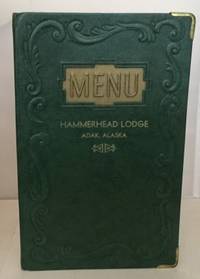
A37467Adak AK: Hammer Head Lodge. Very Good. 0. Hardcover. This is a cardcover folder / menu with a decorated and stamped front cover. The interior contains two typed pages of menu items with prices under plastic holders. This menu is from circa 1955 at the Hammerhead Lodge which was the Naval Officer's mess on Adak Island Alaska. "On 1 July 1950 the Air Force transferred Davis AFB to the United States Navy who established an anti-submarine warfare base there. Adak was most recently run by the U. S. Navy as a deployment base for P-3 Orion maritime patrol aircraft primarily to conduct antisubmarine warfare operations against submarines and surveillance of naval surface vessels of the former Soviet Union. The Naval Air Facility was also reported to be used as a refueling stop for U-2 Dragon Lady ultra-high altitude reconnaissance aircraft. By the 1980s there were over 6000 Navy personnel on the islands. With the fall of the Soviet Union in the early 1990s NAS Adak's operational viability as a front-line military installation began to wane and in the mid-1990s a decision was made by the federal government to cease military flight operations there under the military's Base Realignment and Closure Program BRAC. On 31 March 1997 the Navy closed Adak Naval Air Facility. The lowering of the flag for the last time ended an era that began of 31 August 1942 when U. S. Forces landed on the Aleutian Island and established an advance base there for operations against the Japanese on Kiska and Attu Islands. The Navy left behind a contingent of 30 Navy personnel and 200 civilian contractors to maintain facilities keep the runway open and begin an environmental cleanup." . Hammer Head Lodge hardcover
1898300586Chicago: Poole Bros 1898. hardcover. very good. Large colored folding map laid in. 61 page pamphlet slim oblong 12mo stiff pictorial wrappers. Internally near fine covers are lightly soiled and corners and top of spine chipped. Chicago: Poole Bros. 1898. First Edition. Scarce. Very good.<br/> <br/> Poole Bros unknown
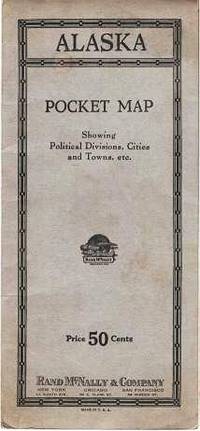
1930039757Chicago: Rand McNally & Co 1930. First Edition. Softcover. Very Good. Map in color opens to 21" x 28". Folded into gray stiff wrappers 9.25" x 4.25" Inset of the Aleutian Islands. Rand, McNally & Co unknown
a104032Palmer Alaska. 2008 first edition. Matanuska Susitna Borough. 133 color arial maps. Oblong large folio - 11 x 18 inches. Plastic spiral binding. VG maps are in Fine condition. from a non-circulating depository library so light library markings. . unknown
a51467June 1983. Denver Service Center National Park Service Department of the Interior. Hardcover. 4to. 163pp. photo illustrations wraps. In hardcover case with pocket containing 6 very large foldout maps of Mining Claims in the area showing mining camps landing strips and placer claims. Numbers and name of depository library on front cover. VG. Quite Scarce. . hardcover
18981143655th Cong. 2d. Sess. Washington 1898. 5 1 pp.with EIGHT OTHER BILLS ON 5975 DURING THIS SESSION through its House Passage in March 1898. Quarto bound together in new plain wrappers. Institutional stamps some blank edge chipping Good. Extending the homestead laws to Alaska and creating easements for railroads and the mode of obtaining them. unknown