[Alaska]. [Mining]Biblio.com

469 résultats
19363570Juneau: Anderson 1936. Very good. Five silver gelatin photographs each 5.25 x 4 inches. Minor wear. Five images depicting mining operations at the A.J. Mine near Juneau Alaska. Images are captioned in the negative and signed by the photographer Anderson dated 1936. Two of them show miners at work. Titles are as follows: "Hand Loading Gate"; "Powder Bench on Bulldoze Level at A.J."; Crusher Level at A.J. Mill"; "Barring Down in Bulldoze Chamber"; and "Grizzly Chute in Bulldoze Chamber. Anderson unknown
195446739New York: Macmillan Co. 1954. 8vo. viii 2 246 pp. Blue cloth white lettering on front cover spine slight shelfwear w/ d.j. cover art by Leo Manso minor edgewear rubbing price-clipped still NF/VG copy. First edition 1st printing of this excellent memoir of life in the Alaskan wilderness and very scarce sequel to the author’s very popular “O rugged land of gold.†Martin 1896-1959 expanded this version from her abridged short for “O Rugged Land of Gold†in Ladies’ Home Journal 1953 detailing her life in the family’s gold mining cabin of Eastern Alaska and whose publishing provided much needed income for the struggling prospecting family. In this sequel she struggles with the loss of her infant adopts two Yugoslavian children Dace & Lazar teaches them English and deals with a marauding bear frequenting their site. Macmillan Co., hardcover
19455579Fort Richardson Ak: March 1 1945. Very good plus. 8pp. of text folded accordion style folded out to a full-page map on verso. Light soiling and toning. A seemingly unrecorded guide and map to Fort Richardson located near Anchorage Alaska. The fort opened in 1941 as the headquarters for the United States Army in Alaska. For a brief time Fort Richardson served as a holding center for fifteen Japanese American internee families. The present guide "was prepared primarily for the information and guidance of military personnel new to Fort Richardson. It presents the rules regulations and facilities of the Post for easy reference." The facilities included officers' clubs theatres a library skating rink ski bowl and much more. A total of thirty-eight of these facilities are keyed to the map of the fort printed on the verso. When folded the pamphlet measures 6 x 4 inches and folds out to a total of 12 x 15.75 inches. We could locate no other copies of this early guide to an important American military base in Alaska during the Second World War. March 1 unknown
188848113New York: A. Wittemann The Albertype Co. 58 and 60 Reade Street 1888. Oblong 12mo 7.25 x 5.25 in. 4 pp unpaginated. 12 plates of photo images on thick card stock. Pebbled red cloth decorated gilt lettering & Aurora Borealis motif on front cover black decoration punch sewn at gutter margin by red silk braid minor soiling and spotting to front cover minor edgewear still G copy w/ very nice images former ownership inscription on front pastedown. First edition of this very scarce travel view book of Alaska in the 1880s detailing Sitka the gold mines the natural wealth of the country and the Native American inhabitants including the Tlingit Eskimos in the Aleutians and the stunning totem poles to be found. There are also views of the Muir Glacier Juneau a quartz mill and the Yukon River. Adolph Wittemann and his brother Herman began working as printers in New York in 1867 and first started printing books and postcards under the Albertype name in 1887. Adolph acted not only as agent finding customers for their services but taking photographs across the country to be made into postcards. Worldcat locates 4 copies. A. Wittemann, The Albertype Co., 58 and 60, Reade Street, hardcover
188743533London: Sampson Low Marston Searle & Rivington 1887. 8vo. xiv 2 248 pp. plus 32 pp. publ. ads. Frontisp. numerous text illusts. 2 colour maps 1 large folding. Illust. gray-blue cloth illust. of scene w/ kayak & canoe on front cover gilt lettering minor bumping to couple corners foot of spine minor rubbing old shelf number at foot of spine still a VG- copy. First edition of this fascinating account by the famed Victorian big game hunter archaeologist mountaineer and explorer. Seton Karr 1859-1938 describes in the book how his party were some of the first passengers to cross Canada by the new Canadian Pacific Railway then a steamship journey north where he made an attempt to scale the 18000 ft. summit of Mount St. Elias but his climbing party was forced back at 7200 feet. Of interest are also his observations of Alaskan Native Americans including a vocabulary for Chugachmiut Indians big game hunting the Aleutian Islands the Alaskan Fur Trade and more. Sampson Low, Marston, Searle & Rivington, hardcover
19334914Seattle & Aboard S.S. Aleutian 1933. About very good. 31pp. total. A few staples and other metal fastenings. Light wear and toning. An interesting group of promotional and shipboard material produced for an Alaska cruise undertaken by members of the Seattle Chamber of Commerce in June 1933. Material present here includes two issues of the shipboard newspaper "Midnight Sun" daily itineraries authored by the captain of the S.S. Aleutian a series of three pre-cruise bulletins distributed by the "excursion committee" of the Seattle Chamber an extensive fact sheet about Alaska from the same and a promotional pamphlet for the 1933 Season of the Alaska Steamship Company under whose auspices the tour was occurring. The itineraries are quite detailed and cover the the northbound portion of the journey from Seattle to Seward. The newspapers are also very interesting and provide a complete passenger manifest as well as a mix of national news President Roosevelt signing the National Industrial Recovery Act e.g. and local interest baseball scores from the Pacific Coast League. Together these typescript documents provide a good deal of information concerning the cruise and form a cogent narrative of this "business-friendship tour" and of Alaska tourism during the Depression. unknown
193753313Anchorage AK: U.S. Department of the Interior The Alaska Railroad April 1 1937. Tall 16mo. 16 pp. Numerous photo illustrations. Printed softcovers map of The Alaska Railroad route through Alaska on back cover printed text on front minor edgewear slight creasing to corners shelfwear VG copy. Revised edition of this scarce photo-illustrated travel brochure for passengers on the Alaska Railroad during the Great Depression including images of Spencer Glacier Anchorage Palmer Fairbanks a gold dredge on the river near Fairbanks and more. U.S. Department of the Interior, The Alaska Railroad, paperback
194348037Edmonton AB: Stuart Douglas 1943. Tall 8vo. 48 pp unpaginated. Numerous photo illustrations text illustrations in green large double-page map centerfold. Colour-illustrated yellow softcovers totem pole illustration on front cover occasional spotting & soiling some wear still G copy w/ signatures on photos by subjects of illustrations. First edition of this informative and well-illustrated account of building the Alcan Highway or Alaskan Highway as it was being constructed during World War II for the War effort. There are five different photos with signatures and sometimes addresses of those depicted in the image. Stuart Douglas, paperback
193653337New York: Grosset & Dunlap 1936. 12mo. 256 pp. Gray ribbed cloth blue lettering w/ d.j. cover art of snow-covered cowboy wearing chaps on horseback pushing snow-covered cattle slight sunning to spine 1 small closed tear very slight creasing NF/VG copy. First Grosset edition of this very scarce title set against the backdrop of the Klondike Alaskan gold rush western shootouts and more. Very scarce in dustjacket. Grosset & Dunlap, hardcover
188945954Boston: Estes & Lauriat 1889. Tall thick 8vo. 348 pp. Frontisp. numerous plates text illusts. Illust. green cloth w/ decorative lettering in gilt & black on front cover & spine pictorial cover art minor bumping & wear to corners some rubbing to fore-edges front hinge starting still VG- copy w/ bookplate on front pastedown. First edition of this installment in the author’s Dutton family travel series where they trek to Alaska to hunt for buried treasure of gold. The Red Mountain in the titles is named for Cinnabar a red ore from which mercury is extracted for gold mining. This was also published later under the title “The Gold-Hunters of Alaska.†Estes & Lauriat, hardcover
192539563Portland OR: George Edward Lewis 1925. 12mo. 69 1 pp. Numerous text illusts. Printed gray wrappers blk lettrng & decrtn mnr shlfwr VG copy inscribed by the author on half-title. First edition inscribed by an Alaskan pioneer who eventually made the first silent movies produced in Alaska including The Chechakos Hearts of Alaska and North of Nome. Certain scenes shot of miners crossing the Chilkoot pass were used by Chaplin in The Gold Rush 1925. George Edward Lewis, unknown
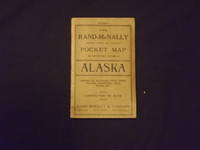
1912106335<p>8vo original printed stiff paper wrappers folding map 18 1/2" x 26" 12 2 pp. Some wear to wrappers slight creasing; otherwise near fine. This is a somewhat scarce fairly early map of Alaska that includes a 12-page index of places and geological features0f the area. The map shows all the railroads cities towns post offices and lakes and rivers. The map also contains three inset maps of the Aleutian Islands Seward Peninsula Mining District and the Mt. McKinley District. The OCLC locates three copies. OCLC. </p> Rand McNally & Company,
190012740Salem MA: Newcomb and Gauss Printers 1900. First Edition. Hardcover. Very Good. 251 pp with frontispiece and many sketches by the author which are rather amateurish but charming. Mild marginal dampstain to the first few pages boards a bit scuffed rubbed at corners and spine ends. The author joined the Lynn Mining Company and departed from Massachusetts in November 1897 traveling via the Schooner "Abbie M. Deering" to Bahia Brazil and on to San Francisco. From there the party secured passage to Seattle and then St. Michael eventually traveling up the Yukon and Koyukuk Rivers to the Arctic Circle. Includes detailed and colorful description of the outfitting process and the vicissitudes of travel and prospecting. Wickersham 80; Tourville 4919; Graff 4712; Howes W556; Smith 11106 Arctic Bibliography 19606. Newcomb and Gauss, Printers hardcover
1908770201908. Significant collection of bulletins clarifying the route of the S.S. Spokane in the summer of 1908. Each is naively illustrated with views from the ship - Sitka Seymour Narrows Taku Glacier Patterson Glacier and Devil's Thumb - as well as Alaska Natives and even baseball.<br /> <br /> An elegant passenger liner the S.S. Spokane was constructed by the Pacific Coast Steamship Company. The vessel was launch in San Francisco in 1901 and made her first voyage to Seattle in 1902. A year later she had the distinction of transporting President Theodore Roosevelt and his party to Seattle. The Spokane was able to carry nearly 300 passengers at a time including 171 in first class.<br /> <br /> From these broadsides we learn the S.S. Spokane sailed from the Strait of Juan de Fuca and on to Kasaan Discovery Passage Queen Charlotte Sound and Juneau in August 1908. Three years later the ship was wrecked on an uncharted rock in Seymour Narrows with the loss of two lives. The Spokane was later raised and repaired returning to service in early 1912.<br /> <br /> Nine broadsides 8 1/2" x 11" or 280 x 215 mm printed on the recto only of the blue or white paper. Old folds with evidence of stapling to the upper left corner and some minor edgewear. unknown
1891122196San Francisco California: Pacific Coast Steamship Co. 1891. Softcover. very good. 1st edition. 63pp. Octavo. Illustrated with 2 drawings cabin plans and tables. Original pictorial wrappers. Housed in a green cloth fold over case. Small library stamp on front cover of wrappers. Minor chips to edges and minor soiling to front cover of wrappers. A very nice example of a fragile item. Scarce. very good Tourville 3449. Information on sailing times of streamers on the Alaska route for the 1891 season stateroom rates and descriptions of the excursions. 1891 Pacific Coast Steamship Co. paperback
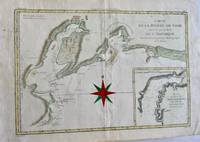
178734758Paris: M. Bonne 1787. Map. Good. Approx. 16" x 11". Hand colored map of the southern Alaska region showing Capt. Cook's discoveries in the Prince William Sound and Cook's Inlet. Light crease in the center fold. Good. M. Bonne unknown
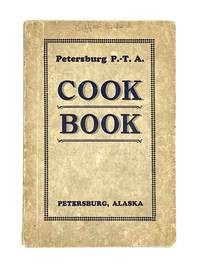
193277205Petersburg Alaska: Parent-Teachers' Association 1932. First Edition. Wraps. Octavo: 133 3 p. with numerous local advertisements. Original paper wrappers with printing in two colors: blue and gray on the front panel and green and red on the rear panel. Occasional soiling and spotting to the contents with scattered pencil and ink notes including a recipe for clam chowder on page 89. Two clipped timeables one for cooking vegetables and the other for broiling are paperclipped to a prefatory blank leaf. The wrappers are rather worn with "coffee bread" handwritten along the top of the front panel a very faint ink stamp below the title some general soiling and toning and a bit of loss at the corners and tips. Scarce OCLC locates only two holdings: Iowa and University of Alaska Fairbanks.<br /> <br /> Community cookbook from Petersburg Alaska a largely Scandinavian community situated on Mitkof Island in the Alexander Archipelago near the Canadian-American border the southern boundary of the City and Borough of Juneau. Includes recipes for cakes pies and a large selection of baked goods including Norwegian Pepperkaker Swedish Nut Wafers Spritz Cookies Berlina Kranse and Sprutbakkelse. There are also sections for seafood eggs meats pickles and salads as well as Men's Recipes all of which were contributed by local men including instructions for preparing Japanese Chop Suey and Lute Fisk. Notably other cuisines are represented with recipes for Arabian Stew Empanada Chilean Pa Kui Italian Delight Roman Holiday Fooyon Shrimp Honolulu Saute etc. The contributor of each recipe is identified. Parent-Teachers' Association unknown
1910100825<p>Pamphlet 3 1/2 x 6 pictorial wrappers stapled illustrated 55 pp. Slight wear and slight bend to some pages but very good to near fine. This little guide book to Alaska contains an amazing amount of information on the vast territory and its towns and cities as well as how to travel around it. Contains a couple of small maps to help the reader get around and even includes a rail schedule too. Additionally there are a number of small black and white photos that illustrate Alaska at the turn of the last century.</p>
1930142875Amsterdam: NP 1930's. Large original counter display. 29.5 X 41 cm. Probably unused display with the support on the rear unopened. Multi colored image. Minor old crease and a bit of surface abrasion otherwise in nice condition. This is a Dutch counter display for Alaska Brand slippers. There is no indicated manufacturer except a very small RT on the bottom left hand corner. The image shows a hunter/trapper with his rifle over his shoulder fur hat on his head and wearing a buckskin jacket. He is holding a pair of woolen slippers and has a big smile on. It appears the display was never used and shows very little wear. I am not sure if the brand was Alaska or the model of slippers. Fun Alaskan kitsch! 1930 NP unknown
19303726Juneau Ak.: Winter & Pond 1930. Good. Panoramic photograph 10 x 34.5 inches. A few heavy creases a handful of short closed tears minor surface soiling and rubbing. An early-20th century panoramic image showing the development of the Alaskan capital city of Juneau produced by prolific local studio Winter & Pond. The image features the downtown portion of Juneau complete with paved streets telephone and electrical wires and hundreds of houses set between nearby Mount Juneau and the Gastineau Channel. <br /> <br /> "Lloyd Winter and Percy Pond preserved the legacy of Alaska's past through their photographs taken over a period of 50 years. The studios of Winter and Pond Company in Juneau Alaska provided local residents and visitors with a rich perspective of Alaska that is now considered a unique reflection of the state in the early 20th century. During the company's existence Alaska expanded mining fishing and resource development into profitable ventures that transformed it from a frontier district to a thriving territory of the United States. The portraits that Winter and Pond produced show the diversity of Alaska's people through the years from the gold rush of the Klondike in 1898 to the end of the mining operations in the Juneau Gold Belt District during the 1940s" - Alaska State Library's Historical Note for the Winter and Pond Collection. <br /> <br /> OCLC reports a few different Winter & Pond views of Juneau from 1909 to 1928 with the present example likely dating from a bit later but nonetheless rare. Winter & Pond unknown
305831Chicago Monroe Book Company 1897. Thick 8vo. Profusely illustrated; 12 maps; 36 b/w illustrations. Original tan pictorial cloth stamped in brown black and yellow rubbed; spine faded. Very good. 555 pages 5 pages of publisher's advertisements at end. No dust jacket. Hardcover. Very Good/No Jacket. [Chicago] Monroe Book Company [1897]. hardcover
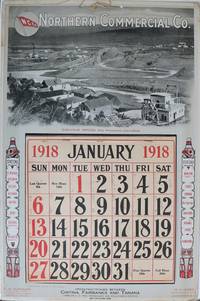
1918137331San Francisco: International Printing Co. 1918. Undetermined. very good. Colour calendar on heavy cardstock. 21" X 14". Occasional very light chipping and to edges. Corners bumped with some creasing. A few other light creases to edges. Full calendar pad Jan - Dec present with penciled notation in most days. Original string hanger present. Colours bright and unfaded. This poster is in very good condition. A scarce advertising calendar for the Northern Commercial Company N.C.Co. a retail company which maintained rural village stores across Alaska and in the Yukon. N.C.Co also operated steamships through Alaskan trade routes. The image on the poster features mining at Iditarod Alaska. Two totem poles on either side of the calendar pad list several stations of the N.C.Co. including Fairbanks Dawson Yukon Territory Bettles Iditarod and many others. The verso of the calendar is a full-page map of Alaska showing sea routes and locations of N.C.Co posts. A later incarnation of the business still maintains 30 stores across rural Alaska. See two other examples in this catalogue. 1918 International Printing Co. unknown
186825042<p>This copy is stamped "THE PRESIDENT" at the top of the front page indicating it belonged to President Andrew Johnson. The President would have read this copy of the act before Congress submitted it to him with some amendments on July 25. The report uses the early variant spelling of "Aliaska" for the territory and peninsula.</p> <b>ALASKA.</b>Newspaper. <i>New-York Tribune</i> July 17 1868. Featuring the terms of the "Aliaska" Bill as passed by the Senate. Copy belonging to President Andrew Johnson. New York: Horace Greeley. 8 pp. 18 x 23¾ in.<p><b><br /></b></p><p><b>Excerpts:</b></p><p>"<i>Be it enacted &c. That the laws of the United States relating to customs commerce and navigation be and the same are hereby extended to and over all the mainland islands and waters of the territory ceded to the United States by the Emperor of Russia.</i>" p1/c2</p><p>"<i>And be it further enacted that all the said territory with its ports harbors bays rivers and waters shall constitute a customs collection district to be called 'The District of Aliaska' for which said district a port of entry shall be established at some convenient point to be designated by the President at or near the town of Sitka or New-Archangel and a Collector of Customs shall be appointed by the President by and with the advice and consent of the Senate who shall reside at said port of entry and who shall receive an annual salary of $2500.</i>" p1/c2</p><p>"<i>That the President shall have the power to restrict and regulate or to prohibit the importation or use of firearms ammunition and distilled spirits into and within said territory.</i>" p1/c2</p><p>"<i>That until otherwise provided by law the Secretary of the Treasury with the approval of the President shall have power to prescribe such rules and regulations as he may deem proper for the preservation of fur-bearing animals from indiscriminate destruction provided that no special permits shall be granted under this act.</i>" p1/c2</p><p><b>Historical Background</b></p><p>After suffering defeat at the hands of the British and the French in the Crimean War of 1853-1856 Russia feared losing the Alaskan territory in some future conflict. In an effort to protect Russian interests Tsar Alexander II 1818-1881 determined to sell Alaska. After offering it in 1859 to the United Kingdom Russia negotiated a sale to the United States finalized in 1867. At the time the territory primarily offered fur trading and some natural resources. Americans generally supported the purchase and believed it enhanced American interests in the Pacific though some critics labeled it "Seward's Folly" after Secretary of State William H. Seward who had negotiated the purchase for the United States. Most newspaper editors especially those in California were enthusiastic about the purchase. Notable among the critics was Horace Greeley the editor of this newspaper and a long-time opponent of Seward. The value of the new territory increased dramatically with the discovery of gold fields in 1896.</p><p>The Senate ratified the Treaty with Russia on April 9 1867 by a vote of 37 to 2. On July 14 1868 the House of Representatives passed a resolution appropriating the $7.2 million necessary to purchase Alaska less than two cents per acre and the Senate approved the resolution with amendments. The House refused the amendments and the resolution went to a committee. The House passed the resolution as revised by the conference committee on July 23 and the Senate passed it the following day.</p><p>Meanwhile on July 15 Senator Zachariah Chandler of Michigan introduced "An Act to extend the Laws of the United States relating to the Customs Commerce and Navigation over the Territory ceded to the United States by Russia to establish a Collection District therein and for other Purposes" and the Senate passed it on July 16. In the House Representative Elihu B. Washburne of Illinois proposed amendments on July 25 and the House agreed to them. The Senate disagreed with the amendments and this bill went also to a conference committee where the Senate receded from its opposition and the bill passed. President Johnson approved and signed both the joint resolution and the act on July 27 1868.</p><p>In 1870 Congress followed up its concerns about preserving fur-bearing animals expressed in this law with "An Act to prevent the Extermination of Fur-bearing Animals in Alaska" aimed directly at regulating the killing of fur-bearing seals on Saint Paul and Saint George Islands off the western coast of Alaska north of the Aleutian Islands.</p><p><b>Additional Content</b></p><p>This issue also includes the Senate confirmation of William M. Evarts 1818-1901 as Attorney General p1/c2 p5/c4; proceedings of Congress including Senate discussion of this bill p1/c3-4; a letter from a special correspondent describing Sitka Alaska p2/c2-3; an editorial nomination of Thomas A. R. Nelson of Tennessee as Secretary of State to succeed William H. Seward "<i>now that Mr. Seward has succeeded in buying Aliaska</i>" p4/c5-6; "base ball" and cricket scores p5/c5; and a report on dozens of deaths from sunstroke during two-week heat wave especially among children p8/c1-3.</p><p><b><i>New-York Tribune</i></b> 1841-1924 was established as a daily newspaper in 1841 by Horace Greeley 1811-1872. By the 1850s it reached a circulation of 200000 copies making it the largest daily newspaper in New York City at the time. Greeley also published weekly and semi-weekly issues of the <i>Tribune</i> through much of his tenure. The <i>New-York Tribune</i>became the dominant Whig and then Republican newspaper in the United States helping to shape public opinion especially as other newspapers often copied its articles and editorials. It was one of the first newspapers in the Union to send reporters and correspondents to cover the military campaigns of the Civil War. Greeley used his newspaper to support many reforms including abolitionism pacifism socialism for a time and feminism. After Greeley's failed campaign as the Liberal Republican candidate for President Whitelaw Reid 1837-1912 assumed control of the <i>Tribune</i> until his death. His son Ogden Mills Reid 1882-1947 acquired the <i>New York Herald</i> and merged the newspapers in 1924.</p><p><b>Condition</b></p><p>Typical folds and light foxing few slight tears at some of the outer margins and appears to have been bound in a book at one point or someone reinforced the outer fold.</p>
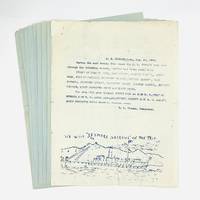
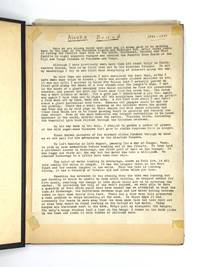
74398Typescript account of 32 pages accompanied by 31 black and white photographs gathered in a scrapbook album documenting an unidentified Washington’s man’s hiking climbing and sight-seeing adventures in Alaska. Written along the top edge of the first page is “Alaska Bound 1946-1947.†Twenty-three of the onion skin paper pages are scotch taped to the album pages and the final nine pages of the typescript are loose and laid into the back of the string-tied album. The black and white photographs measure 4 ½ x 2 ¾†and are affixed to the album pages with black photo corners. The tape affixed to the pages has oxidized but otherwise overall on very good condition.<br/> <br/> The unknown author was a crewman on a cargo ship and wrote that he had made more than 150 prior trips to Southeastern Alaska. On this trip his ship set out from Seattle to the Aleutian Islands and made a stop at Anchorage to drop off some dogs for the Army. “As part of the cargo which we were carrying we had on deck sixty-one sled dogs raised in Nebraska†he wrote. “They were supposed to be mostly huskies but in reality were a mixture of almost everything…It was remarked: ‘They are nothing but a darned bunch of Nebraska coyotes.’â€<br/> <br/> Beyond Anchorage the ship’s itinerary included Adak Attu Shemya Whittier and Amchitaka. The narrative covers his experiences on board but is mainly devoted to his shore adventures oftentimes with other members of his crew which include mountain climbing hiking fishing trips and sight-seeing during his free days while cargo is being off loaded. One of his first adventures was a trip to Wasilla and Palmer. “Back in Palmer once more we made the acquaintance of one of the old timers who gave us quite a history of Alaskan mining from the early gold rush days up to the present time†he wrote. “He tried to persuade us to go back into the mountains with him to take pictures of his claims.<br/> <br/> On the way to Adak he spotted “whale birds†and soon whales were also seen. “During the war whales in these waters were frequently attacked by both bombers and submarines in error†he wrote. “It was it seems difficult to detect the difference between submarines and whales.â€<br/> In addition to being an avid and skillful storyteller and photographer the diarist had a wide-ranging knowledge and interest in the flora and fauna of the region. During a port stop in Attu he explored Holty Holtz Bay and traveled to the summit of Jarmin Pass where the Japanese once maintained a principal base until it was recaptured by the United States during World War II. “In the foreground and also in the distance some dummy guns and other equipment could be seen scattered about†he wrote. “I followed along the stream and before long came across a few small willow bushes less than three feet in height bravely struggling for existence against the elements. They were located in a thicket of Russian thistles wild cherry tanzzy monk hood and numerous other kinds of vegetation. That was my first glimpse of anything in the form of wood growing in the Aleutians.â€<br/> <br/> On this break he undertook the first of several climbing expeditions – this one of Gilbert Ridge. It was a near catastrophe after the weather turned foggy while he was climbing the jagged peaks made the wrong decision dead-ending against sheer cliffs and fell while back tracking his route. “In that next instant I found myself bouncing over the wet cozy ground like a toboggan over a snowbank…I started flying through space at what seemed to me a mile a minute. In the next instant there was a big swoosh as I cut a path three feet wide and five feet long through a patch of Indian celery Russian thistle and Monk’s Hood and landed with a flop in the creek bed below and that was that.†Although he was fortunate to escape with a sore shoulder and sprained thumb he was soaking wet and faced a long journey back to the ship.<br/> <br/> The scrapbook is filled with numerous descriptive accounts of his adventures during the journey. The photographs complement the text and include various images of his explorations ranging from Whittier Glacier to two men holding a crippled Bald Eagle a trading store in Wasilla and fishing at Finger Arm. At the end of the trip before returning to Seattle he and his shipmates went into the woods and cut Christmas trees which they delivered to families on the treeless remote Aleutians. unknown
19004544Various locations in British Columbia and Alaska 1900. Very good. 14 leaves illustrated with 111 vernacular sepia-toned photographs between 2.5 x 4.5 inches and 3.5 x 5.5 inches. Mostly mounted four per page. Oblong folio. Contemporary black cloth gilt string tied. Minor edge wear and rubbing. Some edge chipping to a handful of album leaves occasional dust-soiling. With 5pp. typed and numbered list laid in keyed to manuscript numbering beneath each photograph. A phenomenal collection of vernacular photographs taken by an unidentified traveler on a voyage to British Columbia and Alaska around the turn of the 20th century. Most of the photographs were taken from aboard a steamship or from a railroad car when they venture inland but occasionally the compiler includes shots from the ground. The photographs begin with numerous scenic landscapes in and around Nelson Rossland and Victoria British Columbia picturing landmarks such as Kootenay Lake Bonnington Falls the Cascade Mountains and a "Government House" in Victoria. The scene then shifts to Alaska picturing Devil's Thumb various glaciers a wonderful totem in Simpson distant shots of Juneau and Skagway and much more. Once inland the compiler takes pictures of the White Pass Lake Bennet White Horse and more before getting back on a steamship. One particularly interesting image from White Horse shows a pair of businesses set up in tents - Cap. P. Martin's Cigar Store and the Vancouver Hotel. Once back on the steamship the compiler shoots Five Finger Rapids before reaching the "town" of Yukon really just a loose handful of wooden huts. The intrepid traveler lands next in Dawson City where they include at least half a dozen fantastic shots of the settlement and its downtown area. The next series of images in Grand Forks show exterior shots of gold mines called Gold Hill and Eldorado #26 and a sweeping "View of Klondike Valley." The traveler then apparently turned south as the next series of images picture Taku Alert Bay with images of five Totems and the local cemetery and eight views of Fraser Canon. The album concludes with a few shots of the Illecillewaet Glacier Lakes Agnes and Louise and several views in and around Banff. The latter images include one of a bear and two featuring grazing buffalo. An interesting and wide-ranging collection of photographs featuring the untouched majesty of the landscapes of Alaska and the Canadian Northwest mixed with areas already being developed and exploited by human prospectors and travelers. The images are accompanied by an invaluable list of captions which are vital to identifying the locations of the images which appear to emanate from slightly earlier than usual in photographic groups from these areas. unknown