Wallis, VelmaAntiquariat.de

477 résultats
1998110896München : Heyne, 1998. 141 S. ; 18 cm; OKart. (Taschenbuch);
199883868München : Heyne, 1998. 141 S. ; 18 cm; OKart. (Taschenbuch);
199027955Melsungen : Neumann-Neudamm, 1990. 191 S. Ill. 8°. Bibl.- Einbd.
197031501Berlin, Safari Verlag, 1970. 180 Seiten. Mit vielen farbigen Photographien. 8°, Leinen. Goldprägung auf Rücken mit Originalumschlag.
19961-187796221XUniv of Alaska Fairbanks Center for 1996. Paperback. New. 5th edition. 66 pages. 8.50x5.50x0.25 inches. Univ of Alaska Fairbanks Center for paperback
1992MASTER373036IFairbanks: University Of Alaska. VG- In Wraps. Oversize. Lightly Edgeworn. Light Soiling To Rear Wrap. All Pages Clean Binding Tight. Errata Sheet Tipped IN. Pages: 757. 1992. 4th Printing. Trade Paperback. University Of Alaska paperback
192539563Portland OR: George Edward Lewis 1925. 12mo. 69 1 pp. Numerous text illusts. Printed gray wrappers blk lettrng & decrtn mnr shlfwr VG copy inscribed by the author on half-title. First edition inscribed by an Alaskan pioneer who eventually made the first silent movies produced in Alaska including The Chechakos Hearts of Alaska and North of Nome. Certain scenes shot of miners crossing the Chilkoot pass were used by Chaplin in The Gold Rush 1925. George Edward Lewis, unknown
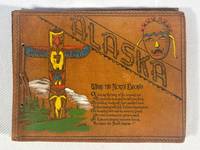
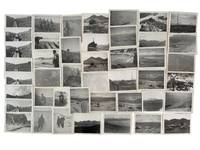
1943217811943. Civilian construction labor photo album documenting on the Alaska-Canada Military Highway during World War II one of the largest emergency infrastructure projects undertaken in North America during the war. The material records wartime military logistics federal civilian contracting and frontier transportation construction through photographs official permits military certifications and worker inscriptions connected to the rapid building of the ALCAN Highway in 1942-1943. Compiled by civilian laborer Paul Cecil Pemble an employee of Ferguson-Diell Construction Company the album connects private contractors federal agencies and the U.S. Army Corps of Engineers to the construction of a strategic military supply route linking the contiguous United States to Alaska following Japan's Aleutian Islands campaign. The archive provides primary-source evidence for wartime infrastructure mobilization civilian labor under military authority and the logistical expansion of defense systems in the North American Arctic frontier.<br /> <br /> Oblong string-tied photo album in original painted suede leather covers titled Alaska - Where the North Begins with embossed and hand-colored totemic decoration. Contains approximately 66 silver gelatin photographs ranging in size from approximately 4.5 x 3.25 inches to 10 x 8 inches alongside multiple official documents licenses permits correspondence and autograph pages. Included documents identify Paul Cecil Pemble as a civilian heavy equipment operator employed on the Alaska Highway project. These include a Public Roads Administration license issued under the Federal Works Agency dated June 29 1943; a U.S. Army Corps of Engineers certification dated August 4 1943 signed by First Lieutenant Colin L. Park authorizing operation of trucks tractors and wheeled scrapers; and an Alcan Military Highway Command permit dated August 19 1943 authorizing travel on the restricted military roadway. A typed letter from Tok Junction dated October 8 1943 confirms the extension of Pemble's Selective Service deferment due to essential wartime labor. Several opening pages titled "Memory Leaves" contain approximately sixty signatures and inscriptions from fellow workers many identifying hometowns in Iowa and including humorous remarks and nicknames such as "Cook" "Butch" and "Alaska Thunderbolt." The photographs extensively document construction activity and camp life including bulldozers graders cranes timber bridge scaffolding military truck convoys wrecked vehicles stranded in ditches muddy roadbeds and large encampments of prefabricated structures. Multiple images show men constructing river crossings operating machinery and posing in work clothes beside heavy equipment. Additional photographs depict interior bunkhouses mess hall scenes with workers gathered around tables and a large group portrait of more than fifty civilian laborers posed before a treeline. Wildlife and recreation also appear throughout the album including black bears scavenging through refuse fishing scenes with large catches displayed by workers dogs resting beside snowy roads and Pemble's trailer quarters attached to the back of a truck. The final pages include panoramic camp views and directional signpost photographs listing construction companies and distances to Fairbanks Whitehorse and multiple contractor camps along the route.<br /> <br /> The album records the logistical effort required to construct the Alaska Highway across remote and environmentally severe terrain during wartime emergency conditions. Built in response to fears of Japanese expansion into Alaska and the North Pacific the highway became a critical military supply corridor linking airfields fuel depots transport infrastructure and defense installations across Alaska and western Canada. The album focuses on civilian laborers operating within military-controlled systems including contract workers represented through photographs permits deferment documents and personal inscriptions. The combination of photographs permits deferment documents and personal inscriptions records daily life labor conditions and federal wartime administration on the ALCAN project. Photographs mounted cleanly to black paper leaves with corner tabs; occasional light creasing and minor wear to several prints. Leather covers lightly rubbed but structurally sound and visually bright. Overall very good condition. A documentary archive of civilian wartime labor and military infrastructure construction during one of the most ambitious engineering projects of the Second World War. unknown
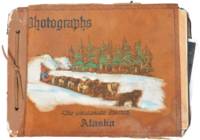
1945191491945. Unidentified compiler photograph album of United States Army troops stationed near Seward Alaska circa 1945 documenting military life and operations in a strategic northern deployment during the closing period of World War II. The material provides primary visual evidence of troop activity infrastructure development and social life within a remote military environment supporting research into wartime logistics soldier experience and the role of Alaska in U.S. military defense during the conflict.<br /> <br /> Photograph album containing 58 black and white silver gelatin prints most measuring approximately 3.5 x 6 inches depicting soldiers engaged in both formal and informal activities. Images include groups of men standing at attention with rifles constructing wooden buildings in rugged terrain and participating in daily routines within camp settings. A series of photographs documents a dance event for troops featuring a jazz band with music stands marked "153" alongside an emblem suggesting a possible connection to the 153rd Infantry Regiment which was stationed in Alaska during the period. Additional images show steamships including the S.S. Baranof S.S. Alaska S.S. Denali and S.S. Columbia navigating the Inside Passage and areas near Taku Glacier indicating transportation and supply routes. The album also contains a "memory leaves" section with handwritten notes and addresses from fellow servicemen reflecting interpersonal networks and efforts to maintain contact beyond deployment.<br /> <br /> 58 photographs mounted in an album with decorated leather covers featuring a hand-painted image of Alaskan sled dogs titled "The Malamute Limited." During World War II Alaska served as a critical military zone due to its geographic proximity to the Pacific theater with troop deployments focused on defense infrastructure and logistics in challenging environmental conditions. This album captures both operational and social dimensions of that presence including labor recreation and movement through the region. Light handling wear to album and photographs contents well-preserved; overall very good condition. A cohesive and detailed visual record of U.S. Army life in wartime Alaska. unknown
1945215781945. AArchive of 64 original black-and-white photographs documenting American military operations and engineering activities in the Aleutian Islands during World War II. Photographs measure approximately 4.5" x 3.5" and provide an extensive visual record of one of the most remote and environmentally challenging theaters of the war. The images chronicle the daily work of U.S. Army personnel and Army Engineers stationed across the Aleutian chain where military forces confronted not only the threat of enemy action but also some of the harshest conditions faced by American troops anywhere during the conflict. Soldiers appear throughout the archive wearing cold-weather gear field jackets heavy boots and M1 steel helmets while working patrolling and constructing infrastructure amid windswept volcanic landscapes.<br /> <br /> A significant portion of the collection documents the enormous logistical effort required to sustain military operations in the islands. Engineers are shown surveying terrain operating equipment cutting and processing timber and building facilities essential to maintaining isolated military outposts. Several striking photographs depict large timber-log chutes descending steep hillsides toward the shoreline apparently designed to move heavy equipment and supplies through terrain where conventional transportation proved difficult. Other images record lumber operations construction projects and the continual adaptation of military infrastructure to the rugged environment. The archive also contains numerous panoramic views of the Aleutian landscape itself. Snow-covered mountains barren volcanic ridges isolated coastlines glacial valleys and treeless tundra dominate many photographs illustrating why the campaign became as much a battle against geography and weather as against enemy forces. The Aleutian chain stretching deep into the North Pacific and containing dozens of active and dormant volcanoes represented one of the most isolated regions under American military control during the war.<br /> <br /> Naval and maritime operations are likewise represented. Several photographs show transport and supply vessels anchored offshore or approaching remote coastal installations highlighting the dependence of Aleutian bases upon sea-borne logistics. Military camps consisting of Quonset huts and tent encampments appear throughout the collection while one particularly notable image captures an aircraft flying above a military installation underscoring the importance of aerial reconnaissance and patrol operations in protecting the northern approaches to Alaska. Although often overshadowed by campaigns in Europe and the Central Pacific the Aleutian campaign held considerable strategic importance. Following the Japanese occupation of Attu and Kiska in 1942 American forces undertook a costly effort to secure the islands and maintain control of the northern Pacific. These photographs document the infrastructure manpower and determination required to operate in a theater where extreme weather isolation and difficult terrain shaped every aspect of military life. A substantial and visually compelling archive documenting the engineering logistical and environmental realities of America's northernmost front during World War II. Photographs remain in very good condition with minor surface wear and occasional light creasing. unknown
1951ROW2648Hamburg, Rowohlt, 1951. (rororo Leinenrücken ; 19), 195 Seiten, H 17,5 x 11,5 cm, TB, OKart. - Seiten gebräunt, ungelesen, oben leichte Knickspuren vord. u. hint. Einband, sonst guter Zustand. broschiert/ Taschenbuch/ paperback
195919812Stuttgart : Union-Verl., 1959. 207 S. 8°. [Nachaufl.]. OHLwd. mit ill. Einbd.
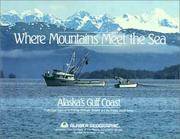
198689056Anchorage, Alaska Geographic Society, 1986. 191 S. 8° Oktav, Softcover/Paperback
1972Q-0882401750Alaska Northwest Books 1972-01-01. Paperback. New. In shrink wrap. Looks like an interesting title! Alaska Northwest Books paperback
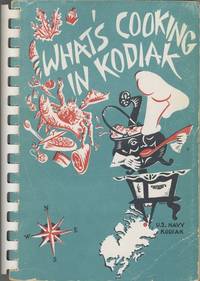
19595842Kodiak Alaska: The Club 1959. Octavo-size 21 x 14 cm. vi 249 vi pages with unnumbered chapter heads interleaved. Photo-reproduction of manuscript. Illustrations within text throughout and on chapter heads. Index. Date of publication from external evidence. ~ Evident first edition. A community cookbook undertaken in support of the nursery operated on behalf of families stationed at the Seventeenth Naval District on Kodiak Island in the Gulf of Alaska. With one hundred sixty attributed recipes including: Alaska Razor Clam Chowder Split Pea Soup with Herbs Custard Corn Bread Onion Shortcake Meat Loaf Spiral Apple Sauce Meat Balls Kodiak Hare Deep Dish Salmon Pie Shrimp-Stuffed Peppers Kodiak Devil Crabs Wild Rice Casserole Sweet Potato Puffs Sourdough Hotcakes Rhubarb Betty Afognak Berry Pie Sherry Pie Kris Kringle Cake Sand Tarts Salmonberry Wine. ~ Reconnaissance for an advance operations command in the Aleutians had begun in 1938 in anticipation of possible military engagement in the North Pacific and construction was underway by 1939. The Kodiak Naval Operating Base later the Seventeenth Naval District was formally established in April 1941 as were Army coastal defense forces nearby at Fort Greely both placed on alert after the attack on Pearl Harbor. After the Japanese landings at Kiska and Attu in June 1942 Kodiak's carriers and submarines played critical roles in the joint campaigns with Canada to secure them. Captain William Rhodes the author of the "Acknowledgement" that serves as preface to What's Cooking in Kodiak had been part of the original study team in 1938 thereafter had served on numerous carriers and as an air fleet commander during the War and returned to command the naval station in August 1952. His wife is the contributor of a recipe for Filipino Style Fish on page 177. The earliest date however that one of the illustrators Martha Bolling can be placed there - as the wife of a navy airman and instructor at a summer arts school - is 1955. The contributor of a recipe for Lemon Souffle on page 69 Alice Watson Estabrook would have departed Kodiak in 1959 with her husband William Sears Estabrook who served for three years as inspector general at the Kodiak base before his retirement. ~ The Seventeenth Naval District was disestablished on 30 June 1971 during an overhaul of the entire administrative system and in 1972 the site was turned over to the United States Coast Guard. Today the Naval Operating Base and Fort Greely form part of a National Historic Landmark on the National Register in recognition of the roles played by men and women stationed there during World War II. ~ White plastic comb holding blue and white covers the front panel illustrated with a fanciful kettle wearing a chef's hat; with some edge-wear and a crease to the lower front fore-corner. OCLC locates one copy; in neither Brown nor Cagle. The Club unknown books
198310410ABBremen, Verlag Gisela E. Walther, 1983. 19 cm, 267 Seiten, mit zahlreichen Abbildungen und Karten, kartoniert. leichte Gebrauchsspuren, gut bis sehr gut erhalten.
19717836Braunschweig, Georg Westermann Verlag, 1971. 4°, 170 S., mit zahlreichen s/w u.farb. Abb., altersbedingte Bräunungen, ger. Gebr.sp., kartoniert
2000107907Zürich : Unionsverlag, 2000. 1. Auflage; 250 S. ; 19 cm; OKart. (Taschenbuch);
198663604Stuttgart ; Wien : Thienemann, Edition Erdmann 1986. 271 S. : 47 Abb., 9 Kt. ; 21 cm, mit Schutzumschlag Gewebe, gebundene Ausgabe, Leinen, Exemplar in gutem Erhaltungszustand
1982V4993Zürich/München (Artemis) 1982 (= Erste Ausgabe). 8°, Originalbroschur, 240 S., einige schwarzweiße Bildtafeln
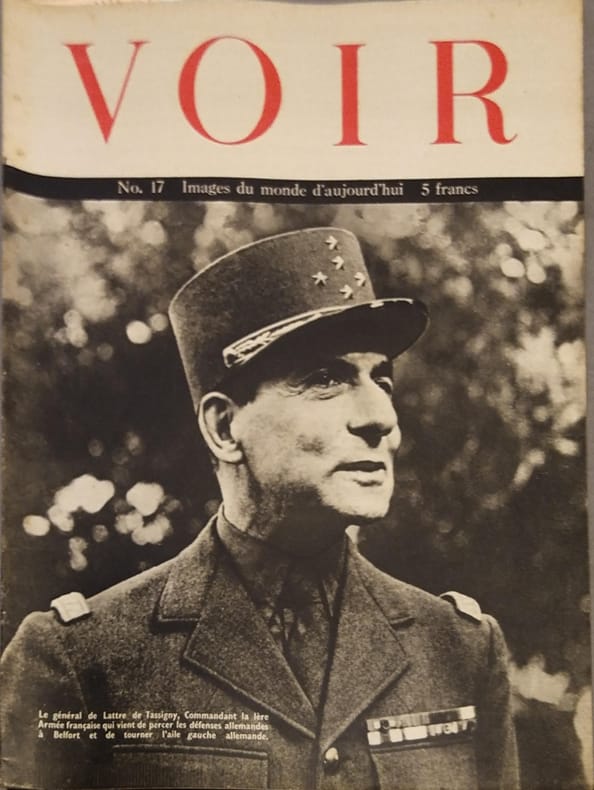
1944142921Couverture souple. Revue 26 x 34 cm.
197822745Heidelberg, Springer Verlag, 1978.
198681204Canton CT: Kidder Corp Coins 1986. Presumed first minting thus. Coin/Medal. Very good. Coin is oval shaped approximately 2 inches in length and 1.5 inches in width. Front side has a gold color rope braid at the outer edge then a red inner ring stating USS Alaska SSBN 732 with the word Alert Confident and Able the boat's motto in gold rectangular boxes and white images of a porpoise and a sea lion. The center has a whale at the top over a shield with a Trident on a blue background. The other side has gold color rope braid at the outer edge and a blue center areas with the words USS Alaska 1986 SSBN 732 and Kodiak Tough under the image of a large bear exiting a waterfall with a fish in its mouth. In a small plastic envelop with information on Kidder Corp Coins printed on it. USS Alaska SSBN-732 is a United States Navy Ohio-class ballistic missile submarine which has been in commission since 1986. She is the fourth US Navy ship to be named for the Territory or State of Alaska. The contract to build Alaska was awarded to the Electric Boat Division of General Dynamics Corporation in Groton Connecticut on 27 February 1978 and her keel was laid down there on 9 March 1983. She was launched on 12 January 1985 sponsored by Mrs. Catherine Stevens wife of US Senator Theodore F. Stevens of Alaska; and commissioned on 25 January 1986. USS Alaska spent much of 1986 engaged in shakedown training for her two crews and in clearing up the many details that attend a new fleet ballistic missile submarine's addition to the Fleet. She operated initially from New London Connecticut and Port Canaveral Florida but shifted homeport to the Pacific Northwest later in the year 4 September to 1 October 1986. Alaska sailed through the Panama Canal and visited San Francisco California 21-29 September while en route. She then served with Submarine Squadron 17 Submarine Group 9 at Naval Submarine Base Bangor Washington. Alaska sailed on her first missile deterrent patrol manned by her Blue Crew in the Pacific 7 December 1986 to 19 February 1987. Her Gold Crew carried out Patrol 2 16 March to 28 May 1987. She completed an engineered overhaul at Puget Sound Naval Shipyard Bremerton Washington 1 May 2000 to 9 December 2001. The work included a Trident II D5 "backfit" that enabled Alaska to fire the improved version of the submarine launched ballistic missile. In addition the overhaul upgraded her to shoot the Mk 48 Advanced Capability ADCAP torpedo. Alaska had carried out 47 Trident I C4 and 12 Trident II D5 deterrent missile patrols when she sailed from Kitsap for the final time on 8 July 2006. The submarine subsequently completed a 27½-month engineered refueling and overhaul at Norfolk Naval Shipyard Virginia on 8 March 2009. Alaska shifted to Submarine Squadron 20 Submarine Group 10 at Naval Submarine Base Kings Bay Georgia on 1 May 2009; she arrived at Kings Bay on 1 April. On 28 April 2010 the Navy announced plans to convert living spaces on Alaska to accommodate female crewmembers. Kidder Corp Coins unknown
198681255Canton CT: Kidder Corp Coins 1986. Presumed first minting thus. Patches. Very good. Coin is oval shaped approximately 3.5 inches in length and 2.5 inches in width. Patch has a gold color rope braid at the outer edge then a red inner ring stating USS Alaska SSBN 732 with the word Alert Confident and Able the boat's motto in gold rectangular boxes and white images of a porpoise and a sea lion. The center has a whale at the top over a shield with a Trident on a blue background. USS Alaska SSBN-732 is a United States Navy Ohio-class ballistic missile submarine which has been in commission since 1986. She is the fourth US Navy ship to be named for the Territory or State of Alaska. The contract to build Alaska was awarded to the Electric Boat Division of General Dynamics Corporation in Groton Connecticut on 27 February 1978 and her keel was laid down there on 9 March 1983. She was launched on 12 January 1985 sponsored by Mrs. Catherine Stevens wife of US Senator Theodore F. Stevens of Alaska; and commissioned on 25 January 1986. USS Alaska spent much of 1986 engaged in shakedown training for her two crews and in clearing up the many details that attend a new fleet ballistic missile submarine's addition to the Fleet. She operated initially from New London Connecticut and Port Canaveral Florida but shifted homeport to the Pacific Northwest later in the year 4 September to 1 October 1986. Alaska sailed through the Panama Canal and visited San Francisco California 21-29 September while en route. She then served with Submarine Squadron 17 Submarine Group 9 at Naval Submarine Base Bangor Washington. Alaska sailed on her first missile deterrent patrol manned by her Blue Crew in the Pacific 7 December 1986 to 19 February 1987. Her Gold Crew carried out Patrol 2 16 March to 28 May 1987. She completed an engineered overhaul at Puget Sound Naval Shipyard Bremerton Washington 1 May 2000 to 9 December 2001. The work included a Trident II D5 "backfit" that enabled Alaska to fire the improved version of the submarine launched ballistic missile. In addition the overhaul upgraded her to shoot the Mk 48 Advanced Capability ADCAP torpedo. Alaska had carried out 47 Trident I C4 and 12 Trident II D5 deterrent missile patrols when she sailed from Kitsap for the final time on 8 July 2006. The submarine subsequently completed a 27½-month engineered refueling and overhaul at Norfolk Naval Shipyard Virginia on 8 March 2009. Alaska shifted to Submarine Squadron 20 Submarine Group 10 at Naval Submarine Base Kings Bay Georgia on 1 May 2009; she arrived at Kings Bay on 1 April. On 28 April 2010 the Navy announced plans to convert living spaces on Alaska to accommodate female crewmembers. Kidder Corp Coins unknown
1978260148BBMchn., Piper, (1978). Mit 63 (davon 9 farb.) Abb., 9 Ktn. u. graph. Darst. 213 S. OPbd. m. farb. ill. OU. - Gutes Ex.