4 242 résultats
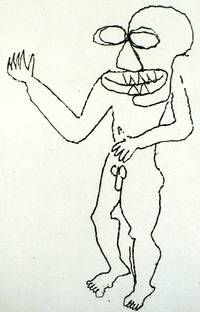
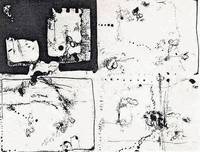
196866998Milano: Grafica Uno 1968. Brossura custodia wrappers slip-case. Ottimo Fine. Five original lithographs on stone and a poem by Harold Perisico Paris. 5 litografie originali su pietra di cui due su fogli ripiegati sciolti ed un poema in inglese di Perisico Paris cm 17x215"; 325x42. 16mo cm 17x22. pp. 16litografie. Ottimo Fine. Prima edizione di 50 2 H.C. esemplari numerati First edition of 50 2 H.C. numbered copies. <em>La prima fase della produzione artistica di <strong>Harold P. Paris</strong> fu dominata da una personale interpretazione dell'<strong>espressionismo astratto</strong> per poi volgersi a una ricerca sull'espressività dei materiali in opere al limite tra la figurazione e l'astrazione.<br />Nel 1963 è chiamato ad insegnare all'<strong>Università di Berkeley</strong>. Prime personali nel 1965 e 1967 alla Hensen Gallery di San Francisco. Nel 1969 ha luogo la sua prima personale in Europa allo <strong>Studio Marconi di Milano</strong>. Negli Anni Settanta si dedica a lavori ispirati alla Shoah e alla cultura ebraica che espone al Jewish Museum di New York nel 1975. Nell'ambito della scultura realizza opere di respiro ambientale vere e proprie installazioni percorribili dai visitatori. Dopo la sua morte nel 1979 l'Università di Berkeley gli dedica una retrospettiva itinerante che tocca diverse città" degli Stati Uniti. da ''Autobiografia di una galleria. Lo Studio Marconi 1965/1992''.</em> Grafica Uno, unknown
1989BN124857Taylor & Francis Inc 1989. 1989. Hardcover. Polyphase Induction Motors Analysis <br/><br/>Polyphase Induction Motors Analysis Paul Scotia New York USA Cochran Taylor & Francis Inc hardcover
Together 3 vols., 2 roy. 8vo. and 1 8vo., First Edition thus, with 40 fine plates; brown boards, upper boards lettered in gilt, brown morocco backs lettered in gilt, Commentary leaflet sewn as issued, a fine set in publisher's board slip-case lettered in blue. EDITION LIMITED TO 500 COPIES. Wonderful facsimiles of the original editions of 1909 and 1910 respectively.
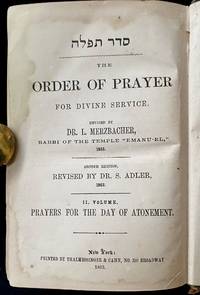
186342038New York Printed by Thalmessinger & Cahn 1863. Hardback. 2nd Revised Edition edited revised and corrected by S. Adler 1st printing thus. Original gilt tooled leather 8vo 396 pages. In Hebrew and English on facing pages. Formerly Singerman 1780 now merged into Singerman 1667 as vol II variant 1 Thalmessinger & Cahn. <br> The second of two volumes vol. 1 Daily prayers & vol. 2. Prayers for the Day of Atonement this volume substantially reworked by Adler and published 1860 vol. I and 1863 vol. 2 here. Together these comprise the First Edition of Samuel Adler's revised edition of Leo Merzbacher's 1855 Prayer-Book. <br> Despite the modest title-page Adler's production here was not merely a revision but rather an entire reworking with additions and alterations to the liturgy. Rabbi Leo Merzbacher's original version of the prayers was quite traditional. "As resourceful and accomplished a liturgist as Merzbacher proved to be he seldom sought to .willfully turn aside from the traditional cannon" Friedland p. 36. Samuel Adler on the other hand Merzbacher's successor at Temple Emanu-El of New York had no such reservations about adopting radical change to the structure of the prayer-book. In his version of the "Order of Prayer" Adler did not rely on sources in Jewish tradition rather he changed the prayers according to his subjective views of how synagogue services should be conducted. See Eric Lewis Friedland Brandeis University dissertation The Historical and Theological Development of the non-Orthodox Prayerbooks in the United States 1967. <br> Indeed it was precisely this 1860-1863 version of the "Order of Prayer" that was adopted by Temple Emanuel in New York and all subsequent issues of the "Order of Prayer" utilized this version containing Samuel Adler's revisions. The Union Prayerbook itself was largely based on Adler's 1860-1863 revisions here. <br> Consequently this prayer-book was also the cause of much controversy. Orthodox Rabbi Bernard Illowy of St. Louis fumed that whomsoever utilized this "so-called" prayer-book was to be "entirely excluded from all religious communion" see Michael A. Meyer Response to Modernity: A History of the Reform Movement 1995 p. 237. <br> <br> Leo Merzbacher 1809-1856 received his Rabbinic ordination from the celebrated Rabbi Moses Sofer of Pressburg the "Chasam Sofer" the leading opponent of the Reform movement. Merzbacher immigrated to America in the 1840's "and was the first Reform rabbi in the country. After serving at Anshe Chesed and Rodeph Sholom in New York Merzbacher became the rabbi of Emanu-El the first Reform temple in the city.The 1855 edition of This prayer book was the first Reform edition issued in America for general use" Goldman. Merzbacher adopted changes in synagogue custom such as the prominent use of an organ and eradicating the observance of the second day of festivals. Samuel Adler 1809-1891 replaced Merzbacher in Temple Emanuel in 1857 following the latter's death where he served until 1891. Adler's son Felix was the founder of the Ethical Culture movement. <br> <br> SUBJECTS: Siddurim -- Texts. Reform Judaism -- Liturgy -- Yom Kippur -- Siddour -- Textes. Judai¨sme re´forme´ -- Liturgie -- Yom Kippour -- OCLC: 78354364. Lacks top 1 inch of backstrip spine covering and rear blank endpaper; wear to boards some stains but solid good condition. Rare and Important AMR-69-11-B-D. New York, Printed by Thalmessinger & Cahn unknown
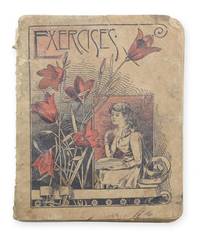
189018000New York January 1 1890 to August 31 1890. Covers worn corners worn smudged and foxed throughout; Edward clipped a portion of one leaf with a loss of some text; in good condition but legible and sound. Lined composition book in original pictorial wrappers entitled "Exercises" 8.25 x 6.75 inches 138 pages. A detailed entertaining legible observant daily account of life in Manhattan for a 20-year-old carpenter going to night school attending union rallies spending evenings playing harmonica and reading early Jehovah's Witness literature swimming in the North River looking for work in slack times or negotiating salaries with bosses and showing curiosity about the hurly-burly of cultures and commerce in New York. The diary includes his penciled ownership note to the head of the second page E. W. Hussey 265 W. 32nd St. N. Y. City; Edward appears to live with his brother Stephen W. Hussey called Walter to distinguish him from their father the English-born carpenter Stephen and mention in the text of family members like Ida taken with clues to his brother's birth in Philadelphia and close personal ties to Monmouth County New Jersey the family often visits the shore at Oceanic further help determine the identity of the diarist and his family relations. Edward generally works six days a week noting in his daily entries his specific jobs. Edward spends much of the first part of the year fixing up what would be the townhouse of prominent socialite Mrs. Brockholst Cutting at 99 Madison Avenue; among other jobs he also works in the shop turning out balusters or building book shelves helps pull down an illegal shack or fitting out a cigar store at 786 9th Avenue--this last an unpleasant job as Edward notes on April 15: "fitting out cigar store etc. 1 day. This fellow that is taking the store is a bad man a gambler pool man and Louisiana Lottery man and a shameless man." Indeed Edward's sense of moral duty seems to run deep; he records his daily reading faithfully often stopping up at the Cooper Union reading room or the Apprentices' Library or ordering cheap books from Ogilvie he is willing to spend a whopping three dollars however on a copy of the popular physiology and marriage manual Cowan's Science of a New Life which he reads and then passes along to his older sister Mary; he outlines at one point his displeasure over his new Webster's Abridged Dictionary no maps no illustrations no biographies or notes his daily reading up on phrenology or geometry or how to be a better carpenter or regular reading from the Bible or from the Charles Taze Russell's works Millennial Dawn or Zion's Watch Tower. On March 24 he makes up his mind to give handbills advertising Millennial Dawn and Zion's Watch Tower to a friend to distribute and later loans a friend an entire year's run of the Watch Tower--or as he usually refers to it in his diary Z.W.T. Edward also reads popular literary papers like Argosy and various daily papers mentioning at one point an "Extra" on the botched Kemler execution with his tastes seeming to run to Pulitzer's World--though the general tenor of yellow journalism prompts him to note ruefully on June 27 "There seems to be nothing but bad women and bad men in the papers lately." Hussey further betters himself by attending night school through April when he finally gets a diploma under the tutelage of long-time New York educator William J. Goldey ca. 1828-1907 often participating in formal class debates recorded in his diary such as the one held the evening of February 7 when Edward took the affirmative on the question whether organizations are beneficial to the working man: "the majority were in favor of Organization also the regular debaters of the Aff. had the better of the debate because they were on the right side perhaps partial." Edward also attends a mock-congress held by Goldey on March 28 "the subject handled was that there should be an Amendment to the Constitution to admit women suffrage! Ladies were present some laughable scenes were pictured the vote Neg. 16 Aff. 11." Edward also shows an interest in labor organizing attending a lecture on Feb. 5 "on the Labor movement for the last 20 yrs. by L. Sanial i.e. the Socialist Labor journalist Lucien Saniel a frenchman: very good" or writing about a carpenters' strike against an employer on Feb. 21 or detailing his attendance at a May Day rally at Union Square the effects of the 8-hour day debate on his brother's prospects taking a walk over to the 42nd St. station on August 10 to take a look at a strike or his visit on July 6 to the Cloakmakers Union Hall on Suffolk Street there had been a riot and police beatings against strikers a few days previous though Edward notes "I saw no signs of distress whatever men where there talking a good deal in Hebrew. I then walked out read W. W. Weekly World a little while sitting on stoop near Ridley's dry hood store in the side st's it was litteraly sic swarming with Jews all trading in there sic own way for it was not the sabbath with them." The changing demographics of New York City and the influx of Jews comes up several times in Hussey's diary and he shows a welcome tolerance--even noting one Friday on July 11 "I took a run out tonight to see if I could attend a Jewish church but found none." On a boat ride back from Monmouth County New Jersey on August 7 Edward notes "on the voyage up I had quite a chat with a small about 40 yr. old Jew from Manasquan N. J. quite agreeable of course smooth of tongue he seemed to take a little liking to me as I am not bigoted against Jews he with another was going Bro'lyn N. Y." Edward then buys a watermelon and has soft shell crabs for dinner. Throughout the account runs the thread of a young man pulled between the obligations of adulthood he notes arguments with his father to whom he gives 80% of his wages until he comes of age and turns 21 in August of 1890 and the pleasures and pull of his youthful pursuits snowball fights with his younger sister blowing soap bubbles with children helping his younger brother on the velocipede and a few veiled and elided references to the perils of his masturbation habits; throughout this account he is clearly attuned to the attractions and textures of daily street life in New York: trips uptown to walk across the Harlem River or over into Weehawken to pick flowers or wild fruit attending meetings of evangelists like Moody or DeWitt Talmage or trying to get a drunk in the Bowery safely into a lodging house or helping another "Drunken fellow" who instead "sat down on steps throwing up etc. got a policeman to take him to R. House so he could sleep it off" or perhaps more enjoyably watching a Barnum & Bailey circus parade from the roof of his building or taking an excursion down to Philadelphia and seeing the "Cracked Bell" and Baldwin's Locomotive Works this trip given in fine detail or paying ten cents on the street to hear an Edison phonograph play three songs including the "McGinty Song" or reporting on his brother's base ball team or his own efforts in ball-throwing contests or his trying out of a street-corner demonstration "lung tester." Edward swims in the North River the latter-day Hudson takes long walks through the city and on occasion takes in an art exhibition or competes for the affections of young Ida Murphy. The diary closes with his efforts to get a satisfactory photographic portrait to send to friends and family; a gem tintype portrait in a folk thread-and-pin frame found with the diary is likely a portrait of Edward himself. Census records later put Edward in Bayonne N. J. in 1900 with a wife named Johanna. Her parents were both natives of Austria. By 1910 he is found in Union N. J. where his profession is given as a barn builder and he lives with Johanna their adopted daughter Helen both of Edward's parents and Johanna's mother Henrietta Bronston. In all a remarkable and perceptive record of a bright thoughtful working-class young man taking full advantage of the street life of Manhattan and of improving his mind. January 1, 1890 to August 31, unknown books
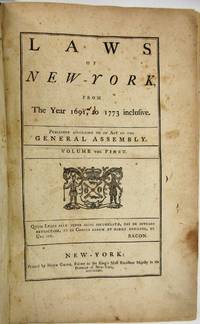
177430509New York: Hugh Gaine 1774. Folio two volumes in one continuously paginated. Pages iv 420; 4 421-835 i.e. 833 1 errata as issued. Title vignette of the State Seal Reilly 941. Some spotting generally in the margins; occasional toning. Small square cut from blank bottom section of the last text page. Very Good in modern blue buckram with gilt spine title. With a typed letter signed by M.J. Walsh of Goodspeed's taped to front pastedown dated August 6 1952. <br/><br/> Peter Van Schaack the editor signs the Preface in type. This comprehensive compilation of laws commences with the First Assembly in 1691. It ends with the Sessions of the Twenty-Ninth Assembly in 1773 which passed a statute making defacing statues of the King a crime. The Acts encompass the broad spectrum of the requirements of a developing society including a number of laws regulating the behavior of slaves and the institution of slavery. <br/>Evans 13467. Hugh Gaine unknown books
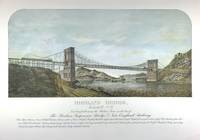
18851775New York: L.W. Ahrens Co 1885. Very good plus. Chromolithograph 21.5 x 28 inches. Matted. Minor wear soiling and a couple of modern pencil annotations at lower corners. A fine image of a proposed railroad bridge across the Hudson River just north of Peekskill New York. Plans to build a bridge over the Hudson River at the site between Fort Clinton and Anthony's Nose had been made as early as 1868. A contract was signed the following year and construction was expected to commence rapidly on the Hudson Highland Suspension Bridge. The purpose of the bridge was to provide a railroad toward Derby Connecticut enabling the supply of coal and iron for industry in the Lower Naugatuck Valley. By 1887 reports suggested the bridge would be finished in two years but by 1896 it was still unfinished when the Hudson Suspension Bridge and New England Railway Company reincorporated as the Hudson Highland Bridge and Railway Company. As a result of the long depressions including stock market crashes of 1873 and 1893 the bridge remained unfinished and the charter for construction expired in 1916. In March 1922 the state authorized the creation of the Bear Mountain Hudson River Bridge Company to complete the project. The bridge was opened on November 27 1924 and was the longest suspension bridge span in the world at the time but looked markedly different from the proposed bridge in this lithograph which bears a passing resemblance to the Brooklyn Bridge. L.W. Ahrens Co unknown books
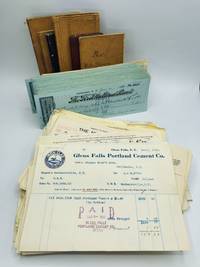
70600An archive of photographs ledgers canceled checks legal documents and other business and personal records from a Stillwater New York family who feuded over the disposition of a lumber and coal business at the turn of the last century. The troubles began following the death in 1898 of Stephen Wood Sr. the owner of Stephen Woods Sons Lumber and Coal in Stillwater New York. The business continued on under the direction of his two sons Stephen and Edward who were named executors of the estate. Two daughters were not included in the settlement. The sons cared for their widower mother Temmy but there was no formal settlement of the estate. When Edward who took care of the books died in 1908 matters became complicated and the family found itself in court because Edward's wife Louise C. Wood asked for a settlement of his portion of the estate. Temmy then sued saying she was owed a third of the estate which was also indebted to her for $6000 in personal loans. This legal dispute went on for several years during which Stephen Jr. died on February 14 1911 followed not long after by his mother Temmy who died in 1912. After Stephen Jr.'s death the remaining heirs settled the dispute with Louise paying her $1500. When Temmy died her estate was left to her granddaughters who signed their inheritance rights over to their mother. Among the court documents is a final settlement of the estate legal fees which were paid in 1917. In a typed letter dated November 8 1911 Emma Wood the daughter of Temmy Wood expressed the concern and frustrations she and her sister Kate felt over the legal troubles. "I understood Kate to say this morning that she does not want to have anything to do with it but that whatever you decide upon will be her decision also. I am in too nervous a state to discuss matters verbally with you so think best to write what I feel the honest thing to be done." Much of the material in this collection appears to be related to the request to settle the estate and therefore provides a detailed overview of the operations of the business along with the family's personal holdings and business dealings. Among the materials included are a handwritten bills ledger receipts legal documents family wills household notebooks and a photographic album. unknown
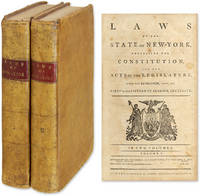
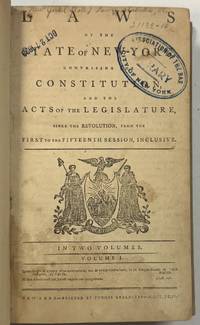
1792592511792. Early Post-Revolutionary Compilation of New York Laws New York. Laws of the State of New York Comprising the Constitution And the Acts of the Legislature Since the Revolution From the First to the Fifteenth Session Inclusive. New York: Printed by Thomas Greenleaf 1792. Two volumes. iv 511 1 pp.; iv 521 15 pp. Octavo 8" x 4-3/4". Contemporary varnished sheep blind fillets lettering pieces and black-stamped volume numbers to spine. Light rubbing to extremities corners bumped light fading to spines minor chipping to spine head of Volume 1 hinges starting. Toning to text light browning and negligible foxing in places internally clean. $950. Only edition. With the state constitution a digested index and subscriber list that includes Aaron Burr Edward Livingston and other prominent New Yorkers of the period. This was the second compilation of New York's laws published since the Revolution and the first octavo edition. This format was chosen to make this edition more affordable. 1400 subscriber copies were issued. Complete in itself a third volume was added to this set in 1798. Babbitt Hand-List of Legislative Sessions and Session Laws 350. unknown books
1831D13063Albany: Croswell and Van Bethuysen 1831. Hardcover. Very Good. Contemporary red morocco gilt-stamped lettering on spine "Rules and Orders / 1831" and upper board "John Van Buren / Ulster"; 24mo 125x84mm; pp. 212 1 calendar plus 3 floor plans of the Senate and Assembly 3 folding maps see below. Binding a little scuffed here and there; spine a touch darkened; upper board flaring it would seem that the plates were added by the owner. Some foxing; closed tears along the creases of folding plates. A scarce volume OCLC locates just 6 copies not overly specific in their cataloging -- the most detail we can find is a copy which includes "2 folded leaves of plates illustrations map." This copy includes much more and additionally bears some handwritten notes on the plates -- presumably all by John Van Buren who also adds his ownership signature and a decoration to the front paste-down. Plates include: folding map of the City of Troy labelled by hand with notes locating landmarks; folding floor plan of the assembly dated by hand 1834; small hand-colored folding map of the city of Albany; folding floor plan of the assembly printed date 1831 presumably original to this volume; small folding floor plan of the Senate chamber printed date 1831 presumably original to this volume; large hand-colored folding "Map of the State of New York and the Surrounding Country" by David H. Burr printed date of 1829. <br/><br/>John Van Buren 1810-1866 was an American lawyer and politician. He served as Attorney General of New York and Democratic Party Leader. He was the subject of much innuendo even after his death -- rumored to have lost $5000 his father's home Lindenwald and his mistress the very popular Elena "America" Vespucci descendent of Amerigo Vespucci to George Parish of Ogdensburg New York in a card game at the LeRay Hotel in Evans Mills New York. This story has not been verified but it plagued Van Buren's reputation. He has also been credited with the semi-humorous saying "Vote early and vote often". Croswell and Van Bethuysen hardcover books
18609034New York: Lith. of W. Faust 105 Nassau St 1860. Broadside wine list 25.5 x 15.5 cm. 1 page. Porcelain card decorated in chromolithograph with text in blue and red. A very early wine list from an important New York hotel and dining establishment. The hotel was at the corner of Broadway and Eleventh Street across from Grace Church and Rectory. Both the hotel and the church were designed by the architect James Renwick Jr. Named for its original owner Denis Julien the St. Denis Hotel opened in 1853 just in time for the Crystal Palace Exhibition. The building was leased to William Taylor in 1875 who incorporated the Taylor Saloon into the facility. The list features Clarets from Finke Merman of Bordeaux mostly from 1847 and 1848. And French whites including 1847 Latour Blanche and 1847 d'Yquem. Champagne Sherries and Madeiras are also included. A solid piece of printing from a firm more known for fruit labels. Verso contains an unattributed primitive pencil drawing of a horse. Some darkening to the top edge of the recto. Lith. of W. Faust, 105 Nassau St unknown
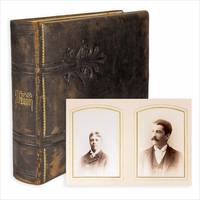
3731848<p>America. Late 19th century. Full leather photo album with 67 cabinet card photographs. 10½ x 14 inches. Six photos have scuffing and wear and there is scattered light foxing. Overall images are in very good to fine condition.</p> <p>Cornell University class photograph album owned by Walter Douglas Young 1870-1945 with his portrait and his classmates. Young was born in 1870 in Aurora New York. After graduating from Cornell he worked as an electrical engineer for the B&O Railroad and was president of The Electromechanical Company in Baltimore. His was in the Maryland National Guard signal corps and coast artillery. In the First World War he was a major in the Engineer Corps US Army. Young died in Maryland in 1945.</p> <p>Many of Young’s classmates at Cornell were in fraternities. They autographed their class photographs giving them to Young. They are:</p> <p>Juan A. Almirall 1891; Raymond Almirall 1891 architect; Leonard Thurlow Beecher 1889 co-founder of Cornell’s Chi Psi chapter; Ethelbert W. Brown an American painter from Arizona who studied with Whistler and exhibited at the Paris Salon and the Pan-Am. Exposition in Buffalo; Albert S. Crane 1891; W.E. G___ Jr. 1894; F.M. Farwell 1891; Charles P. Knowles 1891 Pennsylvania railroad surgeon; George Milik Mashek; Voyta F. Mashek 1889; George McAlpine 1891; Harry C. Palmer; Charles W. Rassler 1889; Charles Goodwin Sands 1890 the Charles Goodwin Sands Memorial Medal is named after Sands; Claude R. Scott 1889 co-founder of Cornell’s Chi Psi chapter and “instrumental in securing for this successful fraternity the Flake-McGraw mansion in Ithaca for the chapter houseâ€; Floyd M. Shoemaker 1888; Zalmon G. Simmons 1888; Milton Smith 1887; John B. Van Cleft 1889 of Norwich New York; Louis E. White; and a Sidney A. ____ 1895 Eleven additional student portraits are not identified. </p> <p>There are also: 2 photographs that show two men likely Young’s classmates costumed in minstrel apparel: one man holds a tennis racked and has a model toy house attached to his costume the other man has a sword and pistol both have nose and ear-rings and stand over a guitar case. The other image shows two students dressed as Confederate Civil War officers. </p> <p>Additionally there are five photographs of young women alone and in groups one group costumed; six images of Young’s future wife Alice Gertrude Eldred 1870–1953; 6 stunning photographs of floral arrangements likely from their wedding; 16 images of unidentified individuals that were photograph in Auburn Aurora and Seneca Falls New York.</p> unknown
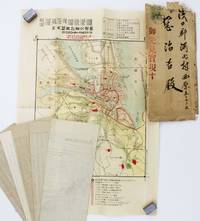
19245500Japan 1924. Very good. Four broadside documents two maps and a stamped envelope. Folded for postal delivery minor overall wear and some toning a few small areas of insect damage. A small but notable collection of documents and maps documenting the New York region in the early-1920s. The two folding maps depict New York with one in color and the other being a reprint of a map from the New York American of Sunday January 22 1922 showing the NYC area marked with concentric circles representing increasing land values. The text around the map promotes a very positive view of the real estate market in the New York area. The four broadside documents are essentially leaflets reprinting various New York Times and other articles each measuring around 20 x 7 inches and printed all in Japanese. These broadsides encourage potential Japanese investment in a syndicate promoting urban redevelopment in New York and its surroundings report on the New York Port Authority business opportunities in NYC and more.<br /> <br /> The material was produced by the New York Land and Building Company one of a number of schemes created in Japan during or immediately following the First World War promoting speculation in relatively risky investment schemes. The NYLBC was founded by Japanese real estate speculator Okamoto Yonezo and was a fascinating precursor to later Japanese overseas investment and emigration efforts. The present documents and maps provide important insights into the economic and social relations between Japan and the United States on the eve of the 1924 Exclusion Act. unknown
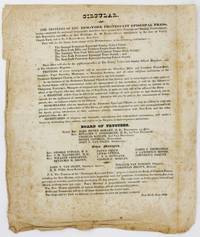
18295234New York: New York Protestant Episcopal Press 1829. Very good. Broadside 10.5 x 9 inches. Old folds foxing creasing and toning with substantial but irregularly-trimmed margins. An unrecorded New York broadside advertising the opening of the New York Protestant Episcopal Press NYPEP and related activities at No. 46 Lumber Street in New York City in 1829. The text states that "PRINTING of every description will be executed for Churches Bible and Common Prayer-Book Societies Tract Societies Missionary or Education Societies and all other religious institutions of the Protestant Episcopal Church at the lowest rates and in the best manner" and that the new establishment will "also be the publication office of The Family Visiter and Sunday School Magazine; and of The Children's Magazine." The text also includes notes about the business of the organization as well as notices to "Booksellers who are members of the Protestant Episcopal Church" and "secretaries of religious and charitable associations." In addition to their printing and binding work the broadside states that the NYPEP will take charge of the depositories of five New York institutions -- the General Protestant Episcopal Sunday Union the New York Bible and Common Prayer-Book Society the Auxiliary New York Bible and Common Prayer-Book Society the New York Protestant Episcopal Tract Society and the New York Protestant Episcopal Sunday School Society. The bottom half of the broadside is taken up with a listing of the organization's Board of Trustees "Other Managers" the general agent book-keeper printer William Van Norden and binder Christian Brown along with a postscript with details on various forthcoming publications by the press. William Van Norden was a prolific printer in New York in the first half of the 19th century producing more than just religious works. He printed the collected works of Benjamin Franklin Hannah Moore's memoir and the Proceedings of the New York Historical Society among many other works and later helped produce The National Portrait Gallery of Distinguished Americans. We could locate no other copies of this broadside anywhere. [New York Protestant Episcopal Press] unknown
179232550New York: Thomas Greenleaf 1792. Two volumes: 4 511 1 blank; 4 521 1 blank 14- Subscribers pp as issued. Later library cloth with gilt-lettered morocco spine labels some chipping old institutional rubberstamps on title leaf scattered spotting Good. <br /> offered with LAWS OF THE STATE OF NEW-YORK COMPRISING THE CONSTITUTION AND THE ACTS OF THE LEGISLATURE SINCE THE REVOLUTION FROM THE FIRST TO THE TWENTIETH SESSION INCLUSIVE. IN THREE VOLUMES. VOLUME III. New York: Greenleaf. 1797. 4 98 1 99-100 1 8 107-160 1 160-258 5 260- 354 3 356-500 1 504-525 1 pp as issued. Matching library cloth with gilt-lettered morocco spine labels some chipping old institutional rubberstamps on title leaf scattered spotting Good. <br /> <br /> These are the first editions of Greenleaf's printing of the Laws. The third volume which issued in 1797 prints only the laws of the sixteenth through the twentieth sessions.<br /> The long list of Subscribers printed in the second volume includes the great men of the times: Aaron Burr George and De Witt Clinton several Livingstons Elias Hicks and a host of other attorneys. Greenleaf reprinted all three volumes together in 1798. <br /> Greenleaf's Preface explains that he had been "engaged to publish a cheap Edition of the Revised Laws". A 1789 folio edition published by Hugh Gaine had been too expensive for most people. Volume I which "contains all the Laws to the eleventh Session has one Session more than is comprised in the first Volume of Gaine's Edition." He emphasizes that "The Types and Paper were manufactured in this State.The Types are not so perfectly Regular as those from the London Foundaries which have been improving for Centuries-- but no Cash went to London for them-- and our infant Manufactures ought to be encouraged that they also may improve." <br /> Evans 24602 32555. NAIP w033259 w016519. Thomas Greenleaf unknown
179232550New York: Thomas Greenleaf 1792. Two volumes: 4 511 1 blank; 4 521 1 blank 14- Subscribers pp as issued. Later library cloth with gilt-lettered morocco spine labels some chipping old institutional rubberstamps on title leaf scattered spotting Good. <br/> offered with LAWS OF THE STATE OF NEW-YORK COMPRISING THE CONSTITUTION AND THE ACTS OF THE LEGISLATURE SINCE THE REVOLUTION FROM THE FIRST TO THE TWENTIETH SESSION INCLUSIVE. IN THREE VOLUMES. New York: Greenleaf. 1797. 4 98 1 99-100 1 8 107-160 1 160-258 5 260- 354 3 356-500 1 504-525 1 pp as issued. Matching library cloth with gilt-lettered morocco spine labels some chipping old institutional rubberstamps on title leaf scattered spotting Good. <br/><br/> These are the first editions of Greenleaf's printing of the Laws. The third volume which issued in 1797 prints the laws of the sixteenth through the twentieth sessions; AAS apparently does not own it. The long list of Subscribers printed in the second volume includes the great men of the times: Aaron Burr George and De Witt Clinton several Livingstons Elias Hicks and a host of other attorneys. Greenleaf reprinted all three volumes together in 1798. <br/> Greenleaf's Preface explains that he had been "engaged to publish a cheap Edition of the Revised Laws". A 1789 folio edition published by Hugh Gaine had been too expensive for the folks. Volume I which "contains all the Laws to the eleventh Session has one Session more than is comprised in the first Volume of Gaine's Edition." He emphasizes that "The Types and Paper were manufactured in this State.The Types are not so perfectly Regular as those from the London Foundaries which have been improving for Centuries-- but no Cash went to London for them-- and our infant Manufactures ought to be encouraged that they also may improve." <br/>Evans 24602 32555. NAIP w033259 w016519. Thomas Greenleaf unknown books
1853WRCAM54449New York 1853. 96pp. plus large color folding map. 18mo. Original printed wrappers. Light wear to wrappers. 20th-century bookplate on front pastedown. Light tanning and foxing heavier to initial leaves. Very good. A scarce edition of this attractive guide to mid-19th-century New York City. The volume contains extensive descriptions and numerous illustrations of the sights as well as a street directory and information on travel within the city and to neighboring locales. It includes further information on attractions in Queens Brooklyn and Staten Island. The work also contains a large and detailed color folding map of Manhattan below 90th Street. <br> <br> OCLC locates only six holdings of this edition; an attractive copy of an ephemeral item in original wrappers. unknown books
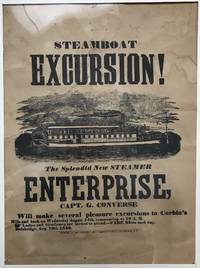
1850517Bainbridge N.Y.: Chenango Free Democrat Office 1850. Very good. Broadside 15.75 x 12 inches. Matted. Light even tanning. An attractive illustrated broadside dated August 10 1850 advertising a short trip up the Susquehanna River from Bainbridge to Corbin's Mills scheduled for August 14. "Ladies and gentlemen are invited to attend - fare 25 cents each way." This broadside was printed at the office of the Chenango Free Democrat a free soil paper that would last from 1849 to 1850. The wonderful large wood engraving signed "Clarkson" shows the steamboat smoke billowing from her stacks the American flag fluttering in the breeze behind and passengers on the upper and lower decks. The Susquehanna flows through the center of Bainbridge but we could not locate a place named Corbin's Mills in the area at that time though the Corbins were a prominent family in the area and a lumber mill by the same name appeared about two decades later. Scarce with no listings in OCLC for this or similar items. Chenango Free Democrat Office unknown books
197451627Paris: 1974. Ottimo Fine. Opera appartenente al libro di E. E. Cummings "Santa Claus" illustrato con 9 acqueforti di Alexander Calder. Sono stati tirati 175 esemplari di cui 25 accompagnati da due suite delle nove incisioni una su Vé";lin d'Arches e l'altra su Auvergne a mano del Moulin Richard-de-Bas; 75 esemplari con una sola suite su Auvergne a mano del Moulin Richard-de-Bas: 75 esemplari con una sola suite su Vé"lin d'Arches. Cm 47x35 Foglio 51x67. . Ottimo Fine. 175 10 H.C. , unknown
Raffigurazione geografica del territorio nord americano in particolare di Canada o Nouvelle France ed una parte degli Stati Uniti (Florida, Carolaina, Luisiana, Virginia...). Interessante evidenziare come l'estensione del Canada venga aumentata, verso sud, a discapito dei territori delle colonie inglesi.
Bellissima rappresentazione di una via Broadway vista dal Bowling Green il parco più antico di New York. L’incisione, in coloritura coeva, mostra la quotidianità di una grande metropoli con evidenziate discrete interazioni sociali tra individui il cui status, di cittadini della nuova nazione, è indicato dal loro comportamento e dai loro costumi. I modi di vestire repubblicani consentivano a tutti di identificarsi come partecipanti in un gruppo di pari-sociali. Pubblicata by Currier & Ives, 152 Nassau Street, New York.
219-Wo.J. Farbstifte und Bleistift, auf festem Velin, links unten signiert und datiert ?Linde Kruck Körner 1966?. 35,2:53,6 cm. Minimal fleckig. Verso am Oberrand Reste alter Verklebung.
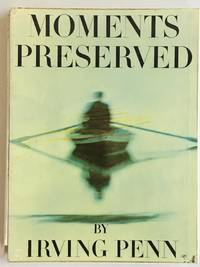
1960217896New York: Simon and Schuster 1960. Rilegato tela sovracoperta custodia cloth dust jacket slip-case. Molto buono Very Good. <em>Eight essays in photographs and words by Irving Penn</em>. With an Introduction by Alexander Liberman. Rosemary Blackmon collaborated in the writing of the captions and text. 39 colour plates and over 260 monochrome illustrations / Fotografie in bianco e nero e a colori di Irving Penn. Introduzione di Alexander Liberman. Testi e didascalie a cura di Rosemary Blackmon. 4to. pp. 182. Molto buono Very Good. Sovracoperta con parti mancanti lungo il dorso entro copertina di protezione mylar Worn dust jacket with missing parts along the spine inside mylar protective cover. Prima edizione First Edition First Printing. Fotolibri1 Roth 2001 Roth Andrew The book of 101 books. PPP Editions - Roth Horowitz 2001. <em>"Irving Penn's first book <strong>Montents Preserved</strong> is an overview of an astonishingly busy career &mdash"; one that began in earnest when he was hired by Alexander Liberman in 1943 to be the art director's assistant at Vogue. Penn had studied briefly with Alexey Brodovitch but it was Liberman who molded and promoted his work and made him Vogue's ruling artistic presence;" he also provides a generous introduction here. The book's uncredited designer is Penn himself "That's part of the whole process" he says but his crisp pacing graphic precision and vivid use of color could easily be mistaken for Liberman at his most lucid. Penn spent a month in Lucerne Switzerland overseeing the printers at C. J. Bucher who had produced Avedon's Observations the previous year. For <strong>Moments Preserved</strong> they worked with gravure letterpress and offset processes on separate paper stocks and had casts of Condé";" Nast's original engraving plates flown in from New York for the book's color reproductions. When the first gravures didn't have the requisite depth those pages went back to press and another image layer was laid on top of the originals. The book's first edition print run of 20000 was divided into French Italian German and English editions and sent back to press again for a separate text run in each of those languages. Penn only recently discovered that beknownst to him a Danish edition was also published. Subtitled "Eight Essays in Photographs and Words" <strong>Moments Preserved</strong> gathers Penn's vast variety of enthusiasms &mdash"; mostly for the vast variety of humanity —" and slots them into categories by nationality: the French the Italians the English the Americans. Though most of these sections include fashion studies still lifes and impressionist scenes like the shimmering mirror image of a solitary boater that decorates the book's slipcase or the pointillist baseball action shot on one double spread they have in common the photographer's deftly understated portraits printed here in the subtlest gravure. Penn reinvented the classic daylight studio portrait for a more casual time undercutting its formality but heightening its potential as a revealing performance. His texts written in collaboration with Rosemary Blackmon are often wry annotations of those performances. Evelyn Waugh he notes "was somewhat less than endearing" while the Duchess of Windsor staking out one of Penn's tight corners like a guardsman "wears history as coolly as she wears her impeccable clothes". A. Roth The Book of 101 Books.</em><br /><br /><em>Il primo libro di Irving Penn <strong>Montents Preserved</strong> è"; la panoramica di una carriera sorprendentemente densa iniziata con l'assunzione da parte di Alexander Liberman nel 1943 come assistente del direttore artistico di Vogue. Penn aveva studiato brevemente con Alexey Brodovitch ma fu Liberman che modellò e promosse il suo lavoro rendendolo la presenza artistica dominante di Vogue; Liberman qui fornisce anche una generosa introduzione. Il designer non accreditato del libro è" lo stesso Penn "Fa parte di tutto il processo" dice ma il suo ritmo vivace la precisione grafica e il vivido uso del colore potrebbero facilmente essere scambiati per intuizioni di Liberman: Penn passò"; un mese a Lucerna in Svizzera supervisionando gli stampatori CJ Bucher che avevano prodotto Observations di Avedon l'anno precedente. Per <strong>Moments Preserved </strong>furono utilizzati i processi del rotocalco della stampa tipografica e dell'offset su stock di carta differente e i calchi delle le lastre per incisioni di Condé Nast arrivate da New York per le riproduzioni a colori del libro. Le prime stampe non avevano la profondità necessaria così quelle pagine tornarono alla stampa e un altro strato di immagine fu posato sopra gli originali. La prima tiratura di 20.000 copie del libro fu divisa in 4 edizioni in lingua francese italiana tedesca e inglese e rimandata in stampa per la parte del testo in ciascuna lingua. Penn scoprì" solo di recente l'esistenza anche di un'edizione danese. Sottotitolato "Eight Essays in Photographs and Words" <strong>Moments Preserved</strong> raccoglie la grande varietà"; di interessi di Penn - principalmente per la grande varietà dell'umanità - e li inserisce in categorie per nazionalità: i francesi gli italiani gli inglesi gli americani. Sebbene la maggior parte di queste sezioni includa studi di moda nature morte e scene impressioniste come l'immagine luccicante dello specchio d'acqua con un navigatore solitario che decora la custodia del libro o l'azione di baseball in stile pointillista stampata su doppia pagina esse hanno in comune l'abilità" <span style="background-color: #ffffff"; color: #626262;">del fotografo</span> abilmente sottostimata nei ritratti qui stampati nel rotocalco più fine. Penn ha reinventato il classico ritratto in studio alla luce del giorno per uno più casual minandone la formalità ma aumentando il suo potenziale di performance rivelatrice. I suoi testi scritti in collaborazione con Rosemary Blackmon sono spesso annotazioni ironiche di quelle performances. Evelyn Waugh Penn osserva era un po 'meno che accattivante" mentre la Duchessa di Windsor sorvegliando uno degli angoli stretti di Penn come un guardiano "indossa la storia con la stessa freddezza con cui indosserebbe i suoi abiti impeccabili". A. Roth The Book of 101 Books.</em> Simon and Schuster, hardcover
Boards creased and darkened and with light rubbing to extremities. ; 8vo; Sheet 1700-1848 pages
Very Good Urdu Extremely rare first and only edition (not in institutional catalogues and market) of this travel book to America in the mid 20th century by Pakistani journalist and intellectual Sharif Farooq, who was invited to visit the USA on the Leader Specialist Programme in 1958. Sharif Farooq visited America in 1958. In his travelogue, he highlights the lifestyle, educational system, and foreign policy of America in detail. He also introduces the economical situation of the country, economical trends, and the condition of different institutions. Reports of press conferences are also a part of this travelogue. (Source: Travelogues of America in the Urdu Language: Trends and Tradition). "Wherever the Americans deserve appreciation for their intense patriotism and enthusiasm for labor, the author has given unstinted praise but where criticism is due he has not spared them, though the language used is very sober and moderate. I am confident that this book will be widely read and aimed as one of the good travel books written about America". (From the preface of the book by advocate-general Muhammad Ali). In original boards with lettering in both Latin and Arabic, spine missing. Otherwise a good copy. Demy 8vo. (22 x 14 cm). Text is in Urdu with a one-page English preface. 387, [1] p. In the Land of Lincoln. First Edition. No copy in OCLC.