1 825 résultats
1921160171Los Angeles: California Theatre 1921. Archive of 41 vintage photographs of the elaborate stage sets and live performers which supported silent film screenings at the California Theatre in Los Angeles taken during the theatre's first three years in operation 1919-1921. 20 photographs with blindstamps crediting photographer Dick Stagg and 14 with blindstamps crediting photographer J.C. Milligan.<br /> <br /> Photographs housed in an album with typed labels on the versos of the adjacent pages identifying the film screening dates performers and musical numbers. <br /> <br /> The first two photographs in the archive feature a day shot and a striking night shot of the theatre's beautifully elaborate facade followed by a photograph of the "original installation" of the stage and grand staircase. The balance of the photographs however show theatre sets usually with performers present occasionally with the orchestra present and always without the audience present likely taken during rehearsals or after the completion of the set designs. <br /> <br /> The earliest dated photographs in the archive only two and a half weeks after the theatre's opening on December 24 1918 show two different sets for the screening of the 1918 film "Eye for an Eye." The last and latest photograph in the archive shows a parlor set with five costumed actors for the 1921 screening of the 1920 film "Billions." All in all 29 films are represented in the archive.<br /> <br /> Interestingly many of the screening dates of the films represented in the archive coincide with-or date earlier than-the currently believed premiere dates of the films some of which may have had their premiere at the California Theatre. <br /> <br /> Fred Miller opened the California Theatre at 810 S. Main Street in downtown Los Angeles on December 24 1918. The majestic Beaux-Arts cinema housed a capacity of 2000 and was designed by architect Alex B. Rosenthal who also designed the Granada Theatre in Santa Barbara. In 1919 the theatre was bought by Goldwyn Pictures and in 1935 operated as Teatro California often showing Spanish language films until 1983 after which it operated as a grindhouse and pornographic theater. The theater closed in 1987 and was demolished in 1990.<br /> <br /> Photographs: 8 x 10 inches. Very Good plus to Near Fine overall with some faint toning with one photograph with two vertical creases.<br /> <br /> Album: 13.75 x 10.25 inches. Very Good plus. California Theatre unknown
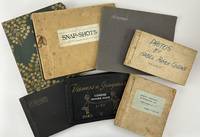
19304373Various locations in California mostly Sausalito and other locations in Marin and Sonoma Counties 1930. Very good. Nine photograph albums in a variety of bindings containing approximately 810 photographs the great majority paper prints but with a fair share of tintypes and CDVs in the earliest two albums plus 102 loose negatives three negative rolls and a metal container housing 135 later color slides. A phenomenal collection of photographs from noted but still somewhat obscure California artist teacher and amateur shutterfly Isabel Margaret Porter Collins. The collection numbers over 800 images ranging from early family images featuring dozens of Collins' antecedents from the 1870s to 1890s personal albums featuring Collins with her family and friends in various locations in California over the course of about thirty years and an album and some further images produced by Collins' son Henry Benjamin Collins whom she called Ben. The collection was most likely retained by Ben. Isabel Margaret Porter Collins 1875-1954 was an artist and teacher who produced both amateur and fine art photography. She was born in Petaluma to a prominent Marin County family descending from the Collins-Dowd-Harris-Howard-Porter line. Collins was a talented visual artist and studied at the Mark Hopkins Institute of Art from 1898-1900. She then worked as a pen-and-ink artist for Shreve & Company producing greeting cards and place cards. She was subsequently employed by Dirk Van Erp from whom she learned coppersmithing producing lamps shades pen trays and other hammered copper objects. In 1906 she married Henry Collins and moved to Sausalito where she taught in Bay Area public schools until her retirement in 1945. She participated in major exhibitions for the San Francisco Art Association 1896 and 1901 and earned a gold medal at the California State Fair in 1900. In her later years Collins lived with her daughter in Seattle. After she died Collins was buried in the family plot in Ukiah California.<br /> <br /> The photograph albums are not organized in strict chronological order as the images overlap slightly in time within a few of the albums. Still the albums are detailed as follows in roughly chronological order: <br /> <br /> 1 Annotated Family Photograph Album. 1870s-1890s. 16 leaves illustrated with forty-four photographs mostly cabinet cards measuring around 6 x 4 inches inset one per page into picture windows with the last six pages comprised of tintypes presented six per page in smaller picture windows. Contemporary padded cloth covers central metal device on front cover manuscript titles to spine reading "Harris Howard Porter Collins." Front cover detached cloth worn and somewhat soiled fore-edge clasp lacking. Occasional wear to photos. The album opens with a nice image of Collins' mother Eliza Harris Porter captioned with her name as well as her birth and death dates. Similarly captioned photographs populate the album throughout featuring Collins' family members and friends such as Alpheus Josephus Harris Julia Harris Polk Porter and so forth providing a solid avenue down which to pursue Collins' ancestry. Many of the images emanate from Honolulu Hawaii where Collins' family lived and worked for some time.<br /> <br /> 2 Annotated Family Photograph Album. 1880s-1890s. 13 leaves illustrated with twenty-five photographs mostly cabinet cards measuring around 6 x 4 inches inset one per page into picture windows. Contemporary red padded cloth with central metal device and corner pieces on front cover four small metal feet on rear cover two music boxes stored within the rear cover which no longer appear to be working and metal clasp on fore-edge. Contents generally nice with occasional dust-soiling. Like the first album this collection of photographs is comprised of cabinet card images of Collins' antecedents beginning with Josephine Porter and also including another image of Collins' mother "Polk with Josie Porter 8-12-82 Healdsburg" "Joe Porter Weller Nevada" "Mr. Crow Nevada Cattleman" Pamela Everett Howard Harris and others. Most notably this album includes an image of a young Collins herself with the manuscript caption reading "Isabelle Porter Collins." In addition to the inset photographs in the album there are several items laid in including later letters to Collins' descendants and a few additional photographs. Another good opportunity to pursue Collins' family lineage.<br /> <br /> 3 Annotated Vernacular Photograph Album of Family and Scenes in Marin County. 1905-1912. 16 leaves illustrated with 104 photographs. Oblong folio. Contemporary gray wrappers. Moderate edge wear and minor soiling to wrappers. Minor dust-soiling to contents but mostly clean and in nice shape. This is the first album in the collection that we can assume is comprised mostly of photographs by Isabel Collins herself. The album features over a hundred shots of Collins and her family mostly centered on her son Ben her mother Eliza and various aunts uncles and family friends. The family is pictured at home in Sausalito as well as traveling around to nearby places in Marin and Sonoma counties such as Fort Ross Sonoma Mission Slide Ranch Muir Woods Carmel and Mill Valley. Apparently Collins's son Ben has occasionally provided his own later captions in some of the albums evidenced here by his inclusion of the word "Grandma" over an image of Eliza Harris Porter. In addition to displaying Collins' talent for photography this album and most of those that follow provide a wide view of the scenery and landscape of the area of California just north of the San Francisco Bay Area where Collins spent most of her married and family life.<br /> <br /> 4 Marin - Monterey & Mendocino Cos. Arizona Isabel P. Collins cover title. 1906-1913. 68 leaves illustrated with 133 photographs. Small square quarto. Contemporary Japanese-style blank book string tied printed title label on front wrapper. Some wear and abrasions to wrappers last few blank pages heavily chipped. Moderate foxing and light occasional staining. A custom photograph album created by Collins featuring scenes in and around the three title counties Marin Monterey and Mendocino as well as a short section near the end capturing a family visit to Arizona. The photos begin in Sausalito at the Collins home and also include pictures of Boyes Hot Springs San Miguel Mission the Presidio Chapel in Monterey Santa Barbara and Sherwood Creek among others. This album also contains numerous images of the Sherwood School in Sherwood California in 1912 where Collins taught school. These images include a class picture of Collins and her class standing outside their one-room schoolhouse other pictures of the school and its students local Sherwood residents a sheep farm in the area and some mining scenes around Sherwood. The small number of photos from Arizona include a shot of Collins labeled "circa 1900 1st teaching job." Due to the language on the printed title card we assume all or most of the images were shot by Collins herself.<br /> <br /> 5 Vernacular Photograph Album of Scenes in Marin and San Mateo Counties. ca. 1910. 48 leaves illustrated with 111 photographs. Oblong quarto. Contemporary limp black cloth "Photographs" in gilt on front cover. Minor edge wear. Contents largely sound and clean. Lightly annotated with a few location captions but largely un-annotated. A collection of photographs featuring Collins' children and family members engaged on a farm and in other outdoor activities in Sherwood and Pescadero attending the "S.D. Fair" and engaged in other recreational activities in and around Sausalito. Two loose images in this album display Collins' photo credit stamp on the verso reading "Isabel Porter Collins Photograph."<br /> <br /> 6 Snap-Shots manuscript cover title. 1911-1930s. 12 leaves illustrated with 116 photographs. Oblong folio. Contemporary tan paper-covered boards manuscript title label on front board single string tie. Minor wear some offsetting to rear cover. One leaf detached but mostly clean and nice internally. A heavily annotated vernacular photograph album that appears to have been compiled by both Isabel and her son Ben and likely mostly the latter. The majority of the images though were likely taken by Isabel though some images are credited to Ben's friends Lafka and Harpo. The photos capture a wide variety of scenes of the Collins family in Sausalito hunting camping and more as well as scenes of Ben's social life and travel to Seattle Salt Lake City and Salinas. Interestingly this album includes a portrait photograph of Collins captioned "Mother 1898 Art School."<br /> <br /> 7 Photos by Isabel Porter Collins - Vallejo manuscript cover title. 1920s-1930s. 38 leaves illustrated with seventy-six photographs and a handful of ephemeral items. Small oblong quarto. Contemporary Japanese-style blank book string tied manuscript title on front cover. Minor wear and soiling to covers. The preponderance of this album concerns Collins' time as a teacher at Lincoln School in Vallejo in the 1920s with numerous images of the students fellow teachers and outdoor scenes around the school. One of the more interesting series of images pictures the Kikuchi children with a later note in Collins' hand reading "Japanese Father Died Consentration sic Camp WWII. Was Vallejo Barber/Wife." There are also several photos of the Collins children and other family members visiting San Francisco. This album was most likely compiled by Collins herself as it includes a few hand-illustrated gift cards from her daughter Clairice Thorsen nee Collins and programs from events attended by Isabel and her two kids with manuscript captions by Collins.<br /> <br /> 8 Annotated Vernacular Photograph Album Recording Isabel Collins' Travels. 1935-1936. 77 loose leaf sheets illustrated with 178 photographs and about thirty postcards. Quarto. Contemporary hardcover three-ring binder covered in decorative floral paper possibly by Collins herself. Minor wear. A few leaves detached from the three-ring binder minor wear to contents but mostly clean and in nice shape. A handmade and very personal account of Collins' travels to Santa Barbara Montecito Santa Ynez Tejon Pass and more in 1935 and 1936 profusely annotated with manuscript captions of the people and places she visited. Collins sees Santa Barbara College the 1935 Santa Barbara Festival the 1936 Old Spanish Days Fiesta Parade in Santa Barbara Huntington Gardens the Santa Ynez Mission and more during her travels. A couple of images feature noted California artist Helen Seegert one captioned "Helen Seegert as a Mexican Flower Girl." The last five pages include a detailed handwritten account and a map detailing the portion of Collins' travels in November 1936. A great many of the vernacular images in this travel album were likely taken by Collins herself except for the images she distinctly captions with the photo credit of another "Photo by Leila Robins" or "Anderson's Photo '35".<br /> <br /> 9 Vamos a Guaymas Mamie y Ben 1-57 manuscript cover title. 1957 1962. 5 leaves illustrated with twenty-three photographs. Oblong quarto. Contemporary black cloth manuscript title on front cover spiral bound. Spine worn moderate edge wear. A short collection of photographs recording Ben Collins and his wife Mamie on a trip to Guaymas Mexico in 1957 and with four photos of a later vacation to southern California in 1962. In addition to this later album the present collection includes three negative rolls and a metal container housing 135 color slides dating from the 1950s and '60s which most likely belong to Ben as well. The assortment of 102 loose negatives arranged by place in a couple of envelopes Sausalito and "Nature Trails Sequoia 1930s" are most likely Isabel Collins' work.<br /> <br /> Collins' photographs are positively rare institutionally. The most substantial collection of Collins' work is held by the California Historical Society numbering 222 photographic prints mostly from her time at the Hopkins Institute. The California State Library holds seven photographs. These two collections are the only institutional records we could find of Collins' work. As such the present collection most certainly represents the largest collection of Collins' work found anywhere and apparently the only deep collection of family photographs as well.<br /> <br /> Edan Milton Hughes Artists in California 1786-1940 Volume I p.233. unknown
1929302295Los Angeles 1929. 100 pp of typed documents and an additional 50 album leaves mounted with approximately 50 photographs various sizes and processes and various documents. Folio. Limp leatherette with title and recipient name stamped in gilt to upper cover. Large black quarter morocco clamshell box gilt. 100 pp of typed documents and an additional 50 album leaves mounted with approximately 50 photographs various sizes and processes and various documents. Folio. "It is proposed that a COMPLETE ZOOLOGICAL GARDENS be opened to the public on a fifty cent admission basis which is to be properly laid out as an attractive Zoological and Botanical Garden with the finest and largest private collection of animals birds and reptiles to be seen anywhere on the continent."<br /> <br /> The advent of the motion picture industry in California had many wide-ranging ramifications on the business world and one was that it created a new market for firms who traditionally supplied animals to circuses and zoos both public and private owned by the likes of William Randolph Hearst. <br /> <br /> This archive is a report by the Investment Auditors of California for the Horne Corporation that was looking to expand by establishing a zoological garden in the environs of Los Angeles. The Horne Corporation was the largest and most successful of its type at the time apparently the only company in the US that could completely outfit a circus with both animals and show equipment. They were to purchase the Los Angeles Zoological Garden and Jungle Studio for $250000 and thereby sought to provide a similarly complete service to the film studios with both animals and suitable locations for film sets.<br /> <br /> The head of the company I.S. Horne for whom this report was compiled commenced trading in animals from Kansas City MO around 1914. The range of animals at the their disposal included big game birds reptiles and many of the documents concern the prospect of importing reindeer from Alaska.<br /> <br /> The material is held in a presentation album and includes the certificate of incorporation in Wilmington Delaware May 13 1929 as well as the by-laws of the corporation minutes of the first meeting the proposal for Los Angeles Zoological Garden and Jungle Studio and a balance sheet. At this stage the company had total assets of $57700 & liabilities of $625388.46; an enumeration of the various animals in inventory including wildebeest sables leopard lynx Rhodesian baboons bushbaby and a large aardvark.<br /> <br /> Of real interest are the plans for the park including artist's impressions which would be furnished with circus attractions "Monkey Island" jungle setting for motion pictures and an acknowledgment that "before the introduction of the motion picture industry the art of showmanship was not quite so highly developed as it is today." In fact one of the first pictures they supplied animals for was - appropriately enough - Trader Horn which was nominated for the 1931 Academy Award for Best Picture. <br /> <br /> On a more practical level there is a "Descriptive Classification of Principal Commercial Wild Animals" which lists 340 different animals in some details. There is also an account of hunting wild animals in East Africa as well as a section on animals that have been trained to hunt by man. Furthermore there is also much correspondence which provides much insight into the game industry its clients and the prospects for its future.<br /> <br /> Horne's venture subsequently became known as the World Jungle Compound in Thousand Oaks California eventually being acquired by 20th Century Fox studios. This archive is a record of a new phase of the entertainment industry. unknown
1929302295Los Angeles 1929. 100 pp of typed documents and an additional 50 album leaves mounted with approximately 50 photographs various sizes and processes and various documents. Folio. Limp leatherette with title and recipient name stamped in gilt to upper cover. Large black quarter morocco clamshell box gilt. 100 pp of typed documents and an additional 50 album leaves mounted with approximately 50 photographs various sizes and processes and various documents. Folio. "It is proposed that a COMPLETE ZOOLOGICAL GARDENS be opened to the public on a fifty cent admission basis which is to be properly laid out as an attractive Zoological and Botanical Garden with the finest and largest private collection of animals birds and reptiles to be seen anywhere on the continent."<br/><br/>The advent of the motion picture industry in California had many wide-ranging ramifications on the business world and one was that it created a new market for firms who traditionally supplied animals to circuses and zoos both public and private owned by the likes of William Randolph Hearst. <br/><br/>This archive is a report by the Investment Auditors of California for the Horne Corporation that was looking to expand by establishing a zoological garden in the environs of Los Angeles. The Horne Corporation was the largest and most successful of its type at the time apparently the only company in the US that could completely outfit a circus with both animals and show equipment. They were to purchase the Los Angeles Zoological Garden and Jungle Studio for $250000 and thereby sought to provide a similarly complete service to the film studios with both animals and suitable locations for film sets.<br/><br/>The head of the company I.S. Horne for whom this report was compiled commenced trading in animals from Kansas City MO around 1914. The range of animals at the their disposal included big game birds reptiles and many of the documents concern the prospect of importing reindeer from Alaska.<br/><br/>The material is held in a presentation album and includes the certificate of incorporation in Wilmington Delaware May 13 1929 as well as the by-laws of the corporation minutes of the first meeting the proposal for Los Angeles Zoological Garden and Jungle Studio and a balance sheet. At this stage the company had total assets of $57700 & liabilities of $625388.46; an enumeration of the various animals in inventory including wildebeest sables leopard lynx Rhodesian baboons bushbaby and a large aardvark.<br/><br/>Of real interest are the plans for the park including artist's impressions which would be furnished with circus attractions "Monkey Island" jungle setting for motion pictures and an acknowledgment that "before the introduction of the motion picture industry the art of showmanship was not quite so highly developed as it is today." In fact one of the first pictures they supplied animals for was - appropriately enough - Trader Horn which was nominated for the 1931 Academy Award for Best Picture. <br/><br/>On a more practical level there is a "Descriptive Classification of Principal Commercial Wild Animals" which lists 340 different animals in some details. There is also an account of hunting wild animals in East Africa as well as a section on animals that have been trained to hunt by man. Furthermore there is also much correspondence which provides much insight into the game industry its clients and the prospects for its future.<br/><br/>Horne's venture subsequently became known as the World Jungle Compound in Thousand Oaks California eventually being acquired by 20th Century Fox studios. This archive is a record of a new phase of the entertainment industry. unknown books
19384491Primarily Los Angeles 1938. Overall about very good. Thirty-four printed items varying lengths; forty-eight postcards; eighty-four loose photographs mostly larger formats; string tied oblong folio album with sixty-six medium and large format images. Some wear with scattered chipping and closed tears to printed items. Occasional chipping and creasing to photo mounts. A few images beginning to fade but mostly crisp and clean. An extensive collection of photographs and ephemera related to the Mount Lowe Railway and various hotels and attractions that operated on Echo Mountain at the crest of the San Gabriel Mountains at the turn of the 20th century and the first part of the 1900s. The mountain was the site of a popular funicular that was originally engineered by Professor Thaddeus S.C. Lowe and opened as the Pasadena & Mt. Wilson Railroad Company in 1893. It was the only scenic mountain electric traction railroad ever built in the U.S. and it remained in operation until 1938 although its heyday was primarily the 1890s and the early-20th century. The railway consisted of nearly seven miles of track beginning in Altadena at a station called Mountain Junction and ending atop Echo Mountain at a magnificent seventy-room Victorian hotel called the Echo Mountain House. Only a few yards away stood the forty-room Echo Chalet which opened in conjunction with the railway. Other buildings on the peak over the years included an astronomical observatory car barns repair facilities dormitories a casino and a dance hall. Mount Lowe's operation was hit by a number of disasters which brought about a slow and ultimately terminal decline. The first was a kitchen fire that destroyed the Echo Mountain House in 1900. Further fires and floods eventually destroyed all remaining facilities and the railway was completely abandoned in 1938 after a storm cleared the mountainside and washed away nearly everything that remained.<br /> <br /> The collection includes thirty-four railway brochures pamphlets and other promotional items; two issues of the promotional Mount Lowe Daily News and a piece of sheet music in honor of the line; a collection of forty-eight postcards; eighty-seven loose photos mostly large format and mounted images; as well as a photograph album containing another sixty-six mid- to large format photos of this ingenious and precipitous tourist railway. The line was broken into three sections. The first was a fairly straightforward section that traversed the hillside residential sections of Altadena to the upper base of Echo Mountain. In order to reach the peak of Mount Lowe however passengers would have to transfer to a steeply graded and narrow funicular that travelled up 2200 feet on the "Great Incline" to the top of Echo before transferring again to wind up a further 3.5 miles on trolley cars over sharp switchbacks and curved viaducts with nicknames like "Cape of Good Hope." Because of the repeated setbacks caused by fire and storm the original owners sold the railroad and its mountain top attractions to Henry Huntington in 1905 after which the line operated as part of the Pacific Electric Railway for another thirty years. <br /> <br /> Amongst the printed matter here highlights include a program from the opening of the railway on August 23 1893 featuring a portrait of Thaddeus Lowe and an image of the Great Incline; a pair of extremely scarce copies of the illustrated promotional newspaper the "Mount Lowe Echo" from the early years of operation; three unrecorded broadsides advertising Mount Lowe excursions around the turn of the century; and a detailed and extensively illustrated pamphlet "Scenes on the Line of the Pasadena Mountain Railway." Also present are a clutch of nearly a dozen scarce color- and photo-illustrated brochures from the Pacific Electric era several illustrated leaflets including one with a bird's-eye view of Echo Mountain and Mount Lowe timetables and other promotional and review materials. The group of over fifty colorized photographic postcards were produced by a variety of publishers but a great number emanate from the shop of M. Rieder who produced numerous viewbooks of California towns in both English and Spanish-language editions during the early-20th century.<br /> <br /> The almost ninety larger format loose and individually mounted photographs show a variety of scenes depicting the railroad tourist facilities and environs across the span of its operation. Most are sized 8"x10" 5"x8" or in the vicinity of said measurements. The first group of photos shows early observation parties and other excursions including one mounted image by the Hill studio of Pasadena showing Professor Lowe guiding a party during the construction of the railway. The following considerate group comprises about twelve posed photos of children and families engaged in winter activities on Mt Lowe and clearly intended for an advertising campaign for year-round tourism to the peak and includes an idyllic image of children on a horse-drawn sleigh in the snow mounted on the card of LA studio Graham & Morill. Other studios represented here include C.B. Waite Putnam Studios and George Wharton James. There are also a number of images from the photo department of the Mt. Lowe Railway itself including numerous photos of the funicular and large souvenir images of tourists riding the open cars on the Great Incline. On the whole the images are often accompanied by manuscript or typed captions and in some cases by lengthy printed texts on the versos of card mounts.<br /> <br /> The terrific album of sixty-six photographs is focused for the most part on the early period of the railroad under the operation of Pacific Electric Railway following its purchase by Huntington in 1905. The professional photographer of these images is unidentified here but several conform to known photographs by C.C. Pierce who heavily documented the railway during this period and the group as a whole is heavily reminiscent of his work. The photos for the most part focus on the operation of the line and its dramatic setting and engineering with images of deep and narrow cuts along through the mountainside hairpin turns on precarious looking trestles the steep incline of the funicular and the astonishingly unfazed passengers. Mixed in with these are shots of the tourist facilities as they existed at that point and the mechanical and structural plant of the rail line. Similar to the loose photographs in the collection the album prints are mostly 8"x10" 5"x8" or thereabouts.<br /> <br /> In all a compelling and rich multi-format archive of one of the most interesting and spectacularly engineered tourist railroads of the late-19th and early-20th centuries. unknown
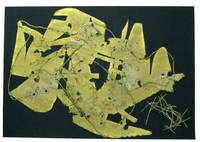
196467049Milano: Grafica Uno 1964. 11 stampe a rilievo di Claire Falkenstein su matrice in filo di rame saldato numerate e firmate a matita cm 45x45. Testi di Michel Tapié"; e Berto Morucchio in italiano e inglese. cm 70x50. . Edizione originale di 70 XXX es. numerati. <em>Coi suoi ferri coi suoi morceaux choisies stabilì anzitutto una segreta impalcatura su cui posto il foglio doveva aderire come l'anima il corpo o più modestamente ma non meno vitalmente la pelle i diffrenti organi. Per pressione e per impressione si sviluppava il suo discorso plastico già" iniziato nel periodo 1953-1958 con l'object-gravure espsoto nel 1958 alla galleria "Il Segno" di Roma da testo di Morucchio</em> Grafica Uno, unknown
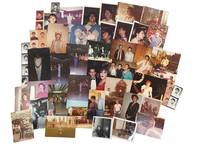
1967230901967. LGBTQGay ActivismDrag "Miss Jessie" photo archive chronicling 30 years in the life of San Diego drag performer and gay community activist Edward "Jesse" Taylor. The archive documents 30 years of Taylor's life as well as images from his 1987 title as Empress XVI in the California Imperial Court and his drag career as Miss Jessie. Taylor's also wrote as a columnist for the San Diego based LGBTQ community newspaper The Gay and Lesbian Times. Included in this archive is a scan of Taylor's 1998 obituary from the Gay and Lesbian Times a touching personal remembrance during a period marked by the AIDS crisis and its aftermath highlighting Taylor's cherished role in San Diego's LGBTQ community.<br /> <br /> Archive comprises approximately 330 photographs primarily color snapshots with some black-and-white prints dating from the 1960s through the 1990s with strong concentration in the late 1970s and 1980s. The photographs depict Taylor from childhood and adolescence to adulthood; with 18 images documenting drag performers including Taylor as Miss Jessie. The images include stage performances in sequined gowns and formal dresses candid backstage and social images and an image of Taylor wearing a crown captioned en verso "Miss Jessie / Empress" likely an image of Taylor as Empress XVI 1987 in the California Imperial Court. The archive also includes numerous photobooth strips snapshots annotated on versos with names dates and personal inscriptions and a California driver's license identifying Edward Gray Taylor linking Taylor's legal identity with his drag persona. Images show Taylor in costume both drag and playful dress-up posing with partners loved ones and family and traveling across the country and abroad. Several images show Taylor reading palms at a rainbow-decorated booth. The obituary clipping from the Gay and Lesbian Times dated October 29 1998 provides personal detail noting Taylor's title as Empress XVI his performance career and his role as a columnist as well as his belief in the mystic and professional psychic and palm-reading work. Jesse is described by those who knew him as as "an asset to the community and a gentle man who gave a lot of himself" and "an extremely loving man."<br /> <br /> The archive is an intimate personal glance at San Diego's LGBTQ community during an immense period of increased visibility through the Gay Liberation Movement of the 60s and 70s and of intense sorrow through the AIDS crisis of the 80s and 90s. Organizations such as the Imperial Court System and local drag performance revues were both sources of escapist entertainment and fundraising supporting the gay community. Taylor's life bridged performance with community journalism and gay activism. Light edge wear minor surface scratching and occasional fading present across photographs; some verso inscriptions in ink; driver's license shows creasing and corner wear; overall condition good. A rare cohesive rich and intensely personal archive offering insight into the life of a beloved figure in San Diego's LGBTQ history. unknown
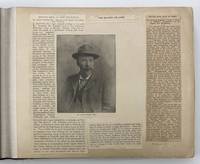
191413005Various locations in Nevada California and British Columbia 1914. 19 leaves illustrated with 176 photographs a combination of albumens cyanotypes silver gelatin and printing out paper images most with penciled captions on the album leaves plus relevant newspaper clippings to first and last leaves and a folder of original drawings letters manuscript poetry and additional newspaper clippings laid in. Oblong folio. Contemporary black pebbled cloth spine bound with two screw posts. Minor wear and dust soiling to covers edges and corners worn. Very good. An extraordinary annotated vernacular photograph album memorializing the career of legendary mining manager Frank Robbins 1856-1914. The compiler of the album was likely Robbins' son George C. Robbins who followed his father into the mining and geology fields. Frank Robbins was born in Portland Oregon in 1856. He studied science at Upper Canada College before first practicing his profession at the celebrated mining camp at Eureka Nevada where he apprenticed to prominent mining and metallurgical engineer Max Moeller. He became partners with Moeller before managing the famous lead mine at Eureka then mining camps at Leadville Colorado; various locations in southern California and northern Mexico; and Hells Canyon New Mexico and two notable mining concerns in British Columbia. He served in various advisory positions including a term as president of the British Columbia Mine Owners Association before moving to Los Angeles in 1902. The newspaper clippings in the album provide further biographical details on Robbins' life and career.<br /> <br /> The album is not presented in chronological order with the photographs beginning with two of Robbins' last managerial stints at the North Star Mine in Kimberley East Kootenay British Columbia and the Brooklyn Mine in Phoenix B.C. The North Star images include several shots of the mining campgrounds the assay office and some of the miners. The Phoenix Mine is presented in several cyanotypes and other photos showing the grounds and buildings from various angles as well as a few shots of Robbin's son Tom Robbins who died of typhoid fever at age twenty at the Phoenix mine camp. The next series of over twenty photographs emanate from the Jacalitos geological formation in southern California and are interspersed with shots of Robbins' family residences at San Diego and some images of the mining camp at Leadville Colorado. The Jacalitos images also include shots taken at Tijuana and Carrissa Valley. These are followed by about twenty images of Robbins and others with their drywasher and other scenes in the Goler Mining District in the Mojave Desert near Randsburg California.<br /> <br /> The next series of twenty photographs capture Robbins traveling to and exploring Cedros Island in Baja California. As with other series in the album several other people are identified in the captions in this section providing important details on Robbins' crew at each stop of his career. These images are followed by a series of over thirty images from Julian San Diego County and Deer Park California. A handful of these images feature mining-related buildings but most of the photos in this section show Robbins and his family and friends. The album concludes with a series of six images from the Hells Canyon Mining District in New Mexico. The images showing Robbins' various mining camps are sometimes interspersed with numerous shots of his family capturing group shots family scenes while traveling exterior and interior scenes of their residences and so forth. A couple of images capture indigenous peoples in the various places Robbins visited "Indians at Needles Calif.".<br /> <br /> The photographs and newspaper clippings in the album are accompanied by a folder containing numerous original materials that were probably intended to be mounted in the album but the compiler ran out of room. These items include thirteen illustrations in ink. All of these were likely executed by Frank Robbins himself as one is a self portrait signed by him. The other illustrations are largely comic or satirical scenes of travels and voyages and early California with one scene seeming to lampoon religious intrusion on Robbins' North Star Mine showing two nuns pushing a mine cart full of "glittering ore" with the mine cart labeled "Souvenir d' Etoile de Nord 1901." The folder also includes a few letters sent home by Robbins and two manuscript poems by him from a mining camp in 1897. Amongst these items is a letter from George Robbins Frank's son docketed on the verso as "George's first letter Sep. 20 1886." George was probably the compiler of the present album as the last page is mostly taken up with newspaper clippings of his professional activities as assayer and chemist namely as manager of the Jay Gould Mine in the Chewelah Mining District in Washington. Altogether the album and laid-in folder constitute a unique record of the life and career of one of the American West's most prominent mining engineers of the late-19th century. unknown
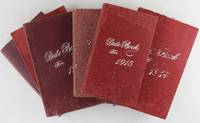
19163823San Diego 1916. Very good. Eight volumes totaling 2635 pages and approximately 85000 words with individual daily entries ranging from a single line to an entire page. Six volumes octavo final two volumes twelvemo all matching "Date Book" annual diaries uniformly bound in matching limp red cloth. Varying levels of rubbing edge wear and insect damage to cloth. Internally clean with occasional related newspaper clippings pasted in. A prime example of "history from below" comprised of eight manuscript diaries recording the daily activities observations thoughts and feelings of a young man living in San Diego for 2635 of the 2920 days that occurred from January 1 1909 through December 31 1916. Allen H. Wright was originally from Rome New York where he returns at least once in the time period covered by the present diaries but the diaries otherwise wholly pertain to Wright’s life in San Diego over an eight-year period. During this time Wright worked a variety of jobs such as shoe salesman freelance journalist with numerous specific mentions of article submissions mentioned here and City Clerk of San Diego. Wright was married to Florence Wright and the couple had two children - Allyn and Helen. Wright balanced his work life with family activities such as picnics trips to the beach visits to San Diego harbor where they witness the arrival of Mexican Japanese and other ships vacations across California and more. He also kept busy socially attending church and recording numerous instances of the meetings of his stamp club the “Floating Society†the New York State Society the “Men’s Club†and other organizations. In addition Wright makes numerous mentions of visitations letters received and news from back home in New York and other places.<br /> <br /> Considering Wright’s voluminous number of diary entries there are necessarily many thousands of subjects events names and more covered by him. A very small sampling of entries from just the first diary relate a wide variety of experience including: the robbery of the local library Wright’s attendance at the local Congregational Church to witness the anniversary exercises of the Chinese and Japanese missions the visit of a “young Mexican†to Wright’s house who asked to buy some flowers for the funeral of a baby the details of a day spent at the Ringling Brothers circus and parade the arrival of a copy of McCarthy’s “Lincoln’s Plan of Reconstruction†that Wright won from an Anderson Galleries book auction and information on other books and autographs he buys including California history works and legions more.<br /> <br /> Wright's life was relatively peaceful with much content recorded here on daily activities talks and sermons heard at his church “I heard Rev. Madison C. Peters the noted divine talk on what the Jew has done for American civilization†and so forth but naturally he also puts down his thoughts on some important and notable historical events. On April 15 1912 Wright writes: "News came today of the wrecking of the great ocean liner 'Titanic' on her first trip from Southampton to New York." In April of the next year Wright attended a lecture of the famed Arctic explorer Frederick Cook who referred to Admiral Peary as “a liar thief and murderer†as Cook claimed that “he himself has been cheated out of the honors which rightly belong to him as the true discoverer of the North Pole.†In January 1916 Wright “heard Upton Sinclair the novelist and author of ‘The Jungle’ talk on ‘After the War’ at the Open Forum. He is not an orator by any means but is argumentative in his utterances. A much more youthful man than I expected to see. Some of his socialist brethren here differed with him.†Wright had attended a speech by Teddy Roosevelt the year before also centered around World War I: "His main plea was for preparedness for war." The threat of the First World War was growing at that time but the event comes off as rather remote in Wright's account of a mostly quiet life in Southern California.<br /> <br /> Another military event which occurred very close to Wright’s home city was the Mexican Revolution which he makes several mentions of in his diaries beginning in August 1913: “Late tonight a special train brought in about 500 Mexican refugees from the frontier at El Paso Texas and Nogales Arizona who had been ordered here by the war department under escort of U.S. troops. Col. Emilio Kosterlitsky sic head of the rurales and Col. J.M. Reyes of the regular Mexican army are among those in the party.†Wright also notes further interactions with refugees the landing of American troops in Vera Cruz in April 1914 which he hopes won’t squelch a real estate deal for himself the arrival of “over a thousand marines†set to train on North Island in July 1914 the attack on a garrison in Tijuana by “the Villa troops†in December 1914 and more.<br /> <br /> Managing elections and oversight of voting was apparently a significant part of Wright's position as City Clerk. In a typical entry from November 1911 he reports "A total vote of 4380 was gotten out including a large percentage of women who thus had their first crack at the ballot." Earlier that same year Wright mentions sending out “2200 sample ballots†and promises to “get off as many more tomorrow.†The next year Wright reports that “for the first time in my voting experience I voted for the Democratic electors for president and for a Democrat ‘Billy’ Kettner of this city for Congress.†Wright was also privy to details regarding local government and political maneuverings as well as the economics of city development and various bond issues.<br /> <br /> A voluminous manuscript record of "ordinary" life in Southern California in the first decade-and-a-half of the 20th century with about 2600 daily entries over the eight years covered providing an opportunity for much deeper research into Wright’s time and place. unknown
1961ZB394410Blackwell Publishers 1961-1999. volumes 1-38; lacks volume 25. 1961-1999. partly bound library markings textually clean & tight PRICE IS FOR THE LOT. - If you are reading this this item is actually physically in our stock and ready for shipment once ordered. We are not bookjackers. Buyer is responsible for any additional duties taxes or fees required by recipient's country. Photos available upon request. Blackwell Publishers unknown
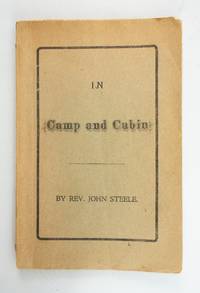
1901ST20777Lodi Wisconsin: J. Steele 1901. FIRST EDITION. 232 x 155 mm. 9 1/8 x 6". 81 pp. <br/> Original green faded to brown printed paper wrappers. Housed in a fine modern caramel-colored morocco clamshell box with gilt lettering on spine. Inside front wrapper with ink signature of M. R. Skinner; occasional pencil underlining in the text. Howes S-924; Graff 3964; Streeter 3027; Wagner-Camp 244 note. Top inch of spine chipped away a little fraying to edges first three leaves with overall browning minor corner creases but QUITE AN EXCELLENT COPY of a very fragile item clean and fresh internally with the insubstantial binding entirely intact against all odds.<br/> <br/> Based on the author's diaries written between September 1850 and July 1853 this work as the introduction tells us lays out events "just as they happened" being "ludicrous solemn serious tragic inexpressibly sad but always interesting." Kurutz calls the book a "detailed and important account of mining life" and notes that Steele "provided important information on mining techniques and laws while laboring in the Coloma District and on the Yuba and Feather rivers." This account includes some fascinating stories about the many hardships and dangers experienced by the author and his associates including nearly constant fatigue and hunger dreadful weather conditions and dicey encounters with desperados dishonest miners and disgruntled frontier men of commerce. John Steele 1832-1905 was only 18 years old when he left his home in Wisconsin for the gold fields of California. After three and a half years of adventuring he returned to the Midwest where he pursued a career in teaching. Steele also volunteered for the Union army during the Civil War and spent the last 30 years of his life as a minister in the Methodist Episcopal Church. The present work was privately printed by the author in a small number of copies and is as expected quite rare on the market now. Besides the present one RBH lists just two other copies sold since 1981 and as of this writing no other dealer seems to be offering one. Furthermore our copy is a remarkably well-preserved survival with its delicate wrappers and text in condition as attractive as one could hope to find. J. Steele unknown
1915366779West Hoboken NJ: Privately published by Albert A. Bieber . C. Reining Printer 1915. First separate edition. One of 65 signed copies. Printed on pink paper folding into publisher's pink wrappers the rear wrapper signed by Bieber. Unfolds to 13-1/4x8-1/4 inches. Stitched into publisher's green cloth with printed label on the upper cover. First separate edition. One of 65 signed copies. Printed on pink paper folding into publisher's pink wrappers the rear wrapper signed by Bieber. Unfolds to 13-1/4x8-1/4 inches. Among the treasures at the Bancroft Library is the original diary of Patrick Breen one of few survivors of the infamous Donner Party the group of California pioneers trapped in the Sierra Nevada mountains in the winter of 1846-47 who resorted to cannibalism to survive. Of the 87 people who entered the Wasatch Mountains only 48 survived. <br /> <br /> Much of the present day knowledge of the Donner Party is known from the Breen diary which was originally recovered by rescuer George McKinstry Jr. The news of the Party was an instant sensation and evidently seeking to capitalize on the notoriety McKinstry published extracts from the diary in several newspapers. In 1871 the McKinstry gave the diary to Hubert H. Bancroft. <br /> <br /> The present item rarely found in its original wrappers and binding was published by bookseller Albert A. Bieber and stated as the first separate edition of any party of the diary. It comprises chilling extracts from Nov. 20 1846 to March 1 1847. Privately published by Albert A. Bieber ... C. Reining, Printer unknown
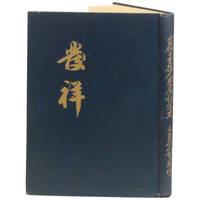
1922362523San Pedro CA: Nanka Mie Kenjinkai Southern California Mie Prefectural Society 1922. First Edition. Hardcover. Near fine. A very scarce Japanese-American history and Who's Who printed in Los Angeles in the Taisho era.<br /> <br /> Many Japanese immigrants to the US participated in organizations centered around their family's native prefecture. This book was published by the Mie Prefectural Association an organization of Japanese immigrants from the central southern coast of Japan. Not surprisingly given their coastal origins a chapter of this book is devoted to fishing. Immigrants from Mie prefecture were also very active in agriculture particularly growing nursery plants and cut flowers. The book includes a fold-out panoramic halftone of the Japanese produce market in Los Angeles.<br /> <br /> About two-thirds of the book is devoted to biographies of residents and their families; more so than other similar books the accompanying photographs often include entire families and not just the male head of household.<br /> <br /> Not in OCLC which records only modern facsimiles or A Buried Past or any other bibliography.<br /> <br /> 56 184 pages. First edition first printing. A near fine copy with minor wear to the publisher's cloth. Errata slip tipped to the rear free endpaper. Nanka Mie Kenjinkai [Southern California Mie Prefectural Society] hardcover
190655705Del Monte CA & Detroit MI: Detroit Publishing Co. 1906. One large panoramic photocrom sized 14.25 x 42.5 in. mounted behind original 22 x 50 in. mat with original 27.5 x 55 in. quarter-sawn oak frame w/ original engraved brass plaque sized 1 x 4.5 in affixed to lower fore-edge retaining original glass. A superb example of this large photochrom panorama of the historic Gothic Revival Hotel Del Monte after it had been rebuilt in 1888 following a tragic fire. Charles Crocker and other members of the “Big Four†who had founded the Central Pacific and completed the transcontinental railroad formed the Pacific Improvement Co. in 1880 to develop the lavish Hotel Del Monte leisure resort immediately attracting thousands of annual visitors. The beauties of Monterey Bay groves of pine oak & cedar with well laid out roads were all designed to feed into the splendid hotel. The main building shown here in the image was 385 feet long by 115 feet wide with two deep wings and four stories with a tall tower containing choice suite with extended views of the countryside. The amenities included bars bowling alleys smoking rooms in detached buildings stables carriage houses ponds fountains and beautifully landscaped grounds. Occasionally mistaken for hand-coloured photographs these stunning images were created by a photolithographic process by which black and white negatives are applied to multiple lithographic stones and colours are added one stone at a time often requiring up to 19 different stones for these vividly coloured images. Jackson 1843-1942 was a noted artist and Western photographer who joined the company by selling his entire stock of 1000s of negatives to the Detroit Photographic Co. in 1897 providing the core images enabling the company to produce millions of images from postcards up to the large panoramas. In 1903 after the resignation of Edwin Husher Jackson took over the supervising and publishing of the images as well as supervising a crew of forty artisans and a dozen traveling salesman. See: Alan Michelson Pacific Improvement Company Hotel Del Monte #1 Monterey CA Pacific Coast Architecture Database 2018; Library of Congress Hotel Del Monte Detroit Publishing Co. No. 50228 Copyright Dec. 1906; Cynthia Read Miller & Rosalie Ehrlich Detroit Publishing Company Collection The Henry Ford 2001. Detroit Publishing Co., unknown
1910List2960Southern California 1910. Ten photographs measuring 8 x 10 inches and smaller with most measuring 5 x 7 inches. Brown Brothers stamps and manuscript captions verso; some with editorial overpainting; some mounted on heavy cardstock. Marginal damage with some tears and corners missing; very good. Japanese immigration to the US began at a large scale following the midcentury loosening of Japan’s emigration laws and the US’s 1882 Chinese Exclusion Act. Most Japanese immigrants entered through the west coast especially San Francisco Portland and Seattle and settled in central and southern California.<br /> <br /> Offered here are ten photographs of Japanese immigrants and laborers in California likely taken between 1900 and 1910 as one is dated 1903. Their work is mainly agricultural though one photograph possibly depicts miners: four men holding sledgehammers stand on a mountainside. Two show newly-arriving immigrants; in one women are lined up to receive a vaccine. Interestingly three of the photographs include women subjects—prior to the 1907 Gentlemen’s Agreement the Japanese population in some California counties had gender ratios of over 100 men to one woman and some simply had no female Japanese residents at all.1 One photograph that shows a woman at work in a cranberry field is identified as having been taken in Moneta California and the caption states that the cranberry farm was “leased by Japsâ€. Moneta actually had the least skewed gender ratio of any Japanese-American settlement at the time in part because its Issei residents were relatively economically better off and as the caption suggests could afford to lease or buy farmland.1<br /> <br /> Of interest to historians of Japanese immigration to California and the Japanese-American labor force around the turn of the century.<br /> <br /> 1 Lane Ryo Hirabayashi & George Tanaka “The Issei Community in Moneta and the Gardena Valley 1900–1920†Southern California Quarterly 70 no 2 Summer 1988: 127–158. unknown
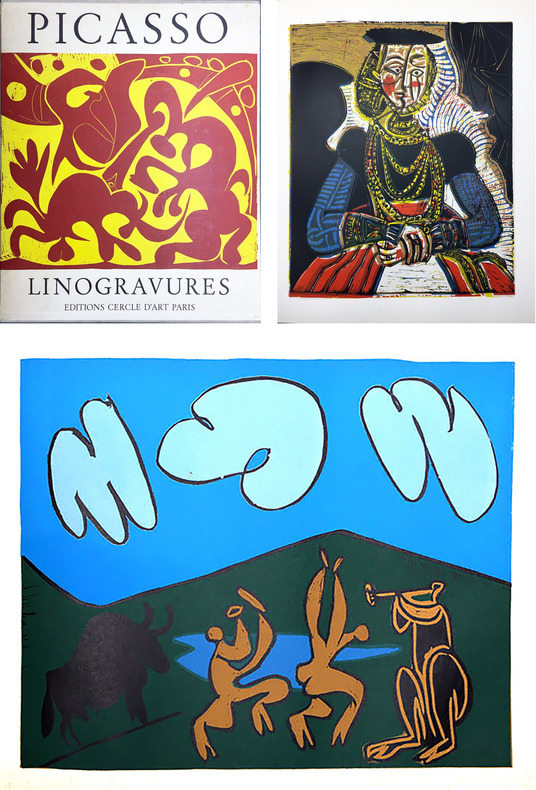
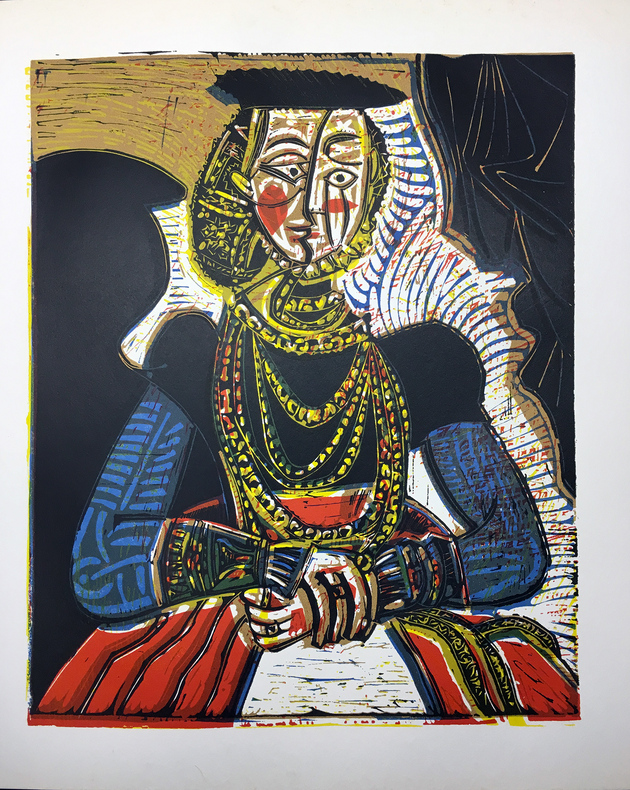
19623185Éditions Cercle d'Art, Paris 1962. Un volume in-folio (390 x 330 mm) relié sous cartonnage toilé illustré, dans l'étui de l'éditeur décoré de deux compositions en couleur de Picasso. - 45 LINOGRAVURES DE PABLO PICASSO EN PLANCHES HORS-TEXTE réalisées d’après les linogravures originales. - PREMIER TIRAGE. Édition originale française, le texte de W. Boeck est traduit par Jacques Chavy. Remarquable publication d'art. Très bel exemplaire en parfait état. Infimes imperfections à l'étui, en excellent état. Très recherché.-- ENGLISH DESCRIPTION : 1 volume oblong folio in the original slipcase. Introduction by W. Boeck. Illustrated with 45 colour plates engraved and remarkably printed on one side only after the original linocuts by Pablo Picasso (approx. 13" x 15"). A state of the art production by Cercle d'Art in 1962. 1st printing. In perfect condition and complete. The decorated slipcase is in excellent condition. Scarce in this condition.
1937226661937. Japanese-American California Japanese American family photograph archive a mid-twentieth-century record of Japanese American community life in California before and after the wartime incarceration of people of Japanese ancestry under Executive Order 9066 during the Second World War. The photographs mostly date between 1937 and 1940 with a few dated 1952 and 1953 preserving decades in the lives of one family navigating forced removal wartime confinement and postwar resettlement. Captions identify "Sayoko" "Sayo" "Miyoshi" and a young boy named "Kenny" creating a generational thread between prewar Japanese American life in California internment and re-acclimation to civilian life after World War II. One photograph bears a wartime military postal censorship stamp reading "Passed by Army Examiner" indicating that at least one image circulated through military screening systems used to monitor correspondence connected to wartime detention camps or military service.<br /> <br /> Archive of over sixty black and white snapshot and studio photographs depicting members of a Japanese American family associated with California between the late 1930s and early 1950s. The images include studio portraits graduation photographs informal domestic scenes travel photographs and family group portraits. Several photographs depict recognizable locations in San Francisco and Los Angeles and one studio portrait bears a photography studio stamp from Oakland suggesting family connections across both Northern and Southern California. A signed graduation portrait dated 1937 identifies a young woman as "Sayoko" while photographs from the early 1950s show a young boy identified as "Kenny" with inscriptions referencing "Sayo" likely the same individual seen in earlier images suggesting the transition from young adulthood to motherhood across the intervening wartime decade. Additional images depict a recurring young Japanese American man in glasses and formal attire a young woman identified as "Miyoshi" couples photographed aboard boats likely operating as local ferries and extended family gatherings in domestic and social settings. Several larger format photographs show women performing traditional Japanese dance in kimono within a landscaped Japanese garden while another image shows a man with two sons posed before a United States Air Force B-36 Peacemaker bomber placing that photograph in the postwar period. Photographs measure approximately 1 x 1 inches to 5 x 7 inches with most around 3 x 4 inches.<br /> <br /> Japanese American communities in California during the late 1930s maintained extensive family educational and social networks centered in cities such as San Francisco Oakland and Los Angeles. After the attack on Pearl Harbor in December 1941 the federal government forcibly removed more than 120000 individuals of Japanese ancestry from the West Coast and confined them in inland detention centers administered by the War Relocation Authority. Personal mail entering and leaving the camps was subject to military censorship and photographs were sometimes stamped with inspection marks such as "Passed by Army Examiner." The presence of such a mark in this archive situates the photographs within the surveillance structures surrounding wartime incarceration and suggests that family communication continued through monitored correspondence. The continuity of portraits spanning youth education wartime absence and postwar family life provides a visual sequence documenting how Japanese American families maintained kinship networks and memory across the disruption of forced relocation and confinement. Minor edge wear and occasional corner creasing to several photographs; overall good to very good condition. A cohesive photographic record documenting Japanese American family continuity across one of the most consequential decades in twentieth century West Coast Asian American history. unknown
1921List3318California and Oregon 1921. 160 total items. Description of Pacific Coast Outlaws 32pp 8vo in cloth wraps; wraps excellent with some staining; contents very good to excellent with some water damage. Thirteen copies found on OCLC. Two business cards one with manuscript notes; 106 letters dating 1906 to 1911; twenty-two mailers circulars shareholder solicitations etc.; twenty-eight pieces of miscellaneous accounting records; and one Trinity Gold Dredging Company map measuring approximately 14 x 28 inches. Overall excellent. Harry N. Morse 1835–1912 was born in New York and came to San Francisco in 1849 seeking gold. After several odd jobs he became a deputy provost marshal in Oakland in 1862 was elected Sheriff of Alameda County in 1863 and held this office for fourteen years before establishing his private detective service in San Francisco. Morse is known for the arrests and killings of numerous California outlaws many of which Shinn’s booklet treats in great detail though with a focus on the Mexican-American contingent to the neglect of some of Morse’s more notable successes such as his role in the capture of Black Bart.<br /> <br /> The majority of the items in this archive concern Morse’s late-career foray back into gold mining first in Lewiston California and then in Applegate Oregon. John Marchand was Morse’s foreman in Lewiston and generally writes to him about the failures of their Lewiston enterprise. Many of the difficulties are attributed to troubles with a steam shovel though the claim itself turns out to be a dud. Marchand informs Morse near the end of their correspondence:<br /> <br /> “Things here I’m sorry to say have gone from bad to ‘very bad’. Y’day I got down to ‘bed-rock’ uncovered a piece 46 by 10 ft and increadible as it may read there was not 30¢ in there some pans in fact you could not get a color.†August 10 1906<br /> <br /> Morse then invests in a claim in Applegate Oregon with more success. The main setback in Applegate is that his mine is repeatedly sabotaged. His foreman E.B. Hawkins explains:<br /> <br /> “I realise things from this end must appear perhaps irregular or peculiar On or about the 17†of May the mine was dynamited I did not write you at that time because I thought I could catch up the ground in two or three days. It took nearer 20 and another thing you had sickness and later death in your family so I did not write about that first offence at all On June 17†we found the Star mine dynamited again good and plenty not less than 10 lbs of powder had been used for the job. They blew the h__l out of things blew the top off of the shaft and the gallows frame awry. I am almost certain I would have succeeded had I had only natures elements to contend with. I don’t know what in h__l will happen on the 17†of July This anarchy is beyond me. On the 17†of May I fired the distasteful element paying them off and I have fired the 17†of June element paying them off – I borrowed $50.00 from Jno. Pernoll to pay them there was 3 of them had not been working longâ€. June 19 1907<br /> <br /> Hawkins soon identifies the culprits:<br /> <br /> “On June 27†Jim Rock Sr. and Dick Rock came to me and offered to square the damages done at the star mine saying that if the mine was blasted their two boys were in on it On July 2†Dick Rock came to me and said his son Roy had confessed saying there were four in it namely Harry Gething Chas Brown Young Jimmy Rock and Roy Rock Dicks son They had all been working at the star. On July 4†Roy Rock confirmed to me same as above saying Harry Gething was leader and young Jimmy Rock was helper that they had a jig of whiskey on the ground that night Jimmy Rock furnished the whiskey Strange to say that every time I have gotten ready to take a certain good block of ore out of the star the mine has been blasted I propose to take that block of ore out if I live and can get grub while doing it†July 6 1907<br /> <br /> Hawkins has a few other confrontations with workers though none this severe and his letters are mainly providing Morse with in-depth updates on the status of the mine including many of Hawkins’ diagrams. The Star mine is never a roaring success and the pair consider trying cyanide mining—â€the salvation of southern Oregon†1908—and gravel mining in British Columbia.<br /> <br /> Of interest to historians of the post-Gold Rush west especially gold mining therein. unknown
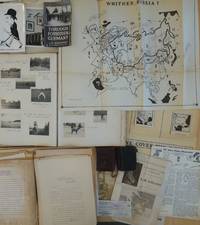
1950List2425Europe and California 1950. Includes two small diaries from 1901 and 1917 with sporadic entries a large photo album measuring 14 x 11 with appx. 400 small photographs from 1906-1909 attached to album pages most measuring 3 x 2 as well as a few larger format images laid in. With 100 plus pages of typed pages including retained correspondence story ideas and various other manuscripts. With eleven maps produced for his “Of Men and Maps†series including five copies of a large map entitled “Whither Russia†in varied states and in large sizes up to 30 by 36 inches and a handful of small ephemeral pieces. Generally near fine condition with the exception of the album which is missing its rear board and has some pages loose and torn. Very Good. J.M. de Beaufort a war correspondent for the London Daily Telegraph and New York American during World War I recounted his wartime adventures in the 1917 book "Behind the German Veil: A Record of a Journalistic War Pilgrimage." Originally arriving in Chicago in 1909 he married a steel magnate's daughter and pursued a career in show business. However by 1912 he had gone through a divorce and transitioned to newspaper work earning the moniker of the "Dude Reporter." Originally born in the Netherlands as Jacques Albert Uilenbroek he was thought to be a deserter. He spent the latter part of his life in the United States apparently jailed in San Francisco for a stint in the 1920s and eventually settled in Los Angeles. <br /> Offered here is an interesting smattering of material from the life of the mysterious De Beaufort which bookends his most unusual career and life with a large visual photographic record of his life in Europe as a young man and over a hundred pages of manuscript material from late in his life with a highlight being several maps in draft form for an apparently unpublished project called “Of Men and Maps.†As a group the material shows the work of an ex-con artist and war correspondent trying to regain his form while living in Los Angeles. He was still writing as a “Special Correspondent†at this point though the title seems to have been fully honorary. Also included are two small pocket journals with sporadic notations from his life in Europe in 1900 and in 1917. In its entirety the group gives an interesting visual and manuscript record of a literary fraudulent and imaginative transatlantic life and intellect. <br /> The cartographic highlight of the group is several iterations of a large map called “Whither Russia†in varied forms which show an interesting interpretation of the sphere of influence of the USSR and its growth from 1939 to 1946. Also included are two drafts of a map of Operation Market-Garden in the Netherlands in 1944 an unidentifed tactical map of a military battlefield a map called “Middle East Jackpot†showing the division of territory between the Allied and Axis powers a map called “Dawn’s Early Light some reproduced small format maps from the De Beaufort’s and a small map called “Gifts from Yalta.†De Beaufort was working on these maps for a column called “Of Men Maps and Memories†that was published in the East Los Angeles Tribune. He also sent the columns out in newsletter form from his address at 1635 N. Ogden Drive in Los Angeles. <br /> The collection of manuscripts drafts and retained correspondence tackle a range of subjects perhaps most interestingly those detailing De Beaufort’s creative process - drafts of stories lists of ideas for stories and letters. His over the top style is on display in a lot of the writings some of which are of unknown origin and purpose. The documents contain correspondence between De Beaufort and Edwin Pauley the oil man and presidential advisor. In one untitled essay he asks himself the question “What has been your most thrilling experience†and his reply is “ Silly questions. Who or at least what newspaperman of some 25 turbulent years standing - and falling - could answer such a question. A reporter’s life has a thousand thrills. There was that rainy day in Marcy 1915 in the fortress of Loetzen when I stood face to face with Hindenburg. Hm yes that was quite a thrill…†De Beaufort was entrenched in the Los Angeles journalistic scene at this point and the documents show the degree to which he relied on his former glories to attempt various career revitalizations endeavors. <br /> The album of photographs from 1906-1909 over 400 in total give a visual record of the young Uilenbroek’s life in Europe. The star of the collection is his bulldog Bob who travels throughout Europe with him and eventually comes to America by 1907. Mary who we presume to be his future wife is featured heavily in the images. It is unclear whether he was working at this point the images show affluent young people and their dog in varied cities and are purely of a personal nature. Other photographs laid in are relics from his war correspondent period. The loose photographs and ephemera are a mix of portraits from different periods from his life including two pictures of Sydney Turing Barlow Lawson one signed by his widow. The journals are sporadically filled and hard to decipher though one legible passage says “drinking all day.â€<br /> Overall the group gives evidence of this intriguing life and is the only extant group of material relating to Beaufort to our knowledge with the exception of a single journal from his time in Belgium during WWI that was sold at Bonhams and is still available in the trade as of this writing. unknown
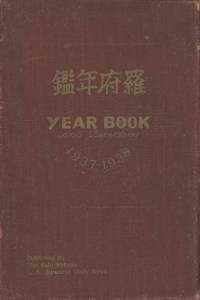
1937List3229Los Angeles California: The Rafu Shimpo / L.A. Japanese Daily News 1937. appx 90 485 pp. Limp cloth. With illustrations in color and black and white. Near Fine condition with some light wear to covers. A very scarce directory of the Japanese-American community with a focus on Los Angeles but also covering other areas of California including Terminal Island and San Pedro and San Francisco and other states such as Utah and Washington published by the Rafu Shimpo. The directory lists the physical addresses and phone numbers of the residents. The first ninety or so unpaginated pages show photographs of prominent businesses and residents and also include advertisements for Japanese-American businesses. Togo Tanaka an editor at the paper lobbied unsuccessfully for the paper’s continuation in the event of a war with Japan. He was eventually sent to Manzanar and the paper ceased publication in 1942. It would resume operations in 1946 due to the efforts of Akira Komai the son of owner Toyosaku Komai who stealthily hid the Japanese type under the floorboards of the office and paid the rent for the duration of the conflict. The directory continued until 1941. This issue presumably published in 1937 was the first in the series.<br /> <br /> Yokoi Iris September 19 1993 "LITTLE TOKYO - Extra! Extra! Rafu Shimpo Is 90" The Los Angeles Times. The Rafu Shimpo / L.A. Japanese Daily News unknown
1920259670Los Angeles 1920. 156 original photographs most 3-1/2 x 5-1/2 inches mounted on black album leaves. 1 vols. Oblong 4to. Original black pebbled leather album. Some toning of photographs. Very good. 156 original photographs most 3-1/2 x 5-1/2 inches mounted on black album leaves. 1 vols. Oblong 4to. A very good and representative photograph album from the home of Zane Grey documenting some of the best selling author's outdoor trips including sailfish off Catalina Island California a trip to the grand Canyon and a pack trip into the hills of Arizona after wild turkey. Provenance: Estate of Zane Grey unknown books
1906200281906. Mexico Photography Vernacular photograph album documenting daily life labor and civic culture in Mexico and California 1906-1908 with substantial visual material from the late Porfirian era preceding the Mexican Revolution. The album records markets religious architecture rural labor and public spectacle across central Mexico alongside views of communities in the American South and Southern California. More than half of the photographs were made in Mexico and depict scenes in Mexico City Puebla Villa de Guadalupe Chapultepec and Guadalajara. <br /> <br /> Oblong large 8vo album in black cloth boards containing 179 silver gelatin and sepia photographs 1906-1908. Photographs measure approximately 3 x 3.5 inches to 5 x 9.5 inches. Subjects include vendors at flower markets rural families gathered outside stone dwellings laborers in straw sombreros working with pack donkeys to transport goods women selling fruit beneath shaded trees and a candid image captioned "Returning from market" showing a vendor walking with a crate strapped to his back. A bullfight before a full stadium documents a major form of popular entertainment. The photographs offer a record of the working economies religious practices and public gatherings that structured everyday Mexican life in the years immediately before the upheavals of 1910. Compiled as a personal album the sequence opens in Spartanburg South Carolina with street scenes and images of African American performers that document the social landscape of the Jim Crow South and includes intervening views from Atlanta Montgomery New Orleans and San Antonio before the album settles into its substantial Mexican content. Images mounted directly to album leaves with detailed contemporary manuscript captions. Nine larger-format photographs present panoramic views of Puebla and Villa de Guadalupe emphasizing the agricultural landscape and small-scale urban settlement that surrounded these communities. Architectural studies include the Mexico City Metropolitan Cathedral and an ornate café in Chapultepec with horse-drawn carriages and formally dressed patrons. California images from Redlands Santa Monica and Pasadena depict coastal landscapes mission-style and clay-roofed structures stone pathways ranch settings and equestrian travel documenting regional built environments and the lifeways of established Californian communities prior to large-scale suburban and automobile-driven development.<br /> The album records everyday labor commerce religious life and leisure in central Mexico during the final years of Porfirio Díaz's regime alongside monumental civic and religious architecture. Manuscript captions anchor the photographs to specific places in Mexico and the American West. Minor spine and edge wear to boards; some pages with slight warping; light fading to a small number of images; photographs generally clear and well preserved. Overall very good condition. A substantial early twentieth-century album documenting Mexican and Southern Californian life immediately prior to revolutionary and metropolitan change. unknown
19623931Éditions Cercle d'Art, Paris 1962. Un volume in-folio (390 x 330 mm) relié sous cartonnage toilé illustré, dans l'étui de l'éditeur décoré de deux compositions en couleur de Picasso. - 45 LINOGRAVURES DE PABLO PICASSO EN PLANCHES HORS-TEXTE réalisées d’après les linogravures originales. - PREMIER TIRAGE. Édition originale française, le texte de W. Boeck est traduit par Jacques Chavy. - ENGLISH DESCRIPTION : 1 volume oblong folio in the original slipcase. Introduction by W. Boeck. Illustrated with 45 colour linocuts plates engraved and remarkably printed on one side only after the original linocuts by Pablo Picasso (approx. 13" x 15"). A state of the art production by Cercle d'Art in 1962. 1st printing. In excellent condition and complete. The decorated slipcase with some imperfections. Photographs on request.
1926321837Modoc County California 1926. 107 photographs most 3-1/4 x 5-1/4 inches but others ranging from 2-3/4 x 2 inches to 10 x 8 inches mounted to eleven card-stock leaves. About one-third of the photographs with manuscript captions in the lower margin or typed captions in the image. 1 vols. Oblong 11 x 14 inches. Contemporary three-quarter leather and patterned paper photo album string-tied. Boards quite rubbed and worn. The photographs in quite nice condition. Very good overall. 107 photographs most 3-1/4 x 5-1/4 inches but others ranging from 2-3/4 x 2 inches to 10 x 8 inches mounted to eleven card-stock leaves. About one-third of the photographs with manuscript captions in the lower margin or typed captions in the image. 1 vols. Oblong 11 x 14 inches. An evocative portrait of deer hunting and other outdoor activities in northern California in the mid-1920s. Many of the activities depicted took place in Modoc County in the far northeast of the state while other camps were made in Shasta National Forest. The album bears the ownership signature of Dr. John H. Brunings on the front pastedown. In a newspaper clipping affixed to one of the album leaves Brunings of San Francisco is identified as a "well known sportsman." Among those depicted in the album is a favored hunting partner of Bruning's Dr. L.N. Briones also of San Francisco.<br /> Much of the album depicts hunters in the field with numerous recent kills and trophies showing the deer field-dressed in place hanging from trees and camp poles draped over car hoods or horses or antlers affixed to other camp structures or car hoods 45 total photographs; duck hunters with daily kills some showing dozens 12; the deer hunters in the field or in camp 17; hunters in the field with a beautiful setter and shotguns 9; a hunter with recently killed rabbits 1; views of the hunting grounds in the Modoc County mountains 7; miscellaneous images of Dr. Brunings mostly with friends in the outdoors 13; Brunings in the U.S. Navy in China 1; view of main street in Adin California 1; and an image of a "pinto" deer a buck with distinct white patches killed by Brunings near Gualala California 1 photograph the 10 x 8 print.<br /> Typed captions appear either in the image or in the margins of twenty photographs mostly from Happy Camp and Horse Springs nineteen others have ink captions in the margins. The captions note locations as well as the names of many of those depicted. unknown
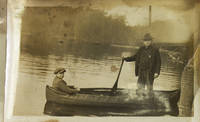
1927316594Oakland 1927. 28 gelatin silver photographs backed with canvas with a detailed typed caption on verso. 1 vols. Oblong 8vo. Ring-bound flexible leather boards. Some wear and crude repairs toning and minor wear to photographs. Very good. In a folding cloth box gilt leather spine label. 28 gelatin silver photographs backed with canvas with a detailed typed caption on verso. 1 vols. Oblong 8vo. An unusual album featuring boats and canoes manufactured by the King Boat Company of California. Many of the photographs are dated 1927 and the album serves not only as a visual catalogue of various boats available from the King Boat Company but also as a document of water travel in Alaska California and the Pacific Northwest in the 1920s.<br /> The canvas backing on the first and last images bears the inkstamped name of F.R. Frederick a distributor based in Boston. Whether this album was prepared by Frederick or by the King Boat Company is unclear. What is clear is that these are very interesting images of various King Boat Company boats and canoes in use.<br /> Nine are identified as having been photographed by "Lewis R. Freeman Noted Explorer and Writer for National Geographic Magazine on Thousand Mile Canadian Trip. Summer of 1927" a tenth is an image of Freeman with an Arrow Boat.<br /> Freeman a noted traveler explorer and writer published over twenty books on his travels. Other images reveal "Arrow Model on Heart Lakes in the High Sierra - 11500 Feet Elevation. Colonel H.G. Thompson at the Oars"; "Boat owned by T. Wherry Taxidermist Victoria B.C. was built in 1893 and in service for over 34 years up to November 1927 on display in King Boat Company Factory Oakland California"; a couple images of canoes loaded on pack horses; several of Henry W. Partridge "Noted Packer" navigating the Salmon River in Idaho; images of boats in Alaska and the Yukon; and several others of boats on shore in use as shelters or otherwise employed. unknown