8 977 résultats
194060957San Francisco CA: Golden Gate International Exposistion Swift & Co. 1940. 4to. 8.75 x 11.5 in. 8 pp unpaginated. With photo illustrations. Colour-illustrated softcovers cover art of marionette inimitable Eleanor Holm Coca-Cola ad on verso ACME breweries pin-up ad on back cover minor edgewear rubbing occasional light foxing still VG- copy from the library of Prof. Marvin Nathan. First edition of this souvenir brochure touting the appearances of the Salici marionette puppet show founded in 1780 and passed down through the family for generations. The puppets sang danced achieved acrobatic effects and appeared Worldwide and were booked by Billy Rose into the 1940 Golden Gate International Exposition due to their Paris France contracts having been canceled. Golden Gate International Exposistion, [Swift & Co.], paperback
305433Grass Valley California. Grass Valley Daily Union 1874. First edition. 4to sheet 11" x 8 1/2" folded to form 4 pages separated at fold printed in gold now faded. Good. Commencement exercises for the 10 members of the graduating class evenly divided: 5 men and 5 women. Not located in Rocq; Rocq lists only 4 earlier imprints from this region see #6034-90. The graduates were: Miss Lou Dorsey; Miss Janet Henderson; Miss Ella Larimer; Miss Minnie Novitzky; Miss Ella Maddrill; R.W. Musgrave; W.R. Poyzer; Albert Griffiths; Howard L. Weed; John T. Riley. 1st Edition. No Binding. Good. [Grass Valley, California]. Grass Valley Daily Union, 1874. unknown
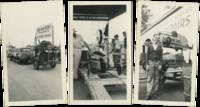
1940Cat332United States 1940. Photo album measuring 7 x 10 inches containing fifty-three photographs: two tintypes c. 1890s and 1920s six RPPCs and forty-five modern photographs. Photographs mainly measure 4 x 6 inches and smaller. Conditions vary; some with wrinkling and damage especially to corners and edges; others Fine. Overall excellent. A photo album of an unknown couple. Early shots include two tintypes which appear to be turn of the century to 1920s and six real photo postcards dating to the 1920s at the latest based on stampboxes. The RPPCs include portraits shots from a farm and a souvenir photo from Brooklyn. Later shots are likely WWII-era showing several men posing in military uniforms.<br /> <br /> The album is highlighted by its photographs of Californian auto tourism and a Soap Box Derby event likely also in California. Identifiable tourist locations include Bear Canyon Campground in Altadena and Cedarpines Park in the San Bernardino mountains; people pose with the car in deep snow and at the campside and shots show the car with luggage strapped to the outside and filling up at a Shell. One Cedarpines photo is dated captioned “Winter ‘28â€. Later auto tourism shots—with what appears to be a 1940s model car—show the car at a Los Angeles mechanic with a teardrop camper and a boat on top and later parked at a beach with the camper set up with manuscript verso indicating that the location is Mexico. Alongside these photographs is a shot of a Depression-era billboard reading “NO JOBS in California / KEEP OUT / 6 MEN FOR EVERY JOB / NO STATE RELIEF AVAILABLE FOR NON-RESIDENTSâ€; on the verso it is captioned “1929 / This sign was posted in Tennesseeâ€.<br /> <br /> Soap Box Derby is a Depression-era invention beginning in 1934 in Dayton Ohio and quickly becoming a national phenomenon. Derby shots in this album appear to be Californian or at least to highlight Californian entrants: the cars pictured are sponsored by Siminow Bros. a Los Angeles gas station and mechanic. These include the cars being towed in the line for the inspection station the starting line and action shots.<br /> <br /> Highlighting two very different forms of car-based recreation the album is of interest to historians of the car in American leisure in the period surrounding the Great Depression. unknown
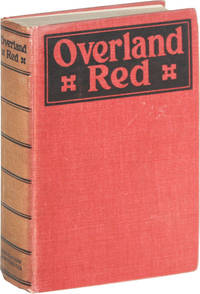
191452020Boston: Houghton Mifflin 1914. First Edition. First printing. 12mo 18.5cm. Publisher's red cloth boards lettered in black on spine and front cover; 349pp; illus. This copy with a 3-pp holograph letter from Henry H. Knibbs laid onto front pastedown. Copy of American journalist David G. Baillie recipient of the letter inscribed by him to his son Hugh on front free endpaper dated Christmas 1920. Tight Very Good copy with mild fading to spine. First page of letter is laid down to front pastedown; second page is loosely laid in. <br /> <br /> An early anonymously-published work by the prolific California author best-known for his work in the genre of Western fiction. The title character "Overland Red" is described on the "Buddies in the Saddle" website as a "former sheriff of Abilene now an itinerant hobo on the run from the law in Barstow where he's mistakenly believed to have killed a man. Living rough he has his wits and plenty of grit to keep him going" see: buddiesinthesaddle.blogspot. <br /> <br /> The included letter is undated addressed from Knibbs to the American journalist David G. Baillie at this time Editor of the Los Angeles Times inviting Baillie to a soirée at Knibbs' apartment on Cole Avenue in Los Angeles - ".nothing formal just cigars and chat out here on the edge of things." and includes a brief note on the present work: ".keep an eye on 'Overland Red' - he is now in a large third edition and I have netted over five thousand dollars so far on advance sales." A later gift inscription transfers the book from David Baillie to his son Hugh noting in the inscription that the book ".was published anonymously and caused much guessing until Knibbs 'acknowledged responsibility.'. Houghton Mifflin unknown
192863463New York: Grosset & Dunlap 1928. 8vo. 297 pp. plus 15 pp. publisher’s ads. Blue publisher’s cloth orange lettering front cover & spine w/ d.j. cover art photo of his starlet wife Fania Marinoff 1890-1971 in leggy costume slight chipping head of spine couple minor closed tears still NF/VG copy. First Grosset edition of this screwball comedy polemic against the absurdity and overboard nature of Hollywood after a Broadway playwrite heads to Los Angeles and becomes involved with movie moguls Herbert Ringrose and Ben Griesheimer and screwball adventures with the splendid screen actress “Imperia Starling.†Grosset & Dunlap, hardcover
186753019Sacramento:: D. W. Gelwicks State Printer 1867. First edition. original printed wrappers. Some light creasing; wrappers a little edgeworn and very dust-soiled. 8vo. D. W. Gelwicks, State Printer, unknown
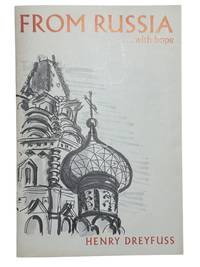
19689887Los Angeles: Otis Art Institute of Los Angeles County 1968. First edition. 22.5x15cm 1 9pp including printed inner covers. Illustrations by Dreyfuss throughout. Staple bound in illustrated wrappers which show some faint edge toning. Near fine. Laid in is an ANS from Dreyfuss to George Skousen thanking him for a bookbinding project and gifting him the pamphlet. <br /> <br /> Very uncommon pamphlet beautifully printed by Grant Dahlstrom at his Castle Press. Prints with illustrations the speech given by Dreyfuss on May 17 1968 at the Commencement Exercise of Otis Art Institute whence he received the honorary degree of Doctor of Fine Arts. <br /> <br /> The note from Dreyfuss is very likely to George Skousen then head binder at the Huntington Library and thanks him for binding "the Russian Diary." <br /> <br /> <br /> Manuscript material from Dreyfuss is quite scarce in the trade and OCLC identifies just 2 holdings for this pamphlet at the Getty and SMU. . Otis Art Institute of Los Angeles County unknown
186932728Virginia City California 1869. Paper. Very good. Approx. 8" x 3" check with printed green borders information and 2 stamps. Check is drawn on the account and signed by Isaac L. Requa. The information printed on the check is "Gould & Curry Silver Mining Company W. C. Ralston Treasurer. Agency of the Bank of California Virginia City. The written date is Aug 3 1869. <br /> <br /> Requa was a mining engineer early Oakland pioneer and later President of Oakland Bank and Savings. unknown
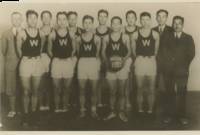
1927List3428California 1927. Photograph measuring approximately 6 ¾ x 10 inches. Unevenly trimmed top edge; some folding at lower corners; excellent contrast with extensive pencil caption verso. Very good to excellent. A portrait of the Waseda University basketball team from 1927; according to its manuscript caption the photo was taken following their defeat by the University of California team at the Oakland Auditorium on a tour of the Pacific coast. The sport invented in Massachusetts in 1891 with a Japanese student partaking in the first game was brought to Japan as early as 1902 by American missionaries.1 A New York Times article from the time reports that Waseda University was the first Japanese basketball team to come to the US following the success of its baseball team’s tour; and that there was “much interest†in the Japanese players’ strategy of “cat-like swiftnessâ€.2<br /> <br /> 1 Tetsuji Kakiyama “Challenging established theory: History of Japanese Basketball†Research Outreach April 10 2023.<br /> 2 “JAPANESE FIVE PLANS TRIP; Waseda University Seeks Games With California and Others†The New York Times October 7 1927 33. unknown
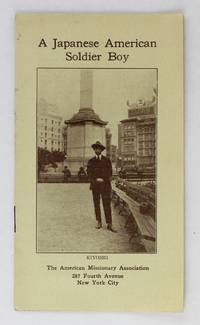
19203850New York: American Missionary Society 1920. Very good. 8pp. Pictorial self-wrappers stapled. Small perforation at upper left corner. Even tanning. An ephemeral piece of pro-Japanese propaganda published by the American Missionary Society during the early 1920s when limitations on immigration to the United States from Japan were eventually put into place. The pamphlet purports to be an interview with "Kiyoshi" pictured on the front wrapper a second-generation Japanese American born in San Francisco and an Army volunteer during World War I. The interview stresses the values of hard work and honesty supposedly inherent in Japanese families and implies that success of Kiyoshi's family in the United States was amplified by their conversion to Christianity. The pamphlet concludes by stating: "There is no force which makes for true assimilation and Americanization as the transforming power of Christianity. Anti-Japanese legislation works injustice and hardships on them and only complicates the problem and in no way removes the difficulties. A practical Christianity lived out in the everyday life of Americans and Japanese alike will most quickly and surely dissolve the hate and race prejudice which lies at the bottom of the present bitterness and agitation." OCLC locates one copy at Columbia. American Missionary Society unknown
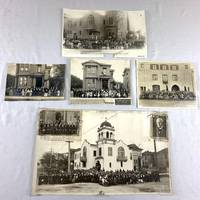
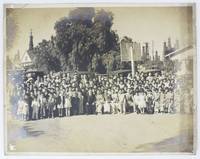
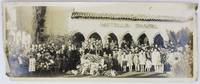
4750Oakland 1986. Good. Seven substantial photographs measuring between 6 x 9 inches and 7.5 x 36.75 inches plus approximately four linear inches of programs newspapers additional photographs holograph notes financial records and more. Varying levels of wear soiling chipping and repairs to the photographs. A rare collection of substantial images picturing members of the Oakland Japanese Methodist Episcopal Church in the early-to-mid 20th century first at what appears to be a converted home in the city and later at their larger more traditional church on West 10th St with an additional image of an outing to Piedmont. The incarceration of Japanese Americans during WWII led to the temporary closure of the church. During this time one of its halls was used to store the possessions of incarcerated Japanese and Japanese American citizens; after the war it served as a hostel for returning members. In 1967 the church sold the land and moved at the invitation of Lake Park Methodist Church to the latter's premises and in 1968 the two churches formally merged. The second portion of the archive relates to the Lake Park Methodist Church both before and after this merger. The photographs present here depicting the earlier years of the Japanese Methodist Episcopal Church are as follows in chronological order:<br /> <br /> 1 Oakland Japanese M.E. Church. Sept. 30 1917 caption title. 7.5 x 9.5 inches. A handsome black-and-white group photograph outside the church captioned in the plate in English. The wooden sign for the church is mounted above the entrance and reads "Japanese M.E. Church." An American flag flies above the sign. Evidence of construction paper adhesion to verso; clear tape to upper corner; light soiling.<br /> <br /> 2 Methodist Ministers' Conference caption title in pencil on verso. 6 x 9 inches. Similar setting to the photograph above this black-and-white group photograph features a group of almost forty ministers of the Methodist Church most of whom are not Japanese American but apparently met in conference at the Japanese Methodist Episcopal Church in Oakland circa 1917 though a pencil note on the verso reads "1912". Formerly mounted with tape remnants to verso and one corner some creasing a few short closed tears.<br /> <br /> 3 Japanese Methodist Episcopal Church of Oakland. Dedicated Feb. 24th 1918 caption title. 12 x 20 inches. A substantial black-and-white group photograph outside the church featuring a couple hundred members presumable posed for the church building's dedication. Two newspaper clippings of ministers of the church are taped to the upper corners small semicircle of loss and tape to middle of bottom margin tape to corners and verso. <br /> <br /> 4 Uncaptioned Panoramic Photograph Featuring Church Members in 1925. Tsuji Studios stamp on verso and embossed blind stamp in lower margin. 7.5 x 36.75 inches. Pictures the church membership of over a hundred Japanese American men women and children in the midst of the Roaring Twenties. Heavy dampstaining and damage to left side obscuring about five inches of the image. Accompanied by another example of the same photograph also with Tsuji Studios stamps this copy with damage to the right side. This second example has an ink inscription in Japanese on verso and a computer-printed date taped to the bottom margin and reading "1925." The chipping on each side of the two photographs obscure some of the subjects but taken together these two images record all of the information contained in the photograph.<br /> <br /> 5 Church Outdoor Ceremony at the Piedmont Hills caption title in Japanese. 8 x 32 inches. A striking sepia-toned panoramic photograph capturing an outdoor excursion to the Piedmont hills in 1927 four captions in the negative printed in Japanese. Tsuji Photo Studio stamp on verso along with a short manuscript caption in pencil in Japanese. Light marginal staining; toning.<br /> <br /> 6 Farewell Ceremony for Pastor Arima and His Family. January 8 1933 caption title in Japanese. Tsuji Photo Studio. 7.75 x 9.5 inches. Handsome sepia-toned group photograph of a farewell gathering for Pastor Arima and his family in early 1933 captioned in the plate in Japanese. An ink inscription on the verso confirms the caption in the negative and reads "Farewell photograph taken on January 8 1933 prior to the departure of Rev. Arima & family to Japan." Rough patch to lower corner and lower edge likely from tape removal slightly affecting the extremities of the image.<br /> <br /> 7 Final Service at the West 10th Methodist Sanctuary. Feb. 5 1967 caption title. Utsumi Studio. 8.5 x 14 inches. An informative black-and-white group photograph depicting the congregation at the West 10th Methodist Church location after it was sold in 1967. Small chip and closed tear to bottom margin affecting part of caption tape to verso.<br /> <br /> The later portion of the archive documents church life and activities at Lake Park Methodist Church the vast majority of which emanates from prior to the merger of the two churches. This earlier material includes a notebook of board meeting notes from 1967 numerous typed board meeting agendas from the 1960s two issues of the Lake Park Methodist Church newsletter called Spotlite church programs and fliers a few Methodist newspapers such as the United Methodist and Lake District Reporter and numerous photographs picturing Anglo-American members of the church. The post-merger material includes a dual-language newsletter and calendar for October 1972 listing the minister as George Uyemura a folder of financial records from the Lake Park United Methodist Church School from 1969-70 and two newsletters from November 1968.<br /> <br /> An important record of Japanese American religious life in Oakland before during and after the collective trauma of WWII incarceration as well as a peek into the development of a particular California Methodist Church later in the century. unknown
19542341Fresno: Kamiyama 1954. Very good. Panoramic photograph 10 x 38 inches. Minor wear and occasional soft creasing. A substantial panoramic photograph depicting the somber scene of the funeral of Fresno resident Shigeki Yokota on September 8 1954. A couple of hundred mourners pose for the camera at the corner of 9th and P streets in Fresno with several wreaths of flowers flanking each side of Yokota's casket. Shigeki Yokota 1902-1954 was a Japanese-American doctor who moved his family to Fresno following the World War II internment period. Evidenced by the signature etched into the negative in the bottom left of the image the photograph was produced by noted and prolific Fresno photographer Urasaburo "Frank" Kamiyama. Frank Kamiyama 1886-1974 was an important Japanese-American chronicler of his own community in Fresno and the surrounding area beginning in the early 20th century. He was arrested on March 27 1942 as one of eight "named Japanese alien enemies" and interned at Angel Island in California and in Santa Fe New Mexico during World War II. His family including his wife Mitan and their four daughters were interned separately at Rohwer in Arkansas the easternmost of the Japanese internment camps. After the war Kamiyama continued to photograph the lives of Japanese Americans in California until his death. Kamiyama unknown
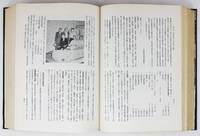
19604561Los Angeles: Japanese Chamber of Commerce of Southern California 1960. Very good. 134756167xi2pp. plus eleven pages of photographic plates. Quarto. Original limp green cloth gilt spine titles. Minor rubbing and dust-soiling to boards small bump to top edge spine titles a bit worn and faded. Internally clean. A massive and detailed historical account of the Japanese American experience in Southern California issued by the region's Japanese Chamber of Commerce. The work is printed in both Japanese and English with chapters on Japanese immigration local Japanese associations various industries engaged in by Japanese immigrants in California the experiences of both Issei and Nisei histories of religion sports the internment period post-internment period and more between 1885 and 1960. The Japanese section includes numerous photographs featuring prominent Japanese-American businesspeople organizations scenes of agricultural labor and more interspersed throughout the text. The eleven photographic plates preceding the Japanese section picture Japanese areas of southern California scenes of industry and business various notices relating anti-Japanese sentiment in the area group shots of Japanese-American businesses and associations prominent Japanese-American business figures and more. A significant and dense history of the Japanese-American experience in Southern California somewhat well represented institutionally but rare in commerce. Japanese Chamber of Commerce of Southern California unknown
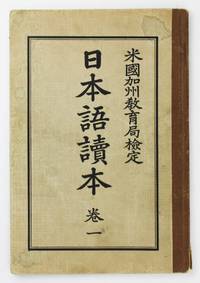
19296347San Francisco & Japan: Aoki Taisei-Do 1929. Very good. 56pp. In Japanese. Original printed stiff wrappers cloth-backed. Minor wear and scattered staining to wraps. Light tanning internally. A fascinating and scarce Japanese-language textbook intended for use by Japanese-American children in California during the late 1920s. The work was published by Aoki Taisei-Do a San Francisco book and stationery store that catered to Japanese immigrants. The inside rear wrapper states that this was was "Approved by the California State Board of Education. August 1923. Published Aoki Taisei-do. San Francisco California. Printed in Japan together with a 1929 date code. The book contains numerous illustrations throughout of young children animals plants and more accompanied by Japanese text and seems to have been a primer for learning to read and write Japanese for children born to immigrants in the United States. A illustration of Santa Claus and one of a English teatime table setting belie a bit of Western influence. Despite the printed discrepancy between approval and publication dates we locate no other editions and only one copy of the present one at the Bancroft. Aoki Taisei-Do unknown
19352466<p>8 x 34 inches. B&w photograph with photographer's name in the plate in the lower right corner. Rolled with a slight crease to the left edge and a small corner crease to the right edge; light soiling to verso.</p><p>A large panoramic photograph of an unnamed chicken farm probably in Petaluma or Penngrove California given Hanasono Studio's San Francisco location. Although there is nothing in the photo itself to indicate the farm was owned by Japanese Americans it is possible as Hanasono Studio was owned and operated by Japanese Americans George and Mabel Hanasono. George was heavily involved in the Bay Area Japanese American community and was one of the partners in the restaurant Nisei Grill on Post Street in San Francisco.</p><p>We find no records of this photograph in OCLC and locate only a handful of any photographs by Hanasono Studio in online records all related to the Japanese American community.</p> Hanasono Studio
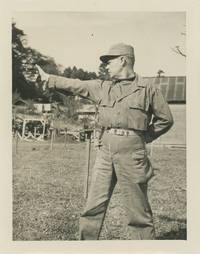
1964List3231United States and Japan 1964. Approximately 143 items: forty-two letters twenty-five in Japanese and seventeen in English; seventy-six photographs with twelve medium-format negatives; eleven pieces of military ephemera; an inscribed handkerchief; and a lacquered wood storage box 8 x 14 x 7 inches with family crest. Letters and ephemera Near Fine photographs curled else excellent; overall excellent to Near Fine. Kiyoshi Tanaka 1914–2001 was born in Sacramento to parents who immigrated from Japan early in the century. In 1943 he and his parents were interned at the Tule Lake War Relocation Center in northern California. Tanaka joined the military in 1949 and served as a Special Agent with the 115th Counter Intelligence Corps Detachment a component of the Far East Command and was stationed in Japan and Korea from 1950 to about 1954. He returned to California and transferred to the Army Reserve in 1956 retiring from the military in 1957.<br /> <br /> Offered here is a collection of Tanaka’s correspondence photographs and military documents mainly from the 1950s. The latter are certificates of appointment and training—Tanaka took courses in counterintelligence and martial law—and transfer and discharge documents. According to his correspondence Tanaka served in both Japan and Korea though he was mainly stationed in Japan and does not seem to have gone to Korea before 1952. Though the US technically no longer occupied Japan after the 1951 Treaty of San Francisco the accompanying Security Treaty allowed the US military to maintain military bases in the country which were critical in the Korean War. Tanaka’s photographs appear to have been taken primarily in Japan and show street scenes target practice and some shots of office work.<br /> <br /> Tanaka does not appear to have discussed details of his work with his family and friends; most of his correspondence consists of reminiscing with friends discussing weather and health with family and reassuring a girlfriend in Japan that his “evils are limited to drinking 2 or 3 beers†May 17 1954; translated. Sometimes friends reflect on current events; one writes:<br /> <br /> “You no doubt have read of strikes and there are still talks of other strikes. We do hope that conditions will become so so that there will be more settlements without walkouts and the like. Yes the higher ups always use the Korea situation as a defense but the people in general do not have that close cooperating spirit as there was during the last war.†February 23 1951<br /> <br /> Also included in the correspondence are several items from attorney Henry Taketa concerning Tanaka’s attempts to get compensation for himself and his mother via the 1948 Japanese American Evacuation Claims Act. The Act was intended to compensate Japanese Americans for losses incurred when they were interned. Tanaka filed and was rejected several times first for over $2000 and then for over $1500; the government countered that Tanaka and his mother were only owed about $90 total. This would have been a typical experience as the Act highly restricted what kinds of losses would be compensated and made the process arduous.<br /> <br /> Of interest to historians of the Japanese American experience after World War II and during the Korean War in particular. unknown
19404399N.p. likely Southern California 1940. Good. Silver gelatin photograph 11 x 13.75 inches. Some creasing and dampstaining a few creases and short closed tears handful of small scuffs in image area some darkening along right edge some minor silvering. A substantial photograph featuring a large group of well-dressed Japanese-American youths and numerous adults posed in front of a line of cars with several oil derricks visible in the background. Neither the location of the photograph nor the photographer are identified but the scene is likely a school or church group in southern California during the first half of the 20th century when oil became an important resource in the area. unknown
1936List2732Fresno California 1936. Approximately 7 x 30 inches. Some creasing fine contrast; stored in tube with residual shape; overall excellent condition. A photograph of the attendees of a yearly meeting of an affinity group for young Japanese-American Christians in California. The first YPCC retreats were held in 1920 with the help of the Japanese YMCA and YWCA and the group continued its meetings until about 1990. The retreats would include church services speakers discussion groups and recreation with the goal that "The rising generation of the Japanese should be awakened to the light of spiritual life."1 <br /> <br /> 1 Brad Shirakawa “The Domei NCJCCF and the Early Young People’s Christian Conference YPCC†accessed October 2 2024 https://lakesequoiaretreat.wordpress.com/histories/the-domei-ncjccf-and-the-early-young-peoples-christian-conference-ypcc/. unknown
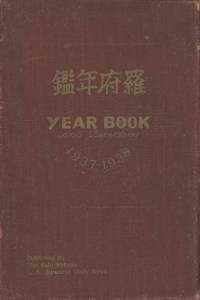
1937List3229Los Angeles California: The Rafu Shimpo / L.A. Japanese Daily News 1937. appx 90 485 pp. Limp cloth. With illustrations in color and black and white. Near Fine condition with some light wear to covers. A very scarce directory of the Japanese-American community with a focus on Los Angeles but also covering other areas of California including Terminal Island and San Pedro and San Francisco and other states such as Utah and Washington published by the Rafu Shimpo. The directory lists the physical addresses and phone numbers of the residents. The first ninety or so unpaginated pages show photographs of prominent businesses and residents and also include advertisements for Japanese-American businesses. Togo Tanaka an editor at the paper lobbied unsuccessfully for the paper’s continuation in the event of a war with Japan. He was eventually sent to Manzanar and the paper ceased publication in 1942. It would resume operations in 1946 due to the efforts of Akira Komai the son of owner Toyosaku Komai who stealthily hid the Japanese type under the floorboards of the office and paid the rent for the duration of the conflict. The directory continued until 1941. This issue presumably published in 1937 was the first in the series.<br /> <br /> Yokoi Iris September 19 1993 "LITTLE TOKYO - Extra! Extra! Rafu Shimpo Is 90" The Los Angeles Times. The Rafu Shimpo / L.A. Japanese Daily News unknown
19404400Long Beach: Inman Co 1940. Good. Panoramic photograph 7 x 17 inches. Small chip to right edge small area of loss along left margin just touching the image area minor darkening to edges minor surface wear. A small-format panoramic photograph picturing a few dozen mourners attending a Japanese-American child's funeral outside Mottell's Mortuary & Chapel in Long Beach California. Along with the attendees the scene captures several bouquets of flowers accompanied by messages written in Japanese. The image was produced by the Inman Company of Long Beach. Inman Co unknown
1910List2960Southern California 1910. Ten photographs measuring 8 x 10 inches and smaller with most measuring 5 x 7 inches. Brown Brothers stamps and manuscript captions verso; some with editorial overpainting; some mounted on heavy cardstock. Marginal damage with some tears and corners missing; very good. Japanese immigration to the US began at a large scale following the midcentury loosening of Japan’s emigration laws and the US’s 1882 Chinese Exclusion Act. Most Japanese immigrants entered through the west coast especially San Francisco Portland and Seattle and settled in central and southern California.<br /> <br /> Offered here are ten photographs of Japanese immigrants and laborers in California likely taken between 1900 and 1910 as one is dated 1903. Their work is mainly agricultural though one photograph possibly depicts miners: four men holding sledgehammers stand on a mountainside. Two show newly-arriving immigrants; in one women are lined up to receive a vaccine. Interestingly three of the photographs include women subjects—prior to the 1907 Gentlemen’s Agreement the Japanese population in some California counties had gender ratios of over 100 men to one woman and some simply had no female Japanese residents at all.1 One photograph that shows a woman at work in a cranberry field is identified as having been taken in Moneta California and the caption states that the cranberry farm was “leased by Japsâ€. Moneta actually had the least skewed gender ratio of any Japanese-American settlement at the time in part because its Issei residents were relatively economically better off and as the caption suggests could afford to lease or buy farmland.1<br /> <br /> Of interest to historians of Japanese immigration to California and the Japanese-American labor force around the turn of the century.<br /> <br /> 1 Lane Ryo Hirabayashi & George Tanaka “The Issei Community in Moneta and the Gardena Valley 1900–1920†Southern California Quarterly 70 no 2 Summer 1988: 127–158. unknown
192062329Portland OR Spokane WA San Francisco CA & Seaside OR: Lyle E. Lewis Dance Orchestra ca. 1920-1944. Eight vols. 1st - 4to. 48 pp unpaginated. on thick black paper w/ 100’s of pieces of ephemera mounted and laid-in including 7 silver gelatin photographs sized from 5 x 7 in. up to 8 x 10 in. many different TLS and ALS most on stationery letterhead for assorted hotels KGW Radio and others many newspaper clippings tickets promotional brochures advertising cards dance tickets along with a spoof printed “Wanted†notice for Ted Mullen alias Sourdough Sullen with $ 500 million reward offered and large double-page advertising broadside on yellow-gold tinged thick paper stock at rear for gig in Astoria OR under the auspices of the Co. L 186th Infantry Oregon National Guard. Contemporary pebbled black boards punch-sewn at gutter margin chipping edgewear still VG- exemplar; 2nd - 4to. 92 pp unpaginated w/ majority of leaves on ruled paper including 18 leaves of mylar sleeves featuring the majority of the 23 silver gelatin photographs most sized 8 x 10 in. photographer’s imprints on versos remainder w/ clippings promotional announcements tickets broadsides ALS & TLS documents throughout along with a long radio program script. Contemporary 2-ring blue cloth binder rounded corners some edgewear rubbing still VG; 3rd-7th - 16mo. Five daily diaries Approx. 700 pp unpaginated. w/ approx. 4000 words manuscript annotations in ink & pencil throughout featuring some laid-in miniature photos receipts business cards including 1 photographic souvenir business card for Cole McElroy’s Dance Band and Cole McElroy’s Spanish Ballroom 1 tiny postage stamp photo of Lewis at his bungalow in Seaside all bound in cloth some wear still VG grouping; 8th - 12mo. Approx. 150 pp unpaginated. of ruled paper mostly typescript ink & pencil manuscript some ruling throughout annotations & checkmarks last 4th or so blank. Flexible black cloth 6-ring binder business card for Lewis as Commercial Agent for ACME Fast Freight taped in on front pastedown 3 blank routing order forms in red & black some scuffing edgewear still VG all from the library of Genevieve Martha Lewis Levin 1911-1994. This unusually well-preserved archive of a Roaring 20’s Jazz Orchestra musician and Band Leader in the Pacific Northwest reveals the exuberance and business success of this largely forgotten artist through his successful years before foundering during the Great Depression. Both scrapbooks open with clippings thank you and recommendation letters as well as dance broadsides and photographs during 1926 at the height of Lyle Lewis’s orchestra appreciation. Testimonials include B.J. Saad who owned the Garden Dancing Palace and stated “I have taken the Garden which is second to no other ballroom west of Chicago. That is why I have secured Lyle Lewis recognized as one of the best orchestra leaders on the Coast.†C.W. Craig of Lipman Wolfe & Co. department store extolls that Jazz music dance held at the Multnomah Hotel March 16 1926 that “I don’t think we have ever enjoyed better or more up to date dance music than that furnished by your splendid aggregation.†Broadsides and notices advertise the Lewis Jazz Orchestra playing the Grand Ball Room at the Masonic Temple Congress Hotel leading McElroy’s Oregonians at the McElroy’s Spanish Ballroom the Dessert Hotel Oasis near Spokane parties for Studebaker and more. One of the mounted letters includes a rather sad severance letter signed by Cole McElroy explaining the circumstances of Lyle Lewis’s leaving stating “I realise that you were a victim of circumstances. On account of the fact that you had a fine band organized. . . certain music masters of the theatre jobs saw fit to take your men away from you thereby breaking up your fine band and forcing me to make a deal for another organization.†McElroy 1888-1947 was known as “Pop†McElroy was a popular band leader who during the years before World War I and after played the Palm Gardens often and had great success in his McElroy Spanish Ballroom which opened in 1926 and then opened another Seattle McElroy Ballroom in 1928. Several TLS on letterheads include those for KXL Radio station KGW Radio Station and the KOIN Studio Director for The Portland News which played three nights a week on air for over six months. The many photographs capture the Lyle Lewis band joking around with their instruments on the road fully arrayed on stage in the Radio Station posing at various venues stages and even one as late as 1939 conducting the Lyle E. Lewis Dance Orchestra. The band included Cluet Mansfield formerly with Henry Halsted band William Webber on drums Eddie Scroggins & Frank Champion as sax players G. Berardinelli on Bass and also played dances at the Irvington Club Multnomah Athletic Club and for a while with the historic Congress Hotel in Portland which had been the City’s first reinforced concrete building erected during the Progressive Era and by 1924 expanded to 119 rooms with vibrant Jazz ballroom. The daily diaries for 1929 and 1930 show that Lewis regularly played at the Cotillion Hall now the Crystal Ballroom initially at $ 7.00 per night in 1929 and then steadily dropping to less than half by 1933. He writes about traveling for a gig in San Francisco with Mansfield in 1929 leaving Tuesday and arriving Wednesday Sept. 18 1929 driving 40 mph and getting 19 miles to the gallon with a drive made in 19 hours and 15 minutes. He played extensively at the Bungalow Club in Seaside OR which had opened originally June 19 1920 and for more than 25 years was the destination for the biggest names in the Big Band Jazz era including Lyle E. Lewis Cole McElroy Duke Ellington Bob Crosby Glenn Miller and tragically became connected with the death of Jimmie Lunceford who died from a heart attack just before playing his last set at the Bungalow after playing McElroy’s Ballroom in Portland 2 nights before. Lewis 1890-1948 was a popular Portland Oregon based jazz band & orchestra leader who managed to lie about his age and enlist at 15 in the Oregon National Guard Co. G 3rd Battalion served for three years and in May 1910 married Genevieve Franklin while working as salesman and musician before World War I Following the War he quickly became a successful band leader including successful stints with the Cole McElroy Spanish Ballroom Congress Hotel Multnomah Hotel Bungalow Garden Ballroom as well as the Coronado Hotel in California. As indicated by the daily diaries he maintained a fairly close relationship with his daughter Genevieve “Martha†but became largely estranged from his wife Genevieve living in separate rooming houses or hotels. Still in her position as a sales manager she managed to convince Meier & Frank to hire him as their house band for store functions and the restaurant while during the Great Depression he mostly worked for the US Forest Service mapping division while his show business largely disappeared. By 1943 he became the commercial agent for ACME Fast Freight where he worked as commercial agent until his death. This cataloguer could find no surviving recorded discography record for Lyle E. Lewis and his assorted incarnations although there are a few recordings for the Cole McElroy Band from 1926-1928 which most likely would have included him as band leader and musician. Lyle E. Lewis, Dance Orchestra, hardcover
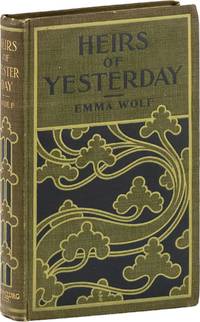
190087914Chicago: A.C. McClurg & Co 1900. First Edition. First printing. 12mo 18cm. Publisher's decorated cloth; 2871pp; one page of ads for Wolf's previous two novels published by McClurg. A brilliant copy with just a trace of wear at spine ends and board corners; some barely perceptible sunning to spine internally tight and clean. Very Near Fine and most unusual thus. <br /> <br /> The author's fourth novel a Jewish-American "problem" novel dealing with assimilation and faith among members of San Francisco's middle-class Reform Jewish community. Wolf 1865-1932 though largely forgotten today was widely read during her lifetime; in addition to dozens of contributions to popular periodicals she published five novels several of which went into numerous reprints. Her first novel Other Things Being Equal 1892 was for many decades regarded as the first Jewish-American women's novel only supplanted in 2017 with the rediscovery of Cora Wilburn's serialized novel Cosella Wayne 1867. Like Wolf's other works Heirs of Yesterday is noteworthy for its frankness regarding Jewish identity and the persistence of antisemitism - whether overt or unspoken - in all strata of American society. WRIGHT III:6044. A.C. McClurg & Co unknown
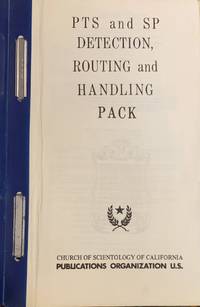
19776124Los Angeles: Church of Scientology of California Publications Organization 1977. 36x22cm various paginations. Printed in several colors. Few revision markings in pen throughout. Bound with acco fasteners in blue plastic covers. Few tape repairs to covers with chipping to edges. Very good. <br /> <br /> A very uncommon internal publication from the Church of Scientology consisting of a packet of HCO policy letters and bulletins covering the detecting and handling of suppressive persons and potential trouble sources. OCLC locates a single copy at UC Davis. Church of Scientology of California Publications Organization unknown
192358862San Francisco Los Angeles Buffalo Cleveland & New York: Southern Pacific Lines The Matthews-Northrup Works Jan. 2 1923. Tall 8vo. 3.75 x 9.2 in. 16 2 pp. which folds out into 21.75 x 27.25 in. colour map on recto text & strip map & self-printed cover on verso minor wear at folds shelfwear still VG copy. First edition thus of this popular Southern Pacific Land Promotion map issued in assorted iterations from 1899 through the 1920’s with most published by the Matthews-Northrup Works. The SP Lines continually revised the quoted statistics over crop yields available land and the map was also revised over years reflecting added stations or those which had been dropped. No copies of this version in Worldcat. Southern Pacific Lines, The Matthews-Northrup Works, unknown