350 résultats
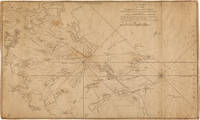
1800WRCAM52103London: R. Laurie and J. Whittle 1800. Engraved map sheet size approximately 21 x 34 3/4 inches. Backed with linen. Mid-19th-century ownership inscription near title. A few small chips and minor closed tears at edges light soiling and scattered faint foxing. Very good. Framed. An extremely scarce nautical chart of Boston Harbor from the second edition of the important 18th-century American atlas the NORTH AMERICAN PILOT. The chart depicts the state of the harbor just after the start of the Revolution having been reprinted from the first edition published in 1776 and 1777. The Boston peninsula and the "Ruins of Charlestown" are located in the west / far left of the chart area which follows the mainland coast as far south as Dorchester and Milton and out to Point Shirley and the Shirley Cut to the northeast in the upper center of the image; the Hull peninsula and Point Allerton are also visible in the lower right-hand quadrant of the map. In the center of the chart are the numerous islands that dot Boston Harbor as well as depth measurements and clearly marked shallow areas such as the shoals formerly known as the Dorchester Flats now a populated area of reclaimed land. Additionally there are a number of guidelines showing the best routes through the harbour to various points and markings for various points on land to aid in navigation. <br> <br> The second edition of the PILOT contained seven more maps than the first for a total of seventeen charts of which this plan of Boston Harbor was the seventh. The first edition was published by Robert Sayer and John Bennett who were succeeded by Laurie and Whittle before the publication of this atlas. The original chart engravings were executed by Thomas Jefferys. Rare in any form or edition OCLC traces only one copy of this individual map from the 1800 printing located at the State Library of Massachusetts. OCLC 843954569. PHILLIPS ATLASES 1220 ref. HOWES J84 ref. SABIN 55557 ref. R. Laurie and J. Whittle unknown books
180131356Boston: D. Bowen 1801. Letterpress broadside woodcut coffin and urn decoration 23 x 18 1/4 inches. Minor losses in the margins at sheet edges not affecting text. A remarkably early American museum broadside.<br/> <br/>A broadside advertisement for the Columbian Museum in Boston one of the earliest American museum publications extant. Opened by Daniel Bowen in 1795 the museum specialized in the exhibition of fine art as well as curiosities. The museum was an expansion on Boston's first such institution also founded by Bowen in 1791 which was dedicated primarily to the exhibition of wax figures. The Columbian also played host to a variety of public performances and lectures. "One exhibit more suggestive of P. T. Barnum than the sedate offerings of a modern museum featured a bibulous elephant who consumed vast quantities of spiritous liquor the museum's advertising assuring the public that 'thirty bottles of porter of which he draws the corks himself is not an uncommon allowance.' . Despite such vulgarities Bowen's Museum is said to have had a significant influence on the history of American painting. The works of art on display there especially those of Robert Edge Pine formed the only public art gallery in Boston. Art historians credit this collection with influencing three major painters: Washington Allston the great Romantic painter Samuel F. B. Morse better known as the inventor of the telegraph and Edward Greene Malbone a miniaturist of note all of whom resided in the Boston area in the 1790s" W.P. Marchione Allston-Brighton Historical Society. This broadside advertises Bowen's wax sculptures of famous figures such as John Adams George Washington and Benjamin Franklin but further promotes a much more eclectic range of exhibited items. First among these are a collection of "large historical paintings" which depict a wide array of subjects including "Mrs. Yates in the character of Medea" "Time clipping Cupid's wings" and "His Excellency John Hancock late Governor of Massachusetts painted by Mr. Copeley." Prominently placed in the center of the broadside is an announcement that a "Monument to the Memory of General Washington has lately been erected in the centre of the Museum" with a small woodcut purporting to be the object in question. Also advertised are a collection of "automaton and musical clocks" and a concert organ "one of the most elegant Instruments of the kind ever imported" as well as a number of "natural curiosities" consisting mostly of birds snakes and a very large fish "12 feet in length" caught in Boston harbor. "The Museum has been established in Boston about five years during which time the collection of natural and artificial Curiosities elegant Paintings Wax Figures &c. have been constantly increasing and is now universally visited as one of the most rational and entertaining places of amusement in the United States: -- And will be removed from Boston at the expiration of the lease. Music on the Concert Organ. -- Admittance Fifty Cents." Though several editions of advertisements for the Columbian Museum have been noted by OCLC ESTC and Evans this particular broadside is apparently unrecorded. D. Bowen unknown books
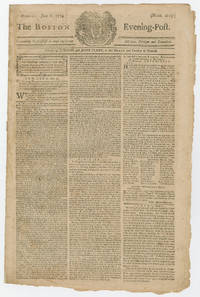
177424806<p>Early report in the local Boston newspaper on implementation of Parliament's Boston Port Act the first of the Intolerable Acts and the reaction to it in Massachusetts and beyond. Taking effect on June 1 1774 rather than punishing individuals the Act besieged the entire city until the colonists paid for the tea destroyed in the Tea Party December 16 1773.</p><p>"<i>the Act of Parliament for blocking up the Port of Boston is now in all its Parts carrying into Execution with the greatest Severity many Vessels being already prevented from coming in and Fishing boats and other small Craft strictly search'd; so that we have reason to expect that in a little time this Town will be in a truly distressed and melancholy Situation.</i>" p3/c1</p> <b>BOSTON PORT ACT.</b>Newspaper. <i>The Boston Evening-Post</i> June 6 1774 No. 2019. Boston: Thomas and John Fleet. 4 pp. 9¾ x 15⅜ in.<p><br /></p><p>The majority of this paper is devoted to patriotic content. The front page features a series of Questions and Answers from New York "<i>being conceived in some measure calculated to advance the cause of freedom in the present critical situation of affairs.</i>" It goes on to note that "<i>A Congress of Deputies from the several Colonies is thought to be absolutely necessary to devise means of restoring harmony between Great Britain and the Colonies and prevent matters from com</i>ing <i>to extremities</i>" p1/c1-2.</p><p>"<i>A Friend to Mankind</i>" wrote to the publishers "<i>When I first read the barbarous Act for shutting up the port of Boston; an act made with the pious design to starve the poor; make the industrious idle; the happy miserable; and as an entering wedge to the horrid purpose of enslaving America although I was transported beyond measure I could not help reflecting that bitter as it was for the present it would absolutely be of happy tendency to America in the result.</i>" p2/c1.</p><p>This issue prints a May 25 address from 33 Marblehead loyalists congratulating Massachusetts Gov. Thomas Hutchinson on his administration and wishing him a safe return trip to Great Britain p1/c3. On the other hand a public meeting in Marblehead denounced the address and declared Hutchinson "<i>an inveterate Enemy to the Liberties of the Province</i>" p2/c3.</p><p>This issue also announces from Boston "<i>the Corporation of <b>Harvard College</b>have voted that considering the present dark Aspect of our public Affairs—There be no public Commencement this Year—and that the Candidates for the first and second Degrees shall receive their Degrees in a general Diploma</i>" p3/c1. On May 1 1775 less than two weeks after the Battles of Lexington and Concord the faculty of Harvard dismissed the undergraduates early for the summer vacation again without a public commencement. Classes did not resume until October in Concord twenty miles away where students boarded with local residents and college courses were held in a deserted grammar school the courthouse and the First Parish meetinghouse. Meanwhile the five buildings of the college's campus in Cambridge housed 1600 American soldiers. After the British surrendered Boston in March 1776 and the American troops moved south to defend New York the college was permitted to reoccupy its buildings in June. Of 190 freshmen entering between 1775 and 1778 only 30 left prior to graduation.</p><p>An advertisement is included for a just-published pamphlet <i>Observations on the Act of Parliament commonly called the Boston Port Bill with Thoughts on Civil Society and Standing Armies</i>p2/c1. From September 1774 to March 1775 Josiah Quincy II 1744-1775 was in England arguing the American cause to sympathetic British politicians. He died of tuberculosis on the return voyage within sight of Massachusetts.</p><p><b>Historic Background</b></p><p>Relief for Boston was sent from as far away as South Carolina and the First Continental Congress convened in Philadelphia three months later to coordinate a colonial response to the Intolerable Acts.</p><p>Parliament finally repealed the Boston Port Act in 1783 after fighting ceased in the American Revolutionary War but before the Treaty of Paris officially ended the war and recognized American independence.</p><p><b>Condition</b></p><p>Near fine; several professional mends to gutter margin. A bright and attractive issue of an important colonial newspaper.</p> Thomas and John Fleet books
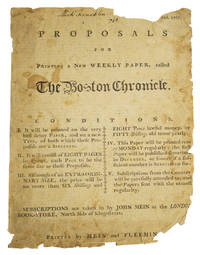
1767313300Boston: Printed by Mein and Fleeming 1767. 2 pp. prospectus printed recto and verso of a single sheet. 4to 10-1/2 x 8 inches. Damage at edges with loss to text month October missing from heading lower corner torn away with loss to"G" in Fleeming in imprint a few letters lost from right margin on recto and 12 lines affected on verso toned and stained. Signed "Mich. Franklin 1768" at top of recto. 2 pp. prospectus printed recto and verso of a single sheet. 4to 10-1/2 x 8 inches. Early American newspaper prospectus. Rare early American newspaper prospectus announcing publication of The Boston Chronicle a weekly Loyalist paper. "John Mein a bookseller was the publisher and John Fleeming the printer. With the beginning of the second year the size of the paper was enlarged to folio and it was publihsed every Monday and Thursday and was the first newspaper to be published twice a week in New-England. To avoid popular resentment of his political views Mein was forced to leave the country before the close of its second year and the paper was continued by Fleeming in the name of the firm until its publication ceased on the 25th of June 1770" Evans.<br/><br/>The five "conditions" listed on the recto detail the general design of the paper - that it will be printed on high quality demy paper with specially designed type 8 pages in quarto priced at 6 shillings and 8 pence printed every Monday and delivered to subscrribers with care. The verso with text in three columns outlines a plan of the contents of the paper including coverage of current events and issues essays on moral subjects notices on newly published books poetry etc. Ford Broadsides 1418; Shipton-Mooney 41736; Bristol B2787 recording 4 copie; Evans 10565 for newspaper Printed by Mein and Fleemin[g] unknown books
1859833001859. COLE Joseph Foxcroft. PRINTS - BOSTON SOUTH BOSTON 1859 HANDCOLORED LITHOGRAPH BY JOSEPH FOXCROFT COLE. Boston: J. F. A. Cole ca. 1859. Image matted to 22 x 29 1/2 inches. Three spots of browning to the sky area faint arc of foxing a few more to the scenes below the main image. Main image features a main intersection of roads one signposted "G Street Ward 12". Great perspective. Very good overall. Below the title is printed: "To the citizens of South Boston this picture is most respectfully dedicated by the Artist. unknown books
1930List328Boston 1930. Oblong quarto 49 pp. With appx. 1400 photos most measuring less than an inch square with roughly 175 in larger formats up to 3 ½ by 5 inches. Very Good. A wonderful labor of photographic love created by an unidentified young woman with ties to the Cabot family of Beacon Hill. The album composed largely of tiny contact prints glued in neat grids. Off-kilter compositions - a portion of a steeple against the sky the tail of a dog etc. - are mixed in with more traditional landscapes leading one to question whether the photographer had modernist aspirations or just took a lot of pictures.<br /> <br /> The photographer is unknown but our best guess is that it was someone who was a friend of Ellen Cabot of Beacon Hill perhaps while both were students or just after. Ellen Cabot the most frequent subject of the album is shown in a variety of settings often accompanied by her dog Prowler. Aerial photography the New England coastline camping life in Cambridge and equestrian competition are all on display. Other highlights include a dog named Benito Mussolini and artful shots of a monk's torso. A portion of the photos perhaps five or ten percent are not present though the album is otherwise in excellent condition. Handwritten label on the front reads "Newport Races to Topsfield autumn 1930". Overall the album is a testament to the energy and spontaneity of youth and the possibilities of the photographic form as well as an intimate look into Boston's storied upper class. unknown books
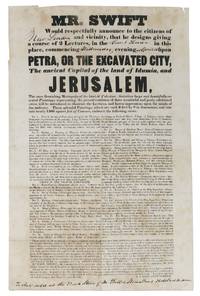
184146846Norwich: M. B. Young Print 1841. 1st printing. Now housed in an archival mylar sleeve. Age-toning. Tack holes at the corners. Faint fold lines. Very Good. Broadside 13 lines of introductory text at top over 2 columns of text describing the paintings to be exhibited. A job printing announcement with the city lecture location therein day of week and date all in manuscript at top. Price of the lecture 25 cts in mss in the 7th line from the bottom. In the lower margin has been inked "Tickets sold at the Book Store of Mr Bolles Steam Boat Hotel & at the doors". 18" x 12" <br/><br/>"Petra is a historical and archaeological city in southern Jordan. Petra declined rapidly under Roman rule in large part from the revision of sea-based trade routes. In 363 an earthquake destroyed many buildings and crippled the vital water management system. In the 12th century the Crusaders built fortresses but left after a while. As a result Petra was forgotten for the Western world until the 19th century. The first European to describe them the ruins was Swiss traveller Johann Ludwig Burckhardt during his travels in 1812. The Scottish painter David Roberts visited Petra in 1839 and returned to England with sketches ." Wiki In this advertisement "Mr Swift" announces "a course of 2 lectures in the New London Court House in this place commencing Wednesday evening April 14th upon PETRA or The Excavated City". He exclaims that the lecture will be accompanied by "Seventeen large and beautifully executed paintings representing the present condition of these wonderful and justly celebrated cities." The broadside then goes on to describe in detail the subject of each of the 17 paintings. He concludes by asserting "The views exhibited are real Paintings --- not Magic Lantern illusions." No doubt this Mr Smith was riding the coattails of Roberts' sketches. one wonders where today might be found those paintings. And if no longer extant here we document their onetime existence. As an aside it should be noted that Eli Smith had a bit of a brouhaha with one J. S. Buckingham who also published some text on Petra of which Smith felt there were inaccuracies and so published same. The contretemps resulting in Buckingham publishing an 1840 pamphlet documenting the correspondence between the two: PUBLIC ADDRESS DELIVERED BY MR. BUCKINGHAM In DEFENSE Of His LECTURES On PALESTINE AGAINST The CRITICISMS Of The REV. ELI SMITH PUBLISHED ANONYMOUSLY In The NEW YORK OBSERVER In 1839. No copies of this broadside found on OCLC. Rare. M. B. Young, Print unknown books
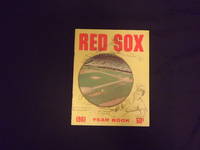
1961106295<p>Program format 8 1/2 x 11 paper illustrated 48 pp. Some slight aging otherwise in near mint condition. This 1961 Boston Red Sox Yearbook that features pictures profiles and records of players on the 1963 team. Featured players include Carl Yastrzemski in his first season with Boston Chuck Schilling Frank Malzone Don Conley Russ Nixon Rico Petrocelli Lou Clinton and Ed Bressoud. Copy is in excellent condition. # 106295</p> books
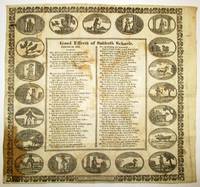
183027456Boston: Boston Chemical Printing Company 1830. 12" x 11" broadside poem printed on white cotton cloth in two columns. A decorative rectangular border surrounds the poem. The inside border is surrounded by twenty vignettes in oval borders. Vignettes include animals such as a fox and an owl as well as scenes such as a soldier leading an army a king holding his scepter a face in the clouds blowing wind at the trees. Spotted at lower left corner and another light spot. Very Good. <br/><br/> This poem is a dialogue between Charles and Father concerning the reformation of Neighbor Joe a former drunk who would curse and beat his wife and children. He told Father that through the example of his eldest daughter Emeline a student in the Sabbath School and follower of the Bible he was able to ask God for forgiveness and change his wicked ways.<br/>OCLC 30730589 4- AAS Mass. Hist. Soc. Yale Brown as of December 2018. Benes Textiles in New England II page 200. Boston Chemical Printing Company unknown books
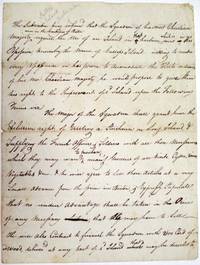
177832766Boston 1778. Unsigned manuscript document folded to 9-1/2" x 7-1/4". 2pp plus integral blank. 25 lines. Old folds light foxing Very Good.<br/><br/> "The Subscriber being informed that the Squadron of his most Christian Majesty now in the harbour of Boston require the use of an island in that harbour which is now in his possession known by the name of Gallops Island-- willing to render every assistance in his power to accomodate the Fleets or Army of his most Christian Majesty he would propose to give them his rights to the Improvements of said Island upon the Following Terms viz.<br/> "The major of the Squadron shall grant him the exclusive rights of Erecting a Storehouse on Long Island & Supplying the French Officers & Soldiers with all those necessaries which they may want to purchase ---- viands Groceries of all kinds. Cyder wines vegetables &c & he will agree to sell those articles at a very small advance from the price of Boston & expressly Stipulate that no undue advantage shall be taken in the Price of any necessary that he may have to sell.<br/> "He will also Contract to furnish the Squadron with 2000 Cord of wood delivered at any part of said Island that may be directed to at 28 Lives money of France per Cord payable upon the delivery of each 100 Cords.<br/> "He will supply the Squadron with any Quantity of Fresh water delivered along side the Ships at 7 deniers money of France per Gallon provided that there be no delay in hoisted the water from the Boats on Board the Ships of the Cask are furnished for Transporting the water in ------ here the document ends in the middle of page 2. <br/> Elisha Leavitt Jr. and/or James Brackett owned Gallops Island at this time; historical records are ambiguous. Some sources indicate that the French erected earthworks at Gallops Island in 1778 to defend their fleet anchored in the harbor; others assert that the earthworks were on George's Island bought by Leavitt Jr. in 1768. Leavitt was a Tory a fact well known in town: people burned down his barn and surrounded his home at one point. The story goes that the pleasant elegantly dressed Mrs. Leavitt invited the mob in for cakes and wine which calmed everyone down. unknown books
1866249849Boston: Baker & Tilden 1866. Colored map scale 2 miles: 1 inch. With 36 folding panels. Manufactured by Walling & Gray 95 Liberty Street New York. 4to approx. 60 x 60 inches unfolded. Backed on linen. Laid in original cloth portfolio. Colored map scale 2 miles: 1 inch. With 36 folding panels. Manufactured by Walling & Gray 95 Liberty Street New York. 4to approx. 60 x 60 inches unfolded. Baker & Tilden unknown books
1793218222Boston: Belknap and Hall 1793. pamphlet. good. Folio 4 pages light foxing lower right corner of front page with seven inch expertly repaired tear with partial loss of some words center fold repaired in margin. Boston: Belknap and Hall 1793.<br/><br/> An entire issue of a Boston newspaper with mostly political content. The American Apollo was only published from January 6 1792 to December 25 1794. The entire front page is an article by William Fox the political reformer pamphleteer and bookseller from London entitled " Thoughts on the Death of the King of France". Most of the 2nd and 3rd pages consists of a reprinting of a letter from Thomas Jefferson as Secretary of State to Gouverneur Morris Minister Plenipotentiary to France. Jefferson writes against French provocations during the "Citizen Genet Affair" and other maritime actions that go against George Washington's policy of neutrality during the War between France and Great Britain. Jefferson writes extensively of the visit of French Minister Edmond Genet to the United States including Genet's attempts to enlist American ships in Charleston South Carolina as privateers against English ships. Jefferson mentions frequently how opposed he is to Genet's actions in America.<br/><br/> Belknap and Hall unknown books
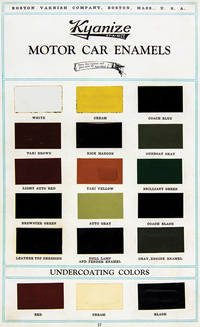
19231511111923. BOSTON VARNISH COMPANY. Kyanize: the highest grade varnishes and enamels in the World. 40 pp. Illustrated with 75 paint and varnish samples 8 varnished wood samples on one leaf and colour illustrations throughout. Oblong 4to. 155 x 245 mm bound in original embossed black and gold post binder. Boston Chicago San Francisco: Boston Varnish Company 1923. First Edition of this catalogue providing an excellent historical reference for the colour schemes of stains varnishes and paints for finishing Jazz Era home interiors and exteriors as well as automobiles. The Boston Varnish Company was founded in 1900 by James B. Lord one of the early leaders in the New England coatings industry. The samples and illustrated colour schemes show Kyanize enamels for exteriors floor finishes and furniture; Celoid finish for artistic and sanitary floors; Kyanize varnishes for woodwork and architectural details; early automobile paints in many colours and much more. With coloured advertisements and images of can labels. unknown books
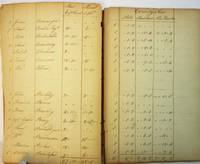
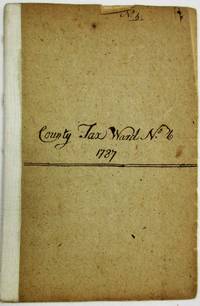
178726593Boston 1787. 5 1/2" x 8 1/2". 18 leaves each with vertical columns. 20 pages are completed in manuscript. Plain contemporary wrappers with inner margins and spine reinforced by tape; wrappers separated from text and the leaves are loose. Else lightly worn and Very Good. <br/><br/> This list of county taxpayers has names of more than one hundred residents; tables report their personal and real property assessments and their poll real estate and personal property taxes paid. A few of the people were Ebenezer Hancock younger brother of John Hancock and Deputy Paymaster-General of the Continental Army; Thomas Pemberton antiquarian and historian of the Revolution; James Tewksbury who had been a Minute-Man; Dr. Amos Winship a naval surgeon and acquaintance of John and Abigail Adams; Samuel Austin a Boston selectman in 1774. unknown books
178726656Boston 1787. 5 1/2" x 8 1/2". 18 leaves each with vertical columns. 22 pages completed in manuscript. Plain contemporary wrappers inner margins and spine reinforced by tape; wrappers separated from text several leaves loose. A clean and Very Good text. <br/><br/> This list of county taxpayers has names of more than one hundred residents; tables report their personal and real property assessments and their poll real estate and personal property taxes paid. Some well-known Revolutionary figures include Major William Bell Captain of the Ancient and Honorable Artillery Company; Benjamin Austin political writer; Jonathan Loring Austin secretary to the Massachusetts Board of War until October 1777; Capt. Nathaniel Goodwin of the 1st Plymouth Co. Regiment; and Dr. Thomas Welch one of the founders of the Massachusetts Medical Society and a surgeon in the Continental Army. Also listed are Dr. James Pecker first vice-president of the Massachusetts Medical Society and Dr. Joseph Whipple also a founder of the Massachusetts Medical Society. unknown books
184037606Boston: S.N. Dickinson 1840. Folio printed broadside 11-1/4" x 18-1/4." Printed in two columns: the left column prints the communication from S.N. Dickinson publisher of the Boston Almanac; the right column prints information about town officers post offices travel banks lawyers public houses physicians churches and other data; seeks confirmation of its accuracy and any additions. Old folds and light foxing Very Good.<br/><br/> Samuel Nelson Dickinson the Almanac's publisher writes "The object of this communication is the future improvement of the BOSTON ALMANAC." The Almanac though deserving "the highest praise" seeks to do even better. Hence to assure accuracy of information he has sent this rare broadside inquiry to representatives of the Massachusetts towns. He asks them to "fill up all the blanks and return the document to the subscriber." <br/>Not located on OCLC or the AAS web site as of May 2021. S.N. Dickinson unknown books
18966716Boston 1896. A bound volume of autograph letters with the invitation and autograph menu. Octavo 22.5 x 15 x 8 cm. bound volume of letters mounted on stubs. A superb record of the social grace of an era long gone. Mrs. Francis Blake wife of the physicist and inventor of telephone fame see DAB gave a small 'dancing' party for the society 'A' list of Boston. Participants were to depart from the Columbus Ave. station and return to the Huntington Ave. station 1:45 AM via private train. Also includes a complete list of the final attendees and a manuscript record of the menu and engraved invitation accompany the individual acceptance and rejection few letters. Very good; some wear to the binding. A stationer's Shipman adhesive half leather letter file book. hardcover books
1861M12986Boston:: David Clapp 1861. 1861. 8vo. 36 pp. Original printed wrappers; creased top right corner chipped spine wear. Very good. FIRST EDITION. "When some time since we had occasion to allude to the fact that ether had proved fatal in a number of instances the announcement was received with much surprise and more than one incredulous correspondent was moved to inquire on what authority the statement was made. The authority was given and reference was made to twenty-five cases that up to that time had been reported. The Boston Society for Medical Improvement soon after appointed a committee to report 'on the alleged dangers which accompany the inhalation of the vapor of sulphuric ether' and recently this committee discharged their obligations in a lengthy and very elaborate report. That they have had 'unequalled facilities' for collecting material this document bears the most unequivocal evidence; and in this respect it may be considered complete. .The report. . . consists of two portions the text and an appendix of forty-one cases of alleged deaths by ether upon which the conclusions of the committee are based. The profession is under great obligations to the Boston Society for instituting this investigation and to the committee for the unwearied zeal they have manifested in the collection of evidence upon the subject of their repot" AMT p. 308. REFERENCES: "Ether as an Anaesthetic." American Medical Times. Nov. 9 1861. 308-316 pp. See: John Farquhar Fulton Madeline Earle Stanton The Centennial of Surgical Anesthesia. An annotated catalogue of books and pamphlets bearing on the early history of surgical anaesthesia VII.33. Locations: American Antiquarian Society UCLA Public Library of Cincinnati and Hamilton County. David Clapp, 1861. unknown books
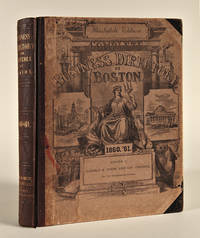
1860WRCAM55041Boston: Damrell & Moore and George Coolidge 1860. xiii19-204301-522pp. as issued pp. 205-300 purposely omitted in the pagination plus folding map and 10pp. including pastedowns of advertisements printed on blue and yellow paper. Quarto. Original three-quarter leather and pictorial paper boards spine gilt. Rebacked with most of original backstrip laid down. Boards rubbed and a bit stained. Very clean internally. Very good. "Illustrated Edition." 1860 Boston directory by the publishers of the Boston Almanac complete with a new plan of Boston engraved for the 1861 Almanac. The nearly 200-page section "Sketches of Boston and Vicinity" provides a detailed geographical historical and economic account of the Boston area and contains numerous engraved views and plans of churches schools places of amusement streets harbors etc. Hundreds of advertisements many illustrated accompany the directory. SPEAR p.57. Damrell & Moore and George Coolidge hardcover books
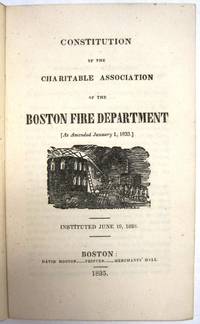
183530636Boston: David Hooton.Printer.Merchants' Hall 1835. 12pp stitched in contemporary plain yellow wrappers. Title page vignette of the Department dousing a house fire. Very Good plus.<br/><br/> This rare Charter of an early mutual aid society evidently located only at the Boston Public Library was established to assist injured Boston firemen who "are liable in the discharge of their duty to many casualties to which citizens generally are not exposed." <br/> The pamphlet prints the 1830 Act of the Legislature incorporating the Association; Edward Prescott George Dearborn and Jonathan A. Davis are the named incorporators. The Articles render every Boston fireman eligible for membership. Annual dues are fifty cents. Injured members are barred from negotiating directly with the City Government for financial assistance: that's the job of the Association the names of whose officers are printed at page 12. Thomas C. Amory was President of the Board of Trustees.<br/>OCLC 33064696 1- Boston Public 1038097739 also Boston Public as of October 2019. AI 30581 1- Boston Public. Not in Sabin or on AAS's online web site. David Hooton...Printer...Merchants' Hall unknown books
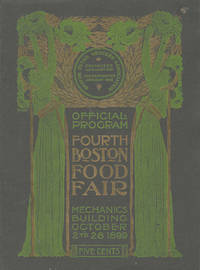
18997503Boston: F.M. Porter Co 1899. Quarto stapled in wrappers 24 x 17.5 cm. 80 pages; 1 plate. Illustrated black & white and chromolithograph plate. Advertising. FIRST EDITION. The "Official catalog musical program list of exhibitors" for this fourth congress of members of the Boston Retail Grocers Association. The association was founded in 1881 and held its first food fair that year. Photographic portraits of the senior members of the Association are included as is a description of Miss Nellie Dot Ranche of Chicago who was brought in for the occasion to run the Domestic Science Programs. It's interesting that the committee reached out to the Midwest at this moment when Cooking Schools in Boston were on the rise and very visible. The copious advertising displays a range of categories of goods one would find in a grocery of the turn of the 19th century: coffee cocoa mustard Havana cigars root beer Ceylon tea French Coca Wine virgin olive oil nut meats and salt as well as household goods including: thread collars washing liquids bluing ink. Also represented are goods and services aimed at the grocers and retailers: boxes and bags promotional printing specialized contracting refrigeration etc. Tiny bit of spotting to green and gold-printed gray wrappers otherwise fine. OCLC locates just one copy Winterthur. F.M. Porter Co unknown books
19347508Boston: B.B. Inc.; Ben-Burk Distillers 1934. Small folded pamphlet 11 x 6.5 cm. 16 pages when folded. Printed in red black and blue. FIRST EDITION. One of the very rare precursors to the famous Old Mr. Boston Bartender's Guide 1935. Following Repeal Ben-Burk Distillers published the Guide which was to become one of the iconic cocktail recipe books. Originally published as a promotional item for the Ben-Burk line of spirits distilled in Boston the Guide became a staple of professional and home bars around the country. But prior to the first work titled Old Mr. Boston Guide Ben-Burk published One Hundred Cocktails Some Old -- Some New 1932 and One Hundred and Twenty Cocktails Fizzes Punches Highballs Toddies and Long Drinks 1934 both of which are very rare. We can add this small work - previously unrecorded - to this short list of precursors. A bit of soiling to edges and one corner dog-eared; otherwise very good. All early printings of the Mr. Boston Guide are scarce. Unrecorded. OCLC records no copies; no in Noling or EUVS. B.B. Inc.; [Ben-Burk Distillers] unknown books
1825102273<p>Letter sheets 8" x 12" 3 pages plus integral address leaf. Extensive tape repairs to folds mostly archival tape but some regular tape too which has caused a little browning in areas long tear obscures writers signature but partially visible creased normal aging and browning remnant of wax seal; otherwise good or better. The letter is to Boston Mayor Josiah Quincy 1772-1864 a future head of Harvard and served eight years in Congress. It appears after becoming Boston's mayor he sent delegates to New York and Philadelphia to study fire fighting techniques in those cities. The author of this letter read about this mission and sent Mayor Quincy a lengthy letter on the subject. The probable author is Solon Robinson 1803-1880 although his signature is partially obscured by a tear. However on the back page a smudged docketed note identifies him as Solon Robertson or Robinson. Robinson was a writer and would become a well known Indiana pioneer. In any case the author would suggest a far more modern system for fighting fires than the existing practice of engines carrying water to fires which would become useless when the water ran out. he proposed putting lead aqueduct pipes "laid deep underground and leading to every part of the city." While her does not use the term fire hydrants the water would be accessed from locked iron covers that would serve that function. ABN.</p> books
1805822291805. THE BOSTON WEEKLY MAGAZINE; Devoted to Morality Literature Biography History the Fine Arts Agriculture &c. &c. Volume II -- 1803-4 & III -- 1804-5. Boston: Published by Gilbert and Dean at their Printing-Office No. 78 State-Street 1805. Two complete years of this weekly from 29 October 1803 through 19 October 1805 bound together: Volume II no. 1-52; Volume III no. 1-52. Folio. Pp. vi208;vi208. Text is printed in triple columns. Each volume is preceded by an index arranged according to the style of the piece essay history useful poetry etc. There are two title-pages for Volume III; one is bound at the beginning of Volume II and the other is in its proper place. The title-page for Volume II is lacking. Paper quality varies throughout. Text leaves are age-browned and occasionally lightly soiled and/or foxed mostly light to moderate but in a few instances it is heavy with a few dog-eared corners and occasional edgewear. Volume II no. 41 p. 163-4 has some loss at the bottom fore-corner resulting in a loss of text to the last few lines in one column. Bookblock is splitting with remnants of the backstrip; but the boards are missing. The June 16 1804 issue third page p.135 second column. "Domestick" mentions that Captain Lewis was in Pittsburg "accompanied by twenty Indian chiefs." There are a couple of tohter references to the L&C expedition. unknown books
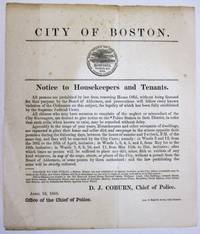
185627691Boston: Geo. C. Rand & Avery City Printers 1856. Broadside 7 3/4" x 9". Signed in type at the end by D.J. Coburn Chief of Police and dated April 16 1856 at the Office of the Chief of Police. Light toning Very Good.<br/><br/> 'House Offal' is garbage. Hours and locations of rubbish collection are set forth. <br/>OCLC 78926136 1- AAS as of May 2020. Geo. C. Rand & Avery, City Printers unknown books