386 résultats
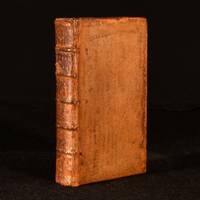
176456222Berlin und Leipzig, Christian Friederich Günther, (1764). Small 4to. Contemp. blue boards, modestly clothbacked later. Wear along edges. Corners bumped. Engraved title-page in rococcostyle and all leaves (text and plates) engraved. (16),126,(6) pp., 62 full-page engravings, with engraved explanatory text on verso. Title-page a bit soiled. On inside upper cover ""Denne Bog er taget af en dansk soldat fra en fjendtlig Officier i Slaget ved Fredericia den 6te Juli 1849"" (this book was taken from a hostile officer (German) in the battle at Fridericia the 6th of July 1849). A few plates with minor brownspots.
176456222Berlin und Leipzig Christian Friederich Günther 1764. Small 4to. Contemp. blue boards modestly clothbacked later. Wear along edges. Corners bumped. Engraved title-page in rococcostyle and all leaves text and plates engraved. 161266 pp. 62 full-page engravings with engraved explanatory text on verso. Title-page a bit soiled. On inside upper cover "Denne Bog er taget af en dansk soldat fra en fjendtlig Officier i Slaget ved Fredericia den 6te Juli 1849" this book was taken from a hostile officer German in the battle at Fridericia the 6th of July 1849. A few plates with minor brownspots. <br/><br/><em>Klaus Jordan 3837. </em> hardcover
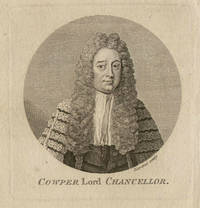
174019421740. Copper-line engraving. 100mm by 95mm platemark. Cowper Lord Chancellor'. <br /> William Cowper 1st Earl Cowper PC KC FRS 1665-1723 was an English politician who became the first Lord Chancellor of Great Britain. Ravenet studied engraving and etching in Paris under Jacques Philippe Le Bas. In 1743 he moved to London to assist William Hogarth in the engraving of his Marriage a la Mode paintings. Ravenet remained in London for the rest of his life. The majority of his work was produced for large-scale publishers including Robert Sayer John and Paul Knapton and especially John Boydell. He also engraved the portraits of such eminent figures as George II Alexander Pope and David Hume. Ravenet played a significant part in the London art institutions that were developing at the time. He sat on the committee of the Society of Artists in 1767 and in 1770 he joined the Royal Academy as one of only six associate engravers. One very small spot. unknown
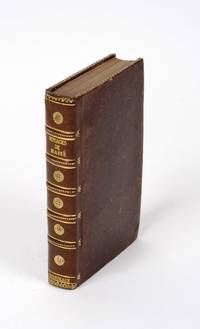
171042748Bourdeaux (La Haye), Jaques l'Aveugle, 1710. In-12 de (8)-508 pp., veau havane, dos orné nerfs, tranches rouges (reliure de l'époque).
171014612Bourdeaux Chez Jacques L'Aveugle 1710
171439159A Bourdeaux ie. The Hague: James L'Aveugle 1714. First Edition. 12mo pp. viii 508. Bound in contemporary calf neatly rebacked in antique style little rubbed some minor foxing soiling a very good tight copy. Rosenberg "A" Gove 217-219; Cioranescu 62587; Barbier IV 1103; Atkinson 'The Extraordinary Voyage in French Literature' p. 70; Rosenberg pp. 84-5. The genuine first edition falsely dated. An important imaginary journey to Australia called a "landmark" by Atkinson. Based on a variety of real voyages the descriptions are believable and realistic. The author offers a detailed account of making a camp building a raft. While the book did not range much beyond the confines of the traditional Utopias of the times it did however include "living fossils" giant birds and strange flora that survived from prehistoric eras arguably making it one of the first modern Lost World novels. After being shipwrecked on the continent the narrator and a friend pressed on and developed a farm in "a plentiful fruitful country" until forced to flee by a treacherous woman. Tyssot de Patot 1655-1727 was a Huguenot who lived most of his life in Holland where he pursued a career as professor of Mathematics at the Athenaeum Illustre in Deventer the capital of the province of Overijssel. James L'Aveugle unknown books
1710129621710 Bourdeaux (La Haye), chez Jacques l'Aveugle, 1710, sphère gravée sur la page de titre, in 12 de (8)-508 pp., rel. d'ép. plein veau brun moucheté, dos à nerfs orné de fers dorés, réparations aux coiffes, sinon bel ex.
1760002415L'Utopie: chez Jaques l'Aveugle 1760. Due volumi in 12o di 272 e 232 pagine. Legature coeve in piena pelle; difetti alle cuffie. Una delle più famose utopie del XVIII secolo francese che presenta curiose somiglianze con il Robinson Crusoe. In viaggio nelle terre australi il protagonista scopre un regno dove domina labbondanza la tolleranza luguaglianza. Viene anche inventata una nuova lingua senza imperativo!. La prima edizione è del 1710. chez Jaques l'Aveugle unknown
171023256Bordeaux: James l'Aveugle 1710. First edition. An important imaginary voyage to Australia: a 'landmark' in the development of the French voyage novel Atkinson in its original full calf decorated binding. <br /> <br /> A Robinsonade account which predates Defoe. It is complete with the ship wreck exploration conflict with local inhabitants stand off and final rescue by a passing ship. It is a reasonable representation of the Australian continent and its challenges along with a realistic estimation of the importance of mining and irrigation to Australia that "foreshadow what has actually come to pass in modern Australia." Friederich <br /> <br /> The title page is falsely dated 1710. In his deep analyses of Tyssot de Patot and his publications Aubrey Rosenberg has concluded that this 1710 printing with the armillary sphere device on the title page with the base pointing to the left is indeed the first edition and was published between 1714 and 1718. "Robinson Crusoe" first appeared in 1719.<br /> <br /> 12mo viii 508pp. Bound in the original full brown calf binding gilt spine in 6 compartments raised bands gilt device decoration on spine and outer dentelles. Bookplate of Sir John Dashwood King on the inside front pastedown. Rosenberg "A" Gove 217-219; Cioranescu 62587; Barbier IV 1103; Atkinson 'The Extraordinary Voyage in French Literature' p. 70; Rosenberg pp. 84-5. <br /> <br /> A handsome copy in its original binding. James l'Aveugle unknown
1710983K3Bordeaux: Jaques L'Aveugle 1710 c1742. Leather. Very Good. 7" by 4". Not Stated. A very scarce early imprint of this controversial work of enlightenment fiction being an early example of Utopian fiction and a precursor to Robinson Crusoe in the 'voyage imaginaire' tradition. Rosenberg edition D with vignette of nude woman to title page and frontispiece portrait of Jacques Masse. Despite title page stating the date at 1710 Rosenberg believes the work to have been published no later than 1742 with the first edition published sometime between 1714 and 1717.Previous scholarship from Professor Storer argued this variant D was in fact the first edition but this was later proven to be incorrect with Rosenberg edition A with the celestial globe now widely considered to be the first. Duodecimo. Signatures run a2 2 A-X12 Y2. 1 incorrectly signed as 2 with 2 unsigned as called for. Collated complete. In contemporary calf. An early example of the Utopian novel Voyages et Avantures de Jacques Masse tells the story of a man who upon being shipwrecked discovers paradise. The protagonist learns the local language in order to preach Christianity but the locals dismiss the teachings with particular distain towards what they considered to be an unjust God. The work was extremely controversial upon publication and was quickly banned notably due to its critique of Catholicism. In contemporary calf. Externally smart with slight loss to spine label. Slight rubbing to joints and extremities. Slight cracking to upper joint but boards remain firm. Offsetting to endpapers. Internally firmly bound. Pages generally bright and clean with the odd spot and marginal age toning. Very Good Jaques L'Aveugle hardcover
17103201143Bordeaux: chez Jacques l'Aveugle 1710. Extremities slightly rubbed rebacked corners reinforced a very good copy. Duodecimo with woodcut device on title; original sprinkled calf binding. <p><p>First edition Rosenberg edition 'A' of this important imaginary voyage to Australia: a "landmark" in the development of the French voyage novel Atkinson. Friederich comments that the importance of mining and irrigation to the Australians makes it the only work "to foreshadow what has actually come to pass in modern Australia".</p> <p>This is an attractive copy of this precursor to Defoe set on the Australian continent among people obsessed with mining and the problems of irrigation: "the detailed account of the adventurer's camp in the Austral continent the building of a raft and the descriptions of plants and trees may be compared favourably to similar passages in Robinson Crusoe." Atkinson.</p> <p>The author Tyssot de Patot was a remarkable figure an English-born Huguenot and self-taught philosopher with a background in mathematics who at the impressive age of 72 suddenly scandalized his Dutch community and was run out of town as a dangerous heretic. He wrote two wonderfully inventive imaginary voyages both well ahead of their time: one was an account of a journey deep underground into a hollow earth while the present work tells the story of a veteran sailor called Jacques Massé who shipwrecks in the far southern reaches of the Indian Ocean not far from what is now Kerguelen Island. Delighted with the new world he discovers Massé denounces his European heritage only to be betrayed and have to flee to the coast where he is besieged for 12 years before being finally rescued by a Portuguese ship. </p> <p>The work was a modest bestseller of the era and the question of editions has been thoroughly investigated by Aubrey Rosenberg no small task given that all four major editions are dated 1710 on the title-page. Rosenberg argues that this edition 'A' in his list with an armillary sphere device on the title with its base pointing to the left was probably published between 1714 and 1717 and is the true first edition of the work. As Rosenberg points out this series of editions dispels the notion that interest in Tyssot quickly died out: in fact the staggered publications argue a sustained interest in the work throughout the eighteenth century.</p> <p>Tyssot de Patot's writings were a continual source of scandal: Voltaire thought that he had "carried the torch of discord into their homeland". Certainly the antagonistically anti-religious stance of this novel created much ill-feeling. Atkinson comments that because "open criticism of the Bible is so frequent" he will have to content himself with listing just a few of the more extreme examples. Nonetheless Atkinson's positive summary gives a good sense of the importance of the work: "a close following of accounts of real travellers such as Dellon Tavernier Mocquet and Lahontan. There is nothing fantastic unbelievable or overdrawn in the descriptions of the Austral continent.". </p> <p>---</p> <p>The story has Massé shipwrecking on the Southern continent at "44 South latitude almost at the point where Kerguelen Island will be found to be on modern maps" Atkinson. Whilst most of the survivors of the wreck are content to maintain a large presence on the coast Massé and his friend Moret travel inland where they settle in an enormous and well-organised utopia "a plentiful fruitful country a land of blessing and peace . where human blood is sacred and safe from the rage and tyranny of great men". They become so enamoured of their Australian hosts that they abjure their faith and their European heritage and it is only when Moret is betrayed by his liaison with a treacherous queen that they reluctantly flee escaping rather fortuitously by a subterranean river which deposits them close by the original settlement. They remain besieged in the camp for another twelve years before they are finally picked up by a Portuguese ship.</p> </p> . Provenance: James Hustler "of Acklam in Cleveland in the North Riding of the Country of York Esq." engraved armorial bookplate dated 1730; Bernard Gore Brett Melbourne book collector. chez Jacques l'Aveugle unknown
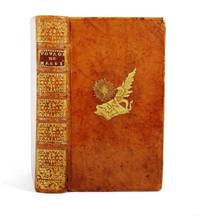
17343006519Cologne: Jaques Kainkus 1734. Slight wear to top and tail of spine otherwise fine. Duodecimo frontispiece title-page printed in black and red; contemporary sprinkled calf spine gilt in compartments. <p><p>A handsome copy of the third edition Rosenberg edition 'C' with frontispiece portrait of Massé and title-page vignette of Mercury. Friederich comments that the importance of mining and irrigation to the Australians makes it the only work 'to foreshadow what has actually come to pass in modern Australia'.</p> <p>Tyssot de Patot was a well-known Huguenot free-thinker whose writings were a continual source of scandal: Voltaire thought that he had 'carried the torch of discord into their homeland'. Certainly the antagonistically anti-religious stance of this novel created much ill-feeling. Atkinson comments that because 'open criticism of the Bible is so frequent' he will have to content himself with listing just a few of the more extreme examples.</p> <p>Massé shipwrecks on the Southern continent at '44 South latitude almost at the point where Kerguelen Island will be found to be on modern maps' Atkinson. Whilst most of the survivors of the wreck are content to maintain a large presence on the coast Massé and his friend Moret travel inland where they settle in an enormous and well-organised utopia 'a plentiful fruitful country a land of blessing and peace . where human blood is sacred and safe from the rage and tyranny of great men'. They become so enamoured of their Australian hosts that they abjure their faith and their European heritage and it is only when Moret is betrayed by his liaison with a treacherous queen that they reluctantly flee escaping rather fortuitously by a subterranean river which deposits them close by the original settlement. They remain besieged in the camp for another twelve years before they are finally picked up by a Portuguese ship.</p> <p>Rosenberg argues for a date of around 1734 for this edition to coincide with the renewed interest in Tyssot's work at the time he cites 1733 English and 1737 German editions. His theory is that this renewal of interest 'arose because it was confused with Mandeville's Fable of the Bees which by 1730 had achieved considerable notoriety'.</p> </p> . Provenance: Frédéric Lachèvre 1855-1943 writer and bibliographer with his romantic bookplate and armorial gilt stamp on front board. Oddly enough the National Library of Australia has Lachèvre's copy of a later edition of this work Special Colelctions SR 913. Jaques Kainkus unknown
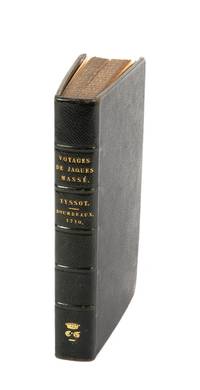
17173211648Bordeaux" actually Rouen 1717. A fine copy. Duodecimo woodcut device on title; 19th-century grained morocco gilt gauffred edges. <p><p>First edition Rosenberg edition 'A' of this important imaginary voyage to Australia: a "landmark" in the development of the French voyage novel Atkinson. Friederich comments that the importance of mining and irrigation to the Australians makes it the only work "to foreshadow what has actually come to pass in modern Australia".</p> <p>This is an attractive copy of this precursor to Defoe set on the Australian continent among people obsessed with mining and the problems of irrigation: "the detailed account of the adventurer's camp in the Austral continent the building of a raft and the descriptions of plants and trees may be compared favourably to similar passages in Robinson Crusoe." Atkinson.</p> <p>The author Tyssot de Patot was a remarkable figure an English-born Huguenot and self-taught philosopher with a background in mathematics who at the impressive age of 72 suddenly scandalized his Dutch community and was run out of town as a dangerous heretic. He wrote two wonderfully inventive imaginary voyages both well ahead of their time: one was an account of a journey deep underground into a hollow earth while the present work tells the story of a veteran sailor called Jacques Massé who shipwrecks in the far southern reaches of the Indian Ocean not far from what is now Kerguelen Island. Delighted with the new world he discovers Massé denounces his European heritage only to be betrayed and have to flee to the coast where he is besieged for 12 years before being finally rescued by a Portuguese ship. </p> <p>The work was a modest bestseller of the era and the question of editions has been thoroughly investigated by Aubrey Rosenberg no small task given that all four major editions are dated 1710 on the title-page. Rosenberg argues that this edition 'A' in his list with an armillary sphere device on the title with its base pointing to the left was probably published between 1714 and 1717 and is the true first edition of the work. As Rosenberg points out this series of editions dispels the notion that interest in Tyssot quickly died out: in fact the staggered publications argue a sustained interest in the work throughout the eighteenth century.</p> <p>Tyssot de Patot's writings were a continual source of scandal: Voltaire thought that he had "carried the torch of discord into their homeland". Certainly the antagonistically anti-religious stance of this novel created much ill-feeling. Atkinson comments that because "open criticism of the Bible is so frequent" he will have to content himself with listing just a few of the more extreme examples. Nonetheless Atkinson's positive summary gives a good sense of the importance of the work: "a close following of accounts of real travellers such as Dellon Tavernier Mocquet and Lahontan. There is nothing fantastic unbelievable or overdrawn in the descriptions of the Austral continent.". </p> <p>---</p> <p>The story has Massé shipwrecking on the Southern continent at "44 South latitude almost at the point where Kerguelen Island will be found to be on modern maps" Atkinson. Whilst most of the survivors of the wreck are content to maintain a large presence on the coast Massé and his friend Moret travel inland where they settle in an enormous and well-organised utopia "a plentiful fruitful country a land of blessing and peace . where human blood is sacred and safe from the rage and tyranny of great men". They become so enamoured of their Australian hosts that they abjure their faith and their European heritage and it is only when Moret is betrayed by his liaison with a treacherous queen that they reluctantly flee escaping rather fortuitously by a subterranean river which deposits them close by the original settlement. They remain besieged in the camp for another twelve years before they are finally picked up by a Portuguese ship.</p> </p> . Provenance: This copy from the British Museum with the stamp on verso of title and the 1831 duplicate release stamp; also the crowned cipher "C.G." on spine. unknown
1710123204Bourdeaux i.e. The Hague: Jaques L'Aveugle 1710 but around 1714. The true first edition First edition of this early utopian novel "the best-known of all the radical philosophical novels of the Early Enlightenment" which "surpassed practically every other work of philosophical fiction of the age for notoriety" Israel pp. liii and lvi. The novel details a Frenchman shipwrecked off South Africa - the co-ordinates are given as 60°E/44°S roughly around the Kerguelen Islands - where he finds a terrestrial paradise. Learning the language of the natives the protagonist seeks to explain Christianity to them who greet its central tenets as absurd and its God as unjust. The hero continues his travels and there hears a parable on Christianity that shocked the author's contemporaries - an absolute monarch who owns bees damns them for sucking nectar which had been prohibited merely to test his authority send his son in bee form to redeem them whereupon the different worshippers of the bee messiah kill each other whilst bee priests live indolent lives on pious bees' labour. Rapidly banned in Holland and France it nonetheless went through further Dutch editions a French edition three English editions and two German editions by 1760. Tyssot publicly denied writing the work at the time due to the controversy and some scholars still question his authorship but he himself claimed to have written it in a letter to his son in 1720 and modern scholarly opinion generally supports the attribution ibid p. liv. The book was actually published around 1714 but was pre-dated 1710 possibly to coincide with the Millenarianism of that year or to feign priority for the idea of a "fable of the bees" as Mandeville had published his own parable in 1714. The book poses bibliographic difficulties with four editions purporting to be published in 1710 three in the same place by the same publisher. Rosenberg has established that the present edition best distinguished by a woodcut on the title page of a celestial globe with a knob deviating to the left is the true first edition. Duodecimo 158 x 92 mm. Contemporary speckled calf red morocco label. Ownership label neat ink note of author and early catalogue description to front pastedown. Small chip at base of spine front joint cracked but firm some light browning front free endpaper and frontispiece expertly reinserted. A very good copy. Atkinson p. 70; Howgego Encyclopaedia of Exploration V T25. Jonathan Israel Radical Enlightenment 2002; Aubrey Rosenberg Tyssot de Patot and His Work 1655-1738 2013 pp. 84ff. unknown
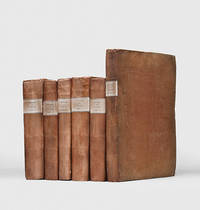
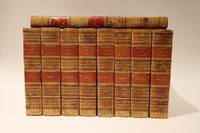
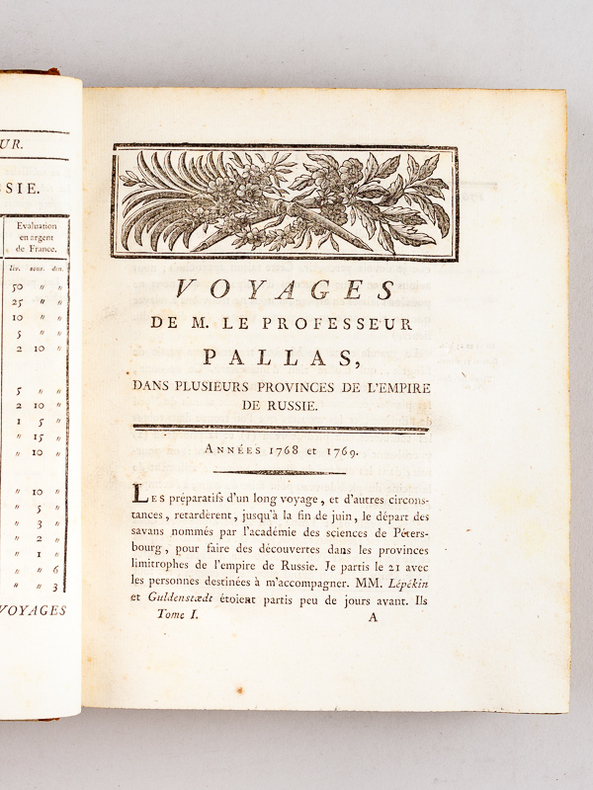
1789168579Paris: Maradan 1789-93. The celebrated French translation in the original boards First edition in French. First published in German this is the account of Pallas's expedition across the central Russian provinces from 1768 to 1774. He reported on the passage of Venus brought back numerous animal and plant specimens and made anthropological observations of local peoples. Simon Peter Pallas 1741-1811 was a German zoologist and botanist and a leading figure in the Russian scientific enlightenment. He was educated at Halle Göttingen and at Leiden where he submitted his doctorate in 1760. After a trip to England to study natural history and geology Pallas settled at The Hague where he published the acclaimed Elenchus zoophytorum and Miscellanea zoologica. He soon attracted the attention of Catherine the Great who invited him to St Petersburg where he became a professor of natural history at the Imperial Academy of Sciences. In 1768 at the specific request of the tsarina he was placed in charge of an expedition of five naturalists and seven astronomers into Russia and Siberia. Over the next six years the party traversed the empire from the plains of European Russia to the borders of Mongolia. "Pallas arrived back in St Petersburg in July 1774 with a vast amount of data and many fossil specimens but broken in health. His hair was whitened with fatigue and nearly all of his companions had died. His journals had been regularly despatched back to St Petersburg and were awaiting him on his arrival" Howgego. His chief geological contribution was the recognition of the temporal sequence of rocks from the centre to the flanks of a range. He also found a wide distribution of mammoth and rhinoceros fossils in the Siberian ice. This work was originally published in German in the period 1771-76. This French edition includes additional material covering the findings of the natural historians Samuel Gottlieb Gmelin Ivan Ivanovich Lepekhin and Johann Gottlieb Georgi. Volume I is the second issue with the Maradan imprint and dated 1789. 6 vols comprising: 5 text vols quarto 274 x 214 mm; folio with maps and plates 354 x 265 mm. With 97 engraved plates 26 folding 10 engraved maps 3 folding 2 double-page large folding general area map as called for loosely inserted. Original dark pink paper covered boards neatly rebacked to style with typographical labels edges uncut. Boards a little rubbed and sunned with minor neat repairs soiled and softened at the corners lightly browned throughout also some occasional marginal damp staining minor loss to front free endpaper in Vol. IV preliminary leaves split at head in Vol. V corners of front board of atlas heavily bumped. A very good wide-margined copy. Atabey 900; Cohen-De Ricci p. 781; Cross D11 for first English edition; Howgego I P10; Nissen ZBI 3076. hardcover
179454245Paris, Maradan, L'An II (1794). 8vo. Bound in 8 uniform contemp. full mottled calf. Richly gilt spines. Tome-and titlelabels with gilt lettering on spines. A few spine-ends with light wear. Stamps on half-titles. Without Atlas-volume.
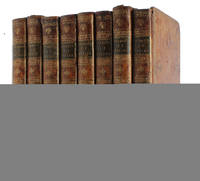
1794LD13011Paris: Maradan c. 1794 1802. Hardcover. Very Good. Eight volumes of text plus an atlas. Contemporary tree calf gilt-stamped lettering in red and green leather spine labels ornately gilt-stamped spine compartments; 8 text volumes 8vo; pp. xl 422; 4 half-title p. title-p. 490; 4 492; 4 499; 448; 455; 448; 4 viii 463. Text volumes c. 1794. Some light scuffing along spines and edges of boards; occasional very light spotting; but text volumes are nice and bright indeed! /// Old boards with antiphonal leaf folded over as a cover; atlas volume folio 370x270mm; contains large folding map and 108 plates including large folding map uncut. Atlas volume c. 1802. Boards worn and front hinge split; stain across half-title p.; atlas detached laid-in; extra title-page quire laid-in; uncut edges just the tiniest bit chipped and toned but plates are overall bright and clean. <br/><br/>Over 6 years Pallas visited the Caspian the Altai Mountains Tomsk the Yenisei Tobolsk Lake Baikal Kolyvan and the frontiers of China. The results of his explorations and scientific investigations were of the greatest significance for botany zoology geology geography and ethnology. The narrative of Pallas's travels was first published in German at St. Petersburg in 1771-76 but the French edition incorporates the natural history results of the expedition. Maradan hardcover books
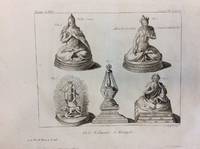
1794136202Paris : Maradan An II de la République 1794. In-8 p. mm. 202x123 8 volumi di testo Atlante in-4 p. mm. 319x242 rilegati in piena pelle coeva alcune lievi mancanze decoraz. e titolo oro su due tasselli al dorso tagli marmorizzati i volumi di testo e tagli dorati l'Atlante dentelles dorate ai risguardi pp. XL422; 4490; 4492; 4499; 448; 455; 448; 4VIII463. Il volume 8° - Appendix - contiene les descriptions des Animaux et des Végétaux observés dans les voyages du Professeur Pallas et cités ou mentionnés dans les volumes précédens; Avec des notes et observations par le C. Lamarck Professeur de Zoologie au Muséum national d'Histoire naturelle. L'Atlante raccoglie 107 su 108 belle tavole incise in rame di cui: 1 grande carta divisa in due fogli più volte ripieg. de l'Empire de Russie d'après la nouvelle division de cet Empire en quarante-deux Gouvernemens // 10 carte geografiche di cui 6 più volte ripieg. // 1 veduta de la Residence d'Ablaikit ripieg. // 11 tavole di costumi e idoli // 8 tavole di cui 1 ripieg. di antichi monumenti geroglifici etc. // 9 tavole di animali storia naturale etc. // 67 su 68 tavole di botanica di cui 22 ripieg. "Manca la tav. 74". Seconda edizione della traduzione francese di questo resoconto di viaggi condotti per tutto l'Impero Russo il primo nel 1769-1774 il secondo nel 1793-1794 da Simon Peter Pallas professore dell'Accademia di Scienze di San Pietroburgo e amico della zarina Caterina II. Cfr. BrunetIV325 - GraesseV109.Peter Simon Pallas 1741-1811 naturalista tedesco. Lavorò per qualche anno nei musei di Olanda e Inghilterra poi fu chiamato dalla Russia a prender parte ad una spedizione. Fu uno dei più eminenti esploratori del sec. XVIII e le collezioni zoologiche geologiche botaniche archeologiche ed etnologiche che raccolse durante le sue spedizioni furono di notevolissima importanza. la sua opera fornisce una massa enorme di osservazioni isolate sui modi di sussistenza delle popolazioni sulle miniere sulla caccia e la pesca sulle formazioni steppose primo tentativo di suddivisione della Russia in provincie botaniche sulle terre nere da lui così battezzate sul clima specialmente del basso Volga sulla formazione delle montagne osservazioni sui graniti in rapporto alle eruzioni sul terreno gelato della Siberia. A lui si deve pure una serie di ricerche sull'antica unione del Mar Nero Caspio e Aral di cui è data per la prima volta una spiegazione plausibile cfr. Enciclopedia TreccaniXXVI p. 122. Solo qualche rara e lieviss. fioritura altrimenti esemplare ben conservato. Maradan, unknown
179454245Paris Maradan L'An II 1794. 8vo. Bound in 8 uniform contemp. full mottled calf. Richly gilt spines. Tome-and titlelabels with gilt lettering on spines. A few spine-ends with light wear. Stamps on half-titles. Without Atlas-volume. <br/><br/><em>Brunet IV325. </em> unknown
1794000213<p><strong>Second edition of the French translation by M. Gauthier de La Peyronie in 8 text vols. and 1 atlas. </strong></p><p><strong>Description:</strong> Contemporary marbled calf sides with gilt frames spines gilt in compartments with red morocco labels lettered in gilt. 8 text vols. octavo: 20 × 13 cm; 1 atlas folio: 335 × 25 cm. pp. vol.1: xl 422; vol.2: 2ll. viii 490; vol.3: 2ll. 492; vol.4: 2ll. 499; vol.5: 443; vol.6: 455; vol.7: 448; vol.8: 2ll. 463; atlas: 108 pl. Atlas with 108 plates including four large folding plates including the large general map of the Russian Empire and 104 plates several folding on ethnology archaeology flora and fauna complete.</p><p><strong>Ref.:</strong> Brunet: IV 325</p><p><strong>Condition:</strong> The boards of the atlas are in very good condition with only minor signs of wear such as light rubbing and a few small chips. The bindings of the text volumes are generally in good condition although they do show some chipping scratches and washed-out areas on the covers. The gilt frames are partly gone and the headcaps of volumes 1 2 and 4 are missing. The contents are generally clean although there are occasional minor blemishes. The atlas is internally in very good condition despite some occasional age toning. The large general map of the Russian Empire exhibits minor wear at the folds.</p><p><strong>Notes:</strong> Peter Simon Pallas 1741–1811 a German naturalist and explorer was commissioned by the Academy of Sciences in St Petersburg to lead one of the most significant scientific expeditions ever sent initiated by Catherine II to explore the vast Russian Empire. Many of its regions remain poorly understood. This work presents a summary of Pallas's discoveries in southern Russia. His travels throughout the immense Russian Empire led to advances in science in many fields including palaeontology geography geology ethnography and linguistics.</p><p><em>Please note: The shipping costs may differ from the indicated prices due to weight and/or dimensions. Please inquire with us about the actual shipping costs before ordering. </em></p> Maradan hardcover
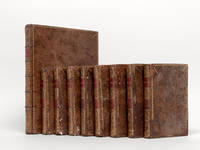
179448720Paris: Maradan 1794. Hardcover. Good. Peter Simon Pallas 1741-1811 was a German naturalist zoologist and botanist known best for his explorations and scientific work in the Russian Empire. He made significant contributions to natural history particularly in taxonomy geology and geography. This is the second French edition of his expedition across vast parts of the Russian Empire including the Ural Mountains Siberia and parts of Central Asia between 1768 and 1774. This edition expanded into eight volumes plus one atlas volume of plates and maps. 8vo. Pp. xl 422; 490; 492; 499; 443; 455; 448; viii 463 with 108 engraved plates and maps in the atlas volume many folding. Bound in full nineteenth century calf each spine with two red leather labels with gilt-stamped titles. Spines sunned and heavily rubbed joints rubbed and the leather dry with various scars and scratches to the boards and some volumes lightly chipped at the spine head. The spine of the atlas volume has been glued back down all boards firmly attached. Internally the books are bright and crisp and the atlas volume is the same with very crisp and bright plates and maps. Two bookplates one unidentified the second is a Bella Coola etched bookplate by Stanley Harrod dated 1926 of T.F. McIlwraith. McIlwraith was a Canadian anthropologist who spent eleven months with the Nuxalk First Nation at Bella Coola between 1922 and 1924. He was the author of The Bella Coola Indians published in 1948 see Wood p. 511 for more details. From his library. Wood p. 511. Maradan hardcover
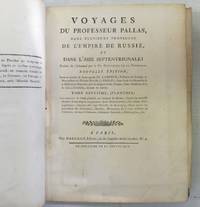
17945870<p>Voyages du professeur Pallas dans plusieurs provinces de l'empire de Russie et dans l'Asie septentrionale; Traduits de l'allemand par le C. Gauthier de la Peyronie Pallas Peter Simon. Tome Neuvieme Planches. Published by Maradan Paris 1794. Nouvelle Édition. 4to - over 9¾" - 12" tall; aka Quarto. This atlas alone constitutes the ninth volume of Pallas's travels comprising four large folding plates including the large general map of the Russian Empire and 104 plates several of which are folding containing flora 67 plates fauna archaeology and a few double-page maps totaling 108 plates. Contents have light toning and a few small areas of damp staining; they are otherwise in generally fine condition. Binding is in poor condition with back strip missing front hinges weak with boards held loosely with tape; marbled endpapers are partially detached.</p><p>Peter Simon Pallas 1741-1811 was a German naturalist and explorer was offered the opportunity by the St. Petersburg Academy of Sciences to lead one of the major scientific expeditions sent at the initiative of Catherine II to explore the Russian Empire many parts of which were still poorly understood. This atlas summarizes Pallas's discoveries in southern Russia. All of his travels throughout the vast Russian Empire advanced science in many fields paleontology geography geology ethnography and linguistics.</p> Maradan hardcover
1794S508Paris: Maradan 1794. Uniform contemporary mottled calf richly gold-tooled spines. 8vo text and large 4to atlas. With 8 title pages and 8 half-titles 108 engraved plates and maps of which 22 folding and 2 double-page. 8 text-volumes and 1 atlas-volume. Second French edition of Pallas's 1768-1774 journeys through Russia. Peter Simon Pallas Berlin 1741-1811 studied medicine and natural history in Germany Holland and England. In 1767 he went to St Petersburg and began to conduct research in Russia. He was an eminent botanist zoologist and geographer and "sought to advance from merely describing nature to finding the causal interrelationships and hidden regularities of natural phenomena." Darwin acknowledged his work to have been influential in the development of evolutionary ideas DSB .In the years 1768 to 1774 Pallas joined so-called "academic expeditions" which traversed the Russian Empire from west to east. He studied flora and fauna landscape geological condition local population and culture. His findings were published in Reise durch verschiedenen Provinzen des russischen Reichs 3 volumes St Petersburg 1771-1776. The French translation of the work appeared in five volumes and one atlas-volume 1788-1793. The present nouvelle édition revised by Lamarck and Langlès comprises eight text-volumes and one atlas volume with maps and plates. The large map of Russia 55 x 117 cm is accompanied by ten others of parts of Russia three folding and two double-page. The other illustrations show plants ca. 58 costumes animals buildings inscriptions etc. A fine set; large bookplates of "Charles Baron de Selby" with smaller bookplates with the text "Caroli de Hoffmann Bruxellis" pasted onto them. Fine setof a great work on Russian natural history.l Cat. Russica 36; DSB X pp. 283-285; Stafleu & Cowan 7224; Wood p. 511. Maradan, unknown
1794LD13011Paris: Maradan c. 1794 1802. Hardcover. Very Good. Eight volumes of text plus an atlas. Contemporary tree calf gilt-stamped lettering in red and green leather spine labels ornately gilt-stamped spine compartments; 8 text volumes 8vo; pp. xl 422; 4 half-title p. title-p. 490; 4 492; 4 499; 448; 455; 448; 4 viii 463. Text volumes c. 1794. Some light scuffing along spines and edges of boards; occasional very light spotting; but text volumes are nice and bright indeed! /// Old boards with antiphonal leaf folded over as a cover; atlas volume folio 370x270mm; contains large folding map and 108 plates including large folding map uncut. Atlas volume c. 1802. Boards worn and front hinge split; stain across half-title p.; atlas detached laid-in; extra title-page quire laid-in; uncut edges just the tiniest bit chipped and toned but plates are overall bright and clean. <br/><br/>Over 6 years Pallas visited the Caspian the Altai Mountains Tomsk the Yenisei Tobolsk Lake Baikal Kolyvan and the frontiers of China. The results of his explorations and scientific investigations were of the greatest significance for botany zoology geology geography and ethnology. The narrative of Pallas's travels was first published in German at St. Petersburg in 1771-76 but the French edition incorporates the natural history results of the expedition. Maradan hardcover
1788585455 vol. in-4 et un atlas in-folio, reliure de l'époque demi-basane marron, Chez Lagrange, Libraire [ puis : ] Chez Maradan, 1788-1793, Tome I : 2 ff., xxxij-773 pp. et 1 f. (errata) ; Tome II : 2 ff., 550 pp. et 1 f. ; Tome III : 2 ff., 491 pp. avec ; Tome IV : 2 ff., 722 pp. et 1 f. (errata) ; Tome V : 2 ff., 559 pp. ; VI (Atlas format en marges 30,8 x 23,8 cm) : 121 planches en 105 feuillets, ainsi décomposées : pour le tome I, 27 planches sur 29 (manquent les planches 1 et 3) dont carte dépliante de la Contrée qui s'étend le long de la Soka, carte dépliante des Landes situées entre le Volga et l'Oural et carte dépliante du Cours du Jaïk au-dessous de Gourief ; pour le tome II, 16 planches sur 17 (manque planche 1, la planche 3 est en double) dont carte dépliante minéralogique des Monts Ouralsks et carte dépliante de la Contrée qui s'étend le long de la Soka ; pour le tome III, 22 planches sur 22 dont carte dépliante des Monts Altaisk ; pour le tome IV, 35 planches (ou 36, selon la manière dont l'on peut compter, car présence des planches 8-9 et 9-10) dont carte dépliante d'une partie des gouvernements de Tobolsk et d'Irkoutsk ; pour le tome V, 21 planches sur 21 dont carte dépliante des Colonies allemandes sur le Volga dans le territoire de Saratof