386 résultats
178156555BBWien, bei Rudolph Grässer 1781. 8°. 12 n.n. Bl., 206 S. Mit einer mehrfach gefalteten gestochenen Karte. Pappband der Zeit mit schwarzgeprägtem Rückenschild.
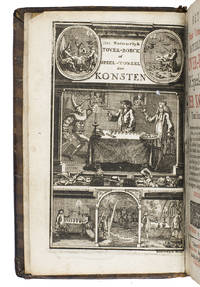
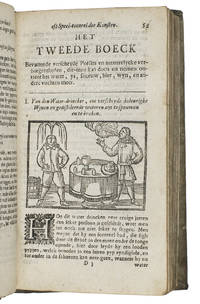
178187OFJJ3LS7HEAntwerpen 1781. 8vo. Petrus Josephus Rymers Contemporary half calf title in gold on spine. With an engraved frontispiece by the artist-engraver Jacob Harrewijn and many full-page woodcut illustrations in text of which 8 are full-page. 10 558 2 pp. Easily the most popular Dutch conjuring and recreation book of the 18th century. On long winter evenings families and parties amused themselves with the help of the book trying the various tricks and games. It contains about 2000 conjuring tricks card games exciting experiments with all sorts of materials word and number games riddles etc. It also includes advice on drawing and colouring on cosmetics means of curing a pain of making perfumed soaps removing stains etc. Reprinted for over a century the book continued amusing generations of children as well as adults in the home and at parties. Landwehr ascribes the book to Willem Goeree who first published it at Middelburg in 1679. Goeree probably choose the pseudonym Witgeest White spirit as a guarantee that the book contained only white magic not black magic. Its advice on drawing and colouring was taken from Goeree's Inleydinge tot de algemeene teyken-konst.Binding slightly worn with a small tear in the frontispiece and the lower margin of the title-page a little short-trimmed but otherwise in good condition.l Landwehr De Nederlander uit en thuis p. 148-50; Volkskunde 68 1967 p. 67f.; Waller 1870-7 esp. 1874 with the same text and "Den X. druk" on the title se above; Muller Pop. prozaschr. 555 "Men kan er menigen winter-avond de jeugd meê bezig houden"; De Vries Pop. prozaschr. 528-29 all other editions. unknown
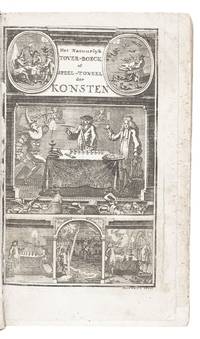
171523270Amsterdam: Jan ten Hoorn title-page: sold in Brussels by Emanuel de Grieck 1715. Contemporary calf with ornamental flowers on spine. 8vo. With an engraved frontispiece by the artist-engraver Jacob Harrewijn title-page in red and black many full-page woodcut plates and numerous woodcut illustrations in text. Easily the most popular Dutch conjuring and recreation book of the 18th century. On long winter evenings families and parties amused themselves with the help of the book trying the various tricks and games. It contains about 2000 conjuring tricks card games exciting experiments with all sorts of materials word and number games riddles etc. It also includes advice on drawing and colouring on cosmetics means of curing a pain of making perfumed soaps removing stains etc. Reprinted for over a century the book continued amusing generations of children as well as adults in the home and at parties. Landwehr ascribes the book to Willem Goeree who first published it at Middelburg in 1679. Goeree probably choose the pseudonym Witgeest White spirit as a guarantee that the book contained only white magic not black magic. Its advice on drawing and colouring was taken from Goeree's Inleydinge tot de algemeene teyken-konst.Lacks title label on spine otherwise a good copy.l Muller 555; De Vries 528-529; see also: J. Landwehr De Nederlander uit en thuis p. 148 ff. Jan ten Hoorn (title-page: sold in Brussels by Emanuel de Grieck), unknown
1715ABC_45273Amsterdam 1715. 8vo. Jan ten Hoorn sold by Emanuel de Grieck Brussels Contemporary vellum blind-tooled with a centrepiece on both sides. Title-page in red and black with an engraved frontispiece containing 5 compartments showing tricks by Harrewijn after the frontispieces in the original editions by Jan van Hoorn in Amsterdam 57 charming woodcuts illustrating the various tricks in the text 7 full-page in the last section on fireworks. 10 518 40 pp. The 1715 edition nominally the 10th but possibly the 11th of a very popular Dutch conjuring book that had been published for the first time by Jan ten Hoorn in Amsterdam in 1679 and frequently augmented in many editions far into the 18th century. The present edition mentions 2000 tricks tover-konsten instead of the 500 in the 3rd edition. The book was also translated into German.The Tover-boek contains sections on magic tricks card-games dice word and number games riddles and recipes and instructions for painting and etching as well as home remedies and recipes for preserving fruits and vegetables toiletries fireworks etc. collected from various sources. The section on drawing and colouring for instance is taken from Willem Goerees Inleydinge tot de algemeene teyken-kons published in 1678.With the owner's inscription of J. Ravelli on the last endpaper. Binding slightly soiled as are the first leaves otherwise in very good condition.l John Landwehr Simon Witgeests Natuurlyk tover-boek et alia in: Volkskunde 68 1967 pp. 67-82; Hoogendoorn Witg. 11 p. 993. hardcover
1739D18457Amsterdam: Gysbert de Groot Keur 1739. Hardcover. Good. 8vo 155 x 90 mm. Engraved extra title page woodcut illustrations in text. Contemporary calf. Rubbed corners bumped spine slightly loose browning. Third edition. <br /> <br/><br/> Gysbert de Groot Keur hardcover
175511692Amsterdam Pieter Meyer 1755. titelprent 36 207 p. Origineel half Leer groot 4° De rug en de voor- en achterplatten zijn fraai met goud bewerkt. Ex-libris Jan Goedkoop en Collectie Buijnsters Smets Zeer fraai geÃllustreerd exemplaar waarvan de titelprent de titelpagina alle zeven sluitstukken aan het einde van de hoofdstukken en de uitvouwbare kaart van de Amstelstroom prachtig origineel handgekleurd zijn. De titelprent is daarnaast ook nog fraai met goud gehoogd. A fine illustrated copy of this epic poem an ode to the river “De Amstel” to which the city of Amsterdam owes its name. The title print the title page all seven tailpieces at the end of the chapters and the fold-out map of the Amstelstroom are beautifully contemporary hand-colored. The title print and title page are heightened with gold as well.  Amsterdam, Pieter Meyer unknown
17745279Amsterdam: Pieter Meijer; Helders & Mars 1774; 1786. First edition. Acceptable. Quarto 22 cm 45493 pages and 11 plates six portraits and five dramatic scenes engraved by Reiner Vineles and J. Houbraken. Engraved vignette on title page. "Artemines" ; 85 1 and one engraved dramatic scene; engraved vignette on title page. Part I only a second part was published in 1786 which included "Artemines". Bound in speckled paper-covered boards with leather backstrip. Spine vertically cracked but holding; joints the same. Basically clean sound and entire. <br /><br />Collection of romantic tragedies by the husband-and-wife team of Van Winter and Van Merken. In fact all but one of the titles in this collection are by the wife Van Merken only "Monzongo" an anti-slavery drama is by Van Winter. Van Winter was the son of a trader in indigo and dyes and witnessed first-hand the kinds of abuses which led to his anti-slavery play Monzongo. Van Merken was an established poet and playwright when she married Van Winter the year his first wife died 1768. Her "Artemines" subtitled in French "La vertu pour guide" was first published in 1774 but was republished in 1786 to coincide with the second volume not present of the couple's collected works. Pieter Meijer; Helders & Mars hardcover
170338593Nurnberg: Wolfgang Maurice Endter 1703. Engraved title page 46 engraved equestrian plates numbered 1-34 on 42 leaves two folding two-page table; one wood engraving in text. 22 223 pp. 1 vols. Small folio. Nineteenth century maroon morocco upper board titled in gilt. Rebacked in later black morocco. Lower hinge weak closely trimmed at table loss of two lines of text and also at pp. 123-126 with loss of numbering. Plates 1&2 backed some loss to plate 2. Lacking plate 3 view of stable complex and plate 7; with 4 additional plates on 3 leaves. Engraved title page 46 engraved equestrian plates numbered 1-34 on 42 leaves two folding two-page table; one wood engraving in text. 22 223 pp. 1 vols. Small folio. Winter's noted work on the breeding of horses originally published in 1672 with the bold equestrian engravings. Mennessier de la Lance II p. 649; Nissen ZBI 4426 Wolfgang Maurice Endter unknown books
17745279Amsterdam: Pieter Meijer; Helders & Mars 1774; 1786. First edition. Acceptable/Collection of romantic tragedies by the husband-and-wife team of Van Winter and Van Merken. In fact all but one of the titles in this collection are by the wife Van Merken only "Monzongo" an anti-slavery drama is by Van Winter. Van Winter was the son of a trader in indigo and dyes and witnessed first-hand the kinds of abuses which led to his anti-slavery play Monzongo. Van Merken was an established poet and playwright when she married Van Winter the year his first wife died 1768. Her "Artemines" subtitled in French "La vertu pour guide" was first published in 1774 but was republished in 1786 to coincide with the second volume not present of the couple's collected works. Quarto 22 cm 45493 pages and 11 plates six portraits and five dramatic scenes engraved by Reiner Vineles and J. Houbraken. Engraved vignette on title page. "Artemines" ; 85 1 and one engraved dramatic scene; engraved vignette on title page. Part I only a second part was published in 1786 which included "Artemines". Bound in speckled paper-covered boards with leather backstrip. Spine vertically cracked but holding; joints the same. Basically clean sound and entire. Pieter Meijer; Helders & Mars hardcover books
17562053Frankfurt and Leipzig 1756. 8vo 170 x 100 mm. 12 292 pp. Typographic title ornament woodcut and typographic head-pieces and tail-piece. Some light spotting and discoloration small light dampstain to some upper blank corners but a very good copy. Old signature on title. Contemporary half parchment sides with speckled paper red edges.Only Edition. Winter's stark beauties are precisely described by a writer of deep learning and broad interests. Citing literature and the classics including Pindar Hesiod Aristophanes and Homer in Greek as well as contemporary sources from scientific journals to travel accounts the author examines the seasons the meteorological manifestations of winter its effect on humans and its aesthetic and bodily pleasures. He discusses "absolute cold" the causes of wind snow's qualities and colors superstitious beliefs in its healing powers frost and hoarfrost avalanches glaciers ice and its different qualities chemical experiments for manufacturing artificial ice and physiological and physical effects of winter and cold on animals for example whose fur changes color; on humans when they freeze to death or nearly so; or on windowpanes which "sweat" with condensed moisture. The seventh and final chapter on the "various pleasures of winter" contains a well-informed digression into music and opera with an appraisal of celebrated contemporary composers instrumentalists and singers including Händel Porpora G. Giacomelli Predieri Farinelli Caffarelli Francesca Cuzzoni the violinist Guignon the viola da gambist Desmarets and the flutist Blavet. While he praises the opera Härter quotes from some of the many contemporary diatribes against the genre by Gottsched Pluche and others who deplored its irrational and amoral pleasures. He concludes that neither adoration nor scorn of the opera are reasonable but that it can be a legitimate wintry pleasure. In the final pages he considers the spiritual benefits of winter so conducive to introspection and in his concluding remarks recommends it as the best season for experiments in electricity.The work is dedicated to Otto Christian von Lohenschiold 1720-1761 Rector of the Academy University of Tübingen. In a humorous preface the author's friend Johann Kies Professor of physics and mathematics at Tübingen and author of several physics treatises including a dissertation on the rainbow concedes that unwilling to be reminded of a season that he loathes he could not bring himself to read the book but should his friend write a treatise on one of the other seasons he promises to read it! No copies in American libraries; outside Germany OCLC locates a copy in Denmark. Holzmann-Bohatta VI 7444 apparently erroneously citing a Tübingen edition with the same date. unknown books
178833060Hartford: Hudson and Goodwin 1788. 32pp. Disbound and lacking the half title. Good. <br /> <br /> Reverend Trumbull an orderly and considerate man "nominated the preacher at his funeral and directed what neighbouring ministers should be desired to attend on that occasion; and who should insert in the public papers the account of his death: he also desired some of his particular friends and leading members of his church to take care that his funeral was conducted with propriety and christian decency. He also ordered the joiner to prepare him a decent but plain unornamented coffin." <br /> The Reverend's "nephew was Connecticut's Governor Jonathan Trumbull the only colonial governor to support the war for independence. Gov. Trumbull's son was the artist John Trumbull whose paintings of the Revolutionary War including the signing of the Declaration of Independence are on view in the Rotunda of the United States Capitol building." Trumbull also owned a few slaves. "Rev. John Trumbull" Waterbury's Slave Owners Fortune's Story Website of the Mattatuck Historical Society accessed February 4 2019. <br /> Evans 21574. Trumbull 1568. Hudson and Goodwin unknown
178833060Hartford: Hudson and Goodwin 1788. 32pp. Disbound and lacking the half title. Good. <br/><br/> Reverend Trumbull an orderly and considerate man "nominated the preacher at his funeral and directed what neighbouring ministers should be desired to attend on that occasion; and who should insert in the public papers the account of his death: he also desired some of his particular friends and leading members of his church to take care that his funeral was conducted with propriety and christian decency. He also ordered the joiner to prepare him a decent but plain unornamented coffin." <br/> The Reverend's "nephew was Connecticut's Governor Jonathan Trumbull the only colonial governor to support the war for independence. Gov. Trumbull's son was the artist John Trumbull whose paintings of the Revolutionary War including the signing of the Declaration of Independence are on view in the Rotunda of the United States Capitol building." Trumbull also owned a few slaves. "Rev. John Trumbull" Waterbury's Slave Owners Fortune's Story Website of the Mattatuck Historical Society accessed February 4 2019. <br/>Evans 21574. Trumbull 1568. Hudson and Goodwin unknown books
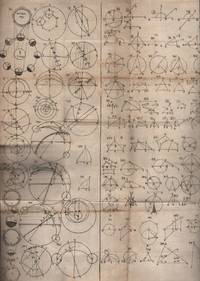
1786336Berlin: Bi-defus Ḥevrat ḥinukh neʻarim; Jüdischen Freyschule 1786. First edition. After leaf 10 numbering reverts to 1 and the text of Maimonides' Hilkhot Ḳidush Ha-Hodesh begins; Naṿeh Kodesh continues as a commentary to it. In contemporary half cloth. Binding rubbed and bumped light foxing throughout. Ink stain on title page. Overall a good copy. First edition. After leaf 10 numbering reverts to 1 and the text of Maimonides' Hilkhot Ḳidush Ha-Hodesh begins; Naṿeh Kodesh continues as a commentary to it. In contemporary half cloth. 4°; 2 1041 leaves and one folded engraved page of geometric diagrams. Waltsch’s work on geometry trigonometry and astronomy woth his commentary to Maimonides’ Sanctification of the Month. Bi-defus Ḥevrat ḥinukh neʻarim; Jüdischen Freyschule unknown
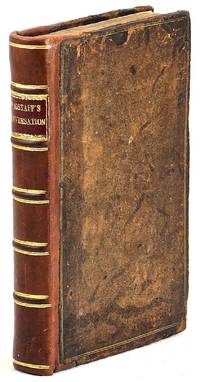
1738102179London: B. Motte and C. Bathurst. 1738. 1st ed. octavo full leather binding pp lxxxvi 215 i. Restored and rebound by Cottage Bindery of Bath original upper and lower boards with gilt rule new leather spine with raised bands and gilt gilt spine title label new endpapers light tanning to some pages otherwise very good condition. Written under a pseudonym by Jonathan Swift. A satirical commentary on the perceived banality of conversation among the upper classes presented in the form of a guide for those lacking in conversational skills. One of Swift's last works 1st Edition. Leather. B. Motte and C. Bathurst hardcover
17175284Amsterdam: Stefano Abbate 1717. Esemplare genuino e in buono stato di conservazione senza scritte strappi gore ecc; alcuni fascicoli un po’ bruniti piccola mancanza di pergamena sull’angolo inferiore del piatto posteriore un paio di forellini di tarlo sui piatti e canalini ma volume solido e segatura salda. Legatura coeva in piena pergamena rigida con nervi passanti alle cuffie e titoli manoscritti sul dorso tagli spruzzati blu 4to cm18x23.5 pp 8 288 16 frontespizio in nero e rosso. Oltre ai quattro trattati del giurista olandese Arnold Vinnen 1588-1657 il volume contiene due orazioni del figlio Simon: DE CONSTANTIA JURIS NATURAE 1648 e DE SAPIENTIA ROMANORUM 1651. Stefano Abbate unknown
1724c48cfSimon T'Serstevens Boekverkooper 1724. Hardcover. Good/No Jacket. Dutch. possibly a 2nd Edition. 257 pages and 9 "Bladt-Wysers" Index pages. 5 Raised bands on the spine accompanied by gold gilt which is very faded. Original early binding. Full leather which is rubbed. Age related markings and waviness. Ink signature from previous owner and small stamp on the front end page. Binding remains secure. Extremely scarce. JHK. Our orders are shipped using tracked courier delivery services. Simon T'Serstevens Boekverkooper hardcover
1727c918jJan Boom 1727. First Edition. Hardcover. Good/No Jacket. Dutch text. In original full vellum binding. The boards are shelf rubbed edge worn and a little warped but remain legible and whole. Internally there is much age-related tanning edge wear and foxing throughout along with a few stamp markings and previous owners' signatures and the front pastedown has loosened a little from the binding but the pages within remain neat legible and complete. Securely bound and in good condition indeed considering the age of the book! JK. Our orders are shipped using tracked courier delivery services. Jan Boom hardcover
1733WRCLIT56765London: Printed for John Watts 1733. 123186pp. 12mo. Contemporary calf sympathetically rebacked in matching calf with raised bands and gilt labels. Engraved frontis signed "G. Van der Guchte". Early stamped insignia on front pastedown modest tanning but a very good copy. First edition in English of a significant imaginary voyage of particular import for its relation to early conceptions of Australia. The first edition was published under a false Bordeaux 1710 imprint and three other editions appeared similarly dated. Recent authorities have sorted out the precedence with the first edition being identified with some confidence as actually Rouen 1714. The translator's dedication is signed Stephen Whatley. Tyssot de Patot's novel "is a carefully written well authenticated story of travel and adventure in Europe in Africa in Asia and in an unknown land far beyond the Cape of Good Hope. The realism of the setting is based upon a close following of accounts of real travelers such as Dellon Tavernier Mocquet and Lahontan. There is nothing fantastic unbelievable or overdrawn in the descriptions of the Austral continent. Tyssot seems to restrain himself consciously in order to write an apparently true story. Indirect criticism by the example of an imaginary and virtuous community is used here as in all the previous novels of the type. The journey to the unknown land is very carefully authenticated as is the return journey. Discussions of science and religion are fitted into the adventures much more artistically than in the case of the novels of Foigny and Vairasse.From the point of the history of ideas.it is a very interesting document."- Atkinson. It is also notable for a reference to the Wandering Jew as well as for a well-constructed bee fable. Howgego . INVENTED AND APOCRYPHAL NARRATIVES OF TRAVEL T25. Atkinson THE EXTRAORDINARY VOYAGE IN FRENCH LITERATURE FROM 1700 TO 1720 pp. 67-97. ESTC T68558. NEGLEY 1118. Gove THE IMAGINARY VOYAGE IN PROSE FICTION pp. 217-19. Printed for John Watts hardcover books
171439159A Bourdeaux ie. The Hague: James L'Aveugle 1714. First Edition. 12mo pp. viii 508. Bound in contemporary calf neatly rebacked in antique style little rubbed some minor foxing soiling a very good tight copy. Rosenberg "A" Gove 217-219; Cioranescu 62587; Barbier IV 1103; Atkinson 'The Extraordinary Voyage in French Literature' p. 70; Rosenberg pp. 84-5. The genuine first edition falsely dated. An important imaginary journey to Australia called a "landmark" by Atkinson. Based on a variety of real voyages the descriptions are believable and realistic. The author offers a detailed account of making a camp building a raft. While the book did not range much beyond the confines of the traditional Utopias of the times it did however include "living fossils" giant birds and strange flora that survived from prehistoric eras arguably making it one of the first modern Lost World novels. After being shipwrecked on the continent the narrator and a friend pressed on and developed a farm in "a plentiful fruitful country" until forced to flee by a treacherous woman. Tyssot de Patot 1655-1727 was a Huguenot who lived most of his life in Holland where he pursued a career as professor of Mathematics at the Athenaeum Illustre in Deventer the capital of the province of Overijssel. James L'Aveugle unknown books
174334396Frontispiece engraving by G. Van de Gucht and title-page in red and black A translation of 'Voyages et avantures de Jacques Masse' not by Pierre Bayle but by Simon Tyssot de Patot. This is an early fictional account of a voyage to an unknown land beyond Cape of Good Hope. The Journey to this unknown land Australia is very carefully authenticated and contains discussions of science and religion which are artistically inserted into the adventures. Atkinson hardcover
1710123204Bourdeaux i.e. The Hague: Jaques L'Aveugle 1710 but around 1714. The true first edition First edition of this early utopian novel "the best-known of all the radical philosophical novels of the Early Enlightenment" which "surpassed practically every other work of philosophical fiction of the age for notoriety" Israel pp. liii and lvi. The novel details a Frenchman shipwrecked off South Africa - the co-ordinates are given as 60°E/44°S roughly around the Kerguelen Islands - where he finds a terrestrial paradise. Learning the language of the natives the protagonist seeks to explain Christianity to them who greet its central tenets as absurd and its God as unjust. The hero continues his travels and there hears a parable on Christianity that shocked the author's contemporaries - an absolute monarch who owns bees damns them for sucking nectar which had been prohibited merely to test his authority send his son in bee form to redeem them whereupon the different worshippers of the bee messiah kill each other whilst bee priests live indolent lives on pious bees' labour. Rapidly banned in Holland and France it nonetheless went through further Dutch editions a French edition three English editions and two German editions by 1760. Tyssot publicly denied writing the work at the time due to the controversy and some scholars still question his authorship but he himself claimed to have written it in a letter to his son in 1720 and modern scholarly opinion generally supports the attribution ibid p. liv. The book was actually published around 1714 but was pre-dated 1710 possibly to coincide with the Millenarianism of that year or to feign priority for the idea of a "fable of the bees" as Mandeville had published his own parable in 1714. The book poses bibliographic difficulties with four editions purporting to be published in 1710 three in the same place by the same publisher. Rosenberg has established that the present edition best distinguished by a woodcut on the title page of a celestial globe with a knob deviating to the left is the true first edition. Duodecimo 158 x 92 mm. Contemporary speckled calf red morocco label. Ownership label neat ink note of author and early catalogue description to front pastedown. Small chip at base of spine front joint cracked but firm some light browning front free endpaper and frontispiece expertly reinserted. A very good copy. Atkinson p. 70; Howgego Encyclopaedia of Exploration V T25. Jonathan Israel Radical Enlightenment 2002; Aubrey Rosenberg Tyssot de Patot and His Work 1655-1738 2013 pp. 84ff. unknown
1720211361720 Amsterdam, Etienne Roger, 1720, 2 tomes en un volume in-12 de (14)-269 pp.- 1 feuillet blanc - 283 pp., pages de titre en rouge et noir, vignette de titre et frontispice répétés aux deux tomes, reliure de l'époque de plein veau brun granité, filet à froid en encadrement sur les plats avec armes dorées au centre, dos à nerfs orné de caissons de fleurons dorés, pièce de titre de maroquin rouge, très bel exemplaire.
171014612Bourdeaux Chez Jacques L'Aveugle 1710
1710129621710 Bourdeaux (La Haye), chez Jacques l'Aveugle, 1710, sphère gravée sur la page de titre, in 12 de (8)-508 pp., rel. d'ép. plein veau brun moucheté, dos à nerfs orné de fers dorés, réparations aux coiffes, sinon bel ex.
176456222Berlin und Leipzig Christian Friederich Günther 1764. Small 4to. Contemp. blue boards modestly clothbacked later. Wear along edges. Corners bumped. Engraved title-page in rococcostyle and all leaves text and plates engraved. 161266 pp. 62 full-page engravings with engraved explanatory text on verso. Title-page a bit soiled. On inside upper cover "Denne Bog er taget af en dansk soldat fra en fjendtlig Officier i Slaget ved Fredericia den 6te Juli 1849" this book was taken from a hostile officer German in the battle at Fridericia the 6th of July 1849. A few plates with minor brownspots. <br/><br/><em>Klaus Jordan 3837. </em> hardcover