2 165 résultats
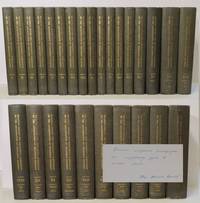
196416972Washington D. C.: Government Printing Office 1964. First Edition; First Printing. Hardcover. Complete in 27 Volumes Very Good bound in full blue cloth with gilt titles and gilt emblem on front panel of each volume. Minor wear to exterior of a few volumes including some rubbing and a few scuffs. Fading to color at spine. Ownership stamp to page edges of all volumes "Declan P. Ford." All hinges strong and intact with the exception of final "Report" volume webbing exposed at front and rear gutter. Text is clean and unmarked in all volumes set illustrated throughout with photographs of evidence diagrams and facsimile documents. All volumes Large 8vo 9 3/8"h x 6 1/4"w. <br /> <br /> Assuredly unique a superb personalized set owned by important Hearing testifier Declan P. Ford friend of the Oswalds. This set is signed by Lee Harvey Oswald's wife Marina/Marnina Oswald 26 times and inscribed to the Fords in 10 of the volumes. The extensive testimony of Declan and his wife Katherine were published in Volume Two of this set. Inscriptions are personal and tender appearing to be at times to Declan at times to Katherine in a mix Russian proverbs and comments relating to the Report and persons involved. Inscriptions and signatures are dated about a year removed from the incident itself still well within the immediate historical fall-out from the assassination. Kennedy-related signed items by Marina are uncommon but a set of this significance and uniqueness is unparalleled.<br /> <br /> Set accompanied by a Certificate of Authenticity.<br /> <br /> A few samples:<br /> <br /> Volume 1: There are good people in this world / for Declan P. Ford / from Marina Oswald / Dallas Dec. 31 1964 <br /> <br /> Volume 4: It's better to have $100 than to have a hundred friends especially in America. The original Russian proverb "Rather than getting your hands on 100 rubles get yourself a hundred friends" is nonsensical<br /> <br /> Volume 6: I feel bad for George Bouhe - he ran into trouble through no fault of his own literally "suffered for nothing" / Mrs. Marina Oswald <br /> <br /> Volume 16: I am sitting on a cherry tree / Unable to stop munching / Uncle Lenin tells children / Listen to your mom - In USSR children are taught this poem in kindergarten / Mrs. Marina Oswald Dallas Dec. 1964<br /> <br /> Volume 17: Declan: my heartfelt thanks for helping to keep this weak body in good spirits. / Mrs. Marina Oswald. Government Printing Office hardcover
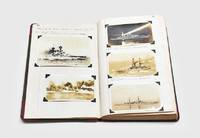
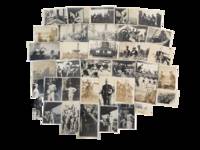
1925182328Various locations: 1925-27. An individual's snapshot of the chaotic 1920s in China An impressive album and collection of loose photographs recording the voyages of USS West Virginia and USS Beaver. The photographs many taken by a fellow sailor feature US ships underway the recovery of a seaplane and Pacific islands. A number show China in the warlord period of the mid 1920s documenting the gruesome public executions of thieves and other dissidents. Harold Caldwell 1907-1984 enlisted in the US Navy at age 18 and was immediately assigned to the West Virginia. During the 1920s this ship conducted training manoeuvres in the Atlantic and Pacific. In 1924 she became the flagship for the Commander Battleship Divisions Battle Fleet of Asiatic Station then helped to trial the defences of Hawaii and Australia. Caldwell's album opens with official photographs of this tour including shots of other ships operating in the region such as the USS Langley the first American aircraft carrier. The album's most striking feature is a collection of personal and souvenir photographs of Qingdao Shanghai and Hong Kong during the turbulent 1920s many taken by Caldwell and his fellow sailor H. B. Grapes of the USS Beaver. The Beaver was based in the city and assigned to support submarines throughout the Asiatic Station. Over 20 annotated prints record the chaos and brutality of the region depicting public beheadings the supposedly outlawed "death by a thousand cuts" prisoners in the stocks and military tribunals. Further images show Hong Kong from the water the premises of Lao Feng Xiang Jewellery company and the streets of Shanghai blockaded with sandbags. In 1927 communist sympathizers in Shanghai were brutally suppressed by Chang Kai-Shek's forces and Western soldiers were deployed to protect their country's citizens. These soldiers can be seen laying barbed wire and surveying the streets in multiple photographs. Later in the album there are official photographs of the Pacific life at sea and the ship's officers and men. The loose photographs capture the crossing of the Equator and associated festivities operations in Panama and many individual portraits of sailors. Folio 350 x 205 mm. Album with 305 gelatin silver photographs 60 x 90 to 178 x 127 mm landscape or portrait corner-mounted recto and verso on 47 leaves of ruled paper paginated with ink stamps in upper corner 6 printed on red paper 1 printed on green paper approximately 10 printed on postcards 2 hand-coloured some with printers' stamps or manuscript annotations on verso many captioned in the negative 15 numbered in ink direct 1 signed in ink direct manuscript ink captions on leaves 3 colour illustrated postcards 3 lettered menus or tickets for "Topsy's Roost". Also loosely inserted: 91 gelatin silver photographs approximately 75 x 120 mm to 126 x 176 mm 10 printed on postcards many with printers' stamps or manuscript annotations on verso 2 inscribed in ink direct; 2 lettered menus 7 postcards 3 half-tone 4 colour 20 half-tone photographic illustrations of ships with glass plate negative captions 60 x 90 mm many inscribed on verso 2 inscribed and stamped envelopes 7 pieces of printed ephemera 10 business cards inscribed both sides in ink 12 receipts inscribed and stamped on both sides. Original red half cloth album spine lettered in gilt flat bands ruled in gilt black pebbled cloth boards with borders tooled in gilt front board stamped with United States Navy insignia in gilt. Collection housed in three grey archival boxes. Photographs generally well preserved a little toned and rubbed one with horizontal split a couple with creasing pinholes and short closed tears at edges binding a little worn and sprung some leaves likely removed: a very good archive. hardcover
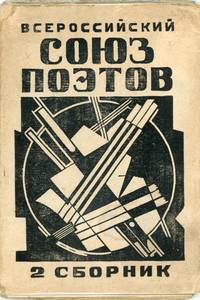
19225057<p>Octavo 178x 12 cm. wrappers 26 pp. The All-Russian Union of Poets was organized in Moscow in 1918 and continued to 1929 when it was absorbed into All Russian Union of Writers.</p><p>In 1922 it came under the scrutiny of the NKVD who forced it to change the charter of its aims This collection consists of exponents of various schools "due to the extreme dubiousness of the goals and revolutionary objectives pursued by the Union as well as harmful activities to the ranks of youth." This is the second poetry collection issued by the Union. Poets representing various isms are found here with Mandel'shtam Sestry Tsvetaeva Kon'-Khrom Pasternak Mne v sumerki ty vse. Sel'vinskii and Boguslavskii among others. Rare Getty 827MOMA 394. Printed on heavy van Gelder This copy very crisp near fine. With very fine cover by Gustav Klutsis one of his earliest works. </p> Sopo paperback
1929D6770Russia 1929. Paperback. Near Fine. Manuscript periodical in four parts numbered 3 4 11 and 13. Staple-bound heavy cardstock wraps brightly illustrated in pen-and-ink and watercolor; four volumes; 8vo 230 x 180 mm; pp. 136 illustrated throughout with pen-and-ink and watercolour drawings signed "S. Sh." or "S. Sheff" Russia 1929. Covers a little scuffed along spine and edges otherwise fine -- bold and bright. <br/><br/>A compilation of various accounts relating to the Russian Navy and Air Force in the decade following the Revolution recorded in tidy penmanship and with quick watercolors painted direct in text plus nicely accomplished pen-and-ink and watercolor illustrations tipped-on showing landscapes sea-scapes portraits and air and sea vessels. The accounts report the travails of various ships including the "Prome" "Paris Commune" "Frunze" the ice-breakers "Ermak" and "Lenin" and others. One part is devoted mostly to the Turkish Fleet and action in the Black Sea during 1914-1917. The aeronautic sections discuss Zeppelin's dirigible and the British R-101. The journal lists various contributors including F. Raskol'nikov L. Berman A. Marti P. Stasevich and others. S. Sheff who drew the illustrations probably produced this journal issuing it over the course of a number of years; the present issues are numbered 3 4 11 and 13 and belong to the fourth year of composition. A nice folk art example of "Grafica Russa" Russian Graphics of the early 20th century combining graphic design illustration and calligraphic interest. paperback
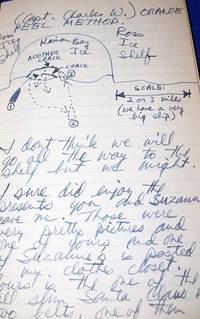
19550002329ASEA ABOARD THE USS GLACIER. Good. 1955. On offer is a super pair of significant original manuscript journals handwritten by Lieutenant P.Y. Matthews Jr. a United States Navy Chief Engineer of the noted USS Glacier detailing the Chief's voyage and participation in Operation Deep Freeze I making for a very detailed account in two volumes beginning in the Antarctic upon arrival December 15 1955 until departure April 1 1956. Written as a group of letters titled 'Dear Jan' it appears from entries in the journal that Jan was perhaps a niece the narrative makes for an intimate sharing of observations and impressions of all the Chief sees. The Chief is as each and every entry attests a personable enthusiastic participant in the voyage who well realizes the significance of the trip. I his own words: 'DEAR JAN The stirring saga of the USS GLACIER the world's most powerful ice breaker and its first polar voyage through six of the seven seas including ice breaking in Antarctica for Operation Deep Freeze I.' We note he writes of sitting down with Admiral Byrd too! Adding great depth are a small number of hand drawn maps diagrams and pictures. Volume 1 is rather half full with 80 or so pages of writings as he only uses the facing pages but Volume 2 contains only a few pages of text the rest is blank as the expedition had ended. Also includes a newspaper clipping about Matthews stating that he had taken much color film footage of Antarctica and Little America. Tucked in is a copy of a document stating that Matthews was in the first landing party on Princess Astrid Coast the original was placed in a cairn there. Overall G.; Manuscript; 8vo - over 7¾" - 9¾" tall; KEYWORDS: HISTORY OF LIEUTENANT P.Y. MATTHEWS JR. US NAVY CHIEF ENGINEER USN UNITED STATES NAVY USS GLACIER OPERATION DEEP FREEZE ANTARCTICA EXPLORATION PRINCESS ASTRID COAST LITTLE AMERICA NAVAL HISTORY NAUTICAL MARINE MARINERS EXPLORERS EXOTIC TRAVEL EXTREME TRAVEL ICEBERGS ADMIRAL BYRD AMERICANA HANDWRITTEN MANUSCRIPT AUTOGRAPHED AUTHORS DOCUMENT LETTER AUTOGRAPH KEEPSAKE WRITER HAND WRITTEN DOCUMENTS SIGNED LETTERS MANUSCRIPTS HISTORICAL HOLOGRAPH WRITERS AUTOGRAPHS PERSONAL MEMOIR MEMORIAL PERSONAL HISTORY ARCHIVE DIARY DIARIES JOURNAL LOG PRIMARY SOURCE FIRST HAND ACCOUNT SOCIAL HISTORY PERSONAL STORIES LIVING HISTORY ANTIQUITÉ CONTRAT VÉLIN DOCUMENT MANUSCRIT PAPIER ANTIKE BRIEF PERGAMENT DOKUMENT MANUSKRIPT PAPIER OGGETTO D'ANTIQUARIATO ATTO VELINA DOCUMENTO MANOSCRITTO CARTA ANTIGÜEDAD HECHO VITELA DOCUMENTO MANUSCRITO PAPELBIOGRAPHY BIOGRAPHICAL AUTOBIOGRAPHICAL AUTOBIOGRAPHY PERSONAL NARRATIVES . unknown
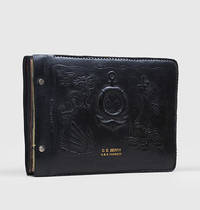
1934115861Chefoo Yantai Shanghai Singapore: 1934-37. Battleships baseball and the Bund An evocative album containing over 300 photographs both personal and from commercial studios recording the active service of the USS Parrott DD-218 on the China Station with the Asiatic Fleet - part of Destroyer Division 58 - including the Asiatic neutrality patrol in 1935 and 1936 offering a wealth of images of China Japan the Philippines and the South Pacific on the eve of the Second Sino-Japanese War 7 July 1937-9 September 1945 and the Second World War. Studio photographs include a number from the renowned commercial photographers Afong based in Yantai formerly Chefoo Joseffa and Skvirsky both established in Shanghai. It was compiled by Yeoman 2nd Class E-5 Charles Edmond Berry and opens with two fine photographs of the officers and crew of the Parrott on deck two colour-tinted photographs showing the ship at anchor and a humorous pictorial advertising photo from the Afong studio including an image of the studio exterior - clearly issued to all ships passing through Yantai - and featuring the Parrott at the centre. There follows an often joyful evocation of life onboard a US Navy destroyer prior to the Second World War with photos of the after-parties at the famed Beach Cafe in Chefoo which featured White Russian "hostesses" and tremendous amounts of alcohol as well as the morning-after breakfasts. Berry has also included panoramic photos of the Asiatic fleet in harbour at Chefoo Yantai and Hong Kong even including a humorous photographic pictorial "Bootlegger's Map of the United States." There are a series of photos showing the other US Navy Clemson-class destroyers on station with the Parrott the USS Pillsbury USS Bulmer USS John D. Ford USS Paul Jones USS Smith Thompson and USS Pope as well as various shipboard shenanigans baseball games battleships and destroyers on maneuvers gunnery practice loading of shells crew pets Liberty parties sailors carousing down the Bund in Shanghai buying souvenirs in Cuba sailing through the Panama Canal sightseeing trips to a walled city in Northern China the Great Wall of China cremation ceremonies in Bali riding rickshaws snake charmers and more. There are photos of Pan American Airways flying boats landing and unloading passengers in China many street scenes in Shanghai Hong Kong Tsing Tao Qingdao including the beheading of Chinese robbers outside the town Peking and Singapore. Of special interest are the series of photos showing Chinese Naval Ships from the Republic of China Navy in the mid-1930s including the CNS Yixian sunk by Japanese aircraft in September 1937; CNS Yisheng which had been converted into a gunboat in 1928 later sunk the CNS Shin Shey built in 1911 converted to a gunboat in 1929 sunk in 1938 and many others. There are also images of Kobe Yokohama street cars in Shanghai parks in Tokyo street scenes in Kyoto and views of the temples there. The USS Parrott DD-218 was a Clemson-class destroyer laid down by William Cramp & Sons Philadelphia and launched in 1919 commissioned in 1920 with a complement of 157 officers and enlisted men. The Parrott spent most of her career sailing with the Asiatic Fleet was awarded the Yangztze Service Medal in part for humanitarian assistance during the flooding of 1931-32 operating through the Chinese Civil War which resulted in considerable naval activity in Chinese waters collecting hydrographic data in and around Saigon then French Indochina in 1935. By 1940 she had served successively as station ship at Amoy Xiamen and Swatow Shantou China. From 7 July to 4 October she patrolled China waters based at Tsing Tao Qingdao and then made calls to other northern Chinese ports returning to Manila on 11 October. There in the early months of 1941 she was refitted with anti-mine and detection gear for anti-submarine warfare. The Parrott saw action in several theatres of war: South China Sea Battle of the Java Sea Atlantic Convoys and the bombardment of Spanish Morocco. She was accidentally rammed by the SS John Morton in Norfolk Naval Shipyard in 1944 and so severely damaged that she was decommissioned that same year and saw no further active service. Thick oblong quarto 380 x 280 x 51 mm. 319 corner-mounted original photographs ranging in size from 102 x 63 mm to 292 x 240 mm including 6 colour-tinted images and 4 panoramas 292 x 145 mm many studio prints captioned in the negative often with the photographer's stamp at lower corner a few with manuscript annotations verso coloured and patterned tissue guards intact white pink blue and jade-green. Contemporary heavily embossed black padded-calf post-binder photo album front board with devices of a Chinese Dragon a junk the Great Wall a life-preserver and anchor title in gilt as above nickel-plate posts rounded corners 52 leaves of black heavy card-stock most of the original tissue guards preserved. Together with a very appealing group of related ephemera and publications including: The Missions to Seamen The Sailors' Institute Anson Road Singapore; The Short Cut to Beauty: Hong Kong's Peak Tram; jocular Subpoena and Summons Extraordinary Royal High Court of the Raging Main Domain of Neptunus Rex two copies; U.S. Naval Despatch USS Parrott; Voyage Smoker USS Henderson en route to Honolulu T.H. to Guam M.I.; Radio Press News en route Manila P.I. to Guam M.I. 23 March 1937; Map of Shanghai dog tags and Bakelite Jesus medallion all preserved together in the original canvas sailcloth bag with stud fasteners. A few slight scuffs to binding occasional creasing to the mounting leaves very minor damage to a couple photographs overall in excellent condition. hardcover
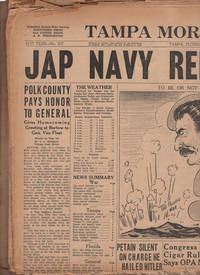
194444499Okinawa Japan; Camp Pendleton CA.; Kinston NC: Photographed and compiled by an American Marine 1944-1946. 1944 - 1946. WORLD WAR II JAPAN. First edition. Oblong octavo black leatherette string-tied photograph album 101 silver gelatin photographs with most being 4 1/4" x 5 1/4" some smaller. An interesting collection of vernacular images from World War II Okinawa documenting an American Marine Corps reservist's time on the Japanese island after the successful U.S. invasion in the spring and summer of 1945. He is identified simply as "Ronnie" in several photographs. The album was likely assembled by Ronnie's wife or girlfriend as the first item is annotated "A Christmas card from my honey" and includes a greeting in manuscript from the soldier on the verso. Eighty-nine photos emanate from Okinawa four from Camp Pendleton and eight from Camp Lejeune in Kinston N.C. and on the soldier's furlough at home likely Florida. The photographs of Okinawa feature a wide variety of interesting subjects including island views abandoned Japanese bunkers tombs Shinto shrines damaged Japanese armaments "Korean teahouse girls . the type used by the Japanese armies for entertainment purposes" Japanese natives washing clothes in the river views of villages "A native barber and his victim in the village of Ishikawa in northern Okinawa" "Native family of three enroute to a detention camp" "Jap dugout in the ‘Suicide Cliff' area" "Japanese school children and teachers" "Native women bathing" "Remains of Japanese 'Betty' pilot Yontan Airstrip" marine and army cemeteries "Ernie Pyle's grave" "Spot where Lt. Gen. Simon Bolivar Buckner was killed . June 18 1945" and many more. The U.S. invasion of Okinawa began in April 1945 and lasted eighty-two days ending on June 22. Immediately the island became an important staging area for the planning of the U.S. invasion of mainland Japan. Ultimately the invasion was not necessary after the atomic bombings of Hiroshima and Nagasaki in early August. Also taped-in are two Japanese yen bills and eight magazine excerpts featuring Okinawa scenes. Laid-in are three Florida newspapers detailing the U.S. Navy's invasion of Japan. A rare view of occupied Okinawa from an American Marine . itself a rare thing as most albums of this type come from Army boys. Minor wear to the covers else a very good copy. Photographed and compiled by an American Marine, 1944-1946. hardcover
190731197N.p. Japan ca 1907. Pair of large trapunto banners both removed from original frames. First 82cm x 60cm ca 32" x 24"; embroidered in silk with trapunto elements on a black silk ground; photographic portrait on cabinet card inserted in embroidered pocket at center inscribed "Mellie McKeever" on verso. Silk ground fragile with a few thin tears but no significant losses; light soil; embroidered portions generally well-preserved and colors bright. Very Good. Second banner 65cm x 50cm ca 25" x 20"; photo-transfer on silk with embroidered ornaments. Slight fading to embroidered portions but generally well-preserved and sound; Very Good. Both banners with firm provenance purchased from the descendants of Mellie McKeever of Richwood West Virginia. Two exceptional and well-preserved examples of the ornamental trapunto banners that were popular souvenirs among U.S. sailors and marines during the late 19th and early 20th century. Yokohama was the principal point of production for these naval souvenirs but we have also seen examples from the Philippines and mainland China; Japanese examples such as these are generally distinguished by a higher quality of embroidery and more sophisticated composition. The banners became popular among British and American sailors beginning as early as the Boxer Rebellion and the Spanish-American War but seem to have reached their peak of popularity with the arrival in the Far East of Teddy Roosevelt's Great White Fleet in 1908. Some 14000 sailors and marines made land at various Japanese ports-of-call in that year and given the regularity with which these textiles still appear one imagines that every sailor must have brought at least one of these souvenirs home with him. <br /> <br /> The first example though of an unusually impressive size is of a type frequently seen displaying typical naval iconography right down to the hand-painted battleship portrait of a two-stack battleship of the Kearsarge class its hull painted white reflecting its peace-time mission at bottom center. The embroidered frame to hold a cabinet portrait of the sailor or perhaps a loved one is a typical feature found on more elaborate examples. The American Eagle in full battle stance is a nearly universal element of these banners. <br /> <br /> The second banner is of a style we have not previously seen and for which we can find no analogues in the extensive literature of naval souvenirs. It is clearly a family portrait probably a composite made from cartes-des-visites carried by McKeever; the portraits are printed by silkscreen using a photo-transfer process with applied trapunto decorations. The likenesses are clearly enlarged -- it is highly unlikely that a common sailor would have had room aboard a battleship to carry full-size portraits -- and it strikes us that this must have seemed an almost magical process at the time of creation especially to a young man from a tiny lumber-and-coal town in central West Virginia. <br /> <br /> Aside from their obvious virtues as objects of art and handicraft we regard these banners as compelling pieces of material culture from a period of tremendous social transformation in the United States. According to the Naval Historical Center U.S. naval rolls expanded by nearly 400% between the beginning of the Spanish-American War and the launching of the Great White Fleet. To meet this demand for the first time in its history the Navy began recruiting from the American heartland rather than solely from the Eastern Seaboard states. The generation of inland farmers and mechanics to follow was thus the first in American history to experience first-hand cultures as diverse and divergent from their own as those of Europe Asia and the Pacific Islands; they represented not only the beginning of the American imperialist enterprise but also the first stirrings of America's global consciousness. That so many of these banners have survived in good condition is evidence of the degree to which they were treasured by their owners for whom they represented an experience that must have been transformative and definitive. unknown
198894121Neri Pozza Editore. New. 1988. Paperback. FREE UPGRADE to Courier/Priority Shipping Upon Request - IN STOCK AND IMMEDIATELY AVAILABLE FOR SHIPMENT - FLAWLESS COPY BRAND NEW PRISTINE NEVER OPENED -- Text in Italian. 314 pages; 199 illustrations in black and white; 8 in color. Catalogue Raisonne Catalog Raisonné Complete Works Catalogo Ragionato Catalogo delle Opere L'Opera Completa Raisonnee Neri Pozza Editore paperback
200094054Gallimard. New. 2000. Hardcover. FREE UPGRADE to Courier/Priority Shipping Upon Request - IN STOCK AND IMMEDIATELY AVAILABLE FOR SHIPMENT - Flawless copy brand new pristine never opened -- Text in French. 430 pages; over 600 illustrations including a number in color. Catalogue Raisonne Catalog Raisonné Complete Works La Vie et L'uvre Oeuvre Raisonnee -- with a bonus offer . Gallimard hardcover
19110001529ASEA. Good. 1911. On offer is the original pre-World War I and early commencement of the War manuscript diary of Commander Alfred Frederick Bell "AFB" Woodhouse Royal Navy. Entries date from June - August 1911 and May 1914 - April 1915 providing a unique pre-War commentary and then leading up to the actual conflict. Woodhouse begins on HMS Fantome off north west coast of Australia surveying: ".Shifted camp to Byron Islands for 4 days. Got there by 11am. Comber went away sounding in steamboat. I first saw the camp rigged up & then went away coastlining in 2 whaler.Away coastlining again at 7am nearly finished Byron Islands by evening. Enormous number of small islands had to be put in.Coastlining longcreek about 5 miles in & then small mangrove swamp.Dozens of flies about appallingly stung.Practically no sleep last night owing to bites. Away 7am started near Beehive. Fixed one point & when turning found myself in whirlpool pass. Went down with flood. Whaler hole in side. Camp - no rum no sugar no flour no tea very little water.". Then HMS Research May 1914 off Ireland and Scotland: ".Weighed at 9.30 after the first mail had come on board & proceeded to the entrance to Wexford. Picked up tide pole & then to Blackwater Bank. Went away in motor boat with Hazlefoot but too misty to see anything. Returned at 3.30 & ship started for Larne. Then HMS King Alfred August 1914: ".After dinner joined King Alfred from Research as my war appointment.We are at present ammunitioning & getting ready as quickly as possible. Invincible in harbour. List of officers.12 Midnight War declared against Germany.My first gun crew do not appear to know much about their drill but they are enthusiastic which is something & I have an excellent gun-layer.Submarine gun crews told off & stationed.Everyone pleased we are getting away but do not know where we are to go. Azores seems popular.Received orders to proceed to Scapa Flow.Ships here are all King Edwards 1st Battle Cruiser Squadron. Drake & 2 Edgar Cyclops & a good number of scouts light cruisers & destroyer. All are painted light grey in different parts & black elsewhere so as to be difficult to take ranges on & also distinguishes them very well.We are painting our funnels & masts light grey & are chipping as much paint as possible off the ship.proceeded round west of Orkneys. At about 11.30 the Drake stopped a Russian barquentine but allowed her to proceed later. We stood by for firing practise.The Drake stopped & boarded a Norweigan steamer but let her proceed afterwards. Sighted a battle cruiser in evening. Heard that a German submarine had been sighted.Received news that German ships were in Norweigan fjords. Ordered by c-in-c to support Alsatian who is to patrol 20 miles from coast.Sighted Alsatian an enormous liner carrying as far as I could see only 8 4.7in or 6in. One shell would probably finish her.In afternoon intercepted signal from c-in-c to destroyers to attack enemies submarines which were apparently sheltering in Linza Sound Stronsea Orkney Is.Our army according to Poldhu message has held its own in Belgium but has had 2000 casualties German losses unknown but believed to be very heavy.Heard the Monarch had a torpedo fired at her which only just missed.Sighted Drake in dog watches she told us that 1 BCS had had a scrap on friday morning with a good deal of success. Light cruisers destroyers & 1 BCS raided near Heligoland & intercepted German cruisers & destroyers returning on friday early. Result 2 German L cruisers & 2 destroyers sunk 1 L cruiser & several destroyers badly damaged.At 6.30 suddenly sounded off night defence stations. Falmouth had seen a submarine following the G into harbour & had waited till her conning tower came up & then fired at her. She says she hit her twice.Superb fired twice at supposed submarine.First shots fired in earnest today.We have received orders to convoy floating dock from Pentland Firth to Cromarty.The Pathfinder & Speedy have been blown up by mines but little loss of life.Got news that the Aboukir was sunk by submarine & that the Hague & Cressy going to her assistance were also sunk. It appears that a flotilla of submarines attacked them. 21 is the first score to their submarines. Ships are not much but loss of life was heavy I believe.Ships company & officers warned by captain about spreading any information about movements of ships or anything else.Proceeding to the HMS Devonshire October 1914 ".Drove to Scabster in a motor lorry got the mail packet at 4am to go to Scapa Flow. Arrived 7am got on board at 9am The Anglia one of the LNWR steamers which is acting as a fleet .There was a big submarine scare during the day & all ships have left. Destroyers were hunting the submarines & say they got 3 but I rather doubt it.Went to a funeral in charge.Received orders to proceed on board Cyclops for passage to Devonshire in the Dryad.At 7pm the Dryad ran on to the rocks near Stromness.By 6pm I was on board the Devonshire after a week trying to get to her.I am to be tanky & prize officer & keep 4 watches.Proceeded on 24th 4pm & swept down to Heligoland way. Our aeroplanes bombed Cushaven & ships there on christmas day.Rear Admiral Pakenham hoisted his flag in Devonshire.Rendezvous with grand fleet & proceeded southward. Battle cruisers & light cruisers fought an action with German B Cruisers sinking the Blucher & severely damaging Deiflinger & Molke. We chased after them.The Lion was badly damaged by mine or torpedo as well as gun fire. The ships hit were only Lion 18 times Tiger 3 times the rest not at all.There are some dummy ships in harbour Liverpool with wooden turrets & superstructures they are very good imitations from a little distance.Left Scapa Flow & joined 3rd CS at sea. While proceeding into harbour on afternoon of 14th we passed down a whole line of submarines each one near a sailing ship painted white. We opened fire at them all but I dont think hit. They did not seem to fire at us but one cannot be sure.". Covers measure approx 7 1/4" x 4 3/4" 18cm x 12cm Cloth bound with 91 sides of entries. Covers heavily marked with some ink staining and wear some minor marking inside about fair condition. Overall G.; 12mo - over 6¾" - 7¾" tall; KEYWORDS: ALFRED FREDERICK BELL WOODHOUSE HMS RESEARCH HMS KING ALFRED NORWAY NORWEIGAN COAST PATROL ROYAL NAVY BRITAIN BRITISH NAVY NAVAL NAVY MARINE NAUTICAL HISTORY OF WORLD WAR I WWI THE GREAT WAR HANDWRITTEN HAND WRITTEN AUTOGRAPH AUTOGRAPHS SIGNED LETTERS DOCUMENT DOCUMENTS MANUSCRIPT MANUSCRIPTS WRITERS WRITER AUTHOR HOLOGRAPH PERSONAL AMERICANA ANTIQUITÉ CONTRAT VÉLIN MANUSCRIT PAPIER ANTIKE BRIEF PERGAMENT DOKUMENT LETTER AUTOGRAPH DIARY JOURNAL LOG KEEPSAKE WRITER HAND WRITTEN DOCUMENTS SIGNED LETTERS MANUSCRIPTS HISTORICAL HOLOGRAPH WRITERS DIARIES JOURNALS LOGS AUTOGRAPHS PERSONAL MEMOIR MEMORIAL PERSONAL HISTORY . hardcover
199293976Cantini. New. 1992. Paperback. FREE UPGRADE to Courier/Priority Shipping Upon Request - IN STOCK AND IMMEDIATELY AVAILABLE FOR SHIPMENT - Flawless copy brand new pristine never opened -- Text in Italian. 159 pages; illustrated with black and white and color images. Catalogue Raisonne Catalog Raisonné Complete Works Catalogo Ragionato Catalogo delle Opere L'Opera Completa Raisonnee Cantini paperback
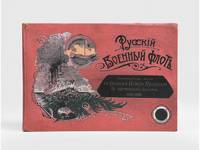
1905189053St. Petersburg: Typolithography Evg. Tile 1905. Rare illustrated chronicle of the Imperial Russian Navy First edition just one institutional copy traced at Stanford. This excellent pictorial history comprises images of ships battle scenes and portraits. Published at the time of the Russo-Japanese War the front cover incorporates an image of the cruiser Varyag celebrated for the stoicism of her crew at the Battle of Chemulpo Bay 1904. At the time of publication Apostoli 1861-1937 a captain in the Russian Navy was already established as a photographer and captured many images of the fleet his work being published in a number of manuals and reference books. From 1905 to 1910 he was successively staff officer at Kronstadt then head of the communications service of the Baltic Fleet. Following the Revolution he managed the photo laboratory of the Baltic Fleet Political Directorate Pubalt although in 1919 he was arrested by the Petrograd Cheka for attempting to cross the Finnish border and sent to Vologda for "community service". Released in 1920 he was stationed in Petrograd later in the decade teaching photography at the M. V. Frunze Higher Naval School now the Saint Petersburg Naval Institute. He also had a reputation as a camera designer developing twin-lens and underwater cameras and wrote a number of books including A Guide to the Study of Practical Photography for Naval Officers and Tourists 1893. Landscape quarto. Illustrated throughout from engravings and photographs red decorative borders to each page. Original reddish-brown pictorial pebble-grain cloth back cover with publisher's name in blind within blind-stamped borders. Contemporary Russian bookseller's stamp to rear pastedown. Front cover dulled spine ends chafed some edge wear corners rubbed through ink stain to back cover internally some finger soiling and general light signs of handling closed tear into images of one leaf another closed tear across final leaf the latter repaired with opaque tape: just about very good. hardcover
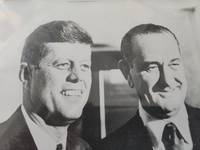
196115402Department of Defense / Marine Corps 1961 This photograph was found in a big estate sale in Arizona hidden in a huge lot of 1960s photographs of politicians and entertainers- all signed. It is a TYPE 1 Original made from the negative and is in Black and White on 8 x 10 semi-gloss thick paper stock. Both signatures match and appear to be hand-signed. The photograph was taken by a Marine Corps /Defense Dept photographer during JFKs Inauguration in January 1961. The other Inauguration photos in the batch have official DOD Marine Corps Photographer ink stamp on back. This one does not so I am thinking it was gifted by JFK to a staffer or the Marine Corps photographer. The signatures were signed by the same pen. It looks to be a fine tip black ink marker. The signatures are not auto penned. They have age smears and different ink wear in places. NO COA. SOLD AS IS. Photo is in VG condition no tears no holes no additions. A nice wood frame is Included. No Binding. Very Good. Department of Defense / Marine Corps unknown
196115402Department of Defense / Marine Corps 1961 This photograph was found in a big estate sale in Arizona hidden in a huge lot of 1960s photographs of politicians and entertainers- all signed. It is a TYPE 1 Original made from the negative and is in Black and White on 8 x 10 semi-gloss thick paper stock. Both signatures match and appear to be hand-signed. The photograph was taken by a Marine Corps /Defense Dept photographer during JFKs Inauguration in January 1961. The other Inauguration photos in the batch have official DOD Marine Corps Photographer ink stamp on back. This one does not so I am thinking it was gifted by JFK to a staffer or the Marine Corps photographer. The signatures were signed by the same pen. It looks to be a fine tip black ink marker. The signatures are not auto penned. They have age smears and different ink wear in places. NO COA. SOLD AS IS. Photo is in VG condition no tears no holes no additions. A nice wood frame is Included. No Binding. Very Good. Department of Defense / Marine Corps unknown
19952082702114901221Benseisha 1995. Soft Cover. Fine. Size: 23x17 cm Number of books: 3 Benseisha paperback
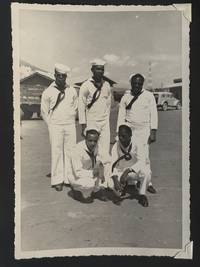
1950215431950. African American sailors aboard the USS Leyte CV-32 photo album compiled circa 1950-1951 documents daily life labor and camaraderie among Black enlisted men serving during the opening phase of the Korean War and in the early implementation of military desegregation under Harry S. Truman's Executive Order 9981. Created while the carrier was deployed in Atlantic and Caribbean waters and later in support of Korean War operations the album offers sustained visual evidence of African American naval presence during a transitional period when the U.S. Navy was moving unevenly from segregation toward formal integration. Of particular historical significance is the inclusion of the 15 December 1950 Christmas edition of 32's News containing an obituary and photograph of Ensign Jesse L. Brown who was killed in action on 4 December 1950 near the Chosin Reservoir in North Korea when his F4U-4 Corsair was struck by enemy fire making the album an immediate shipboard witness to the death of the Navy's first Black aviator. The archive supports research in African American military history Korean War studies naval integration and the social worlds of Black servicemen abroad.<br /> <br /> Photo Album with approximately 100 black-and-white silver gelatin photographs ranging from 2.75 x 1.75 inches to 10 x 8 inches most mounted recto and verso on 22 black paper album leaves with several images unmounted accompanied by loose and mounted ephemeral materials including mimeographed wartime reports clippings and shipboard newspapers. Notable among these are the 14 October 1950 issue of Daily Press News and the 15 December 1950 issue of 32's News Vol. 1 No. 5. Identified sailors include Harvey Thomas James Kincaid Leo Bowser "Lippy Connor" "Stockson" "Boby Mitchell" and James G. Watson the latter represented by photographs captioned "Watson" and accompanied by 1949-1951 W-2 forms documenting his service at Naval Air Station Quonset Point and aboard USS Leyte. A large-format photograph captioned "The GTMO Four" depicts four African American sailors in dress whites at Guantánamo Bay while other images captioned "Mindoro" situate the crew in the Philippines during operational deployment.<br /> <br /> The album interweaves formal portraits group military images and informal scenes of athletic recreation swimming nightlife and cross-cultural encounters with Filipino civilians as well as studio portraits labeled "School Days" and images of family members and sweethearts grounding naval service within networks of kinship and memory. Interior views of barracks communal meals and experimental aircraft armament work-contextualized by a mimeographed article describing the so-called "mercy bomb" perfected aboard Leyte-further illuminate the technical and social dimensions of shipboard life. Produced at a moment when Black servicemen were asserting dignity and professional competence within historically exclusionary institutions the archive offers unusually cohesive visual testimony to African American presence in a modernizing desegregating Navy at the outset of a global Cold War conflict. Photographs exhibit minor fading light corner wear and typical album mounting abrasions; mimeographed documents show toning creasing and several edge tears. Overall very good condition. A substantial and visually integrated record of African American naval service during the Korean War's opening year anchored by contemporaneous memorialization of Jesse L. Brown and richly documenting everyday Black military life at sea and abroad. unknown
1917233411917. U.S. Navy photo archive documenting the Mexican Patrol mission of USS Rainier a Pacific Fleet auxiliary schoonerduring World War I. This archive documents U.S. naval personnel moved between shipboard duty shore stations and regional exploration in Mexican and California waters. Taken by Lieutenant junior grade Dr. Louis Henry Clerf the ship's medical officer these photographs place a named naval physician inside the working life of a little-documented auxiliary vessel assigned to Division 2 Pacific Fleet and the Mexican Patrol after the Navy acquired and commissioned the former civilian schooner in 1917. Rather than isolating military routine from observational practice the archive shows how officers aboard a small auxiliary ship simultaneously functioned as servicemen medical staff coastal travelers and recorders of local environments and natural science during a period of expanding American naval movement along the Pacific and Baja coastline.<br /> <br /> <br /> Photo archive of 41 silver gelatin photographs with many captions most measure 3.5" x 4.5" aboard USS Rainier and in Pacific coastal locations including San Diego and the Guaymas region circa 1917 to 1919. Several photographs focus on animals aboard ship including dogs kept by the crew birds fish catches and larger game animals associated with hunting and provisioning activities carried out during the patrol. Other images depict sailors handling fish and displaying catches beside the vessel revealing the practical realities of subsistence and food sourcing aboard a small auxiliary ship operating in relatively isolated Pacific waters. Together the photographs document the intersection of military hierarchy environmental encounter maritime labor and animal life aboard a World War I patrol. The images include repeated shipboard views of sailors and officers in white tropical uniforms and darker service dress posed singly and in groups on deck among rigging spars deck fittings railings and a mounted gun firmly establishing the operational setting aboard a naval auxiliary rather than a private voyage. Several photographs show relaxed mess scenes beneath awnings men seated at tables or gathered informally at sea while others picture uniformed personnel beside an automobile ashore and in front of a large urban hotel or institutional building. A large formal group portrait taken before an ornate Spanish colonial church further extends the coastal location. One verso identifies "Duck shooting at Ensenada de Francisco Bay about 20 miles north of Guaymas" while another reads "Hospital. Navy Training camp San Diego" linking the group to both field excursion and medical infrastructure. The captions combined with views of harbor craft shore architecture and regional movement show the same photographic hand operating across military environmental and natural science subjects. There are also many photos of the fishes and animals of the Baha region with captions.<br /> <br /> <br /> USS Rainier built in Portland in 1917 as the civilian schooner Patrol and later renamed Angel entered Navy service as a Pacific auxiliary during World War I. Commissioned at Mare Island on July 30 1917 and assigned to Division 2 Pacific Fleet she served on the Mexican Patrol off Southern California and Baja California placing this archive within the history of continued U.S. naval surveillance and mobility in Mexican waters during World War I rather than in a purely European war frame. The archive is attributable to a trained Navy physician who later went on to a long and prominent civilian medical career Dr. Louis Henry Clerf of Washington state. this archive preserve the operational world of a Navy auxiliary schooner where smaller patrol and support vessels were essential to maritime presence but far less frequently documented than battleships or major transports. Clerf's position as medical officer gives the archive unusual coherence since the photographs join shipboard hierarchy working naval space coastal circulation and natural-history attention within one attributable officer's record of service during the final years of World War I and the Mexican Patrol. Dr. Cliff also seem to have a deep interest in natural sciences and has included many photographs of the fish and animals that could be found at the time in the Baha region. Light surface wear scattered fading and minor edge or corner wear; captions present on some versos with images generally clean and legible. The archive offers an identified record of Mexican Patrol service aboard USS Rainier and of the broader naval presence that connected California Baja California and the Gulf of California during the final years of World War I. unknown
190756101New York & Brooklyn NY; Boston MA Wilmington CA San Pedro CA Los Angeles CA: Curtis D. Mabry Lambie & Mabry William Gardner John G. Alden et al 1907-1940. 24 cyanotype blueprints diazo blueprints manuscript blueprints on linen oilskin paper some on glassine sized from 11.5 x 12.5 in. up to 27 x 94 in. w/ several sized primarily between 16 x 27.75 in. to 22 x 48 in. nearly all w/ draftsman specifications w/in the image many w/ pencil or grease pencil annotations and/or markings at margins of blueprints or on versos several signed w/in image and separately by Mabry chipping & edgewear to most the largest piece on glassine diazo paper is quite fragile and chipped w/ minor losses many w/ minor closed tears a couple w/ slight fading still VG- grouping. Eighteen “Specifications & Block Lists†most folio. 11 x 13 in. some typescript others mimeographed and several blueprint w/ nearly all clasped at upper margin: C 14 leaves; 42 leaves; E 38 leaves; 14 1 leaves; 2 8 leaves; 15 leaves unnumbered. - 2 copies; 5 leaves unnumbered.; 5 leaves unnumbered.; 7 2 leaves; 6 leaves unnumbered.; 5 1 leaves; 2 25 4 leaves -- 2 copies; 2 8 leaves; 8 leaves; 10 leaves; 5 leaves nearly all stapled to backing paper as issued. File folder containing over 50 offprint clippings for sail plans newspaper clippings 4 TLS & ALS 2 on letterhead 1 5 x 7 in. photo of Mabry and more. These extraordinary sail plans designs specifications and clippings trace the career arc of a marine architect career with some of the most significant yacht and ship designers in New York and Boston and Southern California. Mabry 1882-1949 launched his career with the storied Gardner & Cox Naval Architects of New York later William Gardner as chief draftsman and later inspector for the firm. He was responsible for designing the earliest version of the Star Class keelboat which produced a large chunk of the top U.S. sailors for years and served as pipeline for training America’s Cup Racers as one of the older one-design classes. His initial design made its regatta debut on Long Island in the Spring of 1907 which was then adapted by storied designer Francis Sweisguth who adapted the size of the hull and sail plan. This archive includes the blueprint Hull Body Plan Lines and Sail Plan for the Cyric a Class “S†32 foot sloop built for Eldon H. Trimingham which raced for the LIpton Cup on Gravesend Bay and later carried the Trimingham colours until the Royal Bermuda Yacht Club brought in a fleet of seven one-design sloops in 1925. It later raced in the 1930 International Yacht Races. Also included are the Block List Body Plan and Lines for Hull No. 254 by Gardner which was a 46 foot Class “S†finished in 1912 originally for Seward Prosser who also owned the yacht Constance. Of additional significance are the Hull Plans and Specifications for the Larchmont “O†Class sloops built in 1917 with six sister ships -- Georgia Varuna Nimbus Grey Dawn Maisie and Betty with all except for the Varuna fitted with Gaff rigs. The Varuna fitted with a groundbreaking Marconi Rig proved to be the fastest design at the close of World War I. The tragic Sea Call one of yachting’s greatest schooners as well as one of its greatest lost opportunities is well represented here including the Main Mast Head Mizzen Mast Head Sail Plan designs together with the typescript Block List. In the design Gardner specified a combination of vanadium steel and monel metal which resulted in violent electrolysis and within three weeks of her first sea trial the decision was made to scrap her. She was designed to hold 10-12 guests with a private owner’s deckhouse. During World War I subsequent to working on the Larchmont “O†Class for Gardner Mabry contracted with J.F. Duthne & Co. in Seattle as chief draftsman and after the War set up in Los Angeles as a Naval Architect. While working for the Los Angeles Shipbuilding & Dry Dock Co. he drafted the designs and plans for the Steamers “Yale†& “Harvard†which had originally served as coastal steamers for the Admiral Line with the Pacific Steamship Co. and taken into Government Service during World War I and then purchased and rebuilt by Harry & Ralph Chandler forming the LS Steamship Co. and operating subsequently as popular steamships on the Pacific Coast. SS Yale was later scrapped in 1949. Included with this archive is a manuscript Hull Design signed by Mabry. In 1925 he also designs the plan for a Los Angeles Fireboat with manuscript plan and Mabry’s signature included here dated June 13 1925. He then contracts with the famed yacht designer John G. Alden in Boston. Specifications for No. 274 the Waterline Auxiliary Ketch “Danai†which was designed and built in 1926 built by Kenneth McAlpine of Shelbourne N.S. Canada and was later renamed Wawa Valdora Nira and Polaris. Of significance is the specifications for Hull No. 435 “Puritan†designed by Mabry and commissioned by Edward Brown and built as a 126 foot gaff-rigged schooner. The Yacht still serves as a charter vessel with the Classic Yacht Experience after extended refit in 2015. Sometime between 1929 and 1930 Mabry partners with noted Southern California Naval Architect William Lambie and their partnership would last about two years. The pair would design many power yacht designs including a fast 88 foot cruiser a 55 foot schooner a cruiser for N. Paul Whittier of Hollywood CA and 110 foot steel auxiliary schooner for H. Wilhelm Rohl who also owned at the time the famed Te Vega yacht. They may be best remembered for designing the glass bottomed “Phoenix†the popular sightseeing side-wheeler paddle boat for tourists sightseeing over the undersea gardens of Santa Catalina Island. Lambie 1886-1963 was a Scottish-American Southern California naval architect who had worked with Southwestern Shipbuilding then with the Seacraft Corporation and well known as the designer of the popular Lambie propellers whose efficiency was first recognized when installed on the SS Catalina. The letters included in this archive reflect the impact of the Great Depression and the Stock Market Crash on shipbuilding with the owner of the Philadelphia based Tunnel & Mine Machinery Co. lamenting that “It has been pretty stringent this year but some of my things are showing signs of coming back . . . which may enable me to complete Sapphire Seas.†While the letter sent by Lambie to W.F. McMahon in Riverside California explaining how he unwittingly may have offended Mabry his former partner as well as Mr. McMahon over the proposed design and build of a yacht in 1932. Mabry would remain in Los Angeles until the mid-1930s before moving again to the East Coast to work for the Cramp Shipbuilding Co. in Philadelphia and then later the EB Company in New London CT. Worldcat lists no copies or examples of designs by Curtis Darling Mabry or for the firm Lambie & Mabrie; See: The Big White Steamer The Branding Iron Los Angeles Westerners Corral No. 101 1971 pp. 5-7; Martin Cox Los Angeles Steamship Company 2010; Francis Sweisguth William Gardner Yacht Designer; John Valois The Centennial History of the Woods Hole Yacht Club 1996. Curtis D. Mabry, Lambie & Mabry, William Gardner, John G. Alden, et al, unknown
1988C94121Neri Pozza Editore. As New. 1988. Paperback. FREE UPGRADE to Courier/Priority Shipping Upon Request - IN STOCK AND IMMEDIATELY AVAILABLE FOR SHIPMENT - FLAWLESS COPY BRAND NEW PRISTINE NEVER OPENED -- Text in Italian. 314 pages; 199 illustrations in black and white; 8 in color. Catalogue Raisonne Catalog Raisonné Complete Works Catalogo Ragionato Catalogo delle Opere L'Opera Completa Raisonnee -- with a bonus offer-- - May be EITHER: out of print OOP and extremely rare in this pristine condition; signed by author or contributor; or a first or special edition; inquire for details . Neri Pozza Editore paperback
2000C94054Gallimard. As New. 2000. Hardcover. FREE UPGRADE to Courier/Priority Shipping Upon Request - IN STOCK AND IMMEDIATELY AVAILABLE FOR SHIPMENT - Flawless copy brand new pristine never opened -- Text in French. 430 pages; over 600 illustrations including a number in color. Catalogue Raisonne Catalog Raisonné Complete Works La Vie et L'uvre Oeuvre Raisonnee -- with a bonus offer-- - May be EITHER: out of print OOP and extremely rare in this pristine condition; signed by author or contributor; or a first or special edition; inquire for details . Gallimard hardcover
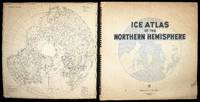
194616398Washington D.C.: United States Hydrographic Office 1946. Arctic Ice Atlas Large folio 625 by 640mm index chart as front pastedown title preface signed by George S. Bryan Rear Admiral 86 full and half-page chromolithographed maps and charts divisional titles tables bibliography; original ring-bound pictorial blind-stamped black cloth binding gilt title. Arctic exploration reached new heights in the early twentieth century with the first successful expedition to the North Pole. Throughout the following decades countries started to claim territorial rights in the Artic for economic industrial and above all military reasons. In the Second World War the Arctic region became a key supply route for then-allies the United States and the USSR. Naturally its strategic importance only increased during the Cold War. In 1946 the US Navy published an atlas of the northern hemisphere documenting the extent of and changes to the ice formation across the Arctic. Coloured monthly maps for each principal region track seasonal changes and show permanent features. In the Arctic sea ice peaks in the early spring after the long cold winter with the most ice typically seen in March. The ice packs then partially melt and break up over the summer with September usually having the least sea ice. The majority of the maps are accompanied by scales and coloured keys to indicate different types of ice. They also show large swathes of the northern lands in the Northern Hemisphere where toponyms and significant geographical features are identified. The altas also includes statistical tables introductory notes and an extensive bibliography and reference list at the end. United States Hydrographic Office, hardcover
19140009024HMS FOX HMS PROSERPINE RED SEA INDIA EAST INDIES. Good. 1914. On offer is a detailed and eclectic book made by John Ring a Royal Marine Number 1520 during World War 1 on the H.M.S. Fox and H.M.S. Proserpine. The book contains journal entries of Rings time on the H.M.S. Fox in active duty and experiencing naval warfare. His entries are presented in a fairly matter-of-fact way with few sentence breaks. For example: H.M.S. Fox 9th June 1915. Join H.M.S. Fox at Ismailia on the 9th and stayed at at Ismailia from June 9th until the 1st of August and went from thier to the Great Bitter Lake and remained their until August 20th and then sailed for Suez and arrived in Suez on Aug 22nd and stayed their until Aug 31st and then left Suez for the Great Bitter Lake and remained their for a week and while we were their we captured two Turkish mines and kept them on board our ship for a night or two and about two mornings afterwards Sept 4 we towed them 4 Hundread miles from the Ship and about one hour after The Signal was made from our ship to press the Button and about two days later we found another Turkish mines and also did the same to that. For the rest of 1915 Ring is one the Fox as it patrols the area Suez Canal area from the canal to Port Said. From the Fox Ring moves to the H.M.S. Proserpine. On the Proserpine Ring does much of the same as he did on the Fox patrolling the Suez Canal rescuing ships that have run aground and occasionally coming into combat: The natives fired back to us and in their firing about the fourth round it was reported that the gunner was blown over and killed and another man had his arm blown off. The ship stays on the Shatt-al-Arab River for 4 months than leaves for India first docking at Bombay and then moving on to Colombo. While we were at Colombo we went to the Royal Naval Camp at Diyatalawa Ceylon and their are some interesting places to go at Ceylon about 200 years from the camp were were at was the Camp while the Boer War was on they sent the prisoners to Ceylon and another place was Little England. After this last diary entry the book takes on a less narrative identity. The rest of the journal consists of page after page of incredibly interesting and comprehensive lists of things concerning military casualties and other matters. The lists contain headings such as Norwegian Ships Sunk Enemys Lost Airships British Steamers Torpedoed and Sunk British Ships Sunk by German Raiders Soldiers Deaths in Quelling Rebellion concerning the 1916 Irish Rebellion commonly referred to as Easter Rising These are Marine Officers lost in the Battle he does not write it but he is referring to the Battle of Heligoland Bight the first naval battle of WW1 H.M.S. Ships Lost and Sunk in the Great War and many other lists of naval ships lost in the war usually containing the name of the ship the size in tonnage the date commissioned and/or destroyed and occasionally the crew size type of guns used and/or the name of the Captain. There are long lists of ships sunk from almost all the Allied Power countries. There are also news stories about the hanging of Sir Roger Casement the sinking of the Dreadnought Leonardo Da Vinci the H.M.S. King George VII and other stories related to the war copied down probably word for word from a newspaper. Though Ring was born in Essex the stories of Sir Roger Casement and the entry about the deaths in the Irish rebellion make it seem that Ring might have had some Irish sympathies or was possibly just interested in the Rebellion as a military matter. There are also about two dozen loose pieces of ephemera include with the book dealing with John Rings entire life and career the earliest dated 1896 and the latest 1955. Included are: A Naval Marriage Certificate of John Ring to Margaret Carr from 1920 on board the H.M.S. Hercules; 2 certificates of service detailing Rings entire military career from 1905-1932 with the earlier certificate showing a complete list of the ships Ring served on from 1905 to 1924 both certificates contain much personal information including Date and Location of Birth Religion Next of Kin and physical characteristics; many newspaper clippings concerning WW1 and WW2 with quite a few political cartoons as well. The book is in very good condition without any noticeable signs of wear and tear. For an unknown reason the cover reads O.R. Wace H.M.S. Swiftsure East Indies. Rings service record has no record of him stationed on the Swiftsure. The handwriting is clean and easy to read. It is 84 pages in length.; Manuscript; Folio - over 12" - 15" tall; KEYWORDS: HISTORY OF JOHN RING ROYAL MARINE MARINE NUMBER 1520 H.M.S FOX H.M.S. PROSERPINE RED SEA PATROL MINE PATROL BRITISH EAST INDIES ENGLISH INFLUENCE IN THE ORIENT GREAT BITTER LAKE BRITISH ROYAL NAVY PELORUS CLASS CRUISER ASTREA CLASS SUEZ CANAL PORT SAID EGYPT COLOMBO ROYAL NAVY CAMP AT DIYATALAWA CEYLON BOER WAR PRISON LITTLE ENGLAND FACTS AND FIGURES OF WW1 ROYAL NAVY IN FIRST WORLD WAR NAVAL MARRIAGE CERTIFICATE BRITISH CERTIFICATE OF SERVICE SOLDIERS WHO FOUGHT IN BOTH WORLD WARS CAREER ROYAL NAVY MARINES BRITISH MARINES 20TH CENTURY WARFARE 1916 IRISH REBELLION EASTER RISING BRITANNICA HANDWRITTEN MANUSCRIPT DOCUMENT LETTER AUTOGRAPH WRITER HAND WRITTEN DOCUMENTS SIGNED LETTERS MANUSCRIPTS HISTORICAL HOLOGRAPH WRITERS AUTOGRAPHS PERSONAL MEMOIR MEMORIAL ANTIQUITÉ CONTRAT VÉLIN DOCUMENT MANUSCRIT PAPIER ANTIKE BRIEF PERGAMENT DOKUMENT MANUSKRIPT PAPIER OGGETTO DANTIQUARIATO ATTO VELINA DOCUMENTO MANOSCRITTO CARTA ANTIGÜEDAD HECHO VITELA DOCUMENTO MANUSCRITO PAPEL . unknown
19190001994ABOARD HMS TEMERAIRE HAIFA CONSTANTINOPLE ISTANBUL 1919. On offer is a super historically significant modest archive of seven 7 original manuscript letters dated Haifa Constantinople Istanbul January 19th 1919 through March 23rd 1919 handwritten by an officer of Royal Navy named Hal aboard the HMS Temeraire of the Eastern Mediterranean Fleet. Hal writes 32 full pages of fascinating content as the British Navy continued its new role post World War I of settling the Middle East. His narrative features an overland journey to Haifa a description of Acre in Israel description and commentary on the tenuous relations and allied efforts between Russians Turks Germans the English and the French in the aftermath of the Great War together with firsthand commentary on naval involvement movement of ships and much more. HMS Temeraire cruised the Black Sea navigated the Bosporus Straits to the Mediterranean during this three month period. Hal twice mentions Colonel Keyes the renowned Admiral who was involved in the Boxer Rebellion and heavily involved in the organisation of the Dardanelles Campaign of World War I. Of particular interest are his writings of the HMS Temeraire's role ferrying the famed General Sir Edmund H.H. Allenby who was associated with the Egyptian Expeditionary Force during the Sinai and Palestine Campaign from Palestine to Turkey. Here are some snippets of this fascinating significant archive: "We are now on our way to Haifa in Palestine to fetch Allenby & take him to Constantinople We left Sebastopol on Wednesday arrived at Constantinople on Thursday left on Friday & get to Haifa tomorrow afternoon. He is going on well but will probably take some time to get quite well. In the meantime Brookfield has put on a fourth stripe & is thoroughly enjoying himself as acting captain. He is very unfussy and quite undisturbed at any close work on the bridge which is very pleasant. Old Underbill used to get very nervous & consequently troublesome. Next day I went to a big lunch party at the local Minister for Foreign Affairs. There were six of us from the ship about an equal number of French officers from each of the two French ships several French soldiers & a balance of Russians. Some of the older Russ were the funniest looking old things in weird old uniforms if about Crimean War date. They the men not the uniforms looked very moth-eaten & dusty a little like wax works as if they had stood undusted in a museum for 50 years. The host was a funny little jew - his wife was a pleasant stoutish party 45-50 possibly a lady & talked French quite passibly. The lunch itself was amusing otherwise I was bored stiff. Quite an interesting day yesterday. It started by the commander going sick which left me practically Rear Admiral of the Black Sea. I was just getting interested in the job & had already given a destroyer her orders for a fortnight's cruise and interviewed a bunch of Russian trade pots who are bent on opening up trade with England from here & probably still more intent on making 500 per cent on the deal when the commander recovered & took the job over about lunch time. Last night three soldiers officers arrived in a destroyer from - two English & a Russian. I heard that one of them was a Col. Keyes he seems to have taken great pains to be wherever there was most fighting. He was with the Romanians in their big scrap with Croutie at Petrograd just before he was done in: at Moscow the only Englishman there I Believe. He was arrested several times and after escaping generally returned with forged passports to look for more trouble. They seem to think a lot of him both the Russians & his own lot.we left here on 4th with Allenby & his staff consisting of four generals & half a dozen other officers. I will send you some photos in due course He is a big man about 6ft 2 I should think & only looks 45 though he is 57. His staff seems to think a lot of him & say that he did the big battle entirely on his own against the advice of all of them & of course it was the big success of the war. We arrived at Constantinople on 7th left again with Allenby on 8th and got here on 11th. That night it blew a gale & made landing impossible next day - fortunately we got the General & staff landed first. We are now staying here until Monday 17th when we return to Constantinople. It is rather an attractive spot to look at. It is by Mt. Carmel 10 miles south east of Acre and 20 miles east of Nazareth Brookfield is still "captain" & thoroughly enjoys himself & liked having all the generals to entertain en route. He & I and the Fleet surgeon dined with the General last night. He & his staff are most pleasant & it was quite enjoyable. On Thursday evening about 9pm our cable parted & we shot down the Bosphorus at about four miles an hour. We got another anchor down & pulled up just short of the Sultan's harem. Only a few hundred yards more & the old Temeraire would have found herself in the main dormitory> The skipper in fact had just asked me the Turkish for "Don't be alarmed ladies the Sultan has just appointed me Lord of the Bedchamber" - the only excuse he could think of when the anchor held. But next day he thought it advisable to clear out as our cables are rather old for these games. So we spent the day at Haidas Pasha just outside the Bosphorus & camp on here yesterday. It is a nice country spot." Overall VG. Very Good. 24mo - over 5" - 5¾" tall. Manuscript. unknown
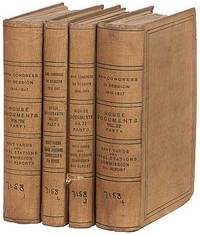
1918381800Washington: Government Printing Office 1918. Hardcover. Very Good. First edition. House Document No. 1946 64th Congress 2d Session 1916-1917. Parts 1-6 bound in 4 volumes. Thick octavos. Numerous folding maps including many in color charts and photographs. Complete as issued in the original publisher's cloth. Moderate soiling to the boards and top edges light stain to the top edge of some text pages and plates in two volumes with a few leaves partially torn or stuck together at the top edge only else overall a very good set. A very scarce complete set of the Commission reports with the many large folding maps in very good condition. Government Printing Office hardcover