19 492 résultats
196474265New York : Wings Club 1964-65-68. SIKORSKI Igor I. Recollections and Thoughts of a Pioneer. First edition. Octavo. 38 pp. including numerous full page photographic illustrations.HUNSAKER Jerome C. Some Lessons of History. First edition. ix 29 1 pp. including numerous photographic illustrations.VON BRAUN Werner Space Flight; Past Present and Future. First edition. Octavo. iv 2 27 1 pp. including numerous photographic illustrations.All three are bound in publisher's blue cloth with silver spine and cover lettering and silver stamped icon of the Wings Club blue endpapers. The Sikorski volume has a previous owner's name on dark blue endpapers hard to see else a very good set.The Wings Club was founded in New York City on May 15 1942. It was housed within the Yale Club and served World War II pilots as a place of leisure and occasional living quarters. The first board of directors included Juan Trippe the founder of Pan American World Airways and World War I flying ace Eddie Rickenbacker. The first president was Caleb Bragg a racer of automobiles and speedboats aviation pioneer and automotive inventor. Bragg had previously been a governor of the Aero Club of America. He was made president of the Wings Club despite suffering from a longterm illness which led to his death later the next year. Also in 1964 founding club member former club president and retired USAF General Harold Ross Harris implemented the annual "Sight Lecture" series at which a leading aviation notable was to be invited to deliver a lecture adhering generally to "insights foresights and hindsights" of aviation. Each lecture was to be published in book form by the Wings Club. Offered here are the First Second and Fifth Sight Lectures. Wings Club hardcover
1940LFA00d12Un ouvrage de 36 pages, format 180 x 240 mm, illustré, broché couverture couleurs, s.d. (années 1940), Bureau d'Information Allié
1946LFA-126742062Une plaquette de 20 pages, format 240 x 150 mm, illustrée, brochée, publiée en 1946, France Editions, bon état
1946LFA-126742063Une plaquette de 20 pages, format 240 x 150 mm, illustrée, brochée, publiée en 1946, France Editions, bon état
1945LFA-126742061Une plaquette de 20 pages, format 240 x 150 mm, illustrée, brochée, publiée en 1945, France Editions, bon état
43780Editions Atlas 1979, in-4 (29 x 21 cm) cartonnage éditeur sous jaquette illustrée, 144 p. (menus accrocs sans gravité à la jaquette, sinon très bon état ; non réédité) Abondamment illustré de photos et dessins, ce volume détaille deux avions anglais et un allemand qui furent les protagonistes d'innombrables affrontements en Europe et en Russie, notamment lors de la Bataille d'Angleterre.
1949LFA00857N° 185 - 30 avril 1949 - Une revue de 32 pages, format 380 x 280 mm, nombreuses illustrations
1944LFA-126730920Une plaquette de 36 pages, format 180 x 230 mm, illustrée, brochée, publiée en 1944, His Majesty's Stationnery Office, bon état
1944Hi126517,5 cm X 23 cm, 36 pp, couverture souple et illustrée. Agrafé, nombreuses photographies N&B
52321Editions Atlas 2001, in-4 (28 x 21 cm) cartonnage illustré de l'éditeur, 240 p. (très bon exemplaire ; épuisé) Texte sur deux colonnes. Belle documentation sur une trentaine des plus performants appareils américains, russes et européens (dont le Rafale), avec photos en couleurs, reproductions et coupes à toutes les pages.
52322Editions Atlas 2004, in-4 (28 x 21 cm) cartonnage illustré de l'éditeur, 239 p. (très bon exemplaire ; épuisé) Texte sur trois colonnes. Documentation de référence sur les hélicoptères les plus marquants de l'histoire de l'aéronautique, évoquant au passage les principales opérations militaires dans lesquelles ils furent impliqués ainsi que le développement des hélicoptères commerciaux, le tout illustré à toutes les pages de photos NB et couleurs ainsi que de coupes.
1998LFA-126732615Un ouvrage de 169 pages, format 235 x 300 mm, illustré, relié cartonnage couleurs, publié en 1998, Editions Atlas, bon état
1999LFA-126738794Un ouvrage de 64 pages, format 180 x 250 mm, illustré, broché couverture couleurs, publié en 1999, Del Prado Editeur / Osprey Aviation, collection "Les Combats du Ciel", bon état
20296Paris, Icare, revue de l'aviation française, N° 84, 1978. Broché, couverture illustrée.par Philippe Mitschké. in-4 de 32-158 pages, illustrations d'Antoine de Saint-Exupéry, Paul-Emile Victor, etc.., photos de Morris Saxe, Musée Air France, Les Expéditions Polaires Françaises, etc..., Carte en double page, facs-similés (dessins, manuscrits, etc..).
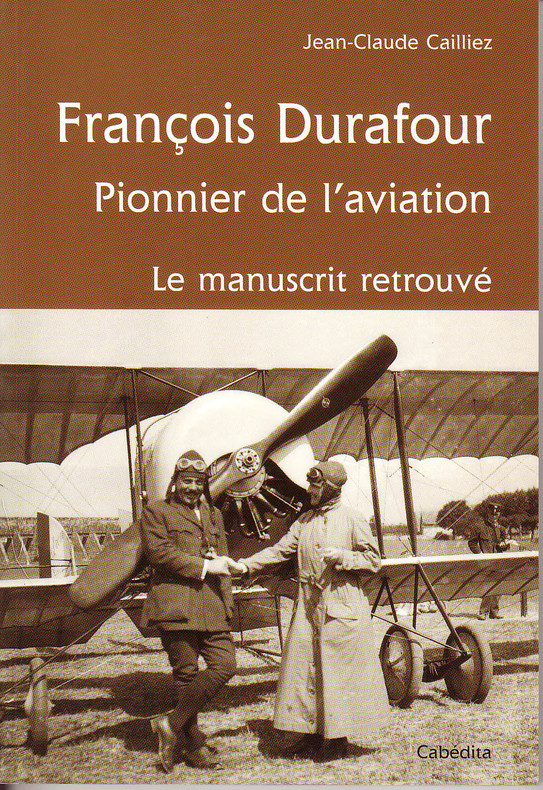
2012AVIATIONNN221210817Bière, Cabédita, 2012, 16,5 x 24, 163 pages sous couverture illustrée. Illustrations noir & blanc.
191896142New Haven: Yale University Press 1918. 1918. Good. - Octavo pictorial teal boards titled in gilt and illustrated in blue on the front cover & the spine. A small three-paneled paper label is mounted between the title and the author's name on the spine. The covers are slightly rubbed and soiled. 256 pages illustrated with a color frontispiece portrait by Rudolph Ruzicka and 4 black & white plates by W.A. Dwiggins. Good. <p>First American edition. From the library of the World War One naval aviator Charles Frederic Beach signed by him on the front endpaper.<p>Laid in at the front is a typed form letter signed by the founder of the Yale University Press George Parmly Day presenting the book to a classmate of Ensign Curtis Seaman Read in his memory. New Haven: Yale University Press, 1918. hardcover
3234Archive. 7 pieces. 1938 to 1939. A grouping of seven pieces concerning Frederic E. Humphreys the first Army officer to fly solo. These pieces arranged in chronological order mention the thirtieth anniversary of Humphreys first flight.1 TLS. 1pp. 8 x 10. July 18 1938. War Department. A typed letter signed J Totten on War Department letterhead concerning Special Recognition for Colonel F.E. Humphreys: Reference is made to your letter of November 12 1937 recommending that some form of special recognition be awarded Colonel Frederic E. Humphreys New York National Guard for being the first officer of the United States Regular Army to fly a plane aloneit is proposed to make a suitable award to Colonel Humphreys. By order of the Secretary of War.2 TL. 1pp. 8 x 10. July 18 1938. War Department. A typed letter that is an unsigned copy of #1.3 TDS. 1pp. 8 x 10. August 3 1938. No place. A typed letter signed Ames T. Brown indicating that he mailed a letter to Louis L. Pendleton concerning the 30th anniversary of the flight.4 TD. 1pp. 8 x 10. August 4 1938. Camp Smith Peekskill. A typed document mentioning that it is to be addressed to Colonel Louis L. Pendleton.5 ALS. 1pp. 8 x 10. August 23 38. New York City. An autograph letter signed L.L. Pendleton Colonel addressed to Lieutenant Humphreys: Please not attached papers which please return to me at your convenience. The Mills of the Gods grind slow it would seem but better late than never also applies. I hope I will be around next summer to see what they really do then!6 TLS. 1pp. 7 x 9. April 5 1939. Aberdeen Proving Ground. A typed letter signed C.M. on Office of the Commanding Officer Aberdeen Proving Ground stationery. He wrote to Humphreys: It certainly was nice to get your pleasant letter of April 3rdmy memory is quite clear as to the time you and Lahm were trying out the first Wright airplane. I am glad you enjoyed the bulletin or class letter but I prepared it quite a while before it was issued and made some serious omissionsThere is a good article in the Sperryscope Vol 8 no 10 just out by Lahm which mentions the trying experience of your pamphlet. Call up the Sperryscope Co. and get a copy from Gillmor who is an old friend of mine. Lahm received the first flying lesson but Humphreys made the first solo flight just before Lahm made his flight.7 Card. 1pp. No date. Governors Island NY. A card imprinted Colonel Earl McFarland and written on in pencil My best wishes and I hope to see you soon. Governors Island NY. unknown
191174126London: Royal Aero Club of the United Kingsom 1911. Quarto. 2 ads 581-602 2 ads pp. Numerous photographic illustrations and ads Publisher's printed mauve wrappers. Bit of spine rubbing but clean and tight.The main article in this issue is about the race for the Gordon-Bennet Cup at Eastchurch. The Gordon Bennett Aviation Trophy was an international airplane racing trophy awarded by James Gordon Bennett Jr. the American owner and publisher of the New York Herald newspaper. Curtiss won the first Cup Claude Graham-White the second and as we learn from the issue C. T. Weyman won the third cup 1911. Weyman was an American and flew a Nieuport aeroplane. Eleven pages are devoted to a detailed account of the race. Royal Aero Club of the United Kingsom unknown
191174173Paris: C.M. ca. 1911. First edition. Oblong octavo consisting of 20 photographic illustrations of early aeroplanes each with a caption beneath in French. All with tissue guards. Publisher's printed brown wrappers with the front bearing images of a biplane and a monoplane. No copies located by OCLC. A very good copy.There is no information about this publication but likely it was meant to accompany "Les Etapes de l'Aviation:Conférence Faite le 12 Décembre 1909" by Mathieu Varille. The conference was held in Lyon perhaps in anticipation of their 1910 air meet. Many of the much monkeyed with photographs herein are by M. Branger a well known early aviation photographer. C.M. unknown
191673081Chicago and Grand Rapids: Bud Morriss Airplane School 1916. Original photograph of "Bud" Morriss and his chief engineer Tony Stadlman at the controls of his flying boat. Photograph measures 3 x 2 1/2 inches. It is in the original frame and with the original label on the verso which reads; "This is an authentic photograph taken in Grand Rapids 1915 of P. G. B. Bud Morris at the controls of his Benoist Flying Boat accompanied by his Chief mechanician Tony Stadlman who later became Superintendent of the Lockheed Airplane Company of Burbank." Together with an original stickpin for the school in brass and blue and with an image of a biplane. It reads "Bud Morriss Airplane School Chicago 1916." The original celluloid covering the photograph is still present. Rare mementos of an early and influential aviator and his aviation school.Percival George Brockhurst Morriss 1884-1944 a native of England learned to fly at Brooklands racetrack in 1909. Soon after that he came to the United States. A former assistant engineer in the Marconi Wireless Telegraph Company he championed the use of wireless to communicate with airplanes in flight. Later the same year he learned to fly a Bleriot in England and then joined the Curzon aviators. In 1914 he operated a flying boat service on the Chicago lake front and in the same year was managing editor of Aero & Hydro an aviation weekly paper. In 1915 he opened the Bud Morriss Flying School in Chicago. His next venture was with the Benoist Aeroplane Co. of St. Louis serving successively as assistant pilot and instructor Chief instructor and finally as vice-president and sales engineer. In 1917 he served as a member of the Chicago Aero Commission. During the First World War he enlisted as a seaman in the Navy in which he served for 18 months. Upon discharge Morriss was executive officer of aviation schools at a naval air station. Anthony Stadlman was in 1886 in Bohemia. He emigrated to the United States from his home in what was then Czechoslovakia in 1906 ispired by news of the aviation work of Orville and Wilbur Wright. By 1910 he was helping to build flying machines at the Chicago School of Aviation. For a short while he was chief engineer at the Bud Morris Aviation School. The Lockheed Aircraft Corporation originally called the Loughead Aircraft Manufacturing Company was organized in the summer of 1916 by brothers Allan and Malcolm Loughead. Their plant was located in the rear of a garage on State Street in Santa Barbara. Tony Stadlman met Allan Loughead on a Chicago airfield and became superintendent of manufacturing when the company changed its name to Lockheed in 1927. Bud Morriss Airplane School unknown
191373067Paris: L'Auto 1913. First edition. Bifolio 16 3/4 by 24 inches. Now separated into two leaves but complete. Photographic illustrations. Very good.A free newspaper supplement detailing the 1913 Air Meet in France. The third page bears photographic illustrations of the winners and include; Monoplane Nieuport; Monoplane Morane-Saulnier; Biplan Breguet; Hydravion Borel; Biplan H. Farman; Monoplan Bleriot; Hydravion M. Farman; Hydravion Caudron. There are alos photographic portraits of 10 pilots including one woman: Mme de Laroche. Born on 22 August 1882 in Paris Elise Raymonde Deroche was the daughter of a plumber. She had a fondness for sports as a child as well as for motorcycles and automobiles when she was older. As a young woman she became an actress and used the stage name "Raymonde de Laroche". Inspired by Wright's demonstations of flight in Paris in 1908 she decided to become a pilot. "In October 1909 de Laroche appealed to her friend aviator and aeroplane builder Charles Voisin to instruct her in how to fly. On 22 October 1909 de Laroche went to the Voisin brothers' base of operations at Chalons 90 miles east of Paris. Voisin's aircraft could seat only one person so she operated the plane by herself while he stood on the ground and gave instructions. After she mastered taxiing around the airfield she lifted off and flew 300 yards. De Laroche's flight is often cited as the first by a woman in a powered heavier-than-air craft; there is evidence that two other women P. Van Pottelsberghe and Thérèse Peltier had flown the previous year with Henri Farman and Delagrange respectively as passengers but not as pilots. On 8 March 1910 de Laroche became the first woman in the world to receive a pilot licence when the Aero-Club of France issued her licence #36 of the Fédération Aéronautique Internationale International Aeronautics Federation or F.A.I." Wiki.L'Auto was the main French sports daily issued from 16 October 1900 to 17 August 1944 . Founded under the title L'Auto-Vélo 1900-1902 by its founder director Henri Desgrange this organized the Tour de France. It was banned from publication in 1944 because it was considered favorable to the German Occupation. L'Auto unknown
74125Trenton NJ: John A. Roebling's Sons Company. First edition. Small octavo. 24 pp. with a plethora of photographic illustrations. Publisher's sewn blue printed wrappers with a window in the front cover to display a biplane aloft. Small marginal tear not afecting any text. A very good copy. None located by OCLC. The Roebling's history in Trenton dates to 1848 when John A. Roebling purchased 25 acres of land in Chambersburg Best known today as the "father of the Brooklyn Bridge" Roebling and the company he founded supplied cables from Trenton to most of the major suspension bridges built in United States during the first half of the 20th century. Among the dozens of major bridges using Trenton-made cable are New York City's Williamsburg Manhattan and George Washington Bridges as well as the Golden Gate Bridge in San Francisco.Roebling Lofts converted the "Clark Street Rope Shop" Building 101 erected in 1917 during WW I. It was an ultra-modern facility for its time with massive windows and a fire resistant design. It replaced an older factory that burned down in late 1915 allegedly by German saboteurs. Building 101 specialized in light- and medium-gauge wire rope such as used in aircraft. Perhaps the factory's most famous customer was Charles Lindbergh who specified Roebling wire for The Spirit of St. Louis the plane he flew non-stop from New York to Paris in 1927. This has been called the single most influential flight in aviation history excepting the 1903 first-flight by the Wright Brothers who also used Roebling cables for bracing wings. Lindbergh used Roebling products for control cables to brace the wings for the ignition harness and the plane's lightning rod. The testing lab for the aircraft business was located on the 4th floor of the Clark Street factory including a massive machine designed to simulate stresses on wings. The machine survives in place on the 4th floor and is being preserved in a lounge for use by residents of Roebling Lofts. John A. Roebling's Sons Company unknown
1329650301.Gpaperback. Good. Access codes and supplements are not guaranteed with used items. May be an ex-library book. paperback
194929031New York: FAR Gallery 1949. 1949. Fine. - sc 4 fine bright hand-colored lithographs depicting events in the history and birth of flight. Each of these beautiful prints is lithographed on 8 inch high by 5-1/2 inch wide cardstock. There is a little minor smudging at the bottom of the lithograph depicting "The Vauxhall Balloon" else the prints are in fine condition. <p>The images respectively depict:<p>The "Descent near Philadelphia Phil. 1850" of a single pink balloon topped with a red & yellow floral accent and horizontal red stripe. A yellow and blue flag and the American flag fly from either side of the yellow gondola wich carries a single person.<p>"The Vauxhall Balloon Phil. 1850" depicts a single red & yellow striped balloon. Two flags fly from the sides of the purple ribboned gondola carrying 6 people.<p>The "Descent Near Easton Pennsylvania" depicts a shredded dark & light blue balloon. The basket gondola carries a single man who holds out his top hat. American flags fly from both sides of the gondola.<p>"Mr. Cocking's Parachute Phil. 1850" depicts the Nasau balloon with Cocking's parachute attached at the bottom. A watercolorist and amateur scientist Robert Cocking designed his parachute based on that of Garnerin's. The blue & yellow striped balloon which ascended from London's Vauxhall Gardens in 1837 carries 2 passengers in its gondola. The yellow red and blue inverted cone parachute attached under the balloon's gondola carried Cocking aloft in its own basket gondola. Cocking's experiment ended in tragedy. Releasing his parachute at a height of 5000 feet it failed due to a mechanical error and Cocking plummeted to his death.<p>A rare group of prints examples of which are housed at the National Air and Space Museum. New York: FAR Gallery, 1949. unknown
a24141Leipzig 1934 Second Enlarged Edition. Letters biography recollections of German WWI aviator killed in action in 1916. 8vo. 187pp. photo illustrations maps hardcover. VG some minor wear no DJ. . hardcover