Administration, National Aeronautics andBiblio.com
857 résultats
22246332like new. unknown
1963ZB332812Washington: 1963. 34 pp. quarto original paper wrappers minor library stamps else very good. - If you are reading this this item is actually physically in our stock and ready for shipment once ordered. We are not bookjackers. Buyer is responsible for any additional duties taxes or fees required by recipient's country. Washington: unknown
16199Brochure Aeronautica - Rolls Royce Motori - Achievement - 1950 ca. - pp. 15 ca con illustrazioni. - Condizioni di conservazione molto buone come da foto. - Interessante per tutti gli studiosi appassionati e amanti del genere! - . FAI IMMEDIATAMENTE un'offerta per l'oggetto . - . NON ASPETTARE la scadenza. - . NON RISCHIARE DI PERDERLO. - COMPRA SUBITO!!! unknown
39287Aeronautica - Un volo di 55000 chilometri - edizione speciale di 500 esemplari - copia n° 291 - ed. 1926 - pp. 238 con 5 tavole a fine testo ripiegate . - Fonte ricchissima di informazioni per studiosi appassionati e collezionisti unknown
90099R. Abate e G. Apostolo - Caproni nella Prima Guerra Mondiale - ed. 1970 - Testo in lingua italiana. Pagine 251 con illustrazioni e una tavola ripiegata. - Copertina rigida. - Condizioni molto buone. unknown
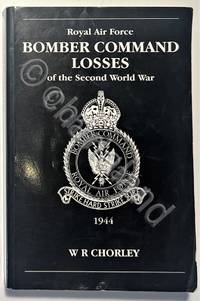
137518WWII - W. R. Chorley - Royal Air Force: Bomber Command Losses of the Second World War Volume 5: Aircraft and Crew Losses 1944 - ed. 1997 - Pag. 576 - Copertina morbida - Testo in inglese. - Condizioni molto buone. unknown
U13OS-00344National Aeronautics and Space Administration. Used - Acceptable. Acceptable condition. NASA Space Exploration A readable intact copy that may have noticeable tears and wear to the spine. All pages of text are present but they may include extensive notes and highlighting or be heavily stained. Includes reading copy only books. National Aeronautics and Space Administration unknown
2009AME_9781563479625Aeronautics 2009. 1ST. Hardcover. New/New. Aeronautics hardcover
2004AME_9781563476730Aeronautics 2004. 1. Hardcover. New/New. Aeronautics hardcover
19603223aAeronautics. Fair. Paperback. 1960. 36 issues. between 1941-1960. Covers mostly frayed with spines also very worn.<br><p></p> . Aeronautics paperback
1505569087.Gpaperback. Good. Access codes and supplements are not guaranteed with used items. May be an ex-library book. paperback
0282767355.Gpaperback. Good. Access codes and supplements are not guaranteed with used items. May be an ex-library book. paperback
1965033442American Institute of Aeronautics and Astronautics: 1965. 559 pages. A volume of 45 technical papers presented in Boston Massachusetts Aug 30-Sept 1 1965. VERY GOOD HARDCOVER this papers have been bound into hardcover. Ex-library withdrawn. Scarce. Hard Cover. Very Good/Not Issued with a Dust Jacket. 4to - over 9¾" - 12" tall. Ex-Library Withdrawn. American Institute of Aeronautics and Astronautics: Hardcover
199242377Washington DC: AIAA 1992. First Edition. First Printing. good. 716 wraps a few illustrations but mostly textual summaries some ink marks in text covers somewhat worn and soiled. 29th Plenary Meeting of the Committee on Space Research COSPAR. AIAA paperback
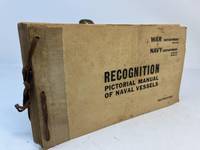
194336709Washington DC: Navy Department 1943. Stiff wraps. Good . September 1943. A Good copy. Oblong 8vo. unpaginated with approximately 150 pages each page a different ship with technical data a b&w diagram and b&w photograph. Bound in two stiff tan boards with string tie. Thumb-nail index seperating the five Nations and Misc. covered. Overall wear and soiling to covers. Paper is tanned at edges appears unmarked. Navy Department unknown
192590627Paris: Impriomerie Nationale 1925. Presumed First Edition First printing. Stiff boards. Poor. The text is in FRENCH. The format is approximately 4.5 inches by 7.5 inches. 170 2 pages. Ex-library copy with the usual library markings. The front cover is largely separated and the rear cover is separated but present. Some page discoloration noted. Stamps relating to the library of the U.S. Air Corps Tactical School Maxwell Field ALA on April 6 1933 present. The contents address aviation and the airfield conditions of employment including reconnaissance photography and artillery observation Communications with those on the ground combat support surveillance Attacking the ground from the air and aviation unit personnel Annexes include coded transmissions classification of photographs materiel and training. These provisional regulations capture many of the lessons from WWI and provide a baseline of the state-of-the-art state-of-knowledge and the state-of-practice in the first portion of the interwar period. The "Provisional Regulations for Aeronautical Maneuvers" was a 1925 military document from the French Ministry of War focused on combat reconnaissance aircraft. Impriomerie Nationale hardcover
1974005829Washington D.C.: National Aeronautics and Space Administration NASA 1974. Book. Near Fine. Photograph. First Edition. 8" x 10". "For Release No Date. Photo No. 62-MAS-168". Near Fine faint 1" surface crease. 8" x 10" black and white NASA publication information printed in blue ink verso. "Astronaut John Glenn was photographed in space by an automatic sequence action picture camera as he became the first American to orbit the earth on Feb. 20 1962. His Mercury spacecraft - Friendship 7- made three orbits in its 4 hours 55 minute flight. Glenn was in a state of weightlessness traveling at 17500 mph as this picture was taken.". National Aeronautics and Space Administration (NASA) unknown
200086103John F Kennedy Space Center: National Aeronautics and Space Administration 2000. Presumed First Edition First printing. Staplebound. Very good. The format is approximately 8.5 inches by 11 inches. 63 5 pages includes covers. Illustrated front cover. The format is approximately 8.25 inches by 11 inches. Illustrations. This includes information on STS-1 through STS 103 from 1981 to 1999. Not all numbers were reported on. The write-ups include mission highlights EVAs Launch and Landing. This includes information on John Glenn's return to space and the first flight to the International Space Station. The International Space Station ISS is the largest modular space station in low Earth orbit. The project involves five space agencies: the United States' NASA Russia's Roscosmos Japan's JAXA Europe's ESA and Canada's CSA. The ownership and use of the space station is established by intergovernmental treaties and agreements. The station serves as a microgravity and space environment research laboratory in which scientific research is conducted in astrobiology astronomy meteorology physics and other fields. The ISS is suited for testing the spacecraft systems and equipment required for possible future long-duration missions to the Moon and Mars. The Space Shuttle was a partially reusable low Earth orbital spacecraft system operated from 1981 to 2011 by the U.S. National Aeronautics and Space Administration NASA as part of the Space Shuttle program. Its official program name was Space Transportation System STS taken from a 1969 plan for a system of reusable spacecraft where it was the only item funded for development. The first of four orbital test flights occurred in 1981 leading to operational flights beginning in 1982. Five complete Space Shuttle orbiter vehicles were built and flown on a total of 135 missions from 1981 to 2011 launched from the Kennedy Space Center KSC in Florida. Operational missions launched numerous satellites interplanetary probes and the Hubble Space Telescope HST conducted science experiments in orbit participated in the Shuttle-Mir program with Russia and participated in construction and servicing of the International Space Station ISS. The Space Shuttle fleet's total mission time was 1322 days 19 hours 21 minutes and 23 seconds. Space Shuttle components include the Orbiter Vehicle OV with three clustered Rocketdyne RS-25 main engines a pair of recoverable solid rocket boosters SRBs and the expendable external tank ET containing liquid hydrogen and liquid oxygen. The Space Shuttle was launched vertically like a conventional rocket with the two SRBs operating in parallel with the orbiter's three main engines which were fueled from the ET. The SRBs were jettisoned before the vehicle reached orbit while the main engines continued to operate and the ET was jettisoned after main engine cutoff and just before orbit insertion which used the orbiter's two Orbital Maneuvering System OMS engines. At the conclusion of the mission the orbiter fired its OMS to deorbit and reenter the atmosphere. The orbiter was protected during reentry by its thermal protection system tiles and it glided as a spaceplane to a runway landing usually to the Shuttle Landing Facility at KSC Florida or to Rogers Dry Lake in Edwards Air Force Base California. If the landing occurred at Edwards the orbiter was flown back to the KSC atop the Shuttle Carrier Aircraft a specially modified Boeing 747. The first orbiter Enterprise was built in 1976 and used in Approach and Landing Tests but had no orbital capability. Four fully operational orbiters were initially built: Columbia Challenger Discovery and Atlantis. Of these two were lost in mission accidents: Challenger in 1986 and Columbia in 2003 with a total of 14 astronauts killed. A fifth operational and sixth in total orbiter Endeavour was built in 1991 to replace Challenger. The Space Shuttle was retired from service following Atlantis's final flight on July 21 2011. National Aeronautics and Space Administration unknown
1971104782National Aeronautics Space Administration NASA. Very Good. 1971. First Edition. Wraps. 1971. Wraps softcover 226 pages. Some wear to cover else Very Good condition. NASA. No Maps. ; 4to - over 9¾" - 12" tall; 226 pages . National Aeronautics Space Administration NASA paperback
200888971Washington DC: National Aeronautics and Space Administration c2008. Presumed First Edition First printing this. Single sticker sheet printed on both sides peal line is about at the diameter line. Very good. The format is a circle with a 4 inch diameter. Sticker seam at the back is at the mid-point. Rare surviving copy. One side is a version of the ARES logo originally designed by Star Trek artist Michael Okuda with 10 stars and a rocket ascending but no image of Earth in the background. The other side has the following text: NASA's Ares I-X Flight Test Vehicle NASA's first flight test of the full rocket for the agency's next-generation spacecraft and launch vehicle systems is launching in 2009. The flight test called Ares I-X will bring NASA one step closer to its exploration goals--to return to the moon for more ambitious exploration of the lunar surface ad to travel to Mars and destinations beyond." Then two links to on-line resources. Ares I-X was the first-stage prototype and design concept demonstrator of Ares I a launch system for human spaceflight developed by the National Aeronautics and Space Administration NASA. Ares I-X was successfully launched on October 28 2009. The Ares I-X vehicle used in the test flight was similar in shape mass and size to the planned configuration of later Ares I vehicles but had largely dissimilar internal hardware consisting of only one powered stage. By flying the vehicle through first-stage separation the test flight also verified the performance and dynamics of the Ares I solid rocket booster in a "single stick" arrangement which is different from the solid rocket booster's then-current “double-booster†configuration alongside the external tank on the space shuttle. Ares I was the crew launch vehicle that was being developed by NASA as part of the Constellation program. The name "Ares" refers to the Greek deity Ares who is identified with the Roman god Mars. Ares I was originally known as the "Crew Launch Vehicle" CLV. NASA planned to use Ares I to launch Orion the spacecraft intended for NASA human spaceflight missions after the Space Shuttle was retired in 2011. Ares I was to complement the larger uncrewed Ares V which was the cargo launch vehicle for Constellation. NASA selected the Ares designs for their anticipated overall safety reliability and cost-effectiveness. However the Constellation program including Ares I was canceled by U.S. president Barack Obama in October 2010 with the passage of his 2010 NASA authorization bill. In September 2011 NASA detailed the Space Launch System as its new vehicle for human exploration beyond Earth's orbit. Unlike the Space Shuttle where both crew and cargo were launched simultaneously on the same rocket the plans for Project Constellation outlined having two separate launch vehicles the Ares I and the Ares V for crew and cargo respectively. Having two separate launch vehicles allows for more specialized designs for the crew and heavy cargo launch rockets. The Ares I rocket was specifically being designed to launch the Orion Multi-Purpose Crew Vehicle. Orion was intended as a crew capsule similar in design to the Apollo program capsule to transport astronauts to the International Space Station the Moon and eventually Mars. Ares I might have also delivered some limited resources to orbit including supplies for the International Space Station or subsequent delivery to the planned lunar base. NASA selected Alliant Techsystems the builder of the Space Shuttle Solid Rocket Boosters as the prime contractor for the Ares I first stage. NASA announced that Rocketdyne would be the main subcontractor for the J-2X rocket engine on July 16 2007. NASA selected Boeing to provide and install the avionics for the Ares I rocket on December 12 2007. On August 28 2007 NASA awarded the Ares I Upper Stage manufacturing contract to Boeing. The upper stage of Ares I was to have been built at Michoud Aerospace Factory which was used for the Space Shuttle's External Tank and the Saturn V's S-IC first stage. The Ares V formerly known as the Cargo Launch Vehicle or CaLV was the planned cargo launch component of the canceled NASA Constellation program which was to have replaced the Space Shuttle after its retirement in 2011. Ares V was also planned to carry supplies for a human presence on Mars. The Ares V was to launch the Earth Departure Stage and Altair lunar lander for NASA's return to the Moon which was planned for 2019. It would also have served as the principal launcher for missions beyond the Earth-Moon system including the program's ultimate goal a crewed mission to Mars. The uncrewed Ares V would complement the smaller and human-rated Ares I rocket for the launching of the 4–6 person Orion spacecraft. Both rockets deemed safer than the then-current Space Shuttle would have employed technologies developed for the Apollo program the Shuttle program and the Delta IV EELV program. National Aeronautics and Space Administration unknown
200386119Kennedy Space Center FL: National Aeronautics and Space Administration Kennedy Space Center 2003. Presumed First Edition First printing. Wraps. Very good. The format is approximately 8.5 inches by 11 inches. 61 3 pages plus covers. Illustrated covers. Illustrations most in color. Contents include Center Director's Message; NASA Vision and Mission; KSC Goals and Principles; The President's Management Agenca; Significant Events; Expendable Launch Vehicle Program; Space Shuttle Program; Shuttle Upgrades; International Space Station and Shuttle Payload Processing; Payload Carriers Program; Spaceport and Range Technologies; Future Vehicles; Safety and Health First; Environmental Stewardship; Partnerships; Outreach to the World; Education; KSC Business Report; Economic Impact; Workforce Diversity; Procurement Report; and Financial Statement. The John F. Kennedy Space Center KSC originally known as the NASA Launch Operations Center located on Merritt Island Florida is one of the National Aeronautics and Space Administration's NASA ten field centers. Since December 1968 KSC has been NASA's primary launch center of human spaceflight. Launch operations for the Apollo Skylab and Space Shuttle programs were carried out from Kennedy Space Center Launch Complex 39 and managed by KSC. Located on the east coast of Florida KSC is adjacent to Cape Canaveral Space Force Station CCSFS. The management of the two entities work very closely together share resources and operate facilities on each other's property. Though the first Apollo flights and all Project Mercury and Project Gemini flights took off from the then-Cape Canaveral Air Force Station the launches were managed by KSC and its previous organization the Launch Operations Directorate. Starting with the fourth Gemini mission the NASA launch control center in Florida Mercury Control Center later the Launch Control Center began handing off control of the vehicle to the Mission Control Center in Houston shortly after liftoff; in prior missions it held control throughout the entire mission. Additionally the center manages launch of robotic and commercial crew missions and researches food production and in-situ resource utilization for off-Earth exploration. Since 2010 the center has worked to become a multi-user spaceport through industry partnerships even adding a new launch pad LC-39C in 2015. There are about 700 facilities and buildings grouped throughout the center's 144000 acres. Among the unique facilities at KSC are the 525-foot tall Vehicle Assembly Building for stacking NASA's largest rockets the Launch Control Center which conducts space launches at KSC the Operations and Checkout Building which houses the astronauts dormitories and suit-up area a Space Station factory and a 3-mile long Shuttle Landing Facility. There is also a Visitor Complex on site that is open to the public. National Aeronautics and Space Administration, Kennedy Space Center paperback
200986122George C. Marshall Space Flight Center Huntsville A.: National Aeronautics and Space Administration George C. Marshall Space Flight Center 2009. Xerox-style reproduction. Assume only a few copies were made for medial representatives. Stapled at upper left corner. Good. Front cover i 1 36 2 pages. Illustrations. Three-hole punched. The top corner of some of the some of the back pages are bent/creased. Contents include Contacts; Media Services Information; LRO/LCROSS Executive Summary; Mission Quick Facts; LRO Quick Facts; LCROSS Quick Facts; Launch Vehicles Mated with LRO/LCROSS; LRO/LCROSS Mission Trajectory; Why the Moon; Historical Explorations of the Moon; LRO Mission Overview; LRO Mission at a Glance; LRO Instruments; LRO Across the Country; LRO Products and Benefits: LRO Spacecraft With Instruments; Treasure Hunting on the Moon: LRO and the Search for Water; Robot Scout: Fly Me Safely to the Moon; LCROSS Mission Overview; LCROSS Mission at a Glance; The Search for Water on the Moon; LCROSS Science Instruments; LCROSS Spacecraft; LCROSS Observation Campaign; Future NASA Lunar Missions; and Program/Project Oversight. The Lunar Reconnaissance Orbiter LRO is a NASA robotic spacecraft currently orbiting the Moon in an eccentric polar mapping orbit. Data collected by LRO have been described as essential for planning NASA's future human and robotic missions to the Moon. Its detailed mapping program is identifying safe landing sites locating potential resources on the Moon characterizing the radiation environment and demonstrating new technologies. Launched on June 18 2009 in conjunction with the Lunar Crater Observation and Sensing Satellite LCROSS as the vanguard of NASA's Lunar Precursor Robotic Program LRO was the first United States mission to the Moon in over ten years. LRO and LCROSS were launched as part of the United States's Vision for Space Exploration program. The probe has made a 3-D map of the Moon's surface at 100-meter resolution and 98.2% coverage excluding polar areas in deep shadow including 0.5-meter resolution images of Apollo landing sites. The first images from LRO were published on July 2 2009 showing a region in the lunar highlands south of Mare Nubium Sea of Clouds. The total cost of the mission is reported as US$583 million of which $504 million pertains to the main LRO probe and $79 million to the LCROSS satellite. As of 2019 LRO has enough fuel to continue operations for at least seven more years and NASA expects to continue utilizing LRO's reconnaissance capabilities to identify sites for lunar landers well into the 2020s. The Lunar Crater Observation and Sensing Satellite LCROSS was a robotic spacecraft operated by NASA. The mission was conceived as a low-cost means of determining the nature of hydrogen detected at the polar regions of the Moon. Launched immediately after discovery of lunar water by Chandrayaan-1 the main LCROSS mission objective was to further explore the presence of water in the form of ice in a permanently shadowed crater near a lunar polar region. It was successful in confirming water in the southern lunar crater Cabeus. It was launched together with the Lunar Reconnaissance Orbiter LRO on June 18 2009 as part of the shared Lunar Precursor Robotic Program the first American mission to the Moon in over ten years. LCROSS was designed to collect and relay data from the impact and debris plume resulting from the launch vehicle's spent Centaur upper stage and data-collecting Shepherding Spacecraft striking the crater Cabeus near the south pole of the Moon. Centaur had nominal impact mass of 5081 lb and an impact velocity of about 5600 mph releasing the kinetic energy equivalent of detonating approximately 2 tons of TNT. LCROSS suffered a malfunction on August 22 depleting half of its fuel and leaving very little fuel margin in the spacecraft. Centaur impacted successfully on October 9 2009 at 11:31 UTC. The Shepherding Spacecraft descended through Centaur's ejectate plume collected and relayed data impacting six minutes later at 11:37 UTC. Contrary to media reports at the time neither the impact nor its dust cloud could be seen from Earth using the naked eye or telescopes. National Aeronautics and Space Administration, George C. Marshall Space Flight Center unknown
200786168Washington DC: National Aeronautics and Space Administration c2007. Presumed First Edition First printing. Single sheet sticker of mission patch printed on both sides. Very good. The format is 4.5 inches by 4.5 inches. The design is one square offset over a square of equal size making an eight-pointed 'star'. The base square has the number 122 in the upper left corner the alphanumeric 1E in the upper right corner and part of a graphic design in the lower two corners that blend into the graphic on the main square. The square has an image of the earth and one of a figure of a sailing ship 'morphing' into the space shuttle One the four sides are the crew names of Eyharts o Frick o Poindexter o Walheim o Melvin o Schelgel o Love. On the reverse there is text which reads STS-122 Patch Description The primary objective of the STS-122 mission is to install and outfit the European Space Agency's Columbus laboratory module. Atlantis will rendezvous and dock with the International Space Station ISS on flight day three and Leopold Eyharts will official become a member of the ISS crew replacing Dan Tani who will return to Earth as part of the STS-122 crew. The crew will conduct three spacewalks to prepare the Columbus module and replace a nitrogen tank on the station. The STS-122 patch depicts the continuation of the voyages of early explorers to today's frontier: space. The ship denotes the travels of the early expeditions from the East to the West. The shuttle shows the continuation of that journey along the orbital patch from west to east. A little more than 500 years after Columbus sailed to the new world the STS-122 crew will bring the European laboratory module ":Columbus" to the ISS to usher in a new ear of scientific discovery. NASA and Space Flight Awareness logos. STS-122 was a NASA Space Shuttle mission to the International Space Station ISS flown by the Space Shuttle Atlantis. STS-122 marked the 24th shuttle mission to the ISS and the 121st Space Shuttle flight overall. The mission was also referred to as ISS-1E by the ISS program. The primary objective of STS-122 was to deliver the European Columbus science laboratory built by the European Space Agency ESA to the station. It also returned Expedition 16 Flight Engineer Daniel M. Tani to Earth. Tani was replaced on Expedition 16 by Léopold Eyharts a French Flight Engineer representing ESA. After Atlantis landing the orbiter was prepared for STS-125 the final servicing mission for the Hubble Space Telescope. The original target launch date for STS-122 was December 6 2007 but due to engine cutoff sensor ECO reading errors the launch was postponed to December 9 2007. During the second launch attempt the sensors failed again and the launch was halted. A tanking test on December 18 2007 revealed the probable cause to lie with a connector between the external tank and the shuttle. The connector was replaced and the shuttle launched during the third attempt on February 7 2008. Columbus is a science laboratory that is part of the International Space Station ISS and is the largest single contribution to the ISS made by the European Space Agency ESA. Like the Harmony and Tranquility modules the Columbus laboratory was constructed in Turin Italy by Thales Alenia Space. The functional equipment and software of the lab was designed by EADS in Bremen Germany. It was also integrated in Bremen before being flown to the Kennedy Space Center KSC in Florida in an Airbus Beluga. It was launched aboard Space Shuttle Atlantis on 7 February 2008 on flight STS-122. It is designed for ten years of operation. The module is controlled by the Columbus Control Centre located at the German Space Operations Center part of the German Aerospace Center in Oberpfaffenhofen near Munich Germany. The European Space Agency has spent €1.4 billion about US$2 billion on building Columbus including the experiments it carries and the ground control infrastructure necessary to operate them. National Aeronautics and Space Administration unknown
195980613Washington DC: National Aeronautics and Space Administration 1959. Contemporary print. Photograph. Good. Sheet is approximately 8 inches by 10.5 inches. Black and white photographic image is approximately 9 inches by 6.5 inches. This is printed on photographic paper stock. The image is of a Pilot/Astronaut in a flight suit/spacesuit seated on a chair. Based on comparison with NASA early photographs of the Mercury 7 Astronauts this appears to be an astronaut in their spacesuit. It may be Gordon Cooper in the picture. The photo is contemporary with Project Mercury. Project Mercury was the first human spaceflight program of the United States running from 1958 through 1963. An early highlight of the Space Race its goal was to put a man into Earth orbit and return him safely ideally before the Soviet Union. Taken over from the US Air Force by the newly created civilian space agency NASA it conducted twenty uncrewed developmental flights some using animals and six successful flights by astronauts. The program took its name from Roman mythology. The astronauts were collectively known as the "Mercury Seven" and each spacecraft was given a name ending with a "7" by its pilot. On April 9 1959 NASA's first administrator Dr. Keith Glennan announced the names of the agency's first group of astronauts at a news conference in Washington D.C. Now known as the "Original Seven" they included three Naval aviators M. Scott Carpenter Walter M. Schirra Jr. and Alan B. Shepard Jr.; three Air Force pilots L. Gordon Cooper Jr. Virgil I. Gus Grissom and Donald K. Deke Slayton; along with Marine Corps aviator John H. Glenn Jr. This group photo of the original Mercury astronauts was taken in June 1963 at the Manned Spacecraft Center MSC now Johnson Space Center in Houston Texas. The astronauts are left-to-right: Cooper Schirra Shepard Grissom Glenn Slayton and Carpenter. Project Mercury became NASA's first major undertaking. The objectives of the program were to place a human-rated spacecraft into orbit around Earth observe the astronaut's performance in such conditions and safely recover the astronaut and the spacecraft. The Mercury flights proved that humans could live and work in space and paved the way for the Gemini and Apollo programs as well as for all further human spaceflight. National Aeronautics and Space Administration unknown
198558682National Aeronautics and Space Administration. VG. 1985. Paperback. Paperback in Very Good condition. 4to 11" - 13" tall. 501 pages. Quick Shipping All Books Mailed in Boxes Free Tracking Provided . National Aeronautics and Space Administration paperback