857 résultats
1988781219PN. New. 1988. Soft Cover. Date is original print. This is a reprint edition. . PN paperback
199247164Washington DC: NASA c. 1992. First Edition. First Printing. very good. 535 & 537 wraps 2-vol. set illus. diagrams slight wear and soiling to covers. NASA Conference Publication 3136. The Conference was held in San Jose CA and was sponsored by NASA the Technology Utilization Foundation and NASA Tech Briefs Magazine. NASA paperback
199144049Washington DC: NASA 1991. very good. 28 cm 533 & 537 wraps 2-vol. set illus. diagrams references. NASA paperback
199111413Washington DC: NASA 1991. very good. Quarto 538 v.2 only wraps illus. figures tables charts references small crease to lower corner front cover and a few pages. This conference was jointly sponsored by NASA the Technology Utilization Foundation and NASA Tech Briefs Magazine. This volume contains 60 papers presented during 30 concurrent sessions on topics including materials sciences robotics artificial intelligence electronics software engineering and medical advances. NASA Conference Publication 3136 Vol. 2. NASA paperback
1995283028PN. New. 1995. Soft Cover. Date is original print. This is a reprint edition . PN paperback
200786172Washington DC: National Aeronautics and Space Administration c2007. Presumed First Edition First printing this. Single sticker sheet printed on both sides peal line is about one third up from the trangle's base. Very good. Michael Okuda. The format is an equilateral triangle with each side measuring approximately 5 inches. Rare surviving copy. One side is the ARES logo designed by Star Trek artist Michael Okuda. The other side has the following text: The Ares Projects The United States is leading the next phase of human Space exploration. The journey begins with two new launch vehicles--the Ares I crew launch vehicle and the Area V cargo launch vehicle--being developed by the Ares Projects managed out of NASA'a Marshall Space Flight Center in Huntsville Alabama. These launch vehicles were for missions to the International Space Station the Moon and beyond. The rockets are part of NASA's Constellation fleet which includes the Orion crew exploration vehicles a lunar lander habitats rovers and scientific equipment. Space exploration propelled by the area rockets promotes leading-edge science leads to innovative technologies and products expands economic opportunities and inspires the next generation of scientists and explorers. Star Trek artist Michael Okuda designed the Ares logo which will adorn both Ares I and Ares V. The Logo's 10 stars represent 10 NASA centers that ware working on the new vehicles. A bright star representing the Ares rocket ascends above Earth's outline depicted in the background. Michael Okuda is an American graphic designer known for his work on Star Trek including designing computer user interfaces known as "okudagrams". His work for NASA's Project Constellation subsequently canceled included logos for the Ares booster the Altair lunar lander and the Orion spacecraft. Ares I was the crew launch vehicle that was being developed by NASA as part of the Constellation program. The name "Ares" refers to the Greek deity Ares who is identified with the Roman god Mars. Ares I was originally known as the "Crew Launch Vehicle" CLV. NASA planned to use Ares I to launch Orion the spacecraft intended for NASA human spaceflight missions after the Space Shuttle was retired in 2011. Ares I was to complement the larger uncrewed Ares V which was the cargo launch vehicle for Constellation. NASA selected the Ares designs for their anticipated overall safety reliability and cost-effectiveness. However the Constellation program including Ares I was canceled by U.S. president Barack Obama in October 2010 with the passage of his 2010 NASA authorization bill. In September 2011 NASA detailed the Space Launch System as its new vehicle for human exploration beyond Earth's orbit. Unlike the Space Shuttle where both crew and cargo were launched simultaneously on the same rocket the plans for Project Constellation outlined having two separate launch vehicles the Ares I and the Ares V for crew and cargo respectively. Having two separate launch vehicles allows for more specialized designs for the crew and heavy cargo launch rockets. The Ares I rocket was specifically being designed to launch the Orion Multi-Purpose Crew Vehicle. Orion was intended as a crew capsule similar in design to the Apollo program capsule to transport astronauts to the International Space Station the Moon and eventually Mars. Ares I might have also delivered some limited resources to orbit including supplies for the International Space Station or subsequent delivery to the planned lunar base. NASA selected Alliant Techsystems the builder of the Space Shuttle Solid Rocket Boosters as the prime contractor for the Ares I first stage. NASA announced that Rocketdyne would be the main subcontractor for the J-2X rocket engine on July 16 2007. NASA selected Boeing to provide and install the avionics for the Ares I rocket on December 12 2007. On August 28 2007 NASA awarded the Ares I Upper Stage manufacturing contract to Boeing. The upper stage of Ares I was to have been built at Michoud Aerospace Factory which was used for the Space Shuttle's External Tank and the Saturn V's S-IC first stage. The Ares V formerly known as the Cargo Launch Vehicle or CaLV was the planned cargo launch component of the canceled NASA Constellation program which was to have replaced the Space Shuttle after its retirement in 2011. Ares V was also planned to carry supplies for a human presence on Mars. The Ares V was to launch the Earth Departure Stage and Altair lunar lander for NASA's return to the Moon which was planned for 2019. It would also have served as the principal launcher for missions beyond the Earth-Moon system including the program's ultimate goal a crewed mission to Mars. The uncrewed Ares V would complement the smaller and human-rated Ares I rocket for the launching of the 4–6 person Orion spacecraft. Both rockets deemed safer than the then-current Space Shuttle would have employed technologies developed for the Apollo program the Shuttle program and the Delta IV EELV program. National Aeronautics and Space Administration unknown
196238406Washington DC: GPO 1962. good. 10.25" x 7.5" 6 wraps profusely illus. small creases in margins slight wear to covers. Illustrations of Carpenter's flight aboard Aurora 7 and a condensation of his remarks at the press conference two days after the flight. GPO paperback
197172114Washington DC: GPO 1971. Wraps. Good. 352 pages wraps quarto illus. a few in color tables charts footnotes chapter references small 1/2" tear at front top hinge slight wear and soiling to covers The Biosatellite Program was the first serious U.S. attempt to design a spaceflight system tailored to the needs of biologic experimentation and Biosatellite II was the first successfully completed mission. Topics covered include experiments with invertebrates experiments with plants and experiments with cellular systems. GPO paperback
1966B1G0023570Izdatel'stvo "Nauka 1966. Paperback. Good. A nice copy. Text in mint/unmarked condition. Cover has some wear with owners name on it. Binding is tight. Izdatel'stvo "Nauka paperback
1978008599Washington D. C.: GPO. First edition. Hard cover in original cloth. Published Washington DC: GPO 1978. Folio 11 1/4" x 14 1/4" vii160pp. illustrated with black and white and color images. Includes unused 3D viewer in pocket at rear. Near fine. . Near Fine. Hard. 1st. 1978. GPO unknown
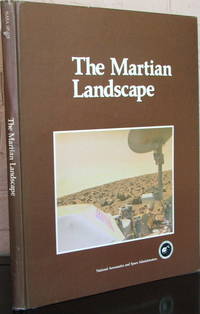
197812271Washington DC: GPO 1978. First Printing. good. 11" x 14" 160 profusely illus. many in color tables 3D viewer in pocket at rear of volume boards somewhat scuffed and some edge wear. Pictures from the Viking 1 and Viking 2 Landers as well as an account of the decade leading up to the Mars pictures by Tim Mutch leader of the Viking Lander Imaging Team. GPO hardcover
197872350Washington DC: National Aeronautics and Space Administration Scientific and Technical Information Office 1978. Presumed First Edition First printing. Hardcover. good. 11" x 14" vii 1 160 pages profusely illus. some in color tables Cover has some fading. Some pages has slight corner creasing. No dust jacket present. 3D viewer in pocket at rear boards have some edge wear. Oversized item requires more shipping charges if sent overseas. The Viking program consisted of a pair of American space probes sent to Mars Viking 1 and Viking 2. Each spacecraft was composed of two main parts: an orbiter designed to photograph the surface and a lander designed to study the planet from the surface. The orbiters also served as communication relays for the landers. The Viking program grew from NASA's earlier Voyager Mars program. Viking 1 entered Mars orbit on June 19 1976 with Viking 2 following suit on August 7. After orbiting Mars for more than a month and returning images used for landing site selection the orbiters and landers detached; the landers then soft-landed. The Viking 1 lander touched down on the surface of Mars on July 20 1976 and was joined by the Viking 2 lander on September 3. The orbiters continued imaging and performing other scientific operations from orbit while the landers deployed instruments on the surface. Pictures from the Viking 1 and Viking 2 Landers as well as an account of the decade leading up to the Mars pictures by Tim Mutch leader of the Viking Lander Imaging Team. The Viking landers were the first completely successful spacecrafts to land on Mars. Before Viking arrived at Mars landing sites were chosen for both Viking landers. On July 20 1976 Viking lander 1 arrived at its chosen site in the western part of Chryse Planitia. On August 7 1976 Viking lander 2 touched down on Utopia Planitia. Each of the Viking landers carried a series of science packages which included a weather station a seismometer a chemical analysis package two cameras a soil composition package and a biological experiment package. Within minutes of lander 1's touch down the first picture was taken in case something happened to the spacecraft. This picture showed what looked like a sandy dusty surface with rocks up to 10 cm in diameter. The two cameras on each lander were mounted on opposite sides of the space craft. This allowed stereoscopic images to be taken which could be used to calculate distances from the lander to the features in the pictures. National Aeronautics and Space Administration, Scientific and Technical Information Office hardcover
1959706292PN. Good. 1959. Soft Cover. G346 Date is original print. This is a 2021 reprint edition. . PN paperback
197640798Washington DC: GPO 1976. Presumed First Edition/First Printing. Wraps. good. xi 1 231 1 pages. Wraps. Frontis illustration. Illustrations. Acronyms. Author index. Pencil erasure on half-title. This volume contains the author's summaries of their papers on the space telescope presented at the 21st annual meeting of the American Astronautical Society at Denver Colorado August 26-28 1975. Space-based astronomy had begun on a very small scale following World War II as scientists made use of developments that had taken place in rocket technology. The first ultraviolet spectrum of the Sun was obtained in 194612 and the National Aeronautics and Space Administration NASA launched the Orbiting Solar Observatory OSO to obtain UV X-ray and gamma-ray spectra in 1962. An orbiting solar telescope was launched in 1962 by the United Kingdom as part of the Ariel space program and in 1966 NASA launched the first Orbiting Astronomical Observatory OAO mission. OAO-1's battery failed after three days terminating the mission. It was followed by OAO-2 which carried out ultraviolet observations of stars and galaxies from its launch in 1968 until 1972 well beyond its original planned lifetime of one year. The OSO and OAO missions demonstrated the important role space-based observations could play in astronomy and in 1968 NASA developed firm plans for a space-based reflecting telescope with a mirror 3 m in diameter known provisionally as the Large Orbiting Telescope or Large Space Telescope LST with a launch slated for 1979. These plans emphasized the need for manned maintenance missions to the telescope to ensure such a costly program had a lengthy working life and the concurrent development of plans for the reusable space shuttle indicated that the technology to allow this was soon to become available. GPO paperback
2009f14424xU.S. National Aeronautics and Space Administration 2009-10-12. paperback. Like New. 7x0x9. Brand New Book U.S. National Aeronautics and Space Administration paperback
1782662952.Ghardcover. Good. Access codes and supplements are not guaranteed with used items. May be an ex-library book. hardcover
191824798Washington DC: National Advisory Committee For Aeronautics/United States Senate 1918. An original copy with an aged textblock which is dog-eared fragile and corner-chipped/worn but complete; Original grey printed covers are worn torn creased chipped and generally depressed but otherwise present and holding; Reports 13 to 23; This is the third annual report on the state of aeronautics as of 1917 vis-a-vis the technology and science of flight Advances in aircraft design aircraft engines and propellors fabrics wing and landing gear construction and the various aspects of aerodynamics flight safety flight instruments communications mapping aerial observation and reconnaissance safety of flight weather considerations and more; 495p. plus dozens of diagrams charts schematics and photographs. Fifth Edition. Grey Printed Wraps. Good. Illus. by Photographs Tables Charts Graphs. 4to - Over 9 " -12" Tall. Paperback. National Advisory Committee For Aeronautics/United States Senate Paperback
1976751946PN. New. 1976. Soft Cover. Date is original print. This is a reprint edition. . PN paperback
mon0003942945National Academies Press 1/19/2024 12:00:01 A. paperback. Like New. 0.9449 11.0630 8.5039. National Academies Press paperback
mon0004057725National Academies Press 1/19/2024 12:00:01 A. paperback. Very Good. 0.9449 11.0630 8.5039. National Academies Press paperback
1964725364PN. New. 1964. Soft Cover. Date is original print. This is a reprint edition. . PN paperback
1983768326PN. New. 1983. Soft Cover. Date is original print. This is a reprint edition. . PN paperback
198325824orange a4 filed N: PN 1983. Paperback. Used: Acceptable. Volume I Condition good clean. ref ZKVQ At the time of writing we have Volume II 2 Sessions 5 to 8 PN paperback
198325825orange a4 filed N: PN 1983. Paperback. Used: Acceptable. Volume II Session 5 to 8 Good condition. ref ZKVQ PN paperback
71124Paperback. Good. Turbine Design and Application paperback