Wolf, Christian und Jan A. RichterAntiquariat.de

128 résultats
2006146014GeraMond Verlag München 2006. 158, (2) Seiten. Mit zahlreichen meist farbigen Abbildungen. Farbig illustrierter OKart.-Einband. Sehr gutes Exemplar. 25x17 cm
200658389ABBad Waldsee, Liebel Verlag, 2006. 8° (30x21), 180 S., mit zahlr. teils historischen fotograf Aufnahmen, ill OPbd, ohne Gebrauchsspuren, offensichtlich ungelesen, frisch,
2014143415Couverture rigide. Cartonné. 24 pages.
2009113619Kessinger Publishing's Rare Reprints, 2009. 23 cm ; kart.
200651784Place_Pub: Washington DC: GPO 2006. very good. 138 wraps figures tables appendices Joint Hearing with the House Committee on Government Reform Subcommittee on Government Management Finance and Accountability. Serial No. 109-29 Serial No. 109-107. GPO paperback
200491218Washington DC: U.S. Government Printing Office 2004. Presumed First Edition First Printing. Wraps. Very good. iv 79 5 pages. Illustrations. Among the witnesses were Paul Spudis Daniel Lester Donald Campbell John Lewis and timothy Swindle. Also included are statements by Dana Rohrabacher Nick Lampson and Roscoe Bartlett. The hearing is not meant to focus on whether to go to the Moon but rather is intended to examine the suitability of using the Moon for an extended-perhaps permanent-presence to conduct space science and resource-extraction activities. It addressed Overarching Questions: 1. Is the Moon a uniquely useful site to base deep-space radio infrared and optical telescopes or other science instruments a. Can space science be conducted using instruments on the Moon more reliably and cheaply than it could be done from Earth or using satellite-based instruments What other fields of science i.e. astrobiology cosmology would benefit from using a Moon-based laboratory 2. Does the Moon contain minerals isotopes or other materials that one day may be commercially exploitable How much certainty is there about the presence and quantity of these resources How readily extractable are they a. What additional technologies if any must we first develop before these resources can be made useful U.S. Government Printing Office paperback
200347793Washington DC: GPO 2003. First Edition. First Printing. good. 166 wraps illus. map appendices. Serial No. 108-2. Joint Hearing with the Senate Committee on Commerce Science and Transportation. GPO paperback
200376689Washington DC: U. S. Government Printing Office 2003. Presumed First Edition First printing. Wraps. Good. iv 258 2 pages. Illustrations. Since the 1980s NASA has struggled to develop a new launch system to provide safe routine and less expensive access to space. Over the years numerous concepts have been studied but few have made it beyond concept definition and none have flown in space. In March 2001 NASA canceled the X-33 single-stage-to-orbit program and the X-34 technology demonstrator after spending $1.4 billion. NASA concluded that the technical barriers of the X-33 were too great and that the benefits of the X-34 did not justify the cost. Last year NASA canceled the X-38 a prototype of a Crew Return Vehicle CRV because it was believed that a multi-purpose vehicle would be a better use of its resources. NASA is continuing to move forward with the X-37 flight demonstration but its value and relevance as a technology demonstrator is questionable because the on-orbit demonstration would not occur until after NASA made its decision for full-scale development. NASA submitted a budget amendment to its FY 2003 request to restructure and refocus the ISTP. The budget amendment proposed to extend the life of the Space Shuttle by creating a Service Life Extension Program SLEP to establish a program to develop an OSP for crew rescue and crew transportation to Space Station and to establish a technology program called the Next Generation Launch Technology NGLT program. Because the budget amendment was submitted late in the 107th Congress the Omnibus appropriations report specifically stated that the ''funding level is not endorsed or denied'' but wanted to examine the details of the proposal especially cost. The Omnibus bill did provide funding for the OSP at the requested level of $296 million for FY 2003. Other than minor changes NASA's FY 2004 budget request reflects the program proposed in the budget amendment. This is the first hearing held by any committee on NASA's ISTP and OSP plans. U. S. Government Printing Office paperback
200967232Moffett FIeld CA: United States National Aeronautics and Space Administration 2009. Reprint. Second Printing. Wraps. Very good. Includes: illustrations diagrams. Various paginations approximately 125 pages. References. From Wikipedia: "The Stratospheric Observatory for Infrared Astronomy SOFIA is a joint project of NASA and the German Aerospace Center DLR to construct and maintain an airborne observatory. NASA awarded the contract for the development of the aircraft operation of the observatory and management of the American part of the project to the Universities Space Research Association USRA in 1996. The DSI Deutsches SOFIA Institut manages the German parts of the project which are primarily science and telescope related. SOFIA's telescope saw first light on May 26 2010. SOFIA is the successor to the Kuiper Airborne Observatory.SOFIA is based on a Boeing 747SP wide-body aircraft that has been modified to include a large door in the aft fuselage that can be opened in flight to allow a 2.5 meter diameter reflecting telescope access to the sky. This telescope is designed for infrared astronomy observations in the stratosphere at altitudes of about 41 000 feet about 12 km. SOFIA's flight capability allows it to rise above almost all of the water vapor in the Earth's atmosphere which blocks some infrared wavelengths from reaching the ground. At the aircraft's cruising altitude 85% of the full infrared range will be available. The aircraft can also travel to almost any point on the Earth's surface allowing observation from the northern and southern hemispheres. Once ready for use the expectation is for observing flights to be flown 3 or 4 nights a week for the next 20 years. SOFIA is now based at NASA's Dryden Aircraft Operations Facility at LA/Palmdale Regional Airport California while staff at NASA Ames Research Center in Mountain View California operate the SOFIA Science Center where astronomical observation missions are planned for the flying observatory. The NASA logo reflected in SOFIAs 2.5-meter primary mirror. SOFIA uses a 2.5-meter reflector telescope which has an oversized 2.7 meter diameter primary mirror as is common with most large infrared telescopes. The optical system uses a Cassegrain reflector design with a parabolic primary mirror and a remotely configurable hyperbolic secondary. In order to fit the telescope into the fuselage the primary is shaped to an f-number as low as 1.3 while the resulting optical layout has an f-number of 19.7. A flat tertiary dichroic mirror is used to deflect the infrared part of the beam to the Nasmyth focus where it can be analyzed. An optical mirror located behind the tertiary mirror is used for a camera guidance system. The telescope looks out of a large door in the side of the fuselage near the airplane's tail and will initially carry nine instruments for infrared astronomy at wavelengths from 1 655 micrometres and high-speed optical astronomy at wavelengths from 0.3 1.1 micrometres. The main instruments are the FLITECAM a near infrared camera covering 1 5 micrometres; FORCAST covering the mid-infrared range of 5 40 micrometres and HAWC which spans the far infrared in the range 42 210 micrometres. The other four instruments include an optical photometer and infrared spectrometers with various spectral ranges. SOFIA s telescope is by far the largest ever to be placed in an aircraft. For each mission one interchangeable science instrument will be attached to the telescope. Two groups of general purpose instruments are available. In addition an investigator can also design and build a special purpose instrument. On April 17 2012 two upgrades to HAWC were selected by NASA to increase the field of view with new detector arrays and to add the capability of measuring the polarization of dust emission from celestial sources. The open cavity housing the telescope will be exposed to high-speed turbulent winds. In addition the vibrations and motions of the aircraft introduce observing difficulties. The telescope was designed to be very lightweight with a honeycomb shape milled into the back of the mirror and polymer composite material used for the telescope. United States, National Aeronautics and Space Administration paperback
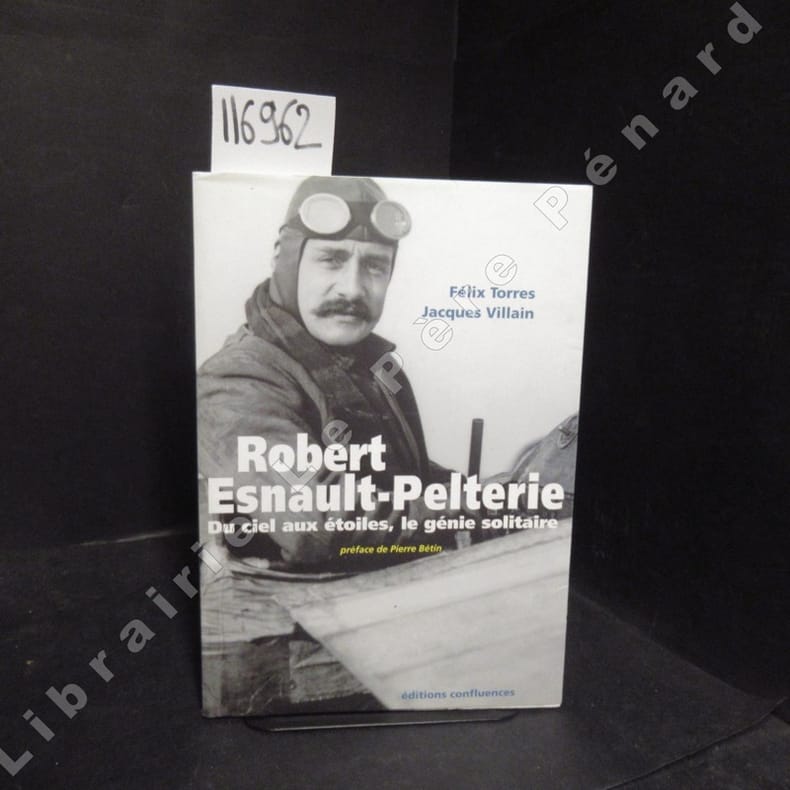
20071169622007 Editions Confluences - 2007 - Fort in-8, broché, couverture illustrée sous jaquette illustrée de l'éditeur - 400 p. - Reproductions photographiques hors texte en N&B - Probable envoi de l'un des auteurs sur la 1ère page
2003208414Couverture souple. Broché. 352 pages.
20052605190192NASA; GPO 2005. Hardcover. Very Good. 7 volumes. Hardcovers and dust jackets. Good bindings and covers. Includes: 1. Realizing the dream of flight : biographical essays in honor of the centennial of flight 1903-2003 2005; 2. Societal impact of spaceflight 2007; 3. Exploring the unknown : selected documents in the history of the U.S. civil space program: v. 1. Organizing for exploration; v. 4. Accessing space; 5. "Read you loud and clear!" : the story of NASA'S spaceflight tracking and data network 2008; 6. William H. Pickering : America's deep space pioneer 2008; 7. Rockets and people. Volume II Creating a Rocket Industry. <br> This is an oversized or heavy set which WILL require additional postage for international delivery outside the US. NASA; GPO hardcover
2012146016München. GeraMond Verlag 2012. 150 (1) Seiten. Mit zahlreichen meist farbigen Abbildungen. Farbig illustrierter OKart.-Einband. (Bindung etwas gelockert). 24x17 cm
200522886Privat 2005 371 pages in-4. 2005. Cartonné/Jaquette. 371 pages. Avec de nombreuses illustrations
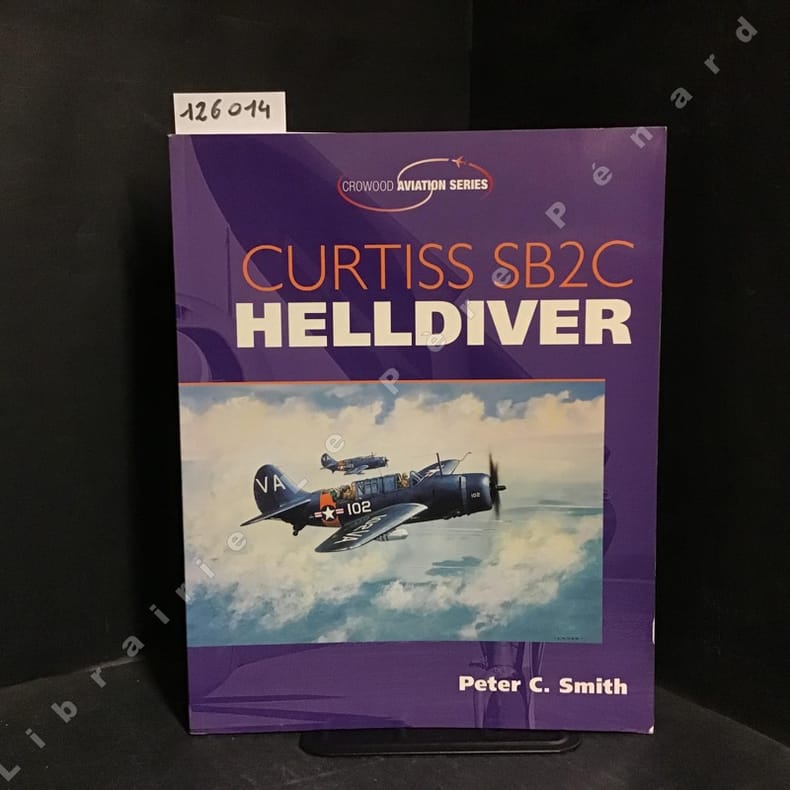
20041260142004 The Crowood Press - 2004 - In-4 broché, couverture illustrée - 224 pages - Nombreuses illustrations en N&B, in et hors texte, dans l'ouvrage - Texte en anglais
201685615Capelle-Lès-Hesdin 62140, Chez l’auteur 2016 In-4. Broché, couverture illustrée en couleurs, 223 pp., illustrations en noir & blanc.
201785616Capelle-Lès-Hesdin 62140, Chez l’auteur 2017 In-4. Broché, couverture illustrée en couleurs, 231 pp., illustrations en noir & blanc.
2001185478Stuttgart, 2001. M. einigen Abb. XX, 160 S. OBr.
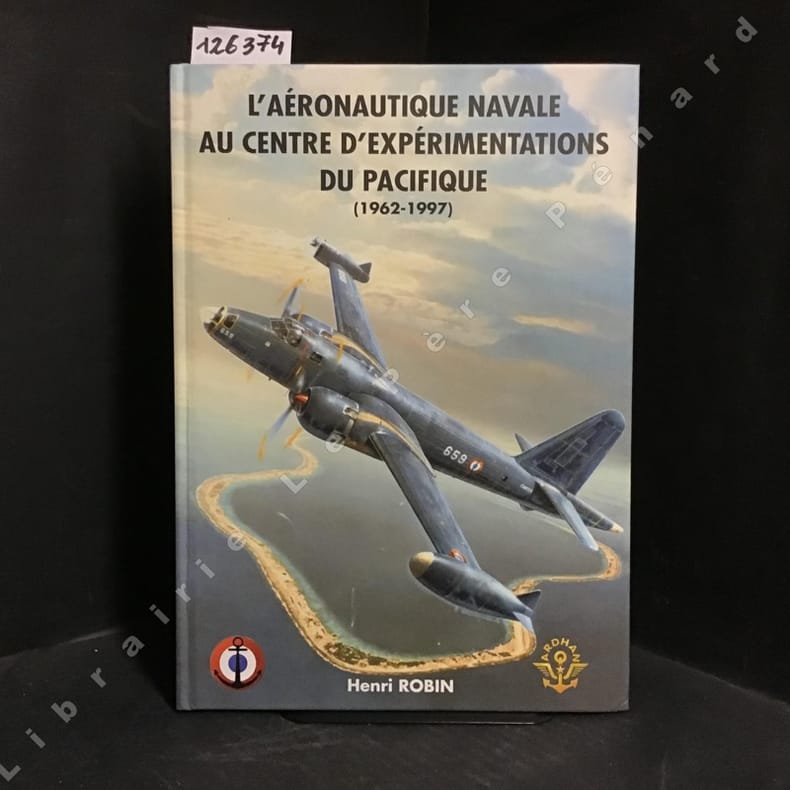
20121263742012 Association pour la Recherche de Documentation sur 'Histoire de l'Aéronautique Navale - 2012 - In-4 relié, cartonnage illustrée - 421 pages - Tirage à 1500 exemplaires - Nombreuses illustrations en N&B et en couleurs, in et hors texte, dans l'ouvrage
20081260082008 Potomac Books, Inc - 2008 - In-4 relié, sous jaquette illustrée - 548 pages - Nombreuses illustrations en N&B, in et hors texte, dans l'ouvrage - Texte en anglais
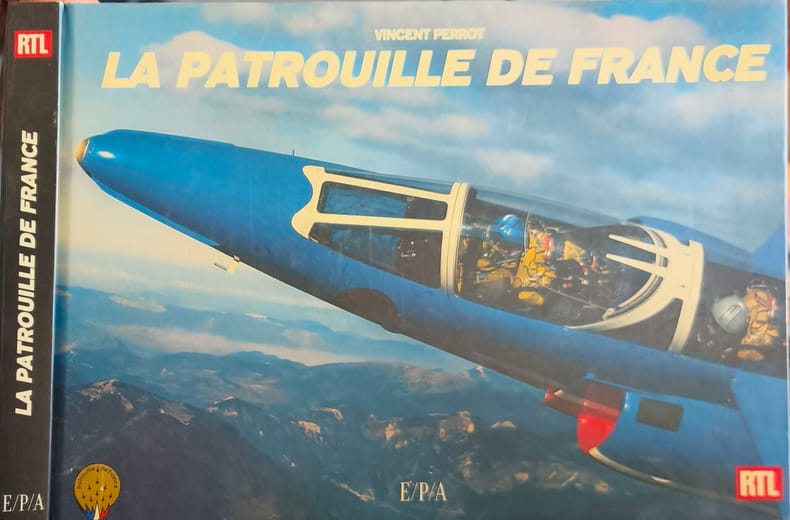
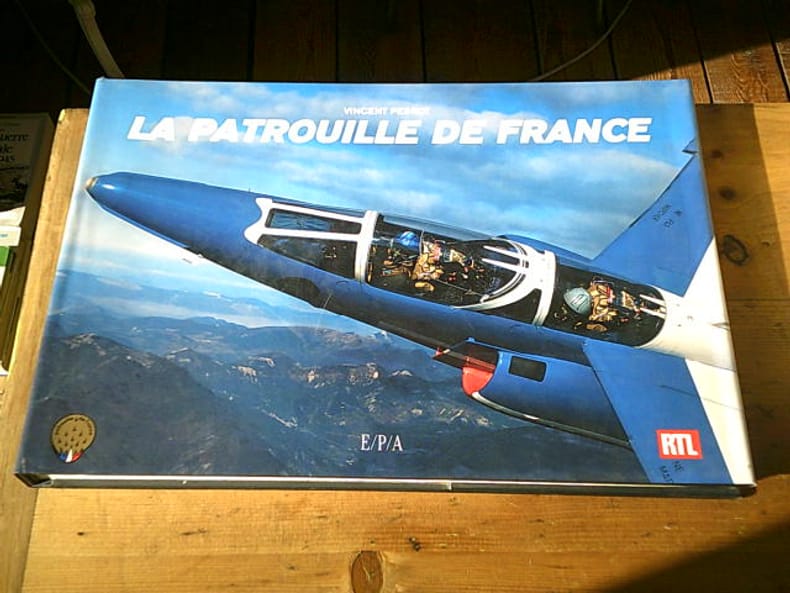
201011251EPA Editions 2010 183 pages 20 6x2 2x29 2cm. 2010. reliure editeur. 183 pages. Ce livre de Vincent Perrot offre un accès privilégié et inédit au sein de la Patrouille de France l'escadron de présentation acrobatique de l'Armée de l'Air. À travers de nombreuses photos des textes documentés basés sur la parole des pilotes et un DVD bonus contenant des films exclusifs l'auteur dévoile le quotidien l'entraînement les avions Alphajet et les aspects secrets de cette unité d'élite lors de la saison 2008
200818359E/p/a 2008 183 pages In-4 oblong. 2008. Cartonné/Jaquette. 183 pages. Avec illustrations et reproductions photographiques
2003LOCOMOTION6510315Seyssel, Champ Vallon, "collection milieux", 2003, 318 pages cousues sous couverture illustrée.
2010167182Chichester, UK. : Praxis Publishing (Leipzig; Amazon), 2010. xviii.; 439 S. Gr.-8°, Broschur
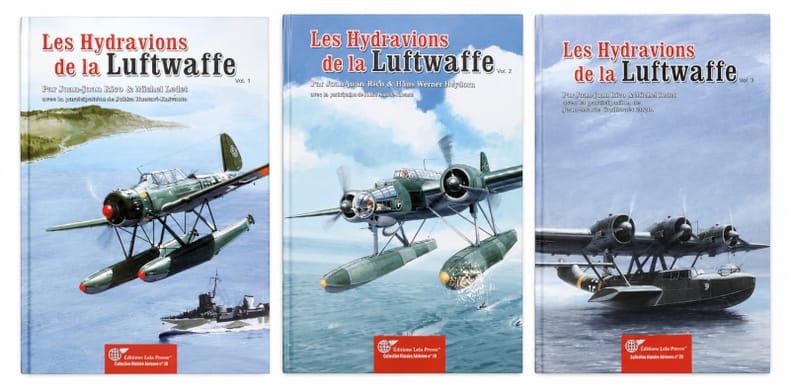
2008nc1475Editions Lela Presse Album cartonné 2008 Trois volumes in-4 (21,5 x 30,5 cm), albums cartonnés, 352 / 400 / 414 pages, abondante iconographie principalement en N&B ; un petit choc au bord du 4e plat vol.1, très bel état d'ensemble pour cette série rarement complète. Livraison a domicile (La Poste) ou en Mondial Relay sur simple demande.