Aeronautica militareBiblio.com
857 résultats
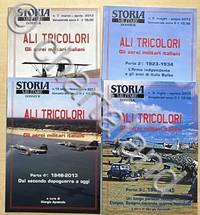
139900Storia Militare Dossier N. 7 8 9 10 - 2013 Ali Tricolori - Opera completa pp. 514 con molte illustrazioni - Lingua italiana - Copertina semirigida - Condizioni molto buone unknown
194946665Washington DC: GPO 1949. Revised Edition. good. 109 wraps 3-hole punched illus. diagrams references writing on cover covers worn and somewhat soiled. Ephemera on Detroit Stamping Co. Toggle Clamps bound in. This was issued bythe Subcommittee on Air Force-Navy-Civil Aircraft Design Criteria of the Munitions Board Aircraft Committee. The purpose of this document was to recognize that since many aircraft manufacturers supply airplanes for both commercial and military use standardization of the requirements of the various Government procuring or certifying agencies would be of direct benefit to the manufacturers. This publication has been prepared to eliminate the necessity for referring to different handbooks and bulletins in calculating the allowable stresses or minimum strength of typical structures. This type of technical information is increasingly scarce. It is of particular relevance to military and aviation museums restoration facilities military and civilian equipment collectors and military and comercial aviation technologists. GPO paperback
1966728681PN. New. 1966. Soft Cover. Date is original print. This is a reprint edition. . PN paperback
200886137Washington DC: National Aeronautics and Space Administration 2008. Xerox-style reproduction. Assumed to be one of only a limited number made for media representatives. Stapled at upper left corner. Very good. ii 114 pages plus front cover. Illustrations. Three-hole punched. Front cover also includes the logo of the United Space Alliance. Contents include STS-126 Mission Overview; Timeline Overview; Mission Profile; Mission Priorities; Mission Personnel; STS-126 Endeavour Crew; Payload Overview; Rendezvous and Docking; Environmental Contol and Life Support System ECLSS; Solar Alpha Rotary Join SARJ; Spacewalks; Experiments; Advanced Resistive Exercise Device; Shuttle Reference Data; Launch and Landing; Acronyms and Abbreviations; Media Assistance; Public Affairs Contacts. STS-126 was the one hundred and twenty-fourth NASA Space Shuttle mission and twenty-second orbital flight of the Space Shuttle Endeavour OV-105 to the International Space Station ISS. The purpose of the mission referred to as ULF2 by the ISS program was to deliver equipment and supplies to the station to service the Solar Alpha Rotary Joints SARJ and repair the problem in the starboard SARJ that had limited its use since STS-120. STS-126 launched on 15 November 2008 at 00:55:39 UTC from Launch Pad 39A LC-39A at NASA's Kennedy Space Center KSC with no delays or issues. Endeavour successfully docked with the station on 16 November 2008. After spending 15 days 20 hours 30 minutes and 30 seconds docked to the station during which the crew performed four spacewalks and transferred cargo the orbiter undocked on 28 November 2008. Due to poor weather at Kennedy Space Center Endeavour landed at Edwards Air Force Base on 30 November 2008 at 21:25:09 UTC. STS-126 included the Leonardo Multi-Purpose Logistics Module MPLM on its fifth spaceflight. Leonardo held over 14100 lbs of supplies and equipment. Among the items packed into the MPLM were two new crew quarters racks a second galley kitchen for the Destiny laboratory a second Waste and Hygiene Compartment WHC rack lavatory the advanced Resistive Exercise Device aRED two water reclamation racks spare hardware and new experiments. Also included in Leonardo was the General Laboratory Active Cryogenic ISS Experiment Refrigerator or GLACIER a double locker cryogenic freezer for transporting and preserving science experiments. The shuttle also carried irradiated turkey candied yams stuffing and dessert for a special Thanksgiving meal at the station as well as an Official Flight Kit with mementos for those who supported the astronauts and helped them complete their mission successfully. Also carried was a Lightweight MPESS Carrier LMC carrying a Flex Hose Rotary Coupler FHRC and returning a Nitrogen Assembly Tank from Quest for refurbishment. STS-126 was the only mission to land on the temporary runway 04 at Edwards Air Force Base as the main runway was completing refurbishment. The use of the temporary runway required new braking and rollout techniques that have never been used before as the runway is 2990 ft shorter than the normal runway. This was the last landing at Edwards for Endeavour. National Aeronautics and Space Administration unknown
201186173Washington DC: National Aeronautics and Space Administration 2011. Presumed first edition first printing thus. Single sheet printed on one side. Very good. The format is approximately 4.25 inches by 5.5 inches. Illustration and text on one side. The other side is blank. RARE surviving commemorative item of the last Space Shuttle launch!!! The STS-135 Launch Salute was in honor of the hundreds of thousands of men and women who have devoted their time careers and passion over the previous 40 years to the success of the Space Shuttle Program and in remembrance of the Challenger and Columbia crews who paid the ultimate price we ask you to join and raise hands as you watch Atlantis ascend into the heavens during the final space shuttle launch. At ten seconds to liftoff stand up. at liftoff join and raise hands For first ten second of flight keep hands raised. With this gesture we convey the thanks of a grateful nation and world for the legacy of space exploration that has been set for the future. NASA continues preparations for the mission that everyone hopes will never be needed: the STS-335 flight to rescue the STS-134 crew in the event that Endeavour becomes disabled during the program’s planned final flight. STS-135 ISS assembly flight ULF7 was the 135th and final mission of the American Space Shuttle program. It used the orbiter Atlantis and hardware originally processed for the STS-335 contingency mission which was not flown. STS-135 launched on July 8 2011 and landed on July 21 2011 following a one-day mission extension. The four-person crew was the smallest of any shuttle mission since STS-6 in April 1983. The mission's primary cargo was the Multi-Purpose Logistics Module MPLM Raffaello and a Lightweight Multi-Purpose Carrier LMC which were delivered to the International Space Station ISS. The flight of Raffaello marked the only time that Atlantis carried an MPLM. Although the mission was authorized it initially had no appropriation in the NASA budget raising questions about whether the mission would fly. On January 20 2011 program managers changed STS-335 to STS-135 on the flight manifest. This allowed for training and other mission specific preparations. On February 13 2011 program managers told their workforce that STS-135 would fly regardless of the funding situation via a continuing resolution. Until this point there had been no official references to the STS-135 mission in NASA documentation for the general public. During an address at the Marshall Space Flight Center on November 16 2010 NASA administrator Charles Bolden said that the agency needed to fly STS-135 to the station in 2011 due to possible delays in the development of commercial rockets and spacecraft designed to transport cargo to the ISS. "We are hoping to fly a third shuttle mission in addition to STS-133 and STS-134 in June 2011 what everybody calls the launch-on-need mission. and that's really needed to buy down the risk for the development time for commercial cargo" Bolden said. The mission was included in NASA's 2011 authorization which was signed into law on October 11 2010 but funding remained dependent on a subsequent appropriations bill. United Space Alliance signed a contract extension for the mission along with STS-134; the contract contained six one-month options with NASA in order to support continuing operations. The federal budget approved in April 2011 called for US$5.5 billion for NASA's space operations division including the shuttle and space station programs. According to NASA the budget running through September 30 2011 ended all concerns about funding the STS-135 mission. National Aeronautics and Space Administration unknown
201186133Washington DC: National Aeronautics and Space Administration 2011. Xerox-style reproduction presumably one of only a few press kits produced. Stapled at upper left corner. Very good. ii 164 pages plus covers. This also has the logo of the United Space Alliance on the front cover. STS-135 ISS assembly flight ULF7 was the 135th and final mission of the American Space Shuttle program. It used the orbiter Atlantis and hardware originally processed for the STS-335 contingency mission which was not flown. STS-135 launched on July 8 2011 and landed on July 21 2011 following a one-day mission extension. The four-person crew was the smallest of any shuttle mission since STS-6 in April 1983. The mission's primary cargo was the Multi-Purpose Logistics Module MPLM Raffaello and a Lightweight Multi-Purpose Carrier LMC which were delivered to the International Space Station ISS. The flight of Raffaello marked the only time that Atlantis carried an MPLM. This press kit covers the Space Shuttle History; STS-135 Mission Timeline Profile and Objectives; Mission Personnel; STS-135 Atlantis Crew; Payload Overview; Rendezvous and Docking; Spacewalks; STS-135 Experiments; Shuttle Reference Data; Launch & Landing; Acronyms & Abbreviations; Media Assistance; Public Affairs Contacts; and The Future. Although the mission was authorized it initially had no appropriation in the NASA budget raising questions about whether the mission would fly. On January 20 2011 program managers changed STS-335 to STS-135 on the flight manifest. This allowed for training and other mission specific preparations. On February 13 2011 program managers told their workforce that STS-135 would fly regardless of the funding situation via a continuing resolution. Until this point there had been no official references to the STS-135 mission in NASA documentation for the general public. During an address at the Marshall Space Flight Center on November 16 2010 NASA administrator Charles Bolden said that the agency needed to fly STS-135 to the station in 2011 due to possible delays in the development of commercial rockets and spacecraft designed to transport cargo to the ISS. "We are hoping to fly a third shuttle mission in addition to STS-133 and STS-134 in June 2011 what everybody calls the launch-on-need mission. and that's really needed to buy down the risk for the development time for commercial cargo" Bolden said. The mission was included in NASA's 2011 authorization which was signed into law on October 11 2010 but funding remained dependent on a subsequent appropriations bill. United Space Alliance signed a contract extension for the mission along with STS-134; the contract contained six one-month options with NASA in order to support continuing operations. The federal budget approved in April 2011 called for US$5.5 billion for NASA's space operations division including the shuttle and space station programs. According to NASA the budget running through September 30 2011 ended all concerns about funding the STS-135 mission. On July 21 2011 NASA hosted an employee appreciation event outside OPF-2 with Atlantis parked. Cheryl Hurst the director of education and external relations at KSC spoke first and invited Susan Lambert to lead the crowd with the American national anthem. A pledge of allegiance followed from KSC children and NASA Administrator Charles Bolden and KSC Director Robert Cabana spoke to the shuttle program employees. During the event Rita Wilcoxson and Patricia Stratton were presented with highest NASA honors: the Distinguished Service Medal and the Distinguished Public Service Medal respectively. The citations on both were identical stating "for continuous outstanding leadership contributions provided to the nation's space shuttle program". A public "welcome home" ceremony was held for the crew at Houston's Ellington Field Hangar 990 on July 22. National Aeronautics and Space Administration unknown
199183822Washington DC: National Aeronautics and Space Administration 1991. Presumed First Edition First printing before correction to replace Discovery with Atlantis. Single sticker sheet printed on both sides. Good. RARE with Discovery attribution. Approximately 5 inches at its highest and 4 inches at its widest. Some soiling noted. STS-43 the ninth mission for Space Shuttle Atlantis was a 9 day mission whose primary goal was launching the TDRS-E satellite TDRS-5. The flight also tested an advanced heatpipe radiator for potential use on the then-future space station and conducted a variety of medical and materials science investigations. Apparently Space Shuttle Discovery was originally intended to fly this mission. From the text on the sticker's peelable back the STS-43 insignia portrays the evolution and continuity of the U.S. space program by highlighting 30 years of American manned spaceflight experience from Mercury to the Space Shuttle. The emergence of the shuttle Discovery from the outlined configuration of the Mercury space capsule commemorates this special relationship. The energy and momentum of launch are conveyed by the gradations of blue which mark the shuttle's ascent from Earth to space. Once in Earth orbit Discovery's cargo bay opens to reveal the Tracking and Data Relay Satellite which appears in gold emphasis against the white wings of Discovery and the stark blackness of space. As primary mission objective the Tracking and Data Relay Satellite System will enable almost continuous communication from Earth to space for future space shuttle missions. The stars on the insignia are arranged to suggest this mission's STS number: four stars left of Shuttle and three starts to the right. NOTE: Later versions of the sticker properly reference the Shuttle Atlantis! The five astronauts are named on the front: Blaha Baker Lucid Adamson and Low. John Elmer Blaha born August 26 1942 in San Antonio Texas is a retired United States Air Force colonel and a former NASA astronaut. He is a veteran of five space missions aboard the Space Shuttle and Mir. Michael Allen Baker born October 27 1953 is a retired captain in the United States Navy former NASA astronaut and the International Space Station Program Manager for International and Crew Operations at NASA's Johnson Space Center. Shannon Matilda Wells Lucid born January 14 1943 is an American biochemist and retired NASA astronaut. At one time she held the record for the longest duration stay in space by an American as well as by a woman. She has flown in space five times including a prolonged mission aboard the Mir space station in 1996; she is the only American woman to have served aboard Mir. George David Low February 19 1956 - March 15 2008 was an American aerospace executive and a NASA astronaut. In addition to holding some technical assignments he logged more than 700 hours in space including stints on the Columbia the Atlantis and the Endeavour Space Shuttles before he left NASA in 1996. James Craig Adamson born March 3 1946 is a former NASA astronaut and retired Colonel of the United States Army. James Adamson flew on two missions STS-28 and STS-43 and completed 263 orbits and 334 hours in space. In terms of mission highlights the primary payload TDRS-E attached to an Inertial Upper Stage IUS was deployed about six hours into flight and the IUS propelled the satellite into geosynchronous orbit. TDRS-5 became the fourth member of the orbiting TDRS cluster. Secondary payloads were Space Station Heat Pipe Advanced Radiator Element SHARE II; Shuttle Solar Backscatter Ultra-Violet SSBUV instrument; Tank Pressure Control Equipment TPCE and Optical Communications Through Windows OCTW. Other experiments included Auroral Photography Experiment APE-B Protein Crystal Growth Ill PCG Ill; Bioserve / Instrumentation Technology Associates Materials Dispersion Apparatus BIMDA; Investigations into Polymer Membrane Processing IPMP; Space Acceleration Measurement System SAMS; Solid Surface Combustion Experiment SSCE; Ultraviolet Plume imager UVPI; and the Air Force Maui Optical Site AMOS experiment. TDRS-E which became TDRS-5 on orbit was successfully boosted to geosynchronous orbit at more than 22000 miles 35400 km 22000 mi above Earth by two firings of the Inertial Upper Stage IUS booster the last of which occurred approximately 12½ hours into the mission. TDRS then deployed its antennas and solar panels and separation from the IUS took place less than 45 minutes later. National Aeronautics and Space Administration unknown
19971302007PN. New. 1997. Soft Cover. Date is original print. This is a reprint edition . PN paperback
1979759834PN. New. 1979. Soft Cover. Date is original print. This is a reprint edition. . PN paperback
1980760484PN. New. 1980. Soft Cover. Date is original print. This is a reprint edition. . PN paperback
196181080Washington DC: United States The Secretary of the Air Force and The Chief of the Bureau of Aeronautics 1961. Revised version. Wraps. Good. FORMERLY CLASSIFIED AS CONFIDENTIAL. Security classification has expired based on Executive Order 13526. Also designated as NAVWEPS 01-4DAVA-1A. Three-hole punched. Ink notation on front cover. Some ink notations to text and at rear. Front and back cover stiff card. Latest date observed was 1961 some earlier dates present. 2 iv 5- 168 2 pages. Pages 1-4 were officially deleted. Pagination uncertain as some pages have additions such as 6A. Page numbers 15-16 and 41-42 absent. Based on preceding and following pages These could be "page intentionally left blank" and were removed. Illustrations diagrams drawings tables some with color. This version canceled or previously incorporated Interim Revisions Nos 1 through 34. This includes the following sections: Description and Operation of Auxiliary Equipment Operating Limitations Flight Characteristics Appendix I Operating Data Charts. Two mimeographed copies of Target Study Log notations on back. Includes information on ASM-N-7 Bullpup Guided Missile Weapon System AN/AWW-1 Fuze Function Control System Carrier Operations Flight Controls Diving Angle of Attack Long Range Attack Tanker Configuration. The Douglas A-4 Skyhawk is a single-seat subsonic carrier-capable light attack aircraft developed for the United States Navy and United States Marine Corps in the early 1950s. The delta-winged single turbojet engine Skyhawk was designed and produced by Douglas Aircraft Company and later by McDonnell Douglas. It was originally designated A4D under the U.S. Navy's pre-1962 designation system. The Skyhawk is a relatively lightweight aircraft with a maximum takeoff weight of 24500 pounds 11100 kg and has a top speed of 670 miles per hour 1080 km/h. The aircraft's five hardpoints support a variety of missiles bombs and other munitions. It is capable of carrying a bomb load equivalent to that of a World War II-era Boeing B-17 bomber and can deliver nuclear weapons using a low-altitude bombing system and a "loft" delivery technique. The A-4 was originally powered by the Wright J65 turbojet engine; from the A-4E onwards the Pratt & Whitney J52 engine was used. The Douglas A-4 Skyhawk is a very versatile light attack-bomber that has been a U.S. Navy first-line aircraft for many years. Despite its relatively small size it is able to carry a large and varied assortment of aerial weapons. In the early 1950s some of the aircraft design group at the Douglas Aircraft Company became concerned by the trend toward increasing complexity and weight in combat aircraft. The group led by Ed Heinemann whose design philosophy was to "Simplicate and Add Lightness" proposed a new attack plane with a gross weight of about half the official specification weight of 30000 lb. The A4D-1 was the first production version of the Skyhawk. The first A4D-1 BuNo 137813 took off on its first flight on August 14 1954 only two months after the first flight of the prototype XA4D-1. A total of 165 A4D-1s were built the last one being delivered in 1957. The A4D-1 was much the same as the XA4D-1 but differed from the XA4D-1 in having a "sugar scoop"-shaped jet tailpipe fairing. and was fitted with an arrester hook. All three weapons pylons were fitted one underneath the fuselage centerline and one underneath each wing just outboard of the main landing gear. Up to 5000 pounds of ordinance could be carried on the three underwing pylons. Alternatively up to three drop tanks could be carried with a combined capacity of 800 gallons. A large blade antenna for the UHF radio was installed immediately aft of the cockpit. The frameless windshield of the XA4D-1 was replaced by a framed windscreen. An internal armament of two 20-mm Colt Mk 12 cannon was fitted one gun in each wing root with 100 rounds per gun. The aircraft did not carry any radar the nose cone being filled with avionics equipment. The A4D-1 was powered by the 7700 lb.s.t Wright J65-W-4 or W-4B turbojet. The next model of the Skyhawk was the A4D-2 A-4B which included provisions for inflight refueling both as a receiver and as a tanker a powered rudder and some structural strengthening. The A4D-2N A-4C first flown in 1959 incorporated radar in the nose and an improved ejection seat. United States, The Secretary of the Air Force and The Chief of the Bureau of Aeronautics paperback
190649754Paris Gauthier-Villars 1906. 4to. No wrappers. In: "Comptes Rendus Hebdomadaires des Séances de L'Academie des Sciences" Tome 142 No 2 and No 13. Pp. 69- 120 a. pp. 741- 816. Entire issues offered. Seux's papers: pp. 79-81 and pp. 772-773. <br/><br/><em>First printing of these 2 pioneering papers in aeronautics the theory here stated eventually lead to the construction of the "Seux monoplane" and the "Roesch-Seux aeroplane".Brockett "Bibliograpy of Aeronautics" No 11072 a. 11083. </em> unknown
1495380416.Gpaperback. Good. Access codes and supplements are not guaranteed with used items. May be an ex-library book. paperback
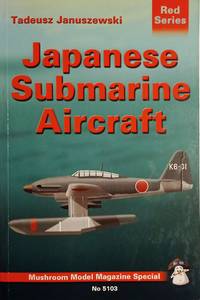
106363T. Januszewski - Japanese Submarine Aircraft - ed. 2002 - Testo in lingua inglese. Pagine 128 con illustrazioni. - Copertina morbida. - Condizioni molto buone. unknown
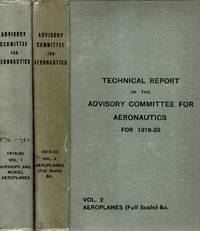
1923253214United Kingdom: HMSO 1923. Book. Very Good. hardback. hardback two volumes complete grey cloth lettered black octavos a very good set tightly bound aside from the neat stamps of the M.A.E.E Experimental Section Library with a clean and unmarked text diagrams charts etc. of which many folding. HMSO Hardcover
197194264London: R.Ae.S. 1971. 1st edition. Very Nice Copy. small folio. stiff wrappers 14 40pp. b/w plates text ills. diags. bibliog. Author was the successor of Dr. Mario Castoldi designer of the famous Macchi racers that flew very successfully in the Schneider Trophy races. This lecture was given at Coventry & Southampton in March 1971. Very scarce R.Ae.S. unknown
1987780270PN. New. 1987. Soft Cover. Date is original print. This is a reprint edition. . PN paperback
1988781219PN. New. 1988. Soft Cover. Date is original print. This is a reprint edition. . PN paperback
199247164Washington DC: NASA c. 1992. First Edition. First Printing. very good. 535 & 537 wraps 2-vol. set illus. diagrams slight wear and soiling to covers. NASA Conference Publication 3136. The Conference was held in San Jose CA and was sponsored by NASA the Technology Utilization Foundation and NASA Tech Briefs Magazine. NASA paperback
199144049Washington DC: NASA 1991. very good. 28 cm 533 & 537 wraps 2-vol. set illus. diagrams references. NASA paperback
199111413Washington DC: NASA 1991. very good. Quarto 538 v.2 only wraps illus. figures tables charts references small crease to lower corner front cover and a few pages. This conference was jointly sponsored by NASA the Technology Utilization Foundation and NASA Tech Briefs Magazine. This volume contains 60 papers presented during 30 concurrent sessions on topics including materials sciences robotics artificial intelligence electronics software engineering and medical advances. NASA Conference Publication 3136 Vol. 2. NASA paperback
199138202Washington DC: NASA 1991. First Edition. First Printing. good. 28 cm 420 & 375 2-vol. set wraps illus. references some wear scuffing creasing & soiling to covers. NASA conference publication 3109. Mailing label on rear covers. NASA paperback
1995283028PN. New. 1995. Soft Cover. Date is original print. This is a reprint edition . PN paperback
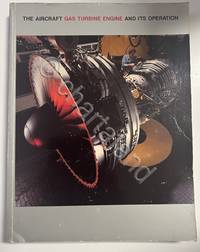
135633The aircraft gas turbine engine and its operation - ed. 1988 pp. 200 ca. con illustrazioni e schemi - Lingua inglese - Copertina semirigida - Condizioni molto buone unknown
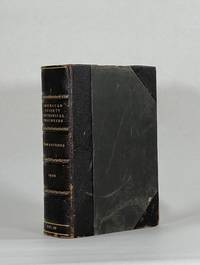
190910468New York: American Society of Mechanical Engineers 1909. Half Leather. Very Good binding. Octavo. xi 1 1255 1 pp. frontis plates illus. First edition. Bound in morocco-backed boards with corners. Light rubbing to the binding; contents clean and binding is solid. <br /> <br /> An interesting collection of papers but undoubtedly the contribution of principal interest is that of George O. Squire "The Present Status of Military Aeronautics" pp. 639 – 721. It is a survey of worldwide developments in aeroplane heavier than air and dirigible designs and practice. Significant discussion of the testing of the Wright Brothers aircraft in September 1908 at Fort Myer VA. Includes the Army request for proposals and specifications for both the aeroplane and dirigible aircraft. This specification resulted in the first U.S. military aircraft contract. Includes many black and white pictures of aircraft and dirigibles including pictures of the Wright Brothers aircraft tested at Fort Myer. American Society of Mechanical Engineers unknown