3 141 résultats
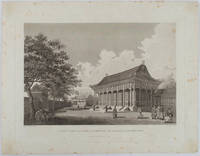
1796177641London. 1796. Large format engraving 23.9 x 35.9 cm; 35.9 x 46 cm sheet including caption and platemark spots of browning to the image affecting the sky and marginal foxing old paper abrasions to the verso the sheet a little creased and dusty but a strong dark impression in very good condition. Fine detailed engraving after a drawing by the artist William Alexander 1767-1816 of the sumptuous Hall of Audience to the Summer Palace prepared as plate 22 for the folio atlas to George Staunton's account of the Macartney Embassy to China of 1793. Staunton's commentary noted its magnificence: "Its projecting roof was supported upon two rows of large wooden columns the shafts of which were painted red and varnished; and the capitals ornamented with various scrolls and devices in vivid colouring particularly with dragons.". The engraver William Lowry 1762- 1824 specialised in architectural engravings and was later a member of the Royal Society. <br> <br>From the Estate of the late collector and scholar Arthur Hacker. . unknown
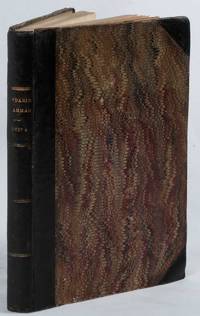
1864223685Shanghai.: Presbyterian Mission Press. 1864. viii 279 pp. contemporary half roan rubbed 23.3 x 16.5cm marbled boards spine gilt lettered a little light rubbing to the boards last two leaves archivally strengthened at the hinge small tidemark to the inner corner of the title-page age-toning and some offsetting to the text inked signature of an early owner Dec. 1870 Fred. P. Napier lettering on spine a little worn a good complete copy. The second work published by the remarkable sinologue missionary and linguist Joseph Edkins 1823-1905. This second edition is noted for its deeper inquiry into the Peking dialect specifically its "laws of tones and accent" <br>The book is divided into three primary parts designed to move a student from basic sounds to complex communication: <br>Part I: On Sound: Detailed exploration of pronunciation the tonal system and phonetics. <br>Part II: Parts of Speech: A categorical breakdown of Mandarin vocabulary and functional grammar. <br>Part III: Syntax: Guidance on sentence structure and verbal interaction. <br>Appendices: Includes discussions on southern Mandarin dialects Mandarin literature and contemporary Chinese philology <br> <br>Lowendahl 1811 Supplement. . Presbyterian Mission Press. hardcover
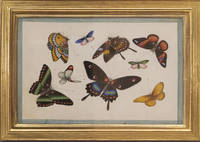
109513Canton ca. 1860. . Watercolour and gouache studies on pith paper overall dimensions 33 x 23.5cm. framed and glazed.<br /> Pith seems not to have been adopted for painting until about 1820. Some European museums claim that their paintings on pith often erroneously called "rice paper" or "mulberry pith" come from the end of the eighteenth century but there do not seem to be any dateable examples that are so early. There is a record of the Kaiser Franz of Austria buying some albums from an English Consul-General Watts in 1826. We know of an Italian Count who visited Canton in 1828 and had over 350 paintings on pith in his baggage when he died in Ambon two years later. In the British Library there is a scrap-book containing six pith paintings and a journal entry by a serving British officer who sent them home from India in 1829. These examples and contemporary accounts by visitors to Canton suggest that there was a flourishing trade in pith paintings by the early 1830s.<br /><br />Pith presumably came into use for painting to satisfy the increasing demand for small inexpensive and easily transported souvenirs following the massive growth in the China Trade in the first quarter of the nineteenth century. Paintings in oils on board and canvas were costly and difficult to carry home. Earlier and more prestigious export water-colours had often been on a larger scale and painted on fine Chinese paper or on paper imported from Europe. The albums of pith paintings and later the little glass-fronted boxes were inexpensive light easy to pack and gave the pictures some protection on the long voyage home. Because many were sold in albums and hence protected from the light they retain their bright colours to this day.<br /><br />Pith comes from the central column of spongy cellular tissue in the stem of a small tree called Tetrapanax Papyrifera native to south-west China. It has had a variety of uses some going back many centuries. At the imperial court both men and women wore coloured flowers made from pith in their hair. For use in painting it is cut by hand with a knife into thin sheets from short lengths of the spongy tissue. Cutting is highly skilled and the constraints of the process mean that the finished sheets for painting seldom if ever measure more than about 30cms by 20cms. The sheets are dried trimmed and used for painting without any further processing.<br /><br />Because of the nature of pith and its cellular structure the gouache used by the Chinese sat on the surface and produced a bright and even sparkling effect. Very fine detail could be achieved but pith did not lend itself to the flat wash of colour favoured for European watercolours. <br /><br />Carl Crossman in his book The Decorative Arts of the China Trade originally published under the title The China Trade gives an excellent list of export painters with a note of those known to have painted on pith. These include Tingqua Sunqua and Youqua. From 1757 until 1842 Canton was the only Chinese port open to trade with the west and it is no surprise that of the eight studios identified by Crossman as producing works on pith six were in Canton. <br /><br />It seems that the 1830s and 1840s may have been the heyday of pith painting. The international trading bases the waterfront 'factories' on the 'Hongs' in Canton where they were produced were partially burnt during the First Opium War 1839-41 and totally destroyed in a fire of 1856. The foreign trading companies then moved to Honan and subsequently put up splendid new offices on reclaimed land at Shamian Island a little up river. As the result of the Treaty of Nanking in 1842 additional Chinese ports were opened up for foreign trade and Hong Kong was established as a major trading centre. <br /><br />By 1860 references to China in the Illustrated London News plentiful three years earlier were few and far between. That is not to say that painting on pith ceased. Nicholas the second was given paintings on pith when he visited Canton in 1891 and the last Emperor is said to have sent him a gift which included pith paintings in 1907 though these could have been examples of much earlier work. <br /><br />Painters on pith did not in general sign their work the sole exception is Sunqua whose name can be found on the face of three paintings on pith. <br /><br />There are collections of paintings on pith in the Ashmolean the British Museum the Fitzwilliam the Hermitage the Peabody/Essex Museum in Massachusetts and the Hong Kong Museum of Art. However because paintings on pith are not in general regarded as fine art they are usually to be found in ethnographic or specialised collections.<br /> Canton, ca. 1860. unknown
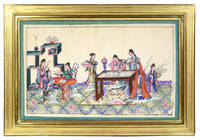
94512Canton 2nd half of 19th century. . Six watercolour and gouache studies on pith paper edged in turquoise silk ribbon and laid on paper; framed glazed and overall size: 27 x 39.4 x 2 cm.<br /> An exquisite group of interior scenes exclusively of noblewomen and ladies in waiting engaging in various genteel activities such as flower arranging painting poetry reading and writing surrounded by elegant Qing dynasty furniture and ornaments including unusual asymmetrical display cabinets exotic bird swings and porcelain vases all standing or sitting on elaborately patterned silk carpets.<br /><br />Pith seems not to have been adopted for painting until about 1820. Some European museums claim that their paintings on pith often erroneously called 'rice paper' or 'mulberry pith' come from the end of the eighteenth century but there do not seem to be any dateable examples that are so early. There is a record of the Kaiser Franz of Austria buying some albums from an English Consul-General Watts in 1826. We know of an Italian Count who visited Canton in 1828 and had over 350 paintings on pith in his baggage when he died in Ambon two years later. In the British Library there is a scrap-book containing six pith paintings and a journal entry by a serving British officer who sent them home from India in 1829. These examples and contemporary accounts by visitors to Canton suggest that there was a flourishing trade in pith paintings by the early 1830s.<br /><br />Pith presumably came into use for painting to satisfy the increasing demand for small inexpensive and easily transported souvenirs following the massive growth in the China Trade in the first quarter of the nineteenth century. Paintings in oils on board and canvas were costly and difficult to carry home. Earlier and more prestigious export water-colours had often been on a larger scale and painted on fine Chinese paper or on paper imported from Europe. The albums of pith paintings and later the little glass-fronted boxes were inexpensive light easy to pack and gave the pictures some protection on the long voyage home. Because many were sold in albums and hence protected from the light they retain their bright colours to this day.<br /><br />Pith comes from the central column of spongy cellular tissue in the stem of a small tree called Tetrapanax Papyrifera native to south-west China. It has had a variety of uses some going back many centuries. At the imperial court both men and women wore coloured flowers made from pith in their hair. For use in painting it is cut by hand with a knife into thin sheets from short lengths of the spongy tissue. Cutting is highly skilled and the constraints of the process mean that the finished sheets for painting seldom if ever measure more than about 30 by 20 cm. The sheets are dried trimmed and used for painting without any further processing.<br /><br />Because of the nature of pith and its cellular structure the gouache used by the Chinese sat on the surface and produced a bright and even sparkling effect. Very fine detail could be achieved but pith did not lend itself to the flat wash of colour favoured for European watercolours. <br /><br />Carl Crossman in his book The Decorative Arts of the China Trade originally published under the title The China Trade gives an excellent list of export painters with a note of those known to have painted on pith. These include Tingqua Sunqua and Youqua. From 1757 until 1842 Canton was the only Chinese port open to trade with the west and it is no surprise that of the eight studios identified by Crossman as producing works on pith six were in Canton. <br /><br />It seems that the 1830s and 1840s may have been the heyday of pith painting. The international trading bases the waterfront 'factories' on the 'Hongs' in Canton where they were produced were partially burnt during the First Opium War 1839-41 and totally destroyed in a fire of 1856. The foreign trading companies then moved to Honan and subsequently put up splendid new offices on reclaimed land at Shamian Island a little up river. As the result of the Treaty of Nanking in 1842 additional Chinese ports were opened up for foreign trade and Hong Kong was established as a major trading centre. <br /><br />By 1860 references to China in the Illustrated London News plentiful three years earlier were few and far between. That is not to say that painting on pith ceased. Nicholas the second was given paintings on pith when he visited Canton in 1891 and the last Emperor is said to have sent him a gift which included pith paintings in 1907 though these could have been examples of much earlier work. <br /><br />Painters on pith did not in general sign their work the sole exception is Sunqua whose name can be found on the face of three paintings on pith. <br /><br />There are collections of paintings on pith in the Ashmolean the British Museum the Fitzwilliam the Hermitage the Peabody/Essex Museum in Massachusetts and the Hong Kong Museum of Art. However because paintings on pith are not in general regarded as fine art they are usually to be found in ethnographic or specialised collections.<br /> [Canton, 2nd half of 19th century]. unknown
1879168207Shanghai.: American Presbyterian Mission Press. 1879. xx 259pp the original wrappers have at some stage been resewn and bound into a quarter leather binding with linen spine the inner edge has been re-enforced and is discoloured. Additions & Corrections have been bound in. New endpapers one page has an archival tape repair to the inner hinge. Paper slightly browned and a little dusty in places rough cut edges corners rubbed but a very good firm copy. 25 x 16.5cm. Thomas Watters 1840 - 1901 was a noted scholar-consul of his day. He spent over 32 years in China serving in Taiwan Fuchow Swatow Ichang Canton and elsewhere and was acting Consul-General in Korea 1887-1888. . American Presbyterian Mission Press. hardcover
196656119Taipei Taiwan ROC: China Evangelical Luthern Church 1966. 4to. 2 ii 4 128 pp. With 128 photo plates illustrations. Red & black softcovers black lettering front cover & spine very slight sunning to spine edgewear still VG copy w/ Chinese Chop stamped on ffep. Second edition of this informative and well-illustrated work on annual Chinese festivals marriage ceremonies and customs as well as funeral customs and rules to guide Christian missionaries working in Taiwan avoid unnecessary misunderstandings and offenses. Albrecht worked on the translation with Go Sin-gi and drew from the Chinese original which was much abbreviated and first published in 1955 by the Taiwan Presbyterian Church. [China Evangelical Luthern Church], paperback
49731144like new. unknown
49731144-nnew. unknown
13037Boston: Houghton Mifflin Company 1965. 8vo 955 pages. Illustrated with black & white plates maps and charts. This book has been beautifully bound in blue and tan leather. The boards are blue and the cross banded spine and corners are tan. Blue label with gilt lettering to spine. Book binders label to front pastedown. No inscriptions. A most attractive copy . Boston: Houghton Mifflin Company, 1965 hardcover
63194Very Good. Apart from curling at the edges the photographs are generally in excellent condition. Over three hundred Edwardian snapshots most approximately 120 × 95 mm but with some variation of travels in India China north Africa and Europe with some 'at home at ease' images as well. Many are captioned some are dated 1907 and there are occasional clues to the identity of the presumably English travellers 'Captain & Mrs Gibb & Anne' etc.; intrepid women feature prominently including on horse- and elephant-back and in motor cars. The images comprise: <p>India: approximately 135 photographs including Kashmir approximately 47 and the Darjeeling area 15 including some interesting images of Tibetan lamas performing sacred dances at a New Year festival and approximately 73 of other localities around the Raj including Ladakh the Khyber Pass Amritsar Lahore Bangalore Calcutta Benares Agra and southern India; <p>China: 34 photographs including scenes from a cruise on the Yangtze River Manchuria Peking the Great Wall and the Ming tombs; <p>Russia: 11 photographs of Siberia 7 and Moscow 4; <p>North Africa: approximately 64 photographs mainly of Algeria including Touggourt 11 Biskra 13 and approximately 40 others including desert forts with some other localities identified; <p>Spain: approximately 19 photographs mainly the Alhambra and Seville; <p>Southern Europe: approximately 13 photographs several apparently of Corsica; <p>A miscellaneous group of approximately 28 photographs including portrait snapshots at a variety of locations early motoring large country houses apparently in England hunting and fishing possibly abroad and more. <p>Approximately 304 items. unknown
1900166942Chicago.: A. Flanagan Company. 1900. Coloured map of China Indochina and Korea and a coloured map of Japan containing insert maps of Formosa Ryukyu Island Ezo and Chishima and an Outline map of Japan. Coloured frontispiece and one other colour illustration together with black & white photographic illustrations engravings and line drawings throughout the text. Original green decorated cloth stamped & lettered in black. 90pp 79pp and 6 pages of book advertisements. Prior owner signature on front free endpaper. A particularly good copy offered together with the 1931 edition which omits any mention of the Boxer Rebellion. <br>The 1931 edition was published by A. Flanagan Company Chicago. 166pp Original tan cloth covered boards with a prior owner bookplate on the front pastedown. Written for intermediate and upper grade American schoolchildren the earlier of these two editions of this textbook published in 1900 contains a description of the Boxer rebellion that has been removed from later editions: <br> <br>" How we have longed to visit this wonderful country! A few months ago such a visit would not have been possible for China was at war with our nation and many of the nations of Europe. Our lives would have been in danger and the journey to China might have been the last we should ever have taken. <br> <br>You have heard of the Boxers of China who killed many foreigners and also many Christianized Chinese in the late revolution in that country. Do you know who these Boxers are They are members of a secret patriotic society. They love their country and want to prevent it from falling into the possession of foreigners. They believe that these foreigners have come to overthrow their government and to destroy their religion. They are opposed to the ruling family in China who are Manchus. These Manchus came from a territory outside of China Proper and Chinese Boxers have always disliked to have the rulers of their country chosen from Manchuria." There is a particularly gruesome illustration of Boxer heads in cages exposed as a warning to passers-by. <br> <br>The 1931 edition omits any reference to the Boxers and the illustration described above has also been removed. . A. Flanagan Company. hardcover
1906168928New York.: G.W. Dillingham Company. Reprint. c1906. Colour frontispiece 426pp 2 adverts neat pencilled inscription front free endpaper dated 1910spine sunned with light rubbing to head and tail. Very good copy A curious collection of short stories set in China or amongst the Chinese community in the US by American author Frances Aymar Mathews. The story from which the book takes its title was first published in Harper's Monthly. While another journal well known for its coverage of Asian affairs at the time The Overland largely ignored the disasterous fighting deaths looting and destruction going on in China during the Boxer Rebellion Harper's Monthly published this "peculiar story" alongside political essays of the time. Set in Tien-Tsin a city which had suffered terribly this is the story of "an illicit intimacy" between an American writer and a young Chinese housewife which not surprisingly ends in tragedy. A story which strongly reflects the attitudes of its time. Yu-Fang describes it: "This story evokes the colonial trope of "enslaved" Chinese women's liberation through Christianity and heterosexual love while displacing violent colonial encounters into a domestic tragedy of illicit inter-racial intimacy." Cultural Politics of Deviance and Unequal Difference 1890-1910 - Yu-Fang Cho. SUNY. 2013. . G.W. Dillingham Company. unknown
192853915Philadelphia & Toronto: China Inland Mission Feb.-June 1928. Three vols. 4to. 17-31 1; 47-63 1; 81-95 1 pp. Numerous photo illustrations text illustrations maps self-printed softcovers minor creasing edgewear couple leaves w/ corners worn folded still VG set. First editions of these very scarce China Inland Mission periodicals published for supporters and as fundraiser during the 1920s for the noted interdenominational missionary society originally founded by Hudson Taylor in 1865. The 1920s were a period of great unrest famine and ongoing conflicts between various warlords as reflected in these contemporary missionary accounts. The China Inland Mission actively recruited women missionaries who in turn often proselytized to Chinese women to promote Christianity public health measures increased education and more. These issues have a number of letters and first-hand accounts of the ongoing internal battles between the Nationalist forces of Chiang-kai Shek and Mao-tse-tung’s Communists. China Inland Mission, paperback
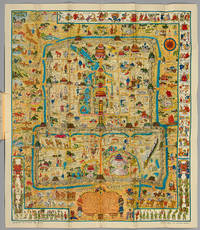
CBF24<p>Lithographed & Published by The Peiyang Press Ltd. Tientsin-Peiping 1936.</p><p>8vo 181 x 132 mm of 1 title-page 22 pp. of explanatory text and a folded map in colors measuring 86 x 74 cm. Two small tears in the white margin of the map. Preserved in the original publisher's wrappers and slipcase.</p><p><b>Very rare first edition complete with the folded map and the booklet preserved in the publisher's illustrated folder.</b></p><p><b>Finely executed pictorial map of Beijing published by Frank Dorn and the Peiyang Press. Ltd. of Tientsin and Peiping in 1936.</b></p><p><b>Dorn's map is perhaps the best known and most iconic pictorial map of Beijing published in the 20th Century offering a host of interesting ethnographic and iconographic information about Beijing and its environs while retaining the whimsical qualities of the great pictorial maps of the first half the 20th Century.</b></p><p><b>Dorn's map is considered one of the great maps of the golden era of pictorial mapmaking. </b></p><p>The map is ringed with a series of cartoon vignettes illustrating the history of the city from ancient times to 1936. Dorn was a friend and admirer of the pictorial mapmaker Jo Mora 1876-1847 and was clearly influenced by Mora's style of combining accurate pictorial details bright colors and a bit of whimsy along with vignettes providing an illustrated history of the place.</p><p>The cartouche is decorated with names and dates of historical events and this legend in the center.</p><p>Frank Dorn was an artist writer and military officer. Growing up in San Francisco he attended the San Francisco Art Institute and became an accomplished cartoonist. After graduation from West Point he was assigned a post in the Philippines and as a side project wrote a book about a clan of tribal people he got to know there. An acquaintance of California artist Jo Mora Dorn began making his own maps; an early one depicted Camp Strassenbourg in the Philippines.</p><p>While living in China Dorn made his popular pictorial map of "Peiping". He later served in the field as advisor to a Chinese army. A fluent speaker of Chinese Dorn's most important military role was in the China-Burma-India theater during World War II. There he served with Deputy Chief of Staff of the U.S. Army forces General "Uncle Joe" Stilwell during the Burma campaign from 1942 to 1944 and served as a commanding officer in 1944-45. A 1942 Life Magazine article about the Burma mission stated that "Dorn an artist drew Stilwell's campaign maps." </p><p>Dorn eventually attained the rank of Brigadier-General and retired in 1953. He settled in Carmel California living what his friend John Thompson describes as "a semi-bohemian life writing and painting. In the Sixties he did some amazing psychedelic paintings wondered if he was the incarnation of a Buddhist painter and held progressive civil rights and antiwar views." In the 1970s Dorn authored two highly-regarded scholarly books on the Chinese and Burmese theaters of World War II. </p><p><b>A fascinating pictorial map of Beijing drawn by an American officer who was a military attaché in China during the 1930s. </b></p><p><b>It features vignettes of Chinese history from 1100 BC to 1927 as well as modern tourist attractions</b> including golf and race courses. </p><p>Hints to the political situation include the 'Kuomintang Headquarters'; and the German swastika and the Japanese 'Rising Sun' flags flying in the 'Legation Quarter' the year before the official start of the Second Sino-Japanese War in 1937. </p><p>Frank Dorn 1901-81 was a graduate of West Point where he picked up the life-long nickname of 'Pinky' before being posted to Beijing in 1934 to help gather intelligence on Japanese aggression. He immersed himself in the language and culture of the city researching the Forbidden City and collecting antiquities. When war with Japan broke out Dorn became chief-of-staff to L.t General Joseph Stilwell with a rank of Colonel. At one point relations between the Americans and the leader of the Chinese Kuomintang Chiang Kai-shek were so bad that Dorn was ordered to prepare a plan to assassinate him. Although Dorn suggested giving Chiang a faulty parachute and sabotaging his plane authorization was never given. </p><p>The plan is packed full of wonderful illustrations from the border that covers the city's history from its inception in 1100B.C. its numerous dynasties - including the 'decadant period under the Ch'Ings' - through to the revolution of 1911 and the movement of the capital to Nanking in 1927. Also to the borders are illustrations of a wedding and a funeral. </p><p>The plan itself not only shows all the historic landmarks including the Forbidden City and the Temple and Altar of Heaven but also the racecourse zoo old execution ground and cocks fighting. </p><p>The color printed map is accompanied by a 22 page booklet which gives a potted history of the city together with a list of points of interest that are shown on the map.</p><p><br /></p><p><u>Français</u></p><p>Lithographed & Published by The Peiyang Press Ltd. Tientsin-Peiping 1936.</p><p>In-8 de 1 f. de titre 22 pp. de texte explicatif et carte repliée en couleurs de 86 x 74 cm. Deux petites déchirures dans la marge blanche de la carte. Conservé dans la brochure et dans l'étui d'origine.</p><p>Dimensions du livret : 181 x 132 mm.</p><p>Dimensions de la carte : 860 x 740 mm.</p><p><b>Très rare édition originale complète de la très belle carte repliée de Pékin et du fascicule de présentation accompagnant la carte le tout sous chemise illustrée d'éditeur.</b></p><p><b>La carte de Frank Dorn est sans doute la plus célèbre et la plus emblématique carte picturale de Pékin publiée au XXe siècle. </b></p><p><b>Elle offre une foule d'informations ethnographiques et iconographiques du plus haut intérêt sur Pékin et ses environs</b> tout en conservant les qualités fantaisistes des grandes cartes picturales de la première moitié du XXe siècle.</p><p>Elle présente une suite de vignettes illustrant l'histoire de la ville de Pékin aux temps anciens. La bordure de la carte regorge d'illustrations formidables qui retracent l'histoire de la ville depuis sa création en 1100 av. J.C. à travers ses nombreuses dynasties jusqu'à la révolution de 1911 et le déplacement de la capitale à Nankin en 1927. Un mariage et un enterrement sont également représentés dans cette bordure. Le cartouche comporte d'ailleurs des noms et des dates d'événements historiques majeurs. </p><p>La carte ne montre pas seulement les lieux historiques comme la Cité interdite ou le Temple du Ciel mais aussi des attractions touristiques plus récentes comme l'hippodrome le zoo les combats de coq… Elle révèle également les occupations des habitants.</p><p><b>La carte de Dorn est considérée comme une des grandes cartes de l'âge d'or de la cartographie illustrée.</b> </p><p>Frank Dorn 1901-81 était un ami et un admirateur du cartographe Jo Mora 1876-1947. Il a été clairement influencé par le style de Mora qui combinait l'illustration précise par des couleurs brillantes et un peu d'humour avec des vignettes fournissant une histoire illustrée du lieu étudié. Frank Dorn est un artiste auteur et officier militaire. En grandissant à San Francisco il a étudié à la San Francisco Art Institute et est devenu un dessinateur accompli. Après l'obtention de son diplôme d'officier à West Point il a été assigné à un poste aux Philippines. A côté de son travail militaire il a écrit un livre sur les tribus autochtones qu'il a appris à connaître là-bas. Proche de Jo Mora Dorn a commencé à faire ses propres cartes. </p><p>Plus tard vivant en Chine Dorn a réalisé sa carte illustrée de "Peiping" après s'être immergé dans la culture locale faisant des recherches sur la cité interdite et accumulant des antiquités. Il a servi dans ce pays comme conseiller militaire de l'armée chinoise. </p><p>Pendant la Deuxième Guerre mondiale il a été attaché au Chef d'Etat-Major Adjoint des Forces de l'Armée de Terre des États-Unis le Général Stilwell pendant la Campagne de Birmanie de 1942 à 1944. Un article de Life Magazine daté de 1942 a par ailleurs déclaré que "Dorn un artiste a dessiné les cartes de campagne de Stilwell." Dorn a finalement atteint le grade de Général de Brigade et est parti en retraite en 1953. Il s'est installé à Carmel en Californie vivant une semi-vie de bohème écrivant et peignant. Dans les années 1960 il a réalisé quelques peintures psychédéliques étonnantes. Dans les années 1970 Dorn a écrit deux livres savants sur les théâtres chinois et birmans pendant la Deuxième Guerre mondiale.</p><p>La carte accompagne un fascicule de 22 pages qui retrace l'histoire de la ville et présente une liste des lieux et monuments représentés sur la carte.</p><p><b>Fascinante carte picturale de Pékin dessinée par un officier Américain envoyé en Chine dans les années 1930.</b></p>
35024501Italy n.d. reprint of 17th century map. Large white sheet black printed map outline center folded seet size 43 x 28 cm. map size: 35 x 24.5 cm. unknown date reprint clean Latin text shows Gipan Japan all of East coast China. A reprint of what appears to be a late 15th century map of the eastern coast of China and one large island of Japan. Shows from the top Qvinsy Saiton susua Tolachia sinsai Chieheam Honam Ochia Can'ai Olam Sisuan Auchieu Sianto Chch'ieu Focieu Canton. These are the Latin names for cities on China's eastern side. There is the large island of Giapan at lower right shows Bungo and Coo. Shows the Mare Della China Sea of China. With text at the upper right corner:" Citta del Quinfai da Mar. Polo vene. Detta ciuitas dei doueabitai ! Re de Chini gurfto alla linea pararella de Vene." A lovely work copy of the original on thick paper. . unknown
199640539Berkeley: Univ. of California Press 1996. 8vo. xi 1 316 pp. Maps. Half-blue cloth over blue boards silver lettrng w/ d.j. NF/Nf. First edition of this excellent work revealing the influence of major figures during Ming China native to T’ai-ho. Univ. of California Press, hardcover
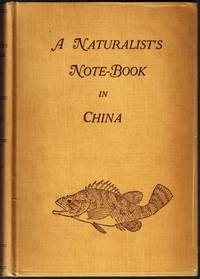
1925010620Shanghai: North-China Daily News & Herald Ltd. 1925. Book. Near Fine. Cloth. 1st Edition. Large 8vo. First Edition. Off-white cloth covered boards with brown lettering and fish design to front and brown lettering rules and insect design to spine shell design at rear cover. Near Fine lacking the scarce dust jacket but now protected in clear mylar cover. Small bump to top front corner faint overall soiling to cloth front end page with vertical crease. "Illustrated with numerous Photographs and one hundred and eight sketches by the Author". 270 pages Errata slip tipped at Contents pages. . North-China Daily News & Herald, Ltd. Hardcover
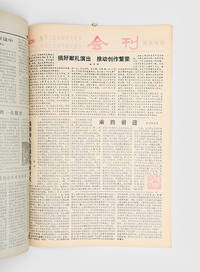
1980189028Beijing: Wenhua bu "Ministry of Culture" 20 January 1979 - 22 March 1980. An informative publication issued during China's post-Mao cultural renaissance including discussion of advances in the spheres of film television and theatre as well as commentary and contributions from cultural and political leaders. A dedicated office at the Ministry of Culture presided over a year-long programme of events to mark the 30th anniversary. 40 issues and supplement together bound in 1 folio 380 x 265 mm each 4 pp. except for final number 8 pp. Illustrations in text. Supplement with masthead and headline printed in red. Bound as a serial volume in strictly contemporary wrappers front cover lettered in red. Contemporary ownership inscription on front cover. Wrappers lightly worn especially at foot of spine toning and cockling internally occasional tidemarks closed tear and old paper repair on final leaf: very good. unknown
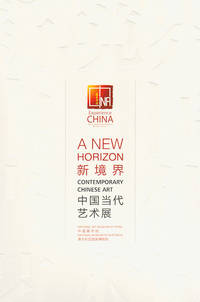
2011213227Australia.: National Museum of Australia. 2011. Colour illustrations 181pp text in English and Chinese covers a little soiled otherwise very good paperback copy. 33.5 x 26.5cm.<P> Catalogue for an exhibition held at the National Museum of Australia 29 September 2011 to 29 January 2012.<P> <b>When referring to this item please quote stockid 213227</b> . National Museum of Australia. paperback
188731477New York Jan. 8 1887. 1887. Very good. - Over 75 words penned on both sides of an 8 inch high by 5 inch wide sheet of A.A. Low's personal 31 Burling Slip buff white stationery with attached blank leaf. In his letter addressed to Mr. Davenport at the Garfield Building which was also one of the buildings which A.A. Low developed in Brooklyn Low mentions the possibility of naming the building located at 186 Remsen Street which would house the Franklin Trust Company after that institution: "I have asked Mr. ____ if it would suit him or it will not to have the edifice called 'The Franklin Building'". Signed "Respectfully yours A.A. Low". Folded for mailing with some minor creases to the left edge. Remnants of paper adhere to the edge of the verso of the blank leaf. Very good. <p>The American entrepreneur businessman and philanthropist Abiel Abbot Low 1811-1893 made his fortune from the China trade. His company A.A. Low & Brothers imported teas porcelain and silks from China and Japan. His firm was originally housed on Fletcher Street in New York City. It moved to new quarters the A.A. Low building which he erected on John street in 1849-50. Once established in New York Low went on to invest in numerous other ventures including the first Atlantic cable and the Nickel Plate Railroad.<p>Among A.A. Low's speculative investments were the Garfield Building as well as financial institutions such as the Dime Savings Bank and the Title Guarantee & Trust Company. Another of his projects the Franklin Building is a seven and a half story Romanesque Revival Building. While most were later replaced by taller skyscrapers The Franklin Building which was completed in 1887 by the architectural firm of the Parfitt Brothers survives as one of the oldest buildings in the district. New York, Jan. 8, 1887. unknown
41029801Hong Kong n.d. ca. 1900. A pair of large b.w. photographs woman: 31.5 x 40.5; man: 31 x 47 cm. very good condition minor wear on eges a few spots board mounted with studio brushed touch ups and accents. OBSCURE This is a pair of matching "Ancestor Photographs." They were taken about 1900 in Hong Kongand are probably photos of a Cantonese husband and wife. They were used posthumously to be placed on the family altar for worship remembrance and to make offerings of incense and food during the year. STUDIO POSED: The works were clearly taken in a studio. Each has been slightly enhanced by the photographer's brush upon development. The man's photo shows touch up and accent in his eyebrows moustache the lines and folds of his eye lids. The woman's photo has been touched up in her hair where thin lines to accent her hair have been drawn in as an accent. The frogs or fasteners of her Cheongsam dress have also been outlined to accent their definition. CONDITION: The woman's photo has some gray spots at her lower chest line in the bottom are of the photo. This is somewhat feint and not exceptionally bad otherwise there are 2 tiny white spots at the left in the background. The lower edge of the photo was roughly cut and then later likely matted out by the photographer. These defects do not significantly detract from the overall image which is clear sharp and otherwise without any major defects. Overall a strong solid image clear sharp and bright. The man's photo has a narrow water spot at the background just adjacent to his left temple a few white spots on the negative which transferred to the photograph common to the early period of this photograph. There is a small divot just below his chin in the background. Otherwise the photograph is with out any large defects. There is an interesting fingerprint in the left background just above his shoulder obviously place there by the photographer. A small discoloration is found on the area just above his right temple which again appears to be in the negative. Overall a strong solid image clear sharp and bright. It is out belief that the photographs were not taken on the same day at the same photographer's studio. The man's photograph appears to be an earlier work with a different photographic process. The woman's looks like it was taken a few years later. We believe the couple were married and represented the late ancestors of a Hong Kong family. PROVENANCE: The set was purchased in Hong Kong in 1959 and were framed as matching set. . unknown
22013501China n.d. ca 1860. Two lovely early photographs each 9.5 x 5 and 9 x 6 cm. very good clear images minor fading each is mounted on a stiffer board one has "Pagoda" in old ink pen on the verso these seem to be albumen type photos. The Pagoda is shown with a pavillion or bridge walkway and two 'chinese looking on. the Pagoda is in the background and with high roof and typical tiles. The 2nd shows a vegetable seller with two baskets loaded with vegetables. He sits in the middle of each basked on a small stool with the should- er pole across his knees. unknown
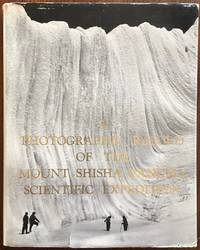
196657346Peking: Science Press Distributed by Guozi Shudian 1966. 4to. 9.25 x 11.5 in. 90 pp unpaginated. Photo-illustrated throughout many in colour 2 large folding panoramic photos. White cloth gilt lettering rounded corners maps on endpapers very slight dustsoiling w/ d.j. photo cover art of expedition photographic team in front of glacier gilt lettering minor edgewear 1 small closed tear rubbing NF/VG copy. First edition of this lavish photographic essay exploring the ascent of Mount Shishapangma now Xixabangma or Gosainthan while Professor Shi Yafeng led a team of glacialogists as part of their detailed glacier survey in the Tibetan Autonomous Region. The true summit is at 8027 meters 26335 feet and often climbers claim to reach the summit when in fact they have climed the lower western summit. The Chinese mountaineering team for the 1964 expedition was led by famed Chinese climber Xu Jing who had climbed Muztagh Ata with the Soviets in 1956 retreated in the 1960 Chinese Mount Everest expedition and succeeded on Mt. Shishapangma which the last unclimbed eight-thousander in the Himalayas. See: Tingjun Zhang & Daqing Yang A Legendary Glaciologist: Academician Shi Yafeng on his Ninetieth Birthday In: Arctic Antarctic and Alpine Research Vol. 40 No. 3 pp. 600-604. Science Press, [Distributed by Guozi Shudian], hardcover
198552228Oxford Hong Kong & New York: Oxford Univ. Press 1985. 4to. ix 1 266 pp. Photo frontisp. numerous photo plates throughout. Gray boards gilt lettering on spine maps on endpapers minor shelfwear w/ d.j. NF/NF copy. First edition of this striking photographic memoir of northern China from 1933 to 1946 by a photographer who had escaped Nazi Germany in 1933 to take charge of a German-owned photographic studio in Peking. She is considered to have been one of the finest photographers who has ever worked in Asia. Oxford Univ. Press, hardcover
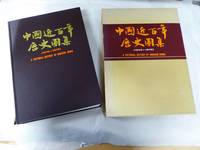
445084Seventies Publishing Hong Kong. Hardcover. Good. THERE ARE NO TARIFFS OR CUSTOMS DUTIES ON BOOKS. 1976 1st edition. Hong Kong : Seventies Publishing. Volume 1: Main book. Contains the primary content and illustrations mostly in Chinese This book is considered a collectible historical reference due to its large size approx. 30�cm extensive illustrations and coverage of the period up to the death of Mao Zedong. Good copy in the original gilt-blocked ribbed cloth has suffered a slight tear comes with original slipcase. The set remains particularly well-preserved overall; tight bright clean and strong with a small fold on one of the pages Physical description: xviii 634 pages : chiefly illustrations some colour ; 30 cm 1 volum Seventies Publishing, Hong Kong hardcover