31 résultats
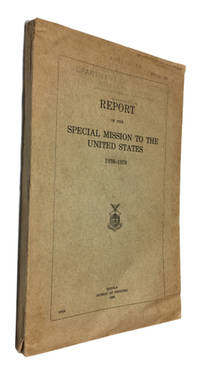
193988381Manilla: Bureau of Printing 1939. Paperback. Good. 334p. Softcover in original wrapper. 24 cm. Light library markings Department of the Interior on front cover. Some wrinkling of cover and text. Cover edges slightly wrinkled and and spotted. Some dog-earing. <br/><br/> Bureau of Printing paperback books
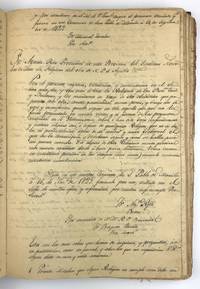
18601570Quingua i.e. Plaridel 1860. Good plus. 428pp. Folio. Original limp calf manuscript cover title. Edges and spine worn; head of spine and upper corner of front wrap chipped. Text block loose at front hinge broken in a couple of places internally. A few leaves loose; scattered chipping and tears occasionally affecting text. Evenly tanned; occasional dust soiling. Completed in several hands; highly legible scripts. A valuable manuscript compilation of Catholic documents recorded by the local religious authorities at Quingua in the Philippines over much of the early- and mid-19th century. The present volume includes over 425 pages of decrees acts directives and elections that affected how religious life and instruction were carried out by the Catholic Church in the Philippines during the 1800s. Quingua now the municipality of Plaridel was founded by the Augustinian friars of Malolos who established a chapel in the village located on the banks of the Angat River on the north side of Manila Bay in 1581. The documents compiled here span from 1827 to 1860 and are recorded on leaves of native rice paper in a locally produced volume. The most basic and indeed most integral documents transcribed here are the chapter acts of the Augustinian order in the Philippines which transmit the orders and directives by which the friars led their daily lives. These include the results of yearly elections by which individuals were made bishops assigned to parishes and chosen for other significant church positions. Also included are annual "Actas y Determinanciones" as issued by central church authorities at Manila which touch on numerous local issues and dictated how the friars lived and carried out their religious duties. The volume contains further individual decrees that affected Philippines parishes as a whole and those that dealt more specifically with the chapel at Quingua many of which were issued from Manila but also many that were promulgated by more local authorities such as those at the parish level in Bulacan in which Quingua was located as well as several orders recorded directly from Spanish church authorities and at least one Papal decree. The final major component of the present work comprises numerous sermons homilies and pastoral letters given by visiting priests or relating to specific occasions. In all the present manuscript volume contains hundreds of individual documents many of which likely do not survive or are not recorded in any other form and which serve to chronicle the lives of the friars of this small outpost at an incredibly granular and detailed level. Additionally these documents are signed or issued by many significant figures in the history of the Catholic Church in the Philippines. The book as indicated in the manuscript title was initiated by Friar Santos Gomez Marañon who spent over half of his life in the Philippines and eventually became the Bishop of Cebu. Many of the documents from the 1830s are signed by Friar Francisco Manuel Blanco who began his church career in the Philippines in nearby Angat and became renowned as a botanist with his authorship of the first comprehensive flora of the islands. An outstanding and extensive manuscript volume on Catholic law administration and practice in the rural Philippines spanning over thirty years of the 19th century. unknown books
194152747Manila: Bureau of Printing 1941. First edition 8vo pp. 59 1; self wrappers; front wrapper unevenly toned; an Ayer Linguistics duplicate with a Newberry release stamp inside the front wrapper; no other markings. Text is in both Cebuano and English and was prepared for publication as the United States entered World War II. <br/><br/> Bureau of Printing unknown books
189957494New York: The Macmillan Company London: Macmillan & co. Ltd 1899. Early edition first printed the year before. Illustrated with plates and folding map. 529 pp. 1 vols. 8vo. Original tan cloth some minor darkening to spine else fine with the armorial bookplate of Van Nest on endpaper. Early edition first printed the year before. Illustrated with plates and folding map. 529 pp. 1 vols. 8vo. The Macmillan Company, London: Macmillan & co., Ltd unknown books
196970835Diliman 1969. Paperback. Very Good. iv 397 leaves. Wrapper. 28cm. Text printed on one side. Research Guide No. 6. <br/><br/> paperback books
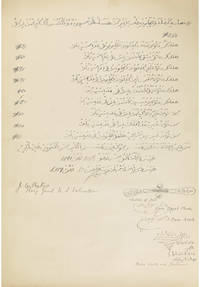
189924064<p><b>PHILIPPINES.</b>Facsimile of original treaty ceding sovereignty of the Archipelago of Jolo to the United States. Jolo Province of Sulu Philippines August 20 1899. Bound in 20th century cloth comprising a large three-page lithographed facsimile of the manuscript treaty written in the Tausug language and signed in print by the Sultan of Jolo and Brig. General John C. Bates 16½ x 12 in. With a small format copy of the document in English the first leaf mimeographed the final leaf lithographed with facsimile signatures. </p><p><b><br /></b></p><p><b>Historical Background</b></p><p>The Sultanate of Sulu began in the early 15th century and once included the northeastern side of Borneo and many islands to the northeast including the island of Jolo. By the late 19th century it had been reduced to a string of islands under Spanish occupation rule. The Treaty of Paris that ended the Spanish-American War transferred control of the Philippines including the Sulu to the United States. The sultanate was home to several ethnic groups including the Moro and Tausug.</p><p>On August 20 1899 the United States signed this treaty with Sultan Hadji Mohammed Jamalul Kiram II and several of his tribal chiefs. The "Bates Treaty" after General John C. Bates recognized U.S. sovereignty over the whole archipelago of Jolo. The U.S. agreed to protect the sultan and his subjects and not to sell any island in the archipelago to any other nation without the sultan's consent. The treaty promised religious freedom especially for the Muslim Moros and free trade with the Philippines. It prohibited piracy and the introduction of war material. The most controversial article recognized slavery but allowed any slave to purchase his or her freedom by paying "the usual market value" to the master. Finally the treaty promised monthly payments to the Sultan and his chiefs totaling 730 Mexican dollars per month approx. $365.</p><p>This treaty theoretically removed the Sultanate of Sulu from participation in the Philippine American War 1899-1902. Some Americans criticized the treaty for granting too much autonomy to the Sultan and for allowing slavery to continue. Over the next five years political conditions deteriorated and there were revolts in several areas even threatening Jolo City where U.S. authorities were stationed.</p><p>In March 1904 the United States abrogated the treaty unilaterally per Secretary of War William Howard Taft's telegram to Gov. General Luke E. Wright 1846-1922: "By order of the President you are hereby directed to notify the sultan of Sulu and the dattos who signed the so-called Bates treaty of August 20 1899 which was a modus vivendi and mere executive agreement that in view of the failure on the part of the sultan … to discharge the duties and fulfill the conditions imposed upon them by said agreement they have forfeited all rights to the annuities therein stipulated to be paid to them and all other considerations… they are subject to the laws enacted therein under the sovereignty of the United States."</p><p>Although the Philippine-American War officially ended in July 1902 with the dissolution of the First Philippine Republic resistance continued for several more years especially in remote areas and the islands occupied by the Moro people. In June 1913 American troops under General John "Black Jack" Pershing 1860-1948 attacked a group of fighters atop Mount Bagsak on the island of Jolo. At the Battle of Bud Bagsak the Americans destroyed the Moro resistance and killed its leader Datu Amil.</p><p>In the text of the treaty there was a critical "translation error." The Treaty in the Tausug version discussed "The support aid and protection of the Jolo Island and Archipelago" but the word "sovereignty" was not used. The English-language version noted that "The sovereignty of the United States over the whole Archipelago of Jolo and its dependencies is declared and acknowledged." In 1946 the English text provided justification for America's decision to incorporate the Sulu Archipelago into the Philippine state.</p><p><b>Sultan Hadji Mohammed Jamalul Kiram II</b> 1868-1936 was a member of the Muslim royal house that ruled the Sulu archipelago from the 15th to the 20th centuries. Proclaimed sultan when his older brother died in 1884 it took ten years to consolidate his authority. In 1912 he took a world tour and visited President William Howard Taft at the White House in Washington D.C. He surrendered his political powers to the United States government in 1915 but retained cultural and religious authority. He died leaving seven daughters but no male heir. His younger brother made an ineffectual claim to the abolished sultanate.</p><p><b>John C. Bates</b> 1842-1919 was born in Missouri the son of Abraham Lincoln's Attorney General Edward Bates and educated at Washington University in St. Louis. During the Civil War John C. Bates served as an aide to General George G. Meade. He served in the Indian Wars of the late nineteenth century and rose to the rank of colonel. In 1898 he received promotion to brigadier general and commanded in the Spanish-American War. He also commanded a division of volunteers in the Philippines during the early stages of the Philippine-American War. He later served as the Chief of Staff of the U.S. Army for several months before his retirement in 1906. He was the last Army Chief of Staff to have served in the American Civil War.</p><p><b>Condition</b></p><p>Dust soiling stains margins strengthened.</p> books