PhilippinesBiblio.com
439 résultats
133269926X.Gpaperback. Good. Access codes and supplements are not guaranteed with used items. May be an ex-library book. paperback
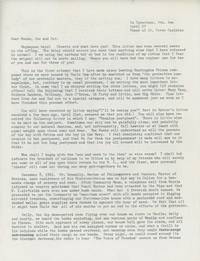
1945List2748Philippines 1945. Single letter; five 8.5 x 11†pages. Pinhole at top of first page missing final pages overall fine. The unknown author of this letter was an American Jesuit missionary in the Philippines who before the war was a novice living in Novaliches just outside Manila. He apparently had not written a significant letter home for a long time: in this letter written in April of what is likely 1945 he recounts his experiences from between December 8 1941 and early January of 1945 shortly before the civilian POW camp in which he was interned was liberated.<br /> <br /> After the “Nips†bomb Pearl Harbor “A feverish month ensuedâ€:<br /> <br /> “We proceeded to put the Community on ‘war-time alert’ with all hands occupied in digging air-raid trenches camouflaging our fortress-like house with a garlanded roof and mud-daubed walls; grain supplies were rushed in against the hour of need. We felt that all it might take Uncle Sam all of six months to put an end to the efforts of the pretender.â€<br /> Around Christmas they evacuated to the Jesuit Ateneo Grade School then in Intramuros as the Japanese were advancing quickly towards Novaliches. Of course this did not prove to be much safer:<br /> <br /> “When darkness came the Japs began their bombing of the Port Area. The bombs began to bounce off the pavement; bombers just skimming our roof-top on their way. We spent the night on our tummies and how we prayed. We thought that each decade of the beads would be our last this side of Purgatory. . When the church sto Domingo was hit the floor beneath us did some tricks and we were lifted up a bit and let down amidst the dust and smoke that poured in from above.â€<br /> <br /> The missionaries try to “salvage important papers and other valuables from the Mission House prior to abandoning it to the fire which threatened the entire Walled City.†During this time they and “a thousand refugees†live in the Ateneo while “Dawn and night raids were supplied by the Japs with nary an American plane to say to them no†– American forces had taken a serious hit and withdrawn outside Manila. It was declared an open city before “the little scrawny but arrogant Japs came into the city and took over†in January of 1942.<br /> <br /> The missionaries persuade the Japanese to let them stay in the Ateneo:<br /> <br /> “We convinced them that it was impossible for us to give up the building because it belonged to the Pope and the Vatican State would hold us responsible. This argument with many ingenious trimmings enabled us to hold on to the Ateneo until June ‘43 when the main building was taken for a military hospitalâ€.<br /> <br /> The author describes how despite what he calls his “partial internment†in Manila he is able to get around checkpoints by pretending to be Belgian. He finishes his studies and begins work at a Belgian convent in Paranaque in February of 1943 living between there and Manila:<br /> <br /> “Incidentally none of this would have been possible if the Japs had gumption enough to find out that I was one of the hated Americans. . All vehicles were obliged to stop here a checkpoint at Baclaran and all passengers get down and file between a Jap sentry and a Filipino constabulary soldier to be searched for hidden arms etc. Since several Belgian Fathers not considered enemy aliens frequently passed this way I was able to walk through unmolested as an unoffending Belgian. . I carefully kept my helmet covering the tell-tale red arm-band which was worn on the arm furtherest away from the Jap. The Filipino would do no more than give me a knowing grin.â€<br /> <br /> On July 10 1944 all of the American civilian POWs are taken to internment camps in Santo Tomas and then Los Baños. In Los Baños the POWs cut wood repair roads and farm. Los Baños would be liberated in February of 1945; the author paints a slightly confusing picture of the leadup to this:<br /> <br /> “Conditions generally ‘worsened’ when on Jan. 8th about the time that the American troops landed at Mindero an island just across from Batangas the Japs got jittery believing that the Yanks were going to do the obvious and cross over the bay to Batangas and they the Japs at Batanga decamped! ‘You are free but remain in camp until the Americans come. Outside your camp Japanese troops will shoot any who leave.’ Great was the joy in Mudville. From nowhere came flag poles on which we quickly unfurled American and British flags .; a short-wave radio was set up and we enjoyed daily Frisco broadcasts .â€<br /> <br /> It sounds as if the missionary was reporting contrary to the usual narrative of the Los Baños raid that the Japanese had essentially given up control of the camp and were like the prisoners simply waiting for the Americans to come get their people. Perhaps something further happened in the nearly two intervening months; however the remainder of the letter is missing.<br /> <br /> Of interest to scholars of modern Jesuit history and of the civilian POW experience during the Second World War. unknown
0366094718.Ghardcover. Good. Access codes and supplements are not guaranteed with used items. May be an ex-library book. hardcover
0366034618.Gpaperback. Good. Access codes and supplements are not guaranteed with used items. May be an ex-library book. paperback
2020DBS.Management-9781774073Society Publishing 2020. 1 ST. Hardcover. New. Society Publishing hardcover
2020DBS.Management-9781774073Society Publishing 2020. 1 ST. Hardcover. New. Society Publishing hardcover
2020AME_9781774073155Society Publishing 2020. UNKNOWN. Hardcover. New/New. Society Publishing hardcover
2020DBS-9781774073155Society Publishing 2020. 1 ST. Hardcover. New. Society Publishing hardcover
2020DBS-9781774073155Society Publishing 2020. 1 ST. Hardcover. New. Society Publishing hardcover
2020AME_9781774071557Society Publishing 2020. UNKNOWN. Hardcover. New/New. Society Publishing hardcover
2020DBS-9781774071557Society Publishing 2020. 1st. Hardcover. New. Society Publishing hardcover
2020DBS-9781774071557Society Publishing 2020. 1st. Hardcover. New. Society Publishing hardcover
a75372Washington 1916 1st. 64th Congress 1st Session Document No. 529. Hardcover. Octavo 352pp. tan buckram. VG. Volume 1. . hardcover
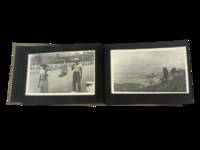
1944224221944. Olson Laverne Edwin vernacular photo album circa 1944-1946 documents U.S. Navy enlisted service across the Philippines and Hawaii during the final phase of World War II and the immediate postwar occupation period providing direct visual and documentary evidence of military presence local communities and wartime social life in the Pacific Theater. The album is anchored by Olson's official U.S. Navy Certificate of Satisfactory Service confirming duty from December 18 1944 through April 23 1946 situating the material within the aftermath of the U.S. return to the Philippines following the Leyte landings and the transition into occupation and reconstruction. The photographs support research into Pacific War military infrastructure American servicemen's daily life and interactions with local populations in recently contested and strategically critical regions.<br /> <br /> Album titled "Snapshots: The Philippines and The Islands of Hawaii" compiled circa 1944-1946 contains 25 items: 23 silver gelatin photographs one wallet-sized U.S. Navy Certificate of Satisfactory Service and one Roosevelt Commemorative Birthday Ball exchange coupon dated January 30 1946. Album measures approximately 4.5 x 3.5 inches with most photographs approximately 4 x 2.5 inches. Images include candid and landscape views from the Philippines likely including Leyte depicting rural villages shoreline activity docked naval vessels and local labor such as fishing and canoe transport. One photograph shows a group of Filipino children and young men gathered along a beach while another captures men and boys navigating shallow coastal waters in a canoe. Hawaiian images include group recreation scenes and coastal landscapes reflecting off-duty life within a major U.S. naval hub. The Roosevelt Birthday Ball coupon printed with the slogan "Dance That Others May Walk" provided access to multiple Honolulu venues and connects the album to wartime charitable campaigns supporting polio treatment through organized social events.<br /> <br /> Created during the closing campaigns of the Pacific War and the first year of U.S. postwar presence in the Philippines the album situates an enlisted sailor within a broader military and geopolitical transformation that included amphibious warfare territorial reoccupation and the reestablishment of American administrative and logistical systems. The Philippines served as a critical site of both combat and reconstruction while Hawaii functioned as a central staging and support base for naval operations. The inclusion of both official documentation and leisure-related ephemera demonstrates how military service encompassed bureaucratic recordkeeping mobility across strategic locations and participation in organized morale and fundraising activities tied to the American home front. Light wear to album covers minor handling and edge wear to photographs with images remaining sharp; service certificate shows toning and wear; pages largely intact. Overall very good condition. unknown
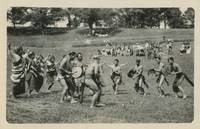
1940List2741Philippines and San Francisco 1940. pproximately 205 photographs: twenty 5 x 7†and smaller eighteen 3.75 x 5.5†and smaller and 167 2.5 x 3.5†and smaller. Most are glued into a scrapbook with some loose. Some photographs bent or with tears; some marked with pencil. Generally very good. The US’s military presence in the Philippines is long-standing beginning in 1898 with the Spanish-American War which ended that year with a treaty that sold the islands to the US. The Philippines was then an American colony until the country’s independence was recognized by the US in 1946. In 1947 the two countries signed the Military Bases Agreement allowing the US to keep military bases in the Philippines for a period of 99 years; this was finally overturned in 1991 and the bases were closed by 1992. However agreements signed in 1999 and 2014 allowed US troops to move freely through the Philippines and allowed the US government to build and operate military facilities.<br /> <br /> Offered here is a large archive of photographs likely belonging to—and likely with many taken by—an American soldier stationed in the Philippines. These were probably mainly taken in the 1930s as a photograph appears to show the Golden Gate Bridge under construction. Some are possibly from World War II as one photograph shows men standing on a ship under a large banner reading “CHINA BURMA INDIAâ€. However they are mostly unlikely to have been taken during the war as there is also a photograph of a pristine-looking Manila Central Post Office – the building was severely damaged during the fighting against the Japanese in the Battle of Manila and was rebuilt in 1946.<br /> <br /> In the archive are a mix of military photographs—generally of planes ships and life aboard them—and shots of Philippine life and scenery. One interesting scrapbook page places a photograph of a massive American steamer next to a shot of a wooden riverboat. Aboard the riverboat young Filipino boys pose and smile for the camera. The military shots emphasize the US’s outsized power: a man poses next to and is dwarfed by a seaplane; three men stand behind a chest-high pile of artillery; planes fly in formation straight overhead; men and women eat a lunch spread under the hulking wings of a plane parked on a lawn.<br /> <br /> The shots of Filipino life show the modernization of a largely agrarian society. On the one hand there are rice paddies huts with straw roofs plows and carts pulled by oxen. Women weave on large outdoor looms young people pose in traditional dress a smiling man stands wearing a loincloth and holding a spear and a circle of men and women dance around with drums. On the other hand a long line of cars is parked outside the Sunday market in Baguio men pose outside the Lanao Golf Club a train speeds by the camera and the neoclassical Manila Central Post Office watches over the wooden rowboats in the Pasig River. One set of photos shows penitents or magdarame performing the Good Friday practice of self-flagellation. As an audience looks on men in hoods many with crowns woven from plants whip themselves or are whipped. Though the Catholic Church in the Philippines discourages it these mortifications continue to be practiced to this day.<br /> <br /> Of interest to scholars of the Philippines’ American colonial period particularly for its documentation of ordinary Filipino life during this transitional time. unknown
2020DBS-9781774072684Society Publishing 2020. 1st. Hardcover. New. Society Publishing hardcover
2020DBS-9781774072684Society Publishing 2020. 1st. Hardcover. New. Society Publishing hardcover
1019989793.Ghardcover. Good. Access codes and supplements are not guaranteed with used items. May be an ex-library book. hardcover
0484633333.Ghardcover. Good. Access codes and supplements are not guaranteed with used items. May be an ex-library book. hardcover
1331280249.Gpaperback. Good. Access codes and supplements are not guaranteed with used items. May be an ex-library book. paperback
2020AME_9781774073223Society Publishing 2020. UNKNOWN. Hardcover. New/New. Society Publishing hardcover
2020DBS-9781774073223Society Publishing 2020. 1 st. Hardcover. New. Society Publishing hardcover
2020DBS-9781774073223Society Publishing 2020. 1 st. Hardcover. New. Society Publishing hardcover
2021AME_9781774076385ARCLER PRESS 2021. UNKNOWN. Hardcover. New/New. ARCLER PRESS hardcover