AFGHANISTAN - SECOND ANGLO-AFGHAN WARBiblio.com
823 résultats
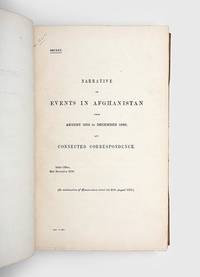
1878166983London & Simla: 1878-82. Confidential India Office archive revealing British decision-making in the final phase of the Second Anglo-Afghan War An exceptional archive of confidential India Office and Government of India papers this collection offers an unusually detailed view of the diplomatic and bureaucratic manoeuvring that accompanied the final stages of the Second Anglo-Afghan War and the negotiation of Britain's withdrawal. Bringing together Foreign Department memoranda from Simla Cabinet papers printed at the Foreign Office and India Office material that seldom survives outside official files it reconstructs policy formation across two administrations and two continents. Running through the papers is the early career of Reginald Baliol Brett later 2nd Viscount Esher who became private secretary to Lord Hartington in 1878. As Hartington and the new Liberal government sought to reverse Lord Lytton's "forward" policy and disengage from Afghanistan the India Office and the Government of India frequently disagreed over strategy intelligence and the limits of influence. The archive captures these tensions vividly and shows Brett learning to operate as an assertive intermediary whose probing questionnaires marginalia and attempts to synthesize rival views already marked him out as a rising - and at times unsettling - force within the department. The documentary foundation of the dossier lies in A. W. Moore's two major surveys of Afghan affairs annotated by Brett and widely regarded as the most authoritative India Office narratives of the conflict. These are complemented by a sequence of extremely restricted Simla-printed papers and a run of Cabinet memoranda from Thomas Harrison's private press together charting the shift from aggressive frontier ambition to the more pragmatic Liberal policy of withdrawal and the recognition of Abdur Rahman as Amir. High-level submissions by Hartington Ripon and Evelyn Baring illuminate the arguments over the retention of Kandahar and Pishin while the "Aide-Mémoire" on negotiations with Abdur Rahman documents the decisive recalibration of British aims. Other materials probe the immediate crises of the war: memoranda assessing Yakub Khan's responsibility for the Kabul Residency attack; correspondence among Griffin Stewart and Lyall on the deteriorating northern situation; and the substantial "Very Confidential" dossier of Russian correspondence between General von Kaufmann and Shere Ali which exposes the diplomatic pressures of the "Great Game". Operational detail appears in the viceroy's secret telegrams of early 1880 field reports from Kandahar and Kabul Wilson's military sketch of the campaign and manuscript troop returns. Among the most revealing personal items is General Charles Gordon's autograph draft of a letter to The Times opposing the retention of Kandahar heavily revised and ultimately suppressed by Brett who feared it would damage Gordon's standing. His decision and later grief at Gordon's death lend an unexpected human dimension to a collection otherwise dominated by official policy and statecraft. Only a handful of the documents can be traced in institutional collections and few survive in private hands. Gathered here in a coherent sequence with close associations they provide a rare high-resolution record of how British officials interpreted the war navigated clashing doctrines and personalities and ultimately engineered their exit from Afghanistan. A full list of the contents is available on request. Folio 339 x 215 mm comprising 37 printed and manuscript items: full listing with titles paginations and outline content given in the note. Contemporary light olive brown diagonal zigzag-grain cloth boards rebacked and cornered in brownish orange morocco in the mid-20th century red morocco label original moderate bluish green endpapers retained matching linen hinges. Esher armorial bookplate. Cloth starting to lift a little from the edges of spine; contents variably browned margins a little fragile in places with a few consequent chips and splits one title page torn across and neatly repaired with archival tape: overall very good. James Lees-Milne The Enigmatic Edwardian: The Life of Reginald 2nd Viscount Esher 1986. hardcover
Very Good Turkish, Ottoman (1500-1928) Contemporary fine quarter leather binding. Five raised bands to spine, second gilt title as "Tarih-i seyyâh", others gilt decorations. Brown boards are embossed decoratively. Demy 8vo. (21 x 15 cm). In Ottoman script (Old Turkish with Arabic letters). [12], 194 p. Hegira: 1142 = Gregorian: 1729. Slightly wear on colophon and the first page. Otherwise a good copy. Extremely uncommon first Ottoman edition printed in the first printing house of the Islamic world as the third Islamic incunabula, of this eye witness and first-hand account, and one of the most important chronicles describing the history of late Safavid Iran in the 18th century, the Iranian invasion of Afghanistan and the siege and the fall of Isfahan in 1722 written by Kruzinski who was a Polish Jesuit missionary served in the Persia in the early 18th century. In 1720 he was nominated advocate general of the mission in Persia and became the secretary to the Bishop of Isfahan. Krusinski himself, however, claimed later on that he is not only the author but also the translator of this work. As a chronicle, this is a history of Iran under the Safavids from 1499 up to 1727 with a special focus on the 1722 Afghan invasion that terminated the Safavid dynasty. "His account of the conditions and events preceding and during the siege and the subsequent demise of the Safavids is unique. It also offers key insights into the workings of the late Safavid state and government as well as the functions of the royal harem." (Bloomsbury). Translated and expanded by Ibrahim Müteferrika of Kruzinski's Latin manuscript written in 1726 in Istanbul and entitled "Historia revolutionis monarchia Persica". The book was first published in Italian, French, and English translations, in Rome (1727), Paris (1728), and London (1728). The founder of the legendary first printing house in the Islamic world, Ibrahim Müteferrika (1674-1745), was the editor and translator of this book. Ceridehâne [i.e. Journal House] Printing House is the successor of the Müteferrika Press in the early 19th century. "The book is a Turkish translation of the history of Iran written in Latin by the Jesuit missionary Judas (Jan) Tadeusz Krusinski (1675-1751). The work, whose title can be translated as 'A voyager's description on the apparition of the Afghans and on the reasons of the Safavid Empire being undermined', focuses on the Afghan invasion of 1722 which led to the fall of the Safavid dynasty, but also offers an overview on the historical processes of early 18th-century Safavid Iran. The publication of this work was made actual not only by the vicinity of Iran to the Ottoman Empire but also by the historical turn reorganizing the relations of power in the region and triggering the intervention of the Ottomans as well. This may have been the reason that among the first Turkish incunabula this was the work published in the highest number of copies. This publication also offers an early example of copyright disputes, as Krusinski considered the Turkish translation as his own work, while Müteferrika, who does not mention his name in the printed version, suggests himself to be the translator". (Source: The Mysterious Printer Ibrahim Muteferrika and the Beginnings of Turkish Book Printing: Library of Hungarian Academy of Sciences Online). The workshop of Müteferrika began its historical mission in 1728. They published 17 works in 22 volumes. The printing house served as a means to the long-term goal of Müteferrika, his efforts to broaden the horizon and modernize the knowledge of Ottoman society and Islamic civilization. This is evidenced by the subjects of the books selected for publishing, the motivations put forth in the publisher's introductions, as well as by the documents illuminating the background of the publication of each book, also published in print. One of 1200 copies. OCLC: 312516053 (For printed copies: Two copies).; Özege: 19897.
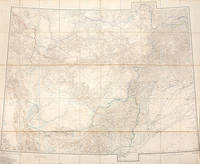
1901129882Dehra Dún: Office of the Trigonometrical Branch Survey of India 1901. Rare and superb Great Game map of Afghanistan Rare and very striking wall map of Afghanistan dated June 1901 compiled under the orders of the Surveyors General of India Major-General Charles Strahan 1895-99 and Colonel St. George Corbet Gore 1899-1904: an online search of institutional libraries records copies at just 3 institutional libraries world-wide British Library Wisconsin and Bayerische Staatsbibliothek. Included is a useful list of "Additional Authorities Consulted" among them maps of Karataghin and Darwaz 1882 by the Russian military topographer P. E. Kossiakoff Kafiristan 1884 by Surgeon-Major G. S. Robertson "Map illustrating the Havildar's and the Mulla's Routes in Wakhan Kolab and Darwaz by Captain H. Trotter RE" 1876 Henry Trotter was part of the Forsyth Mission of 1873-74 Routes in Persia 1893 by Sir Percy Sykes four Russian maps two of the Trans-Caspian "sources of the Amu Dariya" the Oxus "Tehran Askabad &c" and the Pamirs and Upper Oxus Regions 1894 by Ney Elias 1844-1897 an important figure in the Great Game. The present copy has a number of interesting contemporary annotations showing a certain familiarity with the country some in red and blue pencil underlining place names other pencillings connecting towns and the frequent use of a discreet symbol in purple ink that we have not been able to identify but may be the location of way points or sangars temporary fortified positions established by the British; alternatively they may show known or suspected positions of Afghan tribesmen. The most prominent annotation is the manuscript addition of the name "Jani Khel" and an arrow pointing to the area on the map marked as Katawaz the Pashto name for the town of Zarghun Shar but also the plain to the south of the town. It was a raid by Waziri Mahsuds on the flocks of the Jani Khel tribe that precipitated the Mahsud Blockade of 1900-02; the official report of operations notes that a garrison of sepoys was stationed at Jani Khel. "The blockade came into force on 1 December 1900. To enforce the blockade intended to prevent the Mashuds having any contact outside their tribal area a line of posts was established between Bannu highlighted here in red pencil and Dera Ismail Khan. Some eight battalions of infantry two regiments of cavalry and four sections of mountain artillery were initially employed. Some payments of the fine imposed by the British were made but outrages still continued troops and Militia were killed and rifles and mail stolen. Originally the blockade had been seen as a relatively cheap alternative to a punitive expedition but after twelve months results were meagre and recourse was had in November 1901 to a number of small mobile columns. the columns harassed the Mahsuds from all directions simultaneously destroying defences capturing men and cattle and destroying grain and crops. The tribe eventually sued for peace in January 1902. It was a sad commentary on British policy that no better method could be found to curb Mahsud intransigence" Brian Robson Crisis on the Frontier: The Third Afghan War and the Campaign in Waziristan 1919-1920 2004 pp. 159-60. Large coloured heliozincographed wall map 4 sheets 1285 x 1615 mm dissected into 50 panels and mounted on linen brass suspension rings at some time removed folding into a purplish-brown sand-grain cloth map case 263 x 172 mm paper cartouche label of Edward Stanford Long Acre. Case a little sunned only minor wear to extremities. Map in excellent condition. See C. Collin Davies The Problem of the North-West Frontier 1890-1908 Cambridge UP 1932; East India North-West Frontier: Mahsud-Waziri Operations London: HMSO 1902. hardcover
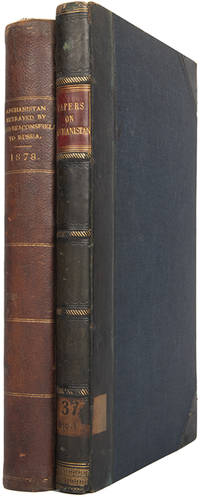
107237London HMSO; Harrison and Sons 1878-1881. . First editions; two volumes containing fifteen works 4to 33 x 21.5 cm; bookplates to pastedowns a occasional small chips to upper margin otherwise internally fine; first volume in half red morocco cloth boards gilt lettering to flat spine minor wear to extremities but otherwise a very good copy; second volume in half blue calf cloth boards gilt spine with gilt morocco lettering piece all edges gilt slight wear a little chipping to head and foot of spine shelf mark to spine otherwise a very good copy; vi 266; ii 27; 17; 37; 6; 9; 87; 14; 8; 31; 4; 14; iv 107; 87; v 165pp.<br /> A collection of fifteen works of government correspondence and dispatches charting the British relationship with Afghanistan and by extension Russia from 1863 to 1881 culminating in the Second Anglo-Afghan War. The 'Central Asian Question' the Great Game saw its denouement play out in the Second Second Anglo-Afghan War and following boundary negotiations in the 1880s and 90s.<br /><br />The letters and despatches contained in these works contain an enormous amount of detail about the politics economics and diplomacy of Britain and Afghanistan in this period in particular the war years of 1879-1881. Important figures such as James Bruce Sir Henry Rawlinson John Lawrence Henry Marion Durand Lord Mayo Robert Napier Edward Bulwer-Lytton Granville Leveson-Gower and Spencer Cavendish all penned or put their name to the letters and despatches in these volumes and reveal the attitudes of the British government at the time. What perhaps stands out the most is the fragility of the British temperament in regards to either real or imagined Russian influence in Afghanistan and the constant shuffling of Amirs in a vain attempt to turn Afghanistan into a puppet state. Although the military actions of the Second Anglo-Afghan War were considered successful by the British Government deposing Yaqub Khan and his brother Ayub Khan from the throne it was also vastly expensive to the tune of nearly 20 million pounds and did not result in any territorial gains or subjugation of the region.<br /><br />The owner who bound the first volume titled the spine 'Afghanistan Betrayed by Lord Beaconsfield to Russia'. This is a strong statement considering Afghanistan preserved its independence and status as a buffer zone following the evacuation of Kandahar and Afghanistan by the British Army. It is an even stronger statement given that the trigger of the conflict Britain's retaliation to Afghanistan hospitality to Russian envoys is widely understood to have been the Viceroy of India Lord Lytton's doing and in direct opposition to orders from Disraeli himself. Perhaps the accusation speaks most to the accentuated fears around Russia and the decline of the influence of the British Empire.<br /> London, HMSO; Harrison and Sons, 1878-1881. hardcover
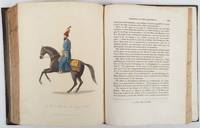
1815222755London.: Printed for Longman Hurst Rees Orme and Brown. First edition. 1815. xxi v-viii "Notice regarding the map" & list of plates 675pp errata leaf 2pp large hand coloured folding map mounted on linen and tipped onto a later leaf at rear and full-page map outlined in hand colour opp. p. 83 14 plates 13 hand-coloured: the frontispiece plate XIII bound opposite p 519; contemporary diced-calf boards 29 x 22 cm rebacked spine gilt-ruled in compartments with black title label gilt-lettered original grey endpapers marbled edges maps toned plates in very good condition some offsetting to the text and a couple of leaves creased scant spotting and some marginal staining costume plates unaffected the plate opp. p 376 with a tidemark and rather browned an early inked inscription to the front pastedown "Maria Hudson to Charles George Richardson June 1839" and another early owner "Gertrude Louisa Allen" to the title-page the name of a modern owner inked neatly to the front pastedown a good complete copy of a handsome work. Montstuart Elphinstone 1779 - 1859 was an administrator with the East India Company who in 1808 was sent by the British Indian authorities on a mission to Afghanistan for the purpose of concluding an agreement with the Afghan ruler Shah Shuja Durrani. His landmark account was the first major English study of the region and the fine costume plates offered the first detailed Western classification of Afghan tribes. . Printed for Longman, Hurst, Rees, Orme and Brown. hardcover
184319824Paris, Typographie de Firmin Didot Frères, 1843-1853. In-8°. CLV, 276; XXXVIII, 292 (2) p. (= Chrestomathies orientales), demi-reliures de toile avec titres dorés. - 1. Prolégomènes des tables astronomiques d'Oloug-Beg, publiés avec notes et variantes, et précédés d'une introduction par L.P. E. A. Sédillot. 1847. - Mirkhond: Histoire de Sassanides, à l'usage des élèves de l'école royale et spéciale des langues orientales vivantes. 1843. - 2. Prolégomènes des tables astronomiques d'Oloug-Beg. Traduction et commentaire, par L.P.E.A. Sédillot. 1853. Reliures un peu frottées. Petite manque sur le plat. Quelques cachets sur les pages de titre et sur les dernières pages de texte. Papier un peu taché par la moisissure.
Very Good Turkish, Ottoman (1500-1928) Original fine 1/4 leather bound in Ottoman lettered gilt. Demy 8vo. (22 x 14 cm). In Ottoman script (Old Turkish with Arabic letters). 174 p. Hegira: 1277 = Gregorian: 1860. Rare early (second) edition of this eye witness and first-hand account, and one of the most important chronicles describing the history of late Safavid Iran in the 18th century, the Iranian invasion of Afghanistan and the siege and the fall of Isfahan in 1722 written by Kruzinski who was a Polish Jesuit missionary served in the Persia in the early 18th century. In 1720 he was nominated advocate general of the mission in Persia and became the secretary to the Bishop of Isfahan. Krusinski himself, however, claimed later on that he is not only the author but also the translator of this work. As a chronicle, this is a history of Iran under the Safavids from 1499 up to 1727 with a special focus on the 1722 Afghan invasion that terminated the Safavid dynasty. "His account of the conditions and events preceding and during the siege and the subsequent demise of the Safavids is unique. It also offers key insights into the workings of the late Safavid state and government as well as the functions of the royal harem." (Bloomsbury). Translated and expanded by Ibrahim Müteferrika of Kruzinski's Latin manuscript written in 1726 in Istanbul and entitled "Historia revolutionis monarchia Persica". The book was first published in Italian, French, and English translations, in Rome (1727), Paris (1728), and London (1728). The founder of the legendary first printing house in the Islamic world, Ibrahim Müteferrika (1674-1745), was the editor of this book. Ceridehâne [i.e. Journal House] Printing House is the successor of the Müteferrika Press in the early 19th century. "The book is a Turkish translation of the history of Iran written in Latin by the Jesuit missionary Judas (Jan) Tadeusz Krusinski (1675-1751). The work, whose title can be translated as 'A voyager's description on the apparition of the Afghans and on the reasons of the Safavid Empire being undermined', focuses on the Afghan invasion of 1722 which led to the fall of the Safavid dynasty, but also offers an overview on the historical processes of early 18th-century Safavid Iran. The publication of this work was made actual not only by the vicinity of Iran to the Ottoman Empire but also by the historical turn reorganizing the relations of power in the region and triggering the intervention of the Ottomans as well. This may have been the reason that among the first Turkish incunabula this was the work published in the highest number of copies. This publication also offers an early example of copyright disputes, as Krusinski considered the Turkish translation as his own work, while Müteferrika, who does not mention his name in the printed version, suggests himself to be the translator". (Source: The Mysterious Printer Ibrahim Muteferrika and the Beginnings of Turkish Book Printing: Library of Hungarian Academy of Sciences Online). Özege: 19897.
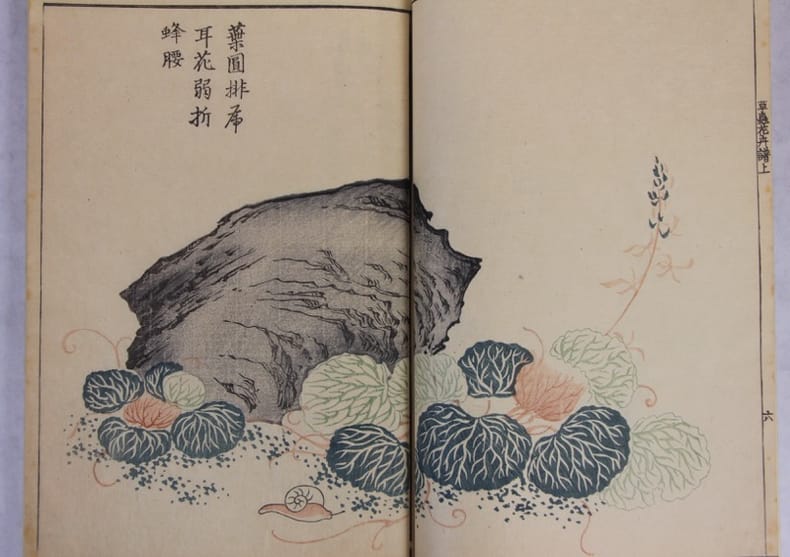
1813137089kyoto, hishiya magobei, sd (XIXème] 1813 2 volumes, 26 x 17.5 cm. Reliure japonaise refaite, étiquetes conservées,.19 & 19 illustrations illustrations à double page en couleurs.
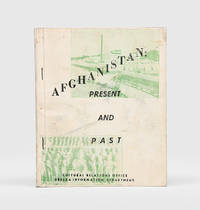
1958180912Kabul: Bureau of Afghan Publicity Cultural Relations Office Department of Press and Information 1958. First edition of this guide to Mohammad Zahir Shah's modernizing state with chapters on politics and diplomacy industry mineral deposits and many other topics. In the year of publication Prime Minister Daoud Khan became the first Afghan to address to the US Congress and President Eisenhower made a formal visit in 1959. Octavo. With 24 photographic half-tone plates. Original illustrated card wrappers wire-stitched as issued front cover lettered in black and with green half-tone illustrations. Occasional contemporary green ink marks in margin. Covers marked contents evenly toned: very good. unknown
237515London, printed for Longman, 1819 2 volumes in-8, XXIV-512 pp. et XII-495 pp., cartonnage papier gris (reliure de l'époque).
186745049ABSt. Petersburg, V. Bezobrazova, 1867. XIV, 1010 S., 1 Bl. Mit 2 (1 gefalt.) lithogr. Tafeln und 1 gefalt. lithogr. Karte. Bedruckte Orig.-Broschur.
Very Good Turkish, Ottoman (1500-1928) Original chromo-lithograph map on cloth. 63x98 cm. In Ottoman script (Old Turkish with Arabic letters). Chipped on extremities, some wear on folds, foxing, and stains on margins and cloth with small holes. Overall a good/fair copy. First separate edition of this rare and attractive chromo-lithographic map of the Imperial Ottoman lands in Europe, as well as the Bosphorus and Crete in separate panels, drawn by Turkish infantry major El-Hac Nasrullah b. El-Hac Nâsir from Daghestan, during the last period of the rule of Sultan Abdulhamid II, with praise to the Sultan. The map gives detailed information on the lower left telegraph and postal codes of the Imperial vilayats such as Bosnia, Bulgaria, Algeria, Egypt, and Tunisia, etc. Additionally, on the lower right, demographic statistics and data of vilayats and some cities. This rare map shows the complete Ottoman Balkans according to the Ottoman administral system. West Anatolia and West Black Sea Coats on the east, Adriatic coasts on the east, and Ottoman Greece, Bulgaria, Albania, and Bulgaria are included on the map. These countries are separated by Selanik (Thessaloniki), Roumeli, Monastery, Ioannina, Kosovo, and Shkodra vilayats.
186945050ABSt. Petersburg, Peatnja V. Golovina, 1869. X, 560 S. Bedruckte Orig.-Broschur.
Very Good Turkish, Ottoman (1500-1928) Paperback. Foolscap 8vo. (18 x 13 cm). In Ottoman script (Turkish with Arabic letters). 80 p., [10] unnumbered b/w plts. Yenisehirlizâde Halit Eyüp was the son-in-law of Ahmet Midhat Efendi, one of the shaded names of Turkish literature. This rare book has 10 unnumbered b/w plates shows firstly Abd Al-Rahman Khan, (1845-1901), who was Emîr of Afghanistan and played a prominent role in the fierce and long-drawn struggle for power waged by his father and his uncle, A'?am Khân, against his cousin Shîr 'Alî, the successor of Dost Mo?ammad Khân. And then, Khaybar Fortress, Peshaver city in India, Tajik chief of Afghanistan: Maaz Khan (two-paged print), a view of Kabul city (two-paged print), Ghaznawid Fortress, North Gate of Kandahar, Herat Fortress (two-pages print), Cohat Fortress, a portrait of Afghan Sufi. An extremely rare and richly illustrated book of the history of Afghanistan. Hegira: 1316 = Gregorian: 1899. First and Only Edition. TBTK 12178.; Özege 19966.; Three copies located in OCLC: 944246927 (One copy in Library of Congress - Karl Süssheim Collection, No. 7.).; 163633157 (Orient-Institut Istanbul and Bayerische Staatsbibliothek).
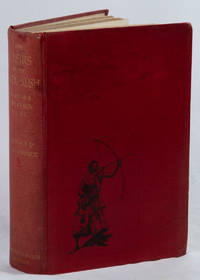
1896223413London.: Lawrence & Bullen Ltd. New Edition. 1896. Coloured folding map tipped in at rear 79 full page and text illustrations by A. D. McCormick xx 658pp original decorated polished red cloth spine gilt-lettered 24 x 15.5 cms front free endpaper browned neat inscription of a previous owner to the front pastedown manuscript short index tipped in by a previous owner at rear boards bumped and stained and spine a little sunned but a good complete copy. A distinguished soldier diplomat and Anglo-Indian administrator Sir George Scott Robertson 1852–1916 journeyed in Kafiristan in 1890-91 living for a year among the "wild" hillmen. <br>The Kafirs’ polytheistic religion and customs were rapidly disappearing by the time Robertson visited and his work served as one of the most important eyewitness accounts of the pre-Islamic cultures of the Hindu Kush and as valuable historical record of a culture that was quickly being assimilated into the broader Afghan Islamic state. It is one of the last detailed accounts of the Kafir people before they were forced into Islam or eradicated by Afghan forces. <br>Robertson’s book also provides important historical context for understanding the political dynamics of the Great Game. His observations of the Kafirs’ resistance to the Afghan Amir and his concerns about the potential spread of Islam in the region highlight the intersection of politics culture and religion in Central Asia during the 19th century. <br>The profuse illustrations are after sketches and watercolours by Arthur David McCormick who was artist on Sir Martin Conway's expedition to the Karakoram subrange of the Himalayas and in 1895 on Clinton T. Dent's expedition to the Caucasus Mountains. . Lawrence & Bullen Ltd. hardcover
Very Good Turkish, Ottoman (1500-1928) Original illustrated wrappers. Cr. 8vo. (19 x 13 cm). In Ottoman script (Old Turkish with Arabic letters). 105 p., 8 b/w plates. First edition of this illustrated travel account of one of the exiled Young Turks to Afghanistan, who was invited to the country by the reformist Afghan Emir Habibullah Khan (1872-1919), who was the ruler of Afghanistan from 1901 to 1919. The news that the reformist Afghan Emir Hamidullah Khan was looking for well-educated Turkish youth to help the development of his country, reached the Young Turks in exile in Egypt. The author of this book, Mehmet Fazli was one of the Young Turks (A reformist group in the early 20th century that favored the replacement of the Ottoman Empire's absolute monarchy with a constitutional government), and he followed this royal invitation and set off with his friends. He reached Kabul via an adventurous journey through Austria-Hungary, Russia, Azerbaijan, Turkmenistan, and Iran. With his guide and friend who was an Afghan and his Turkish friend Hüseyin Hüsni Bey, Fazli met in Cairo and they went to Afghan lands. He described Kabul, Herat, Ghazna, Belh, and Kandahar cities during their travel, wrote about the Afghan Emîr and the dynasty. His book revolves around the many details on Afghan peoples' customs, social life, education, industry, roads, antiquity, postage system and organization, arms and army, etc. The book has a photo of the Afghan Emir beside other attractive illustrations and photographs. (Sources: Afganistan'da Bir Jöntürk: Misir Sürgününden Afgan Reformuna., Prep. by Kenan Karabulut.; History of Geographical Literature during the Ottoman Period., Edited by Ekmeleddin Ihsanoglu). Özege 16749.; OCLC 868007927.; MKAHTBK, II 948.
198561591Graz, Akademische Druck- u. Verlagsanstalt, 1972-1985. 4°. Mit rund 400 Karten im Text, einigen gefalt. Tabellen u. einer mehrf. gefalt. farb. Karte als Beilage. Zus. ca. 3.500 S., OLwd.-Bde. m. illustr. OUmschlägen.
8vo., First Edition, with frontispiece, 15 plates and 5 full-page maps in the text; original blue cloth, gilt back, blue top (somewhat faded), boards a little darkened at fore-edges else a very good, bright, crisp, clean copy. With 2pp of publisher's advertisements at end. First issue of the most celebrated travel book in English of the 1930s. VERY SCARCE IN THIS CONDITION.
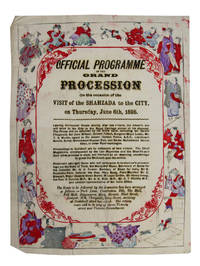
102631London n.p. 1895. . Broadside on japan paper 42 x 32.5 cm. decorative borders with Japanese motifs enclosing details of the procession. light wear to edges and corners a well preserved example.<br /> The Shahzada Nasrullah Khan spent several months in England deputising for his father Emir Abdur Rahman Khan who had intended to visit Queen Victoria but had fallen ill. The visit was part of the new rapprochement between Afghanistan and Great Britain after the end of the British occupation of Afghanistan in 1880 which saw Abdur Rahman Khan installed as head of state.<br /><br />Strange though it might seem to have the broadsheet printed with Japanese illustrations on the surround it was a stock sheet used for various programmes and reflects the British fascination with Orientalism at the time.<br /> London, n.p. 1895. unknown
185221121Wien, Staatsdruckerei, 1851 - 1852. S. 119 - 190, 73 - 109. 3 (2 gefalt.) lithograph. Karten. 4°. Mod. Kart. [5 Warenabbildungen]
195387Paris, Ernest Leroux, 1878 grand in-8, [6]-V-186 pp., avec des illustrations dans le texte et 27 planches hors-texte (dont un portrait-frontispice, deux lithographies, 5 cartes, 17 tableaux dont 16 de relevés anthropologiques "in fine"), demi-basane brune à coins, dos à nerfs muet, couverture conservée (reliure moderne). Dos muet.
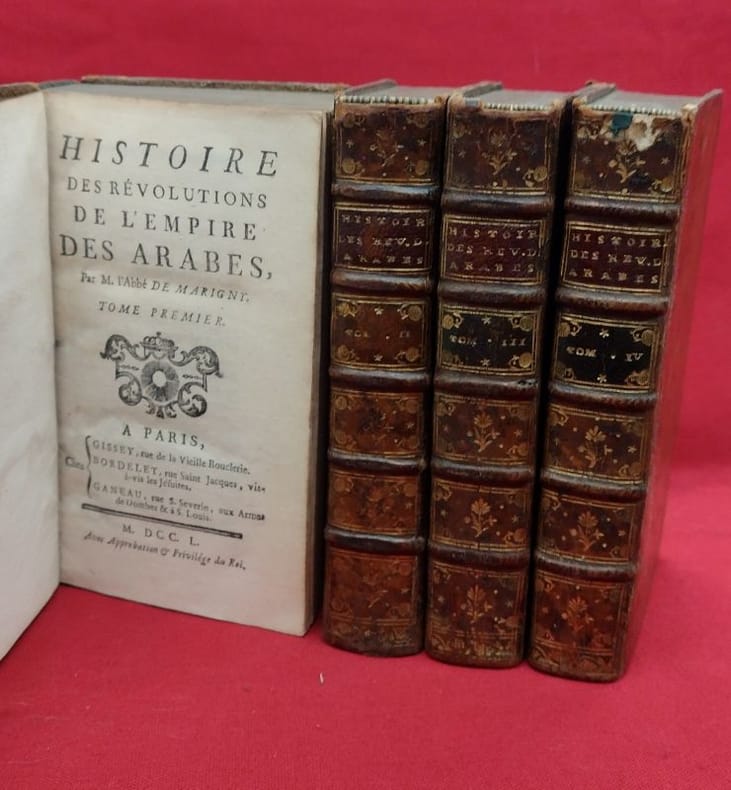
1750118710gisset, bordelet, ganeau 1750 4 in-12 A Paris, chez Gissey, Bordelet, Ganeau, 1752, 4 volumes in-12, (2) ff., LX, 58, 498 pages, (3) ff.-(2) ff., 519 pages - (3) ff., XIV, 540 pages - (2) ff., 525 pages. Plein veau marbré, dos à cinq nerfs portant titres et tomaisons dorés sur pièces de cuir, caissons ornés, filets d'encadrements des plats à froid, filet doré sur les coupes, roulette dorée sur les chasses, tranches mouchetées de rouges, gardes de papier marbré peigné. Cinq coiffes manquantes ou endommagées, coins frottés, rares rousseurs, sinon bon état général.
Abundant black and white illustrations and reproductions of photos. Features: Lost in the Pacific - John Edwin Hogg attempted to take a small boat to Panama from some islands 90 miles off the coast, but encountered treacherous seas; On Niagara's Brink - Orrin E. Dunlap, the unofficial historian of Niagara Falls, describes the area's most thrilling adventure, that of a barge and two men, Lofberg and Harris, who drifted to the verge of Horseshoe Falls - article with photos; An Englishwoman in Upper Egypt - Part I - Oxford Anthropology student Winifred S. Blackman relates her experiences in three winters of living with the people of Upper Egypt - article with photos; Captain Doudera's Bet - The amazing photo-illustrated story of Captain Frank Doudera, of Brooklyn, New York, and his quest to obtain a timber wolf pelt within six weeks; The Head-Hunters of the Sepik - Part II - Beatrice Grimshaw travelled up the Sepik River of New Guinea, where she dealt with the local cannibals - article with photos; Chippin' Paint - An amusing sea story; To Afghanistan in Disguise - Part II - A British officer's remarkable journey, disguised as an Oriental, across a large part of India and finally into forbidden Afghanistan and beyond, living among the natives as one of themselves; The Treasure of Tristan Da Cunha - Photo-illustrated article about a hoard of gold and jewels said to have been hidden here by pirates in 1810; Photo of a literal river full of logs in British Columbia; The Three Angleteers - Part IV - Three bored Englishmen travel to Europe for trouble and adventure; In the British Guiana Jungle - A vividly-written photo-illustrated account of an eventful boat-journey into the interior of British Guiana with a motion picture camera, culminating with a visit to the mighty Kaietuerk Falls, the greatest cataract in the world, five times higher than Niagara; The Secret of the Wilds - photos of wild animals which resemble those of prehistoric times; "Grip" and I - Part II - A bull-terrier spared from death by its new owner Count Nils Cronstedt returns the favour by saving him multiple times during his stay in West Africa as Commander of H.M.S. Heron and Assistant Marine Superintendent in Northern Nigeria; One Night - the story of a hunt in the darkness and a panther who stood his ground; and more. 88 pages plus 24 pages of nice vintage ads. Clean and unmarked with light wear. A quality copy of this excellent vintage issue. Book
1980biblio39406Boston: Management Science for Health 1980. New SoftCover. 8.9"x6.0". be33000. Management Science for Health paperback
201010930ABBonn/Manama/New York, NY/Florianópolis, Scientia Bonnensis, 2010. 25 cm. 861 S. Mit zahlr. farb. Ill., graph. Darst., Kt. Illustrierter Pappband (Hardcover). Rücken am Fuß minimal bestoßen, sonst neuwertiges Exemplar.