827 résultats
9794Annales de l'Extrême-Orient et de l'Afrique, n° 111. Paris, Challamel, septembre 1887. In-4, broché.
"In-folio(cm. 39), pp. 28 con molte illustrazioni. L'articolo (che cita in monito di Churchill e una profezia di GANDHI) occupa 2 pagine (con 4 foto b.n.), del fascicolo. ""Paragonato ad Osama bin Laden, il fachiro di Ipi (Mirza Ali Khan), leader politico del Waziristan aveva impedito il controllo britannico al confine tra Afghanistan e India (allora non esisteva il Pakistan) e aveva lanciato da Radio Himalaya un appello alla Jihad. I tedeschi e gli italiani si misero in
"Il saggio di Turri occupa 15 pagine (da p. 20 a p. 34) con 1 CARTA TEMATICA, 5 FOTO e 4 PIANTE in bianco e nero nel testo. L'annata è completa delle sue 456 pagine e contiene inoltre: 1) 2 studi sulle ALPI APUANE, 2) 22 pagine su DERUTA e le sue MAIOLICHE. 3) 7 pagine sull'avanzamento delle DUNE in SOMALIA. E molto altro. In-8° (cm. 24). Solida mezza tela coeva e oro, angoli, carta decorata ben coordinata ai piatti.
22446Délégation archéologique française en Afghanistan et Librairie C.Klincksieck, Paris, 1964
2016100150902LES BELLES LETTRES 2016 384 pages in8. 2016. Broché. 384 pages. Le journaliste Nicolas Mingasson a recueilli pendant deux ans les témoignages de proches (conjointes mères pères enfants) de soldats français morts en Afghanistan. Le livre aborde avec pudeur et force le deuil de guerre au XXIe siècle donnant la parole à ceux qui restent
2012LFA-126744777Un ouvrage de 302 pages, format 145 x 225 mm, broché couverture couleurs, publié en 2012, Editions Albin Michel, bon état
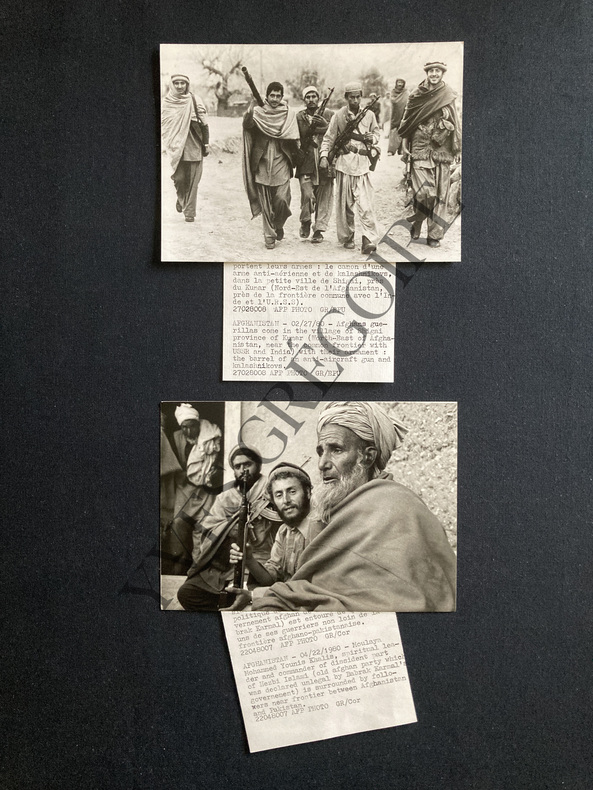
ABE-15463561617805 PHOTOS 13 CM X 18 CM-1 PHOTO 18 CM X 24 CM-CACHET HUMIDE AU DOS-12 01 1980: KABOUL CHAR SUR CAMION-16 01 1980: KABOUL ATTAQUE DE LA PRISON-27 02 1980: REBELLES AFGHANS EN ARMES-28 03 1980: LE CAMP PAKISTANAIS DE BAJAUR PRES DE LA FRONTIERE AFGHANE-22 04 1980: M.MOULAYA MOHAMMED YOUNIS KHALIS LEADER SPIRITUEL EN OPPOSITION AU GOUVERNEMENT AFGHAN-11 06 1981: VILLAGE DE REFUGIES AFGHANS AU PAKISTAN (24 CM X 18 CM)-(CP1)
in-8°, 317 pp., broche, couverture illustree à rabats. Bel exemplaire. [GE-2]
Very Good English Original artwork in watercolor on paper. 42x30 cm. Signed and dated on the lower left as "Ghulam Seddig, Kabul, 1996". A fine drawing of a street in Afghanistan and two Afghan figures on the street by Postwar & Contemporary Afghan artist Ghulam Seddig.
Very Good Arabic Original wrapper, missing back cover. Foolscap 8vo. (17 x 13 cm). In Arabic. 117, [1] p., b/w ills. and one map. Scarce illustrated Arabic book of the Afghan people living in different regions in Afghanistan, written in the period of Mohammed Daoud Khan (1909-1978), who was an Afghan politician and general who served as prime minister of Afghanistan from 1953 to 1963. It's published as the seventh book of the "Peoples of the World Series". Second Edition. Fifteen copies in OCLC 235990862, 29876584.
Very Good Turkish, Ottoman (1500-1928) Original illustrated wrappers. Cr. 8vo. (19 x 13 cm). In Ottoman script (Old Turkish with Arabic letters). 105 p., 8 b/w plates. First edition of this illustrated travel account of one of the exiled Young Turks to Afghanistan, who was invited to the country by the reformist Afghan Emir Habibullah Khan (1872-1919), who was the ruler of Afghanistan from 1901 to 1919. The news that the reformist Afghan Emir Hamidullah Khan was looking for well-educated Turkish youth to help the development of his country, reached the Young Turks in exile in Egypt. The author of this book, Mehmet Fazli was one of the Young Turks (A reformist group in the early 20th century that favored the replacement of the Ottoman Empire's absolute monarchy with a constitutional government), and he followed this royal invitation and set off with his friends. He reached Kabul via an adventurous journey through Austria-Hungary, Russia, Azerbaijan, Turkmenistan, and Iran. With his guide and friend who was an Afghan and his Turkish friend Hüseyin Hüsni Bey, Fazli met in Cairo and they went to Afghan lands. He described Kabul, Herat, Ghazna, Belh, and Kandahar cities during their travel, wrote about the Afghan Emîr and the dynasty. His book revolves around the many details on Afghan peoples' customs, social life, education, industry, roads, antiquity, postage system and organization, arms and army, etc. The book has a photo of the Afghan Emir beside other attractive illustrations and photographs. (Sources: Afganistan'da Bir Jöntürk: Misir Sürgününden Afgan Reformuna., Prep. by Kenan Karabulut.; History of Geographical Literature during the Ottoman Period., Edited by Ekmeleddin Ihsanoglu). Özege 16749.; OCLC 868007927.; MKAHTBK, II 948.
Very Good Turkish, Ottoman (1500-1928) Original chromo-lithograph map on cloth. 63x98 cm. In Ottoman script (Old Turkish with Arabic letters). Chipped on extremities, some wear on folds, foxing, and stains on margins and cloth with small holes. Overall a good/fair copy. First separate edition of this rare and attractive chromo-lithographic map of the Imperial Ottoman lands in Europe, as well as the Bosphorus and Crete in separate panels, drawn by Turkish infantry major El-Hac Nasrullah b. El-Hac Nâsir from Daghestan, during the last period of the rule of Sultan Abdulhamid II, with praise to the Sultan. The map gives detailed information on the lower left telegraph and postal codes of the Imperial vilayats such as Bosnia, Bulgaria, Algeria, Egypt, and Tunisia, etc. Additionally, on the lower right, demographic statistics and data of vilayats and some cities. This rare map shows the complete Ottoman Balkans according to the Ottoman administral system. West Anatolia and West Black Sea Coats on the east, Adriatic coasts on the east, and Ottoman Greece, Bulgaria, Albania, and Bulgaria are included on the map. These countries are separated by Selanik (Thessaloniki), Roumeli, Monastery, Ioannina, Kosovo, and Shkodra vilayats.
1373582Paris: Musée de l'Homme, Museum National d'Histoire Naturelle, 1968 in-4, nombreuses illustrations. Broché, bon état. Sommaire: Edit FEL, Exposition d'art populaire hongrois. - Bernard DUPAIGNE, Aperçus sur quelques techniques afghanes.
Very Good Turkish, Ottoman (1500-1928) Original fine 1/4 leather bound in Ottoman lettered gilt. Demy 8vo. (22 x 14 cm). In Ottoman script (Old Turkish with Arabic letters). 174 p. Hegira: 1277 = Gregorian: 1860. Rare early (second) edition of this eye witness and first-hand account, and one of the most important chronicles describing the history of late Safavid Iran in the 18th century, the Iranian invasion of Afghanistan and the siege and the fall of Isfahan in 1722 written by Kruzinski who was a Polish Jesuit missionary served in the Persia in the early 18th century. In 1720 he was nominated advocate general of the mission in Persia and became the secretary to the Bishop of Isfahan. Krusinski himself, however, claimed later on that he is not only the author but also the translator of this work. As a chronicle, this is a history of Iran under the Safavids from 1499 up to 1727 with a special focus on the 1722 Afghan invasion that terminated the Safavid dynasty. "His account of the conditions and events preceding and during the siege and the subsequent demise of the Safavids is unique. It also offers key insights into the workings of the late Safavid state and government as well as the functions of the royal harem." (Bloomsbury). Translated and expanded by Ibrahim Müteferrika of Kruzinski's Latin manuscript written in 1726 in Istanbul and entitled "Historia revolutionis monarchia Persica". The book was first published in Italian, French, and English translations, in Rome (1727), Paris (1728), and London (1728). The founder of the legendary first printing house in the Islamic world, Ibrahim Müteferrika (1674-1745), was the editor of this book. Ceridehâne [i.e. Journal House] Printing House is the successor of the Müteferrika Press in the early 19th century. "The book is a Turkish translation of the history of Iran written in Latin by the Jesuit missionary Judas (Jan) Tadeusz Krusinski (1675-1751). The work, whose title can be translated as 'A voyager's description on the apparition of the Afghans and on the reasons of the Safavid Empire being undermined', focuses on the Afghan invasion of 1722 which led to the fall of the Safavid dynasty, but also offers an overview on the historical processes of early 18th-century Safavid Iran. The publication of this work was made actual not only by the vicinity of Iran to the Ottoman Empire but also by the historical turn reorganizing the relations of power in the region and triggering the intervention of the Ottomans as well. This may have been the reason that among the first Turkish incunabula this was the work published in the highest number of copies. This publication also offers an early example of copyright disputes, as Krusinski considered the Turkish translation as his own work, while Müteferrika, who does not mention his name in the printed version, suggests himself to be the translator". (Source: The Mysterious Printer Ibrahim Muteferrika and the Beginnings of Turkish Book Printing: Library of Hungarian Academy of Sciences Online). Özege: 19897.
Very Good Turkish, Ottoman (1500-1928) Contemporary fine quarter leather binding. Five raised bands to spine, second gilt title as "Tarih-i seyyâh", others gilt decorations. Brown boards are embossed decoratively. Demy 8vo. (21 x 15 cm). In Ottoman script (Old Turkish with Arabic letters). [12], 194 p. Hegira: 1142 = Gregorian: 1729. Slightly wear on colophon and the first page. Otherwise a good copy. Extremely uncommon first Ottoman edition printed in the first printing house of the Islamic world as the third Islamic incunabula, of this eye witness and first-hand account, and one of the most important chronicles describing the history of late Safavid Iran in the 18th century, the Iranian invasion of Afghanistan and the siege and the fall of Isfahan in 1722 written by Kruzinski who was a Polish Jesuit missionary served in the Persia in the early 18th century. In 1720 he was nominated advocate general of the mission in Persia and became the secretary to the Bishop of Isfahan. Krusinski himself, however, claimed later on that he is not only the author but also the translator of this work. As a chronicle, this is a history of Iran under the Safavids from 1499 up to 1727 with a special focus on the 1722 Afghan invasion that terminated the Safavid dynasty. "His account of the conditions and events preceding and during the siege and the subsequent demise of the Safavids is unique. It also offers key insights into the workings of the late Safavid state and government as well as the functions of the royal harem." (Bloomsbury). Translated and expanded by Ibrahim Müteferrika of Kruzinski's Latin manuscript written in 1726 in Istanbul and entitled "Historia revolutionis monarchia Persica". The book was first published in Italian, French, and English translations, in Rome (1727), Paris (1728), and London (1728). The founder of the legendary first printing house in the Islamic world, Ibrahim Müteferrika (1674-1745), was the editor and translator of this book. Ceridehâne [i.e. Journal House] Printing House is the successor of the Müteferrika Press in the early 19th century. "The book is a Turkish translation of the history of Iran written in Latin by the Jesuit missionary Judas (Jan) Tadeusz Krusinski (1675-1751). The work, whose title can be translated as 'A voyager's description on the apparition of the Afghans and on the reasons of the Safavid Empire being undermined', focuses on the Afghan invasion of 1722 which led to the fall of the Safavid dynasty, but also offers an overview on the historical processes of early 18th-century Safavid Iran. The publication of this work was made actual not only by the vicinity of Iran to the Ottoman Empire but also by the historical turn reorganizing the relations of power in the region and triggering the intervention of the Ottomans as well. This may have been the reason that among the first Turkish incunabula this was the work published in the highest number of copies. This publication also offers an early example of copyright disputes, as Krusinski considered the Turkish translation as his own work, while Müteferrika, who does not mention his name in the printed version, suggests himself to be the translator". (Source: The Mysterious Printer Ibrahim Muteferrika and the Beginnings of Turkish Book Printing: Library of Hungarian Academy of Sciences Online). The workshop of Müteferrika began its historical mission in 1728. They published 17 works in 22 volumes. The printing house served as a means to the long-term goal of Müteferrika, his efforts to broaden the horizon and modernize the knowledge of Ottoman society and Islamic civilization. This is evidenced by the subjects of the books selected for publishing, the motivations put forth in the publisher's introductions, as well as by the documents illuminating the background of the publication of each book, also published in print. One of 1200 copies. OCLC: 312516053 (For printed copies: Two copies).; Özege: 19897.
The star of the film Kandahar.Nelofer Pazira was born into a privileged family living in Kabul. When she was six, the Russians invaded Afghanistan and her childhood ended. Her father, a respected doctor, was imprisoned along with family and friends. Their country became a police state and the centre of a * conflict between the Soviet army and the American-backed guerillas.Amid the blood and fear of war, Nelofer's refuge from violence and anger was her friendship with Dyana. Together they shared their lives, their passion for poetry and the dangers of underground resistance.After a decade of war, Nelofer's family escaped across the mountains to Pakistan and from there to Canada, where she continued her friendship with Dyana through letters. When her friend suddenly stopped writing, Nelofer felt bereft. Her * to Afghanistan under the Taliban and her desperate search for Dyana became the story of the internationally acclaimed film Kandahar. Her journey to discover Dyana's tragedy led her finally to Russia, to the country that destroyed her life, where she found a nation imprisoned by its own history.Nuanced, affecting and stunningly written, A Bed of Red Flowers is a gripping portrait of ordinary life under occupation and an illuminating window onto the devastation of a country and the resilience of its people.408p.llus index Signed on tirle page Book
20091349856PN. New. 2009. Soft Cover. Date is original print. This is a reprint edition. . PN paperback
Pages uncut. Very light browning to wraps. ; The inscription came to light during digging work in April 1957, a few miles west of present-day Kandahar. The bilingual inscription is the most westerly proof of Buddhism yet found, and the most easterly of Greek inscriptions, and the first complete Aramaic inscription discovered in the area reaching to the Indus. ; Serie Orientale Roma XXIX; 62 pages
Broché. 400 pages. 21x30cm. Rousseurs.
Mm 140x215 Volume cartonato rigido, sovraccoperta editoriale , 349 pagine. Esemplare in ottime condizioni. SPEDIZIONE IN 24 ORE DALLA CONFERMA DELL'ORDINE.
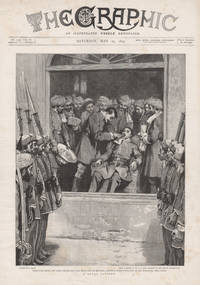
189530001895. Wood-engraving. 395mm by 295mm sheet. 'A Royal Patient. Nasrullah Khan the Amir's Second Son now on a visit to England having a tooth extracted at his bungalow near Kabul'. From 'The Graphic'.<br /> Related and unrelated text on the reverse. Some light foxing. Light toning on far right hand side of the sheet. unknown
11994Paris, Editions Klincksieck, octobre 1976. Grand in-8 broché, 173 à 360 p. Illustrations. Sommaire : L'art antique de la Bactriane - Joinville et la prise de Damiette - Le chapitre XXVIII de la Schedula du moine Théophile : technique et esthétique du vitrail roman... Très bon état. Publication trimestrielle.
1969G59792Misr, Dar al-Katib al-Arabi li-t-Tiba'a wa-'n-Nasr 1969 522pp., hardback (black cloth, spine in black leather with engilded title), 24cm., VG, [text entirely in arabic], OCLC: 258341391, [content: Afghanistan inbetween today and tomorrow]
522pp., hardback (black cloth, spine in black leather with engilded title), 24cm., VG, [text entirely in arabic], OCLC: 258341391, [content: Afghanistan inbetween today and tomorrow]