1 281 résultats
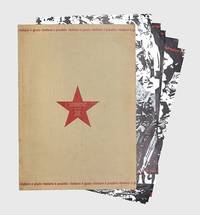
1969148329Milan: c.1969. Striking pop art-influenced suite of anti-imperialist propaganda posters published in Milan by the Comitato Vietnam - self-described in their literature as the "sezione italiana del tribunale Russell". The work of a collective comprised of six prominent Italian artists the images carry the theme 'Rebellion is right rebellion is possible' into various theatres of anti-imperialist struggle. Baratella b. 1935 Mariani b. 1936 and Spadari 1938-97 were long-term collaborators and members of the Nuova Figurazione art movement. Amadori 1945- 2015 won the Joan Miró prize in 1972. Spadari's contribution draws on the "solarised" image of Castro in the Cuban Revolution from his work "26 de julio" while in an anti-Vietnam War themed poster similarly treated repeated images of a Vietnamese women are overlain by a Lichtensteinian US fighter jet wheeling away from an explosion from which emerges a Coca-Cola bottle cap with the slogan 'Nixon boia' - Nixon executioner also the title of a song by popular singer-story teller Franco Trincale - and the partially obscured text 'Coca-Cola merda'. Nixon also features on a poster featuring his cartoonish portrait wearing a star-spangled neck-tie while being choked out by several nooses above him a ferociously snarling Black Panther head; while "Africa Rossa/Africa Nera" centres on a photographic image of the clenched first Black Power salute. Baratella based his poster around his painting "Benito Mussolini Storia del fascismo" where "Il Duce's" face morphs into a skull here with the lower part is superimposed with six small portraits of current political leaders including de Gaulle Pompidou Khrushchev and LBJ. The last in the group dramatises the Arab-Israeli conflict with a repeated image of a woman PFLP fighter - Leila Khaled - in keffiyeh and camo fatigues carrying a AK-47 above her a map of Jerusalem. No other set of these traced a couple of examples of individual posters noted institutionally; an excellent evocation of the artistic-political synergies of the period. Six large black and white photomontage posters 700 x 500 mm printed on coated paper each with the repeated slogan 'ribellarsi è giusto ribellarsi è possibile' in red; in the original tan slub-weave linen textured light card portfolio printed in red title to the front panel superimposed on a red five-pointed star. The portfolio a little rubbed and soiled pale damp spots at the spine-fold where there are a few short splits posters show light handling but overall very good. unknown
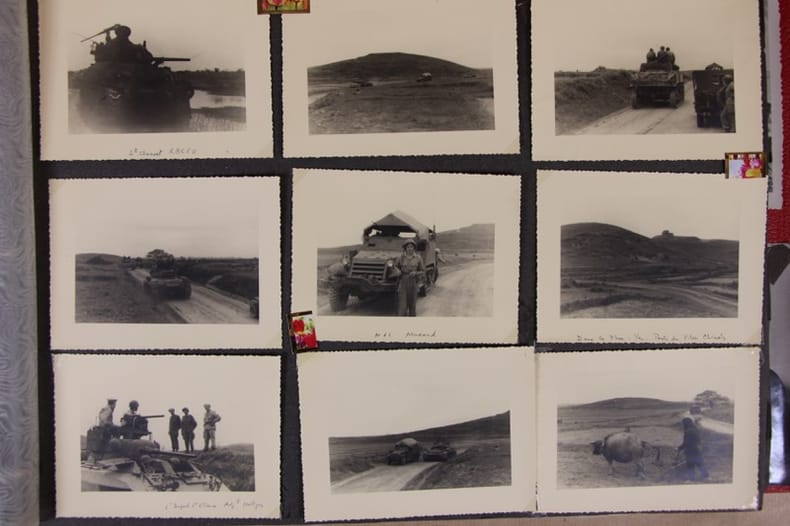
1954135183Sn 1954 Deux albums in-folio oblong, 411 & 607 photographies contrecollées en 40 & 50 planches, format divers : ca 6 x 6 à 17 x 24 cm., majorirtairement 8,5 x 11 cm., tirages argentique et mat, près d’une trentaine de retirages. Nombreuses légendes, en pastilles ou en marge de la photographie. Témoignage photographique d’un officier du 1er escadron du 8ème GSAP 8ème RSA en janvier 1953 au long de deux séjours 4 années et des multiples engagements de cette unité d’intervention : opérations Bissextile, Sablé, Porto, Lorraine, Artois-Bretagne, Corse, Mouette, etc. Le “récit” débute à Alger en 1942 sur quelques photographies familiales puis Saumur en 1949, les étapes du voyage : près de 145 vues prédédent son arrivée. Quelques portaits et scènes de groupe, prises d’arme, etc. précèdent le coeur du reportage : les engagements de son peloton sur half-tracks à l’appui de nombreuses vues de combat, ce qui est rare. Des coupures de presses enrichissent le récit, avec quelques correctifs manuscrits. En point d’orgue : l’opération Mouette. Le second album est agrémenté de près de 300 photographies de correspondants de guerre Camus, Corcuff, Ferrai, Varoqui, etc. de format divers et de très belle facture, débordant le cadre du 8ème spahis : opérations du 3ème BPVN, du 8ème BPC opérations Bambou et Hirondlelle, vue célèbre du 2ème classe Lardillier, le 2ème BEP au Laos, etc. Un document emblématique au coeur du conflit, de toute rareté.
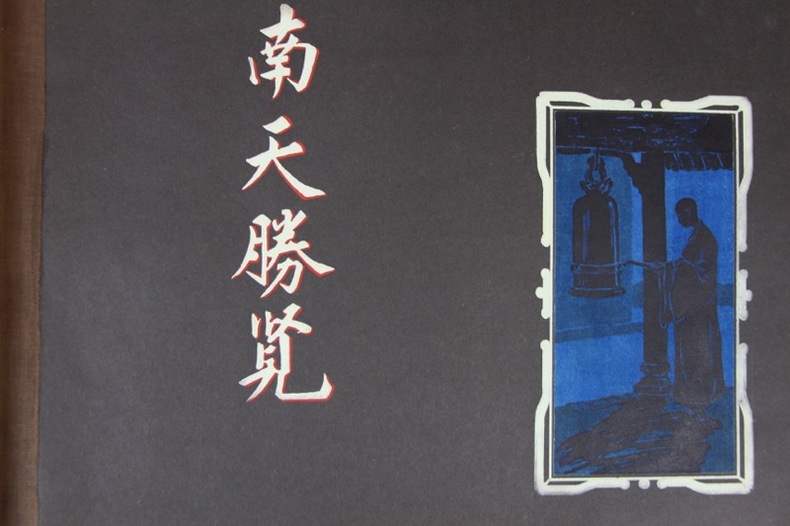
1933134089Sn. 1933 In-4 oblong 27 x 41,5, demi-basane verte à coins, 206 tirages argentiques de formats 23 x 17 cm 14 ; 16 x 11,5 cm 104 ; 11 x 7,5 cm 44 ; 8 x 6.5 cm 2. Superbe album réalisé par les services de communication du Gouvernement de l'Indochine et l'Aéronautique militaire d'Indochine à l'attention d'un haut-fonctionnaire. Les 104 pages grises intérieures sont toutes légendées à la gouache blanche par un calligraphe vietnamien. Majoritairement des vues d’Hanoï : les monuments, l’habitat, les rues, des portraits types et des scènes de la vie quotidienne, petits métiers, paysannerie... Une dizaine de vue aériennes 24 x 17 cm réalisées par des photographes embarqués à bord des biplans Potez de l'aéronautique militaire d'Indochine. Elles sont assez exceptionnelles par leur qualité. Vues d’Haïphong, de Moncay, Chapa, Vientiane, Hué, Dakto, Louang Praband, la baie d'Along, les femmes moïs, etc. Deux vues de têtes de pirates décapités.
1950367089Paris: Édition de la Belle Page 1950. First editions from the limited issues each inscribed by the author. 4 vols. 8vo. Printed wrappers some light toning. First editions from the limited issues each inscribed by the author. 4 vols. 8vo. Collection of four works interpreting Vietnam for a contemporary French public written during the First Indochinese War by Tran Van Tùng 1915-post-1964 a France-based Vietnamese author and nationalist who became secretary general of the Democratic Party of Vietnam which presented itself as a political alternative to both the Diệm and communist governments. Each is inscribed by the author to Philip Dodson Sprouse then first secretary to the American ambassador to France in the early 1950s and later the U.S. ambassador to Cambodia from 1962-64.<br /> <br /> From the limited issues: Le Viet-Nam et sa civilisation is one of 500 hors commerce; Le Viet-Nam au combat is one of 200 on vélin blanc spécial Aussedat; Le Viet-Nam face a son destin one of 400 numbered copies on Marais Crèvecoeur. With Tran Van Tùng's card and associated ephemera. Édition de la Belle Page unknown
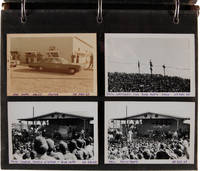
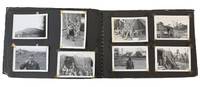
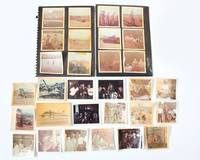
1970WRCAM55101Biên Hòa Nha Trang Long Binh and other locations in Vietnam plus Luzon Philippines and Osan South Korea 1970. 469 black-and-white or color photographs measuring between 3 1/2 x 3 1/2 inches and 8 x 10 inches either mounted or laid-in to acetate sleeves almost all annotated in ink on the bottom margin or on the verso. Contemporary three-ring thick quarto-size binder black cloth over boards. Joints partially split some abrading and dust- soiling to covers. Slight fading to some of the color photos. Overall very good. An exceptional vernacular photograph album by a talented but unknown amateur photographer recording a wide variety of experiences on American Air Force bases in South Vietnam and Asia during peak years of the Vietnam War. <br> <br> The photographer was likely a member of the motor pool or a mechanic as the shots seem to center around truck airplane and helicopter maintenance. Most of the photographs capture scenes on or around the various bases with shots both inside and outside of barracks airplanes including several shots of a U2 spy plane bombed-out equipment and numerous photos of the people and structures in the "Vietnamese Area." A few images capture distant shots of the aftermath of a "rocket attack" on December 12 1969; shortly thereafter the photographer and his friends celebrate Christmas. Some of the more interesting photographs during the photographer's time in Vietnam include "VC Prisoners" "Group of Zips" "Papa-San Working His Rice Paddie" "Vietnamese Guard Tower" "Church on the West Side of Biên Hòa" "Refueling at Phan Rang Run" "Bring the Wounded Out" and several pictures labeled "Buddha Hill" likely the Long Son Pagoda in Nha Trang. Notably and for no obvious reason in two separate images the photographer snaps a picture in a magazine of the famous photograph of ThÃÂch Quang Duc the monk who burned himself alive at a busy intersection in Saigon in 1963. Several times the photographer takes a picture of another picture an interesting practice in the context of so many original photographs. <br> <br> A handful of images of the photographer himself can be seen in the album. In a couple of shots he is posed with his pet lizard. Later he and his fellow soldiers adopt a pet monkey who features in several photographs. There are also a healthy amount of aerial images featuring the South Vietnamese landscape notably rice fields villages rivers "bomb craters" and cities among other locations. Also the photographer identifies dozens of fellow soldiers by name throughout the album in both single portraits and in group photos. <br> <br> The album contains numerous shots both black-and-white and in color taken from the crowd and later on the runway during a December 28 1969 U.S.O. show at Long Binh with several images each of Bob Hope Neil Armstrong Connie Stevens Suzanne Charny Teresa Graves Les Brown the Golddiggers and others. One photograph of Neil Armstrong is captioned "Biggest Hit of the Show." This is understandable given the fact that Armstrong landed on the moon just five months before this U.S.O. show. There is also an 8 x 10 photograph of Connie Stevens inscribed to "Ron" either the photographer's first name or an autographed picture he received from a friend. After the U.S.O. show the photographer snaps several closer shots of Bob Hope Connie Stevens and others climbing into cars to leave. <br> <br> In April or May 1970 the photographer was shipped out to Osan Air Base in South Korea. Along the way he spends a couple of days at Clark Air Base in Luzon in the Philippines where he snaps a few shots of the base. By early May he has arrived at the Osan Air Base near Songtan Station in the city of Pyeongtaek South Korea just south of Seoul. He seems to be happy with his appointment at Osan; he captions one photograph "Home Sweet Home" and a few shots of the countryside as "Paradise." Here he also photographs Korean farmers their families villages a marketplace a church a school and other landmarks. The final two images dated in August 1970 show the photographer on an airboat on an unidentified Korean river. <br> <br> Personal photographic records by soldiers in Vietnam are growing ever more scarce in the market. This collection is one of the best we've encountered and most certainly informs the overall record of the war during perhaps its lowest point of public support. hardcover books
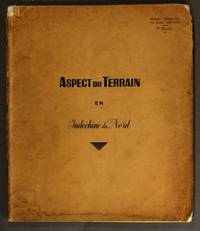
195435722Saigon: Édition du Service cartographique des F.T.E.O. 1954. First edition large square 4to pp. 117; photographic illustrations throughout; some wear a few short splits in the wrapper extremities else very good in original brown wrappers printed in black on the upper cover. At head of title: Forces terrestres du Nord Vietnam. 2. Bureau. Issued during the final battle for France in Vietnam at Dien Bien Phu. Cornell Arizona and Michigan only in OCLC. <br/><br/> Édition du Service cartographique des F.T.E.O. unknown books
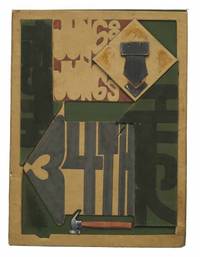
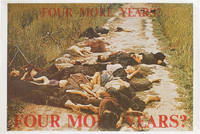
197083515New York: Art Workers Coalition 1970. Offset lithograph in colors; 64cm x 97cm 25" x 38". Mild creasing to extremities else a fine clean copy; unbacked. This one of a presumably small number of copies bearing a rubber-stamped message which reads: "This poster was originally co-sponsored by the Museum of Modern Art. On Dec. 19 trustee William S. Paley forbid the Museum to associate its name with this poster. Do the Trustees approve of the massacre" stamped twice in the image lower right. <br /> <br /> One of the true icons of Twentieth Century American protest art this poster created by the Art Workers Coalition under the guidance of Fraze Dougherty Jon Hendricks and Irving Petlin was issued to bring attention to the horrendous My Lai massacre of March 1968. The photograph by Ron Haeberle originally appeared in Life Magazine. The Museum of Modern Art had originally promised to underwrite the poster's creation and to donate paper and printing costs - but later abandoned the project under the objections of board President William S. Paley. The AWC still managed to print fifty thousand copies which they distributed for free. As a response to MoMA's backing out of the project an unknown number of the posters were rubber-stamped with the message quoted above and a demonstration was held inside the museum in front of Picasso's Guernica where copies of the poster were unfurled and given away. These events are recorded in a 2015 interview with co-creator John Hendricks: ".We had a big meeting of Art Workers' Coalition about how we should address their MoMA's reneging of the agreement with us. It was decided to make a rubber stamp.saying "This is the poster that the Museum of Modern Art agreed to do jointly with Art Workers' Coalition and Bill Paley and Arthur Drexler refused to do" or something like that. So we stamped as many posters as we could with that stamp. Then we had a number of demonstrations in front of the museum and inside in front of Guernica." interview with William Twersky WT_History Blog April 2015. We have traced no copies in commerce or institutional collections that make note of the rubber-stamped notice. In 1972 the design was repurposed to protest President Richard Nixon's campaign for a second term; for that version the motto was changed to "Four More Years Four More Years" 83515. Art Workers Coalition unknown
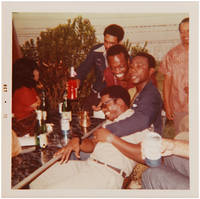
1972WRCAM55575Various places in Vietnam 1972. 145 photographs all but thirteen in color most approximately 3 1/2 x 3 1/2 inches. Majority of photographs mounted on black paper stock with non-archival adhesive tape some photos retain remnants of tape at corners. Some images a bit faded but generally in very good condition. A tremendous collection of photographs depicting the personal life and military service of an unidentified African-American soldier with the last name "Williams" serving in Vietnam during the war and with numerous family photographs at home. The majority of the photographs are undated but those that are dated place the collection roughly between 1968 and 1972. Other identifying characteristics in the photographs indicate that the soldier was likely part of the United States Air Force 93rd Security Police Squadron which provided security and air base defense during the Vietnam War. There is a photograph of Williams leaning against the sign for the 93rd SPS dormitory. <br> <br> Notable in the sixty or more photographs from the soldier's time in Vietnam are images from an unidentified American Air Force base depicting soldiers in the barracks a mess hall and fraternization among soldiers; additional photographs show a heavily-armed Williams manning a bunker holding an EBONY magazine posing with a South Vietnamese soldier in an urban setting and staring strikingly at the camera wearing machine gun ammunition and a hand grenade. A series of thirteen images were taken at "Le Van Loc" a popular Vietnamese night club located on the Tan Son Nhut Air Base near Saigon indicating Williams may have been stationed at or near that base. Personal photographs show individuals of varying ages presumably family members who appear alone or in groups and at times are photographed with Williams. Several of these photographs feature children presumably Williams' at home and at an Elmhurst School function. Williams seems to have been especially proud of his motorcycle as it features in a few shots. <br> <br> A collection of both service and family photographs capturing a young African- American serviceman during the Vietnam War. unknown books
196942627Vietnam: Published by 20th EB Information Office 1969. 1st printing. Presumed one of one i.e. a unique item. Green cloth binding with front board having custom multi-layer onlays depicting the units of the 20th Brigade; rear board with diamond-shaped cut-out for a b/w photograph of a unit bulldozer. Eps original artwork of divers construction scenes; rear paste-down an original bust pencil drawing of Col. Wilson. A VG to Nr Fine item. ~ 85 leaves multi-colored paper. Illustrated with over 60 original b/w photographs most captioned ~ 45 action scenes of divers brigade projects the remainder of staff and Vietnamese citizens. 7 leaves with newspaper clipping affixed also documenting divers brigade projects. Original artwork by PFC Al Schumer. 11-3/8" x 8-1/2" <br/><br/>The 20th Engineer Brigade is a combat engineer brigade currently assigned to the XVIII Airborne Corps of the United States Army stationed at Fort Bragg North Carolina. Though its predecessor units have lineage that dates back before the American Civil War the formation was not formally designated as the 20th Engineer Brigade until its activation on 16 August 1950 at Fort Leonard Wood Missouri. Deploying overseas in November 1952 it supported construction projects in southwestern France until its return to the US on 10 September 1954. Reactivated on 1 May 1967 at Fort Bragg the brigade deployed to Vietnam where it supported American forces for several years and a dozen campaigns. The brigade was deactivated on 20 September 1971 as American forces withdrew from the country. This souvenir book comprehensively documents the brigade's activities & asssigned personnel during the period of June 1968 to June 1969. A unique item the first such we've been able to offer chronicling this period of US history. Published by 20th EB Information Office hardcover books
197174766Tarrytown NY: N.p. 1971. This calligraphic and decorated scroll measures 19 x 124 inches and is composed of five sheets of laid paper attached. Calligraphic text with decoration on the margins. A very powerful yet attractive document.Written much in the style of the Declaration of Independence this scroll written by a known author and illustrated by an renown artist move in an entirely different direction all the while upholding the principles of the US primary document. The time was 1971 and the anger at American involvement in the war in Vietnam was reaching a fever pitch. Marches and demonstrations not a few of which I was dragged to as a youth were happening across the country violence was done to university students. and thousands of deaths were reported weekly on television. It was a great time of togetherness and everyone pitched in. The makers;Robert Andrew Parker; Robert Andrew Parker graduated from the Art Institute of Chicago in 1952 after serving in the Army in the 1940s. He moved to New York after he spent a summer at the Skowhegan School of Painting and Sculpture studying under Jack Levine. Parker continued to develop his printmaking skills at Atelier 17 an historically important printmaking studio founded by the renowned English painter and printmaker Stanley William Hayter. Robert Andrew Parker was also chosen in 1952 as the youngest artist to show at the Metropolitan Museum of Art in the — Exhibition of American Watercolors Drawings and Prints — the exhibition featured Stuart Davis John Marin Robert Andrew Parker and Jackson Pollock. John F. Mahoney seems have slipped the bonds of history but he had a excellent writing style. A source document. N.p. unknown
191246593Hanoi-Haiphong Vietnam: Imprimerie d’Extreme-Orient 1912. Four vols. Folio. xiii 1 370 pp. 20 plates some maps photos each with facing explanatory leaf numerous tables several large folding; Atlas unpaginated w/ 178 diagrams maps geological sections relief maps 2 very large folding colour maps some geological formation plates in colour; 4 146 2 pp. plus 25 plates each with facing explanatory leaf numerous text illustrations diagrams; 8 76 4 pp. plus 9 plates each with facing explanatory leaf numerous text illustrations diagrams. Uniformly bound in original printed wrappers some scuffing soiling edgewear occasional light foxing still a VG- uncut & unopened presentation set inscribed and presented by Honore Lantenois & Henri Mansuy to Prof. Marcellin Boule 1861-1942 French geologist palaeontologist and physical anthropologist who reconstructed the first complete Neanderthal skeleton in France. First edition presentation set of this massive first installment in the Geological Survey of Southeast Asia begun in 1908 documenting the biostratigraphy of the Yunnan Region which was awarded the Tchihatchef Prize of the French Academy of Sciences. Much of this survey work was done during the building of the Hanoi to Yunnan-fou Kunming railroad which was built by the French to exploit the tremendous mineral wealth of Yunnan. The Director of the Department of Natural Resources for France in Vietnam was Honore Lantenois 1863-1940 who worked for years with Henri Mansuy 1857-1937 and sent him back to France several times to study palaeontology at the School of Natural Resources Ecole des Mines. Lantenois recruited Jacques Deprat 1880-1935 in 1908 -- at the time a brilliant palaeontologist -- to conduct an ambitious program mapping the geology of Indochina and neighboring areas. All three men became involved in the notorious Deprat Affair which resulted in Mansuy accusing Deprat to Lantenois in 1917 that Deprat had used a few European-sources trilobites among his fossil specimens from Indochina and Yunnan. This accusation rested on the distinction that the suspect trilobites were not just similar in nature to others found in Europe but the matrix they were embedded may have originated from Europe. Although nearly 90 years later it would be determined that the trilobite fauna discovered by Deprat indicated that the Yunnan had occupied a location adjacent to Bohemia originally in the early Palaeozoic period; the French scientific community condemned Deprat at the time stripped him of his degrees and posts and forced him to leave the field. A complete set including the Atlas is quite scarce. See: Genovese Madeleine Colani and the Deprat Scandal at the Geological Survey of Indochina Journal of the Siam Society Vol. 99 pp. 269-290 2011; Osborne The Deprat Affair: Ambition revenge and deceit in French Indo-China 1999; Stokes Deprat’s trilobites and the position of the Indochina Terrane in the Early Palaeozoic Proceedings of the International Symposia on Geoscience Resources and Environments of Asian Terranes 2008 pp. 201-207. Imprimerie d’Extreme-Orient, unknown
195435722Saigon: Édition du Service cartographique des F.T.E.O. 1954. First edition large square 4to pp. 117; photographic illustrations throughout; some wear a few short splits in the wrapper extremities else very good in original brown wrappers printed in black on the upper cover. At head of title: Forces terrestres du Nord Vietnam. 2. Bureau. Issued during the final battle for France in Vietnam at Dien Bien Phu. Cornell and Arizona only in OCLC. Édition du Service cartographique des F.T.E.O. unknown
1977WRCAM55443Various places in Thailand perhaps centering on Korat Royal Thai Air Force Base 1977. Seventy-seven Kodak color photographs almost all approximately 3 1/2 x 5 inches a handful slightly smaller and one postcard. Slim quarto. Contemporary glossy purple floral-patterned cloth photograph album gilt- stamped label on front cover. Some images slightly faded. Overall very good. A highly entertaining collection of vernacular photographs capturing the lives of young African-American G.I.s and their romantic interests in a village in Thailand during the latter years of the Vietnam War. The photographs show African-American men in both uniforms and street clothes often posed alone or with Thai locals almost exclusively women. The men are seen at work and play including an image of the gun shop with a sign labeled "Phase Section" on the front and a large military van with a similar sign reading "2 Orange." There is also a great deal of coverage of the locals living in the village including women and children. One photograph of particular interest shows part of a commercial building emblazoned with both a Coca-Cola and a Pepsi sign. The date range of 1972 to 1977 stems from the fact that some of the photographs are date-stamped in the margin "Oct 72" and one later image is stamped July 1977; most images seem to emanate from the earlier date. The single postcard is an image of Wang Not Ten Waterfall in Phitsanulok in north-central Thailand. The album could possibly have been retained by a local Thai person documenting their interactions with the visiting Americans. <br> <br> There were a half dozen active American Air Force bases in Thailand during the 1970s from which over 80% of the air strikes of North Vietnam originated. The American servicemen seen in the present photographs were either airmen performing these strikes or ground crew in support of the pilots. Also given that Korat Royal Thai Air Force Base and Phitsanulok are both in north-central Thailand it is likely the images depict this area. <br> <br> A rare look at African-American servicemen in a strategically important region of Thailand during the Vietnam War. hardcover books
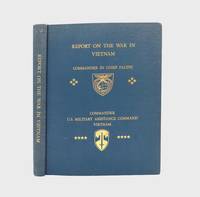
196820360Washington: Government Printing Office 1968. First edition. Maps some folding charts and diagrams photographs Index laid in at the back. 1 vols. 4to. Original blue cloth gilt. Some light soiling of cloth warping of volume and light marginal browning of text else a very good copy of this work. First edition. Maps some folding charts and diagrams photographs Index laid in at the back. 1 vols. 4to. INSCRIBED BY WILLIAM WESTMORELAND TO HEDLEY DONOVAN former editor-in-chief of Time Inc. "To Hedley Donovan-With reminiscence of our pleasant association. W. C. Westmoreland. March 1969." In his position as Editor in Chief of Time Inc. Donovan had made four trips to Vietnam to see firsthand the people and places being covered by his correspondents and to get a feel for the situation. He met with Westmoreland in Vietnam in late 1965-early 1966 and probably on his subsequent trips.<br /> <br /> Westmoreland was the Time Magazine Man of the Year for 1965. Partly reading "As commander of all U.S. forces in South Viet Nam General William Childs Westmoreland 51 directed the historic buildup drew up the battle plans and infused the 190000 men under him with his own idealistic view of U.S. aims and responsibilities. He was the sinewy personification of the American fighting man in 1965 who through the monsoon mud of nameless hamlets amidst the swirling sand of seagirt enclaves atop the jungled mountains of the Annamese Cordillera served as the instrument of U.S. policy quietly enduring the terror and discomfort of a conflict that was not yet a war on a battlefield that was all no man's land. Government Printing Office unknown
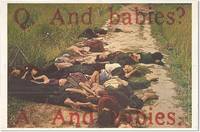
197247693N.p.: Artists' and Writers' Protest / Colorcraft Inc 1972. First Edition. Original photographic poster offset printed in colors on white stock measuring 96.5cm x 63.5cm ca.38" x 25". Some minor handling trivial wear to extremities else very Near Fine / A unbacked. One of the most gruesome and effective pieces of propaganda to emerge during the Vietnam War reproducing a photograph taken during the My Lai Massacre by U.S. Army photographer Sgt. Ronald L. Haeberle. This and other iconic photos were taken by Haeberle on March 16 1968 using his personal camera while assigned to follow Charlie Company into My Lai. Unlike the monochrome images which he returned to the Army shot with a standard-issue Army camera the color images he shot with his personal camera were brought back to the States and sold to Life magazine after Haeberle was honorably discharged. The photos were printed in the December 5 1969 issue of Life offering Americans a harrowing glimpse into some of the attrocities being committed overseas; his caption beneath this image read: "Most were women and babies. It looked as if they tried to get away." The poster was designed by members of the Art Workers Coalition and initially released in 1969 using the identical image with the overlaid text reading: "Q: And babies A: And babies." This version published four years later intentionally subverts Richard Nixon's campaign slogan "Four More Years" forcing Americans to ask whether or not they wanted Nixon for another term and by extention another four years embroiled in foreign conflict. OCLC notes a single holding MoMA. Artists' and Writers' Protest / Colorcraft, Inc unknown
1960232781960. Black U.S. Army soldier's photo album documenting home and military life between Virginia and Vietnam in the late 1960s and early 1970s. Black servicemen moved through the formally desegregated Army during the first major U.S. war fought after official military integration. Centered a young black enlisted man the album tracks the life of service through photos at camp soldiers in formation military equipment helicopters and with portraits alongside other soldiers. Though the Korean War was the first U.S. war that was formally desegregated the units still saw unequal integration and opportunity while the Vietnam War marks an era in which a desegregated military was already well established. <br /> <br /> Photo archive of 92 color and black and white photographs ranging from 3.5" x 3.5" to 3.5" x 5" Virginia and Vietnam late 1960s to early 1970s. Mounted in a 10" x 14" spiral bound album. Many images show the compiler in uniform and civilian dress some of the earlier home scenes have handwritten inscriptions en verso. Other images show helicopter scenes in flight and at camp; tent lines wooden barracks; soldiers standing in formation gathering in small groups and posing beside military vehicles and equipment. A Virginia license plate anchors the soldier's home state and the use of quippy captions gives this soldier a voice identifying some individuals by their first name and one particular youthful photo of himself captioned "Dunn will be leaving on January the 1st army But you know he is trying to get out of it said he was going to school. Ha! Ha! Uncle Sam's school" giving a glimpse into the prior aspirations of young Black man right before being drafted.<br /> <br /> Black soldiers entered the Vietnam era military in large numbers at the same time that civil rights struggles Black Power politics and mounting criticism of the war reshaped the meaning of service for African American men. This album gives weight to that history with repeated presence of black men within camps and comradeship with white soldiers. Adhesive residue to corners and backs of some images edgewear to album and leaves and expected handling wear; photographs generally clear and legible. Overall very good condition. This album shows the ground level of Black military experience in the early post segregation Army. unknown
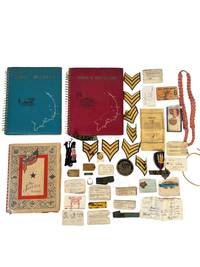
1942193041942. Coon Clarence; Coon Michael. Coons family Air Force service archive 1942-1944 and 1968-1969 documents two generations of American military experience across World War II and the Vietnam War offering direct evidence of shifting military culture wartime attitudes and generational identity within a single family. Clarence Coon's New York World War II service as an engineer gunner in the Fifteenth Air Force in Italy situates the archive within the Allied air campaign over Europe while his son Michael Coon's deployment to South Vietnam places the later material within the context of a deeply contested and culturally transformative conflict. Clarence's letters and scrapbook entries foreground a disciplined and duty-oriented perspective shaped by mid-century wartime expectations while Michael's photographic record presents a markedly different tone capturing leisure irreverence and camaraderie among soldiers during the Vietnam era. The archive preserves Clarence's written voice including lines such as "Another card to let you know that I don't do all my writing to women" and his commentary on the 1942 New York gubernatorial election "The radio just announced Bennet's Defeat. To bad. Well we will see what Dewey can do. I wish him luck" as well as his observations during stateside training "Well as far as I'm concerned they can give Tenn. back to the Indians. We are walking around in a sea of mud. Its all day rains every 5 min. I wouldn't live in the South for anything." Together these materials establish a continuous family narrative linking wartime service political awareness and personal expression across two major twentieth-century conflicts.<br /> <br /> Coons family Air Force archive. United States and Vietnam 1942-1944 and 1968-1969. Group consists of two photograph albums from Vietnam War service and one World War II scrapbook accompanied by a quantity of associated ephemera including patches medals registration cards business cards a ring and a dog tag. Archive contains approximately 123 photographs across the albums and scrapbook along with numerous postcards including 26 with manuscript correspondence on the verso and three pages of a letter incorporated into the scrapbook. Scrapbook also includes newspaper clippings documenting Clarence Coon's training and service progression including flight training in Westover Massachusetts; Nashville and Smyrna Tennessee; technical training in Gulfport Mississippi; and gunnery and pistol range distinction at Tyndall Field Florida. Vietnam-era albums depict Michael Coon and fellow servicemen in informal and candid settings including scenes of drinking recreational outings helicopter transport weapons handling and interactions with entertainment venues.<br /> <br /> The juxtaposition of World War II and Vietnam War materials within this archive provides a concentrated record of evolving American military life particularly the transition from the structured collective ethos associated with the Second World War to the more individualized and culturally expressive environment of Vietnam-era service. Clarence Coon's combat role aboard B-24 Liberator bombers during missions over Italy aligns the archive with the strategic bombing campaigns of the European theater while his writings document both military routine and domestic political awareness. In contrast Michael Coon's photographs capture the lived experience of American soldiers in Vietnam beyond formal operations including leisure dissenting humor and the visual language of 1960s youth culture within the military. Light wear from handling throughout with typical album and scrapbook aging and ephemera showing minor creasing; overall very good condition. unknown
197247693N.p.: Artists' and Writers' Protest / Colorcraft Inc 1972. First Edition. Original photographic poster offset printed in colors on white stock measuring 96.5cm x 63.5cm ca.38" x 25". Some minor handling trivial wear to extremities else very Near Fine / A unbacked. One of the most gruesome and effective pieces of propaganda to emerge during the Vietnam War reproducing a photograph taken during the My Lai Massacre by U.S. Army photographer Sgt. Ronald L. Haeberle. This and other iconic photos were taken by Haeberle on March 16 1968 using his personal camera while assigned to follow Charlie Company into My Lai. Unlike the monochrome images which he returned to the Army shot with a standard-issue Army camera the color images he shot with his personal camera were brought back to the States and sold to Life magazine after Haeberle was honorably discharged. The photos were printed in the December 5 1969 issue of Life offering Americans a harrowing glimpse into some of the attrocities being committed overseas; his caption beneath this image read: "Most were women and babies. It looked as if they tried to get away." The poster was designed by members of the Art Workers Coalition and initially released in 1969 using the identical image with the overlaid text reading: "Q: And babies A: And babies." This version published four years later intentionally subverts Richard Nixon's campaign slogan "Four More Years" forcing Americans to ask whether or not they wanted Nixon for another term and by extention another four years embroiled in foreign conflict. OCLC notes a single holding MoMA. Artists' and Writers' Protest / Colorcraft, Inc unknown books
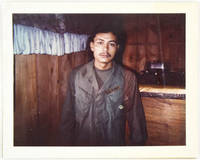
1970185581970. Vandergriff Sergeant. Vietnam War photographs 1970 to 1971 document integrated U.S. Army service during a period when African American troops were serving in substantial numbers in combat units and negotiating both military duty and racial dynamics within the ranks. The images record a tour of duty from basic training through the final days before return home placing the archive within the later phase of the Vietnam War when troop morale racial tension and antiwar sentiment were all intensifying within the U.S. military. The presence of a visibly multiracial unit with many African American soldiers situates the photographs within the post-desegregation military structure established after World War II offering direct visual evidence of daily life interpersonal relationships and combat readiness in an officially integrated force.<br /> <br /> Archive of 68 color Polaroid photographs. Vietnam 1970 to 1971. Images measure approximately 3.5 x 3.5 inches to 3.5 x 4.5 inches with approximately one quarter mounted to black board and the remainder loose. Several loose photographs include handwritten captions and soldiers' names on verso. The sequence follows Sergeant Vandergriff's service from training through deployment with scenes including soldiers smoking drinking and posing with standard-issue M16 rifles and M1911 sidearms. Additional images show helicopter interiors and aerial views a destroyed grounded helicopter tanks aircraft drill formations and encampments. Photographs also depict Vietnamese villages and local civilians including two children bathing in a river. Unit identification is not explicitly stated in the archive. Other photos depict aircraft drill marches tanks weaponry villages and locals including two Vietnamese children bathing in a river. It is not clear which unit these troops belong to. It is possible they are in the 101st Airborne which was prominent at both Birmingham and Evans.<br /> <br /> During the Vietnam War African American soldiers served in disproportionately high numbers in combat roles particularly in airborne and front-line units at a time when the U.S. military was confronting internal racial conflict alongside external war. This archive documents the lived experience of a multiracial unit operating within that structure showing informal social interaction alongside military activity and equipment. The combination of candid personal imagery and operational context provides material for examining race military culture and everyday life in a late-stage U.S. combat theater. Some photographs show minor staining and image degradation; overall very good condition. unknown
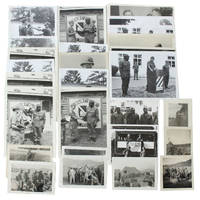
1950186871950. Barber Command Sergeant Major. U.S. Army 17th Field Artillery Battalion photographs circa 1960s to 1970s document integrated military training and the advancement of an African American senior noncommissioned officer within the post-desegregation Army. The images center on activities at a Noncommissioned Officer Academy and within field environments placing the archive within the period following the formal integration of the U.S. military and during the era of the Vietnam War. The repeated presence of Barber in both instructional and ceremonial contexts situates him within the upper ranks of enlisted leadership documenting the visibility and authority of Black noncommissioned officers at a time when opportunities for advancement had only recently expanded following mid-twentieth-century reforms.<br /> <br /> Archive of 30 black and white silver gelatin photographs. United States circa 1960s to 1970s. Photographs range in size from approximately 7 x 5 inches to 4 x 3 inches. Images depict integrated groups of soldiers within the 17th Field Artillery Battalion known as "The Persuaders" engaged in training and daily activities. Scenes include artillery instruction trench digging weapons handling camp life chapel gatherings and a graduation ceremony in which soldiers take an oath and pass a unit flag. Several photographs show Barber prominently including moments that appear to document formal oath-taking or advancement within the noncommissioned officer structure. The photographs appear to have been taken across multiple locations including a more rugged field setting and a separate academy environment.<br /> <br /> Following the desegregation of the U.S. armed forces in 1948 African American soldiers increasingly assumed leadership roles within enlisted ranks particularly during the Cold War and Vietnam War periods. The position of Command Sergeant Major represents one of the highest enlisted leadership roles in the Army responsible for discipline training and the welfare of soldiers. This archive provides visual evidence of integrated unit cohesion professional training systems and the presence of Black leadership within those structures. The combination of field exercises and formal ceremonies offers material for examining race hierarchy and institutional culture within the modern U.S. Army. Light wear consistent with handling; overall very good condition. unknown
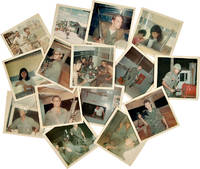
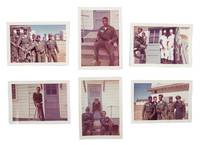
1973185751973. Cooper Howard L. Vietnam War photographs and promotion letter circa 1970s document African American noncommissioned officer service within an integrated U.S. Army and the formal evaluation structures governing advancement during and immediately after the conflict. The material centers on Sergeant Cooper's presence within a deployed unit in Vietnam alongside fellow soldiers and local civilians and extends into the postwar administrative process through a typed recommendation for promotion dated 1973. Together the photographs and letter situate the archive within the broader context of African American military participation during a period marked by both expanded combat roles and documented racial disparities in discipline assignment and promotion within the armed forces.<br /> <br /> Archive of 20 vernacular photographs and one typed letter. Vietnam and United States circa 1970s. Photographs include 15 color Kodak snapshots measuring approximately 5 x 3.5 inches or smaller depicting Sergeant Cooper and fellow soldiers primarily in uniform in Vietnam. Four black and white Agfa snapshots measuring approximately 5.5 x 3.5 inches show Cooper other servicemen and Vietnamese children. One Polaroid photograph includes two African American men standing beside Cooper with handwritten captions. Additional images depict base life and group interactions within the unit. Accompanying the photographs is a typed letter recommending Sergeant Howard L. Cooper for promotion signed by Transportation Supervisor Alice J. Griffin Fort Ord California dated 14 November 1973 one page measuring approximately 8 x 10 3/8 inches.<br /> <br /> African American soldiers served in large numbers during the Vietnam War with many attaining noncommissioned officer roles that required both leadership within units and navigation of institutional structures that did not always provide equitable advancement. The inclusion of a formal recommendation letter alongside the photographs connects personal service to bureaucratic recognition documenting how military authority evaluated performance in the postwar period. The combined visual and documentary record offers material for examining race leadership and military administration in the Vietnam era. Photographs show light wear; letter with pinholes discoloration and minor ink smear at upper edge; overall very good condition. unknown
191161576S. l., s. n, [1911] 1911 Atlas grand in-4, cartonnage d'édition, dos de toile noire, premier plat imprimé. Très rare ouvrage, complet des 38 planches annoncées, entièrement sur onglet. Cartonnage usagé, coins émoussés, le mors du 1er plat fendu entête et en pied.
197019694Dau Tieng ca. 1970. Very good. 12mo. Commercial album; turquoise faux-leather boards. 46 gelatin-silver B&W prints most 4.5" by 3.5"; 13 color prints; 3 pieces of various ephemera including an Army library card dated 1970; plus 4 photos apparently sent from home. Very good. Mild exterior wear; light soil to plastic sleeves throughout; but photos remain clean and bright. <br/><br/>Striking collection of photographs showing many carefree recreational moments of wartime: soldiers sitting around at the barracks reading and smoking; many photos of smiling Vietnamese women including girls at the base library. Notably includes two photographs of a Vietnamese all-female rock band performing and three of an African-American soldier rock band likely USO. Plus several exterior shots of the military base one sign noting the headquarters of the 2/28 Infantry the Black Lions. A moving portait particularly of what appear to be at least momentarily jovial relationships between soldiers and local Vietnamese. hardcover books
197018470N.p. N.p. c. 1970. Prints in uniformly near fine to very good condition with some curling to the edges. Collection of twenty-five 3 3/8 X 4 1/4 inch Polaroid snapshots mostly in color taken during an American soldier's deployment in An Khê Vietnam. Features images of soldiers grilling drinking and sitting in their bunkers with a few double exposures and a couple of photographs of female civilians. Prints have been adhered to cards with in several instances notes penned on the versos. Fascinating vernacular document of soldier life in one of the most strategically significant military zones of the Vietnam conflict. N.p. N.p. unknown books
19742111902158501299Kawade Shobo Shinsha 1974. Soft Cover. Fine. Number of pages: 3 books Size: 21 cm Number of books: 3 books Kawade Shobo Shinsha paperback