4 751 résultats
1994605078Fayard 1994 Très fort vol; in-8 br., 972 pp., bibliogr., index.
8vo. 12 vols. With 72 engr. maps. Contemp. French full calf with giltstamped labels and gilt spines. All edges red; marbled endpapers. A fine copy of the twelve-volume octavo edition of the most detailed and accurate geography of its day (published simultaneously in four quarto volumes). All the maps are taken from the "Atlas Portatif" (1748-49) of Robert de Vaugondy. The fine map of the Arabian Peninsula is derived, via Vaugondy, from Delisle; "it includes the three classic divisions of the Arabian Peninsula and the following regional subdivisions: Tahama in the south west, Bahrain, which extends along the east coast and includes the town of Cathema, Yemen in the south which includes Oman, the States of the Cherif of Mecca which includes Hagiaz and parts of the centre of the Arabian Peninsula. Although the width of the Red Sea is exaggerated, the Sinai peninsula's shape is very close to reality. The topographical features and watercourses are not very different to how they are shown on other maps of the same period. A town named Naged is shown to the north west of the town of Janama" (Al Ankary). - Some bindings slightly bumped at extremeties. Contemporary ms. ownership "Leon. van Berg" to pastedowns; titles bear stamp of the La Valsainte Charterhouse, Switzerland (dissolved in 1825). Slightly browned. Formerly in the collection of the Swiss industrialist Herry W. Schaefer. Streit 17, p. 252, n. 6198. Brunet VI, 19613. OCLC 34221488. For the map of Arabia cf. Tibbetts 278. Sultan Bin Muhammad Al-Qasimi, The Gulf in Historic Maps, S. 162. Al Ankary Collection 338 (all referencing Vaugondy's map).
New English Paperback. 4to. (29 x 21 cm). In English. 160 p. Scar of tongue: Consequences of the ban on the use of mother tongue in education and experiences of Kurdish students in Turkey.
4to. (6), 112 pp. (but: 108 pp.; pp. 61-64 skipped in pagination). With large engraved map of Vienna and its environs; wants an additional plan. Contemporary calf; spine repaired; leading edges gilt. All edges sprinkled in red. First English translation. The Imperial Councillor of War J. P. a Vaelckeren was sick in Vienna in 1683 when the Turks enclosed the capital. His report of the siege and liberation of the city quickly spread throughout Europe in numerous editions and translations. - Wants the map of Vienna; the corresponding "explanation of figures" is present in the preliminaries. Early 19th c. ownership "H. E. Somerville" to pastedown. A good copy of this rare English imprint. Sturminger 2953. Apponyi II, 1132. ESTC R28429. Gugitz I, 485. Cf. Kábdebo, p. 43f. Cf. Mayer 576ff. Cf. Jöcher IV, 1381.
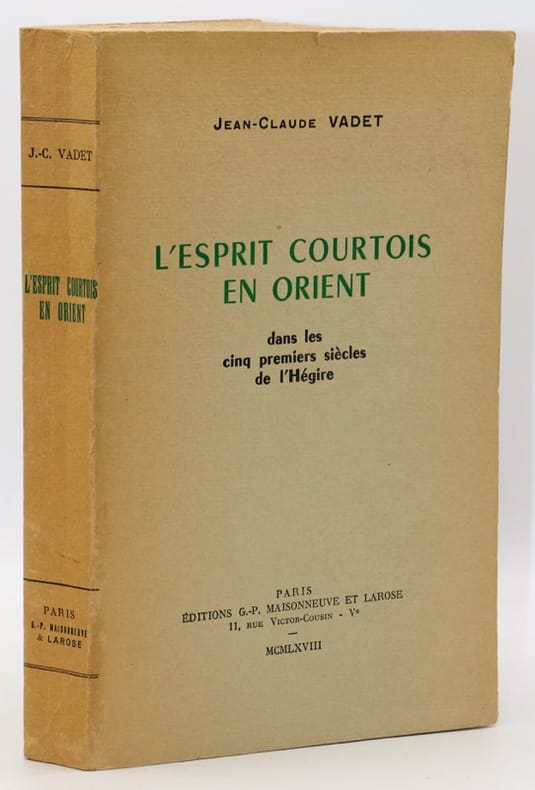
593146P., Maisonneuve et Larose, 1968. Fort in-8 br., 490 pp, bibliographie. Envoi autographe de l'auteur.
VI, 238 pp. 8vo. Modern boards using the original printed upper cover. First edition. - The autobiography of Usamah ibn Murshid ibn Munqidh (1095-1188), who introduced this genre of writing to Arabic literature (cf. GAL I, 319). Born in Shaizar in northern Syria, where his family ruled a small Emirate, he was banished by his uncle and for a time entered the services of Atabeg Sihabaddin ibn Buri, where he got to know members of the Knights Templar. After spending several years in seclusion as a hunter in Egypt, he returned to Damaskus in 1154, joining the campaign against the European crusaders. The editor H. Derenbourg was the first to discover the sole surviving manuscript of the "Kitab al-I'tibar" (in the Escorial in Madrid) and produced this first translation, afterwards the first Arabic edition (1886) and a biography of Usamah (1889). - A few repaired paper defects; well-preserved altogether. OCLC 7045652.
Small 4to (21 x 15 cm). (16), 410, (6) pp. With woodcut arms of the Dominican order (with the IHS and cross covering the centre) on title-page, and a variant version on the last page, and 3 woodcuts in text (2 saints and the Cross). Further with 24 decorated woodcut initials in two series, including 11 repeats. Contemporary gold-tooled mottled calf, each board with the coat of arms of the French Seguier family and with the monogram PSMF (Pierre Seguier and his wife Madeleine Fabry) repeated 6 times on the spine, rebacked (on recessed cords) with original gold-tooled backstrip laid-down, a later spine label (between the 1st and 2nd monogram), the year of publication 1611 at the foot of the spine, later endpapers. First and only edition, in Spanish, of an early work on Ethiopia by the Spanish Dominican monk Luis de Urreta (ca. 1570-1636), who wrote two volumes glorifying his own order's accomplishments in Ethiopia while diminishing those of the Jesuits (his Dominican coat of arms incorporates the IHS with cross, often used by the Jesuits). In the present work, the second of the two, he deals specifically with the Dominican presence in Ethiopia and the history of the Ethiopian saints. Like the first work, the "Historia ecclesiastica" published in 1610, it is a late example of a stream of geographical fantasies where Ethiopia was presented as the wondrous utopian kingdom of Prester John, and Urreta makes the case for an ancient Dominican presence in the country, arguing that they should thus be given precedence over the Jesuits as Catholic missionaries in that country. On pp. 88-90 it gives the information from a report to Pope Gregory XIII (1502-85) on two Dominican monks (Blackfriars) from the Alleluya monastery, who entered Mecca around 1580 and had contact with a Faqih and a Marabout. Everyone who travelled from Africa to Mecca supposedly had to travel by way of the Alleluya monastery as the rest of the region was considered uninhabitable (p. 61). - From the library of Pierre Seguier, Lord Chancellor of France from 1635 to 1672, best known for his appearance in The three musketeers, with his arms and monogram stamped in gold on the binding. And with an owner's inscription of the 17th-century French scholar Etienne Baluze ("Stephanus Baluzius Tutelensis") on title-page. With a faint water stain in the lower margin of four leaves in the introduction, a tiny corner torn from the title-page and two tiny tears in the margins of the main text, otherwise in very good condition. Binding heavily restored, but with the gold-tooled coat of arms still very clear. Olivier, 271(4). Finger & Piccolino, The shocking history of electric fishes, p. 117; Palau 345993; Salva 3417; cf. Gay, Bibl. de l'Afrique et l'Arabe 2690.
198161223Garden City NY: Doubleday and Company. Very Good; Spine of book and slipcase sunned slipcase worn. 1981. Limited Edition. Hardcover. One of 200 numbered copies signed by both authors. Blue cloth binding housed in matching blule cloth slipcase. Many color photos. ; 8vo 8" - 9" tall; 318 pages . Doubleday and Company hardcover
8vo. XI, (1), 211, (1) pp. With a hand-coloured wood-engraved frontispiece and 4 large folding lithographed pedigree tables. Original burnt red cloth binding with giltstamped title to spine and upper cover. First edition. - Upton was one of the early experts on the bloodlines of British thoroughbreds. His book describes both the influence of the Arabian horse on the development of the English thoroughbred as well as many interesting aspects of the Arabian horse. Shortly after the publication of this work - intended to "point out errors that have been committed in the breeding of our horse" (p. iii) - he travelled in Arabia to obtain purebred horses and so improve the quality of British cavalry remounts. Upton served with the 9th Lancers. - Binding somewhat bumped and rubbed with traces of moisture to covers. Lightly browned throughout, paper brittle with occasional edge or corner flaws, frontispiece and title-page rather foxed. Rare. Boyd/P. 130. Huth 273. OCLC 12795478.
Watercolour over traces of pencil. 708 x 490 mm. Signed and dated by the artist. Matted.
Watercolour heightened with white. 681 x 520 mm. Signed and dated by the artist. Matted.
Watercolour over pencil, matted. Signed and dated by the artist lower left. 460 x 363 mm. An impressive watercolour of the famous Arabian mare, dedicated by the artist "to Rachel".
Ballpoint, heightened with white. 378 x 278 mm. A sheet of annotated preliminary sketches for Upton's watercolour portrait of the three Arab mares Gold Roseifa, Russallka, and Roxiralot. - Matted.
Watercolour over pencil. 780 x 525 mm. Signed and dated by the artist. Matted.
Ballpoint, heightened with white. 373 x 276 mm. Matted. A sheet of annotated preliminary sketches (one on recto, two on verso) for Upton's watercolour portrait of the three Arab mares Gold Roseifa, Russallka, and Roxiralot.
Folio (212 x 324 mm). Persian manuscript on faintly ruled paper. 1 blank leaf, 336 pp. (168 ff.), 1 blank leaf. Text is complete, but last leaf is missing. 1 illuminated headpiece and 49 illustrations in ink and bright watercolour wash. Text in black, ruled in black, with important words and phrases picked out in purple. 19th century leather ruled and stamped in blind. Lavishly illuminated Persian manuscript depicting the romance which came to define the love story in Western literature. Composed by Abu al-Qasim Hasan Unsuri (ca. 961-1039), the original Persian was in fact lost, and preserved in a Turkish translation. Unsuri's version was itself based on what was already an ancient love story in his own time, the Ancient Greek novel "Metiochus and Parthenope", which also survives only in fragments. Though certainly derived from the Greek, like many Persian romances with Greek origins, "the nature of the relationship is not [...] the simple one of the earlier (Greek) material influencing the later (Persian) material, as the Greek novels contain a number of motifs and topoi which are identified within the narratives themselves as Persian in origin. The relationship between the love narratives of the two cultures appear, therefore, to have been one of mutual reciprocity over a considerable stretch of time" (Davis). - Some fragments of the original Persian do survive: Sa'id Nafisi collected 141 verses of "Wameq o 'Adra" that were used as evidence in Persian dictionaries, and 372 more verses were discovered by Mohammad Šafi' in the binding of an old manuscript in 1950 (Blois, 201). Unsuri's version was translated in the 16th century into Turkish by Shaikh Mahmud Lame'i, though in comparison with the earlier fragments, this is considered a loose translation of the original. However, it provides the source of most subsequent translations and most of what we know of "Vamiq va 'Azra", as a romance which underpins the genre. In literature both medieval and modern, the narratives of the original persist: lovers separated by a kidnapping, a virgin who must use a range of tricks to elude unworthy attempts on her chastity, an interrupted wedding, and a seemingly final separation with the (supposed) death of one of the lovers. In this way, "Vamiq va 'Azra" echoes down the literary ages. - Covers somewhat worn but professionally repaired; still tightly bound. Light soiling, otherwise a beautifully illustrated and uncommon manuscript. Richard Davis, "Greece IX. Greek and Persian Romances", in: Encyclopaedia Iranica XI, 339-342. Francois de Blois, Persian Literature: A Bio-Bibliographical Survey. Vol. V: Poetry of the Pre-Mongol Period (London: Royal Asiatic Society, 2004), pp. 201-204.
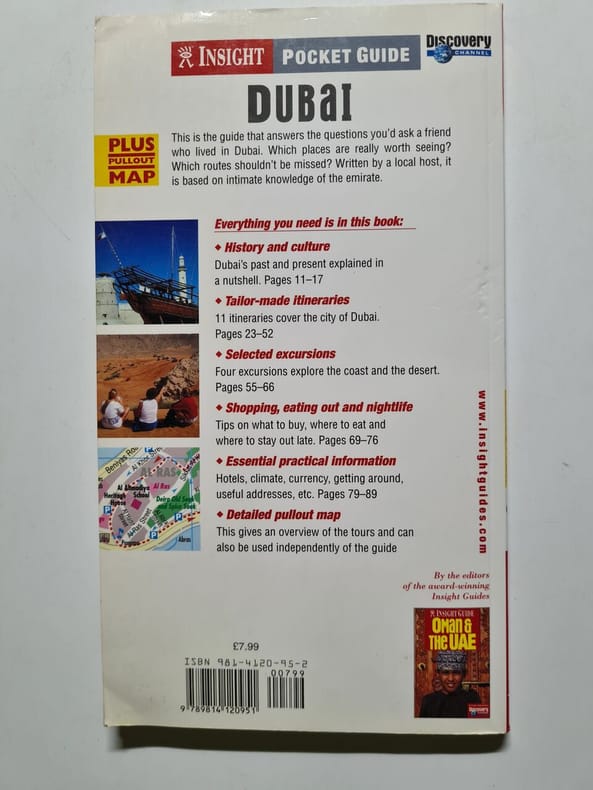
2003500260160APA Publications Pte Ltd 2003 104 pages 12 4x1x21 8cm. 2003. Broché. 104 pages.
325 x 235 mm; 220 x 145 mm. Pack of matches with 18 matches. Ticket holders for a United Arab Airlines flight (probably to Japan) and a pack of matches promoting the Comet 4c Jet. The bigger holder is illustrated with a lithograph showing Geishas. - The de Havilland DH.106 Comet was the world's first commercial jet airliner. The last Comet variant, the Comet 4C, first flew on 31 October 1959. Ordered by Kuwait Airways, Middle East Airlines, Misrair (later United Arab Airlines), and Sudan Airways, it was the most popular Comet variant and made its final flight in 1997.
515614Berlin, De Gruyter, 1936. In-8 rel. pleine toile chamois éditeur, titre bordeaux au dos et plat sup., XI-204 pp., index.
4to. (8), 176 pp. With woodcut printer's device on title page and several woodcut headpieces and initials. 18th century full vellum with giltstamped red spine label. In spite of the subtitle ("nuovamente mandate in luce"), this is the first edition of Ulloa's history of the Ottoman wars in Hungary, including an account of the 1566 Siege of Szigetvár. Though the battle resulted in an Ottoman victory, it halted the Ottoman advance on Vienna that year, and Vienna was not threatened again until 1683. "The Castilian-born Alfonso Ulloa was entrusted with various diplomatic missions by Emperor Maximilian as well as by King Philip II and thus had a first-hand knowledge of the events of the years 1566-1569. Disregarding the frequently panegyrical tone of the account, the book may still be used as a valuable historical source" (Göllner). Apponyi, on the other hand, cautions that "this is nothing but a reprint of Pietro Bizarri's 'Historia', published the previous year [... The book nothing to do with Ulloa's account of the events at Sziget published in his own 'Comentarios' in 1569: apparently, he found it easier to rip off Bizarri than himself ...] Ulloa has the nerve to present this shameless piece of plagiarism to his patron with the most unctuous and swaggering phrases [...] Cautiously, Ulloa shied away only from copying certain personal accounts of Bizarri's, or rather from presenting these experiences of Bizarri's as his own; everything else is reproduced verbatim". - Title page shows some brownstaining, otherwise a clean copy in a pretty contemporary binding. Formerly in the collection of the Marquess of Bute with the family's engraved armorial bookplate (from the library of Luton House, Bedfordshire; pre-1845) on the pastedown. Edit 16, CNCE 38245. Adams U 40. BM-STC Italian 704. Apponyi I, 437. Göllner I, 1271.
4to (174 x 260 mm). 16 pp. Includes 34 (of 70) loose albumen photographs, images approximately 130 x 100 mm each, mounted separately and numbered, housed in a modern album. Text volume in original paper wrappers. Rare anthropological publication, with original photographic documentation, of the inhabitants of the Fergana region in the extreme east of Uzbekistan, near Kyrgyzstan and Tajikistan. - Born in Transylvania, Károly Jenö (Charles Eugene) Ujfalvy de Mezokövesd (1842-1904) was a noted Austro-Hungarian ethographic researcher and linguist of Central Asia and the Himalayas. He settled in France, where he was trained by the noted anthropologist Paul Broca, and taught Asian history and geography at the School of Oriental Languages. The Ministry of Education sent him on a mission to Russia, Siberia, Turkestan and Uzbekistan in 1876, on which journeys he recorded these images of locals in the region. (Ujfalvy would also travel to Samarkand and Bokhara and lead an expedition to the Kashmir in 1880.) This is the fourth of a total of six volumes concerning the French expedition to Central Asia. In his preface, Ujfalvy develops the aims of his enterprise and outlines the principles by which one may obtain anthropologically useful portraits: subjects are to be photographed in the nude, from the front and in profile, against a white background and using a light metre. The individuals, whose portraits measure exactly one-eighth of their natural size, are identified by name, race, sex, height, and age, as well as by the colour of the skin, the hair, and the eyes. The photographs were realised with the aid of one photographer "Kazlowski, le plus habile de Tachkend"; the present album likely constitutes his only published work. - Text volume chipped at edges with some repairs, otherwise good; photos well preserved. OCLC 698467635.
557350New-York, Arno Press, 173. In-8, binding mauve full buckram, gold title on the spine and on the first plate cover, VII-450pp, anastatic reprint of the first english edition (London, John Murray 1856)
Single folded sheet. Two red stamps to interior. A curious document, issued for the use of American servicemen in the Middle East during the Second World War. It was clearly meant to be employed when a soldier was lost or had been separated from his command, as it asks "Arab peoples" to help the bearer of the document. This plea, attributed to Roosevelt, is printed in Arabic, English and French. The back of the card also features seven useful words and phrases, in English and Arabic. - A touch worn, light staining to back of card.
604781Paris, Ed. Nagel, 1964. In-8 broché, 292 pp., 5 cartes dont 2 à pleine pp.
8vo. VIII, 263, (1), 40 pp. Contemporary marbled boards with giltstamped red spine label. All edges red. Only edition. - The principal work of the Göttingen oriental scholar T. C. Tychsen (1758-1834), a grammar of Arabic that replaced that of Michaelis, including a 40-page "Anthologia Coranica" in Arabic which contains suras 1, 68, 91-96 and long excerpts from suras 2, 23, 47, and 5. The instructional text (though not the Qur'anic appendix) of the present copy has been closely studied, corrected and extensively annotated in German, Arabic, and Latin on more than 70 pages by an unidentified contemporary scholar or student of oriental languages, in a manner often consistent with preparatory notes for a revised edition. Sources cited include Scheidius, Reiske's Abulfeda, De Sacy, Rosenmüller, and Gesenius; the latest is the third volume of Freytag's Lexicon Arabico-Latinum, published in 1835. - Binding rubbed, extremeties bumped. Evenly browned throughout due to paper. Formerly in the library of the Gießen-based Arabist Wilfried B. C. Schaum (b. 1943) with his 1970s stamp to the title-page. Kayser V, 484. OCLC 614537916.