4 751 résultats
8vo. 372 pp. With frontispiece portrait, 4 maps (1 folding) & 17 plates. Publisher's gilt cloth with chipped and spotted dustjacket. First edition of this overview of Arab history and culture work that draws upon the author's own experience in the region and includes some of T. E. Lawrence's exploits. - Inscribed on the front free endpaper in the year of publication: "To the Rt Hon and Mrs L.S. Amery, With respects, Bertram Thomas, May 1937". - Bertram Thomas's (1892-1950) "first crossing of the Empty Quarter, albeit by the shortest and easiest route, assured him a permanent place in the history of European exploration of Arabia. He was admired by T. E. Lawrence (who wrote a preface to one of his books) and by his successor Wilfred Thesiger, who found twenty years later that Thomas was remembered by the Bedouin as an honourable, brave, and tolerant man" (ODNB). Leopold Amery (1873-1955) served a Colonial Secretary as well as Secretary of State for India and Burma in Churchill's war ministry. - A few minor spots, but still a very good copy. Macro 2186.
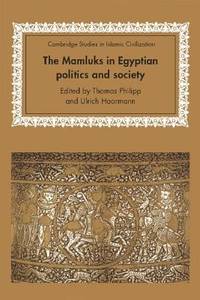
1998MS-24Cambridge U.K.: Cambridge University Press 1998. Scholarly text presents a collection of essays which provides a detailed introduction to the structure of political power under the Mamluks and its economic foundations and also offers a unique insight into the Mamluk households and their relationship with the indigenous Egyptian population. Topics cover Mamluk culturescience and education; Mamluk property geography and urban society; Mamluk rule and succession. 306 pgs. Dustjacket in mylar. First Edition. Hard Cover. Fine/Fine. 8vo - over 7¾" - 9¾" tall. Cambridge University Press Hardcover
Milano, Fabbri, 1959, 8vo cart. cop. colori, pp. 220 con tav. colori f.t.
As New English Paperback. Pbo. Mint. Roy. 8vo. 288 p. In Turkish edition. Most of what we know about attitudes toward Islam in the medieval and early modern West has been based on polemical treatises against Islam written by Christian scholars preoccupied with defending their own faith and attacking the doctrines of others. Christian readings of the Qur'an have in consequence typically been depicted as tedious and one-dimensional exercises in anti-Islamic hostility. In Reading the Qur'an in Latin Christendom, 1140-1560, Thomas E. Burman looks instead to a different set of sources: the Latin translations of the Qur'an made by European scholars and the manuscripts and early printed books in which these translations circulated. Using these largely unexplored materials, Burman argues that the reading of the Qur'an in Western Europe was much more complex. While their reading efforts were certainly often focused on attacking Islam, scholars of the period turned out to be equally interested in a whole range of grammatical, lexical, and interpretive problems presented by the text. Indeed, these two approaches were interconnected: attacking the Qur'an often required sophisticated explorations of difficult Arabic grammatical problems. Furthermore, while most readers explicitly denounced the Qur'an as a fraud, translations of the book are sometimes inserted into the standard manuscript format of Christian Bibles and other prestigious Latin texts (small, centered blocks of text surrounded by commentary) or in manuscripts embellished with beautiful decorated initials and elegant calligraphy for the pleasure of wealthy collectors. Addressing Christian-Muslim relations generally, as well as the histories of reading and the book, Burman offers a much fuller picture of how Europeans read the sacred text of Islam than we have previously had.
8vo. XII, 331, (1), 40 pp. (appendix printed in Arabic, Persian, and Ottoman Turkish). Contemporary papered boards with ms. spine label. First edition. - Dissertation of the German theologian August Tholuck (1799-1877), a study of Sufism and oriental Pantheism composed because an illness prevented him at the time from accepting the chair of oriental languages and Old Testament exegesis at Dorpat. "Still worth reading" (Nicholson). While Schleiermacher criticised the work as untheological, the University of Jena accorded Tholuck an honorary doctorate in 1822 on the strength of his Persian studies. As professor of Old Testament studies in Berlin and Halle, Tholuck would go on to influence many American theologians, including the Methodist John Fletcher Hurst and Philip Schaff. - A contemporary inkstain to the first few pages. Inscribed by the author on the flyleaf: "Seinem innigst verehrten 'Nomodidaskalos en Kyrio' [Greek], der ihn zu Jesu wieß / der Vf." ("To his dearly beloved Instructor of Law in the Lord, who showed him the path to Jesus, from the author"). The recipient of this gift was likely the church historian Johann August Wilhelm Neander (1789-1850), in whose collection the volume was before the entire library was acquired by the American banker Roswell S. Burrows (1798-1884) for the Rochester Theological Seminary in New York (their printed shelfmark label of "Neander Library" on the front pastedown). A good copy. ADB 38, 55. Herzog/H. XIX, 697. Nicholson, the Mystics of Islam, p. 76. OCLC 7436665.
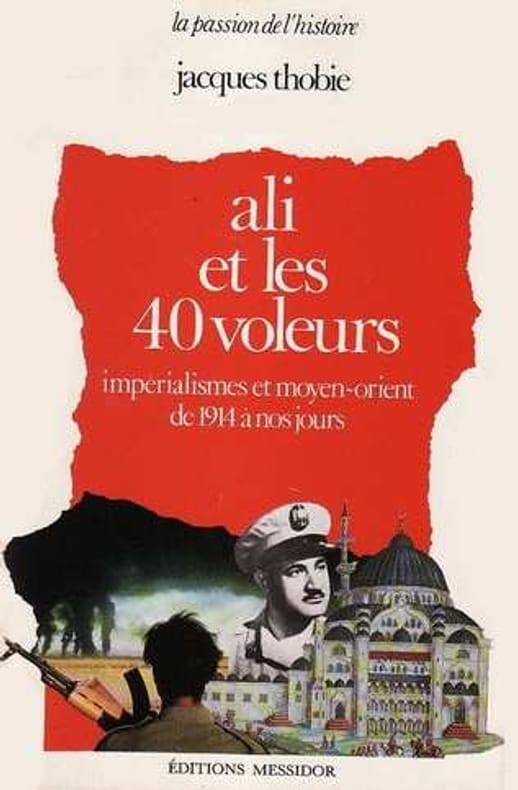
198593417Messidor, 1985 in-8°, 371 pp, 13 cartes, biblio, broché, couv. illustrée à rabats, qqs surlignures, bon état
181590277Charles-Joseph Panckoucke | Paris 1815 | 12.3 x 20.7 cm | Relié
Small 8vo. 71, (1) pp. plus (12) pp. of publisher's ads. Publisher's original printed red cloth. Rare manual of vernacular Egyptian Arabic, intended "for the Navy and Army, Travellers, Missionaries, and Traders on the Nile, in Alexandria, or in the Sudan [...] By the use of this book, students will find they are quite competent to make themselves clearly understood by all classes of Arabs met with in Egypt, the Sudan, and a considerable part of North Africa". Includes "colloquial phrases, travel talk, naval, military and commercial terms, money, weights, and measures", omitting grammar and Arabic characters, instead employing Latin-alphabet transliteration throughout. - Binding loosened; traces of use and moisture. Handwritten ownership of "Alexander Morrison", dated 1897, to front flyleaf.
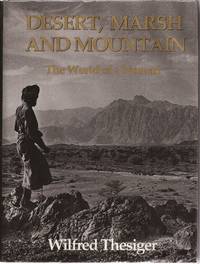
8vo. (14), 242 pp. With a frontispiece, 3 maps in text (including 1 double-page) and 32 plates with reproductions of 109 photographs. Green cloth with illustrated dust jacket. First edition, second impression, of an account of the Arabs living in the marshes of southern Iraq, written by Wilfred Thesiger (1910-2003), who stayed with them from 1951 to 1958. "From my recollections, helped by my diaries, I have tried to give a picture of the marshes and of the people who live there. Recent political upheavals in Iraq have closed this area to visitors. Soon the marshes will probably be drained; when this happens, a way of life that has lasted for thousands of years will disappear" (Introduction). In 25 chapters Thesiger describes his experience in the marshes. The book is illustrated with over 100 photographs showing the people, their homes, boats, horses and kettle, and some common activities like fishing, preparing food and making homes and buildings out of water reed. Thesiger also wrote "Arabian Sands", published in 1959. - In very good condition. Dust-jacket only slightly worn at head and foot of the spine. For the author see: A. Maitland, Wilfred Thesiger: The Life of the Great Explorer (2011).
Colour-printed map (66 x 46 cm). Not in Al Ankary; Al-Qasimi.
19203<p>Dubai. UAE: Motivate Publishing. 1993 1st ed. thus. SIGNED on title p. by author. 304pp. illus. russet cloth 4to w/gilt titles: near Fine in a Fine dj in Brodart poly cover hint of a couple of corner bumps; cloth is rubbed @ tail edge of front & rear endpp @ the pastedown; else a nice clean & crisp copy A very nice signed copy of this lavish reissue of the author’s magnificent photographs and explanatory text originally published in 1979. Wilfred Thesiger 1910-2003 was of one of the great English explorers and travel writers of the 20th century. He was the grandson of Frederic Thesiger Lord Chelmsford 1827-1905 whose British forces were ignominiously defeated by Zulu warriors at Isandlwana in the Zulu War of 1879.</p> Dubai, UAE: Motivate Publishing hardcover
Very Good English In modern aesthetic bound. 12mo. (17 x 12 cm). In English. Ex-library stamp. 124, [2] p. The religion of Babylonia and Assyria.
8vo (116 x 180 mm). Arabic manuscript on paper. 52 pp. on 28 ff. of very fine polished paper (8 ff. on pink paper), complete. Meticulous Naskh in black ink with occasional red; numerous diagrams in red in the margins and occasionally within the text itself. Bound with an astronomical treatise in Persian. 50 pp. Black ink with occasional red; several diagrams in red throughout the text. Altogether 59 ff. 18th century red morocco, ruled in gilt and stamped in blind, modern rebacking. A 16th century Arabic manuscript of the "Sphaerics" by the Greek astronomer and mathematician Theodosius of Bithynia (ca. 169-100 BCE). Unknown in the West during the Middle Ages, the "Sphaerics" proved instrumental in the restoration of Euclidean geometry to Western civilization when the book was brought back from the Islamic world during the crusades and translated from Arabic into Latin. - The text is decorated throughout with geometric diagrams drawn in red ink with a delicate and exacting hand. Each is labelled, and many are quite intricately detailed, showing the geometric qualities of the sphere and progress to astronomical diagrams exploring orbits and planetary movement. This present manuscript was copied by Muhammad Taqi bin Aqa Jalal al-Kilani, dated to Sha'ban 1000 H. - Bound with another astronomical treatise, in Persian, written on somewhat coarser paper stock. Covers worn and rebacked, some dampstaining, otherwise very well preserved. A fine piece in the history of mathematics.
4to (170 x 254 mm). Arabic manuscript on polished oriental paper. 111 pp. (paginated in a later ballpoint hand), 11 lines, per extensum, black and red ink, written space ruled throughout with several sets of coloured borders. With numerous diagrams in the margins. Contemporary blindstamped full calf. An early 20th century Arabic manuscript of the "Sphaerics" by the Greek astronomer and mathematician Theodosius of Bithynia (ca. 169-100 BCE). Unknown in the West during the Middle Ages, the "Sphaerics" proved instrumental in the restoration of Euclidean geometry to Western civilization when the book was brought back from the Islamic world during the crusades and translated from Arabic into Latin. - The present manuscript was written in Afghanistan under the rule of Habibullah Khan, a reform-minded Emir who attempted to introduce modern medicine and other technology to his country. The prettily blindstamped binding would also appear to be of Afghan origin. - Paper a little browned and brittle; traces of former block-stitching; some of the first few leaves transposed during re-binding, according to the later ballpoint pagination.
8vo. 46, (2) pp. Arabic text. Original printed wrappers, stapled. First edition. The second of two rare pamphlets published by the Iraqi government, opposing the independence of Kuwait. The first pamphlet, published in English and Arabic, outlined Kuwait's historical connection to Iraq and analysed its "imperialist relations" with Britain. This second one, in Arabic throughout, prints the minutes of the Political Affairs Committee of the Arab League, which met in Cairo on 20 July 1961 to consider Kuwait's request to join the League. - Kuwait emerged as an independent state in June 1961, after sixty-two years as a British protectorate. With a new constitution, it held its first parliamentary elections in 1963, thereby becoming the first Arab state in the Gulf to establish a parliament. Such political developments, married with growing wealth and modernisations in health, culture and finance, helped to make Kuwait the most prosperous state in the Arabian Peninsula. - The Iraqi government argued that the move toward independence was a continuation of Kuwait's relationship with Britain, albeit under a new guise. Furthermore, they felt that the historical links between Iraq and Kuwait entitled the former to control over the latter and, one suspects, a share of its growing wealth. This position, partly detailed in the pamphlet, led to a point of crisis, with Iraq threatening invasion. To the relief of Kuwait, the Iraqis were eventually deterred by the Arab League's promise of military opposition. - Wrappers a little dusty, two thick black lines to upper wrapper, seemingly erasing stamp, another stamp partially visible to lower wrapper (most likely a bookseller's name and address, "Baghdad" is legible). Interior clean and bright. - Rare: LibraryHub locates one copy in the UK at the British Library; OCLC locates copies in Harvard, the University of Toronto, and the NYU Abu Dhabi. OCLC 219629380.
8vo. Together 7 pp. on two bifolia. Interesting samples of the Aramco expats' buoyant cultural life in Ras Tanura: programmes for performances by the Ras Tanura Fellowship Choir and the theatre group Ras Tanura Players. The former performed "The Seven Last Words of Christ", composed by Theodore Dubois in 1867, under the direction of Lyle R. Danielson. The programme lists all members of the chorus as well as the organist. - The Ras Tanura Players presented the 1944 play "Guest in the House" by Hagar Wilde and Dale Eunson, directed by Don Ertel. Also in 1944, the play was turned into a popular film noir starring Anne Baxter and Ralph Bellamy. The programme features an ink sketch showing Evelyn Heath approaching the Proctor house. - The theatre programme with small marginal flaws.
Fine English Paperback. Pbo. (405 - 573 pp.). Roy. 8vo. (24 x 16 cm). The Iqta System in Lebanon: a Comparative Political View. The Changing World of the Kibbutz. Arab Islam in the Modern Age. Arabic: Its Significance and Place in Arab Muslim Society. The Transformation of Ideology in the arab World.
No marks or inscriptions to contents. Bump/crease to lower corner of front covers and minor bump to top of spine. A very clean very tight copy with bright very faintly marked boards. 472pp. The history and main functions of the oil industry with special reference to The British Petroleum Company Ltd.
4to. 4 pp. on bifolium. With 3 black-and-white photographic illustrations, including a portrait of King Ibn Saud. Interesting account of the close Saudi-American ties forged after the 1933 Concession Agreement. It describes the friendly relationship between King 'Abd al-'Aziz and Aramco, which involved the frequent exchange of valuable gifts. The King presented "his Aramco friends [with] noble Arabian horses, gold-mounted swords, daggers, watches, and Oriental rugs", a courtesy that the Americans recipocrated with exquisite boxes of gold and a golden coffee service, as well as "a complete American cowboy's outfit, with chaps, sombrero, and a gorgeous saddle mounted in gold and silver" - the latter perhaps constituting one of the more peculiar presents. - Further, the article describes friendly interactions between Arabs and Americans and discusses the company's plans to advance Arabian infrastructure and to foster education and housing. - Small marginal flaws. Somewhat toned.
Broch?. 291 pages.
19248523Paris PLON 1924 1 Paris, Plon, 1924. In-12, maroquin vert, dos à 4 nerfs, titre et auteur estampés dorés, tête dorée, 303 pp., (reliure de Hinstin).
33305P., Plon, 1922, in 12 relié demi-chagrin cerise à coins, dos à faux narfs orné, tête dorée, couverture et dos conservés, 291 pages ; à toutes marges ; quelques petites rousseurs, principalement marginales.
34005Paris : Plon, 1927 - in-12 broché de 288 pages - exemplaire non coupé - Edition originale sur papier alfa -
19238036Paris Plon 1923 1 vol. Broché in-12, broché, non coupé ni rogné, 289 pp. Edition originale. Un des 140 exemplaires numérotés sur Japon, en belle condition.