Shaw, Thomas.MareMagnum

4 751 résultats
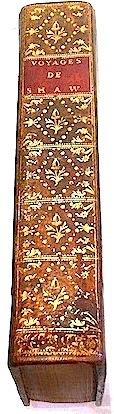
Large 4to. (20), 424, (22) pp. With 20 (4 folding) engr. plates and 12 (8 folding) engr. maps. Later marbled half vellum with ms. title to spine. First German edition, translated by J. H. Merck. "Has been praised by Dibdin and others. It is especially esteemed for its botanical and zoological plates, in addition to the information Shaw imparts on the antiquities, geology and geography of the areas he visited" (Navari, Blackmer). "Cet ouvrage est estimé tant pour ses observations relatives à l'histoire naturelle, que pour son exactitude. L'auteur visita pendant douze ans l'Afrique septentrionale" (Gay). "During the period of his chaplaincy to the English factory at Algiers from 1720 to 1733, Shaw travelled in Egypt, Palestine, Cyprus and through much of North Africa. His work is valuable for its accurate descriptions of antiquities, geography and the natural history specimens he observed" (Aboussouan). Shaw (1694-1751) was professor of Greek at Oxford. The maps show parts of Arabia, the Mediterranean, and the environs of Algiers and Tunis. - Binding somewhat rubbed; some browning throughout due to paper; a large tear to one plate repaired. 1840 ownership "A. Lutz" to flyleaf; armorial bookplate "S. G. Koenig, V.D.M." to pastedown. Later in the Ottoman collection of the Swiss industrialist Herry W. Schaefer. Howgego I, S92. Weber II, 501. Gay 391. Röhricht 1352. Tobler 124. Nissen, ZBI 3840. Chatzipanagioti-S. 1028. Cf. Blackmer 1533-1535. Aboussouan 842. Graesse V, 362.
Small quarto in illustrated pale boards; 94 p. : b/w photos & illus., maps throughout ; 25 cm. Overview of the ancient city of Pasargadae (
1995MS-42Boulder CO.: Westview Press 1995. Scholarly text presents a detailed examination of the extent to which Nasser's 1952 coup d'etat brought about significant changes in the basic social political and cultural structures of Egypt. Topics discussed include state and revolution; economic and social patterns; the role of intellectiuals and the media; issues of foreign relations including the conflict with Israel; the process of value-system transformation; etc. 352 pgs. Dustjacket in mylar. First Edition. Hard Cover. As New/As New. 8vo - over 7¾" - 9¾" tall. Westview Press Hardcover
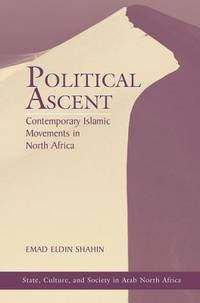
1998MS-3Boulder CO.: Westview Press 1998. Scholarly text presents an unbiased comparative analysis of the Islamic movements in Algeria Morocco and Tunisia exploring their formation and expansion in the late 1960's and the basis of their ideology for social transformation. 275 pgs. Minor shelfwear. First Edition. Soft Cover. Very Good. 8vo - over 7¾" - 9¾" tall. . Westview Press Paperback
193624464London: Herbert Jenkins 1936. Book. Good. Hardcover. First Edition. 8vo - over 7¾" - 9¾" tall. 317 pages. Black and white photographs. Blue cloth with gilt titles. King Faud was born on March 26 1868 and died on April 28 1936. Herbert Jenkins Hardcover
Folio. 1 page. On uncut wove paper, bearing the Schoellers-Parole blind embossed seal, margins uncut. The original autograph contribution of Shah Wali to the Committee of the World League for Peace (Ligue Mondiale pour la Paix), a remarkable organization formed in 1925 with close ties to the League of Nations. The Committee itself was composed of such notaries as Queen Elizabeth of Belgium, King Carol II of Romania, John D Rockefeller, Marie Curie, and Albert Einstein, who personally gathered the present manuscripts over the course of seven years (1925-32). Among the public figures who contributed to the project were dignitaries from the newly-created League of Nations' member states. The inscription is in Arabic with a typset translation below: "War is a terrible catastrophe, which all peoples of all epochs have always abhorred. [Signed] Prince Shah Wali, Minister of Afghanistan in Paris". - Shah Wali, the brother of Mohammad Nader (ruler of Afghanistan 1929-33), was posted in Europe as a foreign minister from 1929 until 1945. Pax Mundi. Livre d'or de la paix. Enquete universelle de la Ligue mondiale pour la paix sous le haut patronage de son comite d'honneur avec l'approbation de la Societe des nations, du Bureau international du travail et de la Cour permanente de justice internationale. Geneve, Societe paxunis, 1932.
4to (164 x 244 mm). Persian manuscript on polished but unsophisticated laid paper. 352 leaves (misnumbered 347, numerous errors in pagination, but complete). 21 lines of black and occasional red Nast'aliq within blue and double red rules; a pretty gilt, red and lapislazuli 'unwan headpiece on the first page. Some marginal glosses throughout, likewise in black and red ink. 19th century Western-style codex binding with leather spine and cloth edges, using the original red morocco covers. An amplified Persian adaptation of the Arabic medical treatise "Sharh al-asbab" (completed in 1424) by the Persian physician Burhan addin Nafis ibn 'Iwaz al-Kirmani (d. ca. 1449), itself a commentary on Najib addin al-Samarqandi's (d. 619/1222) "Kitab al-asbab wa'l-'alamat". This medical compendium, later translated into Urdu and Sindhi, covers the symptoms and treatment of diseases specific to particular parts as well as general diseases. - The Indian medical writer Mohammad Akbar Arzani composed several works in Persian which circulated also through various Urdu translations and thus gained considerable diffusion among later physicians. "According to his own statement in the 'Tibb-i akbari', he had been a recluse in a convent (zawia), later on he studied the religious doctrines and finally dedicated himself to the study of medicine. He probably took part in the Mughal military campaign in the Deccan under Awrangzeb" (Encyclopedia Iranica, online). - Inherently brittle and fragile throughout with numerous edge tears, chips, marginal worming and other minor flaws, several paper breaks due to ink corrosion along the rules. One quire loosened, two leaves have old repairs with adhesive tape. Foliation erratic; leaf 196 (recte: 206) transposed before 194, but complete. Cf. GAL I, 491 & S I, 895 (for Nafis ibn 'Iwaz al-Kirmani's commentary).
4to (178 x 240 mm). Arabic manuscript on paper. (136) pp. Calligraphic text with cursive writing in red ink, black and gold in a frame of double red rules, 15-23 lines, frontispiece on double page, 4 banners. Contemporary blindstamped red morocco binding with fore-edge flap. Arabic manuscript on the virtue of prayer upon the Prophet Muhammad. The very neat cursive calligraphy is finely executed in three inks: black, red and gold (the latter having taken on an olive green hue). The manuscript begins with the last three suras of the Qur'an, followed by the Asma ul-Husna, an introduction, and a prayer. A superb frontispiece on a double page (pp. 5-6) is executed in black ink on a red background within polychrome frames. The one on the right-hand side, decorated with five outward-facing arches in the margins, gives the names of Allah, of the Prophet, and of his four caliphs; the panel on the left indicates the name of the manuscript and its author, "Abi Abdallah Hashim ibn Abdulaziz al-Mohammadi al-Shafei". The titles of each of the six chapters are written in red ink or gold, followed by the "Bismillah" in larger calligraphy. The first colophon, at the end of the first chapter, is calligraphed in red ink in a banner; the other three colophons, arranged within triangular tiers, announce the end of each chapter and repeat the name of the author. The text ends with the "Qasida" to the glory of the Prophet. The analysis of the document and the use of the term "Shafei" suggest that its author was an imam trained in the Shafiist school of jurisprudence, one of four schools (madhhab) of jurisprudence within Sunni Islam, based on the teaching of Imam Al-Shafi'i (767-820) and his followers. This "madhhab" is widespread in Yemen and around the Horn of Africa (Djibouti, Eritrea, Ethiopia, and Somalia), as well as in Kurdistan and Egypt. Binding and paper suggest a date in the second half of the 18th century.
8vo. 2 parts in 1 volume. Arabic manuscript on paper. 144 ff., 1 leaf of index. Text in black naskh with important words and phrases in red, occasional marginal notes. 19th century three quarter red boards with red morocco spine, ruled and lettered in gilt. An uncommon epitome of a 13th century medical treatise by 'Abd al-Wahhab ibn Ahmad Sha'rani (1492/3-1565), known primarily for his mystical writings. While Al-Sha'rani famously founded an Egyptian order of Sufism, Sa'rawiyyah, which remained active until the 19th century and wrote extensively on religious law and Sufism; his interest in medicine is less well known. This book, which discusses a treatise by the physician Al-Suwaydi (1204-92), is unique among his works as a scientific text, and is important in forming an idea of Al-Sha'rani as a man of numerous intellectual interests, equally able to debate religious law and explain medical recipes and procedures. Indee, these were not interests at odds with each other: magical and occult remedies are prominent throughout the text. Al-Sha'rani retains some of Al-Suwaydi's stylistic choices as well, most noticeably the organization of the medical recipes by body part to be treated: the work starts with ailments of the head and proceeds down the body to end with the feet. - This specimen was copied on Sunday, the 11th of Safar 1108 AH by the scribe Muhammad Muhyi al-Din Abi al-Anas al-Shafi'i al-Miliji al-Ash'ari al-Sha'rani. Two of the ownership entries are dated 1251 and 1322 H, and annotations and notes at the end with an added index in Maghribi script suggest that it was last owned by a physician in Morocco or elsewhere in North Africa. - Boards somewhat worn, a few minor stains and wormholes. Index has been reinforced. An interesting medical work from a Sufi theologian. GAL II, 335f.
595562Jerusalem, The Magnes press, Leiden, Brill, 1983. In-8, rel. pleine toile gommée verte de l'éd., titre doré en long, sous jaquette ill. en couleurs, 265 pp., bibliographie, index. Service de presse.
1988100143743Variorum 1988 332 pages 3x23x16cm. 1988. Cartonné. 332 pages.
174310890Jean Neaulme La Haye 1743 1 vol. 2 tomes en un vol. in 4 de 1 f.n.ch. (page de titre) XLIV 414 pp. et IV 192 pp. 172 pp., pleine basane brune de l'époque, dos lisse orné, pièce de titre en maroquin, dentelle intérieure dorée, tranches marbrées (restaurations soignées aux coiffes et coins).
4to (225 x 264 mm). X, 42 pp. With 4 lithogr. folding plates. (And:) Beitraege [...] Zweites, Drittes, Viertes, Fünftes Heft. Systema Astronomiae Aegyptiacae Quadripartitum. Ibid., 1833. XXX, 445, (10) pp. (series titles and separate half-title for no. 2). With hand-coloured frontispiece and 10 large folding plates, lithographed throughout. Contemporary polished red morocco, spine, leading edges, inner dentelle and covers richly gilt and blind-tooled in the Romantic style. Glazed green endpapers; all edges goffered and gilt. Bound by the Leipzig master Anton Stumme with his label on the first flyleaf. A fine morocco volume comprising the first five of Seyffarth’s monographic "Contributions" to Egyptology (apparently all published at the time of binding; two more were to follow by 1840). While the first fascicle contains the earliest catalogue raisonnée of the substantial Berlin collection of papyri, fascicles 2-5 (published with continuous pagination) constitute a bold investigation into early Egyptian astronomy and its all-pervading cosmological cult. This section includes a hand-coloured frontispiece of astronomical animal forms and ten large folding plates, all lithographed, showing important pieces of archeological evidence: the Navicula astronomica (Paris), Zodiacus Tentyriticus (Paris), Zodiacus Taurinensis (Turin), Sarcophagus Sethi (London), Sarcophagus Ramsis (Paris), Monolithus Amosis (Paris), Mensa Isiaca (Rome), and a Papyrus funeralis formerly in the d'Hermand collection. The final part is an astronomical lexicon, a typographical masterpiece that fits more than 1300 lithographed hieroglyphs precisely into their letterpress explanations. - Seyffarth, an opponent of Champollion's, emigrated to the U.S. in 1855. His thousands of transcriptions and sketches are preserved in the Brooklyn Museum as the "Bibliotheca Aegyptiaca Manuscripta". - A luxury copy printed entirely on wove paper and bound in elaborate morocco with finely goffered edges (unusual for a secular binding of the time) by the Leipzig master Anton Wilhelm August Stumme (1804-67), who also worked for Robert Schumann. Minor wear to binding, occasional foxing as typical for wove paper. Coloured frontispiece browned evenly; largely insignificant gutter tears to four folding plates. A crisp, unused copy in a magnificent binding. Ibrahim-Hilmy II, 229f.
4to. 160 unnumbered pp. Title page printed in red and black. With a large title woodcut in red and black and 3 woodcuts in the text (1 page-sized cut, 2 repeats). Modern vellum bound to style, stored in custom cloth-lined slipcase. Scarce account of a 1556/59 journey to the Holy Land by the Silesian nobleman Melchior von Seydlitz. First published in 1580, the work begins with the events of the trip from Venice via the Greek islands to Cyprus, where the pilgrims stayed from July 4 through 14, 1556. An entire chapter is devoted to the description of the island, its geography, agriculture, salt works, etc. Substantive chapters are dedicated to Jerusalem, Damascus, and Constantinople. Also mentions Mecca, "16 days from Jerusalem". "Seylitz's party was taken captive in Palestine; the 'honourable warrior' Hand von Ehrenberg visited them in Ramleh" (cf. Tobler). The fine title woodcut shows the travellers' capture; the full-page illustrations depicts te Holy Sepulchre in Jerusalem. - Several contemporary underlinings and marginalia in red ink. Small, faint erased stamp to reverse of title. A fine copy. VD 16, ZV 14388. Röhricht 710. Yerasimos p. 245. Cf. Tobler 76.
8vo. 99, (1) pp. Red half morocco with blindstamped cloth boards and giltstamped spine title in Ottoman Turkish. First and only edition in the Ottoman world. Sidi Ali Reis was an Ottoman admiral sent by Suleiman the Magnificent to counter Portuguese piracy and attacks on Muslim pilgrim ships in the Indian Ocean, Arabian Sea, Red Sea and Arabian Gulf. He was shipwrecked in India and travelled to the Muslim states of South Asia, Afghanistan, central Asia, Iran, and the Middle East before returning to the Ottoman Empire. His travels are recounted in his present "Mirat ül-Memalik" ("The Mirror of Countries"), first published in 1557, one of the earliest travel books of Turkish literature and written in the now extinct Chagatai language. Rare: OCLC lists 3 copies only internationally (Leiden, Bamberg, Munich). OCLC 632504491, 65818716.
Large 8vo. VIII, 844 pp. Original buff buckram, leather labels to spine. "The law of Transjordan is Turkish law as it existed on the 23rd of September, 1918, except in so far as it has been superseded or modified since that date. To indicate the extent to which it has been so superseded and modified is the purpose of this volume […]" (from the Compiler's Preface). - Seton was President of the District Court, Jaffa from 1920 to 1926, after which he took on the post of Judicial Adviser Transjordan, in which role he produced this digest. He was subsequently President of the District Court in Haifa, 1931-35, before moving on to become Puisne Judge, Jamaica. This was his sole publication. - This copy is unmarked as such, but is from the Library of Glubb Pasha, and is the Arab Legion Head Quarters copy, with ink stamp to the front pastedown and inscription, "Not to be taken from the Head Quarters of the Arab Legion" in Peake Pasha's hand, signed by him. - Endpapers lightly foxed, otherwise very good in the original buckram, labels a little rubbed and lifting at the corners.
8vo (164 x 244 mm). (2), XVIII, (2), 476 pp. (Includes, bound after the preliminaries:) Notice hydrographique No. 4 (1900). 14 pp., 1 blank f. Notice hydrographique No. 8 (1900). 15 pp., 1 blank p. Contemporary gilt half calf over marbled boards. Marbled endpapers. The French essential standard sailing directions for the Red Sea and Gulf of Aden as well as the entire south coast of the Arabian Peninsula. Comprises directions for the navigation of the Suez Canal, the Gulf of Suez, and the central track for steam vessels through the Red Sea, Straits of Bab-al-Mandab, and Gulf of Aden; also, descriptions of the Gulf of 'Aqaba, the shores of the Red Sea, the inner channels, the Gulf of Aden, and the south-eastern coast of Arabia to Ras al Hadd, the coast of Africa from Ras Si Ane to Capo Guardafui, including the Gulf of Tadjoura, thence to Ras Hafun, Abd-al-Kuri, the Brothers, and Socotra. - Largely based on the relevant British counterpart, the "Red Sea and Gulf of Aden Pilot"; the section on the Gulf of Tadjoura is entirely by the lieutenants of the French hydrographic ships Guillou and R. de Carfort. The book had appeared only once previously, in 1885, and the present copy includes not only the Supplements I and II published in 1900, but also extensive publisher's corrections that were issued to slips of paper and are here bound into the volume in their respective place. The flags and signals are partly printed in red and yellow. A rare and early edition in excellent condition. OCLC 460171378.
In 8°, br. edit. ill., pp. 190,(10); prima ed., ottimo es.. (x036/d)
8vo. XXXVII, 394 pp. (Bound with) II: The same. Étude orientale ou trois odes de Hafiz et une élégie de Saadi poetes persans. Paris & Geneva, Duprat & Cherbuliez, 1852. 32 pp. Contemp. red half calf. I: Early anthology of 44 Ottoman writers. An excellent translation, dedicated to the King of Prussia. Contains a wealth of information for the oriental scholar, especially by virtue of the learned introduction and the copious appendix with biographical notes on all poets here presented. - With the author's three-line autograph inscription to Ferdinand Perrier on the endpaper; Perrier's drystamp on title page. - Bound with the first French edition of these three odes of Hafez, also profusely annotated. - Somewhat browned; occasional insignificant foxing. Saba 826. Nawabi VII, p. 990.
Milano, 1940, stralcio con copertina posticcia muta, pp. 1083/1101 con fotografie, tavole fotografiche ed una cartina. - !! ATTENZIONE !!: Con il termine estratto (o stralcio) intendiamo riferirci ad un fascicolo contenente un articolo di rivista, sia che esso sia stato stampato a parte utilizzando la stessa composizione sia che provenga direttamente da una rivista. Le pagine sono indicate come "da/a", ad esempio: 229/231 significa che il testo è composto da tre pagine. Quando la rivista di provenienza non viene indicata é perchè ci è sconosciuta. - !! ATTENTION !!: : NOT A BOOK : “estratto” or “stralcio” means simply a few pages, original nonetheless, printed in a magazine. Pages are indicated as in "from” “to", for example: 229/231 means the text comprises three pages (229, 230 and 231). If the magazine that contained the pages is not mentioned, it is because it is unknown to us.
In 16° leg. edit. pp. 410, ben tenuto
8vo. (33)-47 pp. Original wrappers. Offprint from the Journal of the Royal Asiatic Society, April 1951. Part 1 only, recounting the "Land Dispute". Part 2 (pp. 156-169, "Dispute over the Runaway Wife") would appear in the October issue. - An excellent copy. OCLC 77797713.
Pagine: 366 . Illustrazioni: All'antiporta applicata immagine della Serao tratta dalla rivista Lavoro illustrato . Formato: 16° . Rilegatura: Caronato marmorizzato con dorso in tela nera . Stato: Deteriorato . Caratteristiche: Ultima pagina strappata a metà, senza perdita di testo.Strappetto senza mancanza carta da pg 25 a 30. Opera brunita .
8vo. (6), 276, (2) pp. Early 20th century half leather with green buckram covers. First edition of Sen's English-Farsi dictionary, following a Farsi-English volume published in 1829. In 1841 Sen would produce a new edition, adding the pronunciation of the Persian words in transliteration. - Lightly browned throughout due to paper; a few edges reinforced. Old ownership "D. H. Crawley" (?) on title-page, and later ownership, dated 1957, of the linguist, National Socialist politician, and translator Martin Löpelmann (1891-1981). A good copy of a rare work. OCLC 85263053. Cf. Vater/Jülg 280.
8vo. VI, (2), 164 pp. Original printed wrappers. Scholarly work on Abu 'Ubaid's collection of proverbs (matal) known as "Kitab al-Amtal", assembled in the 8th/9th century A.D., and other, similar anthologies of Arabic adages. - A very good copy.