Enard (Mathias).MareMagnum

4 751 résultats
Un fort volume de format in 8° de 384 pp.; jaquette illustrée. Quelques reproductions photographiques. Bande Editeur conservée. Jaquette un peu effrangée, sinon bon état.
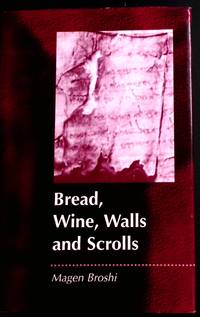
51540London: Sheffield Academic Press 2001. 1st edition.Journal for the Study of the Pseudepigrapha Supplement Series 36. Volume of essays by the former Curator of the Shrine of the Book at the Israel Archeological Museum in Jerusalem covering various aspects of both the material and spiritual life of ancient Palestine in the biblical and post-biblical periods. "Among the topics are wine and food consumption studies of population the ancient city of Jerusalem the Dead Sea Scrolls and the use and abuse of archaeology in historical and biblical research." Pp.312. Red boards dustwrapper edges slightly rubbed. Scarce. VG/VG. London: Sheffield Academic Press, 2001. hardcover
8vo. 2 vols. 45, (1) pp. 94 pp. With photograph illustrations and reproductions of paintings. Original wrappers. First edition of this two-volume set published by High Highness Prince Mohamed Ali under the auspices of the Royal Agricultural Society, to which the heir presumptive of Egypt and Sudan had presented his manuscript. Mohammed Ali describes the care and breeding of Arab horses as practiced by the Arabs, especially in Egypt, and "gives the reader a picture of the Arabian horse, his treatment and presence in the Middle East" (Boyd/Paul). Reprinted in America in 1975. - Covers show moderate wear and soil; somewhat rubbed and bumped with light corner creasing. A small stain and some partial ink stamps (Brighton and Hove) to the cover of vol. 2. Below the photo of Nimr in vol. I is an inscription reportedly in the hand of the American oil magnate, philanthropist and collector Robert Orville Anderson (1917-2007), founder of the Atlantic Richfield Oil Co.: "Saoud's sire cost me £1750. He was a magnificent Brown Seqlauri Jedran 15.1" (the word "hands" has been added at the end in a different ink). A few additional marginal annotations; altogether a fine copy of a book very hard to find in any edition. Boyd/Paul 85.
4to. (20), 360 pp. Title-page within a border of cast fleurons, woodcut arms of the dedicatee Charles II of Spain, and several woodcut initials and tailpieces. Modern gilt blue morocco by the leading Barcelona binder Emilio Brugalla (1901-87), also active in Madrid, signed at the foot of the front turn-in: "Brugalla 1946", with the arms of the Spanish bibliophile Isidoro Fernandez (1878-1963) stamped in gold on front and back in a blind-stamped panel, double fillets on binding edges and richly gold-tooled turn-ins, gilt edges. First edition of an interesting and detailed account of the first overland journey from Spain to the East Indies (1671-80) made by the Spanish missionary Sebastian Pedro Cubero. Interestingly, Cubero covered most of his route by land, as would later Careri, thus constantly being able to observe the customs, religions, ceremonies and costumes of the peoples he visited, describing them in considerable detail. After spending time in Italy, where he was appointed as a missionary to Asia and the East Indies, Cubero travelled by way of Istanbul and Moscow to Iran, visiting Isfahan ("Hispaham") and Bandar Abbas, after which he finally arrived in India. After crossing to Malacca he was imprisoned by the Dutch and later banished from the city. He then proceeded to the Philippines and ultimately, by way of Mexico, back to Europe. "After a stint as confessor in the imperial army in Hungary, Cubero became one of the notable travellers of the seventeenth century. What set him apart was the variety of his traveller's hats. Most obviously a missionary [...], he also became [...] a representative figure of the whole exploratory enterprise. By circumnavigating the globe in his travels, he was recognized in his own time to be another Magellan, Drake, or Cavendish" (Noonan). - With bookplates on pastedown; t. p. has contemporary ownership of Pere de Ribes-Vallgomera de Boixadors, Marques de Alferras, ennobled by Philip V in 1702. Some occasional foxing and a small restoration, replacing the outer lower corner of the title-page in a subtle facsimile. Very narrow margins, occasionally just shaving the headlines and quire signatures, otherwise in very good condition. Rare in the market: two copies appeared at auction in the last 50 years. Palau 65756. Sabin 17819. OCLC 14110894. Howgego C225. Lach & Van Kley III, 360. Maggs cat. 495, 303. This ed. not in Salvá. For the author cf. F.T. Noonan, The road to Jerusalem: pilgrimage and travel in the age of discovery (2007), p. 104.
4to. (4) pp. With 2 woodcut vignettes. Sewn. Extremely scarce pamphlet on a naval battle in the Mediterranean near Cabo de Gata (Andalusia). It describes the destruction of a ship of corsairs from Algiers by the Spanish vessel "San Pedro" on 7 January 1621, killing 70 men. The victory proved important for the Spaniards, as the surviving corsairs provided them with useful intelligence, including information regarding the deployment of 30 Algerian vessels in the area, all seeking to rob other ships. However, the Ottomans were ignorant of any Royal Navy galleys which the Spanish suspected in the area, rather presuming them near Mallorca or Sardinia. - Large Jesuit woodcut vignette to the otherwise blank final page. Somewhat browned. Near-contemporary foliation in ink (205-206), suggesting the work was originally part of a larger volume. No copies traceable in libraries worldwide. Not in OCLC.
4to. 14 pp., final blank leaf. Two printed sheet folded into a pamphlet, unsewn and unbound. Very rare Portuguese account of one of several unsuccessful 18th century attempts by Muslim forces to recapture Oran. Translated by Manuel Pedro Tomás Pinheiro e Aragão (1773-1838), describing the events of May and June 1791. From 1790 to 1792, Muslim forces, led by Mohamed El-Kebir (d. 1796), besieged Oran and Mers el-Kebir, which were in Spanish hands since 1732. Both cities would be returned to the Ottoman Empire after a massively destructive earthquake in 1792. - First page somewhat spotty. Uncut and untrimmed. BGUC Misc. 24, 508. OCLC 56569516.
Folio. [12], 349, [1], [2 blank] pp. With the Propaganda Fide's woodcut rectangular Jesus and Apostles device on the title-page, their round Jesus and Apostles device above the colophon, 1 woodcut tailpiece, 2 woodcut decorated initials (2 series), and numerous decorations built up from cast arabesque fleurons. Set in roman, italic and Arabic type with incidental Hebrew. Contemporary sheepskin parchment, sewn on 5 cords (3 secured to the boards, 2 cut flush with the bookblock), headbands worked in pink and white, edges sprinkled pink and blue, manuscript spine title in 2nd of 6 compartments. First and only edition of Guadagnoli's Latin grammar of the Arabic language, in a luxurious folio format. In 1632 the Propaganda Fide had begun work on an Arabic Bible that was not to be completed until 1671. Guadagnoli (1596-1656) was one of the correctors for the Bible and in the present grammar, set in the same type, he notes that they have taken special care with their Arabic setting and with the metre to suit them to the desires of native Arabic speakers, though the fact that the text was in Latin and the fact that it must have been an expensive book would have limited the audience: it is not the sort of book that missionaries would give away to common people. Erpenius's 1613 grammar, revised and reprinted several times, was aimed primarily at European scholars. The main text opens with a table of the letters, showing (from left to right!) the stand-alone, initial, medial and final forms, along with the name of each letter and its pronunciation. This gives an overview of the new Arabic Bible type. The texts used as examples include the first printing of two poems taken from manuscripts in the oriental library collected by Pietro della Valle (1586-1652) in Rome: the "Carmen Chazregiacum" and the "Carmen de invocationibus". The Arabic type may have been cut by the Propaganda Fide's in-house punchcutters for their Arabic folio Bible, whose Pentateuch was printed from 1632 to 1635 but distributed only in proof copies until the complete Bible was published in 1671. Occasional lines appear in their other books from 1636, but the present book uses it for the main Arabic text. It was to become the staple of their Arabic printing. The book also gives a nice synopsis of the Propaganda Fide's large Hebrew type (6 mm mem-height). - With early manuscript shelf-marks in ink at the foot (R III 20) and on the back (R III 8) of the title-page. Most of the sheets have browned patches or browned spots, but otherwise in very good condition and with generous margins. Binding very good, with only minor wear and a couple small abrasions. An important Arabic grammar intended for native speakers. Amaduzzi, p. 11; Schnurrer 72; Smitskamp, Philiologia orientalis 220.
Folio (220 x 316 mm). (12), 349, (1) pp., final blank f. With the Propaganda Fide's woodcut rectangular Jesus and Apostles device on the title-page, their round Jesus and Apostles device above the colophon, 1 woodcut tailpiece, 2 woodcut decorated initials (2 series), and numerous decorations built up from cast arabesque fleurons. Set in roman, italic and Arabic type with incidental Hebrew. Contemporary limp vellum with ms. spine title. First and only edition of Guadagnoli's Latin grammar of the Arabic language, in a luxurious folio format. In 1632 the Propaganda Fide had begun work on an Arabic Bible that was not to be completed until 1671. Guadagnoli (1596-1656) was one of the correctors for the Bible and in the present grammar, set in the same type, he notes that they have taken special care with their Arabic setting and with the metre to suit them to the desires of native Arabic speakers, though the fact that the text was in Latin and the fact that it must have been an expensive book would have limited the audience: it is not the sort of book that missionaries would give away to common people. Erpenius's 1613 grammar, revised and reprinted several times, was aimed primarily at European scholars. The main text opens with a table of the letters, showing (from left to right!) the stand-alone, initial, medial and final forms, along with the name of each letter and its pronunciation. This gives an overview of the new Arabic Bible type. The texts used as examples include the first printing of two poems taken from manuscripts in the oriental library collected by Pietro della Valle (1586-1652) in Rome: the "Carmen Chazregiacum" and the "Carmen de invocationibus". The Arabic type may have been cut by the Propaganda Fide's in-house punchcutters for their Arabic folio Bible, whose Pentateuch was printed from 1632 to 1635 but distributed only in proof copies until the complete Bible was published in 1671. Occasional lines appear in their other books from 1636, but the present book uses it for the main Arabic text. It was to become the staple of their Arabic printing. The book also provides a synopsis of the Propaganda Fide's large Hebrew type (6 mm mem-height). - Some browning throughout; a few old ink markings to the margins; contemp. ownership "J. Venturi" on t. p. An important Arabic grammar intended for native speakers. Schnurrer 72. Smitskamp 220. Amaduzzi 11.
8vo. 64 pp., 1 folding table. With printer's woodcut device on title-page. Contemporary marbled wrappers. First 18th century edition of this widely used introduction to Syriac, first issued by the Helmstedt professor of oriental languages, Hermann von der Hardt (1660-1746), in 1690 and again in 1694 (all printed by Hamm). - Some browning and brownstaining throughout; occasional slight edge defects without loss of text. The folding plate shows the conjugation of Syriac verbs. - Provenance: ownership of the Heidelberg Jesuits' Seminarium Carolinum (opened in 1730 for Catholic students in the strongly Protestant Palatinate), dated 1744, on title-page. Cf. VD 17, 3:013822V.
4to. (2), (8), (3)-75, (1) pp. With 1 folding table. Contemporary marbled brown boards, spine reinforced with later brown cloth. An orientalist dissertation by the Hessian scholar Happel, incorporating a grammar of the Arabic language and a glossary harmonising Hebrew terms from the first four books of Genesis with Arabic words from three Qur'an suras, namely sura 1 (Al-Fatiha), 12 (Yusuf), and 64 (At-Taghabun), previously edited by Erpenius. - Some browning throughout due to paper. Lacks free endpapers; front hinge reinforced. 19th and 20th century ownerships to pastedown. Schnurrer 87. GV (1700) 56, 6. OCLC 31311242. Not in Fück.
Small 8vo. VI, (2), 125, (3), 92 pp. Later 19th century leather with giltstamped title to spine, both boards and spine with gilt armorial lion crest of the Ducs de Luynes. Leading edges, inner dentelle gilt; marbled endpapers. First edition of Petermann's manual of Arabic in a French master binding for the Duc de Luynes. Issued as part IV of the author's "Porta Linguarum Orientalium" for private study, this also contains a selection of Arabic reading pieces. - Some foxing throughout, otherwise beautifully preserved. From the library of the Ducs de Luynes at the Château de Dampierre. Vater/Jülg 27. OCLC 27870350.
Oblong small folio (258 x 355 mm). Photo album with 56 original silver gelatin prints, 10 picture postcards in colour, and 2 folding greeting cards. 4 photos captioned in Arabic, the remainder in English. Contemporary full calf. Private photo album of a Western engineer involved in bridge construction near Jeddah. The collection includes images of the workers' camp, construction machines, Saudi workers and supervisors, the rising bridge piers, and inspection rounds, as well as pictures of the engineer chatting with Saudi friends or repairing his SC truck. In addition, the set comprises views of Mecca, pilgrim buses and tents, as well as souvenir cards and postcards, suggesting a friend of the collector participated in the Hajj. - One postcard, showing a street view of Mecca, is dated Jeddah, 3 July 1964 (addressed to Silvia Pirani in Bologna). - The 4 photographs with Arabic captions, dated 1375/1955, show a family, including a small boy in formal uniform, before a mosque. - A very well-preserved album documenting the advance of infrastructure in the Saudi Arabian desert.
8vo. 254 pp. Publisher's black cloth with title to spine. First edition of this important survey of Britain's imperial policy in the Middle East. Includes copious bibliographical references. Published in the series "Britain in the World Today"; a new and revised edition was published as late as 1981. - Spine-ends rubbed. Formerly in the library of Westminster College, Oxford, and Oxford Brookes University, from which it was deaccessioned (their ownerships, library ticket and withdrawal stamp on the front endpapers; traces of shelfmarks on spine). OCLC 2170797.
556279Ankara, Türk Tarih Kurumu Basimevi, 1990. Fort volume grand in-4 reliure éditeur pleine toile bleu, titre doré au dos et au plat sup. LIX-703 pp., index.
8vo. (4), 86 pp. With 3 folding maps. Original printed wrappers. Informational publication issued by the New York Arab Information Center - The Research Section to argue the Arab cause among U.N. delegates, with contributions by Fathalla El Khatib, Khalid I. Babaa, Ism Kabbani and Omar Halig. Articles include "British Penetration and Imperialism in Yemen", "British Aggression Against the Imamate of Oman", and the "Buraimi Dispute". - Old ownership "M. Cain" to front cover; Arvada I.R.C. stamps. Information Papers Number 6.
556390Basingstoke, Carfax Publishing, 1999. Grand in-8 broché, pp.200-360.
Coloured two-part bronze, cold painted. Ca. 205 x 117 x 105 mm. A scribe in oriental costume, seated on a carpet with a large removable Qur'an on a bookrest. - Recognised for his great attention to detail and use of wonderfully vibrant colours, works from Bergman’s foundry are highly prized today by collectors worldwide. F. X. Bergman was the son of a Bohemian metalwork chaser and finisher who had moved to Vienna in 1860, there founding a small bronze factory. At the turn of the century, his son Franz Xaver inherited the company and opened a new foundry, basing many of his early bronzes on designs from his father’s workshop and producing an eclectic mix of oriental, erotic and animal figure bronzes. Bergman used a cold painted technique, whereby cast bronzes were decorated in several layers of polychrome ‘dust paint.’ These layers were not fired to fix them to the bronzes, hence they are ‘cold painted’. - Very slightly rubbed. An appealing work, likely from the artist's late phase.
Oblong 8vo. Frontispiece (coloured lithograph view of the Carriage Works, Grantham), 40 attractive individual colour lithographs. Tissue guards. Original blue cloth; title stamped in gilt on upper cover. All edges gilt. The lithographs show carts, broughams, dress coaches, landaus, private omnibuses, wagonettes, shooting carts, hound vans, phaetons, dog and pony carts, etc. The title page provides a lengthy description of the works undertaken, with assurances of quality and affordability. - Slightly brownstained, flecked, and rubbed. Rare; COPAC locates a single copy (University of York Libraries; Grantham library holds another copy).
593202Damas, Institut français de Damas, 1967. In-4 br., non coupé, 339 pp., index. Textes en français et arabe.
593160Damas, Institut français de Damas, 1958. In-4 br., en partie non coupé, 184 pp., index. Textes en français et arabe.
593207Damas, Institut Français, 1961. Grand in-4 br., 134 pp. + 78 pp. en arabe, planches en noir hors-texte.
593203Damas, Institut français de Damas, 1962. In-4 br., 265 pp.
593204Damas, Institut français de Damas, 1964. In-4 br., 301 pp., planches en noir h.-texte.
593159Damas, Institut français de Damas, 1967. In-4 br., en partie non coupé, 213 pp., qqes fig. in-t., 12 pl. hors-texte de reprod. photog. en noir, index. Textes en français et arabe.
593206Damas, Institut Français, 1968. Grand in-4 br., 436 pp., 14 planches de fac-similés en noir.