4 751 résultats
Colour lithograph, 790 x 625 mm. Mounted on original cloth with maps series key printed on verso. Folded. The finest contemporary map of the Çanakkale sector of the Gallipoli Campaign, the site of the dreaded "Narrows" of the Dardanelles where Allied naval forces made their ill-fated attempt to "force the straits" towards taking Istanbul. Drafted in Cairo under the direction of T. E. Lawrence at the Arab Bureau's Intelligence Office, based on a recently captured Ottoman map. - In the early days of World War I, the Entente sought to knock the Ottoman Empire out of the conflict by taking Constantinople, by way of the Dardanelles. The Gallipoli Campaign (17 February 1915 to 9 January 1916) involved a force of 490,000 British, Indian, Australian, New Zealander and French troops making various landings upon the Gallipoli Peninsula that strategically guarded the mouth of the Dardanelles. The 325,000 Ottoman defenders, backed by German forces, successfully repelled these raids in what was one of the most bloody military contests in world history. - From the outset, the Allies were hampered by a lack of accurate maps of the Gallipoli Peninsula and the adjacent Asian shore of the Dardanelles. They eventually succeeded in capturing a complete six-part set of excellent, newly published Ottoman surveys showing the battle theatre in its entirety. These maps were rushed to the map department of the Intelligence Office (later the famed "Arab Bureau") in Cairo, where they were translated, enlarged and improved by a team headed by Lieutenant T. E. Lawrence, later known as "Lawrence of Arabia". These maps were printed by the Survey Department, Egypt, as a series of six interconnecting maps, although each map was designed to act as a stand-alone work complete in and of itself (a geographic key to all six maps is present on the verso of the present map). - Overall clean and bright, with some very light staining to upper-left quadrant and some light wear at some fold vertices.
New English Paperback. Pbo. Cr. 8vo. (20 x 14 cm). In English. 216 p. "With the end of the Cold War in the 1990s, many countries around the world entered a period of change and transformation. Yet, for the formation of a similar atmosphere, Middle Eastern countries have waited for the second decade of the 21st Century. The main reason for this delay has been the security-based policies of the Western countries in the region. Maturation of the global and local political conditions in the Middle East such as deepening poverty in the region, inappropriate training policies, the oppressive and exclusionary political regimes, increased opportunities for communication, and acceleration of the flow of goods, capital and human has made a similar change and transformation inevitable. Winds of change deepened the uncertainties about the region. At present, it is needless to say that global powers are struggling with might and main to reshape the region according to their interests. However, we must mention that changes that are likely to occur in the region have the capacity to influence the global international system".
19770118411977. Hardcover. Good. Publisher: American University of Beirut 1977 Good HB 240 pp. EX-LIB. with usual markings. hardcover
8vo. 200, (2) pp. (front flyleaves included in pagination). Printed in red and black throughout. With 12 watercolour plates. Original printed wrappers. First edition of this French translation of the classics of Islamic poetry. Prepared by the French writer and orientalist Toussaint (1879-1955), this anthology features some prominent examples of love and war poetry, including the Mu'allaqat, and the Rubáiyát of Omar Khayyám, as well as excerpts from the Quran, al-Burda, the Arabian Nights, and the work of Ibn al-Farid. With decorative watercolour plates by Antoine de Roux. - Extremities slightly rubbed. Small tear to lower margin of pp. 33f., not touching text, otherwise in excellent condition. A lovely Laffont production. OCLC 492849402.
New English Original bdg. HC Edition. Demy 8vo. In English. 288 p. Chaotic uncertainty: Reflections on Islam the Middle East and the world system. Immanuel Wallerstein is one of the most important and yet controversial thinkers and activists of our time, writing on a wide range of topics from global economics and international politics to the decline of the United States, antisystemic movements, multiculturalism and the role of religions in modern world since the 1950s. Currently, he is a Senior Research Scholar at Yale University. To Wallerstein, capitalist world-system, which was created over the last ve hundred years, and whose main ideology was liberalism, has been going through a deep structural crisis since the 1970s. He maintains that this system will be replaced by other and perhaps better systems in the mid- or long run. In his works in last few decades, Wallerstein has devoted almost all of his energy and time analyzing and explaining how the capitalist system could be replaced by a better system. In that regards, he considers Islamism as one of the most important dissenting movements in the World-System, but necessarily as a powerful force to replace it. This volume contains Wallerstein's articles and commentaries on Islam, the Middle East and the World-System, all of which were published since the 'Arab Spring'.
New English Paperback Edition. Demy 8vo. In English. 288 p. Chaotic uncertainty: Reflections on Islam the Middle East and the world system. Immanuel Wallerstein is one of the most important and yet controversial thinkers and activists of our time, writing on a wide range of topics from global economics and international politics to the decline of the United States, antisystemic movements, multiculturalism and the role of religions in modern world since the 1950s. Currently, he is a Senior Research Scholar at Yale University. To Wallerstein, capitalist world-system, which was created over the last ve hundred years, and whose main ideology was liberalism, has been going through a deep structural crisis since the 1970s. He maintains that this system will be replaced by other and perhaps better systems in the mid- or long run. In his works in last few decades, Wallerstein has devoted almost all of his energy and time analyzing and explaining how the capitalist system could be replaced by a better system. In that regards, he considers Islamism as one of the most important dissenting movements in the World-System, but necessarily as a powerful force to replace it. This volume contains Wallerstein's articles and commentaries on Islam, the Middle East and the World-System, all of which were published since the 'Arab Spring'.
1140 x 710 mm. Chart of the East Coast of Arabia from Ras Sukra to Palinurus Shoal with inset maps of Bander Reisut, Merbat Bay and Kishin Bay. Engraved chart, including tidal information, compass roses, soundings, seabed notations, currents, sandbanks, shoals, lighthouses and beacons picked out in yellow and red, inland elevations, detailing and buildings. Published by John Walker, Geographer to the East India Company in 1850, new editions in 1865, 1888, 1921 and 1924. Signs of contemporary use. Folded.
187720079La Revue des deux mondes | Paris 1877 | 15.50 x 25 cm | agrafé
Aquatint print (image size: 485 x 390 mm, not including title and imprint; paper size: 55 x 45 cm), engraved by Jean Pierre Jazet after Vernet. Striking aquatint of a Mamluk leader by the acclaimed French artist Carle Vernet (1758-1836), best known for his depiction of horses and war scenes. The Mamluk leader is depicted in traditional garb with a scimitar dangling from a robe in his hand, on a horse, with a fighting scene in the background in front of a Middle Eastern town. The engraver, Jean Pierre Jazet (1788-1871), must have been a skilled artist himself. - A lithographed copy, retaining some of the original splendour, was published in Vienna by Joseph Trentsensky a few years later. - A fine copy in a crisp impression. Dayot, Carle Vernet (1925), no. 102. Nagler XXII, p. 440. Cf. Mennessier de la Lance II, p. 617.
4o. 294, (1) pp., final blank page. With a full-page map of Palestine not included in pagination, 2 full-page plans of Jerusalem included in pagination, and several small print illustrations in the text. Contemporary half calf over marbled boards with giltstamped spine and spine-title. Marbled endpapers. Fourth edition of this description of a journey through Palestine by the French painter and writer Bazelaire (1857-1926), first published in 1889. In April 1888 she boarded a ship with a group of pilgrims, which, after a stop in Civitavecchia, from where she visited Rome, dropped anchor in Haifa. Accompanied by her brother Maurice (1840-1909) and her sister Isabelle (1847-89) she departed on horseback to tour the country for a month. Her emotional account describes the places they visited, including Mount Carmel, Nazareth, Tibériade, Jerusalem ("Am I really in Jerusalem, or is it but a dream about to fade away?", p. 129), Mount Olivet, Jericho, the Dead Sea, Bethlehem, Hebron, and the Valley of Josaphat. Among other adventures, a night spent locked in the Church of the Holy Sepulchre near Jesus's empty tomb inspired a particular sense of awe: "It is a night as long as a century, and as short as all joys in the world! [...] All those who have seen Jerusalem know and understand these things, I invoke all pilgrims!" (pp. 253f.). - The initials and illustrations accompanying the text were created by Bazelaire herself. The plans show the old and new towns of Jerusalem. - Extremities insignificantly rubbed; small flaw to spine. Paper somewhat browned and brownstained throughout. A pressed palm leaf is inserted between pp. 124 and 125. Hage Chahine, Guide du livre orientaliste 359. OCLC 1083265900. Cf. Ueckmann, Frauen und Orientalismus 359 (1899 ed.). Kuhn, Orientalische Bibliographie VI, 4225 (1892 ed.). Not in Weber, Cox, Graesse.
2017100150921TALLANDIER 2017 in8. 2017. Broché. Cet ouvrage de Pierre-Jean Luizard publié chez Tallandier explore en 100 questions-réponses didactiques l'histoire et les développements du conflit millénaire entre chiites et sunnites. Il met en perspective les racines historiques de cette discorde depuis la mort du Prophète en 632 jusqu'aux récents bouleversements comme les Printemps arabes et la guerre de Gaza tout en analysant le rôle des grandes puissances et la politisation de l'islam
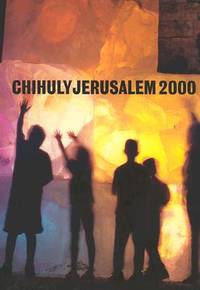
2000699282000. 2000 Chihuly CHIHULY JERUSALEM 2000 Seattle WA: Portland Press c2000 First edition 234pp illustrated in color 4to As new hardcover copy with as new dust jacket. unknown
190536071905 2 vol. in-8 , VIII, 275pp. et (2ff.),70pp., br. Genève Köndig 1905-1906,
1905122361905 br. 2 vol. in-8, Genève Kündig 1905-06,
Small 8vo. 2 vols. VIII, 320 pp. 406, (2) pp. With 2 engraved frontispieces. Somewhat later brown cloth with giltstamped spine titles. Edges sprinkled. First edition; very rare. This is the earliest "édition pour la jeunesse" cited by Chauvin, containing such popular episodes as "Haroun al Raschid" and "Ali Baba". The editor chose not to tamper with Galland's century-old text, since modernisations would have compromised the "naïveté de narration". Contemporary reviewers, however, were quick to point out that any parts unfit for juvenile consumption had been omitted, while difficult passages referring to oriental customs were elucidated by editor's notes. A second edition (enlarged by a glossary) was published in 1825; a German translation would appear in 1828. - Bindings slightly rubbed. Interior evenly browned with light spotting. From the library of the Bohmian lawyer and amateur naturalist Ludwig Grasse of Reichenbach, with his repeated ownership stamps (ca. 1900). Rare; OCLC lists only three copies in libraries internationally (Cleveland; Weimar; Erlangen-Nuremberg). Chauvin IV, 76. OCLC 4433944.
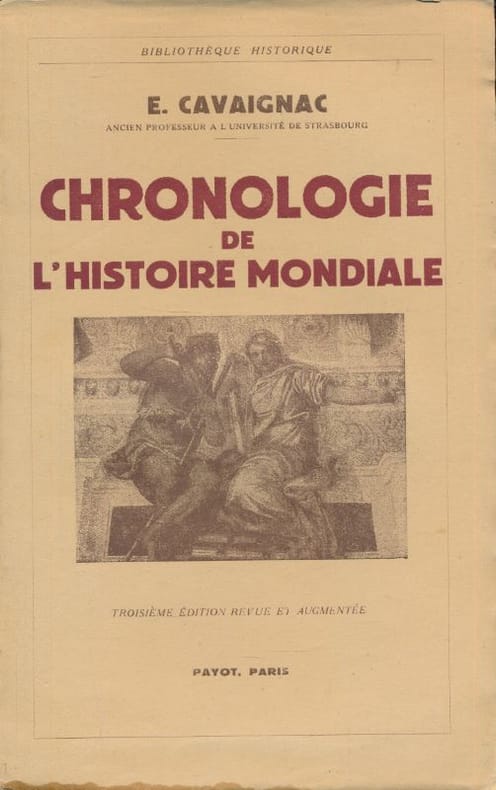
1946172098Payot Payot, 1946. In-8 broché de 235 pages. Tache au bas de la couverture sinon Bon état
1991LFA-126735523Un ouvrage de 398 pages, format 120 x 170 mm, illustré, broché couverture couleurs, publié en 1991, Bibliothèque A.E.D., bon état
Large 4to (222 x 253 mm.). 2 parts in one volume. XII, 194, (2) pp. (4), 147, (3) pp., all lithographed save for 1 page. With 6 lithographed plates (4 folding). Original temporary grey boards as issued. Rare; one of the first Sanskrit works published in Germany. Lithographed throughout (with the exception of a single letterpress page at the beginning of part 2) and published at the author's expense: "Alles über Umdruck lithographisch gedruckt" (Winkler). Contains the earliest (partial) edition of the Bhagavadgita (in part 2), pre-dating August Wilhelm Schlegel's edition - admittedly better printed - by several years. The former Benedictine monk Frank (1770-1840), an admirer of Persian philosophy, studied oriental languages in Paris and London. In 1821 he took the chair of Indian and Persian at Würzburg University and went to Munich in 1826 as Professor of Sanskrit. In spite of his pioneering work, he exerted little influence on the development of linguistics and Sanskrit studies, probably due to his penchant for mysticism and his laboured, nebulous prose (cf. ADB). - Boards worn; some browning and staining as common. From the library of Swedish antiquarian bookdealer Björn Löwendahl (1941-2013). Graesse II, 629. Winkler 224. ADB VII, 260.
8vo. 2 parts in one vol. (16), 435, (13) pp. (16) , 208, (14) pp., final blank f. With woodcut vignettes to both title pages (the first showing an Ottoman warrior, after J. Amman) and two (repeated) printer's devices at the end. Contemporary vellum. Remains of ties. First octavo edition of Lonicer's collection of Turkish history, previously published in 1578 as a hefty three-volume folio set with woodcuts attributed to Jost Amman. The present issue is a pretty, handily pocket-sized edition minus the illustrations, incorporating several important changes to the text. Book 2 of the first part still comprises Menavino's "Mahometicae leges, religio, vita" in Lonicer's translation, while Aventin's appendix at the end of part 1 is omitted, as is the entire third volume of the folio edition (Barletius's "Scanderbeg"). The beginning of part 2 includes an important new addition: Contarini's "De bello Turcico", with the description of the Battle of Lepanto. - Binding rubbed; large defects to spine. Interior somewhat browned as common with occasional insignificant waterstains to margins. A few contemporary censorship marks in ink; title page shows contemporary ownership "Ex libris fratris Constantini Cruseni Augustiniani" (obliterated) and of the Augustinians' monastery of St Thomas (Kostel sv. Tomáše) in Prague. VD 16, L 2464. BNHCat L 379. BM-STC German 525. Adams L 1456. Göllner 1773. Atabey 729. Graesse IV, 265. Pétrovitch 48. Hammer 1090. Chauvin XII, 248, 1019 (& cf. 266, 1107). Yerasimos 126. Not in Blackmer (cf. 1030 note).
604781Paris, Ed. Nagel, 1964. In-8 broché, 292 pp., 5 cartes dont 2 à pleine pp.
561747P., G. Charpentier, 1880. Petit in-8, bradel de l'époque pleine percaline bleue, dos titré, [1] ff., II-368 pp.
Edizione: Prima edizione . Pagine: 238 . Illustrazioni: Molte foto in bianco e nero fuori testo . Formato: 8° . Rilegatura: Cartonato telato crema con sovracoperta . Stato: Buono . Caratteristiche: Sovracopertina con i bordi stanchi. Bruniture .
New English Paperback. Pbo. 4to. (28 x 18 cm). [6], 143 p. First Edition. In English. Civil society, democracy and the Muslim world. Papers read at a Conference Held at the Swedish Research Institute in Istanbul, 28-30 October, 1996. ISLAM Ottoman society Social life Anatolian Islam Tasavvuf Sufism Politics Democracy Islamic world Caliphate.
(III)-XV, (1), 478 pp. Modern boards. With a folding map of Africa and the Arabian Peninsula. Edges sprinkled green. Rare, early British parliamentary papers and correspondence with British agents and residents regarding the slave trade. Includes communications relevant to slavery in Africa and India, with reports by the Agent at Muscat on the landing of slaves in that city's harbour (p. 383) and the kidnapping of children by Muslim slave dealers and their conveyance to "Arabia and the Persian Gulf" (p. 426f.), as well as instructions to the Resident in the Persian Gulf "immediately to communicate with the Arab Chiefs" to pursue the objective of suppressing the slave trade in the Arabian seas (p. 382). - Well preserved, with additional page numbers in a contemporary hand. OCLC 25471335.
Folio. XXII, 466 pp. Modern blue wrappers with cover label. British papers and correspondence with local agents on the international slave trade, including missives exchanged between Mr. Murray and the Earl of Clarendon respecting the slave trade in the Arabian Gulf. - Well-preserved.